
What to Do Right Now When Your Roof Is Leaking
A quick fix for roof leak situations can mean the difference between a minor repair bill and thousands of dollars in structural damage. Here’s what to do immediately:
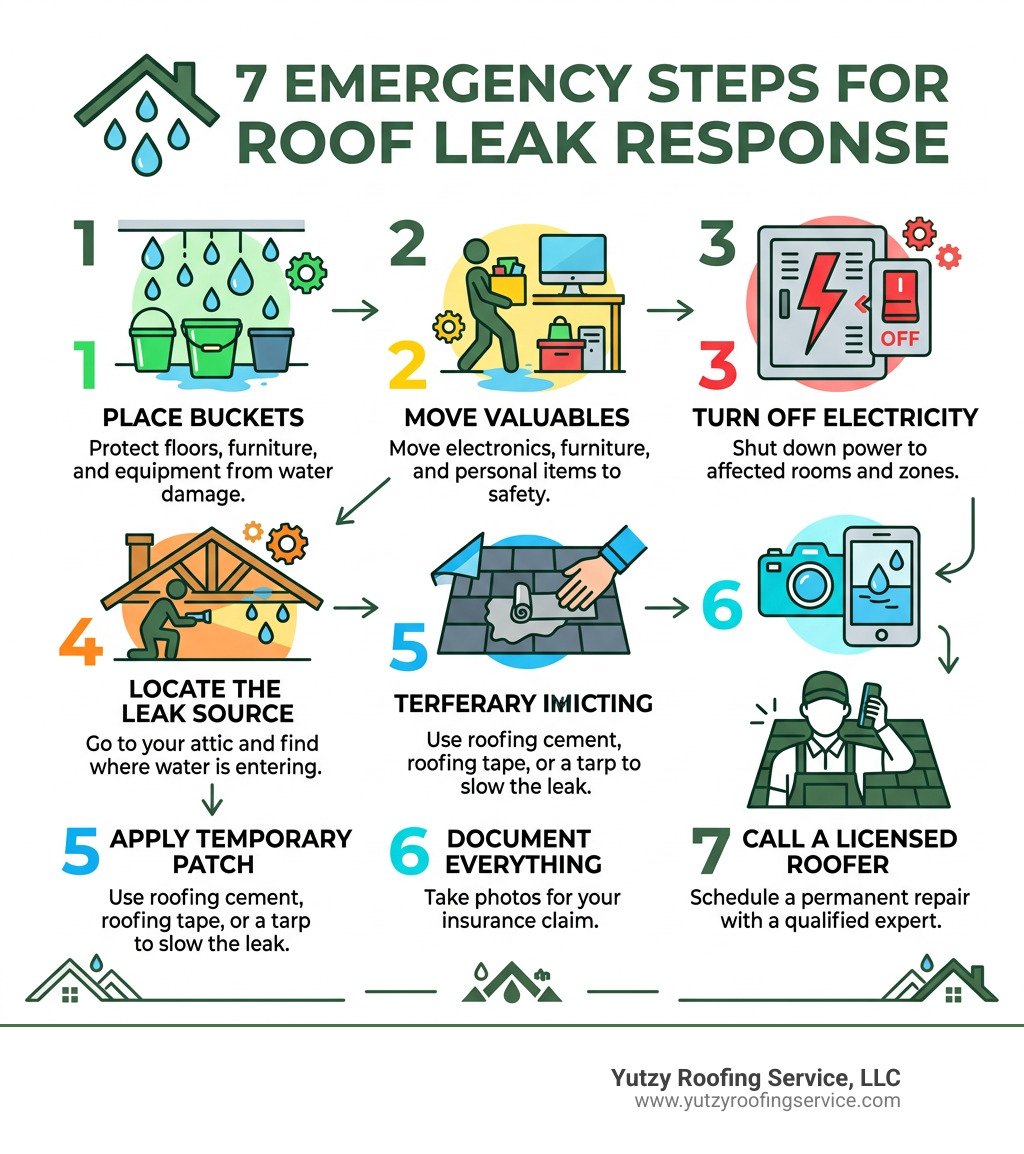
Quick Answer: 7 Emergency Steps
- Place buckets under active drips to protect floors and equipment
- Move valuables, inventory, and electronics away from the wet area
- Turn off electricity in any affected rooms or zones
- Go to your attic and locate the source of the water entry
- Apply a temporary patch using roofing cement, roofing tape, or a tarp
- Document everything with photos for your insurance claim
- Call a licensed roofer to schedule a permanent repair
That’s the short version. The rest of this guide walks you through each step in detail.
Water doesn’t wait for a convenient time to show up. One Wisconsin winter storm — or a hot, wet summer — can push even a well-maintained commercial roof past its limits. A small drip ignored for even 24 to 48 hours can trigger mold growth and rot that costs far more to fix than the original leak.
The good news: you don’t have to wait for a roofer to show up before taking action. Several proven temporary fixes can stop or slow the damage right now.
I’m Josh Yutzy, and my family has been fixing roofs across Wisconsin since 1995 — including plenty of emergency situations where a quick fix for roof leak damage bought a property owner critical time before a permanent repair was possible. In this guide, I’ll walk you through exactly what works, what doesn’t, and when it’s time to call for backup.
Safety and Preparation Before You Climb
Before we talk about hammers and tarps, we need to talk about you. According to OSHA, falls are the #1 cause of roofing-related injuries. In Wisconsin, where we deal with ice, snow, and sudden gusts of wind in cities like Wausau and Green Bay, the stakes are even higher.
OSHA Guidelines and Fall Prevention
Never attempt a DIY repair during an active storm. Rain, wind, and lightning make the roof a no-go zone. Wait until the weather clears and the roof surface is completely dry. Even then, you should never work alone. Always have a spotter on the ground who can steady the ladder and call for help if something goes wrong.
Ladder Safety 101
Your ladder is your lifeline. Ensure it is placed on stable, level ground. Use the 4-to-1 rule: for every four feet of height, the base of the ladder should be one foot away from the wall. If you are stepping onto the roof, the ladder should extend at least three feet above the roof edge.
Essential Safety Gear List
- Non-slip shoes: Rubber-soled boots with good traction are mandatory.
- Safety gloves: Protect your hands from sharp shingle granules and metal flashing.
- Safety goggles: Debris and sealant splashes can happen in an instant.
- Safety harness: If you are working on a steep pitch, a fall-arrest system is highly recommended.
Before heading to your local hardware store in Cape Cod or right here in Marshfield to grab supplies, make sure your safety gear is in top shape. A temporary patch isn’t worth a trip to the emergency room.

Identifying the Source of the Leak
Finding the leak is often harder than fixing it. Water is sneaky; it rarely drips straight down from where it enters. Instead, it follows the path of least resistance, often “running” along rafters or roof decking for several feet before finally soaking through your ceiling.
The Attic Inspection
Grab a bright flashlight and head into the attic during a rainstorm if possible. Look for:
- Water trails: Shiny streaks on the underside of the roof deck.
- Dark stains or “rings”: Evidence of persistent moisture.
- Damp insulation: Feel around for wet spots, as insulation acts like a sponge.
- Mold growth: Black or green fuzzy spots often indicate a long-term leak.
Exterior Visual Check
If you can’t get into the attic, perform a visual inspection from the ground using binoculars. Look for:
- Damaged Flashing: The metal transitions around chimneys, vents, and valleys are the most common failure points.
- Curled or Missing Shingles: High winds in the Fox Valley can easily lift aged shingles.
- Clogged Gutters: If water can’t drain, it backs up under the roof edge.
For more detailed tips on pinpointing the exact entry point, check out your guide to roof leak repairs: how to spot a leaking roof.
Top 5 Methods for a Quick Fix for Roof Leak
Once you’ve found the hole, you need to plug it. The best method depends on the size of the damage and how long you need the fix to last.
| Method | Best For | Estimated Lifespan | Difficulty |
|---|---|---|---|
| Heavy-Duty Tarp | Large areas / missing shingles | 60-90 Days | Moderate |
| Roofing Cement | Small cracks / vent boots | 30-60 Days | Easy |
| Roofing Tape | Small holes / metal seams | 30 Days | Very Easy |
| Rubber Patching | Flat roofs / EPDM | 90+ Days | Moderate |
| Plywood Patch | Large holes / structural gaps | 30 Days | Hard |
For an exhaustive list of options, see our article on 6 ways to fix your leaking roof.
The Tarp Method: A Reliable Quick Fix for Roof Leak
The “blue tarp” is the industry standard for a reason. It provides a broad shield against the elements. However, simply throwing a tarp on the roof and weighing it down with bricks won’t work in Wisconsin winds.
How to do it right:
- Size it up: Your tarp should extend at least 4 feet beyond the damaged area on all sides.
- Over the ridge: If the leak is near the top of the roof, pull the tarp over the peak (the ridge) to prevent water from running under the top edge.
- The “Sandwich” Technique: Never nail directly through the tarp. Instead, wrap the edges of the tarp around 2×4 boards. Nail the boards into the roof using cap nails. This creates a tight seal and prevents the tarp from shredding.
- Smooth it out: Ensure there are no “pockets” where water can pool.
Avoid common pitfalls by reading about staying dry: how to fix a roof leak and mistakes to avoid.
Using Sealants as a Quick Fix for Roof Leak
For small cracks around vent pipes or chimneys, a tube of roofing cement is your best friend.
- Application: Use a caulking gun or a putty knife to apply the cement liberally.
- Preparation: Use a wire brush to clean away dirt and loose granules first; sealants won’t stick to mud.
- Weather Window: Most sealants apply best between 50°F and 85°F. If it’s freezing in Eau Claire, you’ll need a specialized “wet/cold” grade cement.
Emergency Shingle and Flashing Repair
If you have a single cracked shingle, you can sometimes slide a piece of sheet metal (called a “bib”) underneath the damaged shingle and over the shingle below it. Secure it with a dab of roofing cement. For damaged rubber boots around pipes, self-adhesive flashing tape can provide a quick, waterproof wrap that buys you a few weeks of dry ceilings.
Managing Interior Damage and Insurance
While you’re busy on the roof, don’t forget the chaos inside. Water damage can become a mold nightmare in as little as 24 to 48 hours.
Interior Recovery Steps
- The Ceiling Puncture: If your ceiling is sagging or bubbling, it’s holding a pool of water. Use a screwdriver to carefully poke a small hole in the center of the bulge. This creates a controlled drain into a bucket and prevents the entire ceiling from collapsing.
- Ventilation: Run fans and dehumidifiers 24/7. High-volume air movers are best for drying out drywall and carpets.
- Furniture Protection: Move everything out of the room. If furniture is too heavy, put aluminum foil or plastic “feet” under the legs to prevent wood stains on the carpet.
Documentation and Insurance
Before you clean up, take photos. Lots of them. You need evidence of the initial leak, the damage to the interior, and the temporary repairs you made.
While you’re managing your budget, you might be looking for ways to save elsewhere. Some homeowners save up to $996 per year by switching insurance providers, which can help offset repair costs. Keep all receipts for materials like tarps and cement, as most insurance policies cover the cost of “mitigation”—the steps you took to prevent further damage.
Frequently Asked Questions about Roof Leaks
How long will a temporary roof repair last?
Most quick fix for roof leak solutions are designed to last 3 to 6 months. In harsh Wisconsin winters, a tarp might only last one or two major snow loads before the wood battens loosen or the plastic becomes brittle. These are “Band-Aids,” not cures.
Can I fix a roof leak from inside the attic?
You can try, but it’s rarely successful as a standalone fix. If you apply roofing cement to the inside of the roof deck, the water will simply find a different path along the wood until it drips elsewhere. The only effective indoor fix is a “diversion”—using a piece of plastic or a “leak diverter” funnel to channel the water into a bucket.
When should I stop DIY efforts and call a professional?
You should hang up the tool belt if:
- You see multiple leaks in different areas.
- The ceiling is sagging significantly, indicating structural weight.
- The leak is near electrical panels or light fixtures.
- You have a flat or commercial roof (these require specialized materials like EPDM or TPO).
- The roof is over 20 years old and simply failing due to age.
Conclusion
A quick fix for roof leak damage is a race against the clock. By acting fast with a tarp or sealant, you protect your home’s structural integrity and prevent mold from taking root. However, once the dripping stops, the real work begins.
Proper maintenance and timely professional repairs can extend your roof’s life by 10-15 years. Whether you’re in Madison, Appleton, or right here in Marshfield, don’t let a temporary patch become a permanent problem.
At Yutzy Roofing Service, LLC, we specialize in long-term solutions for commercial and residential flat roofs, from spray foam coatings to full restorations. We offer up to 18-year non-prorated renewable warranties to give you peace of mind through every Wisconsin season.
Don’t wait for the next storm to test your DIY patch. Schedule a professional flat roof inspection with us today and let’s get your roof back to 100%.
