
What Is an Asphalt and Gravel Roof — and Should You Keep Yours?
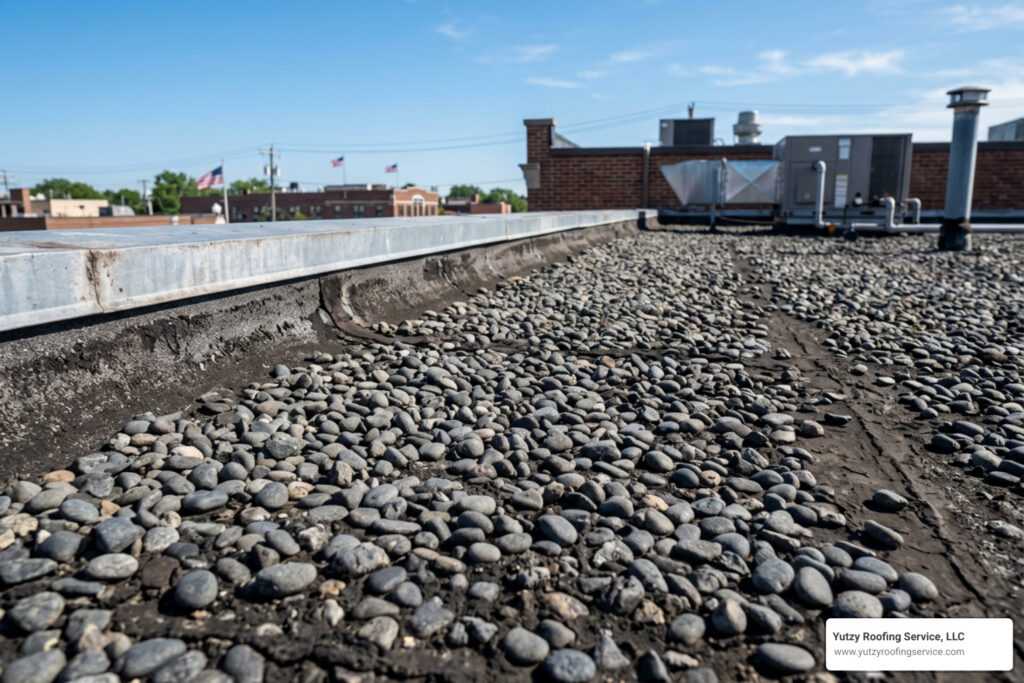
An asphalt and gravel roof — also called a built-up roof (BUR) — is a multi-layer flat roofing system made from alternating sheets of asphalt-saturated felt and hot-applied bitumen, topped with a layer of embedded gravel for protection.
Here’s what you need to know at a glance:
| Topic | Quick Answer |
|---|---|
| What it is | Multi-ply flat roof system using felt, hot asphalt, and gravel surfacing |
| Lifespan | 20 to 30 years with proper maintenance |
| Average cost | $2.50 to $4.50 per sq ft ($7,500–$13,500 for 3,000 sq ft) |
| Fire rating | Class A with proper gravel application |
| Best for | Commercial and industrial flat or low-slope roofs |
| Biggest challenge | Weight, hidden leaks, and maintenance access |
| Restore or replace? | Restoration is often the smarter, lower-cost option |
If you own a commercial building in Wisconsin, there’s a good chance you’re already dealing with one of these roofs. Maybe it’s showing its age — cracked seams, pooling water after a heavy rain, or gravel worn thin in spots. The good news is that most asphalt and gravel roofs are far from done when they start showing those signs. With the right maintenance and, where needed, a targeted restoration, you can add years of reliable service without the cost and disruption of a full tear-off.
I’m Josh Yutzy, and my family has been installing and restoring asphalt and gravel roofs across Wisconsin since 1995. In that time, we’ve seen what keeps these systems performing and what causes them to fail prematurely — and I’ll walk you through all of it in this guide.
Understanding the Asphalt and Gravel Roof: History and Construction
The asphalt and gravel roof isn’t a new invention. In fact, Built-Up (Tar-and-Gravel) Roofing Systems have been a staple of North American commercial architecture since the early 1900s. While modern materials like TPO and EPDM have gained popularity, many building owners in Madison, Wausau, and Green Bay still rely on the “old-school” durability of a BUR system.
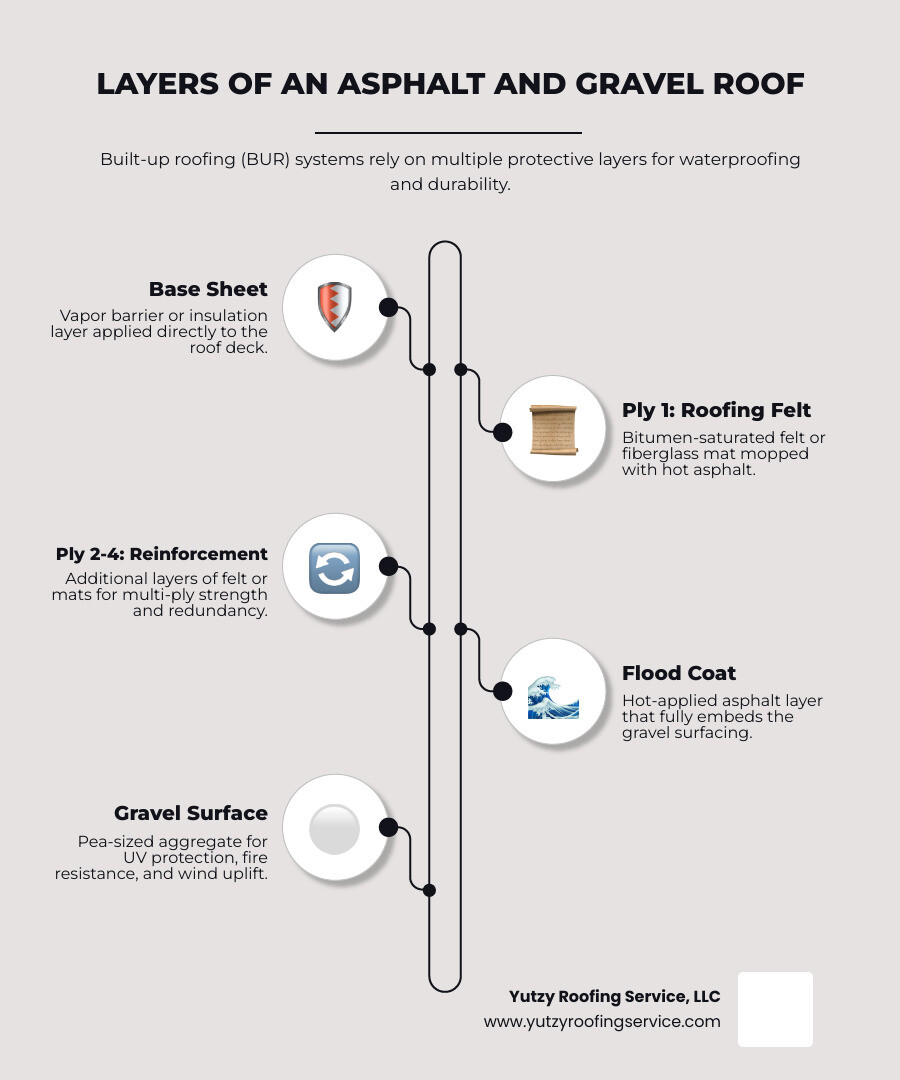
The construction process is a bit like making a multi-layer cake—if the cake were made of waterproof stone and petroleum. It begins with a base sheet, followed by alternating layers (or “plies”) of roofing felt or fiberglass mats. These mats are saturated with bitumen—either hot-applied asphalt or coal tar pitch.
In a standard installation, we typically see 4 to 5 layers of #15 felt paper. Each layer is “mopped” with hot asphalt, creating a cohesive, monolithic waterproofing membrane. This multi-ply reinforcement is what makes the system so robust. Unlike a single-ply roof, where one puncture means a leak, a BUR system has multiple redundant layers. If the top layer is compromised, the ones below it are still there to keep the water out.
Why Gravel? The Science of Protection and Performance
You might have wondered why we dump tons of rocks on top of a perfectly good roof. It’s not just for aesthetics. The gravel surfacing serves several critical technical functions that protect the underlying asphalt membrane.
- UV Protection: Asphalt is essentially a heavy oil. When exposed to the sun’s ultraviolet rays, it “evaporates” or degrades, becoming brittle and prone to cracking. The gravel acts as a 24/7 sunblock, reflecting UV rays and keeping the bitumen flexible.
- Fire Resistance: According to Absolute Roof Solutions, the aggregate—usually pea-sized and about a quarter-inch thick—helps the roof achieve a Class A fire rating. It is very difficult for an external fire to ignite a thick layer of stone.
- Weight and Stability: On older roofs, the gravel provides weight to keep the felt layers from shifting. In ballasted systems, larger stones (1-2 inches) are used to hold down single-ply membranes against wind uplift.
- Heat Management: As noted by WATERPROOF! Magazine insights on ballasted roofs, gravel can help absorb and dissipate heat, preventing the building from becoming an oven in the summer.
- Mechanical Resistance: If a stray branch falls or a technician drops a tool, the gravel takes the impact, protecting the waterproof layers underneath.
Benefits of an Asphalt and Gravel Roof
- Extreme Durability: This is the “tank” of the roofing world. It can handle heavy foot traffic and harsh Wisconsin winters better than almost any other flat roof.
- Cost-Effectiveness: While the initial installation requires labor, the long-term cost-per-year is very competitive.
- Soundproofing: The mass of the asphalt and stone provides excellent acoustic insulation, which is a major plus for schools or office buildings.
- Impact Resistance: It is the most resilient flat roof against hail. While five-inch hail can shred a single-ply membrane, it usually just bounces off the gravel.
The Realities of Ownership: Costs, Lifespan, and Challenges
Owning an asphalt and gravel roof in places like Eau Claire or Fond Du Lac comes with specific financial and structural considerations.
Installation Costs: On average, you can expect to pay between $2.50 and $4.50 per square foot for a new installation. For a typical 3,000-square-foot commercial space, that totals roughly $7,500 to $13,500. Factors like the number of plies, the type of gravel used (white gravel is more reflective and energy-efficient), and the complexity of the roof’s perimeter will influence the final price.
Lifespan: With proactive care, these roofs easily last 20 to 30 years. However, if maintenance is neglected, the lifespan can drop to 10–15 years as the asphalt dries out and the gravel scours away.
The Weight Factor: This is a heavy roof. A standard gravel application requires a minimum of 400 lbs of gravel per “square” (100 square feet), embedded in 60 lbs of asphalt flood coat. Before installing or restoring one, we always ensure the building’s structure can handle the loading.
Common Issues with an Asphalt and Gravel Roof
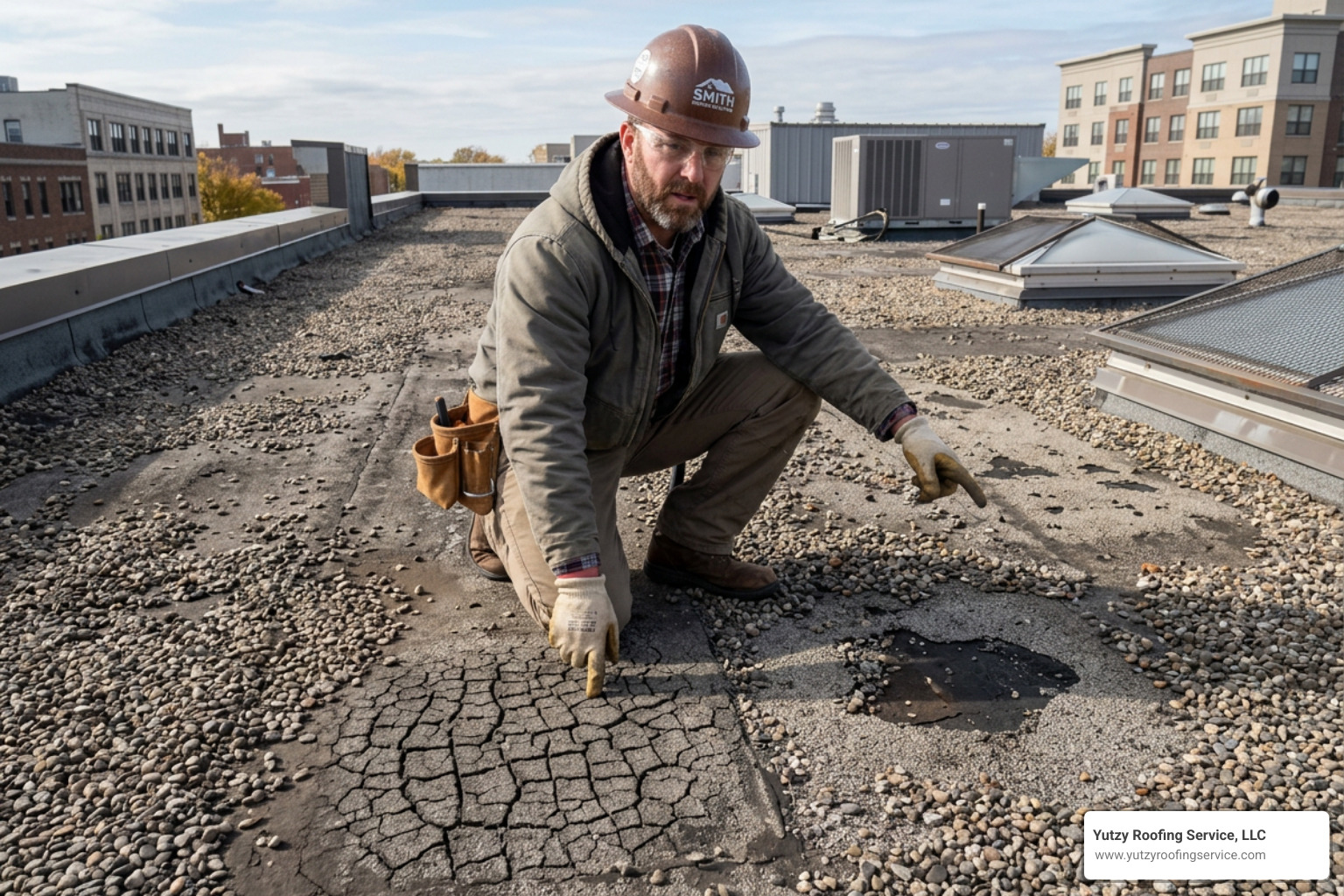
- Alligatoring: This looks exactly like it sounds—the asphalt surface cracks into a pattern resembling alligator skin due to UV exposure and age.
- Ponding Water: Because gravel roofs are flat, they are prone to standing water. If water sits for more than 48 hours, it can begin to degrade the bitumen.
- Hidden Leaks: Finding a leak on a gravel roof is like finding a needle in a haystack. You often have to move large amounts of gravel just to see the membrane.
- Vegetation Growth: If dirt and seeds blow into the gravel, you might find yourself with a rooftop garden. Roots can eventually penetrate the membrane.
- Clogged Drains: Gravel can migrate into drains, causing backups that lead to heavy water weight on the structure.
Proactive Maintenance: How to Keep Your Roof in Peak Condition
You don’t have to lose your mind (or your budget) maintaining an asphalt and gravel roof. The key is consistency. At Yutzy Roofing Service, we recommend a “twice-a-year” inspection schedule—once in the spring after the snow melts and once in the fall before the first freeze.
Step-by-Step Maintenance Checklist:
- Debris Removal: Clear away leaves, branches, and trash. Debris traps moisture and encourages rot.
- Gravel Redistribution: Wind and water can move gravel, leaving “bald spots” where the black asphalt is exposed to the sun. Use a broom to gently push gravel back over these areas.
- Drain Cleaning: Ensure all scuppers and drains are clear. This is the single most important task to prevent structural collapse from water weight.
- Inspect Flashing: Check the metal edges and transitions around chimneys or HVAC units. Most leaks start here, not in the middle of the roof.
- Soft-Soled Shoes: If you must walk on the roof, wear soft-soled shoes to avoid grinding the gravel into the membrane.
For more detailed tips, you can check out our guide on how-to-maintain-a-tar-and-gravel-roof. Keeping detailed maintenance records is also vital for insurance claims and property valuation. You can find more specific articles under our tag/tar-and-gravel-roof section.
Restoration vs. Replacement: Modern Solutions for Aging Systems
When an asphalt and gravel roof reaches the end of its primary life, many owners think their only option is a messy, expensive tear-off. But there’s a better way: Asphalt Emulsion Restoration.
Restoration involves cleaning off the loose gravel and applying a thick “flood coat” of asphalt emulsion. We typically use 18 to 30 gallons per 100 square feet. Because emulsion is about 40-45% solids, it fills in the “alligatoring” cracks and creates a new, seamless waterproofing layer.
We then reinforce this with polyester fabric plies and finish it with a reflective acrylic topcoat. This transforms your old, dark, heavy roof into a “cool roof” that reflects up to 85% of solar heat.
When to Restore Your Asphalt and Gravel Roof
- The membrane is still intact: If the underlying felts aren’t soaked with water, restoration is a go.
- Budget constraints: Restoration typically costs half as much as a full replacement.
- Energy efficiency goals: You want to lower your cooling bills in the summer.
- Sustainability: Restoration keeps tons of old roofing material out of Wisconsin landfills.
At Yutzy Roofing Service, our restoration systems often come with up to an 18-year non-prorated renewable warranty. It’s a way to get a “new” roof performance without the “new” roof price tag.
Frequently Asked Questions about Asphalt and Gravel Roofs
Can you walk on a tar and gravel roof?
Yes, you can walk on it, but you should be careful. The gravel provides a slip-resistant surface, but excessive foot traffic can grind the stones into the asphalt, causing punctures. If you have HVAC units that require frequent servicing, we recommend installing dedicated walkway pads to protect the membrane.
How much does it cost to repair a gravel roof?
Minor repairs, such as patching a small leak or resealing a seam, usually cost between $300 and $600. Larger repairs that involve removing sections of gravel and replacing saturated insulation can run between $1,000 and $2,500. If more than 25% of the roof is damaged, restoration or replacement is usually more cost-effective.
Is gravel the same as ballast?
Not exactly. While both use stone, “gravel” on a BUR system is usually small (pea-sized) and embedded directly into the hot asphalt flood coat. “Ballast” refers to larger stones (1-2 inches) that are “loose-laid” over a single-ply membrane like EPDM to hold it down. Ballast is easier to move for repairs, but it doesn’t provide the same monolithic waterproofing as an embedded gravel BUR.
Conclusion
The asphalt and gravel roof remains one of the most reliable choices for commercial buildings in the Midwest. Its ability to withstand hail, fire, and extreme temperature swings is legendary. However, it isn’t a “set it and forget it” system. It requires an owner who understands the value of a quick sweep and a professional eye.
Whether you are in Marshfield, Appleton, or Mankato, Yutzy Roofing Service, LLC is here to help you navigate the complexities of your flat roof. From simple maintenance to high-performance asphalt emulsion restorations, our goal is to provide sustainable, long-term protection for your investment.
Don’t wait for a ceiling tile to drop before you check on your roof. Learn how to maintain a tar and gravel roof today and keep your building—and your peace of mind—perfectly dry.
DOWNLOAD NOW DOWNLOAD OUR GUIDE TOTOP 7 ROOF PROBLEMS AND HOW TO PERMANENTLY SOLVE THEMDOWNLOAD NOW
