
Is Fixing a Roof Leak Yourself Actually Worth It?
Can I fix a roof leak myself? Yes — but only for certain types of damage. Here’s a quick breakdown:
| Situation | DIY Feasible? |
|---|---|
| Cracked or missing asphalt shingles | Yes |
| Loose or damaged flashing | Yes, with care |
| Clogged gutters or debris dams | Yes |
| Failed vent boot or pipe collar | Yes, minor skill required |
| Widespread leaks or structural rot | No — call a pro |
| Metal, TPO, or flat roof membranes | No — specialized tools needed |
| Steep roof pitch (over 4:12) | No — serious fall risk |
The honest answer is that some roof leaks are simple weekend fixes. Others will make things worse if you attempt them yourself.
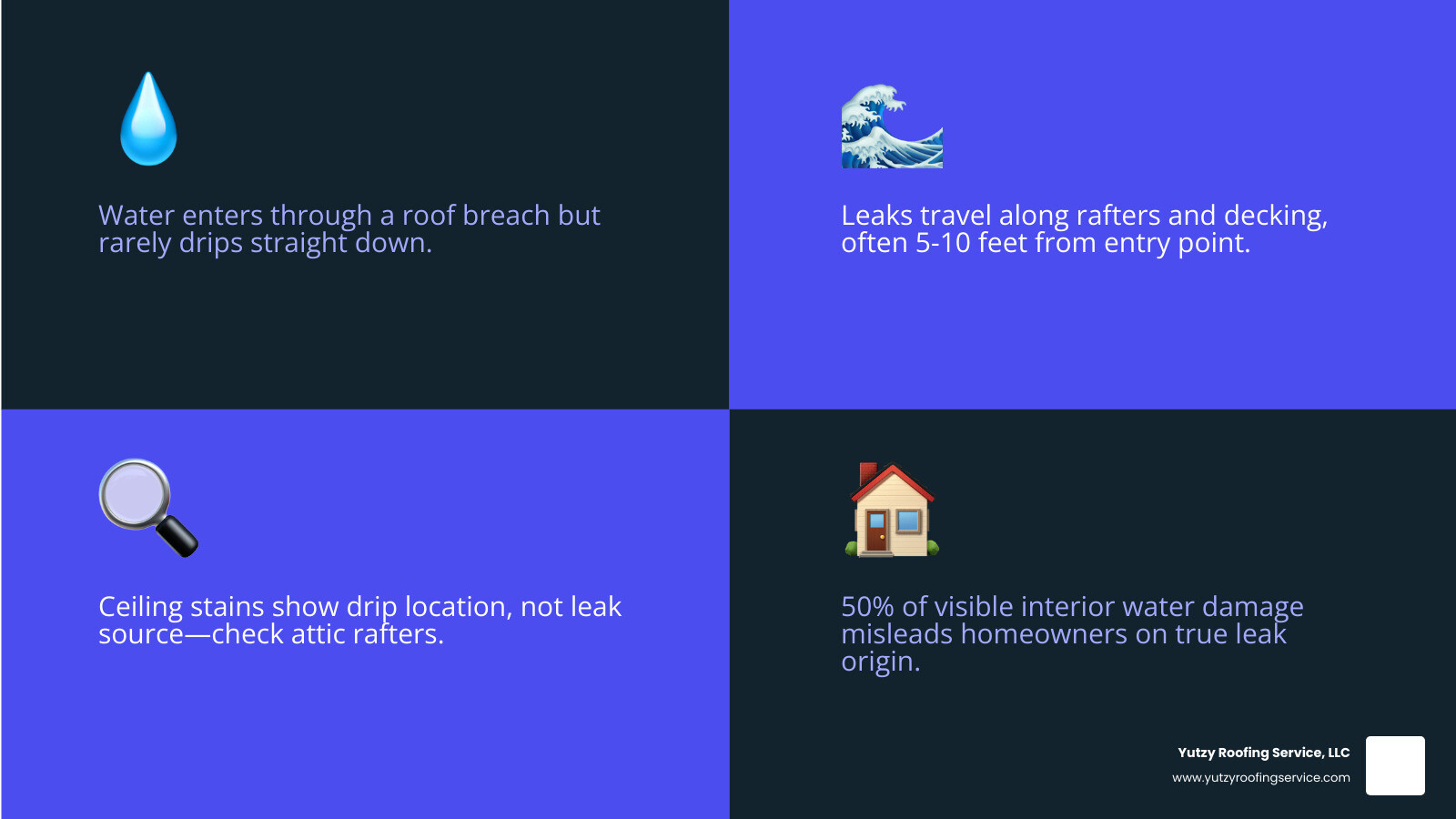
One thing that trips up most homeowners: the drip you see on your ceiling is rarely directly below where the water got in. Water travels along rafters and decking before it finally drops — sometimes several feet from the actual breach. That makes finding the real source the hardest part of the whole job.
I’m Josh Yutzy of Yutzy Roofing Service, LLC — a family roofing business serving Wisconsin since 1995. After nearly three decades of repairing everything from storm-damaged asphalt shingles to commercial flat roofs, I’ve seen what happens when homeowners ask “can I fix a roof leak myself?” and then tackle the wrong job. In the sections below, I’ll walk you through exactly what’s safe to DIY, what isn’t, and how to do it right.
Can I Fix a Roof Leak Myself Safely?
Before you grab your ladder, we need to talk about the “S” word: Safety. It is the most critical factor in deciding whether you should attempt a repair. According to OSHA, falls are the leading cause of injury in construction, and those risks apply to homeowners just as much as pros.
Skill and Risk Assessment
Ask yourself: Are you comfortable with heights? Do you have the right equipment? If your roof has a steep pitch (anything over a 4:12 slope, which means it rises 4 inches for every 12 inches of horizontal run), the risk of slipping increases exponentially. We always recommend that homeowners stay off steep or wet roofs entirely.
Essential Safety Gear
If you decide to proceed, you need more than just a “can-do” attitude. You need:
- Proper Footwear: Wear soft-soled, rubber boots or sneakers with excellent traction. Keep the soles free of mud or grit.
- A Sturdy Ladder: Ensure your ladder extends at least three feet above the roof edge and is placed on stable, level ground.
- A Helper: Never work alone. Have a friend or family member steady the ladder and keep an eye on you. They can also send tools up in a bucket on a rope so you don’t have to carry them while climbing.
- Fall Protection: For anything beyond a very low-slope porch roof, consider a Personal Fall Arrest System (PFAS). You can find more details on safety regulations for preventing falling injuries to ensure you are meeting professional standards.
Weather Conditions
Only work on a dry, calm day. Wind and moisture are your enemies on a roof. For more on the common pitfalls of DIY work, check out our guide on Staying Dry: How to Fix a Roof Leak and Mistakes to Avoid.

How to Locate the Source of a Persistent Leak
Finding a leak is often harder than fixing it. Water is sneaky; it follows the path of least resistance. It might enter through a cracked shingle near the peak, run down a rafter, and finally drip onto your ceiling ten feet away.
The Attic Inspection
Your first stop should be the attic. Grab a powerful flashlight and look for:
- Wet Spots or Stains: Look at the underside of the roof sheathing and along the rafters.
- Mold or Mildew: Even if it’s not currently raining, black or white fuzzy spots indicate a chronic moisture problem.
- “Shiners”: These are nails that missed the rafter. In cold Wisconsin winters, frost forms on these nails; when it warms up, they drip, mimicking a roof leak.
The Garden Hose Test
If the attic doesn’t reveal the culprit, it’s time for the hose test. You’ll need a helper inside the attic with a flashlight while you are on the roof with a garden hose.
- Start at the lowest point of the suspected area.
- Spray water slowly over a small section (like a chimney or a vent).
- Wait several minutes for the water to soak through.
- If no leak appears, move up the roof slightly and repeat.
Focus your search on “penetrations”—places where things poke through the roof, like vent boots, chimneys, skylights, and valleys where two roof planes meet. For a deeper dive into detection, see Your Guide to Roof Leak Repairs: How to Spot a Leaking Roof.
Step-by-Step Guide to Simple DIY Repairs
If you’ve found the leak and it’s a minor issue with an asphalt shingle roof, you might be able to handle it yourself. Here is what you will need:
| Tool/Material | Purpose |
|---|---|
| Roofing Sealant | Waterproofing cracks and nail heads |
| Pry Bar (Flat Bar) | Lifting shingles and removing nails |
| Galvanized Nails | Securing new shingles or flashing |
| Utility Knife | Cutting shingles to size |
| Hammer | Driving roofing nails |
| Roofing Cement | Heavy-duty adhesive for shingles and flashing |
Replacing Damaged Asphalt Shingles
Shingles can crack, curl, or blow off during high winds.
- Remove the Damage: Use your flat bar to carefully break the sealant strip on the damaged shingle and the one above it. Pry up the nails.
- Slide in the New Shingle: Slide the replacement shingle into place. You may need to trim the back corners slightly with a utility knife to make it fit easily.
- Secure: Drive new galvanized nails into the designated nail line.
- Seal: Apply a small dab of roofing cement over the nail heads and under the edges of the shingle to reseal it.
For more techniques, read our post on 6 Ways to Fix Your Leaking Roof.
How to Fix a Roof Leak Myself by Sealing Flashing
Flashing is the metal sheeting used to direct water away from joints (like chimneys or dormers). Over time, the sealant around flashing can dry out and crack.
- Inspect: Look for rust or gaps where the flashing meets the brick or siding.
- Clean: Use a wire brush to remove old, brittle caulk or rust.
- Reseal: Use a caulking gun to apply a high-quality roofing sealant (not latex caulk!) to the gaps.
- Ventilation Check: Leaks aren’t always from holes; sometimes they are from condensation. You can learn about preventing ice dams with proper attic ventilation to keep your roof deck dry year-round.
Repairing Vent Boots and Pipe Collars
The rubber “boot” around your plumbing vent pipes is a common failure point. UV rays from the sun cause the rubber to rot and crack.
- Temporary Fix: You can sometimes apply a thick bead of roofing sealant around the base of the pipe.
- Permanent Fix: It’s usually best to replace the entire boot. This involves prying up the shingles around the pipe, sliding the old boot off, and installing a new one. Ensure the shingles overlap the top and sides of the boot’s flange, while the bottom of the flange stays on top of the shingles to allow water to run off.
When DIY Isn’t Enough: Recognizing Serious Damage
Sometimes, the answer to “can i fix a roof leak myself” is a resounding “No.” If you see any of the following, it’s time to call the professionals:
- Structural Rot: If the wood sheathing or rafters feel soft or “spongy” when you step on them, the wood is rotting. This is a safety hazard and requires structural repair.
- Widespread Leaks: If you have multiple leaks in different areas, your roofing material has likely reached the end of its lifespan.
- Commercial Systems: Flat roofs and commercial buildings use specialized materials like EPDM or TPO. These require heat-welding or specific adhesives that are not available at your local hardware store.
For flat roofs, the repair process is entirely different from shingles. You can learn more about this specialized work in our guide: Flat Roof Leak Repair: How Does It Work.
Why I Can’t Fix a Roof Leak Myself on Metal or Flat Roofs
At Yutzy Roofing Service, we specialize in commercial and metal roof restoration. These systems are durable, but they are not DIY-friendly for several reasons:
- Specialized Tools: We use hot-air welders for TPO patches and high-pressure sprayers for foam coatings.
- Thermal Expansion: Metal roofs expand and contract. If you secure a patch incorrectly, the movement of the roof will tear the repair apart within a single season.
- Warranty Integrity: DIY repairs often void the manufacturer’s warranty. Our systems come with up to 18-year non-prorated renewable warranties, giving you long-term peace of mind that a DIY patch simply can’t offer.
If you are dealing with a metal roof, check out Your Guide to Metal Roof Leak Repair.
Frequently Asked Questions about DIY Roofing
How much does a DIY roof repair cost vs. hiring a pro?
A DIY repair for a few shingles or a vent boot might cost you between $100 and $300 in materials and tools. In contrast, a professional minor repair typically ranges from $400 to $1,000. While DIY saves money upfront, the “cost” of a mistake—like falling or causing more water damage—can be thousands of dollars. Professional repairs also come with a warranty, which has significant value if the leak returns.
What is the best temporary fix for a leaking roof?
If it’s currently raining and you can’t get a roofer out immediately, emergency tarping is your best bet.
- Use a heavy-duty woven tarp.
- Extend the tarp over the ridge of the roof so water can’t get under the top edge.
- Secure it with 2×4 wooden strips screwed into the roof (or use sandbags if you don’t want to add more holes). Note: Silicone caulk or “Flex Seal” sprays are okay for a few days, but they become brittle and very difficult for a professional to remove later.
How do I handle interior water damage and mold?
Once the roof is fixed, you must address the inside.
- Dry it out: Use box fans and dehumidifiers in the attic and the affected room.
- Prevent Mold: Spray affected wood with a white vinegar solution. Vinegar penetrates the wood to kill mold at the root, whereas bleach only kills surface mold.
- Replace Drywall: If the ceiling is sagging or the drywall has disintegrated, it must be cut out and replaced to prevent hidden mold growth.
Conclusion
Taking care of your roof is a mix of simple maintenance and knowing when to step back. You can prevent 90% of leaks by keeping your gutters clean, trimming tree branches at least three feet away from the shingles, and doing a quick visual inspection twice a year.
However, when the damage is widespread or you’re dealing with a flat or metal commercial system, the risks of DIY far outweigh the rewards. At Yutzy Roofing Service, LLC, we’ve spent 30 years perfecting roof restoration across Wisconsin and Minnesota—from Marshfield and Wausau to Madison and Mankato. We specialize in spray foam coatings and EPDM repairs that provide a “second skin” for your building, backed by our industry-leading 18-year non-prorated renewable warranty.
Don’t risk a fall or a failed repair. If you’re in Appleton, Eau Claire, Fond Du Lac, Green Bay, or Rochester, give us a call. We’ll make sure your roof stays where it belongs: over your head and leak-free.
