Madison Commercial Roofing Services That Protect Business Operations
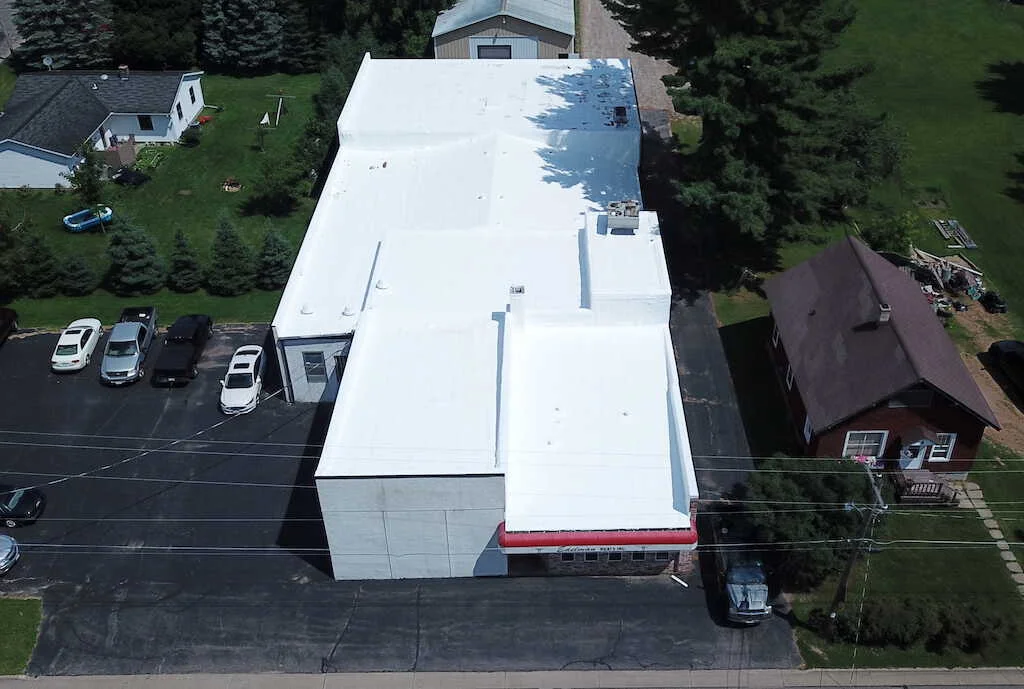
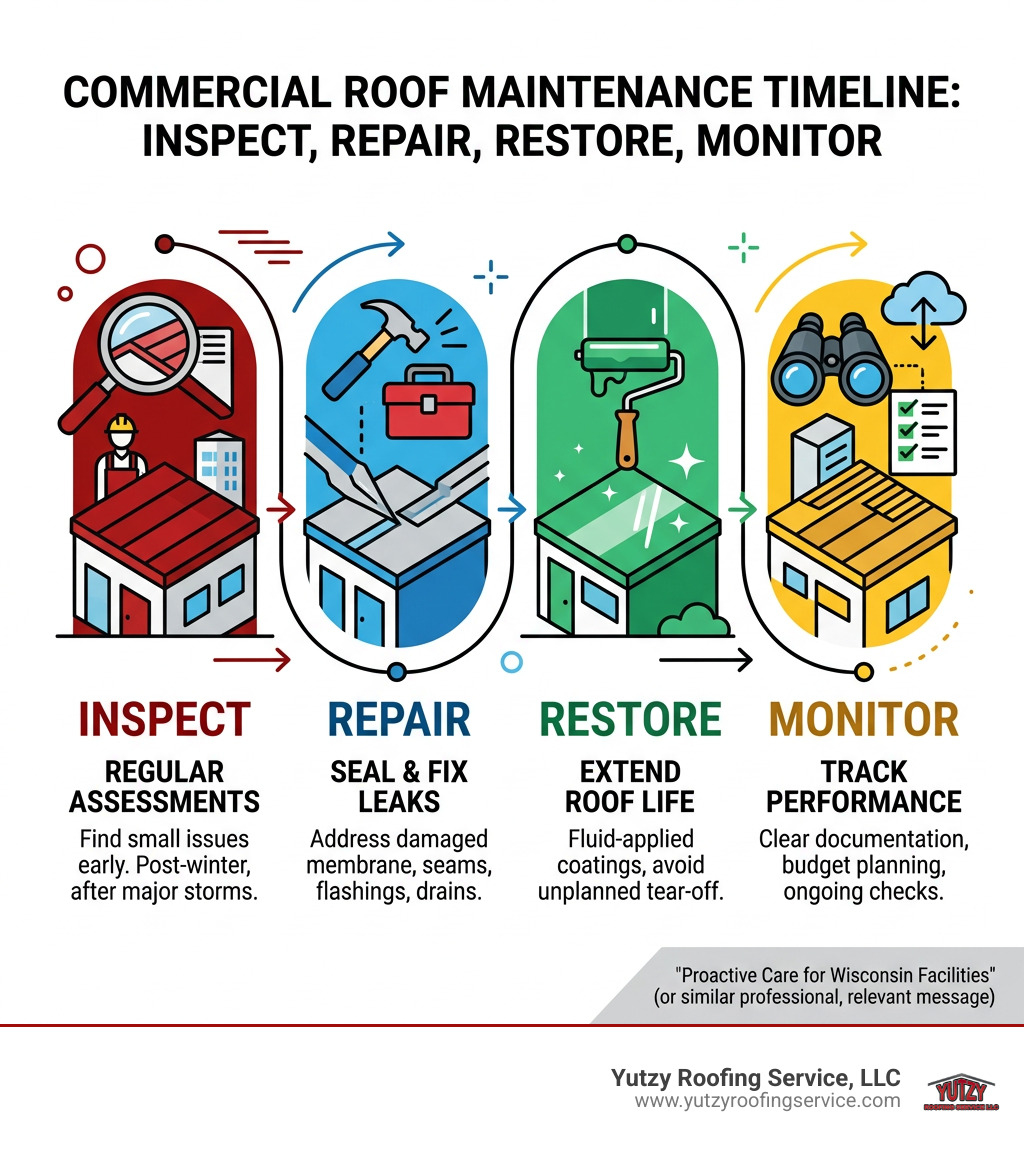
The best Madison commercial roofing services combine routine inspections, leak repair, drainage care, roof restoration, and protective coatings. For Wisconsin facilities, the practical goal is simple: find small problems early, keep water out, improve roof performance where possible, and avoid an unplanned tear-off that can disrupt operations.
A strong commercial maintenance plan should include:
- Scheduled inspections after winter and major storms
- Repairs to seams, penetrations, flashing, and damaged membrane areas
- Drain and ponding-water checks for flat or low-slope roofs
- Restoration options, such as fluid-applied coatings, when the existing roof is a good candidate
- Clear documentation that helps owners plan repairs and future budgets
Madison businesses face snow loads, freeze-thaw cycles, summer heat, wind-driven rain, and standing water. The right roofing partner adapts the work to the building, whether it is a small retail property that needs cost control or a hospital that needs low-disruption scheduling and careful jobsite practices.
I am Josh Yutzy of Yutzy Roofing Service, LLC, a family-owned roofing company that has served Wisconsin since 1995. Our experience with Madison commercial roofing services focuses on durable materials, practical solutions, and labor and material warranties of up to 20 years.
Simple guide to madison commercial roofing services:
Essential Madison Commercial Roofing Services for Facility Longevity
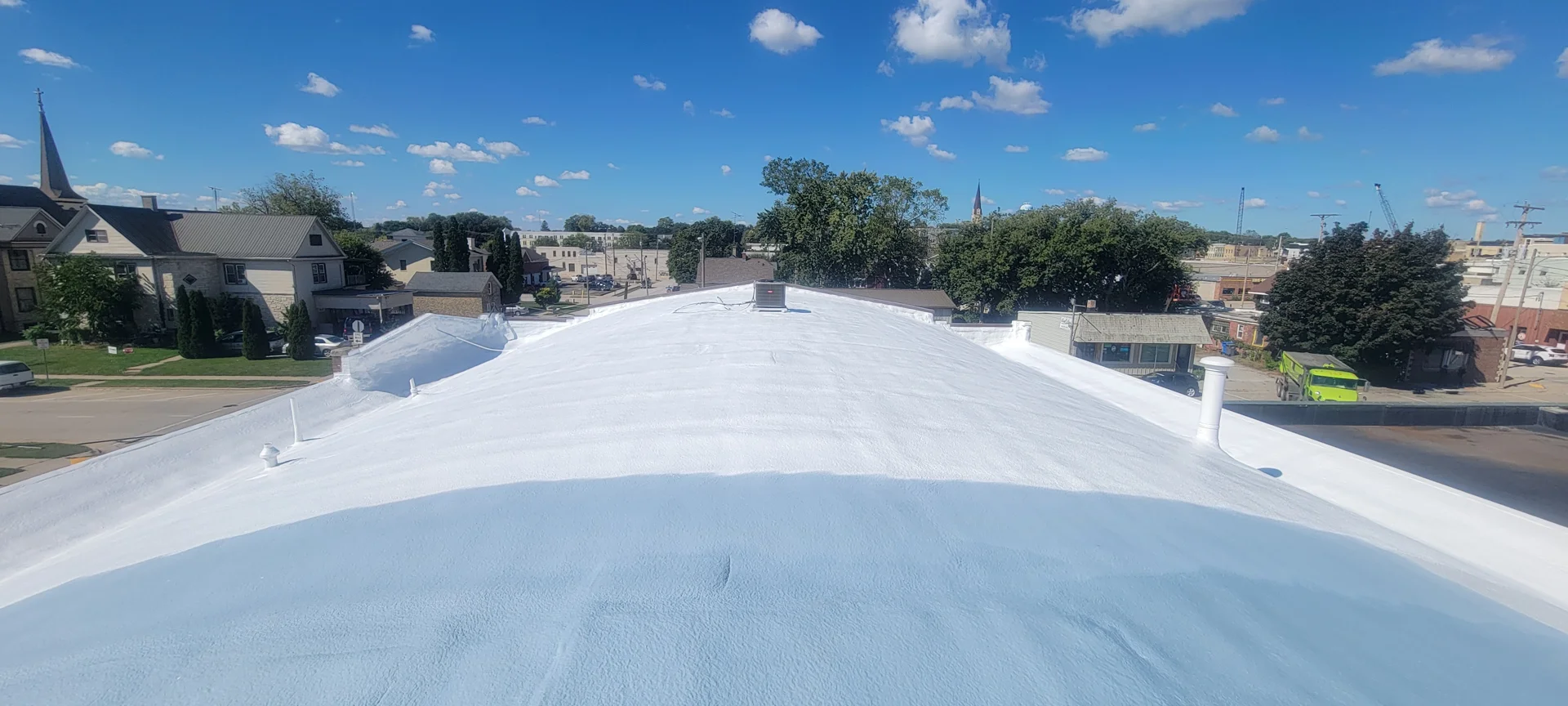
Every commercial facility in Dane County represents a significant capital investment. Preserving that investment requires shifting from reactive emergency patching to proactive asset stewardship. Protecting commercial industrial buildings, retail strips, and warehouses starts with stopping water before it ever contacts the decking or structural framing.
Investing in top-tier commercial roof coatings transforms an aging, weathered substrate into a monolithically sealed shield. These liquid-applied barriers cure into a seamless rubber-like layer that locks out rain and prevents common points of failure around parapet walls, expansion joints, and pipe flashings. In addition to waterproofing, reflective coatings bounce harsh solar radiation away from your facility during hot Wisconsin summers, cutting peak roof temperatures dramatically and trimming utility bills.
Preventative Inspections and Emergency Leak Detection
Catching an active penetration before it drips onto sensitive equipment, inventory, or tenant spaces is critical. Routine moisture surveys and high-resolution thermal imaging uncover subsurface insulation saturation that remains invisible to the naked eye. Moisture trapped beneath single-ply systems acts like a hidden sponge, slowly rotting wood or rusting steel decking from within.
When sudden severe storms hit, fast intervention prevents extensive collateral damage. Knowing how to manage flat roof leak repairs ensures field seams, perimeter edges, and penetrations are resealed with industrial-grade compounds rather than temporary fixes. Systematic drainage audits further guarantee that internal scuppers, gutters, and downspouts remain completely clear of debris so water drains freely.
Specialized Madison Commercial Roofing Services for EPDM and Metal Systems
Different substrates demand targeted engineering approaches. Facilities protected by single-ply rubber benefit immensely from dedicated EPDM roof restoration strategies. Over years of thermal cycling, factory seams can pull apart, and flashings around HVAC units shrink. We reinforce these critical weak points with specialized self-adhering tapes, primer agents, and elastomeric topcoats that restore factory-level elasticity.
For aging industrial steel structures, our focused metal roof restoration halts oxidization in its tracks. Fasteners often back out or lose their rubber grommets due to constant expansion and contraction. We replace or encapsulate thousands of exposed fasteners, seal horizontal and vertical lap seams, treat surface rust with advanced inhibitors, and coat the entire assembly with a waterproof elastomeric finish that extends the roof’s service life for decades.
Fluid-Applied Membranes and Insulation Upgrades
Older commercial facilities frequently suffer from inadequate baseline insulation, driving heating costs through the roof during harsh Midwest winters. Utilizing spray foam commercial roofing delivers unmatched thermal efficiency by establishing a continuous, self-flashing layer without thermal shorts.
Sprayed polyurethane foam expands quickly into place, sealing small gaps around conduits and skylights while adding substantial R-value per inch of thickness. Once topped with a protective UV-resistant elastomeric barrier, this assembly eliminates energy waste, creates positive drainage on low-slope decks, and creates an impenetrable barrier against wind uplift and torrential rains.
Overcoming Severe Climate and Structural Challenges in Dane County
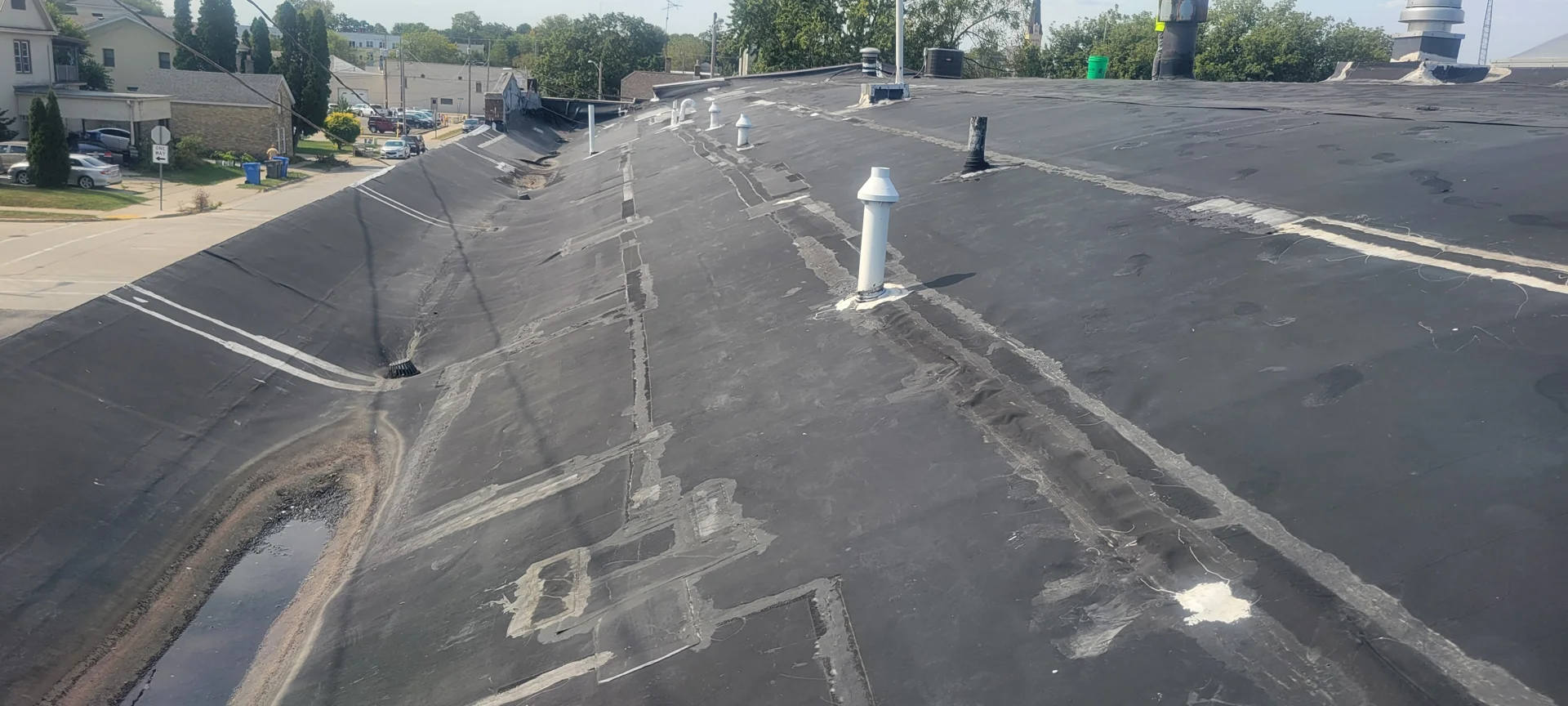
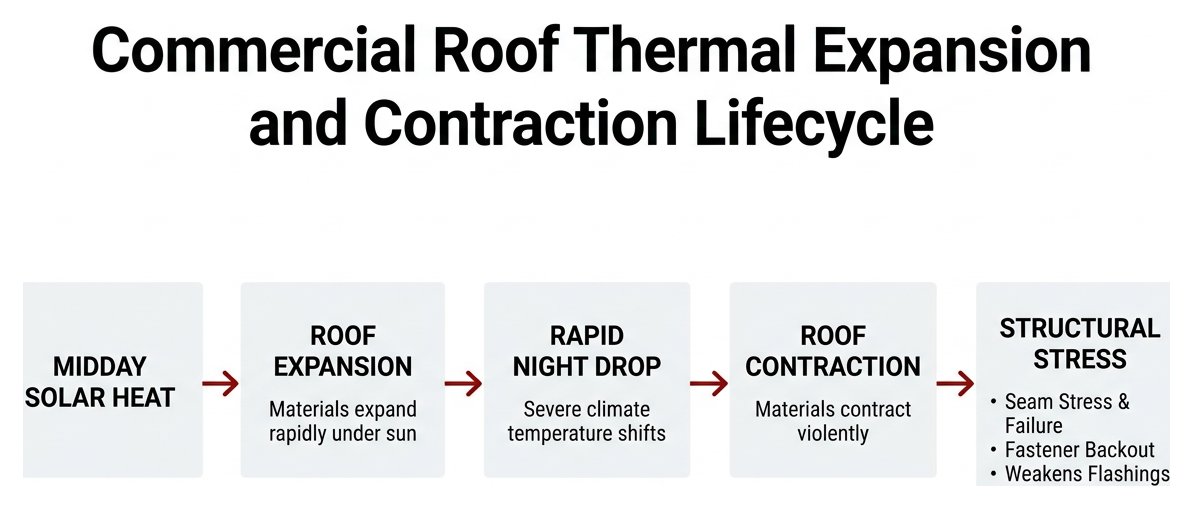
Commercial structures throughout Madison experience intense seasonal swings. From sub-zero winter blasts sweeping across Lake Mendota to intense summer heat waves, roofing materials endure extreme thermal shock every year. Materials expand rapidly under midday sun and contract violently when temperatures drop overnight, stressing field seams and mechanical flashings.
Protecting Commercial Flat Roofs Against Heavy Weather
Heavy snowfall, drifting ice, and repeated freeze-thaw cycles present major risks to flat and low-slope facilities. Ice dams can trap meltwater, forcing standing water into microscopic seam openings. Unchecked ponding water also adds immense dead load onto structural joists, creating internal safety hazards.
Executing expert commercial roof maintenance minimizes these weather-related risks. Regular drainage channel clearing, slope adjustments around rooftop equipment, and proactive reinforcement of high-stress zones keep water moving toward exterior downspouts, preventing structural deflection and interior ceiling damage.
Tailoring Madison Commercial Roofing Services for Small Businesses and Hospitals
Operational requirements vary across commercial environments. A community hospital, outpatient surgical center, or healthcare facility demands strict infection control, zero-odor materials, and whisper-quiet installation methods. Fumes or airborne dust cannot enter intake dampers or patient wards.
Small local businesses, retail spaces, and auto garages require flexible phasing that keeps parking areas open, prevents customer disruptions, and respects strict operating budgets. Adapting application schedules around quiet hours, weekends, or specific shift changes ensures full operational continuity while projects are underway.
Strategic Operational and Financial Benefits for Facility Managers
Facility directors must balance asset performance against strict operational budgets. Choosing restoration over conventional full-system replacement yields major financial and operational advantages.
| Evaluation Metric | Full Commercial Tear-Off | Fluid-Applied Roof Restoration |
|---|---|---|
| Material Cost | High (New boards, membranes, fasteners) | Moderate (High-performance coatings & primers) |
| Labor & Disposal Costs | Extreme (Demolition, dumpsters, landfill fees) | Minimal (Non-invasive surface preparation) |
| Business Disruption | High (Noise, open decking, dust, odors) | Minimal (Applied quietly with low VOCs) |
| Tax Accounting | Capital Expense (Depreciated over decades) | Maintenance Expense (Immediate write-off potential) |
| Environmental Impact | Tons of debris sent to local landfills | Zero roofing debris added to landfills |
| Renewable Warranty | Rare (Requires full replacement cycle) | Available (Up to 18-year renewable terms) |
Minimizing Downtime and Facility Disruption
Traditional roof tear-offs generate disruptive structural noise, produce heavy dust, and expose sensitive building interiors to unpredictable weather while decking lies open. For precision manufacturing centers, medical clinics, or busy retail centers, shutting down operations for weeks is financially impossible.
Liquid-applied restorations install directly over existing structurally sound roof membranes without invasive demolition. The specialized equipment runs quietly, coatings are formulated with low VOC ratings to eliminate noxious odors, and the work can be completed in stages, letting your business run smoothly without interruptions.
Maximizing ROI with Commercial Roof Restoration
Opting for comprehensive commercial roof restoration provides measurable financial returns. Because the underlying insulation and substrate remain in place, facilities save thousands of dollars on labor and landfill tipping fees.

Furthermore, restoration projects qualify as facility maintenance expenses under IRS Section 179 rules, allowing commercial property owners to fully expense the project in the year it was completed rather than depreciating it over nearly four decades. Backed by non-prorated renewable warranties of up to 18 years, commercial restoration delivers long-term peace of mind and maximum return on investment.
Streamlined Scheduling and Preventative Maintenance Protocols
Managing roof maintenance across one or several commercial properties requires clear, structured communication. A reliable service model takes the guesswork out of facility care through scheduled checkpoints and detailed reports.
Transparent Facility Roof Audits and Assessments
Every professional roofing project starts with a detailed physical and digital assessment:
- Visual and Core Analysis: Field technicians assess field membrane pliability, check seam integrity, and take core samples to confirm insulation dryness.
- Infrared Thermal Scans: Advanced cameras pinpoint trapped subsurface moisture without requiring invasive cuts.
- Photographic Documentation: Property owners receive clear photographic records detailing flashings, drain bowls, and critical transition zones.
- Actionable Estimates: Facility managers receive clear, line-item estimates outlining maintenance, repair, or full restoration options.
Structured Annual Maintenance Plans
Enrolling in an annual maintenance agreement protects your commercial roof year-round. Our scheduled bi-annual visits focus on spring checkups to assess winter freeze damage and autumn preparations before sub-zero temperatures hit.
These service visits cover cleaning debris from drains, re-caulking mechanical flashings, resealing deteriorated pitch pockets, and making minor membrane patches. By addressing minor wear immediately, building owners protect their warranty coverage and extend the working life of their roofing systems indefinitely.
Frequently Asked Questions About Madison Commercial Roofing
How often should Madison commercial facilities schedule roof inspections?
Commercial roofs in Wisconsin should be formally inspected twice a year: once in the spring to evaluate winter stress and once in the late autumn to prepare for freezing conditions. Extra inspections are recommended right after severe hail, high winds, or heavy snowstorms.
Why is commercial roof restoration preferred over roof replacement?
Restoration costs roughly half as much as a full tear-off, requires no invasive demolition, creates no landfill waste, and can be deducted immediately on taxes as a maintenance expense. High-performance coatings restore waterproofing and provide renewable warranties for up to 18 years.
How do roofing contractors accommodate sensitive healthcare and medical facilities?
Contractors use low-VOC or zero-odor coating systems, coordinate staging away from fresh-air HVAC intakes, employ quiet equipment, and schedule noisy prep work outside normal patient hours to ensure clean air quality and zero operational disruptions.
Conclusion
Sustaining a leak-free commercial facility in Dane County requires a proactive partner who understands local weather challenges, commercial substrates, and cost-effective restoration methods. Prioritizing routine maintenance, seamless coatings, and detailed inspections protects your operational budget and eliminates disruptive surprises.
When you need trusted, professional guidance from an experienced family-owned team, turn to dedicated commercial roofers near me in Madison, WI to secure your property for decades to come.
