5 Indicators You Need an Emergency Roof Repair
When you are managing a commercial facility in places like Wausau, WI, or Rochester, MN, the weather doesn’t always play nice. Between heavy snow loads and high-wind summer storms, your roof takes a beating. But how do you distinguish between a “fix it next week” leak and a “call right now” catastrophe?
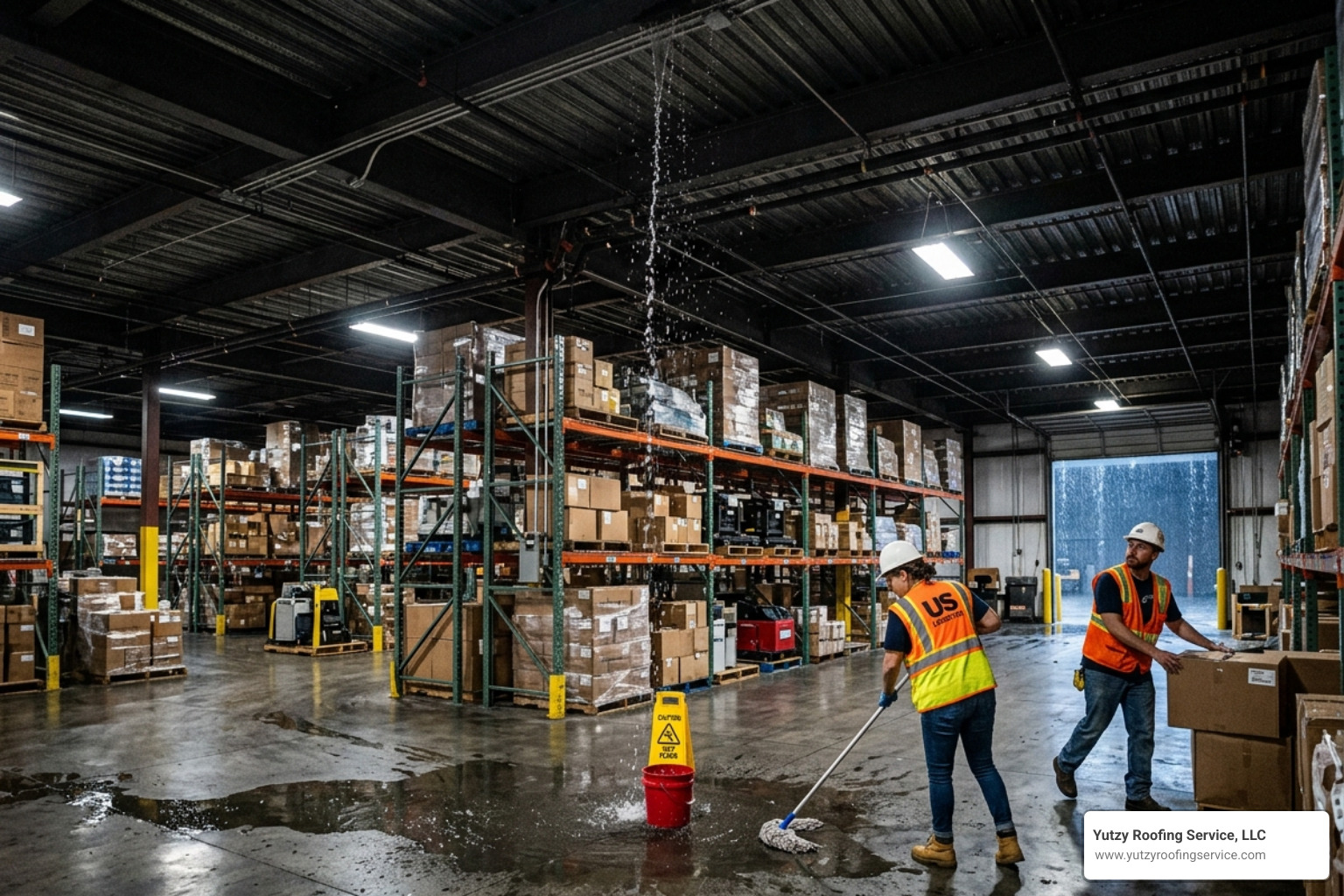
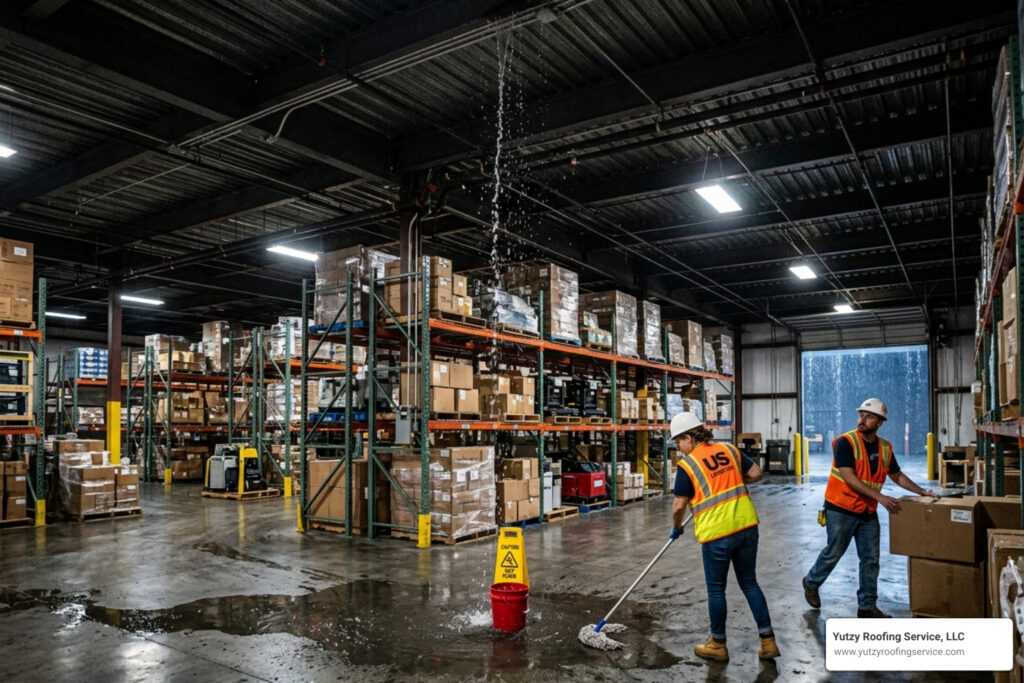
In our experience at Yutzy Roofing Service, the difference usually comes down to the risk of secondary damage. If a leak is dripping onto a warehouse floor where it can be mopped up, that’s one thing. If it’s pouring onto a $50,000 CNC machine or an electrical panel, you are in the middle of a bona fide emergency roof repair situation.
Signs of an Immediate Emergency Roof Repair
The most obvious sign is active water intrusion. If you see water spreading across a ceiling or running down an interior wall, the clock is ticking. Research from the EPA shows that mold can begin to colonize in as little as 24 to 48 hours after water exposure. In a commercial setting, this isn’t just a health hazard; it’s a massive liability.
You should consider it an immediate emergency if:
- Water is near electricity: This is a fire hazard. If water is dripping near fixtures, turn off the power to that zone immediately.
- Multiple leak points appear at once: This suggests a widespread failure of the membrane or a structural shift.
- Equipment is at risk: Protecting your inventory and machinery is often the primary reason for a rapid response.
Knowing what to do about a leaky commercial roof in those first few minutes can save you thousands. We often tell our clients in Madison and Appleton that the “first hour” decisions are the most expensive ones you’ll ever make.
When to Schedule Emergency Roof Repair for Commercial Facilities
Sometimes the emergency isn’t a leak you can see, but a structural threat you can sense. For commercial buildings with flat or low-slope roofs, “ponding water” is a major red flag. If that water isn’t draining, the weight can cause the roof deck to bow.
Structural sagging or decking failure is a critical indicator. If you notice a dip in the roofline from the ground, or if interior ceiling tiles are bulging downward, the structural integrity of the building may be compromised. This is especially common after heavy Wisconsin snowfalls or when ice dams form, trapping water behind a wall of ice.
Understanding commercial roof repair: what to know involves recognizing that commercial systems like EPDM, TPO, or metal restoration require specialized tools. You can’t just throw a hardware-store tarp over a 20,000-square-foot flat roof and hope for the best. You need a team that understands how to stabilize the specific material of your facility.
Immediate Steps to Take During a Roofing Crisis
When disaster strikes-whether it’s a microburst in Green Bay or a fallen limb in Mankato-your first priority is safety. Never send maintenance staff up onto a roof during a storm or high winds. According to OSHA safety standards, a wet commercial roof is incredibly slick, and wind gusts can easily knock a person off balance.
Mitigating Interior Damage
While you wait for our 24/7 response team to arrive, focus on what you can control inside the building.
- Relocate high-value assets: Move electronics, palletized stock, and sensitive documents.
- Contain the flow: Use heavy-duty bins or “leak diverters” (large plastic funnels designed for commercial ceilings) to direct water into drains or containers.
- Puncture “bubbles”: If you see a bulge in a drywall ceiling, carefully poking a small hole in the center with a screwdriver can release the trapped water, preventing a much larger, heavier section of the ceiling from collapsing.
If you are currently facing this, check out our guide on what to do if your commercial roof is leaking for a step-by-step containment plan.
Professional Stabilization and Tarping
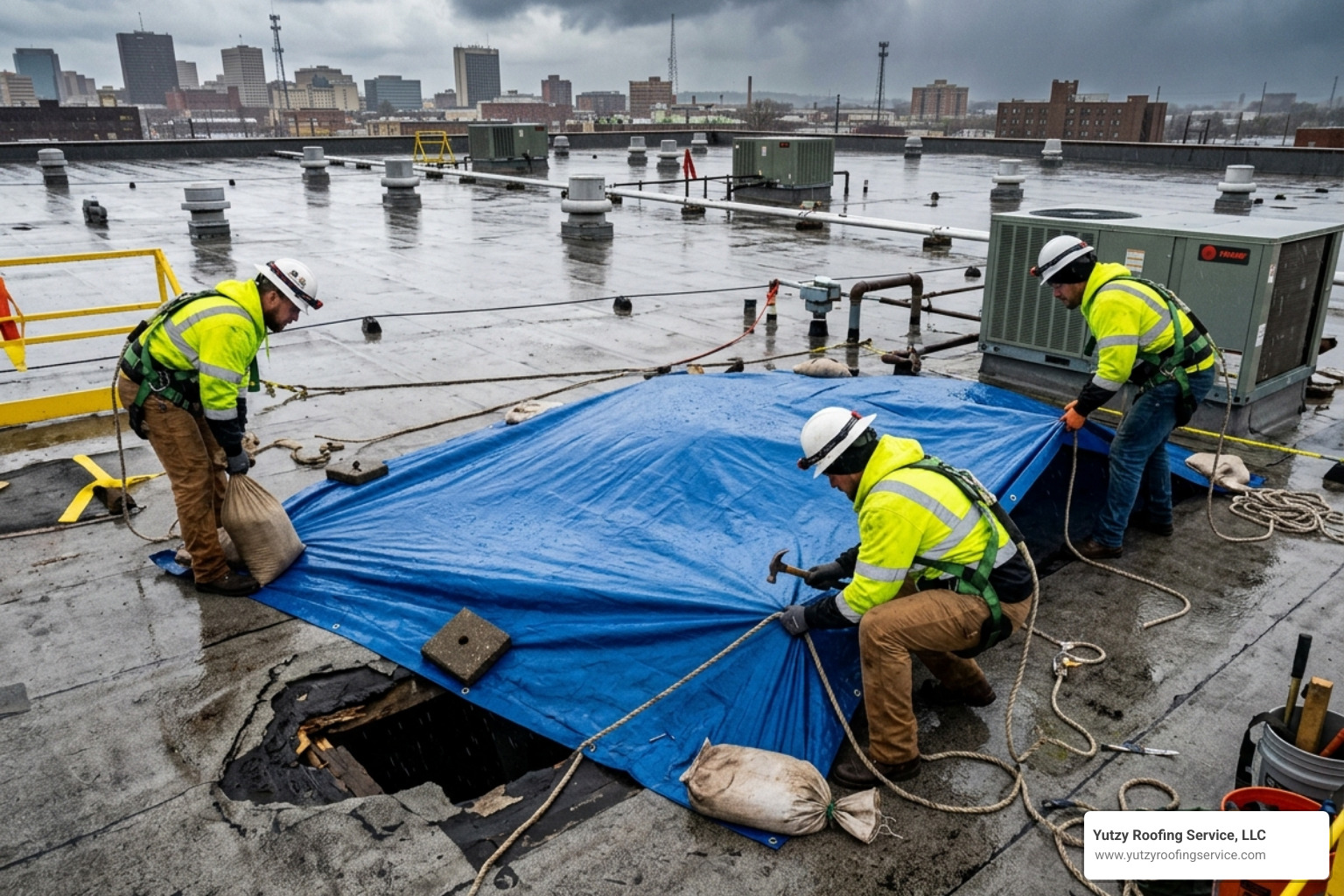
Once our crew arrives, our goal is “roofing triage.” We aren’t necessarily looking to do a permanent restoration at 2:00 AM in a rainstorm; we are looking to stop the bleeding.
Professional stabilization typically involves:
- Heavy-duty tarping: We use industrial-grade tarps secured with plywood “batten strips” to ensure they don’t blow away in the next gust.
- Temporary patches: For EPDM or TPO roofs, we may use specialized “peel-and-stick” flashing or emergency sealants that can bond even in damp conditions.
- Debris removal: Clearing away fallen branches or storm debris that could cause further punctures.
Our Wisconsin emergency roof repair services are designed to buy you time. A proper emergency stabilization can protect your building for weeks, giving you the breathing room to coordinate with insurance and plan for a permanent fix, such as a spray foam coating or metal roof restoration.
How Insurance and Permits Factor Into Repairs
One of the biggest mistakes facility managers make during an emergency roof repair is failing to document the “before.” Insurance companies are notoriously picky. They need to see the cause of the loss to justify the claim.
Navigating the Claims Process
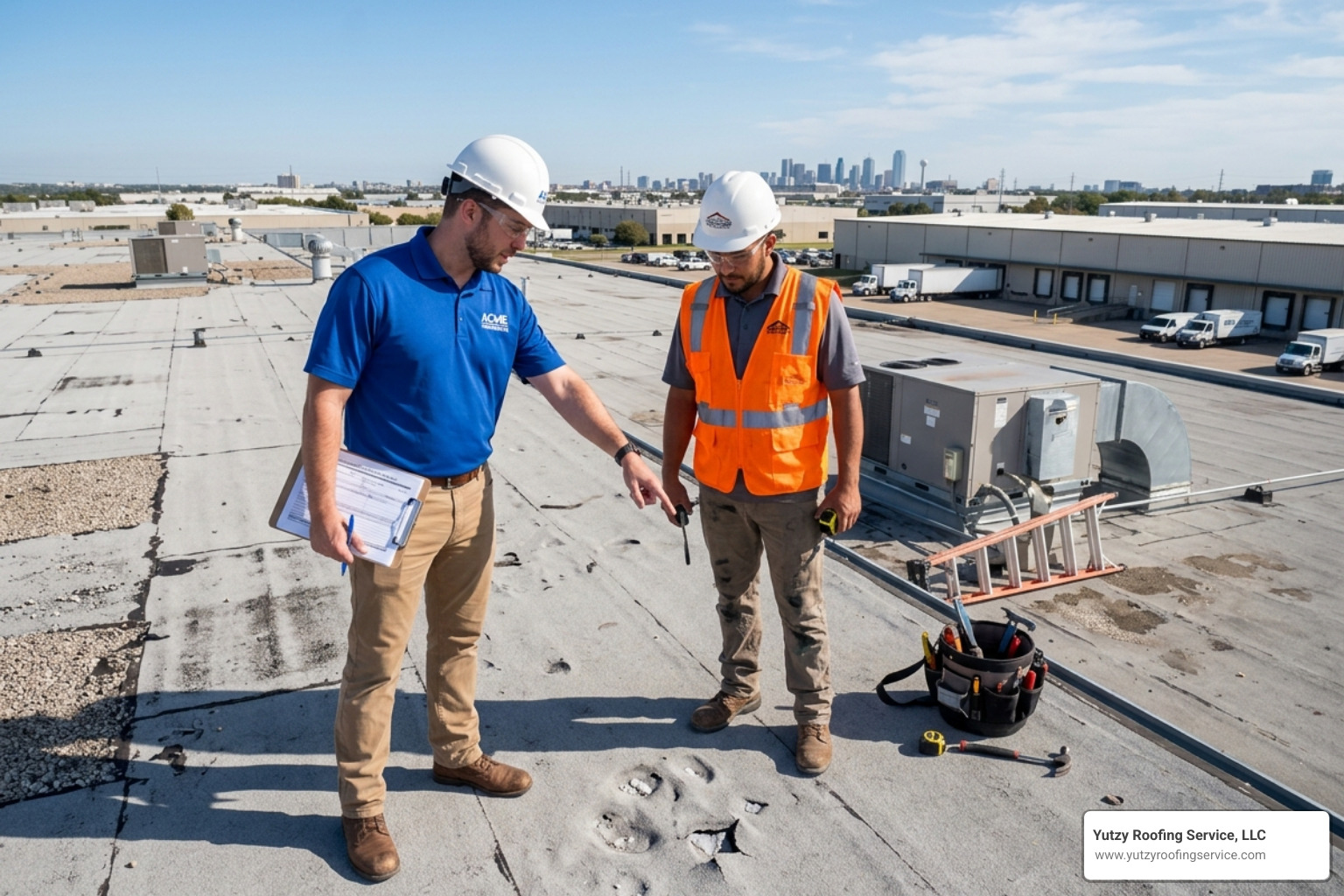
We always recommend having your roofing contractor present when the insurance adjuster arrives. Why? Because we speak the same language. We can point out “bruising” on a membrane from hail or “wind uplift” that an adjuster might overlook.
To protect your claim:
- Take photos and video: Document the damage from the ground and any interior water damage.
- Save everything: Keep the receipts for any buckets, plastic sheeting, or temporary labor you used to mitigate the damage.
- Request moisture reports: We use specialized tools to detect water trapped under the membrane, which is vital evidence for a full replacement claim.
As we explain in the critical importance of commercial roof leak repair explained, documentation isn’t just about getting paid—it’s about ensuring the structural health of your building is fully restored.
Compliance and Safety Standards
Does an emergency repair need a permit? It’s a bit of a gray area. Most municipalities in Wisconsin and Minnesota allow for “emergency stabilization” (like tarping) without a prior permit to prevent further property loss. However, the permanent repairs that follow almost always require one.
Skipping the permit process for permanent work can lead to:
- Fines: Local building departments don’t take kindly to unpermitted commercial work.
- Insurance denial: If you have a future claim, the insurance company may deny it if they discover previous repairs weren’t done to code.
- Voided warranties: Most manufacturers require proof that repairs met local codes to keep your warranty active.
We handle the heavy lifting here, ensuring that our commercial roof leak repair: top solutions always meet or exceed local building codes in cities like Eau Claire and Fond du Lac.
Frequently Asked Questions about Emergency Roof Repair
Is a permit needed for emergency roof repairs?
For immediate “stop-gap” measures like tarping or boarding up a hole to prevent further damage, you usually do not need to wait for a permit. However, for the permanent repair or restoration that follows, a permit is typically required by your local municipality. We always check local regulations in areas like Madison and Wausau to ensure full compliance.
Should I attempt DIY emergency roof repairs?
In a commercial setting, we strongly advise against it. Aside from the extreme safety risks of falling, DIY fixes often involve using the wrong materials—like using asphalt-based “wet patch” on a TPO or EPDM membrane. These materials are chemically incompatible and can actually melt or damage the existing roof, making the eventual professional repair much more expensive. Plus, DIY repairs can void your manufacturer’s warranty and lead to insurance claim denials.
How much damage requires a full roof replacement?
A general industry standard is the “30% rule.” If more than 30% of the roof surface is damaged, or if the cost of the emergency roof repair exceeds 30% of the total replacement cost, a full replacement or a restoration coating is often the more fiscally responsible choice. Additionally, if the insulation beneath the membrane is saturated (which we check with moisture probes), a simple patch won’t work because the trapped moisture will eventually cause mold or deck rot.
Conclusion
A roofing emergency is a test of your facility’s resilience. Whether you are dealing with a sudden leak in a warehouse in Marshfield or storm damage to a retail center in Rochester, the speed of your response determines the total cost of the disaster.
At Yutzy Roofing Service, LLC, we specialize in turning emergencies into long-term wins. We don’t just “patch and run.” We look at the big picture, offering commercial restoration services like spray foam coatings and EPDM repairs that can often extend the life of your roof by decades.
Our work is backed by our signature up to 18-year non-prorated renewable warranty, giving you peace of mind long after the storm clouds have cleared. If you’re facing a crisis or just want to be proactive with a maintenance plan, we are here to help.
More info about emergency services
Yutzy Roofing Service, LLC Serving Wisconsin and Minnesota 9106 Woehrle Lane, Marshfield, WI 54449 Locations: Marshfield, Appleton, Eau Claire, Fond Du Lac, Green Bay, Madison, Wausau, Mankato, Rochester.
