
Why Knowing How to Repair Rubber Roofing Can Save Your Business Thousands
Knowing how to repair rubber roofing correctly is one of the most valuable things a commercial property owner can do to protect their building.
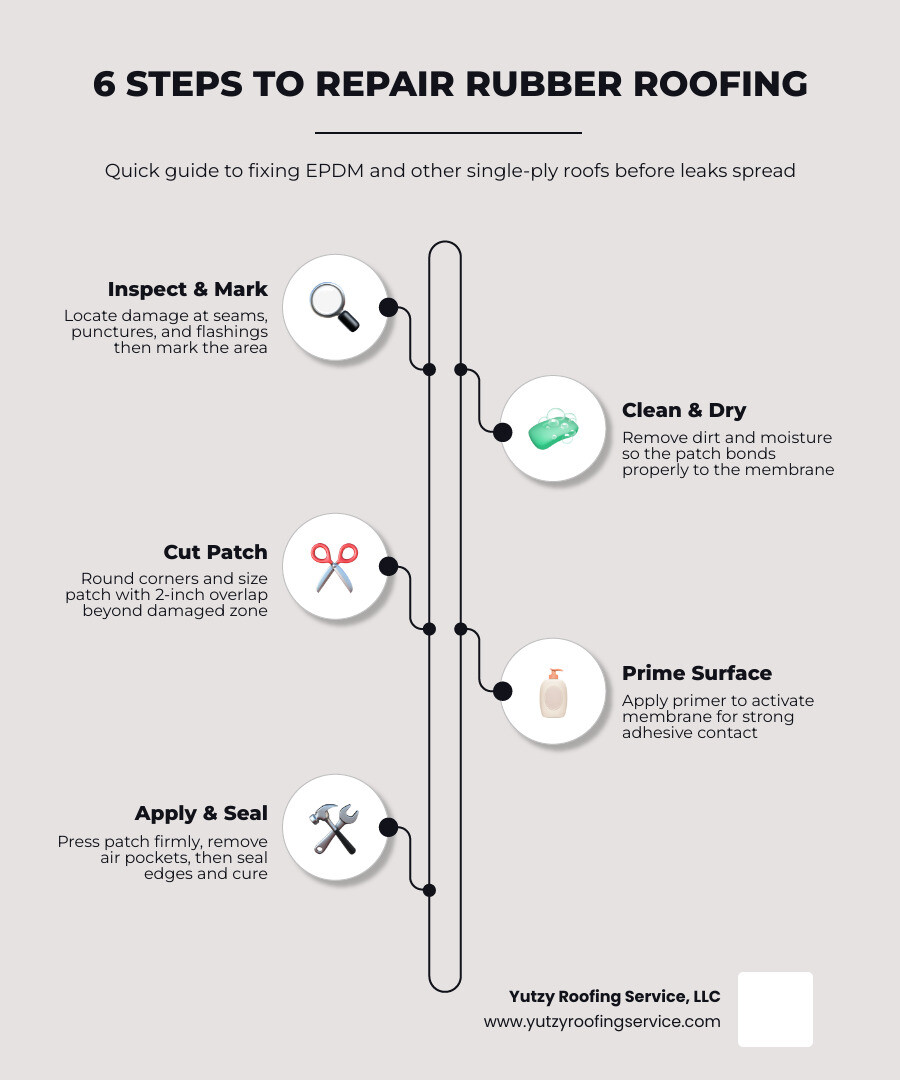
Here is a quick overview of the 6 steps to repair a rubber roof:
- Inspect and mark the damaged area
- Clean and dry the membrane completely
- Cut the patch with rounded corners and a 2-inch overlap
- Prime or activate the surface for proper adhesion
- Apply the patch and press out all air pockets
- Seal the edges, inspect, and allow to cure
EPDM rubber roofing is tough. It can last 20 to 30 years with proper care. But Wisconsin’s freeze-thaw cycles, heavy snow loads, summer UV exposure, and pooling water are hard on any flat or low-slope roof. Small problems — a split seam, a minor puncture, a failing flashing — can turn into major water damage fast if left alone.
According to the 2026 This Old House Roofing Survey, active leaks drove roughly 24% of all roof replacements. Most of those replacements could have been avoided with earlier, targeted repairs.
I’m Josh Yutzy of Yutzy Roofing Service, LLC — a family-owned roofing company serving Wisconsin since 1995 — and our team has handled countless rubber roof repairs and restorations on commercial properties across the state. In this guide, I’ll walk you through everything you need to know to repair rubber roofing the right way, whether you’re tackling a small patch yourself or deciding when to call in a pro.
Why Rubber Roofs Fail and How to Spot Trouble Early
Rubber roofs do not usually fail all at once. They fail one detail at a time.
Most leaks start in predictable places: seams, penetrations, flashing transitions, drains, and areas that stay wet too long. On commercial roofs in Madison, Appleton, Green Bay, Wausau, Eau Claire, Fond Du Lac, Marshfield, and across our Wisconsin and southern Minnesota service areas, we also see damage from snow removal, wind-blown debris, service foot traffic, and long-term ponding water.

The most common causes of damage on EPDM and other rubber roofs
The biggest causes of EPDM roof trouble are usually:
- Seam separation from age, movement, or poor original adhesion
- Punctures from tools, dropped equipment, branches, or rooftop traffic
- Ponding water caused by clogged drains or low spots
- Flashing failure around vents, curbs, skylights, and edge metal
- UV wear and membrane aging over many seasons
- Shrinkage that puts stress on seams and penetrations
- Substrate movement or moisture trapped below the membrane
EPDM is durable and flexible, which is a big reason it often lasts 20 to 30 years when maintained. But flexible does not mean invincible. Once water gets under the membrane, it can travel far from the visible opening. That is why the stain inside your building may not be directly below the actual roof damage. Roof leaks love playing hide-and-seek.
How to identify leaks before they spread
Early leak detection saves money. When we inspect a rubber roof, we look both outside and inside the building.
Exterior warning signs include:
- Cracks, cuts, or punctures in the membrane
- Open laps or loose seams
- Wrinkling around patched areas
- Deteriorated flashing at penetrations
- Standing water that remains long after rainfall
- Debris buildup near drains and scuppers
Interior warning signs include:
- Ceiling stains or drips
- Wet insulation
- Musty odors or mold growth
- Bubbling paint
- Damp wall sections near roof edges or penetrations
A good first step is tracing the leak path and documenting suspected areas with chalk or tape. If you want a deeper primer on indoor and outdoor warning signs, here is more info about roof leak repairs.
When leak symptoms point to bigger structural problems
Not every leak is a simple patch job.
If you notice multiple leaks, soft spots underfoot, sagging areas, saturated insulation, recurring seam failures, or widespread membrane deterioration, the issue may go beyond the top layer. At that point, patching alone may just be putting a bandage on a bigger problem.
That is usually when we recommend a professional inspection to determine whether targeted repair, restoration, or partial replacement is the smarter move.
Repair Rubber Roofing: The 6 Easy Steps That Actually Work
For small, localized damage on an accessible EPDM roof, the repair process is straightforward if you use the right materials, prep carefully, and work in dry conditions.

Step 1: Inspect, mark, and measure the damaged area
Start by locating all visible damage, not just the obvious leak point.
Check:
- Seams and lap joints
- Flashing bases
- Roof drains
- Corners and edge details
- Areas around rooftop equipment
- High-traffic service paths
Mark each damaged area with chalk. Measure the defect so your patch extends beyond it properly. Research-backed best practice is to make the patch at least 2 inches larger than the damaged area on all sides. For larger cut-out repairs, some methods call for significantly more coverage depending on substrate involvement.
If the membrane feels soft over a wide area, there may be wet insulation below. That is a sign to stop and call a pro.
Step 2: Clean and dry the membrane completely
This step is boring, and it is also the step that determines whether your repair holds or fails.
Use a membrane-safe cleaner and clean rags to remove:
- Dirt
- Oxidation
- Old sealant residue
- Grease
- Loose debris
Then let the area dry fully. Adhesives and primers do not bond well to moisture, dust, or grime. Even a good patch can fail early if the surface prep is sloppy.
For commercial roofs, we often see repairs fail because someone tried to patch over a wet membrane or skipped cleaning around the edges. That is like putting tape on a dusty windshield and hoping for the best.
Step 3: Cut the patch and round the corners
Cut a patch from EPDM-compatible repair material so it overlaps the damage by at least 2 inches on every side.
Always round the corners.
Why? Square corners are more likely to catch, lift, or peel over time. Rounded corners reduce stress points and help the repair stay bonded longer. This is one of those small details that makes a surprisingly big difference.
Lay the patch over the area before applying anything to make sure the size and placement are correct.
Step 4: Prime or activate the surface as required to repair rubber roofing
Most EPDM repairs need a compatible primer or surface activator before the patch goes down. Follow the repair product instructions closely. The goal is usually a clean, properly prepped surface that becomes tacky enough to accept the patch without trapping contamination.
Use only materials intended for that exact membrane. If you need a closer look at seam and flashing details, here is more info about EPDM seam repair.
This is also where membrane type matters:
- EPDM commonly uses primer plus seam tape or adhesive-backed patches
- TPO usually requires heat welding
- PVC often uses heat-welded repairs with membrane-specific products
Do not mix systems. An EPDM patch is not a universal fix for every white single-ply roof you see.
Step 5: Apply the patch, press firmly, and remove air pockets
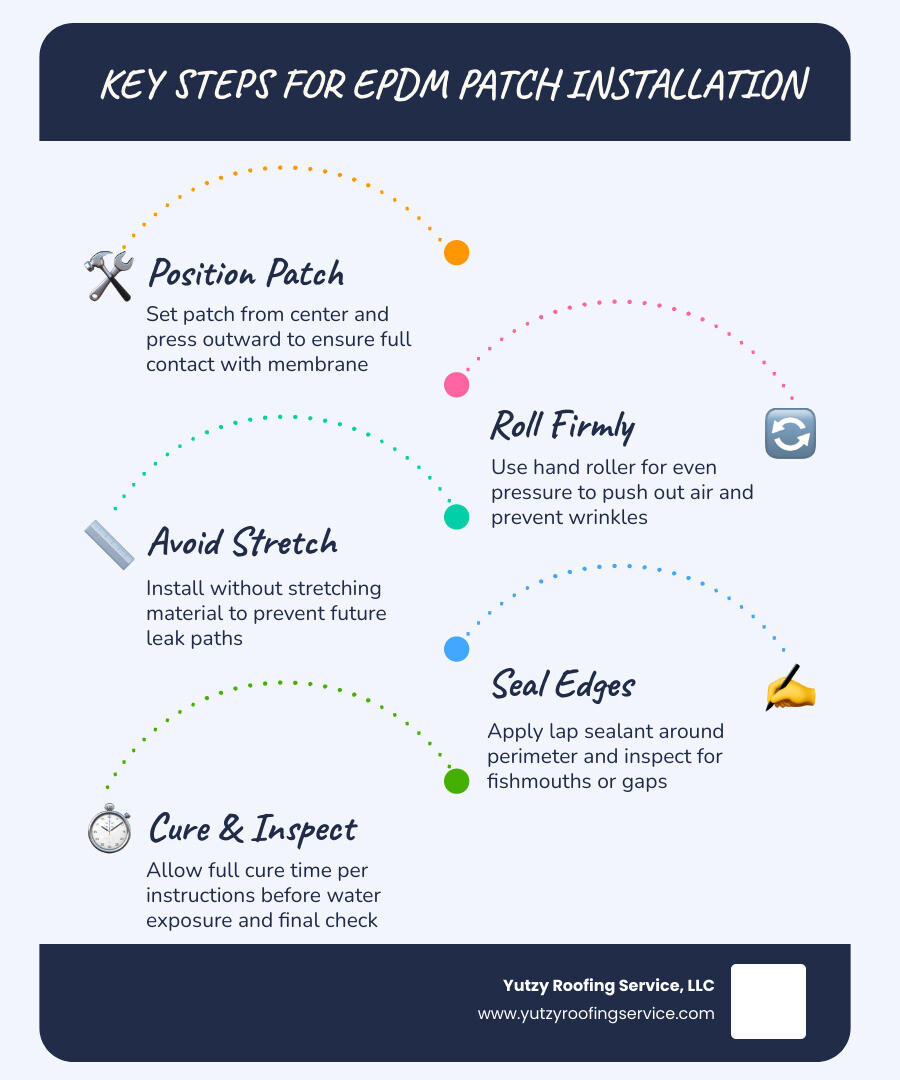
Set the patch carefully in place and press it from the center outward. Use a hand roller to apply firm, even pressure.
This helps:
- Create full contact
- Push out trapped air
- Prevent wrinkles
- Improve edge adhesion
Whether you are using seam tape or a peel-and-stick patch, avoid stretching the material as you install it. Stretched patches can pull back later and create another leak path.
Step 6: Seal edges, inspect the repair, and let it cure
Finish by applying compatible lap sealant around the patch perimeter if the repair system calls for it. Then inspect all edges closely.
Look for:
- Fishmouths
- Loose corners
- Gaps at the edge
- Trapped wrinkles
- Incomplete contact
Allow the repair to cure based on product instructions and weather conditions before exposing it to heavy water. For a solid outside reference on the patching process, see how to patch a leaking EPDM roof.
Materials, Tools, and Weather Conditions That Make or Break a Repair
Having the right process matters. Having the right stuff matters too.
What you need for a DIY rubber roof repair
For a basic EPDM patch repair, the typical list includes:
- EPDM-compatible patch material or seam tape
- EPDM primer or activator
- Lap sealant
- Membrane cleaner
- Hand roller
- Utility knife or scissors
- Measuring tape
- Chalk
- Clean rags
- Gloves
- Caulk gun
- Basic fall protection and safety gear
Some DIY repair kits package most of this together. They can be useful for very small, isolated repairs. Contractor repair pricing often falls around $600 to $1000 or more, while DIY can save a few hundred dollars for minor issues. For product-related guidance, see more info about leaky rubber roof products.
Why temperature and moisture matter so much
Weather can make a good repair impossible.
Most EPDM adhesives and primers work best when temperatures are above about 40 to 50 degrees Fahrenheit. Cold weather reduces membrane flexibility and can interfere with adhesion and cure time. Moisture is another major problem. Wet surfaces can trap water under the repair and lead to blistering, poor bond strength, or early failure.
Best conditions for repair are:
- Dry roof surface
- No rain in the forecast
- Moderate temperature
- Limited wind
- Low humidity when possible
Some emergency products are marketed for wet or cold surfaces, but those are often best viewed as temporary until a proper permanent repair can be made.
Key differences between EPDM, TPO, and other single-ply membranes
This is one of the most important points in the whole guide.
EPDM, TPO, and PVC are all single-ply roofing membranes, but they are not repaired the same way.
| Membrane type | Common repair method | Key caution |
|---|---|---|
| EPDM | Primer plus patch or seam tape | Use EPDM-compatible products only |
| TPO | Heat-welded patch or seam repair | Adhesive-only fixes often fail |
| PVC | Heat-welded patch with PVC materials | Wrong materials can damage warranty |
Using incompatible materials can lead to premature failure and may create warranty issues. If you are not 100% sure what membrane you have, do not guess.
DIY vs Professional Repair: Cost, Lifespan, and When to Call a Contractor
A small repair can be manageable. A big roofing problem rarely stays small for long.
When a small DIY patch is reasonable
A DIY repair may be reasonable when all of these are true:
- The damage is small and isolated
- It is an accessible area on the roof
- The membrane type is clearly identified as EPDM
- There is no sign of saturated insulation or deck damage
- You can work safely
- You have the correct repair products
Examples include a small puncture, a minor cut, or an isolated seam split in otherwise good condition.
When professional rubber roof repair is the smarter move
We strongly recommend professional help when you have:
- Large tears or multiple damaged areas
- Repeated leaks in the same section
- Ponding water problems
- Complicated flashing details
- Soft spots or possible wet insulation
- Aging membrane with widespread wear
- Warranty concerns
- An occupied commercial building where downtime matters
This is especially true for TPO and PVC, since proper repairs often require heat-welding equipment and membrane-specific experience.
At Yutzy Roofing Service, we handle EPDM repairs, commercial roof restoration, spray foam coatings, and maintenance programs across Wisconsin service areas including Madison, Appleton, Green Bay, Wausau, Eau Claire, Fond Du Lac, Marshfield, and beyond. For many commercial buildings, professional restoration can be far more cost-effective than waiting until replacement is unavoidable.
What repairs cost and how long they typically last
For professional rubber roof repair, common small-to-midsize service calls often land around $600 to $1000 or more, depending on access, damage extent, labor, and materials. Labor and material costs are usually the biggest drivers.
DIY may save roughly $300 to $600 on a minor repair, but only if:
- The diagnosis is correct
- The membrane type is correct
- The repair is installed properly
- No hidden water damage is present
As for lifespan, a properly executed EPDM repair using quality materials can often last 5 to 10 years or more. Some sources put high-quality EPDM patches in the 5 to 15 year range depending on climate, workmanship, and maintenance. The roof itself may last 20 to 30 years when maintained well.
Want a deeper look at what restoration can do for aging EPDM? See more info about EPDM repair and restoration.
Maintenance Tips to Prevent Future Leaks and Extend Roof Life
Repairs are important. Prevention is cheaper.
The best inspection schedule for rubber roofing
We recommend inspecting rubber roofs:
- Twice a year, ideally in spring and fall
- After major storms
- After heavy snow or ice events
- After rooftop service work on HVAC or other equipment
During inspections, pay special attention to:
- Seams
- Drains and scuppers
- Flashings
- Edges
- Penetrations
- High-traffic zones
This kind of simple routine catches small issues before they become expensive surprises.
Maintenance habits that reduce future repair needs
The best preventive habits are not glamorous, but they work:
- Keep drains clear
- Remove debris regularly
- Limit unnecessary foot traffic
- Check and maintain flashing details
- Address ponding water quickly
- Document repairs and trouble spots
- Schedule post-storm checks
If you want a practical maintenance overview, here is more info about membrane maintenance.
How coatings and restoration can add service life
Not every aging roof needs to be torn off.
On commercial buildings, restoration and coating systems can often extend roof life by improving waterproofing, UV resistance, and overall system performance. Some liquid butyl products have shown stronger long-term aging performance than standard acrylic or elastomeric options in controlled testing, though product choice should always be matched to the roof condition and membrane type.
Our team also helps building owners evaluate restoration options that may qualify for up to an 18-year non-prorated renewable warranty. If you are exploring that path, read more info about commercial roof coatings.
Frequently Asked Questions About Repair Rubber Roofing
How long does repair rubber roofing usually last?
A well-done EPDM repair often lasts 5 to 10 years or more. Durability depends on:
- Surface preparation
- Material compatibility
- Weather during installation
- Quality of workmanship
- Ponding water exposure
- Ongoing maintenance
A patch on a clean, dry roof installed correctly will usually outlast a rushed repair done in bad conditions.
Can you repair rubber roofing in cold or wet weather?
Usually, permanent repairs should wait for dry conditions and temperatures above about 40 to 50 degrees Fahrenheit unless the manufacturer specifically approves otherwise.
Cold weather can reduce flexibility and slow curing. Wet surfaces can trap moisture and cause bond failure or blistering. Emergency temporary repairs may be possible, but they should be followed by a proper permanent repair when conditions improve.
Should you repair or replace an older rubber roof?
That depends on age, leak frequency, and how widespread the damage is.
Repair is often the right choice when:
- The roof is still structurally sound
- Damage is localized
- Seams and flashings are mostly intact
- Insulation is still dry in most areas
Replacement or restoration may make more sense when:
- The roof is near the end of its service life
- Leaks keep returning
- Multiple sections are failing
- The deck or insulation is saturated
- Repair costs are piling up
A professional inspection is the best way to make that call without overspending.
Conclusion
Knowing how to repair rubber roofing is valuable, but knowing when a simple patch is enough and when a commercial roof needs expert help is even more important.
If your EPDM roof has a small puncture or isolated seam issue, the 6-step process above gives you a solid roadmap. But if you are dealing with recurring leaks, ponding water, failing flashing, or an aging roof system, it is usually smarter to bring in experienced help before minor damage turns into major interior loss.
At Yutzy Roofing Service, we provide EPDM repairs, commercial restoration, spray foam coatings, and maintenance throughout Wisconsin, including Madison, Appleton, Green Bay, Wausau, Eau Claire, Fond Du Lac, and Marshfield. If you want to explore the next step, here is more info about EPDM roofing system repair.
