What Is a Reflective Metal Roof Coating and Which Type Works Best?
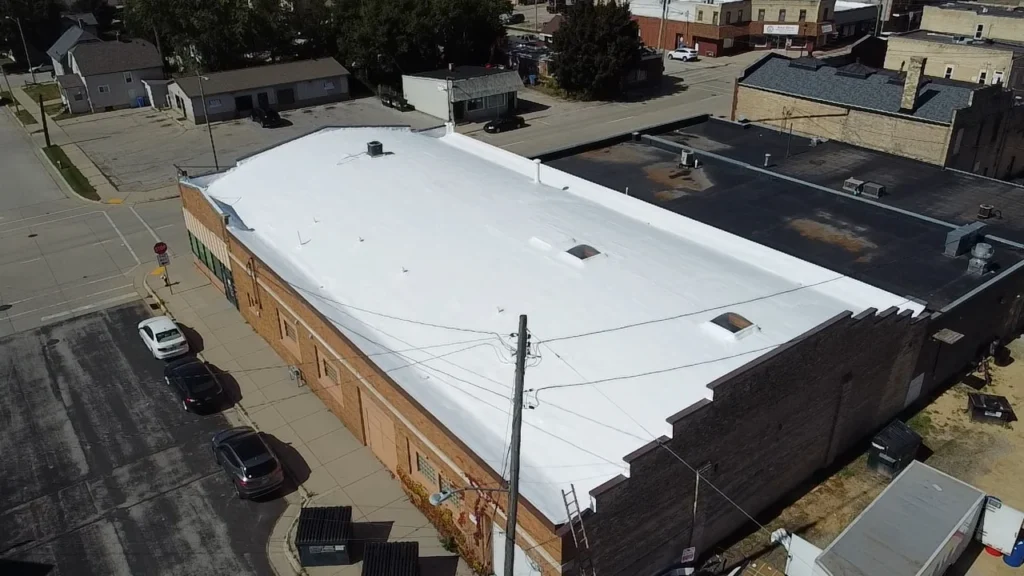
A reflective metal roof coating is one of the most cost-effective ways to restore a worn commercial roof, stop leaks, and cut cooling costs — without a full tear-off.
Here’s a quick look at the top coating types for commercial metal roofs:
| Coating Type | Best For | Lifespan | Reflectivity |
|---|---|---|---|
| Acrylic Elastomeric | General restoration, UV-heavy climates | 10–15 years | High (white) |
| Silicone | Ponding water, thermal movement | 10–20 years | High |
| Urethane | Heavy wear, puncture resistance | 10–15 years | Moderate–High |
| Co-Polymer (SEBS) | Multi-surface, flat roofs | 10–15 years | Very High (SRI 102) |
| Fibered Aluminum | Metal, built-up asphalt | 5–10 years | Moderate (silver) |
Not all coatings work on all substrates. Compatibility with your existing roof material matters.
Wisconsin commercial roofs take a beating. Freeze-thaw cycles crack seams. Summer heat warps panels. And every year you delay, a manageable restoration job gets closer to an expensive replacement. The right reflective coating can stop that cycle — sealing leaks, reflecting heat, and adding years of life to your existing roof.
I’m Josh Yutzy, and our team at Yutzy Roofing Service has been restoring commercial metal roofs across Wisconsin since 1995, including applying reflective metal roof coatings that carry up to a 20-year full labor and material warranty. In the sections below, I’ll walk you through exactly which coating types perform best on commercial roofs and how to choose the right one for your building.
Choosing the Right Reflective Metal Roof Coating for Commercial Buildings
Selecting the ideal reflective metal roof coating isn’t just about picking the brightest white paint on the shelf. It requires a detailed evaluation of your building’s structural design, localized climate conditions, and the exact metal alloy of your roof panels. If you want a deep dive into the broader landscape of commercial options, our detailed guide to roof coating options is an excellent starting point.
When evaluating coatings, we must first look at the specific metal substrate. Is your commercial roof galvanized steel or Galvalume?
- Galvanized steel relies on a pure zinc layer for protection. However, the quality of this protection varies wildly. For example, G100 galvanized steel contains 66% more zinc than G60 galvanized steel. This makes G100 vastly superior at resisting long-term corrosion. If your facility has a G60 roof, it will require a highly specialized, rust-inhibiting primer before any reflective topcoat can be applied.
- Galvalume steel features an alloy coating of zinc and aluminum. It naturally resists corrosion better than standard galvanized steel but can occasionally suffer from adhesion issues if the coating is applied without proper chemical profiling.
Beyond the substrate, climate and roof slope play massive roles in your decision:
- Climate: In Wisconsin and Minnesota, our roofs experience extreme temperature swings. A hot July afternoon can send metal roof surface temperatures soaring above 150°F, only for them to plummet below zero in January. This causes intense thermal expansion and contraction. Your coating must have high elongation properties to stretch and contract without cracking.
- Roof Slope and Ponding Water: Low-slope or flat commercial roofs are prone to ponding water. If water stands on your roof for more than 48 hours, water-based coatings like acrylics will re-emulsify and peel away. For flat roofs, you must look toward moisture-cure urethanes, silicones, or high-performance co-polymers.
High-Performance Acrylic Reflective Metal Roof Coating Solutions
For sloped commercial metal roofs that drain freely, acrylic elastomeric coatings are often the most practical, budget-friendly solution. These water-based systems are easy to apply, highly breathable, and offer outstanding resistance to ultraviolet (UV) radiation.
To ensure long-term durability, a high-quality acrylic coating must meet the rigorous ASTM D6083 standard. This specification guarantees that the cured membrane possesses the necessary tensile strength, low-temperature flexibility, and water resistance required for commercial roofing environments.
A prime retail-grade example of this technology is Henry 587 Dura-Brite, a 100% acrylic elastomeric roof coating designed to reflect solar heat and lower interior building temperatures.
While acrylics are incredibly cost-effective, they are best suited for sloped roofs where water cannot pool. If your commercial facility has flat sections or valleys that hold water, acrylic is not the right choice. To understand why these systems excel on sloped profiles, read our article on why acrylic roof coating is the coolest choice.
Durable Silicone and Urethane Reflective Metal Roof Coating Systems
When ponding water is an unavoidable reality on your flat or low-slope commercial roof, you must step up to silicone or urethane-based systems. These chemistries do not break down under standing water, making them the gold standard for challenging commercial designs.
Silicone Coatings
Silicone is highly hydrophobic and exceptionally stable under UV light. It maintains its flexibility across a wide temperature range and does not chalk or degrade over time. However, silicone can attract dirt and dust, which can slowly diminish its reflectivity if not washed periodically.
Moisture-Cure Urethane Coatings
If your roof experiences regular foot traffic, mechanical maintenance, or potential physical impacts, moisture-cure urethanes are the ultimate shield. Unlike standard coatings, urethanes cure by reacting with ambient moisture in the air, forming an incredibly tough, elastomeric barrier.
A standout product in this category is RAC 007 | Andek. This high-performance, single-component moisture-cure urethane is modified with bright metallic leaf pigments to deliver both excellent solar reflectance and extreme physical durability.
Let’s look at the technical specifications of a commercial-grade urethane like RAC 007:
- Tensile Strength: 400 psi (providing extreme resistance to tears and punctures).
- Elongation: 500% (allowing the coating to stretch effortlessly during thermal expansion).
- Puncture Resistance: 120 psi (making it highly resistant to dropped tools or storm debris).
Because urethanes are so tough, they are also excellent for sealing high-movement areas like seams, fasteners, and penetrations. For a comprehensive look at how to seal these critical failure points, check out our metal roof sealant complete guide.
Aluminum and Co-Polymer Reflective Coatings
If you are looking for specialized alternatives to acrylics, silicones, or urethanes, both fibered aluminum and co-polymer coatings offer unique advantages for commercial restoration.
Fibered Aluminum Coatings
Fibered aluminum coatings combine an asphalt base with metallic aluminum flakes. When applied, the aluminum flakes “leaf” to the surface, creating a bright silver finish that reflects heat and UV rays.
- These coatings typically last 2 to 3 times longer than standard black asphalt coatings.
- A popular option is Black Jack® Silver-Seal 300, which is excellent for built-up asphalt and metal roofs. However, it is highly incompatible with EPDM, rubber membranes, or existing elastomeric coatings.
- Another common silver option is Karnak 27 Perfectseal, which lowers surface temperatures to reduce thermal shock on older metal panels.
SEBS Co-Polymer Coatings
For the ultimate in multi-substrate versatility and solar reflectivity, solvent-based SEBS (Styrene-Ethylene-Butylene-Styrene) co-polymer coatings are incredibly tough to beat.
- Exceptional Reflectivity: High-end co-polymer white flat roof coatings (such as the E814RCP formulation) boast an initial Solar Reflectance of 82.5% and a remarkable Solar Reflective Index (SRI) of 102.
- Tested Performance: Even after years of exposure, CRRC (Cool Roof Rating Council) testing shows these co-polymers maintain a 3-year aged solar reflectance of 82.5% (white) and a high thermal emittance of 0.89.
- Physical Strength: With a tensile strength of 1,000 psi and 500% elongation, they form a highly flexible, impermeable rubber membrane that resists water absorption (only 0.04%).
Key Performance Metrics and Energy Efficiency Benefits
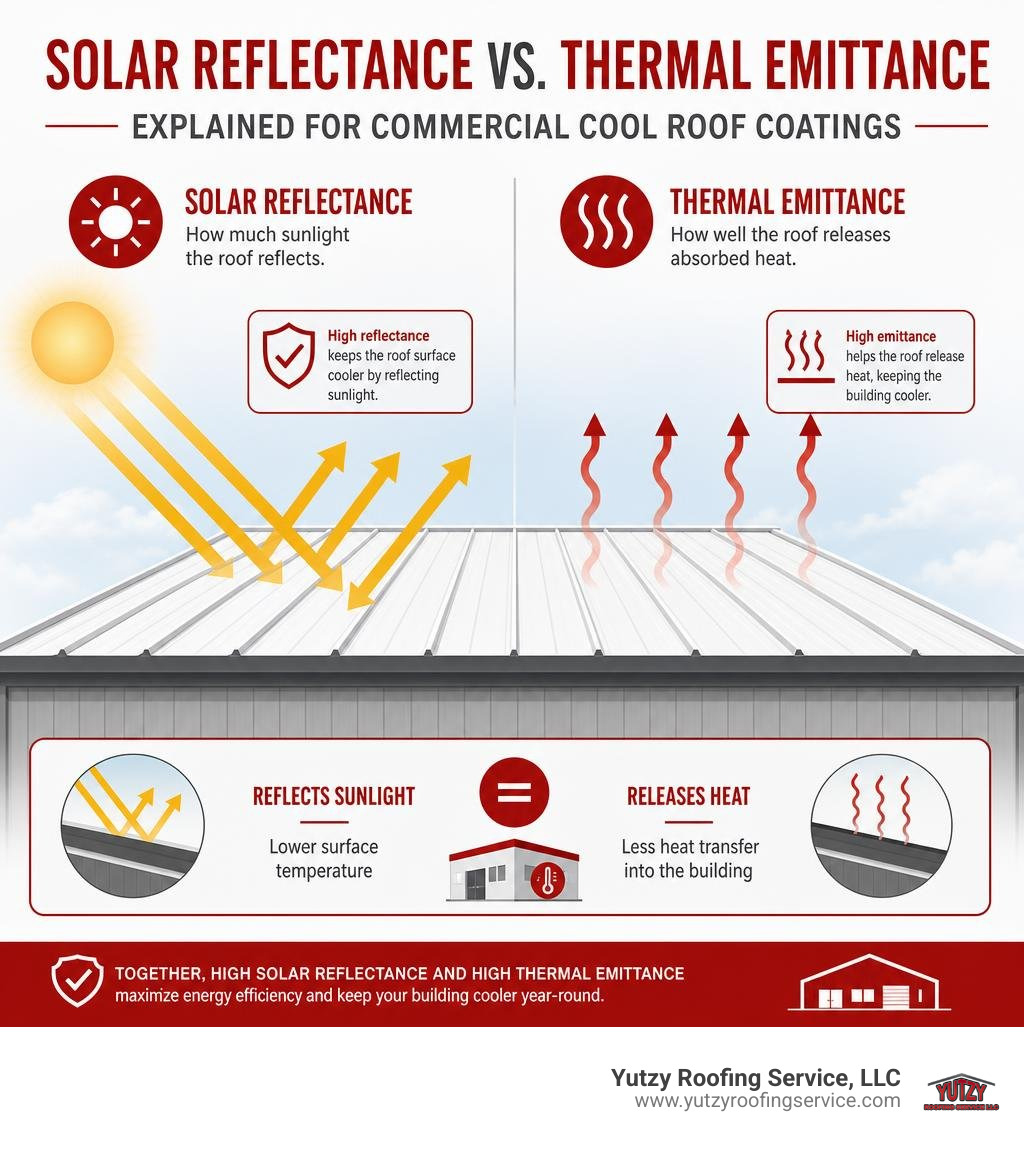
To understand how a reflective metal roof coating lowers your energy bills, you must understand the three key metrics used to measure “cool roof” performance:
- Solar Reflectance: The fraction of solar energy reflected by the roof surface. A value of 0.82 means 82% of the sun’s heat is bounced away immediately.
- Thermal Emittance: The relative ability of the roof surface to radiate absorbed heat back into the atmosphere. High emittance (e.g., 0.89) means the roof quickly sheds whatever heat it does absorb.
- Solar Reflective Index (SRI): A composite value incorporating both reflectance and emittance. Standard black is 0, and standard white is 100. A high-performance white coating can score over 102.
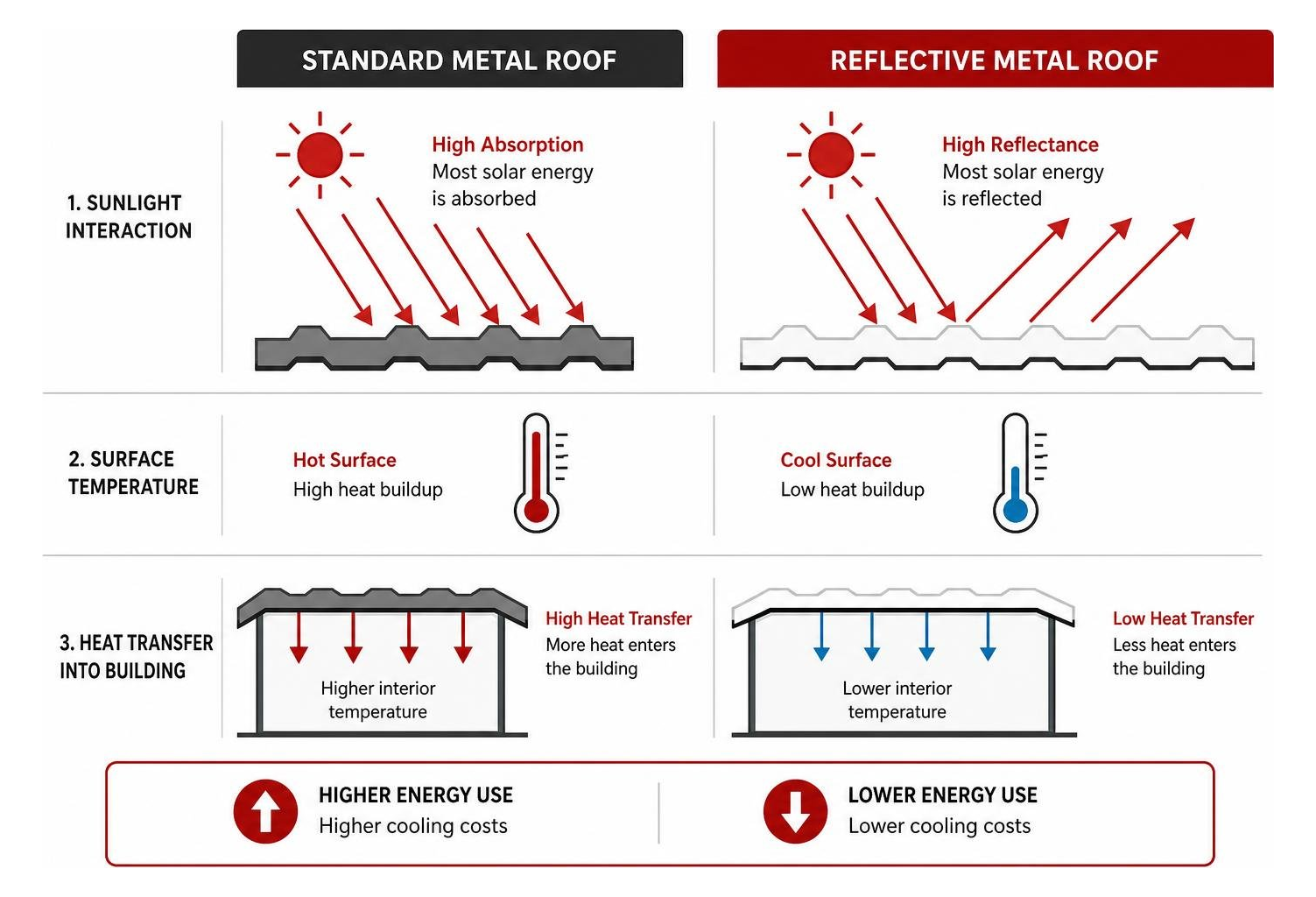
By keeping the roof surface cool, these coatings directly lower the heat transferred into your building. For example, a premium white elastomeric roof coating can lower interior building temperatures significantly, providing cooling energy savings of up to 35%.
Preventing your roof from heating up also reduces “thermal shock”—the rapid expansion and contraction that loosens screws, tears seams, and causes premature leaks. By mitigating this movement, you can save thousands of dollars in ongoing maintenance. To see the math on how this preserves your budget, read how a metal roof restoration can help you save on replacement costs.
Substrate Compatibility, Surface Preparation, and Application Best Practices
A reflective coating is only as good as its adhesion to the roof. If you do not prepare the surface correctly, the coating will bubble, peel, and fail prematurely.
Surface Preparation Steps
Before any liquid product touches your roof, you must execute meticulous preparation:
- Rust Removal: All loose and scaling rust must be removed using wire brushes or abrasive blasting. If rust is left behind, it will continue to eat through the metal underneath your new coating.
- Pressure Washing: The entire roof must be power washed to remove dirt, dust, grease, and oil. For EPDM or rubber membranes, use a wide-angle spray tip to prevent tearing the membrane while scrubbing away embedded clay and dust.
- Seam and Fastener Detailing: Metal roof seams are the most common leak points. We apply a heavy coat of sealant (15 to 25 mils wet), embed a reinforcing polyester fabric (like ROOFAB), and apply a second coat to fully encapsulate the seam. Fastener heads must be individually coated to the point of slight rundown.

Application and Curing Guidelines
- Thickness: You must strictly adhere to the manufacturer’s recommended film thickness. For example, a co-polymer coating requires a total wet film thickness of 32 mils (applied in two separate coats of 16 mils each) to cure to the correct dry film thickness. Applying it too thick in a single pass can trap solvents and damage underlying insulation boards like EPS.
- Cure Times: Most commercial coatings require at least 24 hours of dry, rain-free weather between coats, and a full 72 hours to achieve complete cure. Never apply coatings if the temperature is below 40°F (or 35°F for urethanes) or if the relative humidity exceeds 90%.
- Substrate Compatibility: Ensure your chosen coating is chemically compatible with the substrate. For instance, you should never apply asphalt-based aluminum coatings over EPDM or existing elastomeric coatings, as the solvents will cause the rubber to swell and degrade.
If you want a step-by-step breakdown of how our team executes this process, refer to the ultimate guide to metal roof restoration. For budget planning, you can also review average regional pricing via Wisconsin roof coating costs.
Frequently Asked Questions About Reflective Metal Roof Coatings
How long does a reflective metal roof coating last?
A professionally applied commercial-grade reflective coating typically lasts 10 to 18 years, depending on the chemistry used and the thickness of the application. However, routine maintenance is critical to achieving this lifespan.
For example, in flat or low-slope areas, ponded water can accumulate organic debris. As this debris dries, it bonds tightly to the coating. When the roof expands and contracts, the bonded debris restricts the coating’s natural elongation, which can tear or delaminate the membrane. Regularly flushing debris from these areas will preserve your warranty and extend the life of the system. To compare this to the overall lifespan of a metal roof, read how long does a metal roof last.
Can you apply reflective coatings over existing roof coatings?
Yes, but only if the chemistries are compatible and the existing coating is still well-adhered to the substrate. You can never apply a coating over a failing, peeling, or blistered layer.
We always recommend performing an adhesion test patch first. We apply a small square of the new coating, embed a strip of fabric, let it cure for 7 to 10 days, and then use a pull-gauge to test the strength of the bond. If you are located in the southern part of the state, you can learn more about our local testing and application services at metal roof restoration near Madison WI.
What are the environmental and VOC regulations for roof coatings?
Volatile Organic Compound (VOC) regulations vary significantly by region. Many solvent-based coatings have VOC levels around 349 g/L, which makes them non-compliant with strict regional environmental regulations in states like California, Illinois, Indiana, Ohio, Pennsylvania, New York, and others.
In Wisconsin and Minnesota, while regulations are slightly more flexible, choosing low-VOC options (under 200 g/L, like RAC 007) ensures compliance with local EPA regulations and reduces strong chemical odors during application. Always check for CRRC (Cool Roof Rating Council) and Energy Star certifications to ensure the product meets modern green building standards.
Conclusion
Restoring your commercial roof with a high-performance reflective metal roof coating is a smart, sustainable business decision. It stops leaks, accommodates thermal movement, and slashes your summer cooling costs by up to 35%—all while avoiding the massive expense and operational disruption of a complete roof tear-off.
At Yutzy Roofing Service, LLC, we specialize in high-end commercial roof restoration. Because we stand behind our craftsmanship and the premium materials we use, we offer an up to 18-year non-prorated renewable warranty on our restoration systems.
Whether your facility is located in Marshfield, Appleton, Eau Claire, Fond Du Lac, Green Bay, Madison, Wausau, Mankato, or Rochester, our team is ready to help you protect your investment.
Ready to stop the leaks and start saving on your energy bills? Contact us today at our Marshfield headquarters (9106 Woehrle Lane, Marshfield, WI 54449) or visit our commercial metal roof restoration page to schedule your professional roof evaluation!
