Why the Right Metal Roof Sealant Can Save Your Commercial Roof
Metal roof sealant is a flexible, waterproof material used to seal seams, fasteners, and overlaps on metal roofing systems — stopping leaks before they cause serious structural damage.
Quick answer for commercial property owners:
| Situation | Best Sealant Type |
|---|---|
| Sealing seams and panel overlaps | Gun-grade silicone or elastomeric sealant |
| Metal-to-metal connections (unfastened) | Butyl tape |
| Rusted surfaces needing protection | Rubberized coating with rust inhibitors |
| Fastener heads and small lap seams | Mastic-grade elastomeric sealant |
Here’s the core issue: a metal roof can last 40 to 60 years — but only if the sealant holding it together does its job. When sealant fails, moisture gets in. And once moisture gets in, the roof fails regardless of how solid the panels are.
Wisconsin’s climate makes this especially pressing. Brutal freeze-thaw cycles, heavy snow loads, and hot summers put constant stress on seams and joints. That thermal movement stretches and compresses sealant year after year. The wrong product — or a failed one — turns a minor maintenance task into a costly repair.
I’m Josh Yutzy, and my family’s roofing business has been restoring and repairing commercial metal roofs across Wisconsin since 1995 — which means I’ve seen what happens when the wrong metal roof sealant is used, and what a proper sealant system can do to extend a roof’s life. In this guide, I’ll walk you through everything you need to know to make the right call for your building.
Understanding Metal Roof Sealant and Its Role in Restoration
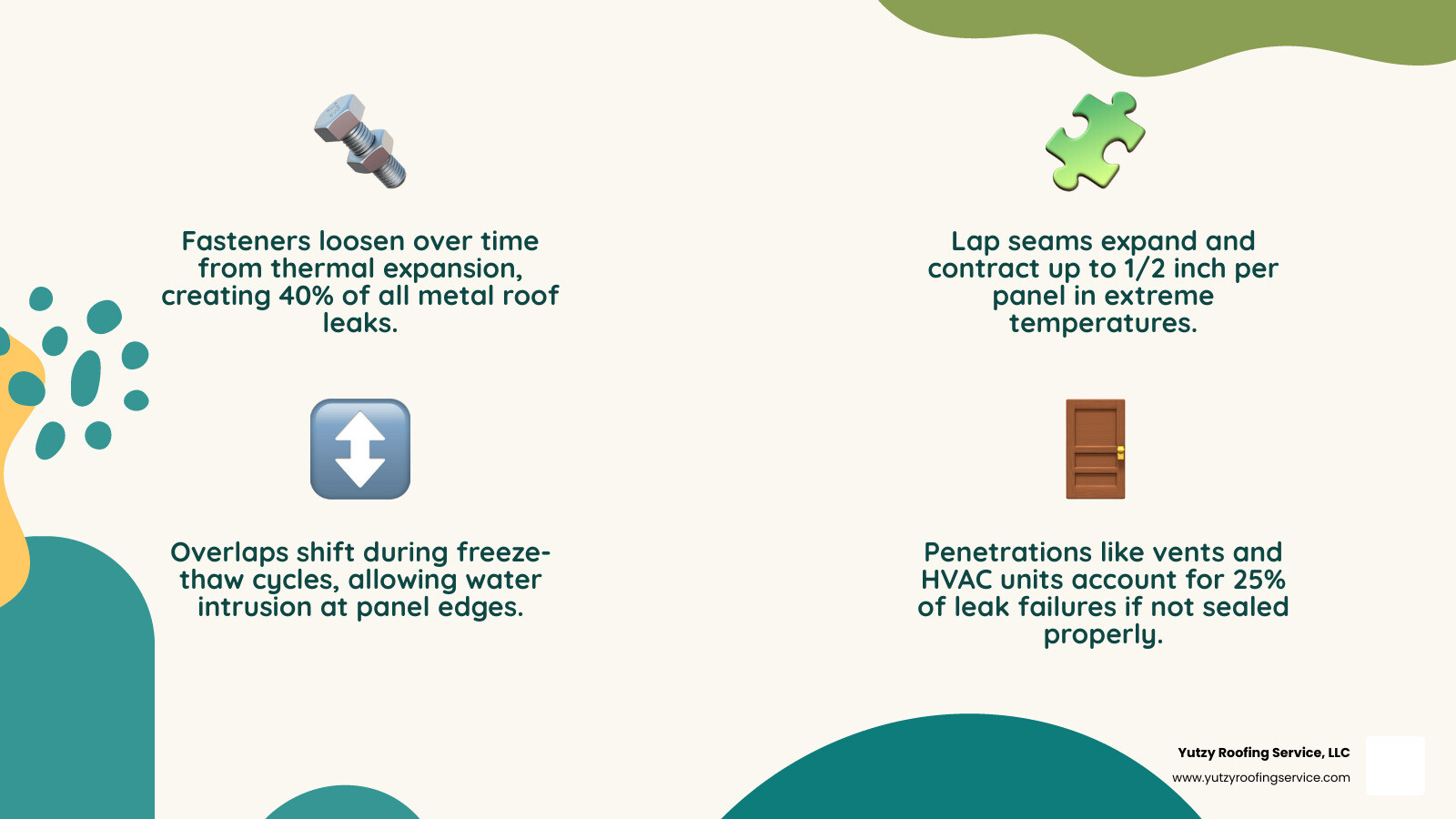
When we talk about The Importance Of Metal Roof Waterproofing In Madison Wi, we aren’t just talking about the metal panels. Those panels are incredibly durable, but they are also “dynamic.” This is a fancy way of saying they move. Depending on the temperature, a metal roof can expand and contract significantly throughout the day.
This is where metal roof sealant enters the picture as your secondary defense. While the mechanical design of the roof (like the standing seams or the way panels overlap) handles the bulk of the water shed, the sealant is what makes the system truly watertight. It fills the microscopic gaps where water, air, and dirt try to sneak in.
High-quality products like WEATHERMASTER METAL ROOF SEALANT are engineered specifically for this movement. This isn’t your standard hardware store caulk. These are advanced polymers designed to stay flexible even when the temperature swings from a bone-chilling -75°F in the dead of a Wisconsin winter to a scorching 212°F on a July afternoon.
Without a flexible barrier, the constant “breathing” of the metal would snap a rigid sealant like a dry twig. Once that seal is broken, you’re on the fast track to rust, interior drips, and damaged inventory.
Why Silicone is a Top Choice for Metal Roof Sealant
In our experience across Eau Claire and Fond Du Lac, silicone-based sealants are often the “gold standard” for topical repairs. Why? Because silicone is virtually immune to the sun. UV rays are the natural enemy of most building materials, causing them to become brittle and crack. Silicone, however, keeps its rubbery “bounce” for decades.
Key features of professional silicone sealants include:
- ±50% Joint Movement: This means if a joint is half an inch wide, the sealant can stretch to three-quarters of an inch or compress to a quarter-inch without losing its bond.
- Kynar Adhesion: Many modern commercial roofs use Kynar™ coatings for color and protection. Standard sealants often slide right off these surfaces, but premium silicone is formulated to stick to them like glue.
- Non-Shrinking: Since these sealants are often 100% solids, what you put in the joint is what stays there. It won’t pull away from the edges as it cures.
Choosing Between Butyl Tape and Liquid Metal Roof Sealant
We often get asked whether a “tape” or a “liquid” is better. The truth is, they have completely different jobs. Think of it like this: Butyl tape is for the “sandwich” (the inside), and liquid sealant is for the “icing” (the outside).
| Feature | Butyl Tape Sealant | Gun-Grade Liquid Sealant |
|---|---|---|
| Primary Use | Between two metal panels (internal) | Over fasteners and seam edges (topical) |
| UV Resistance | Poor (must be covered) | Excellent (designed for sun exposure) |
| Application | Pre-portioned rolls | Caulking gun / Tubes |
| Longevity | 35-60+ years (protected) | 10-20 years (exposed) |
| Curing | Non-curing (stays tacky) | Cures to a flexible solid |
Butyl tape is incredible for metal-to-metal connections that are fastened together. It has high “tack” and cohesive strength, meaning it creates a gasket-like seal that can last as long as the roof itself—provided it isn’t exposed to the sun. For anything exposed to the elements, you need a liquid metal roof sealant that can handle the UV load.
Professional Application Methods for a Watertight Seal
You could buy the most expensive sealant in the world, but if you apply it to a dirty roof, you’re just throwing money into the wind (literally). Proper application is 90% preparation.
In our A Complete Guide To Metal Roof Restoration, we emphasize that the surface must be “squeaky clean.” This usually involves:
- Pressure Washing: Removing years of industrial grime, bird droppings, and loose debris.
- Rust Treatment: Knocking off heavy scale and treating rusted areas. Interestingly, some modern sealants can be applied directly over light rust if they contain specific inhibitors, but we always prefer a clean slate.
- Drying: Most sealants require a dry surface, though premium polymers like WeatherMaster can actually adhere to damp surfaces in a pinch—a lifesaver during a rainy Green Bay spring.

Applying Metal Roof Sealant to Fasteners and Seams
The most common leak points on any metal roof are the fasteners. Every single screw is a hole in your roof. Over time, the rubber washers on these screws dry out and crack.
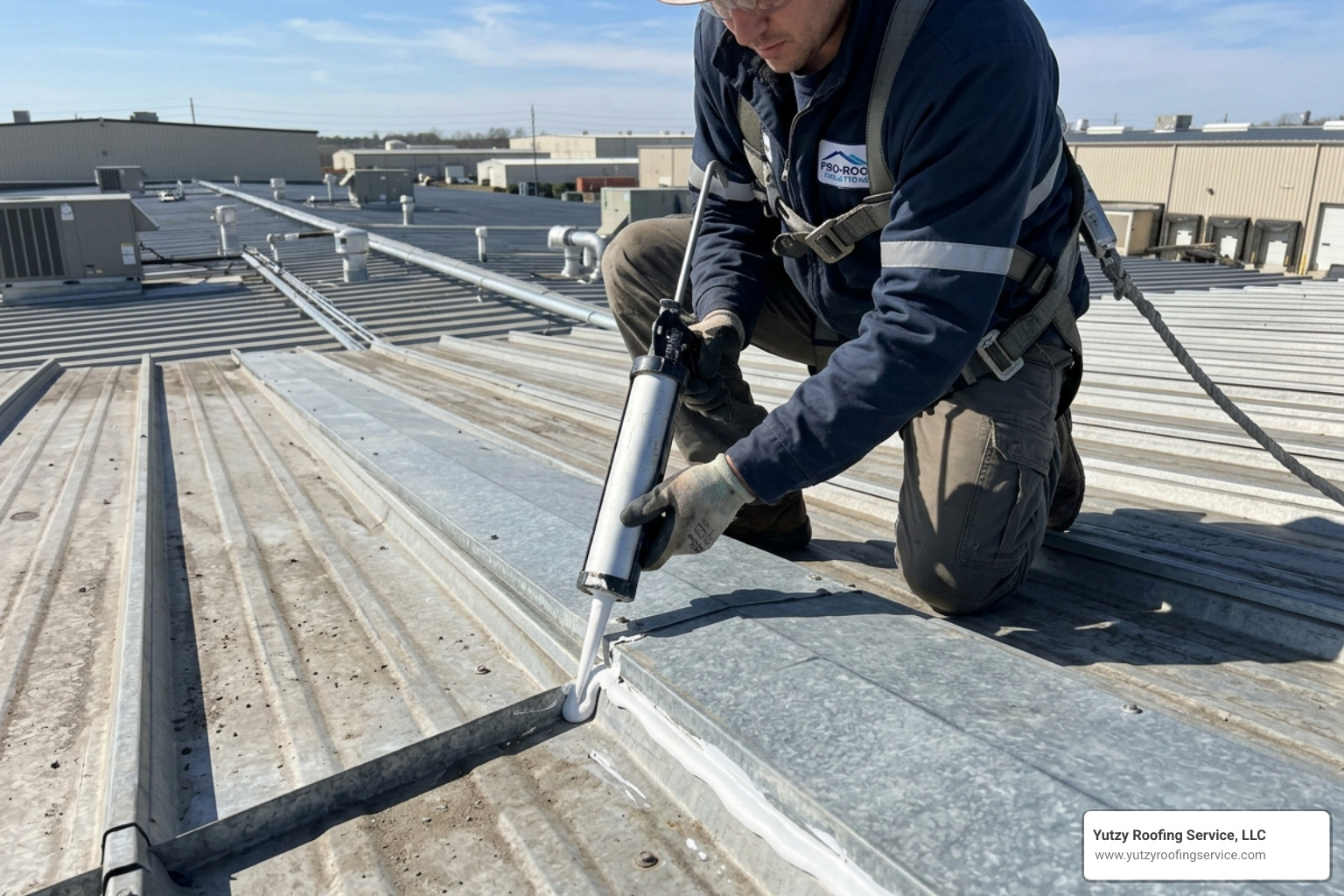
When we use a product like Henry 295 Metal Seam Sealer: Durable, Flexible Sealing for Metal Roof Seams, we aren’t just dabbing it on. For fasteners, we apply a “dollop” that completely encapsulates the head and the base, creating a seamless cap.
For seams, we follow these professional steps:
- Bead Consistency: We typically use a 1/4″ to 3/8″ bead. A 9.5 oz cartridge will give you about 29 feet of coverage with a 1/4″ bead.
- Tooling: Unlike bathroom caulk, you generally don’t want to “smear” or “tool” metal roof sealant too thin. It needs thickness (body) to handle the thermal expansion of the panels.
- Masking: For high-visibility areas, we use masking tape to ensure clean, professional lines, removing the tape while the sealant is still “tack-free” (usually within 10-15 minutes).
Longevity, Costs, and Maintenance of Sealant Systems
How long does it last? This is the million-dollar question. While a metal roof might last 50 years, the metal roof sealant usually has a service life of 10 to 20 years. This discrepancy is why regular inspections are non-negotiable.
If you ignore your sealant, you’ll eventually hear that dreaded Drip Drip Drip. Identifying a leak early can mean a $500 maintenance visit instead of a $50,000 structural repair.
The Economics of Sealing:
- Individual Tubes: High-quality sealant typically costs between $6 and $12 per tube.
- Butyl Tape: Rolls generally run from $3 to $8 depending on the width and thickness.
- Commercial Quantities: For large-scale restorations, we often use 5-gallon pails of mastic-grade sealants, which can cost anywhere from $150 to $250 per pail.
When you consider that a single tube can seal dozens of fasteners, the ROI is massive. You are essentially spending pennies to protect a roof structure worth thousands.
Common Mistakes to Avoid During Metal Roof Repair
In our three decades serving Wisconsin and Minnesota, we’ve seen some “creative” DIY repairs that actually made the problem worse. Here is what not to do:
- Using Topical Butyl: Never use butyl tape as a “patch” on top of a seam. It has no UV resistance. Within a year, the sun will turn it into a gooey, ineffective mess that attracts dirt.
- Sealing Over Rust: If you don’t remove loose rust scale, the sealant will bond to the rust, not the roof. When the rust flakes off, your seal goes with it.
- The “Smear” Technique: Many people try to save money by smearing a thin layer of sealant over a wide area. This is a mistake. Sealant needs “depth” to stretch. A thin film will snap the first time the roof heats up.
- Incompatible Substrates: Be extremely careful with polycarbonate (skylight) panels. Certain metal roof sealant formulas can cause polycarbonate to crack or degrade. Always check the label for “Polycarbonate Safe.”
- Ignoring the Substrate: As we mention in Your Guide To Metal Roof Leak Repair, applying sealant to a wet or oily surface is a recipe for failure. The bond will never form, and the leak will return with the next storm.
Frequently Asked Questions about Metal Roof Sealing
How long does metal roof sealant typically last?
Most high-quality topical sealants last between 10 and 20 years. However, environmental factors in places like Wausau or Marshfield—such as heavy snow sitting on the roof or extreme UV exposure—can shorten this lifespan. We recommend a professional inspection every 2–3 years to check for “alligatoring” (small cracks) or loss of adhesion.
Can sealant be applied directly over rusted metal?
Yes, but with caveats. You must remove “loose” rust with a wire brush or pressure washer. Some products, like rubberized elastomeric sealants, contain rust inhibitors that “lock down” light oxidation. However, for heavy rust, a dedicated rust-inhibitive primer is always the best practice before sealing.
Is metal roof sealant paintable?
Many are, but not all. Most elastomeric and polyurethane sealants can be painted with a high-quality acrylic latex paint once they have cured (usually after 1–2 hours). If you are using a translucent silicone, it is generally not paintable. If aesthetics matter, look for sealants that are color-matched to industry-standard metal roof colors.
Conclusion
Choosing the right metal roof sealant isn’t just a maintenance chore—it’s an investment in the longevity of your business’s physical home. Whether you’re dealing with a leaky seam in Appleton or a rusted fastener in Madison, the goal is the same: a watertight, flexible seal that can stand up to the elements.
At Yutzy Roofing Service, LLC, we specialize in taking the guesswork out of roof maintenance. We don’t just “patch” leaks; we provide comprehensive metal roof restoration services designed to extend your roof’s life by decades. Our work is backed by an up to 18-year non-prorated renewable warranty, giving you peace of mind that your “deal” is truly sealed.
If you’re noticing drips or just want to stay ahead of the Wisconsin weather, don’t wait for the next heavy rain. More info about metal roof services is just a click away, or you can reach out to our team in Marshfield, Green Bay, or any of our other service locations for an expert evaluation. Let’s make sure your roof stays as tough as the business it protects!
