
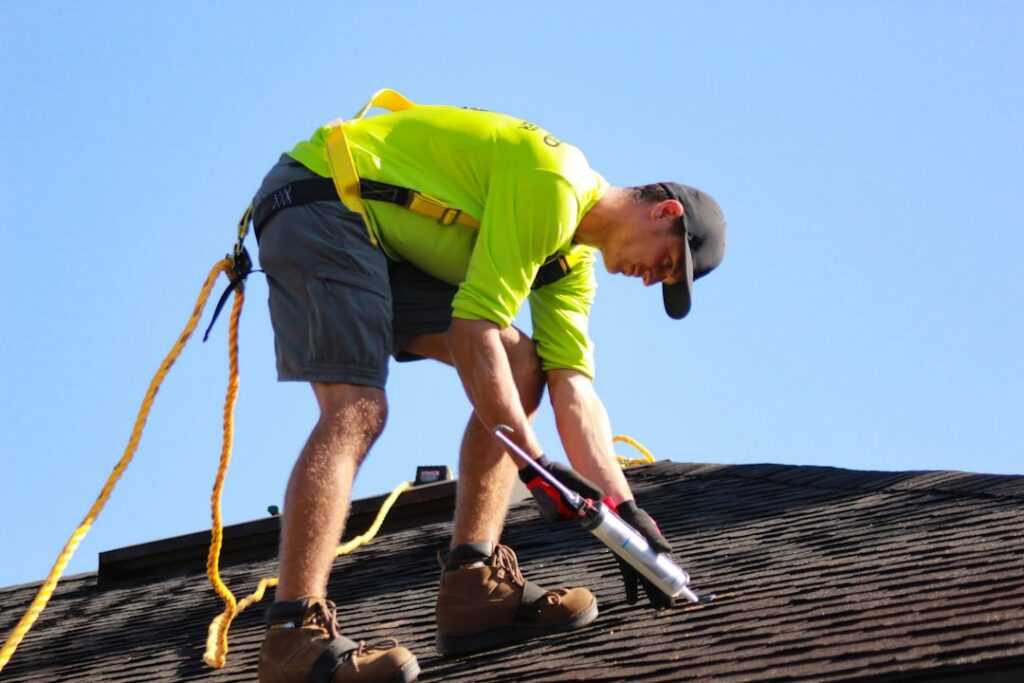
What Commercial Property Owners Need to Know About Tar and Gravel Roof Repair
Commercial roofing tar gravel repair is one of the most common maintenance challenges for flat-roof building owners across Wisconsin — and ignoring even a small problem can turn into a very expensive one fast.
Here’s a quick answer to what most property owners want to know:
- Small cracks and blisters can often be repaired by cleaning the area, applying roofing cement, embedding reinforcement fabric, and replacing gravel
- Repair costs typically run $5–$10 per square foot, depending on damage extent
- Repairs make sense when the roof is under 20 years old and damage is localized
- Replacement is smarter when insulation is saturated, the deck is rotting, or repairs are happening repeatedly
- Professional inspection is the right first step before spending anything
Wisconsin’s freeze-thaw cycles are especially brutal on built-up roofing (BUR) systems. Asphalt becomes brittle in extreme cold, and summer heat causes blistering and gravel displacement. The result? Leaks that travel under membrane layers before showing up inside your building — making them tricky to trace without the right expertise.
I’m Josh Yutzy, and my family has been repairing and restoring commercial tar and gravel roofs across Wisconsin since 1995 — commercial roofing tar gravel repair is something we’ve handled on hundreds of flat roofs in every condition imaginable. In this guide, I’ll walk you through exactly what’s happening with your roof, how repairs work, and when it’s smarter to stop patching and start fresh.
Understanding the Mechanics of a Tar and Gravel Roof
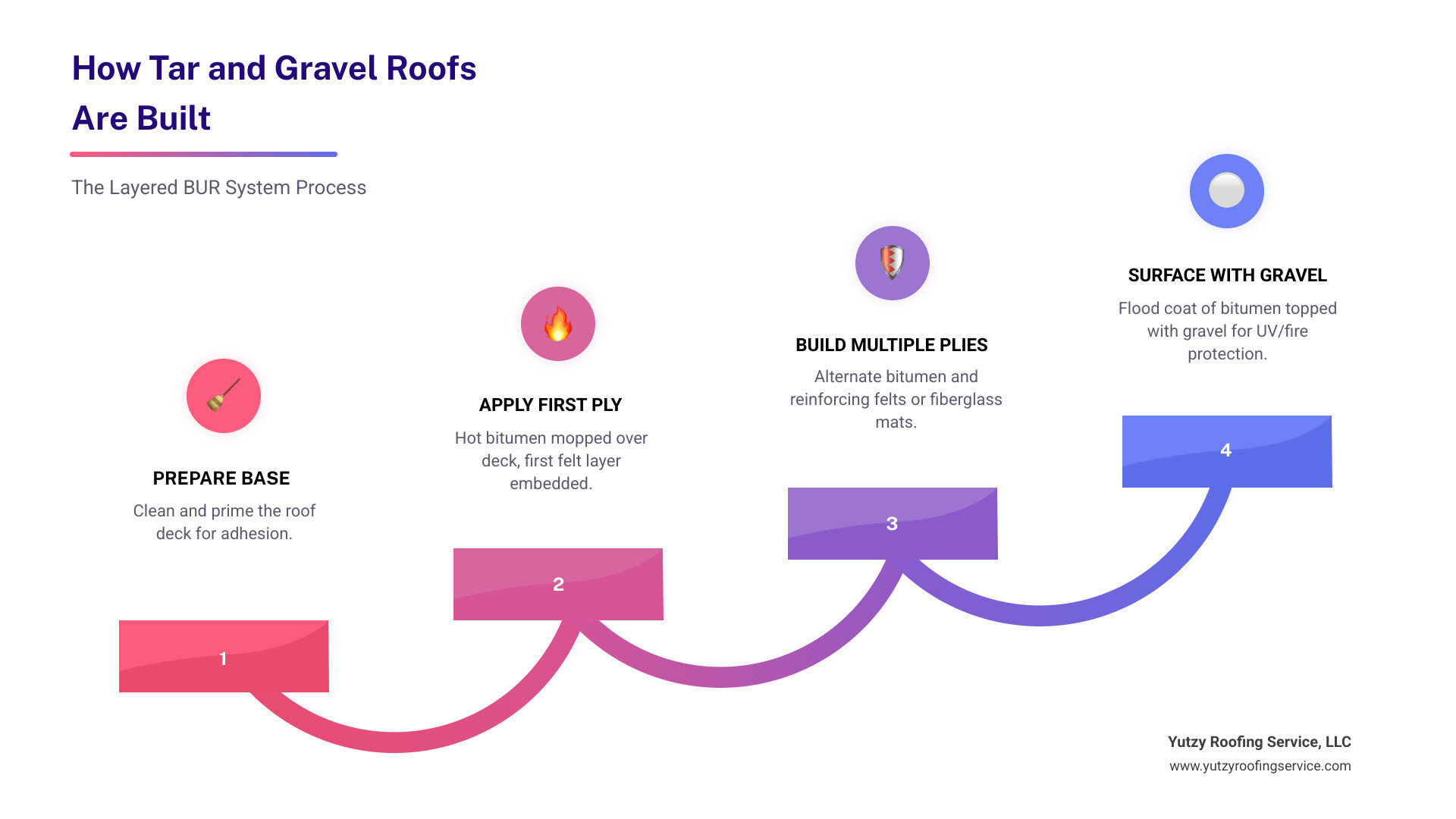
To understand how to fix these roofs, we first have to look at how they are built. A tar and gravel roof, technically known as a Built-Up Roof (BUR), is essentially a “sandwich” of protection. We create these systems by layering bitumen (asphalt or coal tar) with reinforcing fabrics called roofing felts or fiberglass mats.
The process usually involves:
- Bitumen Layers: Hot asphalt is mopped onto the roof deck or insulation.
- Roofing Felt: A layer of felt is embedded into the hot tar. This provides the structural integrity and tensile strength of the roof.
- Repetition: This process is repeated three to five times, creating a thick, multi-ply waterproof membrane.
- Gravel Topcoat: Finally, a “flood coat” of hot bitumen is applied, and a layer of pea gravel or crushed stone is embedded into it.
This system has been a staple in commercial roofing for over a century because it is incredibly tough. The multi-layer approach means that if the top layer is punctured, there are several “backups” underneath to keep the water out. However, as the asphalt ages, it loses its oils and becomes brittle—a process accelerated by the harsh sun in the summer and the deep freezes we see in places like Wausau and Eau Claire. When the asphalt loses its flexibility, it can no longer expand and contract with the building, leading to the common issues we see during what-are-the-most-common-commercial-roof-repairs.
Identifying When You Need Commercial Roofing Tar Gravel Repair
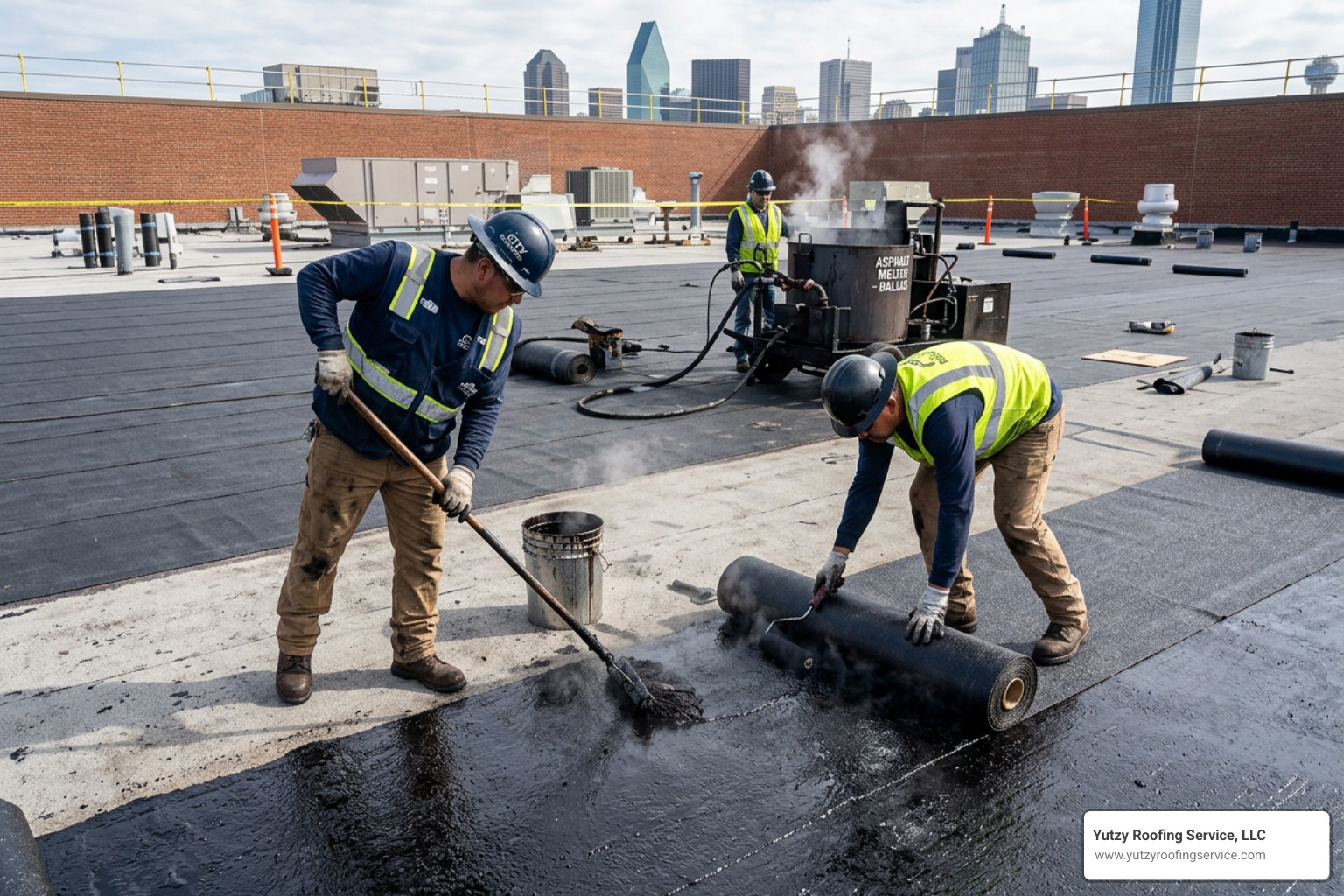
Knowing when your roof is crying out for help is half the battle. Because the gravel hides the underlying membrane, damage isn’t always obvious until you see a puddle on your warehouse floor. However, there are several “early warning signs” that indicate you need commercial roofing tar gravel repair.
- Blistering: These look like small bubbles or “humps” in the roof. They occur when moisture or air gets trapped between the felt layers. As the sun heats the roof, the air expands, stretching the membrane.
- Alligatoring: This is a classic sign of aging. The bitumen begins to crack in a pattern that looks like the skin of an alligator. This means the asphalt is drying out and losing its waterproofing ability.
- Ponding Water: If you see standing water on your roof 48 hours after a rainstorm, you have a drainage issue. This extra weight and constant moisture can break down the tar layers much faster than usual.
- Gravel Scouring: Strong winds or heavy rain can push the gravel around, leaving “bald spots.” Without gravel, the tar is exposed to UV rays, which will destroy it in short order.
Ignoring these signs can lead to structural rot, which is why the-critical-importance-of-commercial-roof-leak-repair-explained cannot be overstated for Wisconsin business owners.
Locating Leaks and Punctures
Finding a leak on a tar and gravel roof is a bit like being a detective. Water rarely drips straight down from where it entered. It often travels along the felt layers or the roof deck before finding a hole in the ceiling.
When we come out for an inspection in Madison or Green Bay, we use several methods to find the source:
- Infrared Thermography: This is our “secret weapon.” We use thermal cameras at night. Since wet insulation holds heat longer than dry insulation, the leak source literally glows on our screen.
- Interior Inspection: We look for water stains on the underside of the deck or on ceiling tiles.
- Visual Check of Flashing: Most leaks happen at “terminations”—where the roof meets a wall, a vent pipe, or a chimney. We look for gaps or cracked sealants in these high-stress areas.
If you are currently dealing with water inside your building, check out our guide on what-to-do-if-your-commercial-roof-is-leaking for immediate steps to take.
Common Signs of Commercial Roofing Tar Gravel Repair Needs
Beyond the obvious leaks, keep an eye out for these subtle red flags:
- Exposed Felt: if you can see the fabric layers, the gravel and flood coat are gone. This is an emergency repair.
- Clogged Drainage: If your scuppers or drains are full of gravel and debris, water will back up and find its way through the seams.
- Cracked Bitumen: Visible cracks in the tar around vents or edges need immediate attention.
For more proactive tips, we recommend reading our 6-tips-for-preventing-commercial-roof-leaks.
The Step-by-Step Process for Commercial Roofing Tar Gravel Repair
If the damage is localized, a professional commercial roofing tar gravel repair can extend the life of your roof by several years. Here is how we handle a standard patch:
- Surface Preparation: We start by “spudding” the gravel. This involves using a flat-bladed tool to scrape away the embedded gravel from the repair area until the smooth bitumen layer is exposed.
- Cleaning: The area must be bone-dry and free of dust. We often use blowers or rags to ensure the new materials will stick.
- Applying Roofing Cement: We apply a thick layer of professional-grade roofing cement (sometimes called “mastic” or “flashing cement”) over the crack or hole.
- Reinforcement: We embed a piece of fiberglass mesh or roofing fabric into the wet cement. This prevents the patch from cracking as the building moves.
- Final Seal: Another layer of roofing cement is applied over the fabric, feathering the edges so water flows over it rather than under it.
- Gravel Replacement: While the cement is still wet, we sprinkle the original gravel back onto the patch to protect it from the sun.
Repairing Blisters and Cracks
Blisters require a slightly different approach known as the X-cut technique:
- The Cut: We carefully cut an “X” into the blister using a utility knife.
- Drying: If there is moisture inside, it must be allowed to dry completely. We never seal moisture into a roof!
- The Patch: We lift the flaps, apply roofing tar underneath, and press them back down.
- The Overlay: We then follow the same fabric-and-cement reinforcement steps mentioned above to ensure the seam is permanently sealed.
Repair vs. Replacement: Making the Cost-Effective Choice
As a business owner, you have to decide: do I keep patching this, or is it time for a new roof? A well-maintained BUR roof can last 20 to 30 years. However, once it hits that 25-year mark in Wisconsin’s climate, the asphalt is often too brittle to hold a patch effectively.
| Feature | Repair | Replacement / Restoration |
|---|---|---|
| Average Cost | $5 – $10 per sq. ft. | $700 – $800 per “square” (100 sq. ft.) |
| Lifespan Added | 1 – 3 years | 15 – 20+ years |
| Best For | Localized punctures, new vents | Widespread leaks, old age |
| Insulation | Keeps existing | Replaces saturated boards |
One of the biggest factors in this decision is saturated insulation. If water has soaked into the insulation boards under the tar, the roof loses its R-value (insulating power), and your energy bills will skyrocket. Worse, that trapped moisture can lead to deck rot, which can eventually cause a structural collapse.
To help you decide, we’ve put together a detailed breakdown: commercial-roof-repair-or-replacement-whats-the-best-choice.
Modern Alternatives to Commercial Roofing Tar Gravel Repair
If your tar and gravel roof is aging but the structure is still sound, you might not need a full “tear-off.” At Yutzy Roofing Service, we specialize in commercial roofing restoration.
Instead of hauling tons of gravel to a landfill, we can often clean the roof, remove the loose rock, and apply a spray foam coating or a fluid-applied membrane. These systems create a seamless, white, reflective surface that can:
- Stop all leaks permanently.
- Lower roof surface temperatures by up to 50 degrees.
- Provide a renewable warranty of up to 18 years.
You can learn more about these options on our tag/tar-and-gravel-roof page.
Frequently Asked Questions about Tar and Gravel Roofs
How long does a tar and gravel roof typically last?
In our experience serving Wisconsin and Minnesota, a professionally installed BUR system lasts between 20 and 30 years. The key variable is maintenance. If you clear your drains and fix small blisters early, you’ll get 30 years. If you ignore it, you might be looking at a replacement by year 15.
Is it safe to perform DIY repairs on a commercial flat roof?
While some small patches are manageable for a maintenance crew, we generally advise against DIY for commercial properties. There are significant liability risks if a worker falls, and using the wrong materials (like putting “wet-patch” on a dry roof) can actually trap moisture and accelerate rot. Furthermore, improper DIY repairs can often void your existing manufacturer warranty.
Why is gravel necessary on a flat roof?
Gravel isn’t just there for looks! It serves four critical purposes:
- UV Protection: It shields the asphalt from the sun’s rays, which would otherwise “cook” the tar and make it brittle.
- Fire Resistance: Gravel is naturally fireproof and provides a high fire rating for the building.
- Weight (Ballast): It helps hold the roof down during high winds.
- Heat Dissipation: It creates a small amount of shade and air space, keeping the building slightly cooler.
Conclusion
Managing a commercial property is hard enough without worrying about a waterfall in your warehouse. Whether you need a simple commercial roofing tar gravel repair in Appleton or a full-scale restoration in Madison, the goal is always the same: keep the water out and protect your investment.
At Yutzy Roofing Service, LLC, we don’t just “slap a band-aid” on your problems. We provide long-term solutions, including spray foam coatings and metal roof restorations, backed by our industry-leading up to 18-year non-prorated renewable warranty. We’ve spent decades helping building owners in Wausau, Green Bay, and beyond avoid the “sunk cost fallacy” of endless repairs.
If you want to ensure your roof stays in top shape for the next decade, check out our guide on how-to-maintain-a-tar-and-gravel-roof or contact us today for a professional inspection. We’ll help you find the most cost-effective way to stay dry—without getting buried in gravel.
