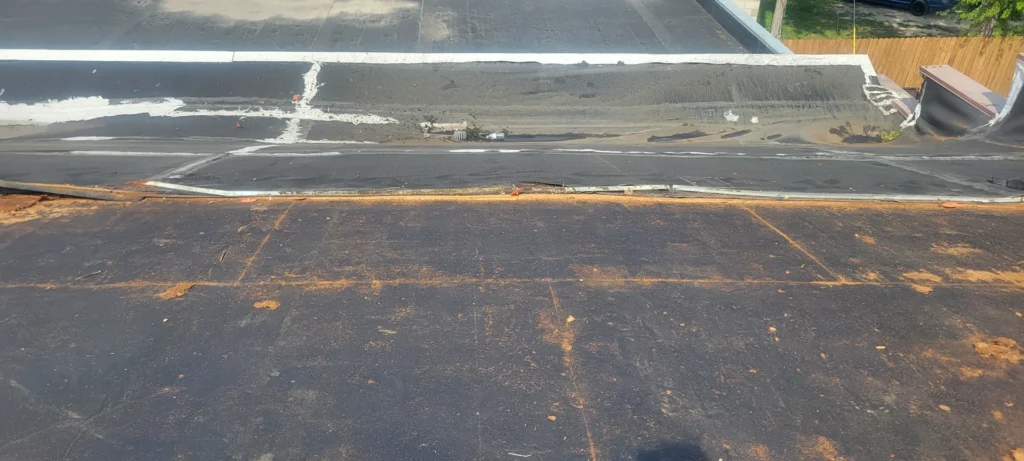
Why Commercial Roof Leak Repair Can’t Wait
If you’re dealing with roof leak repair on a commercial property, here’s what you need to know right away:
Quick Answer: What to Do About a Commercial Roof Leak
- Control the damage — move equipment and valuables, place buckets, and shut off power in affected areas
- Document everything — photograph all water stains, drips, and damage for insurance purposes
- Apply temporary protection — use roofing cement or an emergency tarp to stop active water intrusion
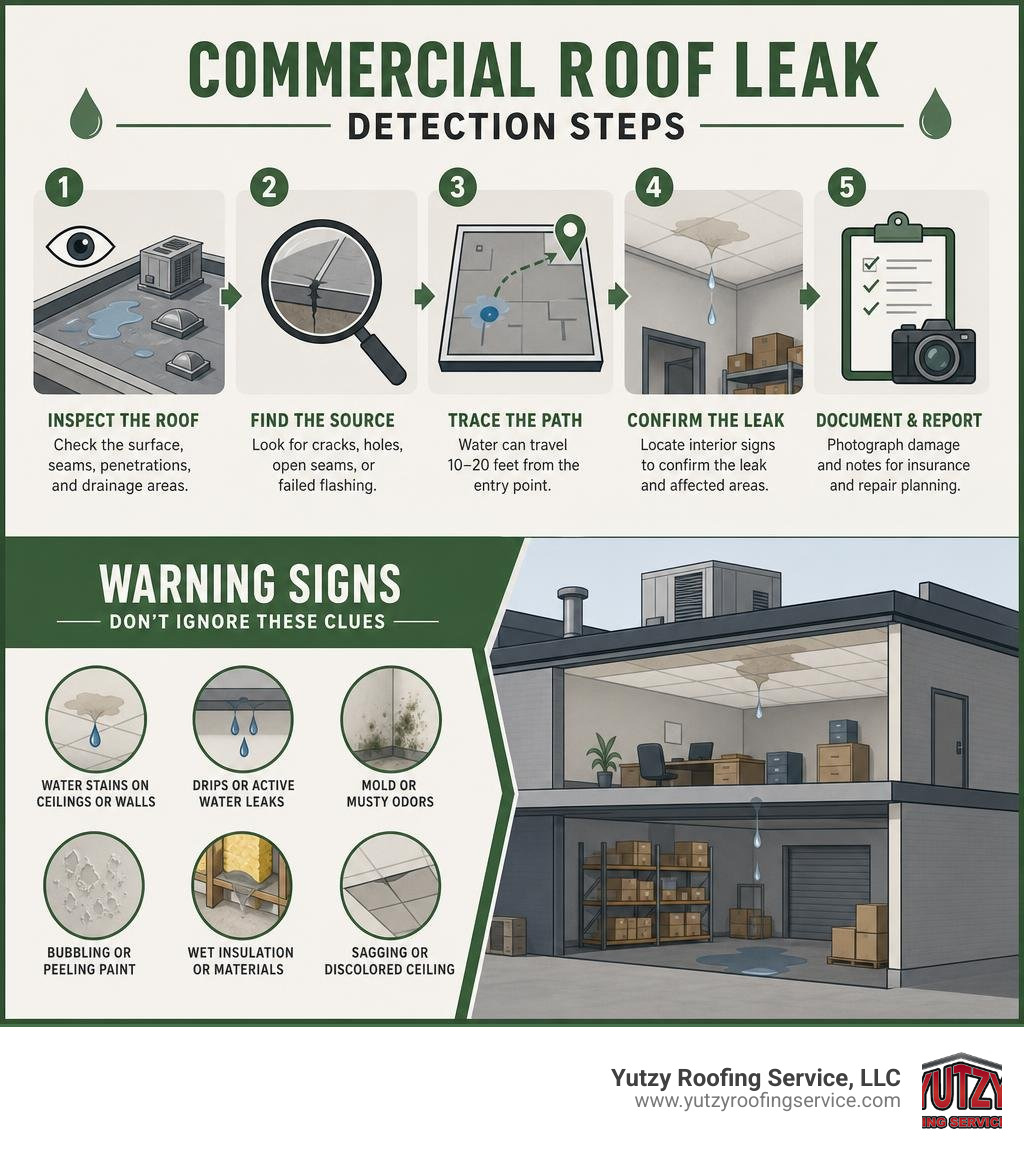
- Locate the source — water often travels 10–20 feet from the entry point before dripping inside
- Call a licensed commercial roofer — for a proper diagnosis and lasting repair
A single slow drip after a storm can seem minor. But water is patient. Left unaddressed, even a small commercial roof leak can silently rot framing, saturate insulation, trigger mold growth, and eventually compromise your building’s structure — turning a few-hundred-dollar repair into a five-figure problem.
For commercial property owners in Wisconsin, the stakes are even higher. Freeze-thaw cycles, ice dams, and punishing summer heat put constant stress on roofing membranes, seams, and penetrations. The average roof leak repair costs around $1,500, but ignoring early warning signs can push that number into the tens of thousands.
I’m Josh Yutzy of Yutzy Roofing Service, LLC — our family has been handling roof leak repair across Wisconsin since 1995, and we’ve seen how fast a manageable leak becomes a structural emergency. In this guide, I’ll walk you through exactly how to find, fix, and prevent commercial roof leaks before they drain your budget.
Common Causes and Identification of Commercial Roof Leaks
Commercial roofs are complex systems. Unlike steep-slope residential roofs that shed water quickly, commercial flat and low-slope roofs must manage water over vast, horizontal surfaces. When water cannot drain efficiently, it finds the path of least resistance.

Understanding why your commercial roof is leaking is the first step toward a permanent solution. Here are the most common commercial roof leak causes we encounter across our service areas in Wisconsin and Minnesota:
- Ponding Water: When flat roofs develop low spots or experience clogged drainage systems, water pools on the surface. If water stands on a membrane for more than 48 hours without evaporating or draining, it puts immense hydrostatic pressure on the seams, eventually forcing its way through.
- Membrane Degradation: Exposure to intense UV radiation, extreme temperature fluctuations (from sub-zero winter nights to 90°F summer days), and foot traffic causes EPDM, TPO, and PVC membranes to shrink, crack, and blister over time.
- Wind Damage and Storm Debris: High winds can lift membrane edges, tear flashing away from parapet walls, or blow heavy debris onto the roof, puncturing the water barrier.
- Failed Seams: The seams where membrane sheets meet are the most vulnerable parts of a flat roof. Over time, adhesives degrade, or heat-welded seams pull apart due to building expansion and contraction.
- Compromised Flashings: Flashings seal the transitions around roof edges, valleys, and penetrations. When flashing cracks, rusts, or pulls away from walls, water flows directly into the building’s interior envelope.
- Damaged Penetrations: HVAC units, exhaust pipes, vents, and skylights require penetrations through the roof deck. The boots, collars, and sealants protecting these areas dry out, crack, and fail far faster than the primary roof membrane.
Spotting the Signs of Commercial Water Damage
You don’t always have to climb onto the roof to know you have a leak. In fact, 60% of hidden water damage starts above ceilings, quietly saturating insulation and wood framing before a single drip hits your floor. To catch problems early, keep an eye out for these interior warning signs:
- Ceiling Stains: Yellow, brown, or dark rings on ceiling tiles or drywall are classic indicators of water intrusion.
- Mold Growth: Mold thrives in dark, damp spaces. If you notice dark spotting or fuzzy growth on ceiling tiles, walls, or roof decking, water has been present for at least 24 to 48 hours.
- Musty Odors: A persistent, damp, earthy smell in certain areas of your building is a strong indicator of trapped moisture and mold growth above the ceiling grid.
- Bubbling Paint or Soft Drywall: Water migrating down interior walls will cause paint to blister and drywall to soften or sag.
For a deeper look into identifying early warning signs before they escalate, read Your Guide to Roof Leak Repairs: How to Spot a Leaking Roof.
How to Locate the Source for Commercial Roof Leak Repair
Finding the exact entry point of a commercial roof leak can feel like looking for a needle in a haystack. Because of gravity and the slope of the roof deck, water frequently migrates along roof rafters, metal decks, or concrete slabs before dripping into your workspace. A leak showing up over an office desk might actually originate 20 feet away near an HVAC unit.
To trace a leak back to its source, we use a systematic approach:
- Plenum and Attic Inspection: We go above the ceiling grid with a high-powered flashlight to inspect the underside of the roof deck. We look for water trails, rusted metal deck panels, damp insulation, or visible daylight around pipe penetrations.
- The Garden Hose Test: If the leak is elusive, we perform a controlled water test during dry weather. Working in pairs—with one technician on the roof and another inside the building—we use a garden hose to soak low areas of the roof first, slowly working our way uphill around drains, seams, and penetrations until the interior drip starts.
- Physical Component Flexing: For rubber components like plumbing vent boots, we physically flex the material. Hairline cracks that are invisible to the naked eye under normal conditions will open up when flexed, revealing the leak source.
- Infrared Thermography: Wet insulation retains heat longer than dry insulation. By scanning the roof with an infrared camera after sunset, we can pinpoint the exact boundaries of trapped moisture beneath the membrane, showing us exactly where the water is getting in.
Best Methods and Products for Commercial Roof Leak Repair
Once the leak source is identified, selecting the right repair method and product is critical. Using the wrong sealant can cause chemical incompatibility, melting the membrane or failing to adhere entirely.
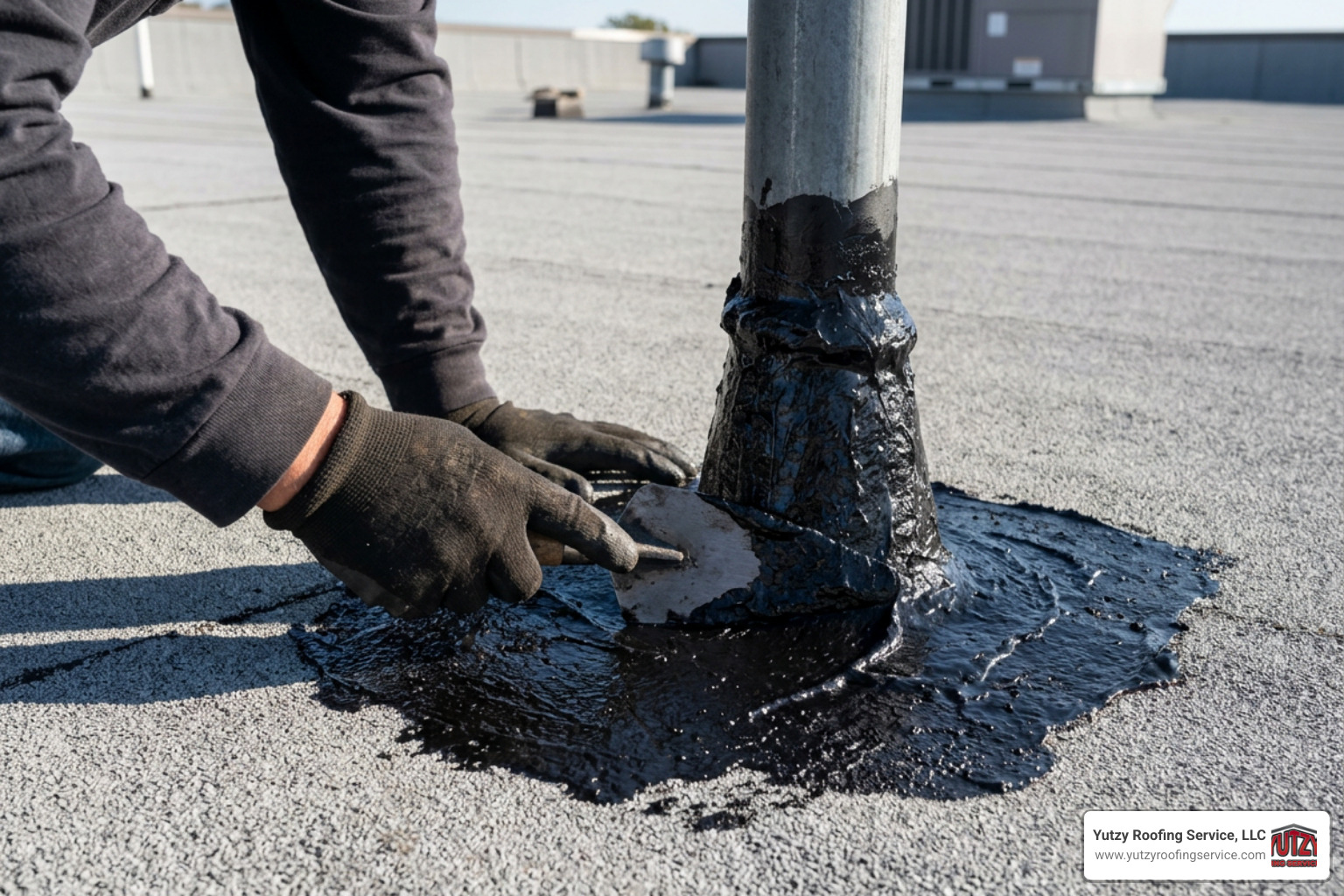
For emergency repairs, especially during active rain or cold weather, a high-performance rubberized wet patch sealant is an invaluable tool. Products like Henry 208R Rubberized Wet Patch are specifically engineered to stop leaks instantly, even in standing water.
To ensure a durable, long-lasting patch, we recommend the 3-course patch method:
- Clean the Area: Remove loose dirt, gravel, and standing water from the repair zone.
- First Sealant Coat: Apply a 1/8-inch-thick layer of rubberized wet patch using a roofing trowel, spreading it at least 2 to 3 inches beyond the damaged area. A single gallon of Henry 208R covers up to 12.5 square feet at this thickness.
- Embed Reinforcing Fabric: Press a heavy-duty polyester or fiberglass reinforcing mesh directly into the wet sealant, smoothing out any wrinkles or air bubbles.
- Second Sealant Coat: Apply a second layer of wet patch over the fabric, completely encapsulating the mesh.
- Cure Time: Let the patch cure. If you plan to apply a reflective aluminum or silicone coating over the repair, you must wait at least 30 days to allow the solvents to fully release.
Flat Roof Leak Repair Solutions
Flat commercial roofs require specialized membranes and coatings to handle standing water and thermal movement. Depending on your building’s roof type, we utilize several advanced repair methods:
- EPDM Membrane Repairs: For rubber roofs, we clean the damaged area with a specialized primer, apply heavy-duty EPDM adhesive, and roll on a self-adhering EPDM patch. This creates a watertight, flexible bond that moves with the roof.
- Spray Polyurethane Foam (SPF) Coatings: For seamless, lightweight, and highly insulated repairs, SPF coatings are applied to seal cracks, fill low spots, and eliminate ponding water.
- Silicone and Acrylic Restoration Coatings: Instead of tearing off a aging roof, applying a high-solids silicone coating over the entire surface seals all existing leaks, reinforces seams, and provides excellent UV resistance.
To understand how these systems work in detail, check out Flat Roof Leak Repair: How Does It Work?.
Restoring Metal Roof Penetrations and Seams
Metal roofs are highly durable, but they are prone to leaks at fasteners, seams, and penetrations due to “thermal shock”—the constant expansion and contraction of metal panels as temperatures change.
Our approach to metal roof restoration focuses on reinforcing these critical failure points:
- Seam Sealing: We apply a heavy-duty elastomeric brush-grade sealant or butyl tape reinforced with fabric over all horizontal and vertical seams.
- Fastener Tightening and Sealing: Loose or backed-out fasteners are replaced with oversized screws, and each fastener is capped with a dollop of high-performance polyurethane sealant.
- Penetration Restoration: We seal around chimneys, vents, and HVAC curbs using liquid-applied flashing systems that conform to irregular shapes and bond tightly to metal.
To learn more about preserving your existing metal roof, read Your Guide to Metal Roof Leak Repair.
Temporary vs. Permanent Commercial Roof Repairs
When a leak strikes, you must quickly decide whether to apply a quick temporary fix or invest in a permanent repair.
Safety must always come first. Working on a wet, slippery commercial roof carries immense hazards. Always follow OSHA safety guidelines, utilizing personal fall arrest systems (PFAS), safety harnesses, and secure ladders when inspecting or repairing a roof.
| Repair Type | Materials Used | Expected Lifespan | Best Used For |
|---|---|---|---|
| Temporary Patch | Plastic roofing cement, emergency tarps, slip-on vent collars | 1 to 12 months | Active storms, extreme winter cold, holding over until scheduled restoration |
| Permanent Repair | EPDM patches, polyurethane sealants, full vent boot replacements | 5 to 15+ years | Localized physical damage, failed flashings, isolated boot cracking |
| Roof Restoration | Spray foam, full silicone or acrylic liquid-applied membranes | 10 to 18+ years (renewable) | Widespread aging, multiple leaks, ponding water issues |
When to Use a Temporary Tarp or Patch
Temporary repairs are designed to stop the immediate flow of water and protect your building’s interior assets until dry, warm weather allows for a permanent fix.
- Active Storms: Never attempt a permanent repair during a heavy rainstorm. Instead, perform interior water mitigation (using buckets and plastic sheeting) and apply an emergency tarp or wet patch sealant from the exterior only if it is safe to do so.
- Winter Weather Constraints: In Wisconsin and Minnesota, winter temperatures make it difficult for permanent adhesives and coatings to cure. A temporary rubberized wet patch formulated for cold-weather spreading (down to 0°F) will keep your building dry until spring.
- Budget Planning: If you are planning a full roof restoration in the near future, temporary patches can keep leaks at bay for a few months while you finalize project financing.
For more on why addressing these leaks quickly is vital, see The Critical Importance of Commercial Roof Leak Repair Explained.
Implementing Permanent Commercial Roof Leak Repair
Permanent repairs restore the structural integrity of your roofing system. This involves removing damaged insulation, replacing rotted roof decking, and installing new, high-performance membranes or flashings.
At Yutzy Roofing Service, LLC, we specialize in high-performance commercial roof restorations. By applying advanced spray foam and fluid-applied coatings over your existing roof, we can eliminate seams, seal all leaks, and provide an up to 18-year non-prorated renewable warranty. This approach avoids the massive cost and business disruption of a complete roof tear-off while delivering long-term durability.
Cost Factors and Insurance Coverage for Commercial Roof Repairs
Budgeting for roof leak repair requires understanding the variables that influence pricing and knowing how to navigate commercial property insurance claims.
Understanding Commercial Roof Repair Costs
The cost of repairing a commercial roof leak can vary widely based on several key factors:
- Extent of Damage: A simple puncture in an EPDM membrane is quick and inexpensive to repair. However, if water has saturated large areas of insulation or rotted the wood or metal decking beneath, repair costs will escalate significantly.
- Roof Accessibility: High-rise buildings, steep slopes, or roofs with limited access points require specialized safety equipment, cranes, or scaffolding, which increases labor costs.
- Material Costs: Specialized commercial materials—such as EPDM flashing tape, polyurethane sealants, and high-solids silicone coatings—cost more than basic retail patching compounds but offer vastly superior lifespans.
- Labor Rates: Commercial roofing requires specialized training and certification. Labor rates reflect the expertise required to safely and correctly repair complex commercial systems.
On average, minor commercial repairs run between $150 and $500, while moderate repairs involving flashing, chimneys, or valleys range from $400 to $1,500. Major structural repairs or localized membrane replacements can cost $1,000 to $3,500+.
What to Do If Your Commercial Roof Is Leaking
If you discover an active leak in your commercial facility, taking swift, organized action will minimize damage and streamline your insurance claim:
- Mitigate the Damage: Move computers, inventory, and equipment away from the drip. Place buckets to catch water, and carefully puncture bulging ceiling tiles to release trapped water safely.
- Document Everything: Take clear photos and videos of the active leak, the damaged ceiling tiles, and any ruined property or equipment.
- Contact a Professional: Have a licensed commercial roofing contractor perform an emergency inspection. Request a detailed digital report with photos of the roof damage and a written repair estimate.
- File Your Claim Promptly: Submit your documentation and the roofing contractor’s report to your insurance company. Most commercial property insurance policies cover roof leaks caused by sudden, accidental events (like wind, hail, or fallen trees), but they exclude leaks caused by wear and tear, lack of maintenance, or age.
For a step-by-step checklist on handling an active leak, read What to Do If Your Commercial Roof Is Leaking.
Frequently Asked Questions about Commercial Roof Leaks
Can you repair a commercial roof leak in wet or cold conditions?
Yes, but you must use products specifically formulated for these environments. Standard roofing adhesives and sealants require completely dry surfaces and temperatures above 40°F to adhere and cure.
However, high-performance rubberized wet patches (like Henry 208R) are designed with 100% wet surface adhesion per ASTM D3409. These products displace water, allowing them to bond securely to wet membranes and metal even under standing water or in temperatures as low as 0°F.
How long does a rubberized wet patch repair last?
While a rubberized wet patch is incredibly effective at stopping leaks instantly, it is considered a temporary to semi-permanent fix. Under normal UV exposure and thermal cycling, surface-applied roofing cement will begin to dry out, shrink, and crack within 1 to 3 years. It is an excellent stop-gap solution, but it should eventually be replaced or covered with a permanent, reinforced repair system.
When should you call a professional commercial roofer?
While minor maintenance tasks can sometimes be handled by in-house facilities teams, you should always call a professional commercial roofer if:
- The roof deck feels soft, spongy, or saggy underfoot (indicating structural wood or metal rot).
- Multiple leaks are occurring simultaneously across the building.
- The leak is located near high-voltage electrical conduits or HVAC units.
- Your roof is currently under warranty (unauthorized DIY repairs will void your coverage).
- You lack the proper OSHA-compliant safety harnesses, ladders, and fall protection equipment.
Conclusion
A leaking commercial roof is a serious threat to your building’s structural integrity, your inventory, and the safety of your occupants. Whether you need an emergency temporary patch to get through a harsh Wisconsin winter or a permanent, energy-efficient roof restoration, acting quickly is the key to minimizing costs and avoiding business disruption.
At Yutzy Roofing Service, LLC, we specialize in helping commercial property owners protect their investments. We provide top-tier commercial roof restoration, spray foam coatings, EPDM repairs, and preventative maintenance across Wisconsin (including Madison, Appleton, Wausau, Eau Claire, Fond Du Lac, Green Bay, and Marshfield) and Minnesota (including Mankato and Rochester). Our seamless, liquid-applied restorations come with up to an 18-year non-prorated renewable warranty, giving you long-term peace of mind.
Don’t let a small drip turn into a costly disaster. Contact us today to schedule a professional roof inspection and keep your building dry for decades to come.
To learn more about keeping your property dry and avoiding costly repair blunders, read our guide on staying dry: how to fix a roof leak and mistakes to avoid.
