

What You Need to Know About Tar Roofs Right Now
A tar roof — also called a built-up roof (BUR) — is one of the most proven flat roofing systems available for commercial buildings. If you own a commercial property in Wisconsin and you’re dealing with leaks, wear, or wondering whether to restore or replace, here’s the short answer:
Quick Facts About Tar Roofs
- What it is: Multiple alternating layers of asphalt and reinforcing felt, topped with gravel
- How long it lasts: 20–30 years with proper maintenance; up to 40+ years with periodic recoating
- Typical installation cost: $3–7 per square foot depending on number of plies
- Repair cost: $5–10 per square foot for localized damage
- Best for: Commercial flat roofs, industrial buildings, and properties needing regular rooftop access
- Biggest risks: Ponding water, blisters, cracked flashing, and UV degradation
- Best restoration option: Liquid rubber coating systems can extend roof life by 10+ years without a full tear-off
Tar roofs have protected commercial buildings for over 100 years. The technology is simple, battle-tested, and when maintained correctly, extremely cost-effective. Wisconsin’s freeze-thaw cycles, heavy snowloads, and summer heat can push any roofing system to its limits — and knowing exactly how BUR works is the first step to protecting your investment.
I’m Josh Yutzy, and at Yutzy Roofing Service, LLC we’ve been installing, restoring, and maintaining tar roof systems across Wisconsin since 1995. In that time, we’ve seen just about every way a built-up roof can succeed — and fail.
Key tar roof vocabulary:
What is a Tar Roof and How Does It Work?
To understand why the tar roof has remained a commercial staple for over a century, you have to look at its core philosophy: redundancy. Unlike modern single-ply membranes (like TPO or EPDM) that rely on a single sheet of synthetic rubber or plastic to keep water out, a built-up roofing (BUR) system uses a multi-layered barrier.
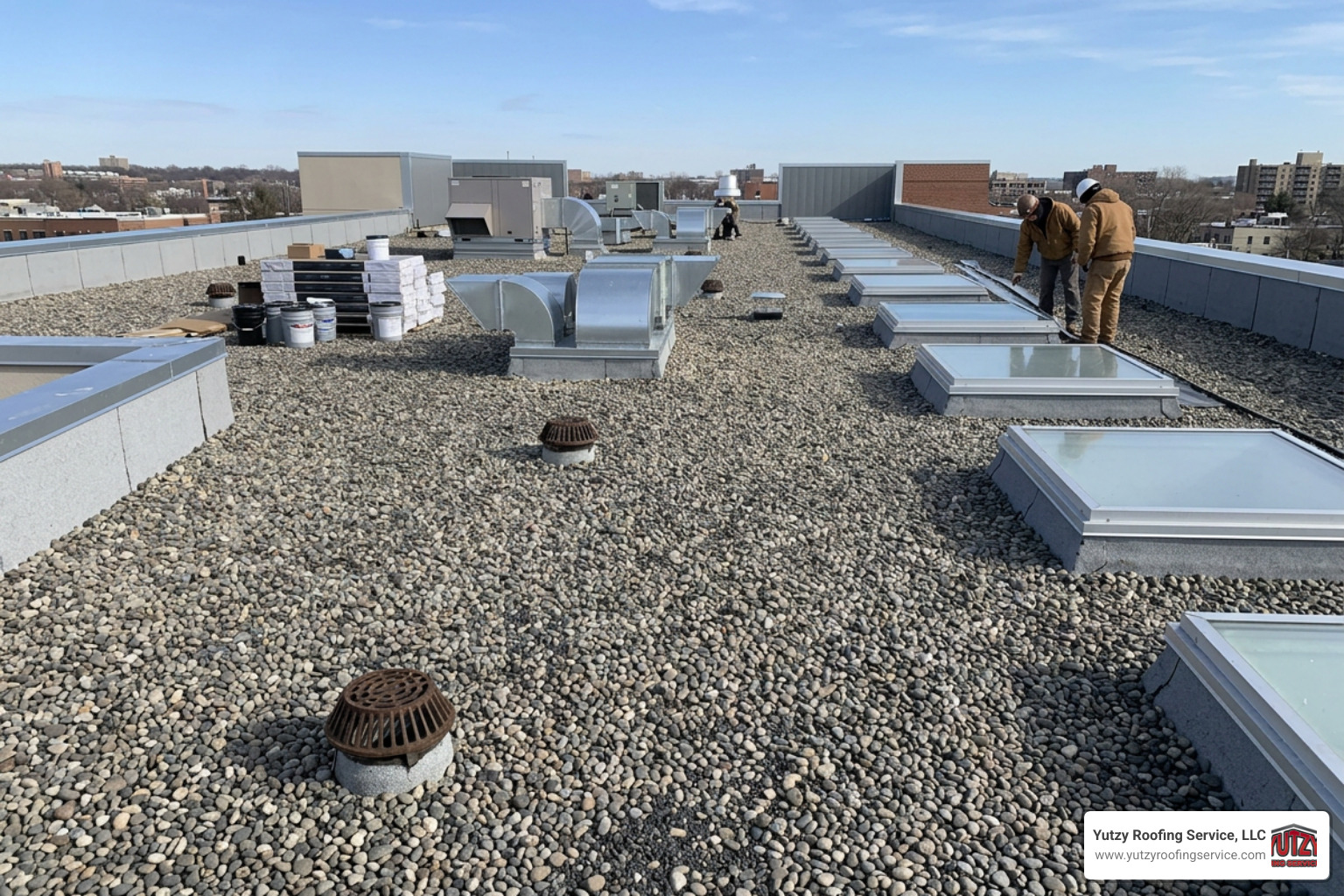
If a sharp object punctures the top layer of a single-ply roof, you have an immediate leak. On a tar roof, a puncture in the top layer merely brings water to the second, third, or fourth water-resistant layer beneath it. This multi-ply redundancy makes BUR exceptionally tough and highly reliable for low-slope commercial structures.
The term “tar roof” is a bit of a colloquialism. In the early days of low-slope roofing, builders used coal tar pitch. Today, most modern built-up systems use liquid asphalt bitumen as the adhesive and waterproofing agent. However, the fundamental application remains the same: alternating layers of reinforcing fabric and liquid waterproofing, finished with a heavy layer of aggregate. For a deep dive into these systems, check out our guide on Roof tar and gravel 101.
The Anatomy of a Built-Up Roofing System
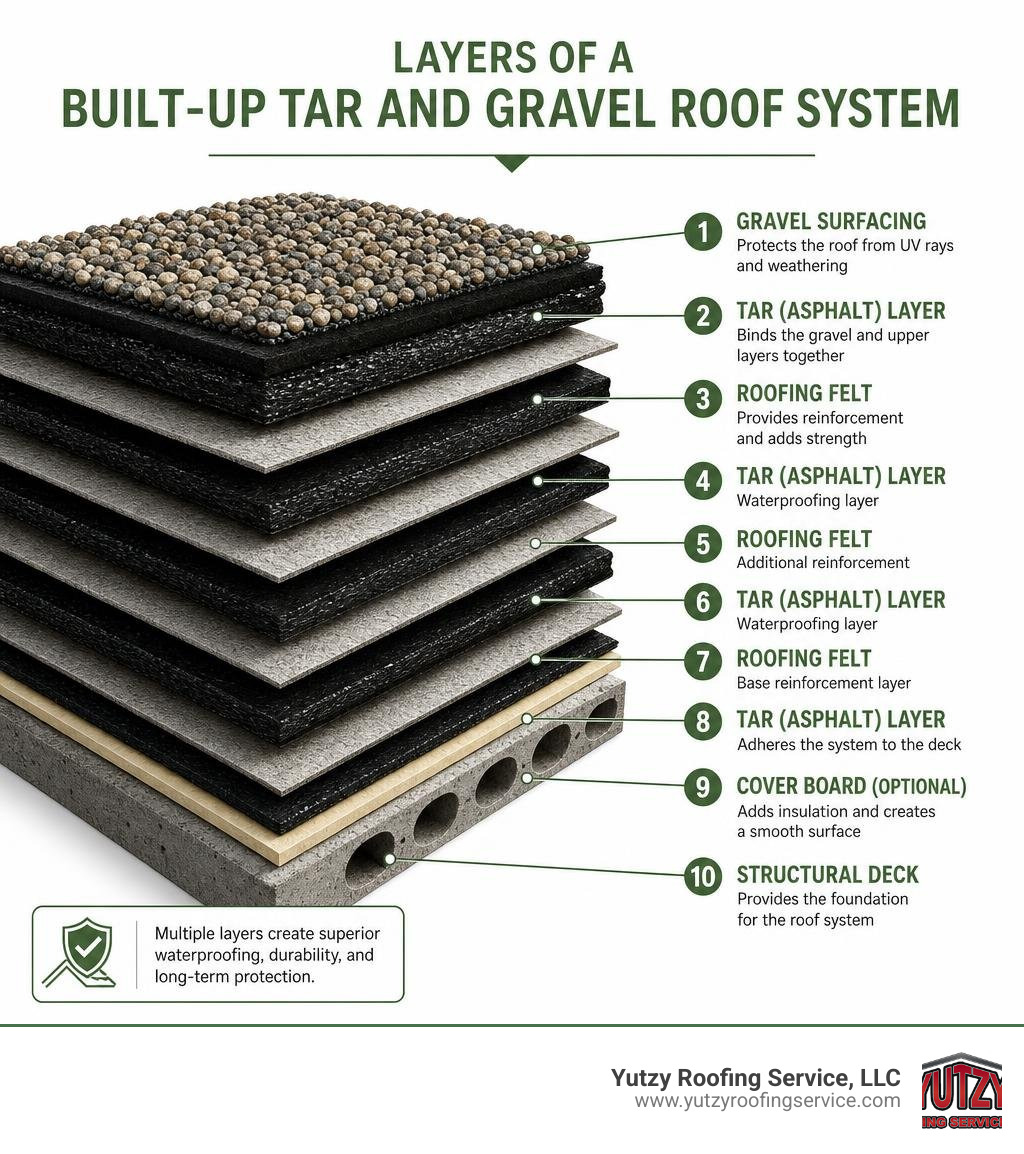
A standard built-up roof is constructed directly on top of the roof deck or rigid insulation boards. The system is assembled on-site, layer by layer, in a process often referred to as “hot mopping.” Here is how the layers stack up from bottom to top:
- The Substrate/Base Sheet: A heavy base sheet is mechanically fastened to the structural roof deck or insulation. This layer provides a stable, flat foundation for the rest of the system.
- The Ply Sheets (Reinforcing Felts): These are rolls of fabric made from fiberglass felt or organic felt. The felts are rolled out over the roof and fully embedded in hot, liquid asphalt. A typical commercial system features 3 to 5 plies. Each additional ply adds structural strength, puncture resistance, and years of service life.
- The Interply Bitumen: This is the “tar” itself. Heated to temperatures between 400°F and 500°F in a specialized roofing kettle, the liquefied asphalt is mopped over each ply sheet, bonding the layers together into a single, seamless, monolithic membrane.
- The Top Flood Coat: Once the desired number of plies is established, a thick, final flood coat of hot bitumen is poured over the entire surface.
- The Aggregate (Gravel Ballast): While the top flood coat is still hot and sticky, workers spread 400 to 600 pounds of gravel, slag, or mineral-surfaced cap sheets per 100 square feet (known as a “square” in roofing terms).
For detailed material specifications and nailing patterns, you can review the Tarco Specification Sheet, manufactured by Tarco, a trusted name in the industry. You can learn more about their full line of underlayments and roll roofing products on the Roofing Products Manufacturer | Underlayments | Tarco website.
Pros and Cons of a Traditional Tar Roof
Like any commercial roofing system, the traditional tar roof comes with its own set of advantages and challenges. It is vital to weigh these carefully before deciding whether to install a new BUR system or restore your existing one.
The Pros:
- Exceptional Waterproofing: The seamless, multi-layered design makes it incredibly difficult for water to find a path into your building.
- Class A Fire Rating: The thick layer of gravel ballast on top provides the highest fire-resistance classification available, protecting your commercial asset from external fire hazards.
- High UV Protection: The gravel layer blocks destructive ultraviolet rays from reaching the underlying asphalt, preventing premature drying, cracking, and degradation.
- Excellent Foot Traffic Tolerance: Unlike delicate single-ply membranes that can be easily punctured by dropped tools or heavy boots, a gravel-ballasted roof is highly resistant to impact. This makes it ideal for commercial buildings with heavy rooftop HVAC equipment that requires regular maintenance.
The Cons:
- Extreme Weight: A fully ballasted tar roof is heavy, weighing between 10 and 25 pounds per square foot. Your building’s structural deck must be engineered to handle this dead load, especially when you factor in Wisconsin’s heavy winter snow loads.
- Complex, Hazardous Installation: Applying hot asphalt at 400°F+ carries significant safety risks for workers. The fumes are highly pungent and can disrupt building occupants or neighbors, making it difficult to install on occupied offices, schools, or retail centers.
- Vulnerability to Ponding Water: Because these roofs are flat, any structural sagging or clogged drains can lead to standing water. If water ponds on the roof for more than 48 hours, it can accelerate the breakdown of the asphalt binder.
- Difficult Leak Detection: If a leak does occur, tracking down the exact entry point can be like finding a needle in a haystack because the water can travel between the plies before dripping into the building.
For a comprehensive breakdown of the financial investment required for these systems, see our detailed article, The price of protection: a complete hot tar roofing cost breakdown.
Common Problems and Maintenance Schedules
Wisconsin’s climate is notoriously harsh on flat commercial roofs. In cities like Madison, Green Bay, Wausau, and Eau Claire, your roof must survive sub-zero winter temperatures, rapid spring thaws, and humid summer heat waves. This constant thermal expansion and contraction puts immense stress on a tar roof.
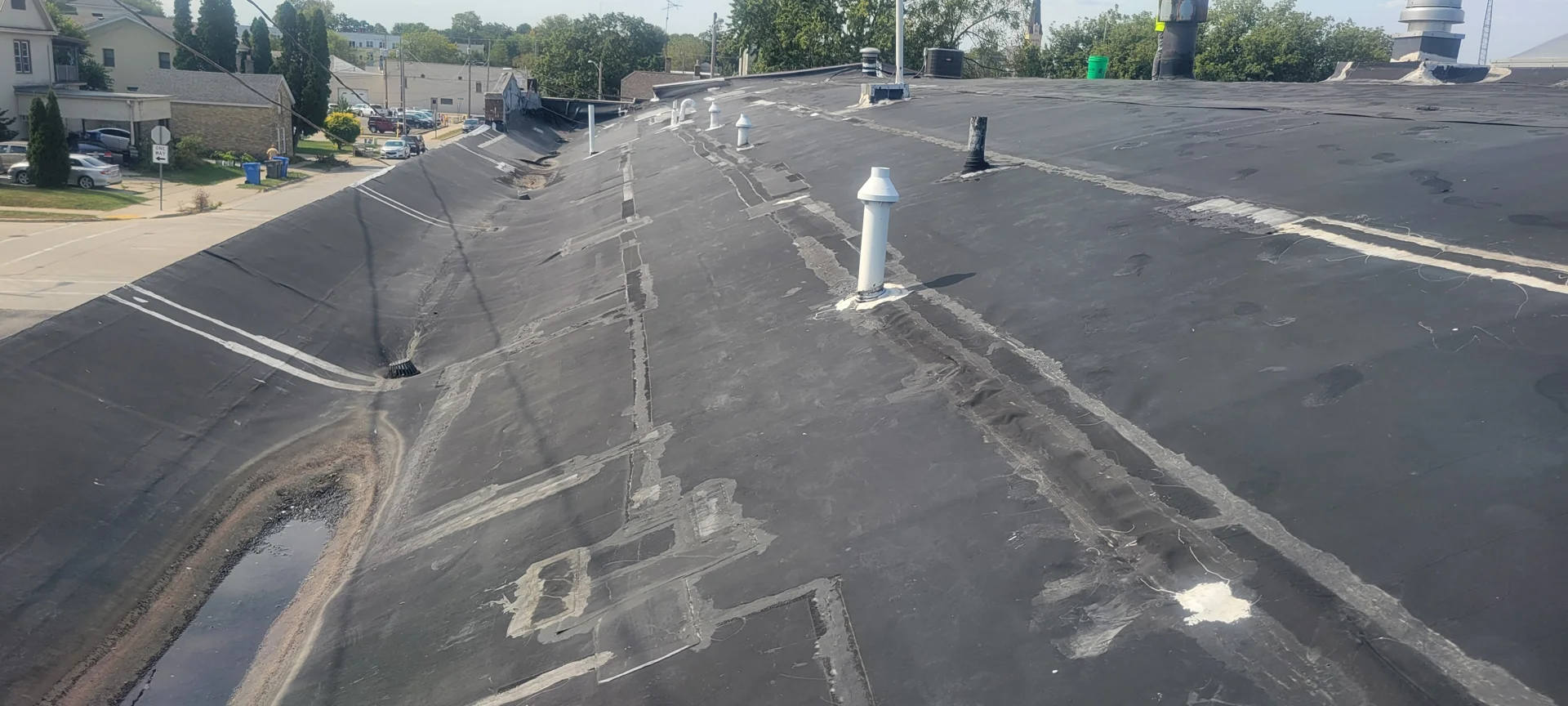
Without a proactive approach to maintenance, small issues can quickly balloon into expensive structural repairs. To keep your system performing beautifully, read through A complete guide to maintaining an asphalt and gravel roof without losing your mind.
Identifying Leaks, Blisters, and Ponding Water
During your regular roof walks, keep an eye out for these four common warning signs:
1. Alligatoring
Over years of intense sun exposure, the asphalt in bare spots (where gravel has washed away) will begin to dry out, crack, and resemble the skin of an alligator. This is a clear sign of advanced UV damage and indicates that the asphalt is losing its flexibility and waterproofing capabilities.
2. Blisters and Delamination
Blisters occur when moisture or air becomes trapped between the felt plies during installation or through a minor pinhole leak. As the sun heats the roof, the trapped moisture expands, forcing the layers apart and creating raised, bubble-like pockets. If left unaddressed, foot traffic can easily pop these blisters, opening a direct pathway for water to enter.
3. Membrane Cracks and Splits
Thermal shock—the rapid temperature swing from a hot summer afternoon to a cool night—can cause the rigid multi-ply membrane to crack or split, particularly around roof penetrations, flashing joints, and edges.
4. Ponding Water
If you notice standing water on your roof 48 hours after a rainstorm, you have a ponding problem. This is usually caused by structural settling, poor initial slope design, or clogged drains. Ponding water degrades the asphalt, compresses insulation, and adds thousands of pounds of unnecessary weight to your roof deck.
Inspection and Maintenance Timelines
To maximize the 20- to 30-year lifespan of your built-up roof, we recommend a strict twice-yearly inspection schedule: once in the spring to evaluate winter damage, and once in the autumn to prepare the roof for heavy snow loads.
Your routine maintenance checklist should include:
- Clearing Debris: Remove leaves, branches, dirt, and windblown trash from the roof surface, gutters, scuppers, and drains. Clogged drains are the number-one cause of catastrophic ponding.
- Redistributing Gravel: Wind, heavy rain, and foot traffic can displace the gravel ballast, leaving bare asphalt exposed to destructive UV rays. Use a soft-bristle broom to gently sweep gravel back over bare spots.
- Inspecting Flashing: Examine the metal flashing around chimneys, HVAC units, vents, and parapet walls. Cracked or pulling sealant in these areas is a common source of leaks.
- Scheduling Professional Evaluations: While building maintenance staff can handle basic cleaning, having a certified commercial roofing contractor inspect the roof every two to three years is critical for detecting hidden moisture damage.
To learn more about keeping your system in top-tier shape, read our guide on How to maintain a tar and gravel roof.
How to Restore and Coat a Tar and Gravel Roof
There comes a time in the life of every tar roof when simple repairs are no longer enough, but a complete, costly tear-off feels like financial overkill. If your roof is structurally sound, has less than 25% moisture saturation in the insulation, and is starting to show its age, restoration is the smartest path forward.
Applying a high-performance liquid rubber coating system can seal existing leaks, protect the underlying asphalt from UV rays, and extend your roof’s life by 10 to 18 years—at a fraction of the cost of a full replacement. Discover how this process works in The waterproof truth about commercial flat roof coating.
Preparing the Surface for Coating
The secret to a successful, long-lasting roof coating is in the preparation. You cannot simply pour liquid rubber over a gravel roof and hope for the best; the coating will fail to adhere, wasting your investment. The preparation process requires meticulous, labor-intensive steps:
- Spudding and Gravel Removal: All loose gravel must be removed from the roof. This is typically done using heavy-duty vacuum trucks or mechanical spudding machines that scrape the loose aggregate away, leaving a relatively smooth, clean asphalt surface.
- Power Washing: The remaining asphalt surface must be thoroughly power washed to remove decades of accumulated dirt, atmospheric soot, algae, and loose debris. Any remaining dust will prevent the liquid coating from bonding properly.
- Repairing Defects: Before coating, all blisters must be cut open, dried out, and patched. Cracks, split seams, and flashing joints are reinforced using heavy-duty seam tape and specialized detail sealants.
- Complete Drying: The roof must be 100% dry before any coating is applied. Applying coatings over trapped moisture will cause immediate blistering and adhesion failure.
Choosing the Best Tar Roof Coating System
Not all roof coatings are created equal. When restoring a built-up roof, you must choose a system that can handle the unique challenges of asphalt surfaces, including chemical compatibility and the potential for “asphalt bleed-through” (where oils from the asphalt discolor the topcoat).
| Protection Level | System Components | Best For | Expected Lifespan Extension |
|---|---|---|---|
| Good (Acrylic System) | Acrylic base coat + Acrylic top coat | Budget-conscious projects with excellent roof slope and no ponding water. | 5–7 Years |
| Better (Silicone / Polyurethane) | Epoxy primer + High-solids silicone top coat | Roofs with minor low spots or areas prone to temporary ponding water. | 10–12 Years |
| Best (Reinforced Liquid Rubber) | Asphalt-compatible primer + Liquid rubber base coat + Geo-textile fabric + Liquid rubber top coat | The gold standard for maximum durability, seamless waterproofing, and high foot traffic. | 15–18+ Years (Renewable) |
For high-end restorations, we recommend seamless, monolithic liquid rubber systems. These systems are highly regarded by both contractors and property owners:
- Liquid rubber waterproof sealants boast an average rating of 4.4 out of 5 stars from over 3,575 customer reviews for flat roof applications.
- Liquid rubber geo-textile repair products (used to reinforce seams and joints) maintain a stellar 4.6 out of 5 star rating from 609 reviews.
Using a multi-layer system with a dedicated base coat, reinforcing geo-textile fabric, and a highly reflective topcoat creates a durable, rubberized shield that moves with your building during Wisconsin’s extreme temperature swings.
Professional Restoration vs. DIY Application
With flat roof coating products readily available at local home improvement centers, some commercial property owners are tempted to treat roof restoration as a weekend DIY project. However, commercial flat roofing is a highly specialized trade with steep consequences for mistakes.
Here is how DIY compares to hiring a professional commercial contractor:
- Safety Hazards: Working on a commercial roof carries serious risks of falls, chemical exposure, and thermal burns. Professional crews are fully trained in OSHA safety standards and use specialized safety equipment.
- Specialized Equipment: Properly preparing a tar roof requires industrial equipment—such as commercial gravel vacuums, spudding machines, and high-volume airless sprayers—that are incredibly expensive to rent or purchase for a single job.
- Application Thickness: Liquid rubber coatings must be applied at a precise wet film thickness (measured in mils) to cure properly and provide the rated protection. Professional contractors use wet-mil gauges throughout the application to ensure consistent coverage. Under-applying the product will lead to premature failure, while over-applying can prevent proper curing.
- Warranty Protection: DIY applications carry zero commercial warranties. When you work with a professional contractor like Yutzy Roofing Service, LLC, your investment is protected by non-prorated, renewable warranties of up to 18 years.
If you are looking for certified professionals to handle your restoration, protect your investment by reading Don’t let your roof flop: finding the best flat roof coating contractors.
Frequently Asked Questions about Tar Roofs
How long does a tar and gravel roof typically last?
A professionally installed and properly maintained tar roof typically lasts 20 to 30 years. If the roof is constructed with high-quality materials (such as heavy-duty ply sheets from premium manufacturers) and features 4 or 5 plies, it can easily reach 35 to 40 years.
To maximize this lifespan, the roof must be inspected twice yearly, and bare spots in the gravel must be recovered promptly. Furthermore, applying a high-solids liquid rubber coating system can extend the life of an existing, aging tar roof by an additional 10 to 18 years without the need for a costly tear-off.
Can you walk on a tar and gravel roof?
Yes. One of the greatest advantages of a built-up roof with a gravel surface is its high tolerance for foot traffic. The thick layer of gravel ballast acts as a protective shield, distributing weight and absorbing the impact of boots and dropped tools.
This makes BUR systems an excellent choice for commercial and industrial buildings that house heavy rooftop HVAC units, exhaust fans, or commercial refrigeration equipment requiring regular maintenance access. However, care should still be taken to avoid walking on the roof during extremely hot summer afternoons when the underlying asphalt is softest, as this can displace the gravel and compress the membrane.
What is the difference between coal tar pitch and asphalt?
While both materials look similar and are used in built-up roofing, they have distinct chemical properties, histories, and behaviors:
- Coal Tar Pitch: A byproduct of coking coal during steel production, coal tar pitch has been used since the late 1800s. It has a distinct, pungent creosote-like odor. Coal tar is highly thermoplastic, meaning it has “self-healing” properties; during warm weather, it softens and flows slightly, naturally sealing minor cracks. However, coal tar pitch contains high levels of polycyclic aromatic hydrocarbons (PAHs), which are classified as carcinogens. Because of these health and environmental concerns, its use has declined significantly.
- Asphalt Bitumen: Derived from the distillation of petroleum, modern asphalt is the standard waterproofing agent used in BUR today. It has a milder, petroleum-like smell and is much safer for installation crews. While it does not self-heal to the same extent as coal tar, it is highly stable, highly flexible when modified, and compatible with modern reflective roof coatings.
If you have an older commercial building and are unsure which material is on your roof, a professional contractor can perform a simple solvent test (using lighter fluid) to identify the material. Coal tar pitch will turn the solvent a bright yellow-green, while asphalt will turn it a dull brown. To learn more about the fascinating history and chemistry of these legacy systems, read Coal Tar Pitch Roofing: What It Is, History, Issues & More.
Conclusion
A tar roof is a classic commercial flat roofing system that offers incredible durability, redundant waterproofing, and a proven track record. However, keeping these heavy-duty systems performing at their best requires consistent maintenance, timely leak repairs, and a proactive approach to restoration.
At Yutzy Roofing Service, LLC, we specialize in helping commercial property owners extend the life of their existing flat roofs while avoiding the massive expense, mess, and disruption of a full roof tear-off. We provide premium commercial roof restoration, high-solids spray foam coatings, and advanced liquid rubber membrane systems designed to withstand the harshest Midwestern weather.
We proudly serve commercial clients across Wisconsin and parts of Minnesota, with dedicated service locations in:
- Wisconsin: Marshfield, Appleton, Eau Claire, Fond Du Lac, Green Bay, Madison, and Wausau.
- Minnesota: Mankato and Rochester.
All of our high-performance restoration systems are backed by our industry-leading, up to 18-year non-prorated, renewable warranty, giving you complete peace of mind.
Ready to protect your commercial asset and stop dealing with frustrating flat roof leaks? Contact us today at our main office at 9106 Woehrle Lane, Marshfield, WI 54449, or visit our guide on How to maintain a tar and gravel roof to learn more about our restoration solutions!
