
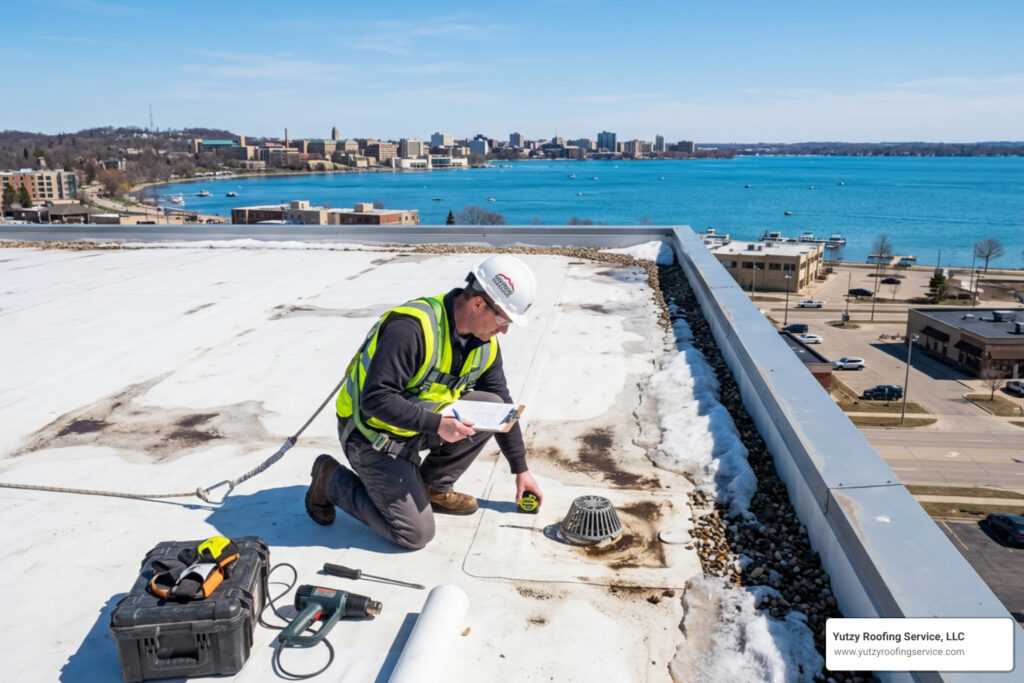
Why Flat Roof Maintenance Madison is Critical for Wisconsin Weather
Flat roof maintenance Madison property owners need to prioritize comes down to a few key tasks done consistently:
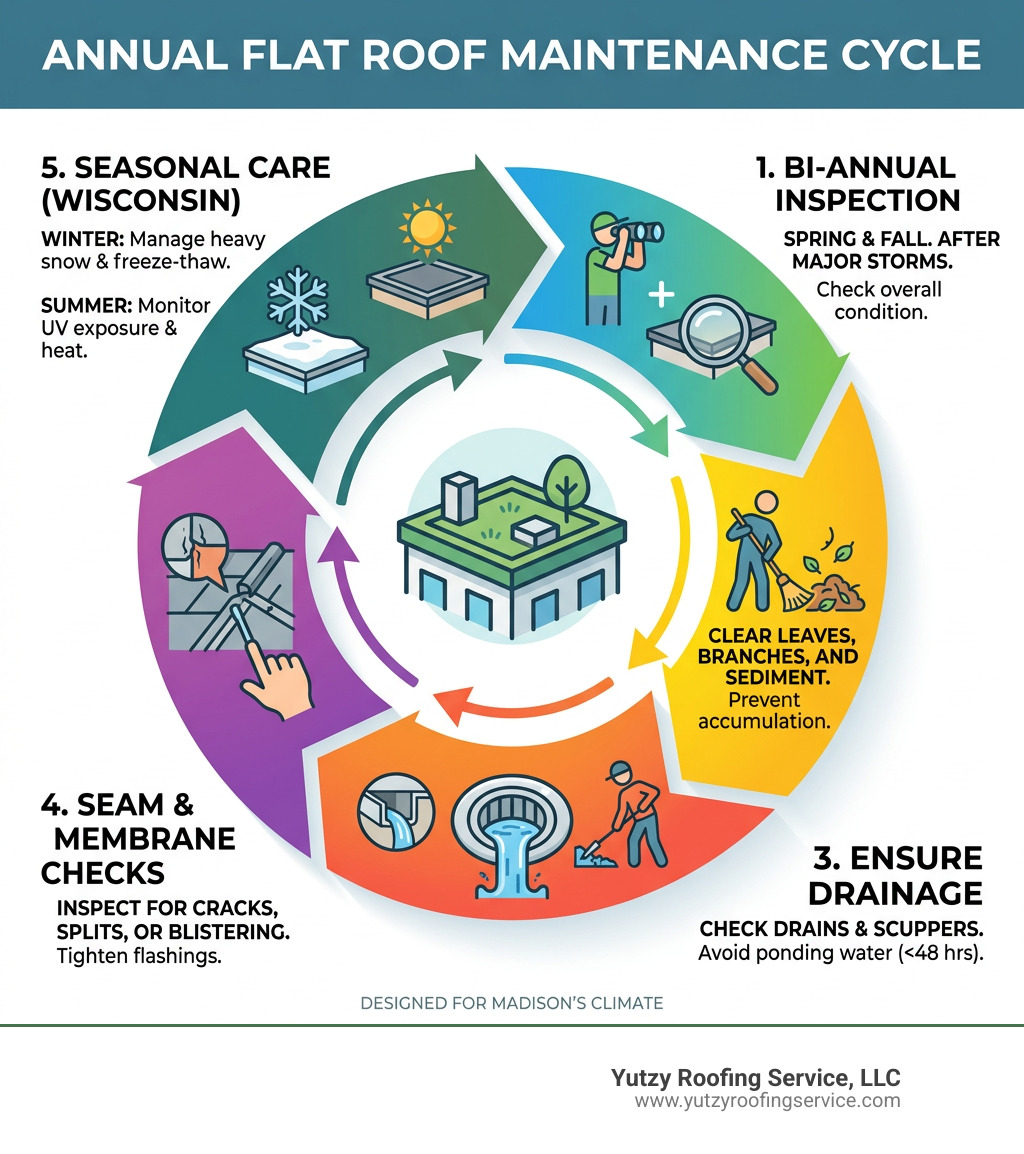
- Inspect twice a year (spring and fall) plus after major storms
- Clear debris and drains to prevent ponding water
- Check seams, flashings, and membrane surfaces for cracks, splits, or blistering
- Remove standing water within 48 hours to avoid structural damage
- Call a professional for anything beyond surface-level cleaning or minor patching
Madison’s climate is hard on flat roofs. Winters bring heavy snow loads and brutal freeze-thaw cycles. Summers hit with UV exposure and heat that expands roofing membranes. Then the cycle repeats. For commercial property owners, that means a low-slope roof that gets no maintenance can go from minor wear to a costly leak problem faster than you’d expect.
Flat roofing systems are already more vulnerable than sloped roofs – water doesn’t run off on its own, debris sits and accumulates, and small gaps in seams can quietly let moisture in for months before you notice interior damage.
The good news? Most major damage is preventable with a consistent maintenance routine tailored to Wisconsin’s seasonal patterns.
I’m Josh Yutzy, and our team at Yutzy Roofing Service has been maintaining and restoring commercial flat roofs across Wisconsin since 1995, making flat roof maintenance Madison businesses can count on a core part of what we do. In this guide, I’ll walk you through exactly what it takes to keep your flat roof performing year-round.
The Unique Challenges of South-Central Wisconsin
In Madison, our roofs don’t just sit there; they endure a workout. The low-slope nature of these systems means they rely on a slight incline—typically less than 10 degrees—to move water toward drains. When that movement is hindered by debris or structural sagging, problems begin.
Freeze-Thaw Cycles: This is perhaps the biggest enemy of flat roof maintenance Madison faces. Water gets into a tiny crack during a sunny 40-degree afternoon. That night, it drops to 10 degrees. The water freezes and expands, turning that tiny crack into a split.
Snow Load: Unlike pitched roofs where snow might slide off, flat roofs hold every inch. This weight can cause the roof deck to bow slightly, creating new low spots where water will later “pond.”
Ice Dams: While we usually associate these with shingles, they happen on flat roofs too. If heat escapes from your building, it melts the bottom layer of snow. That water runs to the cold edge of the roof and refreezes, creating a dam that traps water behind it.
Understanding these risks is the first step in choosing the right common materials for commercial roofing in Madison, WI and developing a plan to protect them.
Essential Steps for Routine Flat Roof Care
Maintaining a flat roof isn’t rocket science, but it does require discipline. Because these roofs are often “out of sight, out of mind,” small issues like a clogged drain can escalate into a $50,000 structural repair if ignored.
Debris Removal: The Silent Roof Killer
Flat roofs are magnets for leaves, twigs, and wind-blown trash. Unlike a sloped roof where wind might clear the surface, debris on a flat roof stays put. This organic matter holds moisture against the membrane and can eventually rot, creating “compost” that eats away at the roofing material.
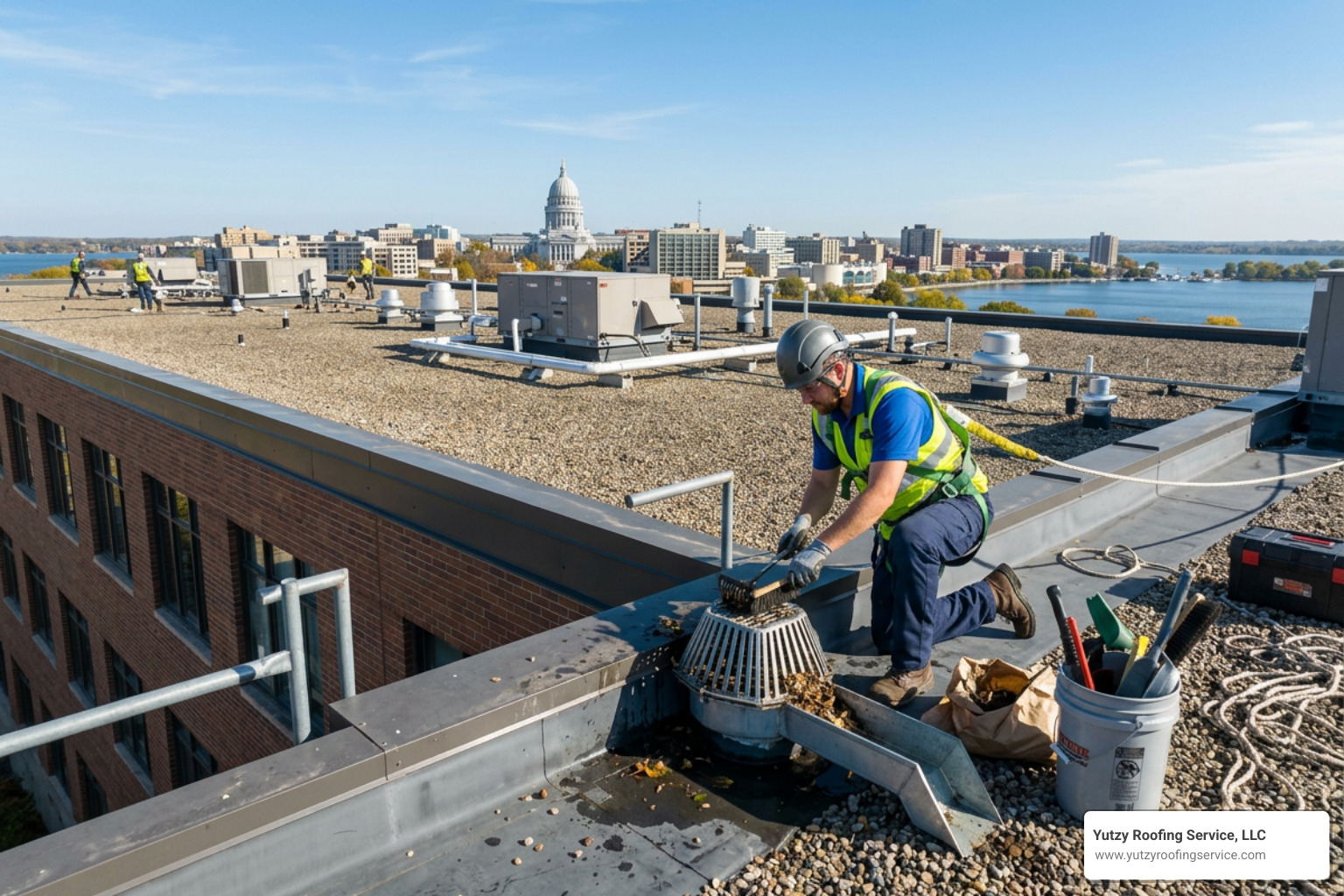
We recommend sweeping your roof at least twice a year. Use a soft-bristle broom or a leaf blower. Be careful not to use metal rakes or sharp tools that could puncture the membrane.
Managing Ponding Water
“Ponding” is defined as water that remains on the roof for more than 48 hours after precipitation. If you see birds treating your roof like a swimming pool, you have a problem. Standing water adds immense weight and acts like a magnifying glass for UV rays, accelerating the degradation of the membrane.
DIY vs. Professional Maintenance Tasks
| Task | DIY Suitable? | Frequency |
|---|---|---|
| Visual Inspection | Yes | Quarterly |
| Debris Removal | Yes | Twice Yearly |
| Clearing Drains/Scuppers | Yes | After major storms |
| Seam Repair | No | As needed |
| Puncture Patching | Sometimes (Small) | Immediate |
| Structural Evaluation | No | Annually |
For a deeper dive into what you can handle versus what needs a pro, check out these 6 commercial roof maintenance tips.
Seasonal Checklists for Flat Roof Maintenance Madison
Spring Cleaning (The Post-Winter Recovery)
- Check for Ice Damage: Look for areas where ice may have pried up flashings or expanded existing cracks.
- Clear the Winter Grime: Remove the salt, silt, and grit that accumulated from melting snow.
- Inspect Drains: Ensure the spring rains have a clear path off the building.
Fall Prep (The Winter Readiness)
- Gutter and Scupper Clearing: This is the most critical fall task. Clogged drains in November lead to massive ice blocks in January.
- Trim Overhanging Branches: Madison is known for its beautiful canopy, but those branches can scrape the roof membrane during winter winds or snap under heavy snow.
- Seal Check: Ensure all caulking around vents and HVAC units is pliable and intact before the deep freeze hits.
Material-Specific Maintenance: TPO, EPDM, and PVC
Different materials have different “personalities.” Knowing what’s on your roof changes how you maintain it.
EPDM (Ethylene Propylene Diene Terpolymer)
Often called “rubber roofing,” EPDM is a Madison staple because it handles thermal shock (rapid temperature changes) very well.
- Maintenance Tip: Check the seams. EPDM seams are usually glued or taped. Over time, the adhesive can dry out. If you see a seam beginning to “fishmouth” (gap open), it needs immediate professional attention.
- Cleaning: Use a specialized cleaner; avoid petroleum-based products which can cause the rubber to swell and degrade.
- Learn more in our guide on how to maintain a rubber roof membrane.
TPO (Thermoplastic Polyolefin)
TPO is popular for its energy efficiency—its white surface reflects sunlight, keeping cooling costs down during humid Wisconsin summers.
- Maintenance Tip: TPO seams are heat-welded, making them very strong. However, the membrane can be susceptible to “crazing” (fine cracks) if it’s a lower-quality product.
- Puncture Watch: TPO can become brittle over decades. Inspect for punctures caused by dropped tools or hail.
PVC (Polyvinyl Chloride)
PVC is the “heavy-duty” option, often used on restaurants because it resists grease and chemicals.
- Maintenance Tip: Check for membrane shrinkage. PVC can tighten over time, which puts stress on the flashings at the edges of the roof.
Professional Inspections and Restoration Strategies
While a visual walk-through is great, it doesn’t tell the whole story. At Yutzy Roofing Service, we use advanced technology to see what the naked eye misses.
Infrared Scanning and Moisture Mapping
Water is sneaky. It can enter a hole in the membrane on the north side of the building but travel along the insulation and leak into an office on the south side. We use infrared cameras to detect temperature differences. Since wet insulation holds heat longer than dry insulation, we can “see” exactly where water is trapped under your roof without tearing it apart.
The Power of Restoration
Maintenance isn’t just about cleaning; it’s about extending life. If your roof is showing its age but the structure is sound, we often recommend restoration over replacement.
- Spray Foam Coatings: We can apply a seamless layer of high-density spray foam and a silicone coating. This eliminates seams (the #1 cause of leaks) and adds significant R-value for energy efficiency.
- Renewable Warranties: One of the biggest 3 benefits of roofing inspections is staying eligible for warranties. Our restoration systems can come with an 18-year non-prorated renewable warranty.
Warning Signs to Watch for During Flat Roof Maintenance Madison
If you see any of the following during your inspection, it’s time to move from “maintenance mode” to “repair mode”:
- Blistering: These look like bubbles or “humps” in the roof. They are caused by air or moisture trapped between the layers of the roof. Do not pop them! This will create an instant leak.
- Splits and Cracks: Often found near the corners of the building or around HVAC units where the roof experiences the most movement.
- Membrane Shrinkage: If you see the edges of the roof membrane pulling away from the walls or “tenting” at the base of parapets, the membrane is shrinking.
- Repeated Leaks: If you are patching the same spot every six months, you likely have saturated insulation underneath that needs to be replaced.
Knowing when to call the professionals in Madison can save you thousands in interior damage to inventory, electronics, and structural steel.
Frequently Asked Questions about Madison Flat Roofs
How often should I inspect my flat roof in Madison?
We recommend a minimum of two inspections per year—once in the spring after the snow melts and once in the late fall before the first freeze. Additionally, you should do a quick visual check after any major weather event, such as high-wind storms or heavy hail, which are common in the Madison area.
What is the average cost of flat roof maintenance?
For a standard commercial building in Madison, a professional maintenance visit (including inspection and minor cleaning) typically ranges from $300 to $1,500 depending on the size and accessibility of the roof. This is a small price to pay compared to a full replacement, which can cost $10 to $20 per square foot.
How do I prevent ice dams on a flat roof?
Prevention is two-fold: Insulation and Drainage. Ensure your building has proper attic/ceiling insulation to keep heat from reaching the roof deck. Secondly, keep your drains and scuppers clear. If water can’t get off the roof, it will stay on the edges and freeze into a dam.
Conclusion
Your flat roof is one of your building’s most expensive assets. In the Madison area, the weather is constantly trying to find a way inside. By staying on top of flat roof maintenance Madison requirements—clearing debris, managing ponding water, and catching small cracks before they become big leaks—you can easily double the lifespan of your roof.
At Yutzy Roofing Service, we specialize in helping Madison businesses avoid the “rip and replace” cycle. Whether you need a simple EPDM repair, a full commercial restoration, or want to explore metal roof restoration options, we are here to help.
Our USP is simple: we provide high-quality work backed by an up to 18-year non-prorated renewable warranty. We don’t just fix your roof for today; we protect it for the next two decades.
If it’s been more than six months since your last roof inspection, don’t wait for a ceiling tile to start dripping. Contact us today to schedule a professional evaluation and keep your Madison business dry and functional.
