Understanding Commercial Roofing and Coating Systems
Commercial roofing and coating systems are one of the most cost-effective ways to protect and extend the life of a commercial building’s roof — without the expense and disruption of a full tear-off replacement.
Here’s a quick overview of what they are and why they matter:
| What You Want to Know | Quick Answer |
|---|---|
| What is a roof coating? | A liquefied polymer applied directly over your existing roof to seal, waterproof, and protect it |
| How long can it extend roof life? | Up to 10 years with proper application |
| What does it cost? | Roughly $3.50–$7 per square foot for materials and labor |
| What roofs are compatible? | Metal, EPDM, TPO, PVC, modified bitumen, built-up roofing, and more |
| Is it better than replacement? | For structurally sound roofs, yes — it’s faster, cheaper, and more sustainable |
Wisconsin’s extreme weather is hard on commercial roofs. Brutal winters, summer heat, UV exposure, and freeze-thaw cycles quietly wear down your roof year after year. By the time leaks show up, the damage is already done — and a full replacement can cost far more than most building owners expect.
The good news? If your roof is still structurally sound, a coating system can give it a second life. Think of it as a liquid hug — a seamless, flexible layer of protection that wraps around every crack, seam, and penetration on your existing roof.
I’m Josh Yutzy, and our team at Yutzy Roofing Service, LLC has been installing commercial roofing and coating systems across Wisconsin since 1995. In this guide, I’ll walk you through everything you need to know to make the right call for your building.
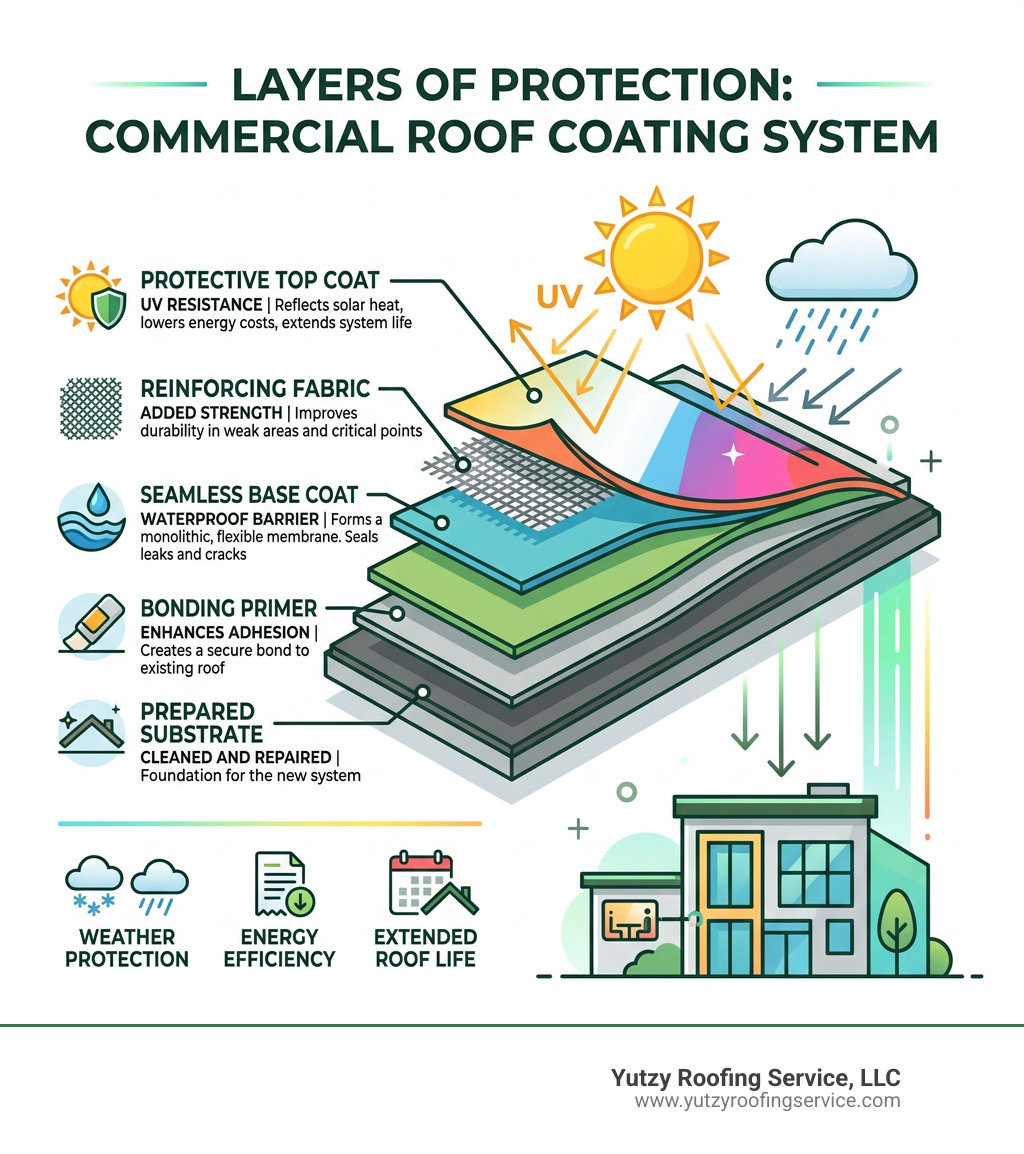
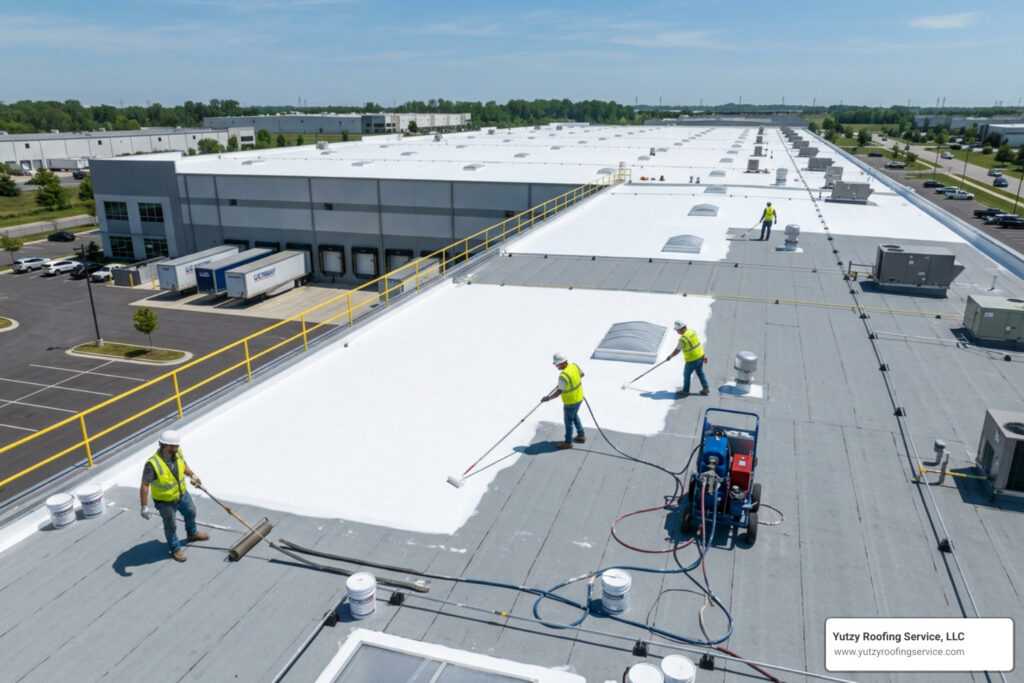
When we talk about commercial roofing and coating systems, we are describing a sophisticated restoration method. Unlike a traditional roof replacement, which involves tearing off the old materials and starting from scratch, a coating system is applied directly onto your existing roof. These systems are made of liquefied polymers that, once cured, form a monolithic, seamless membrane.
The primary difference between a full replacement and a restoration is the “tear-off.” A full replacement is a massive construction project that fills up landfills and interrupts your daily operations. A coating system, however, is a non-invasive “liquid hug” that seals imperfections and adds a waterproof layer without the mess.
One of the biggest 7-surprising-advantages-of-roof-coatings-and-sealants is the high UV stability. In regions like Madison or Appleton, the sun can bake a roof until it becomes brittle. Coatings reflect a significant portion of that UV radiation, keeping the underlying structure cool and flexible. This transition from a “dying” roof to a restored one is a core part of what we do at Yutzy Roofing Service. You can explore more about these technologies in our tag/commercial-roof-coatings section.
Benefits of Commercial Roofing and Coating Systems
Why do building owners in Wausau or Green Bay choose coatings? The reasons are as varied as the buildings themselves:
- Life Extension: Applied properly, a commercial roof coating can extend the life of your roof by up to 10 years. This delays the massive capital expenditure of a replacement.
- Ponding Water Resistance: Certain coatings, particularly silicone, are engineered to withstand standing water. This is a lifesaver for flat roofs that struggle with drainage.
- Seamless Waterproofing: Because the coating is applied as a liquid, it fills in cracks and wraps around penetrations (like HVAC units and vents) to create a single, unbroken shield.
- Corporate Branding: Believe it or not, some systems allow for customization. We can even apply company logos directly onto the roof surface using specialized coating colors.
- Total Flexibility: These systems expand and contract with the temperature. Whether it’s -20°F in Eau Claire or 90°F in Fond Du Lac, the coating moves with your building.
Check out more benefits in our tag/roof-coatings archive.
Substrates Compatible with Commercial Roofing and Coating Systems
One of the most common questions we get is, “Will this work on my roof?” The answer is usually a resounding yes. Commercial roofing and coating systems are incredibly versatile. We regularly apply them to:
- Metal Roofs: Coatings stop rust in its tracks and seal those pesky fasteners that always seem to leak.
- EPDM (Rubber): A specialized primer allows coatings to bond tightly to old rubber membranes.
- TPO and PVC: Even these single-ply membranes can be restored once they reach the end of their initial warranty period.
- Modified Bitumen and Built-Up Roofing (BUR): Coatings prevent the “alligatoring” and cracking common in asphalt-based roofs.
- Spray Polyurethane Foam (SPF): Coatings are actually a required protective layer for foam roofs.
If you are wondering which membrane you currently have, our guide on how-to-choose-the-right-type-of-roof-membrane-for-your-commercial-building can help you identify your system.
Silicone vs. Acrylic: Choosing Your Liquid Membrane
Choosing the right material is like choosing the right winter coat for a Wisconsin January—you need the one that fits your specific environment. The two heavy hitters in the industry are silicone and acrylic.
Silicone Restoration Membranes (SRM) are often considered the “premium” choice. They are high-solids, moisture-cure systems. This means they actually use the humidity in the air to help them cure into a thick, rubbery gasket. If you’re interested in seeing the physical difference, you can Get sample Request a Silicone or Acrylic Roof Coating Sample to feel the texture for yourself.
Acrylic coatings, on the other hand, are water-based. They have been around since Uniflex engineered the first liquid-applied coating in 1946. They are fantastic for UV protection and are generally more budget-friendly, though they don’t handle ponding water as well as silicone.
| Feature | Silicone Coating | Acrylic Coating |
|---|---|---|
| Ponding Water | Excellent resistance | Not recommended |
| Cost | Higher initial investment | More economical |
| Solids Content | Typically 90%–95% | Typically 50%–60% |
| Application | Single thick coat often possible | Usually requires multiple coats |
| Environment | Solvent-free options available | Water-based, low VOC |
Silicone Coating Performance
Silicone is the “tough guy” of the coating world. Because it is an inorganic material, it doesn’t break down under UV rays the way organic materials do. It is also highly “breathable,” allowing moisture vapor from inside the building to escape without causing blisters in the membrane.
For those looking for technical specifics, the Duro-Shield Silicone Installation Guide highlights how these systems create a permanent seal that won’t degrade. We often recommend silicone for buildings in places like Mankato or Rochester where heavy snowmelt can lead to standing water on flat roofs. Learn more about these tag/elastomeric-coatings and why they are so durable.
Acrylic Coating Performance
Acrylic systems, like the HydroStop system, are highly reflective and excellent for “cool roof” applications. They are elastomeric, meaning they can stretch and return to their original shape. This is vital for the thermal shock roofs experience during rapid temperature changes in the Midwest.
While they are water-based, don’t let that fool you—once they dry, they are incredibly durable. They are best suited for sloped roofs or roofs with excellent drainage. You can read more about the-different-types-of-roof-waterproofing-methods-explained to see where acrylic fits in your maintenance plan. For detailed specs, refer to the Duro-Shield Acrylic Installation Guide.
The Restoration Roadmap: Installation and Investment
A “liquid hug” only works if the surface is ready for the embrace. You can’t just pour a bucket of coating over a dirty roof and expect it to stay. The installation process is where the “pro” in professional roofing really shines.
Before we start, we always recommend building owners ask the right questions. Our list of 7-questions-to-ask-a-commercial-roofing-company is a great starting point to ensure your contractor isn’t cutting corners on prep work. Proper preparation is the difference between a 20-year solution and a 2-year disaster for your tag/roofing-system.
The 5-Step Application Process
While every roof is unique, most successful installations follow this 5-step roadmap:
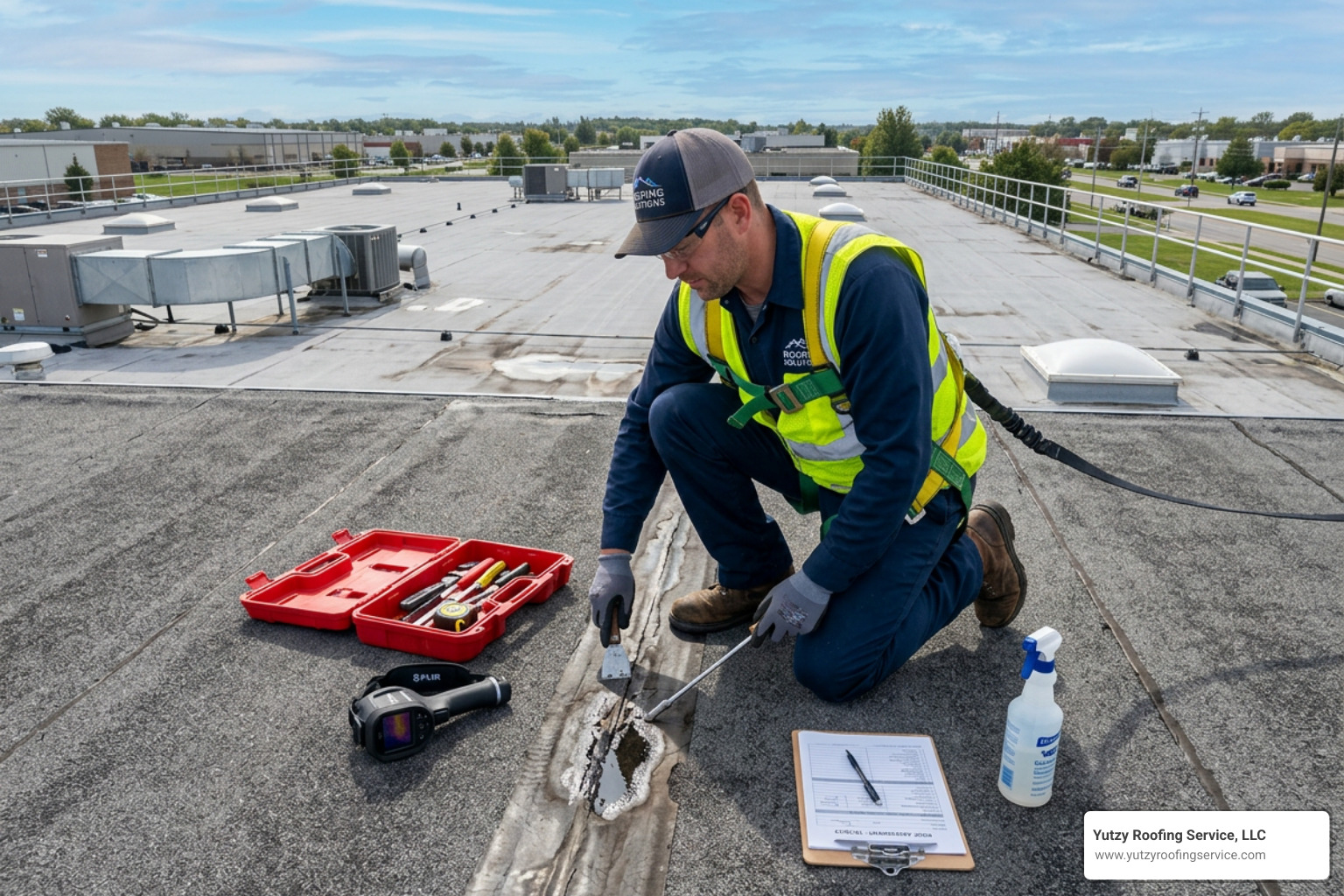
- Qualify and Clean: We start with a thorough inspection, often including a moisture scan to ensure there is no water trapped in the insulation. Then, we pressure wash the roof using specialized cleaners to remove every bit of dirt, grease, and loose debris.
- Prime: Depending on the substrate (like aged TPO or metal), a primer is applied to ensure maximum adhesion. This is the “glue” that makes the coating stick.
- Seam Treatment: This is the most critical step. We reinforce all seams, joints, and cracks with fabric or heavy-duty mastic. Since most leaks happen at the seams, we give them extra attention.
- Detailing: We wrap all penetrations—pipes, vents, and HVAC curbs—to ensure they are airtight.
- Final Coating: The liquid membrane is applied via spray or roller. We monitor the “wet mil thickness” constantly to ensure the finished product meets the manufacturer’s warranty requirements, such as the Duro-Shield 20-Year Material and Labor Warranty — Silicone Applications Only.
Cost Factors for Roof Restoration
Let’s talk numbers. We know that for many businesses in Wisconsin and Minnesota, the bottom line is everything.
An average 20,000 sq. foot commercial roof usually costs between $3.50 and $7 per square foot in materials and labor to install a typical silicone roof coating system.
What changes that price?
- Roof Condition: If your roof has significant damage or wet insulation that needs replacing first, the cost goes up.
- Access: A one-story warehouse is cheaper to coat than a five-story office building with limited staging area.
- Material Choice: Silicone is generally more expensive than acrylic.
- Warranty Length: Longer, non-prorated warranties require a thicker application of material, which increases the cost.
For a deeper look at material costs, see our guide on top-flat-roof-material-types-you-should-know-about-a-closer-look.
Environmental and Energy Advantages
In the modern business world, being “green” isn’t just about the environment—it’s about the “green” in your wallet. Commercial roofing and coating systems are some of the most eco-friendly options available today.
Most coatings are “cool roofs.” They are highly reflective, meaning they bounce solar energy back into the atmosphere rather than absorbing it into your building. Many of the systems we use are ENERGY STAR certified and exceed standards like California Title 24. For a building in Green Bay or Madison, this can result in massive energy savings during the summer months when the AC is working overtime.
If you are interested in how these energy-efficient systems compare to other options, check out our spray-foam-roofing-an-in-depth-guide-for-building-owners and our tag/spf resources.
Reducing the Carbon Footprint
The most sustainable roof is the one you don’t throw away. A typical roof tear-off sends tons of petroleum-based waste to landfills in Wisconsin and Minnesota. By choosing a restoration system, you:
- Avoid Tear-offs: You keep thousands of pounds of waste out of the landfill.
- Lower Energy Consumption: High solar reflectance means less power used for cooling.
- Sustainable Lifecycle: Many coatings can be “re-coated” every 10–15 years, essentially making the roof last indefinitely.
This makes coatings one of the-best-roofing-system-materials-for-your-business if you have long-term sustainability goals.
Frequently Asked Questions
How long do commercial roof coatings last?
A high-quality, professionally applied coating typically extends the life of a roof by 10 years. However, the beauty of these systems is that they are renewable. Before the 10-year mark, we can perform a simple cleaning and apply a new topcoat to extend the warranty for another decade.
At Yutzy Roofing Service, we offer up to an 18-year non-prorated renewable warranty, which is one of the strongest in the industry. You can learn more about the lifespan of different materials in roof-membranes-how-long-do-they-last.
Can you apply a coating over a leaking roof?
Yes, but with a huge caveat: the roof must be structurally sound. We cannot coat over rotted decking or saturated insulation. If your roof is leaking, we first perform a moisture scan to identify the “wet spots.” We replace those specific areas, make the roof watertight with repairs, and then apply the coating system.
Restoration is about protecting a sound structure, not hiding a failing one. You can browse our category/commercial-roofing section for more on how we handle these repairs.
What maintenance is required after installation?
While these systems are “low maintenance,” they are not “no maintenance.” We recommend:
- Annual Inspections: Check for any mechanical damage (like someone dropping a tool or a heavy branch hitting the roof).
- Debris Removal: Keep the roof clear of leaves and trash that can trap moisture.
- Gutter Cleaning: Ensure your drainage system is working so the coating isn’t under unnecessary stress.
For more maintenance tips, the Duro-Shield Silicone FAQ Sheet provides excellent guidance on keeping your restored roof in top shape.
Conclusion
At Yutzy Roofing Service, LLC, we believe your building deserves the best protection possible. Whether you are in Marshfield, Green Bay, or over in Rochester, MN, our goal is to provide a “liquid hug” that keeps your assets safe and your overhead low.
We specialize in commercial roofing restoration, spray foam coatings, and metal roof restoration. Our up to 18-year non-prorated renewable warranty is our promise to you that we stand behind our workmanship and our materials.
If you’re ready to stop the leaks and start saving on energy costs, we serve the following areas:
- Wisconsin: Marshfield, Appleton, Eau Claire, Fond Du Lac, Green Bay, Madison, and Wausau.
- Minnesota: Mankato and Rochester.
Don’t wait for the next big storm to find out your roof is failing. Give your building the protection it needs today.
