Why Water Resistant Underlayment Is Critical for Your Commercial Roof
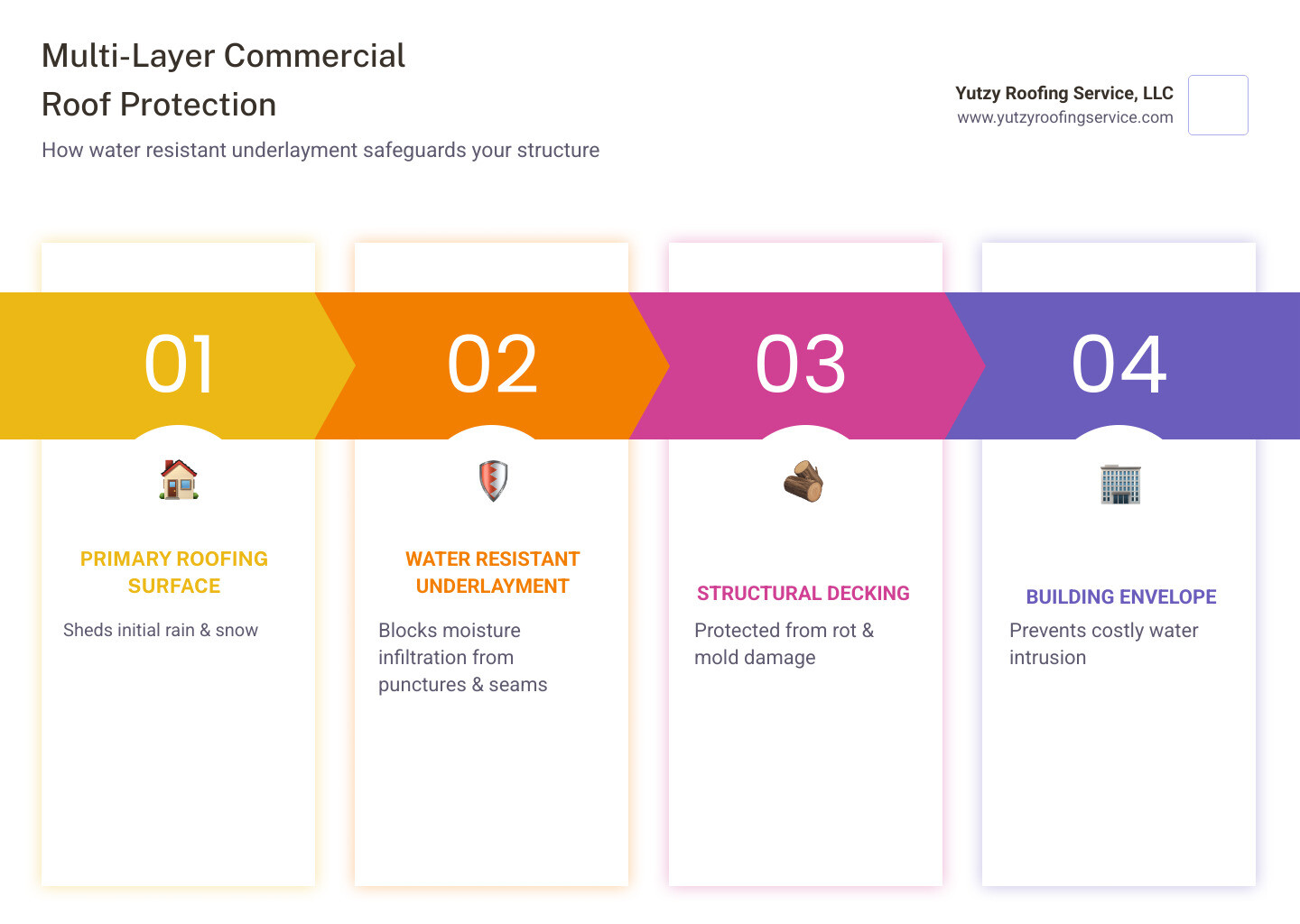
Water resistant underlayment is a protective layer installed beneath your primary roofing material to block moisture from reaching the structural layers below. Here’s a quick breakdown of what it does and why it matters:
- Blocks moisture infiltration from rain, snow melt, and condensation
- Protects structural decking from rot, mold, and premature failure
- Acts as a secondary barrier if your primary roofing surface is compromised
- Extends roof lifespan by reducing wear on vulnerable substrates
- Required by most roofing manufacturers to maintain warranty coverage
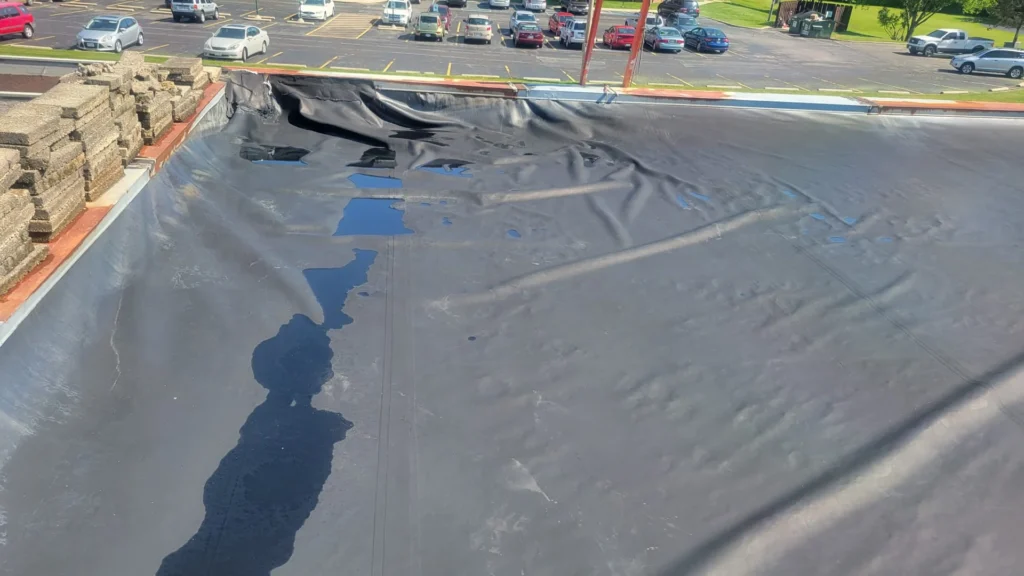
Wisconsin’s winters are brutal. Freeze-thaw cycles, heavy snow loads, and ice damming put constant pressure on commercial roofs. Without a reliable moisture barrier underneath your primary roofing surface, water finds its way in — and once it does, the damage compounds fast.
The difference between a roof that lasts 20+ years and one that fails in under a decade often comes down to what’s underneath the surface material. Most property owners focus on the visible roofing layer. But the underlayment is doing the quiet, critical work of keeping moisture out of your building’s structure every single day.
I’m Josh Yutzy, and with over 30 years of commercial roofing experience across Wisconsin, Missouri, and Kansas, I’ve seen what happens when the wrong — or no — water resistant underlayment is used beneath a commercial roof system. It’s one of the most preventable and costly mistakes a building owner can make.
Understanding Water Resistant Underlayment vs. Waterproof Membranes
When we talk about protecting a commercial building, the terminology can get a bit muddy. Is it “waterproof” or “water resistant”? In synthetic roofing materials, these two terms mean very different things for your structural integrity.
A truly waterproof membrane is one that completely prevents water infiltration regardless of the installation method, provided it follows manufacturer guidelines. On the other hand, water resistant underlayment is designed to protect from moisture but may allow for potential infiltration under extreme hydrostatic pressure or if the installation creates “weak points.”
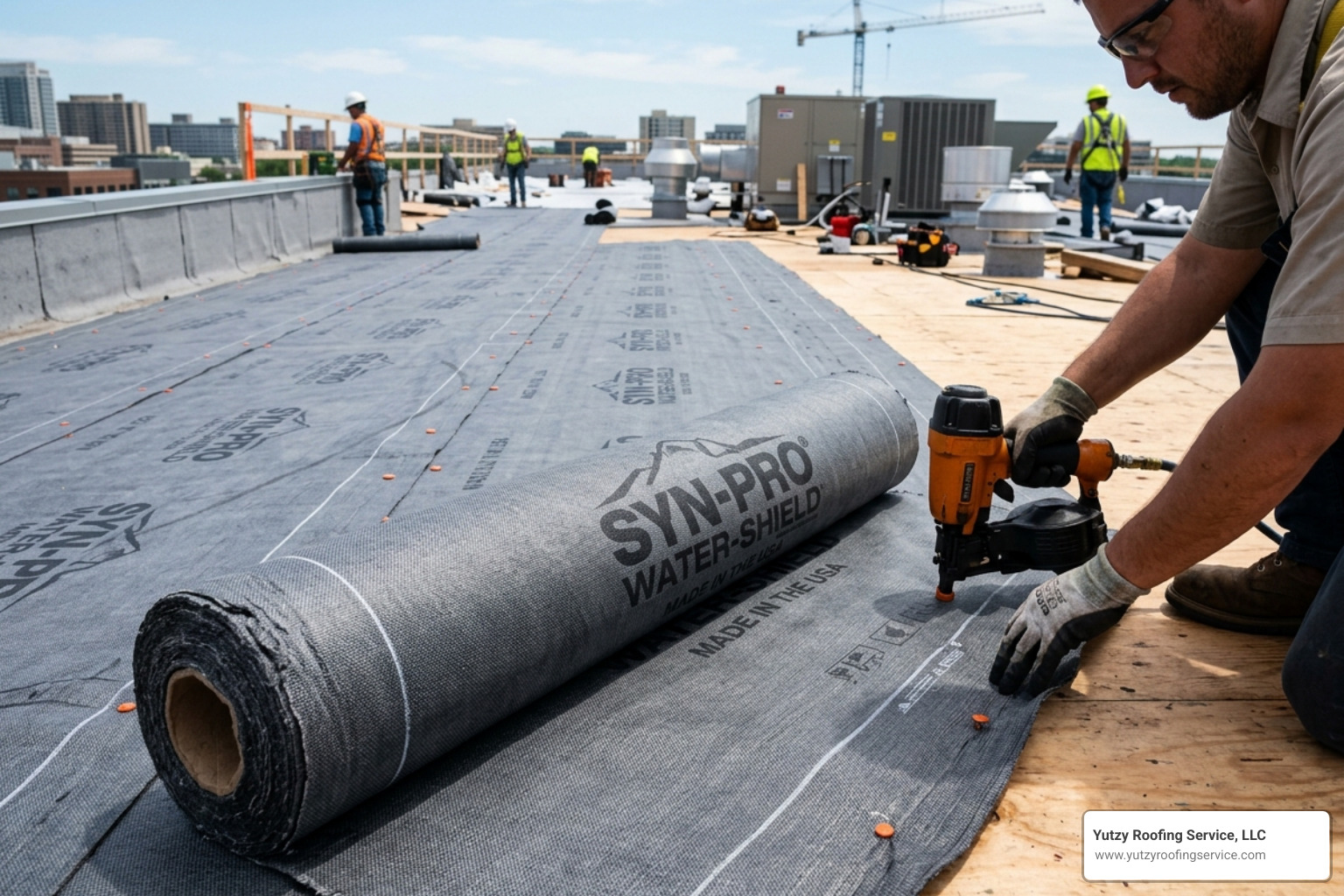
One of the biggest differences lies in how the material handles fasteners. Most synthetic underlayments are inherently waterproof as a fabric. However, the moment you drive a cap nail or staple through them during installation, you’ve created a hole. Unless that material is “self-sealing,” it technically becomes water resistant rather than fully waterproof because water could potentially seep through those puncture points.
To learn more about the specific nuances of these systems, you can explore our guide on The Different Types Of Roof Waterproofing Methods Explained. In commercial settings, we often prioritize synthetic durability because these materials don’t rot or crack like old-fashioned felt, making them ideal for moisture-sensitive substrates.
Defining the Performance Gap
The gap between these two categories often comes down to permeability and hydrostatic pressure. Permeability refers to how much water vapor can pass through the material. In many commercial applications, we want a low perm rating to prevent vapor from the building’s interior from condensing against the cold underside of the roof deck.
High-end Waterproof Underlayment options are often tested to withstand a certain amount of water “head” or pressure. For a commercial roof in a place like Wausau or Green Bay, where snow might sit for months, having a material that can handle that constant moisture contact without failing is non-negotiable.
Why Most Synthetics are Water Resistant
Most synthetic underlayments rely on high-tech PE (polyethylene) or PP (polypropylene) weaves. While the fabric itself is a total block, the installation involves thousands of fastener punctures. Standard synthetics do not “grip” or seal around these nails.
This is why we often distinguish between standard synthetics and self-sealing “peel-and-stick” membranes. The latter uses a thick adhesive backing that flows around the fastener, maintaining a Waterproof Roof seal even after the nail goes in. For critical areas like valleys or low-slope sections, this self-sealing property is what moves a product from “resistant” to “proof.”
Essential Types of Underlayment for Commercial Roofing
Choosing the right material isn’t just about picking the most expensive roll; it’s about matching the material to your specific roof deck and climate.
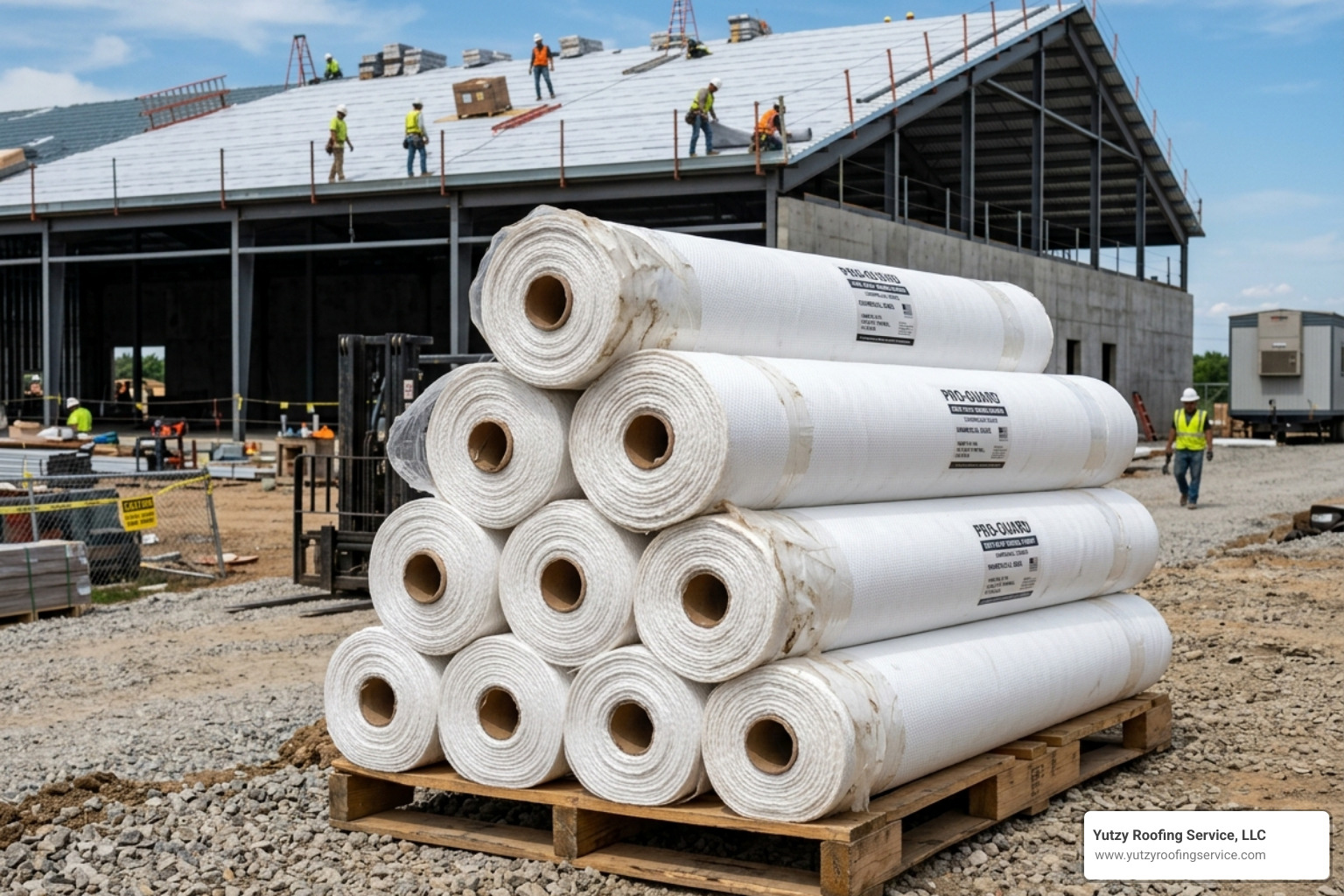
- Synthetic PE/PP Fabrics: These are the modern workhorses. They are incredibly strong, lightweight, and won’t tear in high winds during installation.
- Uncoupling Membranes: Often used in specialized roofing or “green” roof assemblies, these allow for independent movement between the substrate and the top layer. Products like Schluter-DITRA are famous in the flooring world for this, but the same “uncoupling” principle applies to complex commercial roof transitions to prevent stress cracks.
- Self-Adhering Sheets: Also known as peel-and-stick, these provide the highest level of vapor management and leak protection because they bond directly to the deck.
Choosing the Right Water Resistant Underlayment Thickness
Thickness is usually measured in “mils” (thousandths of an inch). While a 2-mil or 6-mil barrier might work for some light moisture protection, commercial-grade membranes often go much thicker to provide higher tensile strength.
A thicker underlayment, such as those found in the Mapeguard UM line, offers better “crack isolation” and can handle the foot traffic of a busy construction site without tearing. When we evaluate a project in Madison or Appleton, we look at the coverage area and the expected “open time” (how long the underlayment will be exposed to the elements before the final roof goes on) to determine the necessary thickness.
Material Composition and Durability
Modern water resistant underlayment is a marvel of chemistry. We’ve moved away from organic felts that absorb water and rot. Today, we use:
- Polyethylene (PE): Excellent for vapor blocking.
- Polypropylene (PP): Known for its incredible toughness and UV resistance.
Many of these materials now incorporate recycled content, which is great for LEED certification and green building initiatives. If you are considering a metal roof restoration, the underlayment’s UV resistance is vital, as heat can transfer through the metal. You can find more on this in our discussion on Metal Roof Waterproofing.
Top Benefits of Advanced Moisture Protection
Why spend the extra money on high-quality water resistant underlayment? The data shows that the ROI is massive.
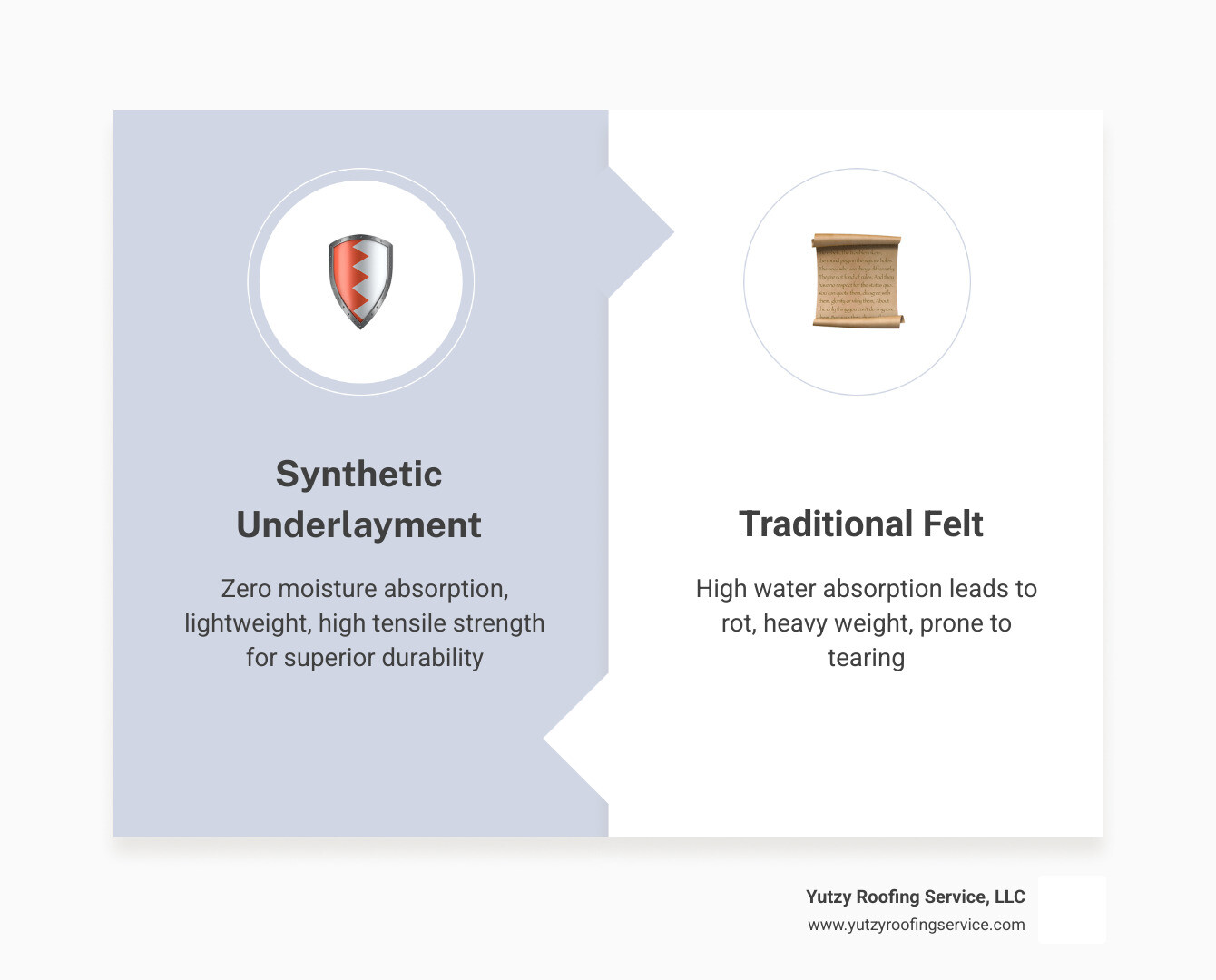
| Feature | Synthetic Underlayment | Traditional 15/30lb Felt |
|---|---|---|
| Moisture Absorption | 0% (Will not rot) | High (Can swell and wrinkle) |
| Weight | Very Light | Heavy and Cumbersome |
| Durability | High Tensile Strength | Tears Easily |
| UV Resistance | Up to 6-12 Months | Days to Weeks |
| Mold Resistance | Inorganic (Doesn’t support mold) | Organic (Mold food) |
Beyond simple leak prevention, these materials offer crack suppression and thermal insulation. In our region, Metal Roof Waterproofing in Madison is a top priority because of how much metal expands and contracts. A high-quality underlayment acts as a “slip sheet,” allowing the roof to move without tearing the moisture barrier.
Performance of Water Resistant Underlayment in High-Moisture Zones
In high-moisture environments like commercial kitchens, laundry facilities, or buildings with high humidity, condensation is a silent killer. Some advanced underlayments utilize “Air Gap Technology.” This creates a small space for air to flow beneath the surface, allowing trapped moisture to evaporate rather than soaking into the wood or concrete deck.
Products like DRICORE Certiguard have pioneered this in subfloors, and similar principles are used in commercial roofing to ensure longevity. By managing the “breathability” of the roof assembly, we prevent the “greenhouse effect” that leads to structural rot.
Impact on Long-Term Maintenance Costs
Let’s talk numbers. Research suggests that floors or roofs without proper moisture protection can fail in as little as 3 to 7 years. In contrast, a well-protected system can easily last 20 to 30 years or more. Replacing a failed commercial roof early can cost $15,000 to $50,000 or more depending on the square footage.
By investing in a quality Moisture Resistant Underlayment, you aren’t just buying a roll of plastic; you are buying insurance for your structural decking. It preserves your warranty and prevents the kind of catastrophic leaks that disrupt business operations.
Proper Installation for Maximum Leak Prevention
Even the best water resistant underlayment will fail if it’s installed poorly. We follow a strict protocol to ensure every square inch is sealed.
Critical Steps for Sealing Seams
The seams are the most vulnerable part of any underlayment system. We don’t just “overlap and hope.”
- Overlap Standards: Most manufacturers require a minimum 4-inch side lap and a 6-inch end lap.
- Seam Tape: In high-risk areas, we use specialized seam tape to bridge the gap between sheets.
- Adhesives: For certain membranes, like those detailed in the Mapeguard UM technical data, a polymer-modified mortar or specialized adhesive is used to bond the edges, creating a monolithic barrier.
Avoiding Common Installation Pitfalls
- Dust Removal: If you’re installing a peel-and-stick product, the deck must be bone-dry and free of dust. If it’s dirty, the adhesive won’t grab, and you’ll have “fishmouths” (gaps) in your seams.
- Wrinkle Prevention: Synthetics can expand when they get hot. If they aren’t pulled taut during installation, they can wrinkle, creating “channels” that actually direct water toward your fasteners.
- Slope Tolerance: Not all underlayments are rated for flat roofs. Always check the minimum pitch requirements at retailers like Menards or specialized roofing suppliers before starting.
Frequently Asked Questions about Water Resistant Underlayment
What is the typical cost of commercial-grade underlayment?
Pricing varies wildly based on the material. Basic synthetic rolls might cost between $0.15 and $0.30 per square foot. High-end, self-adhering, or uncoupling membranes can range from $0.80 to over $2.00 per square foot. While the upfront cost is higher, the labor savings (due to easier installation) and the long-term protection usually make the premium options a better value.
How does underlayment affect commercial roof warranties in 2026?
In 2026, roofing warranties are stricter than ever. Most major manufacturers now require you to use their specific brand of water resistant underlayment as part of a “complete system” to qualify for a long-term (20+ year) NDL (No Dollar Limit) warranty. If you mix and match brands, you might find yourself without coverage if a leak occurs.
Can water resistant underlayment be used with spray foam coatings?
Yes, but the application is different. In many restoration projects, we use the existing roof as the “substrate.” However, if we are doing a full tear-down, we install a high-quality Waterproofing Membrane over the new deck before applying the spray foam or coating. This provides a “belt and suspenders” approach—the foam provides the insulation and primary seal, while the underlayment protects the building if the foam is ever punctured.
Conclusion
Your commercial roof is a significant investment, and the water resistant underlayment you choose is the foundation of that investment’s success. Whether you are in Madison, Eau Claire, or Rochester, the weather is going to test your building. Don’t let a cheap roll of felt be the reason your structural deck rots out.
At Yutzy Roofing Service, we specialize in commercial roofing restoration and maintenance that stands the test of time. We believe in doing the job right the first time, which is why we offer up to 18-year non-prorated renewable warranties on our systems. If you’re concerned about moisture infiltration or want to learn more about how we can protect your facility, check out our guide on The Different Types Of Roof Waterproofing Methods Explained or contact us today for a professional consultation. We’re here to help you keep your business dry and your roof strong for decades to come.
