Why Every Commercial Property Owner Needs a Roof Inspection Checklist
A roof inspection checklist is your first line of defense against costly repairs — and for commercial properties in Wisconsin, that defense gets tested hard every single year.
Here’s a quick-reference checklist to get you started:
Commercial Roof Inspection Checklist (Quick Reference)
| Zone | What to Check |
|---|---|
| Membrane surface | Blisters, tears, ponding water, seam separation |
| Flashing | Cracks, gaps, lifting around HVAC curbs and walls |
| Drainage | Clogged drains, scuppers, slow-draining areas |
| Parapet walls | Sealant failure, cracks, cap flashing condition |
| Gutters & downspouts | Debris blockage, sagging, proper water flow |
| Interior/attic | Water stains, mold, damp insulation, daylight gaps |
| Structural elements | Sagging deck, soft spots, rusted components |
Roof problems rarely announce themselves — they build quietly. A small flashing crack becomes a major leak. Ponding water degrades membrane seams. And by the time you notice the water stain on your ceiling, the damage is already done.
The numbers back this up: for every dollar spent on preventive maintenance, you can avoid roughly four dollars in future repair costs. That’s not a minor difference — that’s the gap between a $300 repair and a $1,200 emergency fix.
I’m Josh Yutzy, and my family’s company has been inspecting and restoring commercial roofs across Wisconsin since 1995. A proper roof inspection checklist is something we rely on for every single job, because a systematic approach is the only way to catch what the naked eye wants to miss.

Why a Professional Roof Inspection Checklist is Essential in 2026
In 2026, building owners are facing higher material costs and stricter insurance requirements than ever before. A full roof replacement for a commercial facility can easily range between $5,860 and $13,150 for smaller units, and climb significantly higher for large-scale industrial plants. This makes the 3 Benefits Of Roofing Inspections And How To Get The Most From Them more than just a suggestion—it’s a financial necessity.
Scientific research on roof deterioration shows that systems fail due to normal wear, building movement, and environmental stress. In our neck of the woods—from Madison to Green Bay—the freeze-thaw cycle is a silent killer. Water gets into a tiny crack in your membrane, freezes, expands, and turns a pinhole into a “call-me-at-3-AM” emergency.
Regularly using a roof inspection checklist helps you:
- Extend Lifespan: Proactive maintenance can add 5 to 10 years to a commercial roof’s life.
- Ensure Insurance Compliance: Many insurance policies require proof of regular maintenance to honor claims after a storm.
- Detect Hidden Issues: Problems like granule loss or poor ventilation often exist for months before a leak occurs.
By following a standardized procedure, you move away from “guessing” and toward “knowing.” According to industry data, nearly 20% of all commercial building inspections find significant roof issues—many of which were completely unknown to the owner.
Seasonal Timing and Frequency for Commercial Assets
One of the most common questions we hear is: “How often do I really need to do this?” For commercial assets in Wisconsin and Minnesota, the answer isn’t “whenever I remember.”
At a minimum, a commercial roof should be inspected twice a year—once in the spring and once in the fall. We call this the “Pre-Winter Prep” and the “Post-Winter Recovery.”
- Spring Assessment: This is when we look for damage caused by ice dams, heavy snow loads, and the brutal Wisconsin winter.
- Fall Preparation: We focus on clearing debris and ensuring the drainage system is ready for autumn rains and the upcoming freeze.
- Post-Storm Protocol: If a major hail or wind storm hits, you need to be on that roof within 48 hours to document damage for insurance purposes.
If you are wondering Whens The Last Time You Had A Commercial Roof Inspection, and you can’t remember, you’re likely overdue.
High-Risk Roofs and Snow Loads
In regions like Wausau and Eau Claire, we have to pay special attention to “High Risk Roofs.” A roof is considered high risk if it scores a 15 or greater out of 20 on a Snow Overload Risk Assessment. These roofs require more frequent monitoring during the winter months to prevent structural distress.
| Property Type | Inspection Frequency | Key Focus |
|---|---|---|
| Commercial (Retail/Office) | 2x Per Year | Drainage and HVAC Curbs |
| Industrial (Manufacturing) | Quarterly | Chemical Exhaust and Vibration Stress |
| Government/Public Assets | Annual + Post-Storm | Code Compliance and Safety Standards |
| Roofs Over 15 Years Old | Quarterly | Seam Integrity and Material Degradation |
Critical Zones of the Exterior Assessment

When we step onto a roof, we don’t just walk around and hope to see something. We divide the roof into “Critical Zones.” This systematic approach ensures that even the smallest TPO tear or EPDM seam failure is caught, utilizing scientific research on common roof defects.
Membrane Integrity and Ponding Water
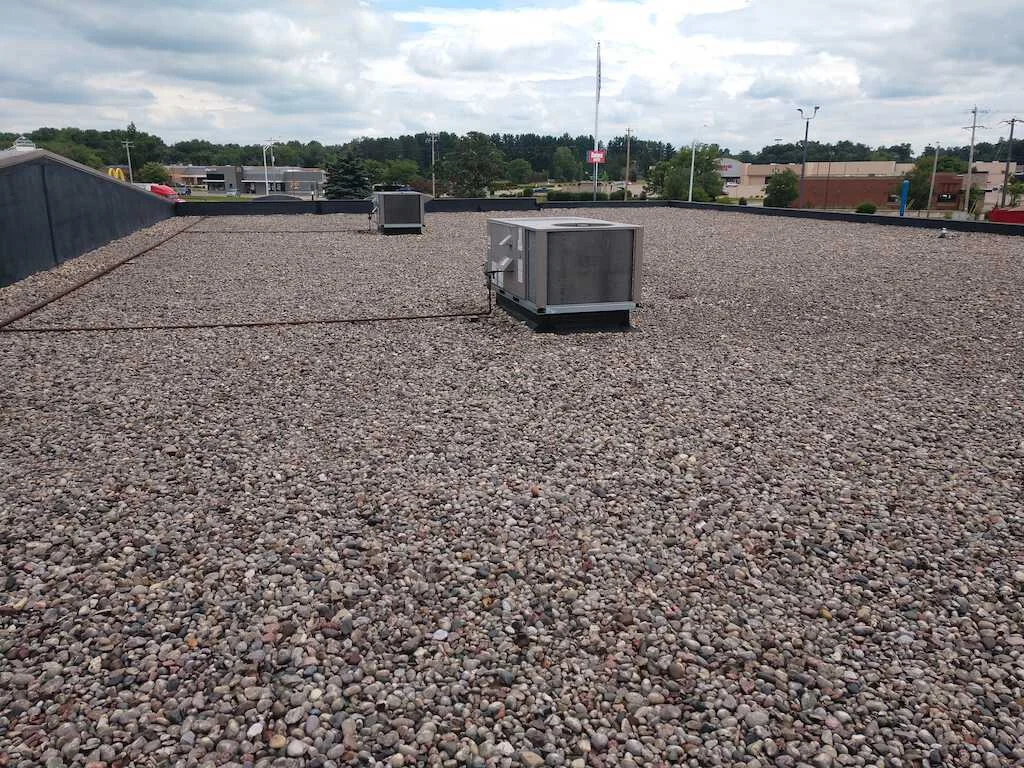
The field of the roof is the most visible part, but it can be deceptive. We look for “ponding water,” which is defined as water that remains on the roof for more than 48 hours. You can spot these areas even when they are dry by looking for silt deposits, rust-type stains, or concentrated debris.
On PVC membranes, ponding is less of a warranty issue, but on asphalt-based roofs, it can lead to rapid degradation. We also check for “alligatoring” (cracking that looks like reptile skin) and blisters caused by trapped moisture.
Flashing and Drainage Systems
Flashing is the most common point of failure. It’s where the roof meets a wall, a chimney, or an HVAC unit. We check for gaps, cracked sealants, and “fastener back-out,” where the screws literally start to pop out of the metal.
Your drainage system—the scuppers, gutters, and internal drains—must be clear. A single plastic bag or a handful of leaves can turn your roof into a swimming pool, and most commercial roofs aren’t designed to hold that much weight.
Essential Items for your Exterior Roof Inspection Checklist
- EPDM Seams: Check for “fish-mouthing” where the adhesive has failed.
- TPO/PVC Blistering: Ensure the heat-welded seams are still tight.
- Metal Restoration Areas: Look for rust at the laps and failed washers on fasteners.
- HVAC Curbs: Inspect the seals around units; vibrations from the fans often loosen flashing over time.
- Pitch Pockets: Ensure the filler material hasn’t cracked or shrunk.
- Debris Removal: Clear any branches, trash, or abandoned equipment left by other contractors.
Interior and Structural Assessment Protocols

A thorough roof inspection checklist doesn’t stop at the roof hatch. What’s happening inside the building often tells the real story of the roof’s health, often referencing scientific research on interior damage signs.
Water Penetration and Structural Distress
We look for water stains on the ceiling or walls. Yellowish or brown rings are a dead giveaway. However, we also look for “daylight penetration.” If you are in an attic or warehouse space and you can see sunlight peeking through the roof deck, you have a major problem that requires immediate attention.
Infrared Thermography
For commercial properties, we often use infrared thermography. This non-destructive testing allows us to see “hot spots” where wet insulation is trapped under the membrane. Wet insulation loses its R-value (costing you money on energy) and can lead to mold growth and deck rot.
Deck Integrity
If the roof deck is wood, we look for rot or delamination. If it’s metal, we check for rust on the underside. We also look for “soft spots” while walking the roof. If the roof feels “spongy” underfoot, the insulation or the deck itself may be compromised.
Frequently Asked Questions about the Roof Inspection Checklist
When should I call a professional for a roof inspection checklist?
While a building owner can do a ground-level check with binoculars, some things require a pro. You should call us if:
- The roof pitch is greater than 6:12 (too steep for standard walking).
- You have active leaks that you can’t locate.
- You need to validate a warranty for a restoration coating.
- You see visible sagging in the roofline.
If you’re curious about the investment, you can learn more about How Much Does A Roof Inspection Cost, but generally, a professional assessment is a fraction of the cost of a missed structural issue.
What are the signs of urgent commercial roof failure?
Urgent failure isn’t just a leak. It’s “active” issues like:
- Membrane Tears: Large openings that allow direct water entry.
- Fastener Back-out: When fasteners pull out, the wind can catch the membrane and peel it back like an orange.
- Severe Ponding: Water that isn’t moving toward a drain after two days.
- Rusted Decking: If the structural support is rusting, the roof is no longer safe to walk on.
What safety equipment is required for a commercial inspection?
Safety isn’t optional. According to OSHA standards, anyone performing a roof inspection should have:
- Fall Protection: A safety harness and lanyard if working near edges.
- Non-Slip Footwear: Roofs can be incredibly slick, especially TPO when it’s damp.
- Ladder Stabilization: Ladders should extend at least 3 feet above the roof edge and be tied off.
- A Partner: Never inspect a commercial roof alone.
Conclusion
Your commercial roof is a massive asset, and a roof inspection checklist is the tool that keeps that asset from becoming a liability. Whether you are managing a warehouse in Marshfield, a retail center in Appleton, or a manufacturing plant in Madison, the goal is the same: catch the small stuff before it becomes the big stuff.
At Yutzy Roofing Service, LLC, we specialize in helping Wisconsin business owners avoid the “full replacement” trap. Through high-quality commercial restoration, spray foam coatings, and EPDM repairs, we can often breathe new life into an aging roof. Best of all, our restoration systems often come with up to an 18-year non-prorated renewable warranty.
Don’t wait for the next big storm to find out your roof is failing. More info about commercial roofing services is just a click away, and our team is ready to help you secure your facility for the long haul.
