What Commercial Property Owners in Wisconsin Need to Know About Hail Damage Roof Replacement
Hail damage roof replacement is one of the most urgent decisions a commercial property owner can face after a major storm — and in Wisconsin, those storms are no small matter.
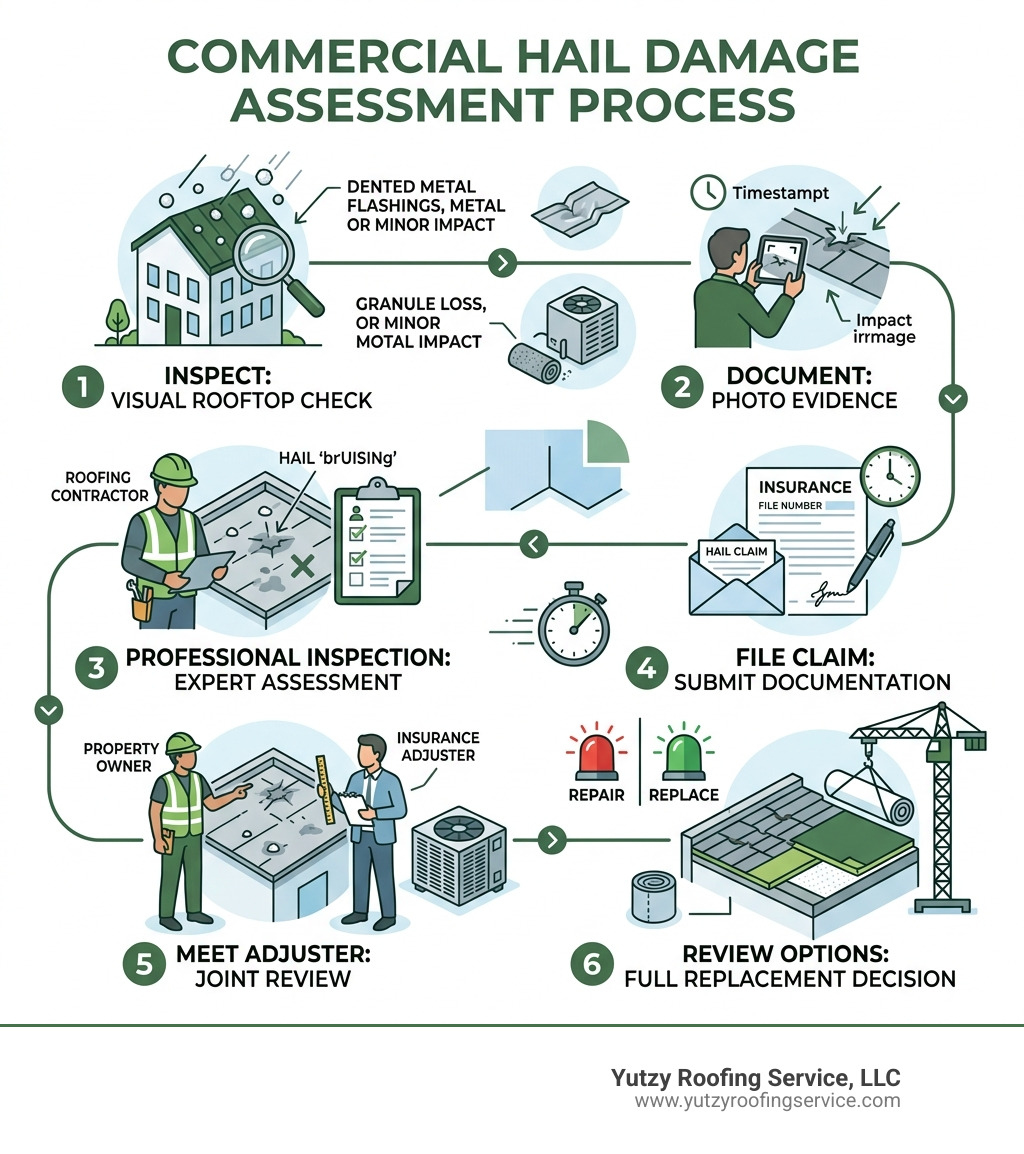
Here’s a quick overview of what the process typically involves:
| Step | What to Do |
|---|---|
| 1. Inspect | Check for visible damage from the ground — dented gutters, granule loss, AC fins |
| 2. Document | Take time-stamped photos of all damage before touching anything |
| 3. Call a contractor first | Get a professional inspection before contacting your insurer |
| 4. File your claim | Submit documentation promptly — most policies require filing within 6–12 months |
| 5. Meet the adjuster | Have your contractor present to advocate for a fair, complete settlement |
| 6. Review your options | Decide between restoration, repair, or full replacement based on damage extent and roof age |
The U.S. sees over 4,000 major hail events every year, and roughly 1 in every 35 insured properties files a wind or hail damage claim annually. For commercial property owners, the stakes are even higher — a compromised roof doesn’t just mean repair bills. It means business disruption, potential liability, and long-term structural risk.
The challenge is that not all hail damage looks the same — and not all of it is as straightforward as a few cracked shingles. Hidden damage to membranes, underlayment, and drainage systems can go undetected for months, quietly turning a manageable repair into a costly replacement.
I’m Josh Yutzy, and my family has been handling hail damage roof replacement on commercial properties across Wisconsin since 1995. In that time, we’ve seen nearly every type of storm damage — and we’ve helped hundreds of property owners navigate the inspection, insurance, and restoration process from start to finish. Let’s walk through everything you need to know.
Identifying Hail Damage on Commercial Roofing Systems
Identifying hail damage on a commercial facility is vastly different than checking a residential home. While a homeowner might look for missing shingles, a commercial property manager must look for “functional damage” — impacts that diminish the lifespan of the roof or its ability to shed water.

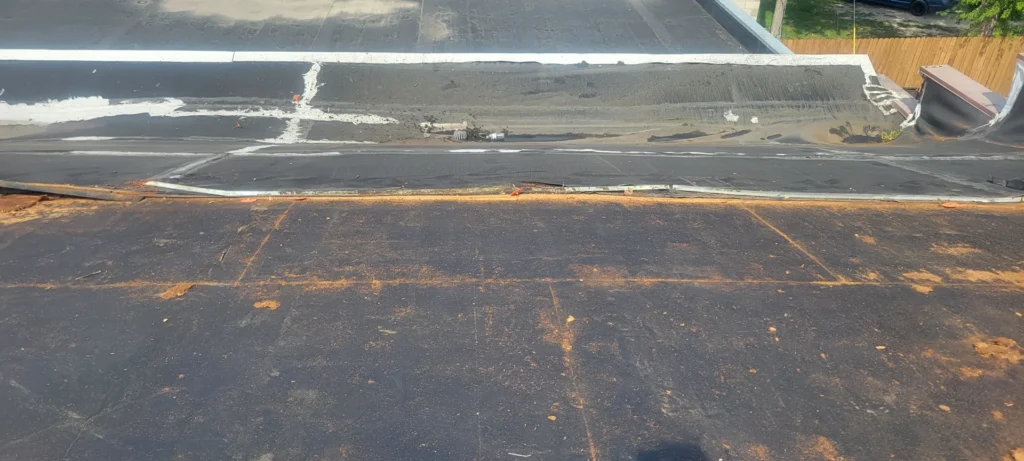
On a flat or low-slope roof, hail doesn’t always leave a gaping hole. Instead, it creates “bruises.” Just like an apple that looks fine on the outside but is mushy underneath, a commercial membrane can suffer a fractured internal mat while the surface appears intact. Over time, these weakened spots expand and contract with Wisconsin’s temperature swings, eventually splitting open and allowing water to saturate the insulation below.
According to research, it often takes 1.5-inch hailstones to damage thicker, laminated-type materials 50% of the time, but for older commercial membranes, even 1-inch “quarter-sized” hail can be the beginning of the end. You can find more detail on identifying these signs in this Homeowner’s Guide to Hail Damage Roof Replacement.
Visual Signs of Hail Damage on Different Materials
Each commercial material reacts to ice impacts differently. Here is what we look for during our inspections:
- EPDM (Rubber): We look for “bruising” or circular cracks. If you press on a suspected hit and it feels soft or spongy, the reinforcement mat inside is likely fractured.
- TPO and PVC: These thermoplastic membranes often show “star-cracking.” These are tiny, radial cracks that look like a shattered windshield. Even if they don’t leak today, they will fail as the plasticizers age.
- Modified Bitumen and Built-Up Roofing (BUR): On these asphalt-based roofs, hail knocks the protective granules loose. You’ll see dark spots where the bitumen is exposed to UV rays. Without those granules, the sun will “cook” the roof, leading to brittleness and leaks.
- Metal Roofing: While metal is tough, hail causes dents and dings. More importantly, it can jar fasteners loose or break the factory seal on seams, leading to slow, hidden leaks.
If you suspect your facility has been hit, our Storm Damage Repair Services can provide a professional verification to see if the damage is functional or merely cosmetic.
Identifying Hail Damage on a Roof Without Climbing
We never recommend property owners climb onto a commercial roof without proper safety gear, especially after a storm when surfaces may be slippery or structurally unsound. Fortunately, you can spot “collateral damage” from the safety of the parking lot.
Check these areas first:
- Gutters and Downspouts: Look for fresh dents on the metal. If the gutters are dented, the roof likely took a similar beating.
- HVAC Units: Check the thin metal “fins” on your AC condensers. If they are crushed or flattened, it’s a clear sign of significant hail impact.
- Downspout Terminations: Look for piles of granules (they look like black sand) at the bottom of your downspouts. This indicates the hail has scrubbed the protective layer off your asphalt-based roofing.
- Metal Flashing and Vents: Dented vent caps or warped drip edges are “smoking guns” for insurance adjusters.
For more tips on what to look for, check out our resource on Tag/Roof Damage.
When to Choose Hail Damage Roof Replacement Over Repair
The big question after a storm in Madison or Appleton is: “Can I just patch it?” The answer depends on the density of the hits and the age of the system.
Insurance companies typically use a “test square” method. They mark off a 10×10 foot area (100 square feet) on each slope of the roof. If they find a specific threshold of hits — often 8 or more functional hailstrikes within that square — they will typically approve a full hail damage roof replacement.
| Feature | Repair | Replacement / Restoration |
|---|---|---|
| Damage Extent | Isolated to one area | Widespread (8+ hits per square) |
| Roof Age | Less than 10 years old | Over 15-20 years old |
| Integrity | Dry insulation/decking | Saturated insulation/compromised deck |
| Cost | Lower upfront | Better long-term ROI/Warranty |
| Insurance | Often below deductible | Usually covers full cost |
For a deeper dive into this decision, see this 2026 Hail Damage Roof Replacement guide.
Telltale Signs Your Facility Needs a Hail Damage Roof Replacement
If your roof is approaching the 15-to-20-year mark, a major hailstorm is often the “final straw.” Older membranes lose their elasticity and become brittle. When hail hits a brittle roof, it doesn’t just bruise; it shatters.
If our inspection reveals widespread bruising across multiple “squares” or if we find that the hail has compromised the underlayment, a patch is just a band-aid. Recurring leaks after a storm are a primary indicator that the structural integrity of the system is gone. You can learn more about making this choice at Roof Replacement Or Repair Learn More Now.
Interior Indicators of Compromised Roofing
Sometimes, the first sign of hail damage isn’t on the roof at all — it’s in your warehouse or office space. Look for:
- Ceiling Stains: Water spots that appear or grow larger after a heavy rain.
- Wall Bubbles: Peeling paint or bubbling drywall often indicates water is traveling down the wall studs.
- Musty Odors: A lingering damp smell suggests mold is growing in the insulation.
- Mold Spots: Visible mold on ceiling tiles is a health hazard and a sign of long-term moisture intrusion.
These issues shouldn’t be ignored, as they can lead to much larger structural problems. Read more about 8 Common Causes Of Roof Damage And How To Repair Them.
Navigating the Insurance Claim Process for Commercial Properties
The insurance process for a commercial hail damage roof replacement is a high-stakes negotiation. Most commercial policies are either Replacement Cost Value (RCV) or Actual Cash Value (ACV). RCV policies are preferred because they cover the cost to replace the roof at today’s prices, whereas ACV policies subtract depreciation based on the roof’s age, leaving you with a much larger out-of-pocket bill.
Step-by-Step Filing for Hail Damage
- Immediate Documentation: Take photos of the hail on the ground (use a ruler or a coin for scale) and any immediate leaks.
- Professional Inspection: Call us to document the “functional damage” that an adjuster might overlook.
- File the Claim: Contact your agent with the “date of loss.” Most policies in the Midwest require this within 6-12 months.
- The Adjuster Meeting: This is the most critical step. Having your contractor present ensures the adjuster sees every hit.
- Review the Scope of Work: Don’t just look at the check; look at the “line items.” Ensure they included local building code upgrades and proper disposal fees.
For more guidance, see How To Get Insurance To Pay For Roof Replacement and our Tag/Storm Damage resources.
Why You Should Hire a Contractor Before the Adjuster
Many property owners call their insurance company first. We recommend calling a trusted contractor like Yutzy Roofing Service before the adjuster arrives. Why? Because adjusters are often overwhelmed after a storm and may miss subtle bruising or hidden fractures.
We act as your expert advocate. We know how to identify the difference between normal wear and tear and actual hail strikes. Statistics suggest that having a contractor present during the inspection can significantly increase the likelihood of a full replacement approval. As noted in The Real Cost of Hail in 2026, professional documentation is the key to a fair settlement.
Financial Factors and Restoration Options
A full “tear-off” replacement isn’t your only option. At Yutzy Roofing Service, we specialize in commercial roofing restoration. If the underlying structure is still dry, we can often apply a spray foam coating or a metal roof restoration system. These options are often covered by insurance and can provide a “like-new” roof for a fraction of the cost of a full replacement.
The Cost of Commercial Hail Damage Roof Replacement
The cost of a hail damage roof replacement in Wisconsin varies based on several factors:
- Material Choice: EPDM and TPO are generally more budget-friendly, while high-end metal or tile systems are more expensive.
- Roof Pitch and Height: Steep roofs or high-rise buildings require specialized safety equipment and more labor.
- Regional Labor Rates: Prices in Madison or Green Bay may fluctuate based on local demand after a major storm.
- Disposal Fees: Tearing off multiple layers of old roofing adds significant labor and dumpster costs.
For a detailed pricing breakdown, refer to this comprehensive guide on estimating cost. You can also compare Commercial Roof Repair Or Replacement to see which makes the most financial sense for your budget.
Hail-Resistant Materials for Future Protection
If you are replacing your roof in 2026, it’s worth investing in hail-resistant materials to prevent going through this process again in five years.
- Class 4 Impact-Resistant Shingles: These are designed to withstand 2-inch hailstones without cracking.
- Spray Foam Coatings: These provide a seamless, flexible layer that absorbs the energy of hail impacts rather than fracturing.
- Reinforced Membranes: Modern TPO and PVC membranes now come with thicker reinforcement mats specifically for hail-prone areas.
Upgrading your roof can even lead to insurance premium discounts of up to 30% in some cases. Learn more about When Should You Start Considering A New Commercial Roof.
Selecting a Reputable Commercial Contractor in Wisconsin
After a storm, “storm chasers” often flood areas like Wausau, Eau Claire, and Fond du Lac. These are out-of-state companies that follow hail maps, sign as many contracts as possible, and then disappear once the work is done.
When selecting a contractor, look for:
- Local Roots: Do they have a permanent office in Wisconsin? We’ve been here since 1995.
- Commercial Expertise: Residential roofing is not the same as commercial restoration. Ensure they understand flat roof drainage and commercial building codes.
- Manufacturer Certifications: This ensures your warranty will actually be honored.
If you’re in the Eau Claire area, check out our guide on How Do I Know I Need To Replace My Roofing In Eau Claire Wi.
Risks of Using Out-of-State Storm Chasers
Using a storm chaser is a gamble. Because they aren’t local, they often use sub-contracted crews who may not follow manufacturer specifications. If your roof leaks two years from now, that company will likely be three states away, leaving you with no one to call for warranty repairs. Furthermore, some “waive deductible” schemes are considered insurance fraud in many states. Always choose a local, licensed professional. Explore more in our Category/Roof Replacement section.
Frequently Asked Questions about Hail Damage
What size hail causes commercial roof damage?
While pea-sized hail is mostly harmless, 1-inch (quarter-sized) hail is the threshold where asphalt shingles and older membranes start to see functional damage. Golf ball-sized (1.75 inches) hail will almost always damage a commercial roof, and tennis ball-sized (2.5 inches) hail can cause catastrophic destruction to almost any material. For a full pricing and size breakdown, see this Hail Strike report.
Will filing a hail claim increase my insurance premiums?
In many cases, a hail claim is considered an “Act of God,” meaning the insurance company cannot single you out for a rate hike. However, if a major storm hits your entire region (like a zip code in Madison), the insurance company may raise rates for everyone in that area to account for the increased risk. It is almost always better to file a legitimate claim than to pay for a $50,000 roof replacement out of pocket.
How long do I have to file a claim after a 2026 hailstorm?
Most policies give you between 6 and 12 months from the “date of loss.” We recommend filing as soon as possible. As time passes, the “hits” become weathered and harder for an adjuster to distinguish from normal aging, which could lead to a claim denial.
Conclusion
Navigating a hail damage roof replacement doesn’t have to be a nightmare for your business. By acting quickly, documenting the damage, and partnering with a local expert, you can ensure your facility is protected for the long haul.
At Yutzy Roofing Service, LLC, we aren’t just here for the storm; we’re here for the decades that follow. We specialize in commercial restoration, spray foam coatings, and EPDM repairs across Wisconsin and Minnesota. We are so confident in our work that we offer an up to 18-year non-prorated renewable warranty on our restoration systems.
Whether you are in Marshfield, Green Bay, or Rochester, MN, we are ready to help you restore your roof. Contact us today for a professional inspection and let’s get your business back under a dry, secure roof.
