
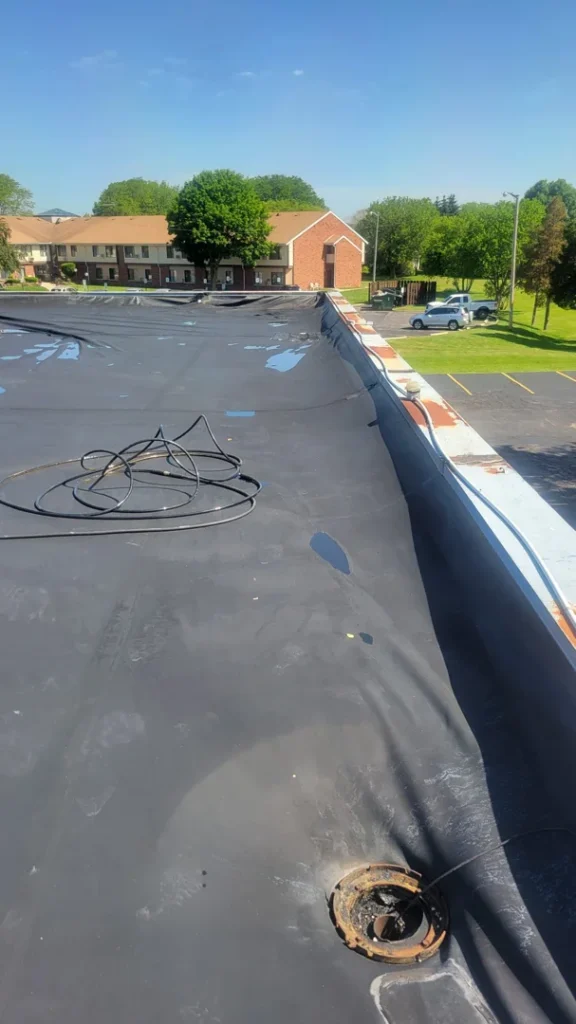
Why the Right Flat Roof Drain Is the Most Important Part of Your Commercial Roof
A flat roof drain is the single most critical component standing between your building and serious water damage. Before we get into the full guide, here’s a quick look at the main types available — so you can find what you need fast:
Main types of flat roof drains for commercial buildings:
| Drain Type | Best For | Key Feature |
|---|---|---|
| Internal (bottom outlet) | New construction | Connects to vertical plumbing below deck |
| Internal (side outlet) | Retrofit projects | Connects to existing horizontal plumbing |
| Scupper drain | Parapet walls | Wide opening, clog-resistant |
| Overflow / secondary drain | Backup protection | Sits 2 inches higher than primary drain |
| Retrofit drain | Existing roofs | Fits inside current pipe without excavation |
| Siphonic drain | Large commercial roofs | Up to 100x faster than gravity drainage |
Flat commercial roofs in Wisconsin take a beating. Snowmelt, spring downpours, and summer storms all test the same drainage system — sometimes all in the same month.
When that system fails, the consequences aren’t just a wet ceiling. Standing water weighs 5.2 pounds per square foot per inch of depth. A single inch of water pooled across a 20-square-foot depression adds 2,000 pounds of unplanned load to your roof deck. That’s before you factor in membrane damage, insulation saturation, or the interior leaks that follow.
The problem is that choosing and installing the wrong drain — or installing the right one incorrectly — is surprisingly common. Research shows that as many as 75% of retrofit drains are fitted incorrectly, causing water to back up inside the assembly instead of flowing out as designed.
I’m Josh Yutzy, and our team at Yutzy Roofing Service has been installing and maintaining commercial flat roof drain systems across Wisconsin since 1995. We’ve seen what happens when drainage is treated as an afterthought — and what a well-designed system can protect. This guide will help you buy with confidence.
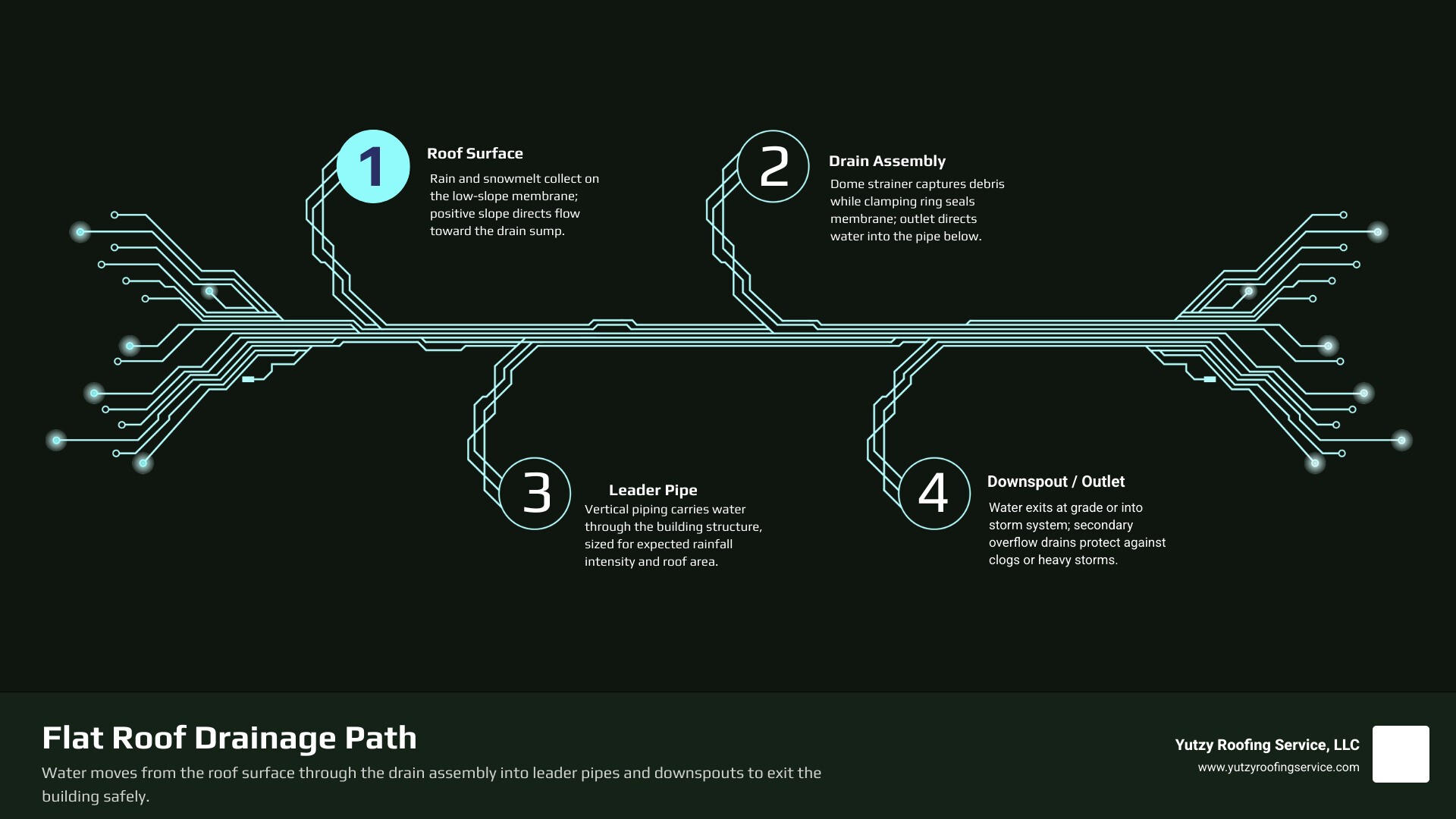
How to Choose the Right Flat Roof Drain for a Commercial Roof
Choosing the right flat roof drain isn’t just about picking a part from a catalog; it’s about matching the drain to the specific physics of your building. In cities like Madison or Wausau, where we see heavy snow loads followed by rapid thaws, your drainage needs to be robust.
When selecting a drain, we first look at the roof’s square footage and the historical rainfall intensity of the region. A small warehouse in Marshfield requires a different layout than a massive distribution center in Appleton. Other factors include the depth of your insulation, the presence of parapet walls, and whether you are working on a new build or a refurbishment.
Compatibility is also a major hurdle. You cannot simply slap a cast iron drain onto a TPO membrane without the right flashing components. If the materials aren’t compatible, you risk leaks at the most vulnerable point of the roof. Tips and Tricks for Choosing the Right Roof Drainage System can provide deeper insights into making these technical selections.
Flat roof drain sizing and layout basics
The goal of any flat roof drain system is “positive drainage.” This means the roof is designed to allow water to drain off completely within 24 to 48 hours after the rain stops. To achieve this, we use drain sumps—recessed areas around the drain—to ensure the water actually flows into the pipe rather than sitting around the flange.
Local stormwater regulations also dictate how fast we can let water off the roof. In some urban areas, “control flow” drains are required to prevent overwhelming the city sewer system during a cloudburst.
Material and membrane compatibility that prevents failures
Modern drains come in various materials, each with pros and cons:
- Cast Iron: Heavy-duty and long-lasting. Brands like Zurn use cast iron for its strength and resistance to warping.
- Stainless Steel: Excellent for corrosion resistance and often used in high-end retrofit options.
- PVC-Clad and TPO-Clad: These are game-changers for single-ply roofs. A PVC-clad stainless steel drain allows the roofing membrane to be heat-welded directly to the drain flange, creating a monolithic, watertight seal.
- Polypropylene and ABS: Lightweight and cost-effective, but they must be UV-stabilized to survive on a roof.
Using the wrong combination can lead to galvanic corrosion or flashing failure, where the membrane pulls away from the clamping ring.
Gravity vs siphonic systems for large commercial buildings
Most buildings use gravity drainage, which relies on a slope and air in the pipes to move water. However, for massive structures like convention centers or airports, siphonic drainage is the superior choice.
A siphonic system uses specialized baffles to keep air out of the pipes. This creates a vacuum, allowing the system to achieve up to 100 times the drainage speed of a gravity system. Because the pipes run full of water, they can be smaller and installed horizontally without a slope, which saves significant interior space.
Flat Roof Drain Types Compared by Function and Installation
When you are ready to buy, you’ll encounter several different “families” of drainage products. Understanding their installation requirements is key to avoiding a “square peg, round hole” situation.
| Feature | Internal Drain | Scupper | Gutter | Retrofit | Siphonic |
|---|---|---|---|---|---|
| Location | Mid-roof | Parapet wall | Roof edge | Existing drain | Mid-roof |
| Installation | Complex (plumbing) | Moderate | Simple | Simple | Highly Engineered |
| Clog Risk | Moderate | Low | High | Moderate | Low |
| Best Use | New builds | Buildings with walls | Small roofs | Maintenance | Large-scale |
Internal flat roof drain systems for primary drainage
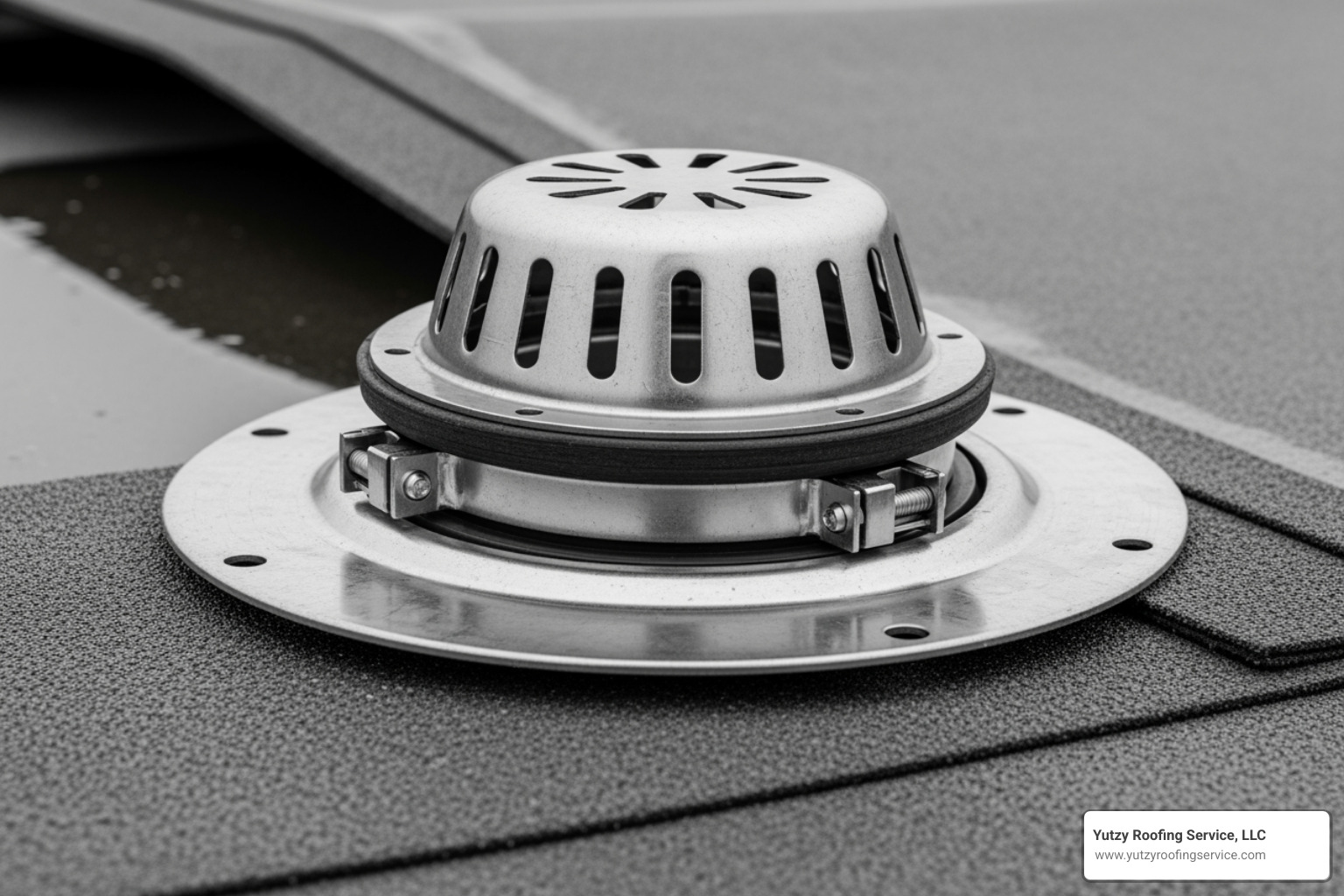
Internal drains are the workhorses of the industry. A standard unit like the Jay R. Smith 12″ Diameter Roof Drain consists of a drain body, a flashing clamp, and a dome strainer. The “dome” is crucial—it’s designed to let water in even if leaves or debris start to pile up around the base.
- Bottom Outlet: The most common for new construction, where the pipe goes straight down through the deck.
- Side Outlet: Essential for retrofits where you can’t change the vertical plumbing but need to route water horizontally to an existing leader.
Scuppers, gutters, and downspouts on parapet and edge conditions
If your building has parapet walls (the short walls around the edge of the roof), you’ll likely use scuppers. These are essentially holes in the wall that allow water to exit to an exterior downspout or conductor head. They are fantastic because they are very difficult to clog.
However, built-in gutters can be a nightmare. While they look sleek, they are prone to leaks. We often recommend external gutters or metal inserts to ensure water stays where it belongs. Curious about how these differ from residential setups? Check out How Does Flat Roof Drainage Compare to Non-Flat Roofs: A Guide.
Retrofit flat roof drain options and why installation accuracy matters
Retrofit drains are designed to fit inside your existing drain pipes. They are a lifesaver when an old cast iron drain has cracked, but the plumbing behind the wall is still good.
The danger here is the seal. As mentioned, 75% of these are installed incorrectly. If the compression seal isn’t perfect, water can back up between the new drain and the old pipe, leading to “mystery leaks” that rot out your roof deck from the inside. We always recommend a staged water test using drain balls to ensure the new connection is 100% watertight.
Drainage Design Details That Prevent Ponding and Structural Damage
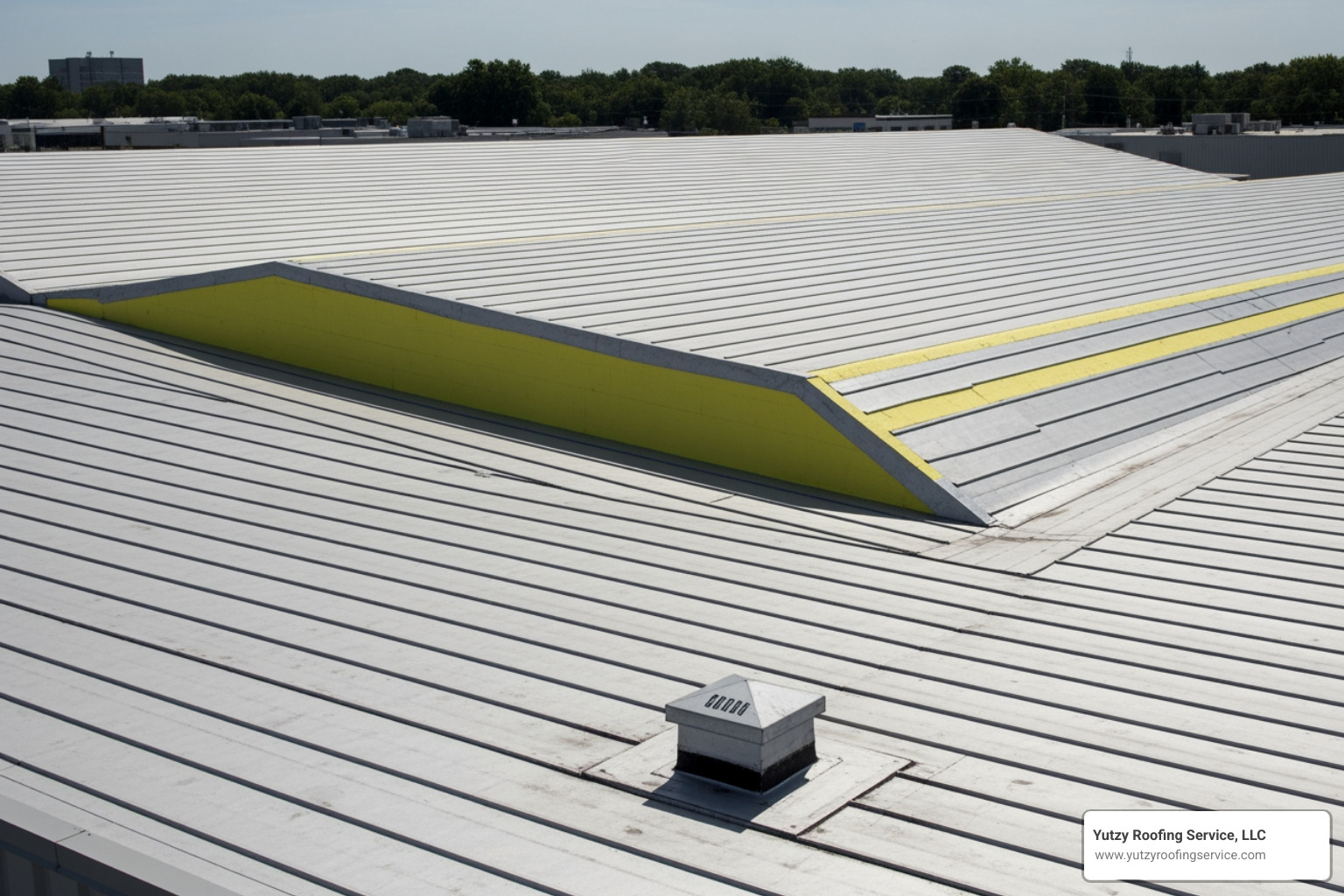
A flat roof drain is only as good as the slope leading to it. On a truly “dead-level” roof, water has no reason to move toward the drain. This leads to ponding—one of the most common causes of premature roof failure.
Ponding water does more than just add weight. It acts as a magnifying glass for UV rays, accelerating the degradation of TPO and PVC membranes. In the winter, that water freezes and expands, which can tear at flashing and seams. To understand the full scope of the danger, read about The Harmful Effects of Pooling Water on Commercial Roofs.
Why slope matters more than most flat roof drain buyers realize
In the commercial world, we aim for a minimum slope of 1/4 inch per foot. We achieve this through tapered insulation—sheets of foam that are thicker on one end than the other—or by pouring lightweight insulating concrete. Without this “positive pitch,” even the most expensive drain in the world won’t help you.
The weight of standing water and what it does to the roof system
We can’t emphasize this enough: water is heavy. At 5.2 pounds per square foot per inch, a large pond can easily exceed the structural load limits of your building. This causes the roof deck to deflect (sag), which creates an even deeper hole for more water to collect. It’s a vicious cycle that ends in structural failure if not addressed.
Overflow drains, secondary drains, and water dams as backup protection
Modern building codes usually require a secondary drainage system. This acts like the little hole near the top of your bathroom sink. If the main flat roof drain gets clogged by a plastic bag or heavy debris, the water level rises until it hits the secondary drain.
Typically, an overflow drain like the Z125 with a water dam sits about 2 inches higher than the primary drain. If you see water coming out of your overflow scuppers or downspouts, it’s a “silent alarm” telling you that your main drains are blocked and need immediate maintenance.
Best Product Features to Look for Before You Buy
When you’re shopping for a flat roof drain, look for these specific features to ensure long-term performance:
- Low-Profile Domes: Great for areas where wind might blow debris, but high enough to prevent clogging.
- No-Hub Outlets: The industry standard for easy connection to cast iron or PVC piping.
- One-Piece Bodies: These eliminate seams that could leak over time.
- Perforated Flanges: Products like the Dakota Flat Roof Outlet use perforated flanges to create a better mechanical bond with the waterproofing sheath.
New construction drains vs retrofit drains
If you are building from scratch, go with a heavy-duty bottom outlet drain. If you are doing a roof restoration or “recover,” a retrofit drain like the FarBo FloDrain is often the most cost-effective way to refresh the drainage without tearing into the building’s interior ceilings.
Specialty drains for overflow, controlled flow, and membrane-specific roofs
For roofs in areas with strict environmental codes, consider the Zurn Z105 Control-Flo. It uses a specialized weir to restrict water flow to a specific gallon-per-minute rate, protecting the city’s infrastructure during heavy storms.
What codes and standards affect flat roof drain selection
Don’t forget the paperwork. Standards like ASME A112.6.4 govern how drains must perform. Furthermore, the International Energy Conservation Code (IECC) now requires specific R-value insulation thickness even near the drains. In the past, contractors would taper the insulation down to almost nothing at the drain; now, we have to ensure the building stays warm even at the lowest point of the roof.
Maintenance Tips That Protect Your Drain Investment
You’ve spent thousands on a high-quality flat roof drain system; don’t let a $5 tennis ball or a handful of autumn leaves ruin it.
Routine maintenance for drains, scuppers, gutters, and siphonic components
We recommend a semiannual inspection—once in the spring and once in the fall.
- Clear Debris: Remove leaves, twigs, and trash from around the dome strainers.
- Check the Clamping Ring: Ensure the bolts are tight and the membrane hasn’t slipped.
- Inspect the “Silent Alarms”: Check overflow scuppers for signs of water passage.
- Test Downspouts: Ensure water is moving freely to the ground and away from the foundation.
For more on keeping your roof in top shape, see The Ultimate Guide to Flat Roof Coating Experts and Maintenance Plans.
Warning signs your flat roof drain system is failing
Keep an eye out for these red flags:
- Slow Drainage: If water is still there 48 hours after a storm.
- Membrane Blisters: Often caused by moisture trapped under the surface.
- Stains or Mold: Check the ceiling inside your building, especially near columns where drain pipes usually run.
- Bird Activity: Birds love standing water. If your roof looks like a birdbath, it probably is one.
When repair, re-sloping, or replacement is the smarter buy
If you are constantly dealing with clogs or ponding, your drains might be undersized for today’s weather patterns. In these cases, a “tapered redesign” during your next roof coating or replacement is a smart investment. It’s often cheaper to fix the slope than to keep paying for leak repairs. The Madison Guide to Keeping Your Flat Roof Functional offers localized advice for Wisconsin building owners facing these issues.
Frequently Asked Questions About Flat Roof Drain Buying
Which is better for a commercial roof: internal drains or scuppers?
It depends on the building. Internal drains are better for very large roofs where water can’t easily reach the edges. Scuppers are simpler and less likely to leak into the interior, but they require parapet walls. Most modern designs use a combination of both.
How often should a flat roof drain be inspected and cleaned?
At least twice a year. However, if your building is surrounded by tall trees (common in areas like Eau Claire or Fond Du Lac), you may need to check them monthly during the fall.
Can ponding water void roof warranties or damage the building?
Yes. Most major membrane manufacturers have clauses in their warranties stating that the warranty is void if “positive drainage” is not maintained. Beyond the warranty, the structural risk of a collapse is the much greater concern.
Conclusion: Buy a Flat Roof Drain That Fits the Whole Roofing System
A flat roof drain is only as effective as the system it’s part of. Whether you are in Green Bay, Wausau, or Rochester, MN, your drainage needs to be engineered for the specific challenges of the Upper Midwest.
At Yutzy Roofing Service, we don’t just “install drains.” We look at the entire roof—from the tapered insulation to the final heat-welded seam—to ensure your building stays dry for decades. With our up to 18-year non-prorated renewable warranties, we stand behind the systems we build.
If you’re seeing ponding water or suspect your current drainage isn’t up to the task, don’t wait for the next big storm. Contact us today for a professional evaluation of your commercial roof’s drainage system. We’ll help you find the perfect solution without going down the tubes.
