
Why Flat Roofs Leak — and What Actually Stops Them
Waterproof sealant for flat roofs is a liquid-applied coating that seals cracks, seams, and vulnerable surfaces to stop water from penetrating your roof membrane.
Quick answer — what you need to know:
- Flat roofs are prone to leaks because water sits rather than runs off
- Liquid waterproof sealants form a seamless, flexible membrane that moves with the roof
- The right sealant depends on your roof material (EPDM, TPO, modified bitumen, concrete, etc.)
- Most sealants can be applied by a professional in one to two coats
- Quality products last 10 to 25 years with proper preparation and maintenance
- Recoating costs roughly half what a full roof tear-off and replacement runs
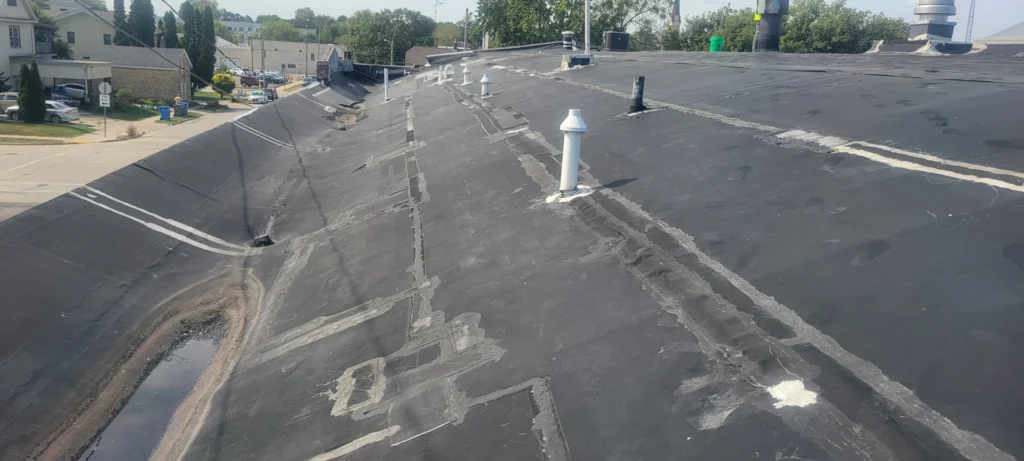
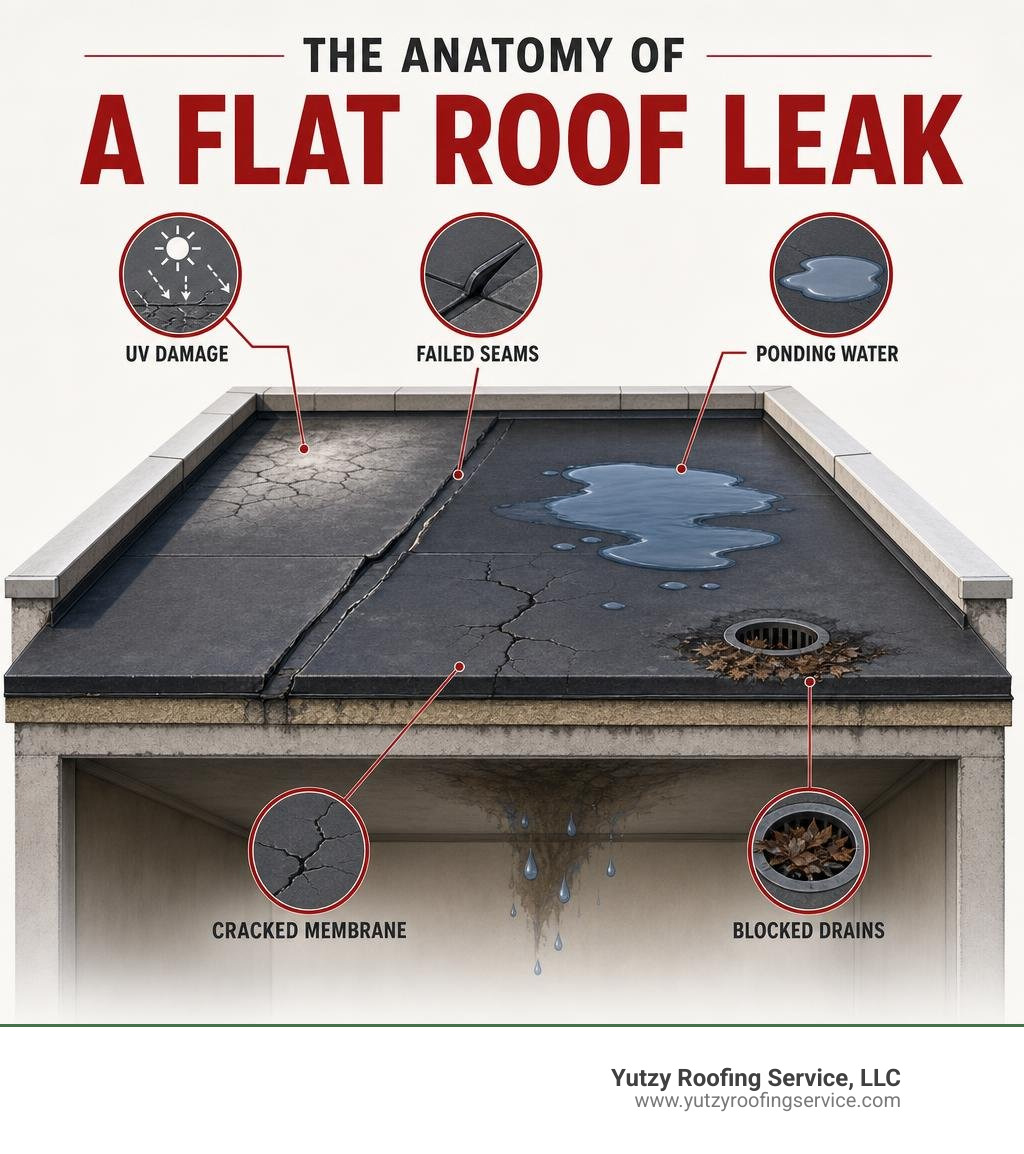
Flat roofs are built for function, not forgiveness. When Wisconsin winters pile on snow load and summers bake the membrane with UV radiation, small cracks and failing seams become expensive problems fast. Ponding water — water that sits for 48 hours or more — is one of the most common culprits. UV rays break down seams and flashing details over time, opening pathways for water to work its way in. What starts as a minor drip can quietly rot decking, damage insulation, and compromise structural integrity before you ever notice it inside the building.
The good news is that a properly chosen and correctly applied waterproof sealant can stop that cycle before it starts — and extend your roof’s life by a decade or more without tearing everything off.
I’m Josh Yutzy, and our team at Yutzy Roofing Service has been restoring and protecting commercial flat roofs across Wisconsin since 1995, with extensive hands-on experience selecting and applying waterproof sealant for flat roofs across a wide range of substrates and climate conditions. In the sections below, I’ll walk you through exactly how to choose, prepare for, and apply the right sealant for your roof.
Waterproof sealant for flat roofs basics:
What is Flat Roof Waterproofing and How Does It Work?
Flat roof waterproofing is the process of creating an impermeable barrier over an existing roof structure to prevent water intrusion. Unlike sloped roofs that shed water rapidly, flat roofs must shed water slowly through drains and scuppers. When drains clog or structural sagging occurs, water ponding is inevitable.
To combat this, modern roofing science relies on liquid-applied membranes. When applied to the roof surface, these liquid sealants cure to form a completely seamless, joint-free protective barrier. Because seams and joints are the most common failure points on any flat roof, eliminating them entirely is the single most effective way to guarantee long-term watertight performance.
These liquid-applied systems are engineered with high elasticity, allowing them to stretch and contract during extreme temperature changes without cracking or peeling. In our Midwestern climate, where temperatures can swing from sub-zero winter nights in Wausau to blistering summer afternoons in Madison, this thermal performance and flexibility are absolutely critical.
Understanding the Role of Waterproof Sealant for Flat Roofs
A high-performance waterproof sealant for flat roofs works by forming a direct chemical bond with the underlying roof substrate. Many advanced formulations use moisture-cure technology. This means the sealant actually uses ambient moisture in the air to trigger its curing process, forming a dense, rubberized shield that is highly resistant to standing water.
Unlike traditional asphalt-based products that degrade rapidly under standing water, modern elastomeric and silicone sealants are specifically engineered to withstand permanent ponding water. Furthermore, these coatings are typically formulated in bright white or highly reflective light gray colors. This allows them to reflect up to 85% of UV radiation away from the building. By keeping the roof surface cool, the sealant prevents the thermal shock that causes structural movement and premature membrane degradation. To understand how these systems compare to full replacements, read The Waterproof Truth About Commercial Flat Roof Coating.
Key Benefits of Liquid Waterproofing Systems
Opting for a liquid-applied waterproofing restoration system offers several major advantages over traditional roof tear-offs:
- Substantial Cost Savings: A liquid restoration system typically costs about half as much as a traditional roof tear-off and replacement.
- Disruption-Free Installation: Because there is no loud, messy tear-off process, your commercial facility can continue normal operations throughout the application.
- Improved Energy Efficiency: Reflective white coatings significantly lower roof surface temperatures, reducing cooling costs during hot summer months.
- Seamless, Monolithic Protection: By eliminating seams, flashing gaps, and mechanical fasteners, you remove the primary sources of commercial roof leaks.
- Renewable Lifespan: When the sealant eventually wears down after 10 to 15 years, the surface can simply be cleaned and recoated to renew the warranty protection.
For more details on keeping your commercial facility dry, explore Don’t Let the Rain Win with These Top Waterproofing Solutions.
How to Choose the Best Waterproof Sealant for Flat Roofs
Choosing the right waterproof sealant for flat roofs is not a one-size-fits-all decision. The best product depends entirely on your existing roof substrate, drainage capacity, and local climate conditions.
Applying the wrong chemistry to a roof can lead to adhesion failure, chemical blistering, or rapid degradation. For example, applying certain acrylic coatings to a flat roof with persistent ponding water will cause the coating to re-emulsify (turn back into a liquid) and wash away.
Below is a comparison table of the three most common commercial roof sealant chemistries:
| Feature | Silicone Sealants | Polyurethane Sealants | Acrylic Sealants |
|---|---|---|---|
| Ponding Water Resistance | Outstanding (does not degrade) | Good to Very Good | Poor (re-emulsifies over time) |
| UV Resistance & Reflection | Excellent (highly stable) | Moderate (requires UV topcoat) | Very Good (highly reflective) |
| Tensile Strength & Durability | Moderate (flexible but softer) | Extremely High (highly puncture-resistant) | Moderate |
| Solvent/VOC Profile | High solids, low odor | Solvent-based or solvent-free | Water-based, low odor |
| Best Substrates | EPDM, TPO, Metal, Concrete | Concrete, Modified Bitumen, Metal | Well-drained Metal or Concrete |
Silicone and Polyurethane Sealant Technologies
For flat roofs with low slopes or areas prone to standing water, silicone and polyurethane represent the gold standard of protection.
Silicone roof coatings deliver superior waterproofing and UV stability. High-solids silicone formulas are quick-setting, low-odor, and form a durable chemical bond that resists ponding water indefinitely. They do not harden or become brittle in the extreme cold, making them ideal for facilities in Eau Claire or Green Bay.
Polyurethane liquid membranes, such as the SikaRoof® Liquid Membrane | One-component PU Waterproofing System , offer unmatched tensile strength and wear resistance. Polyurethane is highly recommended for roofs that experience light foot traffic, mechanical maintenance, or potential impact from flying debris. Some advanced systems combine these chemistries into hybrid systems to leverage the strength of polyurethane with the UV resistance of silicone. To understand which material fits your flat roof repair needs, check out Rubber Roof Sealant vs Coating Which One Wins.
Substrate Compatibility and Priming Requirements
Before applying any waterproof sealant for flat roofs, you must ensure complete compatibility with your existing roof material:
- EPDM (Rubber): Requires thorough cleaning to remove accumulated carbon black. A specialized EPDM primer is often necessary to guarantee strong adhesion.
- TPO and PVC (Single-Ply): These plastic-based membranes require an adhesion test. Because TPO is chemically inert, a dedicated TPO primer is typically required before coating.
- Modified Bitumen & Asphalt: These asphaltic surfaces are prone to “bleed-through,” where oils from the asphalt discolor the white topcoat. A specialized bleed-blocker primer is essential here. For details on protecting asphaltic systems, see Keep Your Assets Dry with Bitumen Sheet Waterproofing.
- Concrete: Concrete must be fully cured (typically 28 days minimum), dry, and free of laitance. Products like WATERSTOP Flexible Waterproof Coating | Bostik UK can provide excellent primerless adhesion on sound concrete, but porous surfaces should still be evaluated for moisture content before sealing.
Step-by-Step Guide to Preparing and Applying Roof Sealants
A successful flat roof waterproofing project is 80% preparation and 20% application. If you apply the highest-quality sealant over a dirty, damp, or structurally compromised surface, the coating will inevitably bubble, peel, and fail.

Surface Preparation and Detail Work
To prepare your flat roof for a seamless waterproof coating, follow these critical preparation steps:
- Thorough Cleaning: Power-wash the entire roof surface to remove dirt, grease, moss, algae, and loose debris. For concrete or heavily soiled single-ply roofs, use a specialized roof cleaner or concrete etch.
- Moisture Testing: Never trap moisture beneath a waterproof sealant. Trapped water will vaporize in the summer heat, creating large blisters that ruin the coating’s adhesion. Use a hand-held moisture meter or perform an ASTM D4263 plastic sheet test to ensure the substrate is completely dry.
- Repairing Cracks and Seams: Fill all cracks, voids, and open seams wider than 1/8 inch with a heavy-bodied polyurethane or silicone flashing grade sealant.
- The 3-Course Method: For critical detail work around roof penetrations, drains, skylights, and flashing transitions, employ the 3-course reinforcement method. Apply a thick layer of liquid sealant, embed a high-strength polyester geo-textile reinforcing fleece or seam tape into the wet coating, and immediately apply a second layer of sealant over the top. This creates an incredibly strong, flexible joint that can withstand high stress. Learn more about these techniques by reading The Best Methods for Sealing Your Roof Deck.
Step-by-Step Application of Waterproof Sealant for Flat Roofs
Once all detail work has cured, you are ready to apply the main field coats.
- Check the Weather: Ensure ambient and substrate temperatures are between 50°F and 85°F (10°C to 30°C). Do not apply sealant if rain is forecast within 24 hours, or if the temperature is within 5 degrees of the dew point. High humidity (above 80%) can severely delay cure times for solvent-based coatings.
- Mix Thoroughly: Stir the sealant with a low-speed drill mixer for at least two minutes to ensure a completely homogeneous mixture.
- Maintain a Wet Edge: Work in manageable sections (such as 10×10 foot areas). Apply the sealant using a professional-grade, solvent-resistant deep nap roller or commercial airless spray equipment. Maintain a wet edge to prevent lap lines.
- Apply in Alternating Directions: Apply the first coat evenly across the roof. Once it has cured dry to the touch (typically 6 to 12 hours depending on humidity), apply the second coat perpendicular (at a 90-degree angle) to the first. This cross-hatching technique guarantees even dry film thickness (DFT) and eliminates pinholes. Refer to technical guidelines like the SEAL IT ROOF SEAL data sheets for precise mil thickness specifications.
- Inspect the Finished Membrane: Once cured, inspect the entire roof for thin spots or bubbles. For rubber membranes, consult Top Products to Fix Your Leaky Rubber Roof.
Frequently Asked Questions About Flat Roof Sealing
How long does a waterproof flat roof sealant last?
A professionally applied, high-solids waterproof sealant for flat roofs typically lasts between 10 to 25 years. The exact lifespan depends on the quality of the product used, the dry film thickness applied, and the thoroughness of the surface preparation.
To maximize this lifespan, we recommend scheduling professional roof inspections at least twice a year — once in the spring and once in the autumn. Keeping drains clear of leaves and debris prevents long-term ponding water from putting unnecessary hydraulic pressure on your flashings.
How much sealant is required for a flat roof project?
The amount of sealant you need depends on the surface profile of your roof. Smooth single-ply membranes like EPDM or TPO require less material, while rough, porous surfaces like concrete or modified bitumen require significantly more.
As a general rule of thumb:
- Silicone Coatings: Typically cover about 50 square feet per gallon, meaning a 100-square-foot area (one roofing square) requires approximately 2 gallons of material to achieve the necessary dry film thickness.
- Polyurethane & Hybrid Coatings: Often require a heavier application, with consumption rates of approximately 1.5 to 2.5 kg per square meter (roughly 1 gallon per 15 to 20 square feet) to achieve a robust 2mm to 3mm protective barrier. Always consult the manufacturer’s coverage calculator and round up by 10% to account for waste and surface irregularities.
Can you apply waterproof sealant over damp surfaces or old paint?
Generally, no. The vast majority of high-performance roof sealants require a completely dry substrate to bond properly. Applying sealant over a damp roof traps moisture, which will inevitably turn to steam under the summer sun, causing the coating to blister, crack, and fail.
If you are dealing with old paint or previous coatings, all loose, flaking, or poorly adhered material must be mechanically removed by scraping, wire-brushing, or pressure-washing. Well-adhered paint should be rough-sanded to create a profile for the new sealant to grip. Always perform a small 1-square-foot adhesion test patch before committing to coating the entire roof.
Conclusion
A leaking commercial flat roof doesn’t have to mean a costly, disruptive tear-off. By selecting the right waterproof sealant for flat roofs, performing meticulous surface preparation, and applying the coating to the correct specifications, you can secure a completely seamless, highly reflective barrier that protects your commercial investment for decades.
At Yutzy Roofing Service, LLC, we specialize in commercial roofing restoration, spray foam coatings, and flat roof maintenance across Wisconsin — serving businesses in Madison, Appleton, Wausau, Marshfield, Eau Claire, Fond Du Lac, and Green Bay. We stand behind our work with an industry-leading, up to 18-year non-prorated renewable warranty.
If you want to stop your flat roof leaks before they start, contact us today to schedule a comprehensive roof evaluation. For a deeper look at your options, read The Different Types of Roof Waterproofing Methods Explained.
