Why Timely Flat Commercial Roof Repair Protects Your Business and Bottom Line
Flat commercial roof repair is the process of identifying and fixing damage to low-slope roofing systems — including membrane punctures, seam failures, flashing leaks, and drainage problems — before they escalate into costly structural issues.
Here’s what most commercial property owners need to know right away:
- Act fast on leaks. A small leak left for six months can multiply repair costs by 10x or more.
- Ponding water is a red flag. Standing water that remains more than 48 hours after rain accelerates membrane breakdown and risks structural damage.
- Repair is often enough. Localized damage — punctures, failing seams, damaged flashing — can usually be fixed without a full tear-off.
- Bi-annual inspections are the standard. Spring and fall checks catch small problems before Wisconsin’s extreme weather turns them into emergencies.
- Match your materials. Always repair with the same membrane type (TPO, EPDM, PVC) as your existing roof to avoid adhesion failures and warranty issues.
Wisconsin’s harsh freeze-thaw cycles, heavy snow loads, and intense summer UV exposure put commercial flat roofs under constant stress. Most failures don’t start as emergencies — they start as small, ignored problems that spread silently beneath the surface. A stained ceiling tile inside your building is often a sign that the damaged area underneath the membrane is far larger than the visible entry point.
I’m Josh Yutzy, and my family has been providing flat commercial roof repair and restoration services across Wisconsin since 1995. In that time, we’ve seen how proactive maintenance protects building owners from the kind of compounding damage that turns a manageable repair into a full replacement. The sections below walk you through everything you need to make the right call for your roof.
Identifying Common Issues and Warning Signs
Before we can fix a problem, we have to find it. On a flat roof, “flat” is actually a bit of a misnomer. These roofs are technically low-slope, designed with a slight pitch of 1/4 inch to 1/2 inch per foot to guide water toward drains. When that drainage fails, the trouble starts.
Ponding Water: The 48-Hour Rule
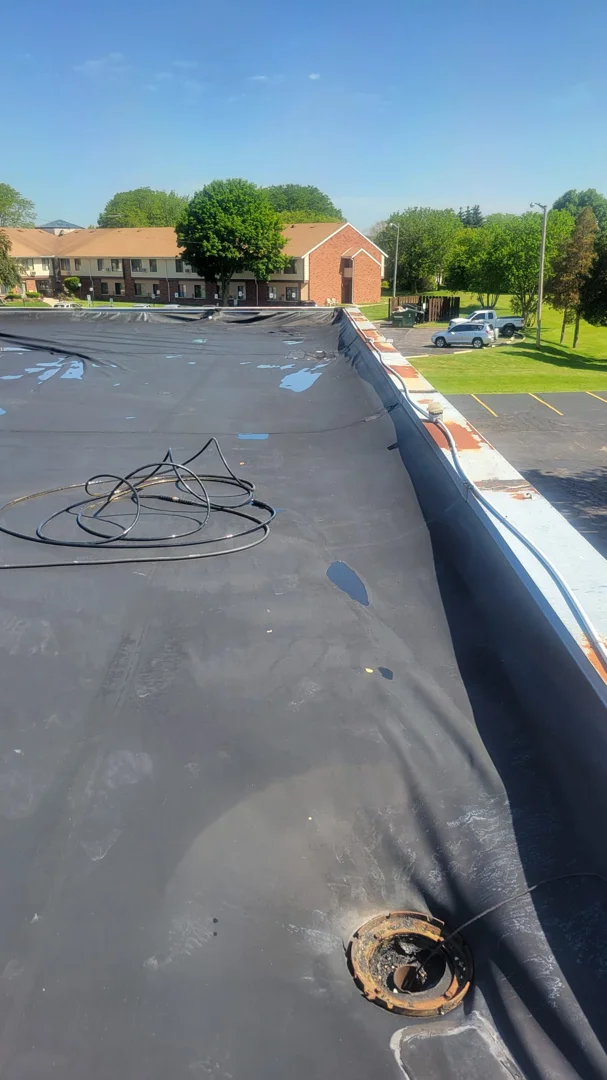
The most frequent issue we encounter in places like Eau Claire and Madison is ponding water. If you see puddles on your roof more than 48 hours after a rainstorm, you have a drainage problem. This standing water adds immense weight to the structure and acts as a magnifying glass for UV rays, cooking the membrane underneath. Over time, it leads to the harmful effects of pooling water on commercial roofs, including accelerated membrane rot and structural sagging.
Punctures and Membrane Damage
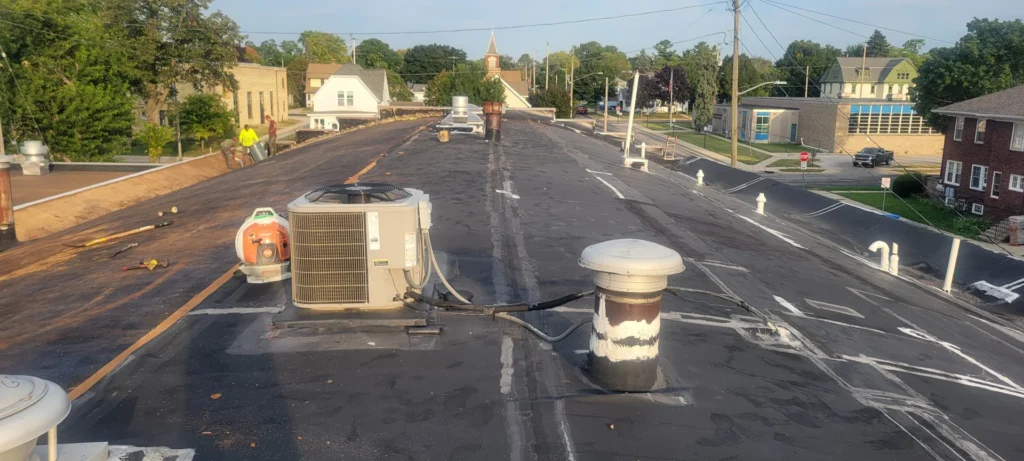
Flat roofs are often used as platforms for HVAC units, solar panels, and satellite dishes. This means foot traffic. We often find punctures caused by dropped tools, heavy equipment panels, or even debris blown during a storm. Because the membrane is your building’s primary defense, even a hole the size of a ballpoint pen can allow gallons of water into your insulation.
Seam Failures and Flashing Leaks
Seams are the “zippers” of your roof. Whether they are glued, taped, or heat-welded, they are the most common points of failure. In Wisconsin’s freeze-thaw climate, water can get into a tiny gap in a seam, freeze at night, and expand, “zipping” the seam open further. Similarly, flashing — the material that seals the edges around vents, chimneys, and walls — is a high-risk area. According to what are the most common commercial roof repairs, flashing leaks are responsible for a significant percentage of interior water damage.
Blistering and UV Degradation
If you see “bubbles” or blisters on your roof, it’s a sign that moisture is trapped between the layers of the roofing system. As the sun heats the roof, that moisture turns to vapor and expands, stretching the membrane. Combined with constant UV exposure that makes older membranes brittle, these blisters eventually crack, creating an open door for leaks. For more details on spotting these signs, check out How to Repair a Commercial Flat Roof: Essential Tips and Techniques .
The Step-by-Step Process for Flat Commercial Roof Repair
When we arrive for a flat commercial roof repair in Appleton or Wausau, we don’t just start slapping patches down. A professional repair follows a rigorous technical process to ensure the fix lasts as long as the roof itself.
1. Advanced Diagnostics and Infrared Scanning
We start with a thorough inspection. Often, we use infrared thermography to find “hot spots.” Since wet insulation holds heat longer than dry insulation, an infrared scan after sunset can show us exactly where water is trapped under the membrane, even if there’s no visible leak inside.
2. Surface Preparation and Moisture Detection
You can’t bond new material to a dirty or wet surface. We clean the repair area meticulously, removing dirt, algae, and old loose sealants. If the insulation underneath is saturated, it must be cut out and replaced. Patching over wet insulation is a recipe for mold and structural rot. You can learn more about the mechanics of this in our guide on flat roof leak repair how does it work.
3. Executing the Repair
Depending on the material, we use different methods:
- Heat-Welding: For TPO or PVC, we use a robotic or hand-held heat welder to fuse a new patch to the old membrane, creating a permanent, monolithic bond.
- Adhesive Patching: For EPDM (rubber), we use specialized primers and pressure-sensitive adhesive patches.
- Reinforcement: We often reinforce seams and flashing with liquid-applied membranes or specialized tapes to provide an extra layer of protection.
For a deeper dive into professional standards, see A Comprehensive Guide to Commercial Flat Roof Repair . Our goal is always to provide the best commercial roof repair solutions for long term durability.
Selecting Materials for Flat Commercial Roof Repair
Choosing the right material is critical. Using the wrong sealant or patch material can cause a chemical reaction that melts your existing roof!
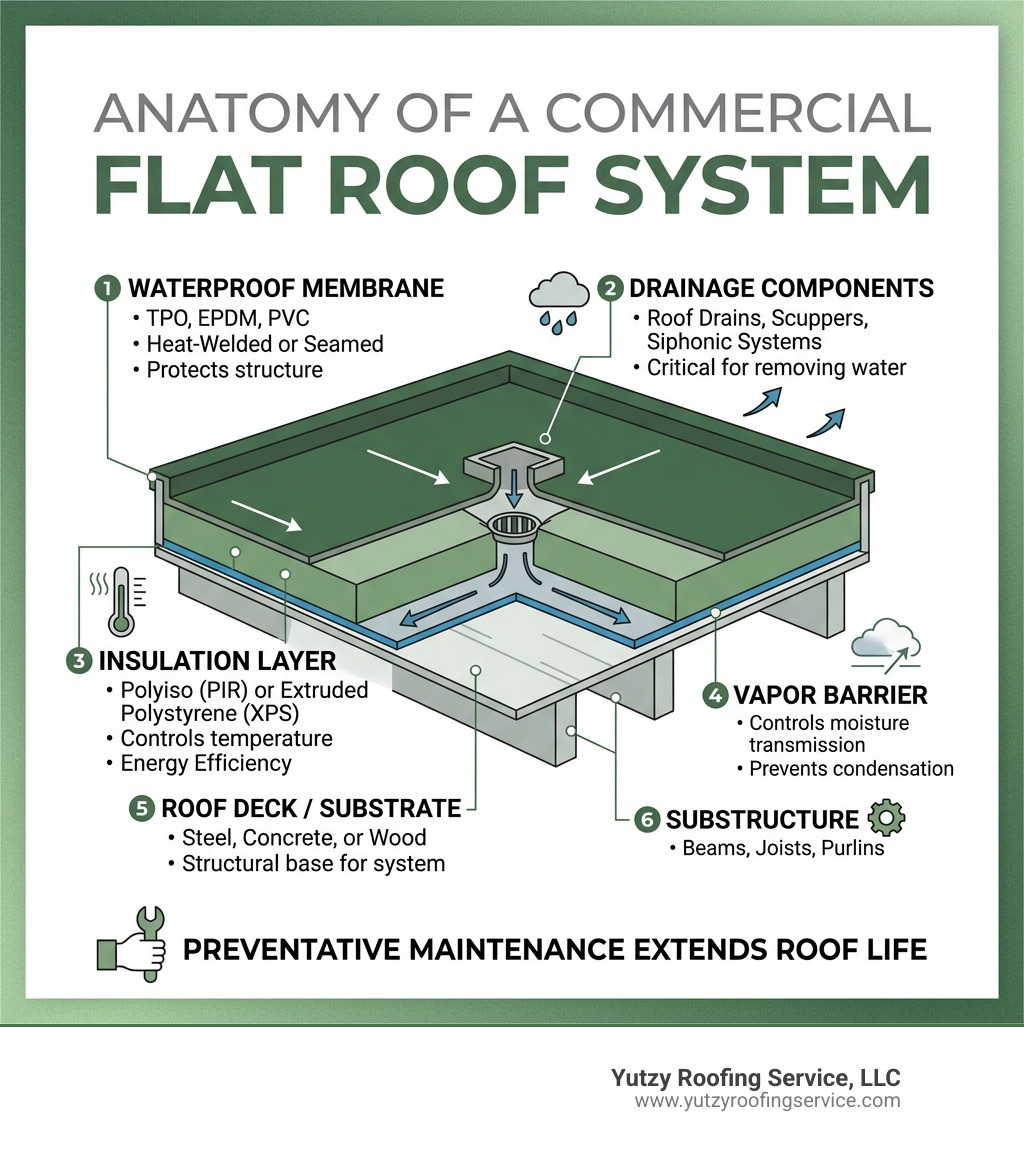
- EPDM (Ethylene Propylene Diene Monomer): A durable synthetic rubber. It’s great for Wisconsin because it stays flexible in sub-zero temperatures.
- TPO (Thermoplastic Polyolefin): A white, reflective membrane that helps lower cooling costs. It’s popular in Green Bay and Madison for its energy efficiency.
- PVC (Polyvinyl Chloride): Highly resistant to chemicals, grease, and fire. Ideal for restaurants or manufacturing plants.
- Elastomeric Coatings: These are liquid-applied “super-paints” that create a seamless, waterproof barrier over your entire roof.
- Modified Bitumen: A modern take on the old “tar and gravel” roof, usually applied in layers for extra toughness.
To see which fits your building best, take top flat roof material types you should know about a closer look.
Repair, Retrofit, or Replace: Determining the Best ROI
As a business owner, you have to balance the immediate cost against the long-term value. We use a few key metrics to help you decide.
The 25% Rule
Generally, if more than 25% of your roof is damaged or saturated, a full replacement is usually more cost-effective than constant patching. However, if the structure is sound but the membrane is just aging, a retrofit (adding a new layer over the old one) or a restoration (using a high-performance coating) might be the better choice.
| Option | Typical Cost | Lifespan Extension | Best For |
|---|---|---|---|
| Repair | $500 – $5,000 | 1 – 5 years | Isolated leaks, punctures, or new damage. |
| Restoration (Coating) | $3 – $7 per sq. ft. | 10 – 18 years | Aging but dry roofs needing a “reset.” |
| Retrofit (Overlay) | $5 – $10 per sq. ft. | 15 – 20 years | Sound structures with one existing layer. |
| Replacement | $10 – $20+ per sq. ft. | 20 – 30 years | Saturated insulation or structural failure. |
We often perform core sampling — literally taking a small “plug” out of the roof — to check the layers of insulation. If the insulation is dry, we can often save you thousands by avoiding a full tear-off. Check out our guide on commercial roof repair or replacement whats the best choice for more help.
Innovations in Flat Commercial Roof Repair Technology
The industry has come a long way since the days of hot tar kettles.
- Induction Welding: Systems like SFS isoweld® allow us to bond the membrane to the fasteners underneath without piercing the top layer. This creates a roof resistant to wind uplift up to 200 mph!
- Cool Roof Technology: Modern white coatings can reflect up to 85% of solar heat, significantly reducing your energy bills.
- Drone Diagnostics: We use drones for fast, safe, and high-resolution visual inspections of large warehouse roofs.
For more on these high-tech options, read the ultimate guide to flat roof coating experts and maintenance plans.
Proactive Maintenance and Warranty Compliance
The cheapest flat commercial roof repair is the one you never have to make. A proactive maintenance plan is the secret to making a roof last 30 years instead of 15.
Bi-Annual Inspections
In Wisconsin and Minnesota, you need to inspect your roof in the spring (to check for winter ice damage) and the fall (to clear leaves and prep for snow). During these visits, we ensure drains are clear of debris, check for “tenting” fasteners, and reseal any cracking caulk. This is especially important for how to avoid ponding water on your commercial roof in eau claire wi.
Documentation and Warranty
Most manufacturer warranties require proof of regular maintenance. If you don’t have a record of inspections, the manufacturer might deny your claim if the roof fails prematurely. We provide detailed documentation for every visit to keep your warranty in good standing. This is a core part of our wisconsin commercial roof repair services.
Professional Standards for Repair
Don’t let a “handyman” on your commercial roof. We adhere to strict OSHA safety standards and hold certifications from major manufacturers. When you need flat roof leak when to call the professionals in madison wi, you want a team that offers more than just a quick fix. At Yutzy Roofing Service, we provide an up to 18-year non-prorated renewable warranty on our restoration systems, giving you total peace of mind.
Frequently Asked Questions about Flat Commercial Roofs
How much does flat commercial roof repair typically cost in 2026?
Minor repairs like patching a few punctures or sealing a single flashing typically cost between $500 and $2,000. Moderate repairs involving larger sections or drainage corrections can range from $2,000 to $7,000. For very large roofs, we often see costs around $3 to $10 per square foot depending on the material and labor required.
How long can I expect a repaired flat roof to last?
A high-quality professional repair using compatible materials should last as long as the rest of the roof membrane — often 5 to 10 years or more. However, if the roof is already at the end of its 20-year lifespan, repairs may only buy you a few more seasons.
Why is ponding water dangerous for commercial roof membranes?
Beyond the weight, ponding water creates a “lensing” effect that intensifies UV damage. It also encourages algae and moss growth, which can eat into certain membrane types. In Wisconsin, ponding water turns to ice, which can expand and tear at seams and flashing.
Conclusion
Your commercial roof is a massive asset, and protecting it doesn’t have to be a headache. Whether you’re dealing with a sudden leak in Fond Du Lac or looking for a long-term maintenance plan in Mankato, Yutzy Roofing Service, LLC is here to help.
We specialize in commercial roofing restoration, spray foam coatings, and EPDM repairs that extend the life of your roof without the mess of a full tear-off. With our 18-year non-prorated renewable warranty, you can stop worrying about the next storm and focus on running your business.
Serving Madison, Appleton, Wausau, Marshfield, Eau Claire, Green Bay, and beyond — we are your Wisconsin and Minnesota restoration experts.
Ready to protect your investment? Contact Yutzy Roofing Service today for a professional evaluation!
