
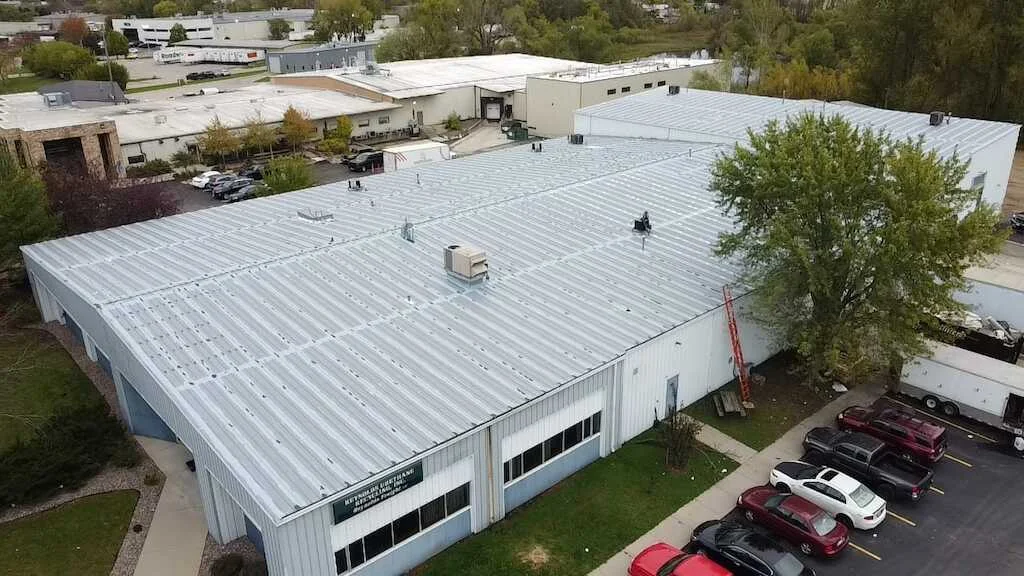
What Is Heritage Roof Restoration — and Why It Matters for Your Building
Heritage roof restoration is the process of repairing and preserving a historic roof using period-appropriate materials and traditional techniques, rather than replacing it with modern alternatives.
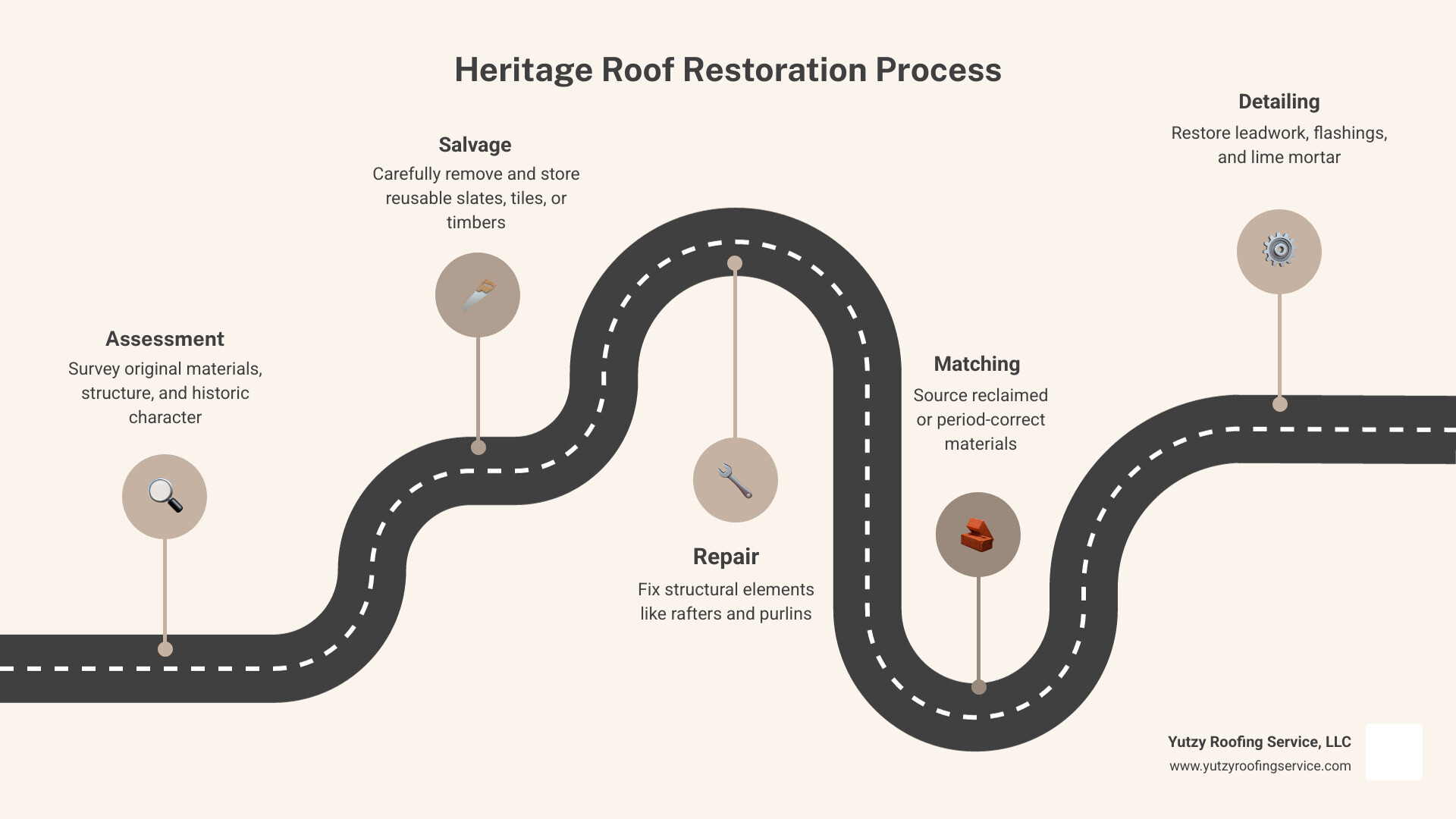
Here’s a quick overview of what it involves:
- Assessment — Surveying original materials, structure, and historic character
- Salvage — Carefully removing and storing reusable slates, tiles, or timbers
- Repair — Fixing or replacing structural elements like rafters and purlins
- Matching — Sourcing reclaimed or period-correct materials to fill gaps
- Detailing — Restoring leadwork, flashings, and lime mortar to original standards
- Compliance — Meeting conservation approvals and building code requirements
It differs from standard roof replacement in one key way: the goal is preservation, not substitution. Every decision is guided by what was originally there — and what needs to stay there.
Historic preservation experts are clear on one point: the roof is the most critical component of any historic building. When a roof fails, water gets in. And when water gets in, it can destroy irreplaceable materials — and ultimately the entire structure — faster than almost any other threat.
For commercial property owners in Wisconsin, where brutal winters and hot summers put constant stress on aging roofing systems, that risk is very real. A leaking roof on a historic building isn’t just a maintenance problem. It’s a threat to the entire asset.
I’m Josh Yutzy, and through decades of roofing work across Wisconsin, Missouri, and Kansas, I’ve seen how heritage roof restoration done right can extend a building’s life by generations — while protecting the character that makes it worth preserving in the first place. The sections below walk you through everything you need to know to get it done properly.
The Critical Importance of Heritage Roof Restoration
When we talk about historic commercial buildings in cities like Madison or Green Bay, we aren’t just talking about bricks and mortar; we are talking about landmarks. However, these landmarks are only as strong as their top layer.
Preventing Interior Devastation
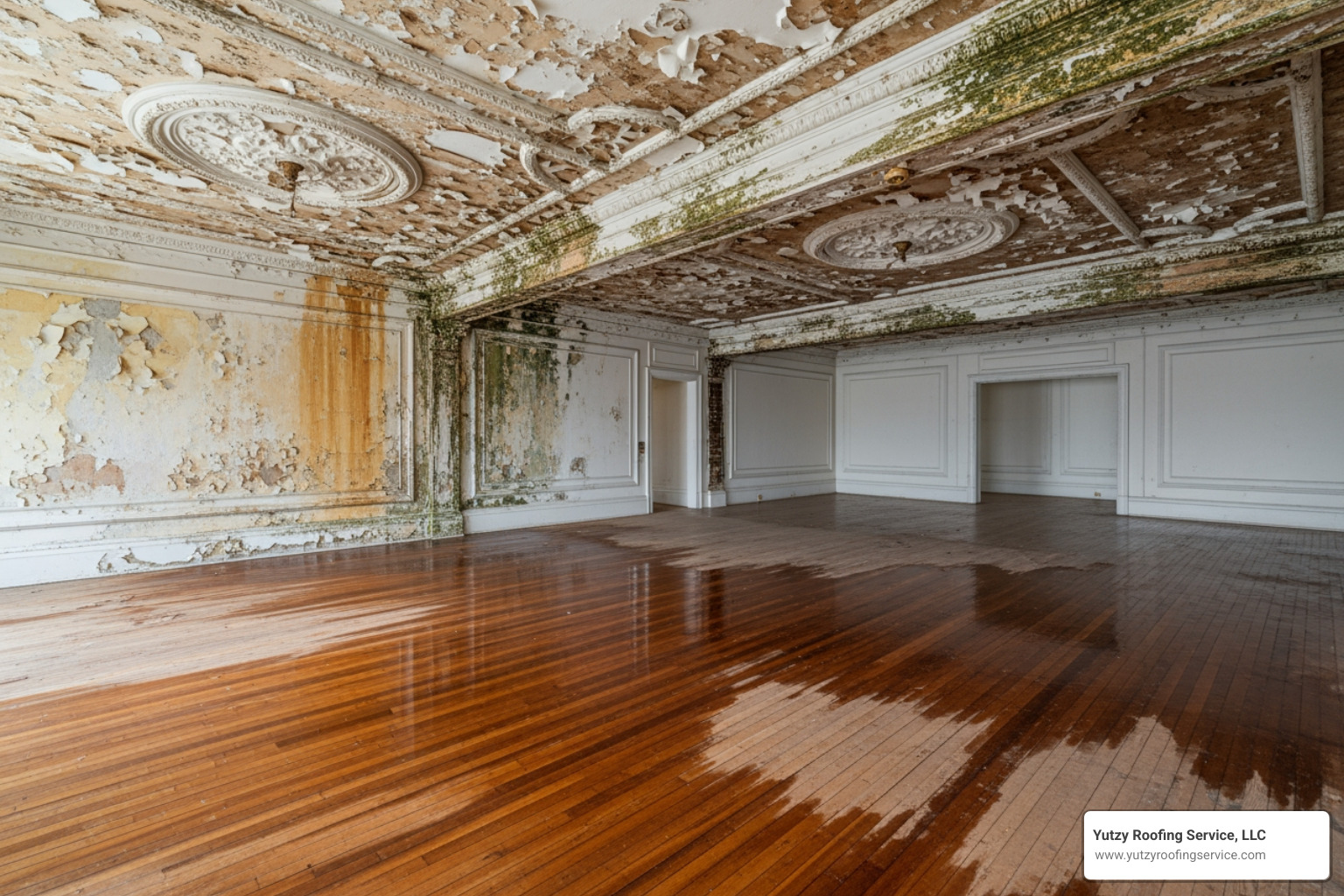
The most immediate reason for heritage roof restoration is the prevention of interior water infiltration. In a historic commercial building, a leak doesn’t just result in a wet carpet. It can quickly destroy prized historical materials like ornate plasterwork, original hardwood floors, and antique structural timbers. Once these elements are lost to rot or mold, they are incredibly difficult—and expensive—to replicate.
Restoration vs. Replacement
A standard roof replacement often involves stripping everything back and throwing it in a landfill, replaced by synthetic materials that may only last 20 or 30 years. Restoration takes the opposite approach. By performing a thorough historical and physical investigation, we can identify what can be saved. Often, materials like slate or clay tile can last over a century. By restoring the system rather than replacing it, we maintain the building’s historical integrity and often achieve a longer lifespan for the roof.
Compliance and Standards
For many historic properties, restoration isn’t just a choice; it’s a requirement. Work often must comply with Federal guidelines for certified rehabilitation to qualify for tax incentives or to meet local conservation standards. This requires a level of craftsmanship and attention to detail that goes far beyond “business as usual” roofing.
Traditional Materials and Craftsmanship
The soul of a heritage building lies in its materials. You cannot simply pick up modern shingles from a big-box store and expect them to look or perform correctly on a 19th-century structure.
Traditional Materials Used in Heritage Roof Restoration
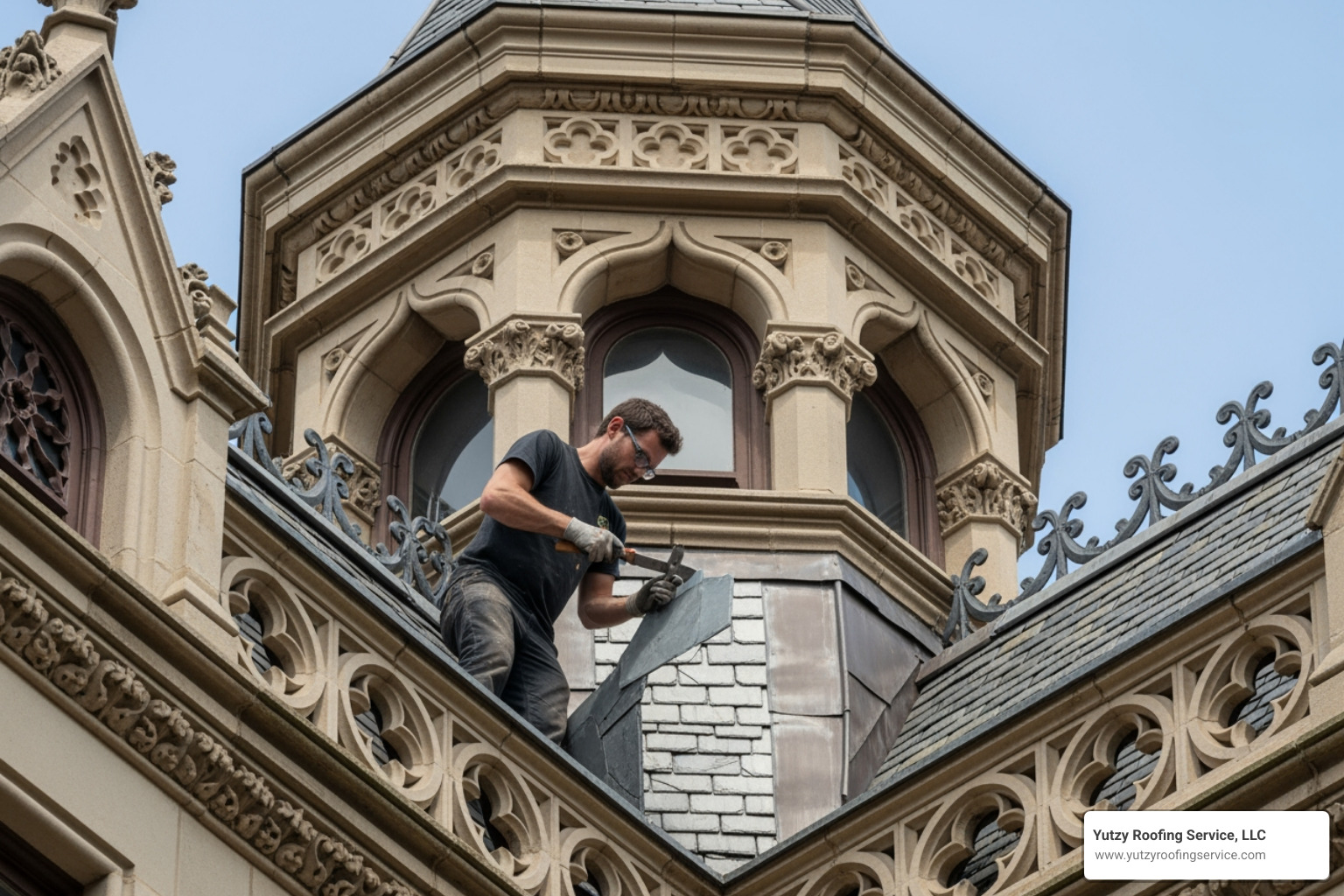
In our experience, the key to a successful project is sourcing and matching period-appropriate materials. This often involves:
- Slate: Whether it is Welsh slate, Canadian Glendyne, or Spanish varieties, matching the color, thickness, and grain is vital. In many cases, we can recover approximately 20% of original tiles for reuse, sourcing the remainder from high-quality reclaimed stock to ensure visual continuity.
- Metal Roofing: Historic commercial buildings often utilize metal roofing such as copper (standing seam or batten roll), architectural zinc, or galvanized steel. These materials offer incredible longevity and a patina that modern coatings simply cannot replicate.
- Clay Tiles: Traditional clay tiles require specific firing techniques to match the durability and hue of the originals.
Specialized Leadwork and Metal Detailing
Leadwork is perhaps the most specialized aspect of heritage roof restoration. While modern plastics and rubbers are often used for flashings today, lead remains the preferred choice for historic buildings because it can last up to three times longer than modern alternatives.
Our specialists use traditional forming and soldering techniques to create:
- Code 6 and Code 8 Lead: Heavier gauges used for valleys, ridges, and dormers to ensure the metal can handle thermal expansion without cracking.
- Technical Flashings: Bespoke curved components formed on-site to fit complex architectural features like conical turrets or ornate parapets.
- Copper Ridging: Often used alongside slate to provide a naturally antimicrobial runoff that prevents moss growth.
Navigating Regulatory and Structural Challenges
Restoring a roof on a listed or historic building in Wisconsin is a bit like a high-stakes puzzle. You have to satisfy the building’s structural needs while keeping conservation officers happy.
Structural Continuity and Timber Repair
When we strip back an old roof, we often find unexpected timber defects. Traditional rafters and purlins may have suffered from dry rot or decades of slow leaks. Rather than replacing the entire roof structure, we prioritize timber reinforcement. We often use original timbers as templates for like-for-like replacements, ensuring the structural character remains unchanged.
Breathability and Lime Mortar
One of the biggest mistakes in modern restoration is making a building “too tight.” Historic buildings were designed to breathe. We use traditional lime mortar for pointing and bedding ridge tiles because it allows for natural movement and moisture evaporation. Unlike modern cement, lime mortar won’t trap moisture against original bricks or stones, preventing the “spalling” or crumbling that occurs during Wisconsin’s freeze-thaw cycles.
Requirements for Listed Buildings
Depending on the level of protection (Grade I, II, or II* equivalents in some jurisdictions, or local historic designations in WI), the requirements for your project will vary.
| Requirement | Grade I / Landmark | Grade II* / High Significance | Grade II / Standard Historic |
|---|---|---|---|
| Material Matching | Exact like-for-like mandatory | High-quality reclaimed or new match | Closest possible match |
| Method Statements | Detailed technical filing required | Required for all structural work | Often required for visual changes |
| Leadwork | Traditional rolled lead only | Traditional rolled lead preferred | Modern equivalents rarely allowed |
| Conservation Liaison | Full oversight by officer | Regular inspections | Initial approval and final sign-off |
Integrating Modern Performance Standards
How do we take a roof designed in 1890 and make it meet 2026 energy codes? It’s a delicate balance of old-world charm and new-world tech.
Balancing Modern Standards with Heritage Roof Restoration
The goal is to improve the building’s performance without changing its appearance. This is achieved through:
- Breathable Membranes: We replace old, non-porous felts with high-performance breathable underlays. This provides a secondary waterproofing barrier while allowing internal moisture to escape, preventing rot in the original timbers.
- Thermal Performance: We can often integrate Eco-roof thermal blankets or thin, high-efficiency insulation layers that meet Building Regulations (like Part L) without raising the roof line or altering the eaves.
- Conservation Roof Windows: If a commercial attic is being converted to usable space, we use “Heritage” style windows. These provide modern thermal efficiency and natural light while maintaining a low-profile Victorian appearance that sits flush with the slate.
Long-Term Protection
A restoration is only as good as its final seal. We perform rigorous leak testing and moisture inspections before any project is considered complete. This ensures that the metal roof restoration or slate repair will stand up to the elements for decades.
Frequently Asked Questions about Heritage Roofing
Do I need Listed Building Consent for roof repairs?
In most cases, yes. If your building is designated as a local or national landmark, any repair that changes the appearance or uses different materials will require consent. We often assist building owners with method statements and liaison with conservation officers to ensure the project stays on the right side of the law.
How long does a typical heritage restoration take?
Because of the hand-crafted nature of the work, these projects take longer than a standard shingle job. A typical commercial terrace or small institutional building may take 10–14 days for the main roof work, while complex buildings with turrets and extensive leadwork can take several weeks.
Can modern insulation be used in historic roofs?
Yes, but it must be done carefully. Using the wrong type of insulation can trap moisture and cause rafters to rot. We use breathable insulation systems and “cold roof” ventilation strategies to ensure the building remains energy-efficient without sacrificing its structural health. For more on how these upgrades save money, see how restoration can save you money in the long run.
Conclusion
Restoring a heritage roof is an investment in the history of your community and the future of your property. By choosing heritage roof restoration over a total replacement, you preserve the architectural “soul” of the building while gaining the benefits of modern waterproofing and thermal performance.
At Yutzy Roofing Service, LLC, we understand the complexities of commercial restoration. Whether you are dealing with an aging metal roof on a historic warehouse in Madison or a slate roof on a landmark in Wausau, we specialize in extending the life of your asset. Our metal roof restoration strategies and maintenance programs are designed to provide long-term preservation and significant cost savings.
We offer up to an 18-year non-prorated renewable warranty on our restoration services, giving you peace of mind that your historic building is protected for years to come. Don’t let a failing roof destroy a piece of history—let us help you restore your commercial roof and keep its legacy alive.
