Protect Your Facility with Commercial Roof Leak Repair
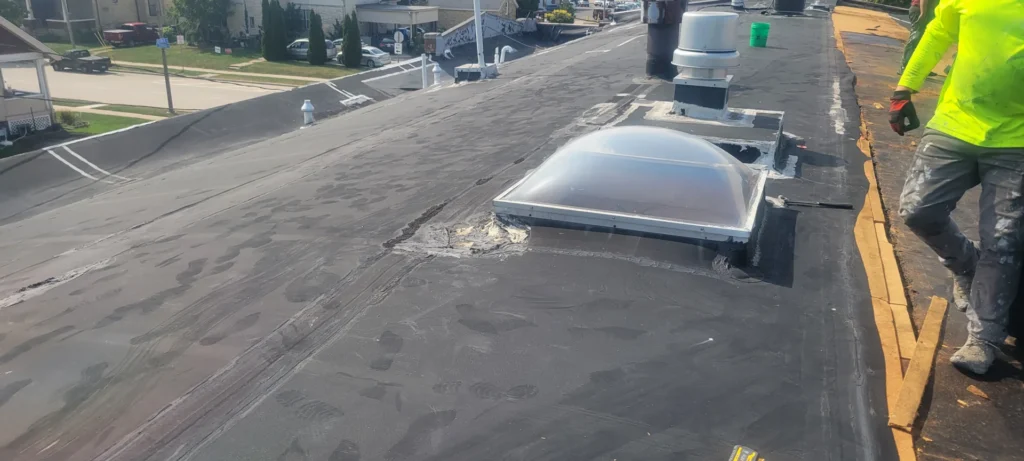
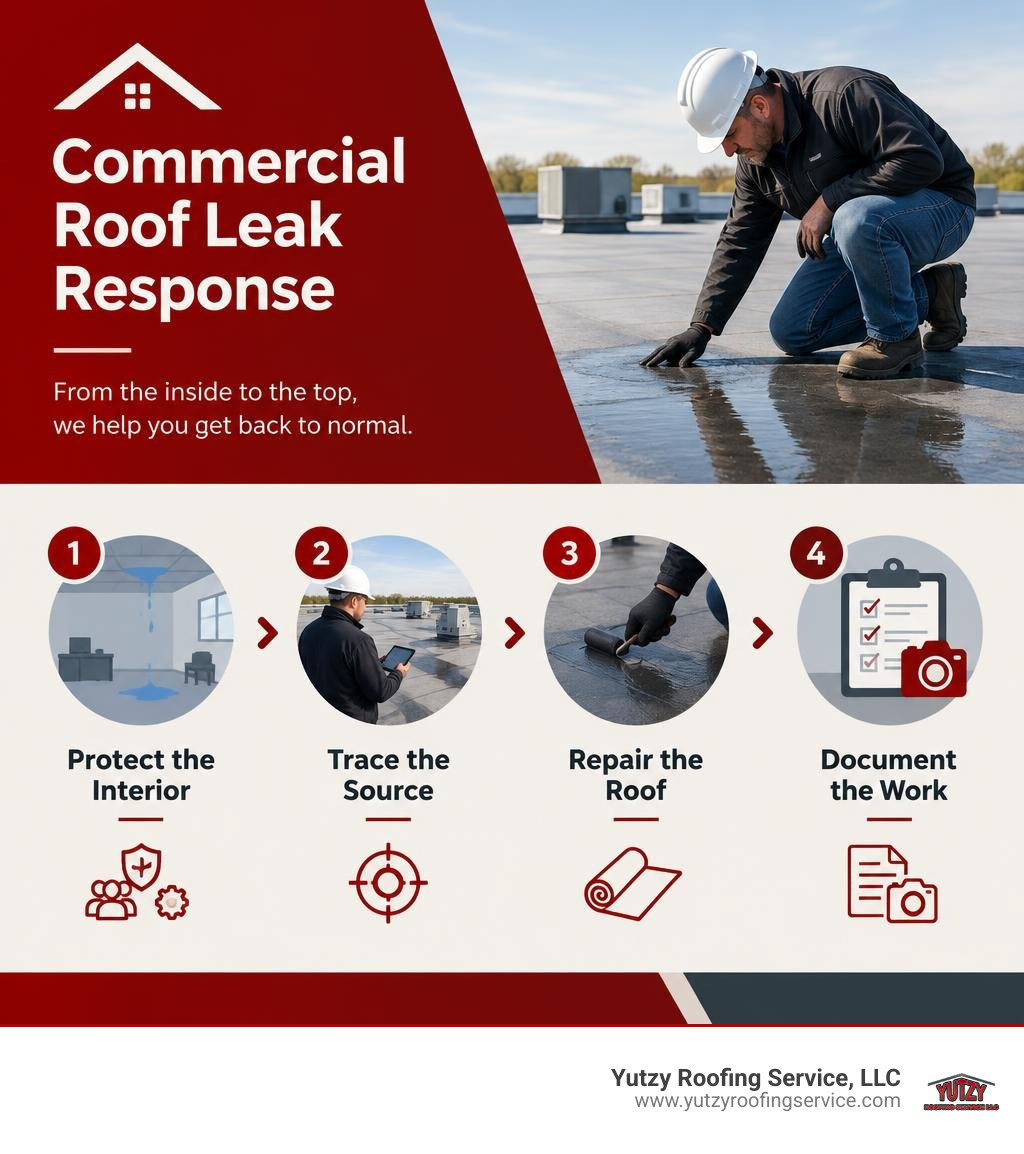
If water is entering your building, protect people and equipment first, then call a commercial roof leak repair service. A contractor can trace the source, contain the leak, and recommend a repair suited to your roof. Avoid treating the ceiling stain as the source: water can travel beneath the roofing before it drips inside.
Watch for new stains, damp insulation, or water near roof drains and equipment. Prompt attention can limit damage to inventory and reduce disruption for tenants.
I’m Josh Yutzy of Yutzy Roofing Service, a family-owned business that has served Wisconsin since 1995. Our commercial roof leak repair service draws on that roofing experience, including EPDM repairs, restoration, and maintenance.
Terms related to commercial roof leak repair service:
Introduction to Commercial Roof Leak Risks and Facility Protection
A commercial roof leak rarely announces itself with a gentle drop into a convenient bucket. In commercial and industrial facilities, water infiltration threatens expensive manufacturing machinery, electronic infrastructure, and stored inventory. Beyond direct property destruction, moisture compromises the structural integrity of your facility by saturating structural decking, rotting framing members, and accelerating steel corrosion.
When water breaches the exterior envelope, wet insulation loses its thermal resistance, driving up heating and cooling bills across your facility. Lingering moisture quickly fosters mold growth inside drywall and suspended ceiling tiles, triggering indoor air quality hazards that disrupt workforce productivity and tenant operations.
Water takes the most tortuous path available across an overhead assembly. It enters through a micro-tear in the outer membrane, travels horizontally along underlying insulation boards or metal flutes, and finally drips down a structural beam dozens of feet away from the initial puncture.
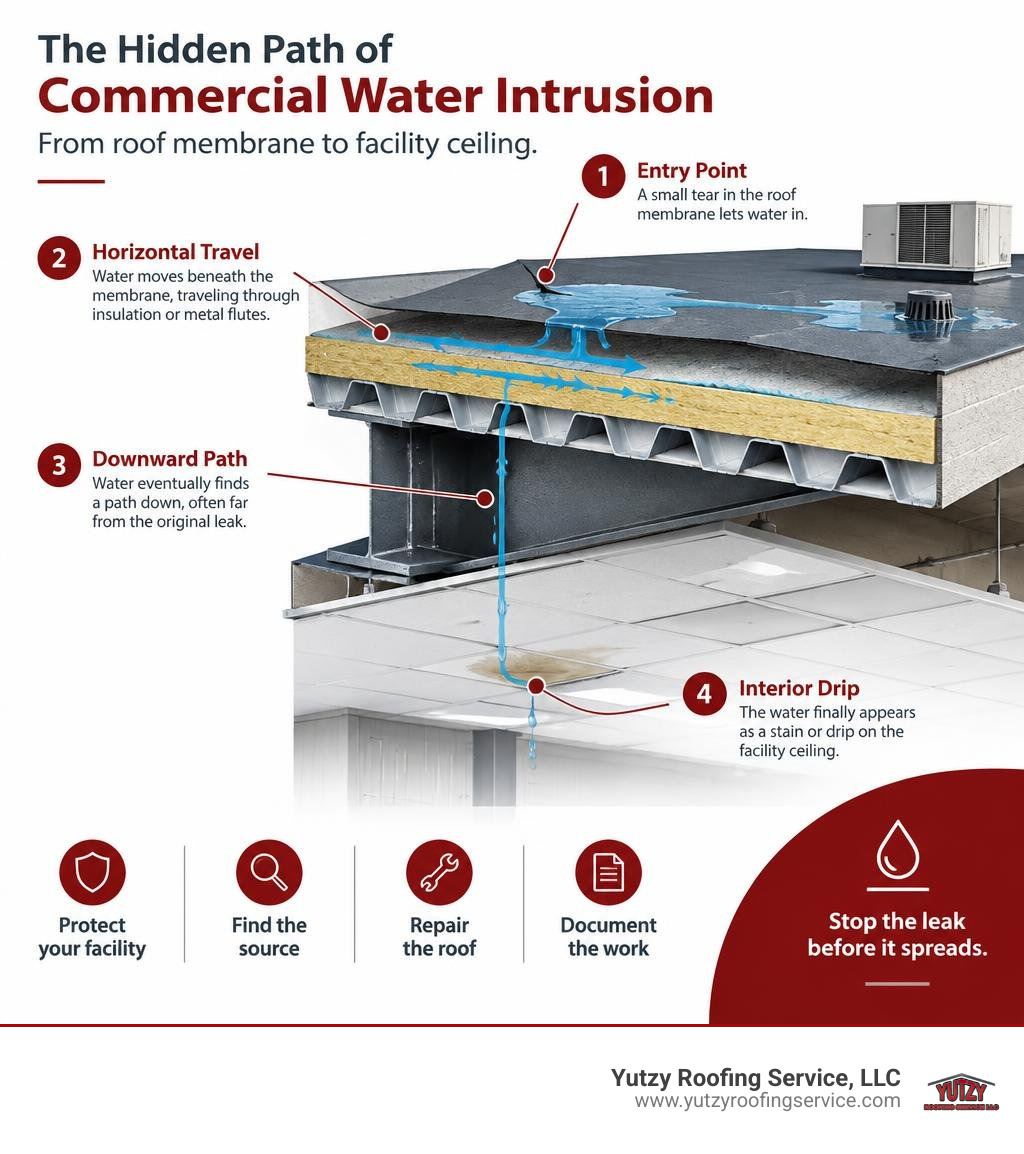
Attempting to address only the interior drip leaves the active leak site unsealed, allowing water to continue degrading structural building assets beneath the surface.
Why Hiring a Professional Commercial Roof Leak Repair Service Matters
Commercial roof repair is not a simple maintenance chore. Low-slope and flat industrial roofing systems present steep physical hazards, demanding strict adherence to safety standards, fall protection protocols, and specialized diagnostic tooling.
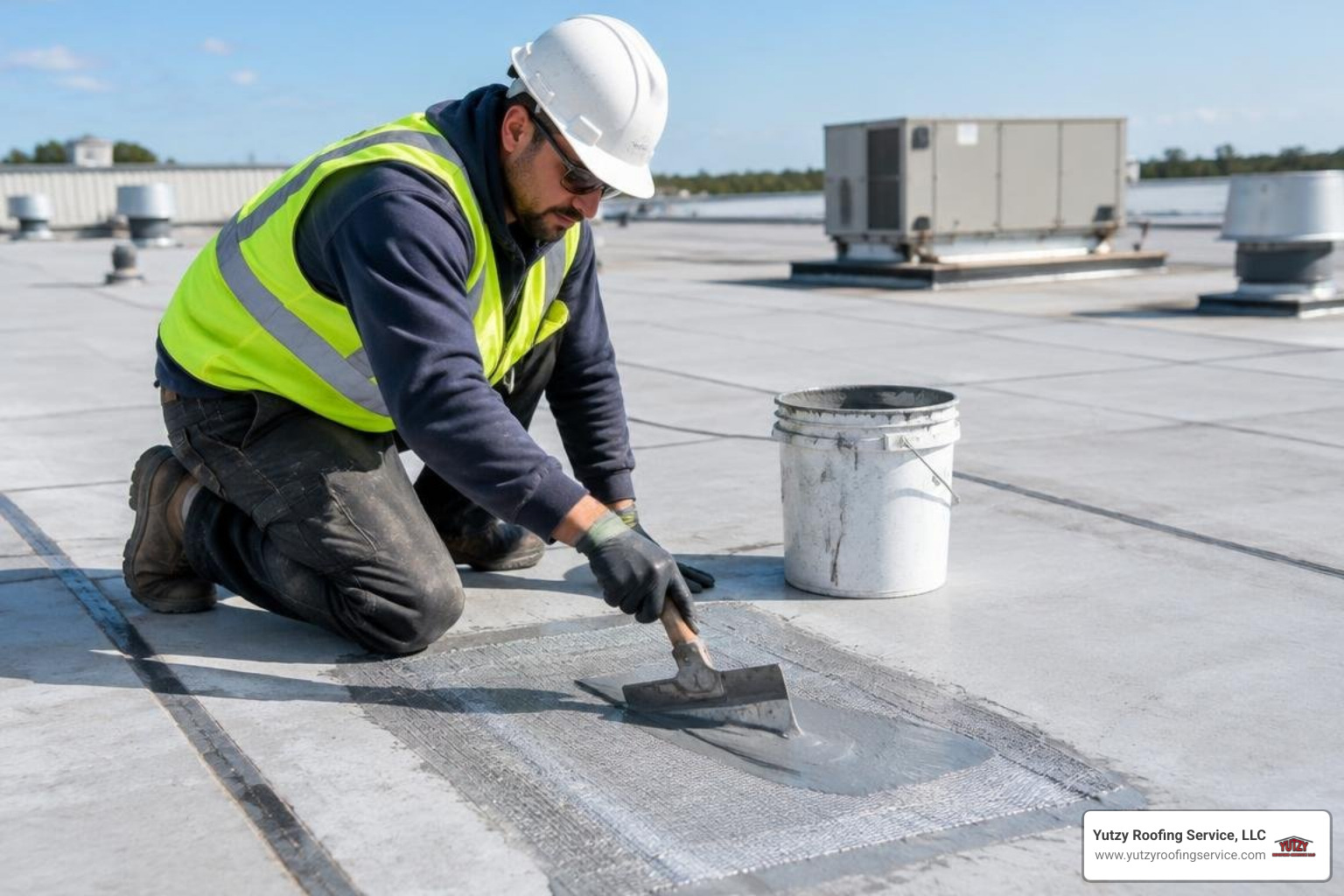
Understanding the critical importance of commercial roof leak repair starts with recognizing the complexity of modern multi-layered assemblies. When building maintenance staff attempt makeshift repairs without dedicated training, they risk voiding manufacturer warranties, stepping on concealed soft spots, and creating chemical incompatibilities between mismatched sealants and membranes.
Minor leak repairs typically start in the hundreds of dollars, while complex repairs or extensive membrane rebuilds require a higher investment based on material choice, square footage, and access requirements.
| Evaluation Factor | Quick Mastic Patch | Professional Reinforced Repair |
|---|---|---|
| Average Lifespan | 3 to 6 months | 5+ years of robust waterproofing |
| Substrate Preparation | None (often applied over moisture) | Thorough drying, power washing, and priming |
| Material Flexibility | Cracks during thermal expansion cycles | Expands and contracts via elastomeric fabric |
| Moisture Management | Traps hidden moisture beneath seal | Removes wet insulation before sealing |
| Warranty Compliance | Typically voids manufacturer coverage | Protects and maintains existing warranties |
A quick caulk-gun fix or bucket of unreinforced tar is merely a postponement you end up paying for twice. Professional contractors use industrial-grade primers, elastomeric formulations, and polyester reinforcement fabrics designed to withstand extreme freeze-thaw cycles without rupturing.
How a Commercial Roof Leak Repair Service Pinpoints Elusive Water Sources
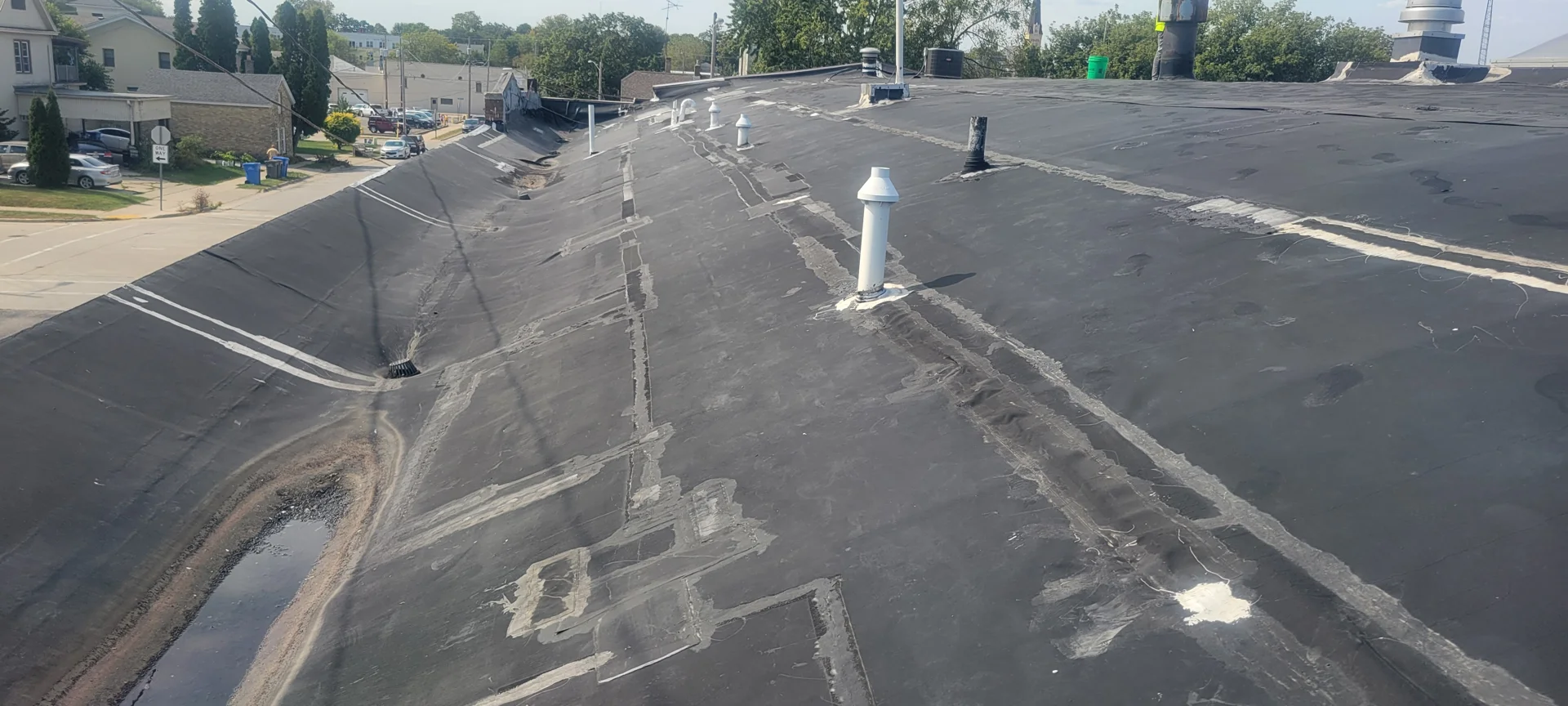
Because water moves horizontally along insulation and roof decks, finding the exact point of entry requires systematic diagnostics. Thermal expansion causes perimeter flashings to pull away from parapet walls, while heavy foot traffic from mechanical contractors punctures single-ply membranes. Clogged internal drains allow ponding water to sit over submerged seams, accelerating adhesive breakdown.
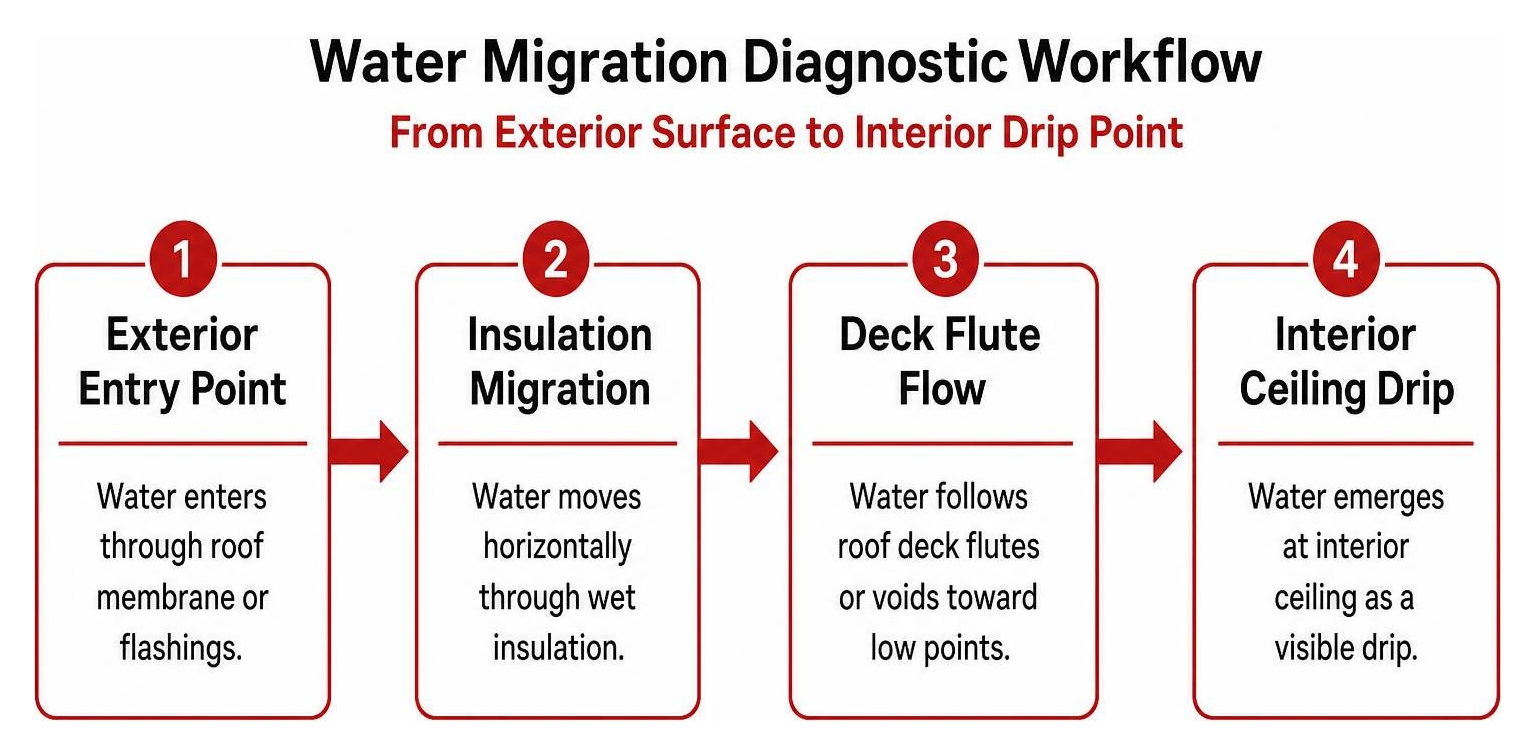
Facility managers reviewing warehouse roof leak diagnostics often discover that an apparent roof issue actually stems from mechanical units. Condensate pans on rooftop HVAC systems can overflow, or pressurized plumbing runs inside the ceiling plenum might develop hairline splits.
Experienced technicians evaluate these crossovers using visual inspections and non-destructive thermal imaging. Addressing persistent commercial roof leaks in Marshfield, WI, requires tracking thermal differentials across the membrane surface to map wet insulation boundaries precisely before any surface repair begins.
What to Expect When Dispatching a Commercial Roof Leak Repair Service
When an active leak disrupts operations, facility managers need to know what to do if your commercial roof is leaking during severe weather. Professional roofing teams prioritize rapid dispatch to provide emergency stabilization, utilizing temporary weighted barriers, non-destructive drain diverters, or emergency skin seals to halt interior damage until dry weather allows permanent reconstruction.
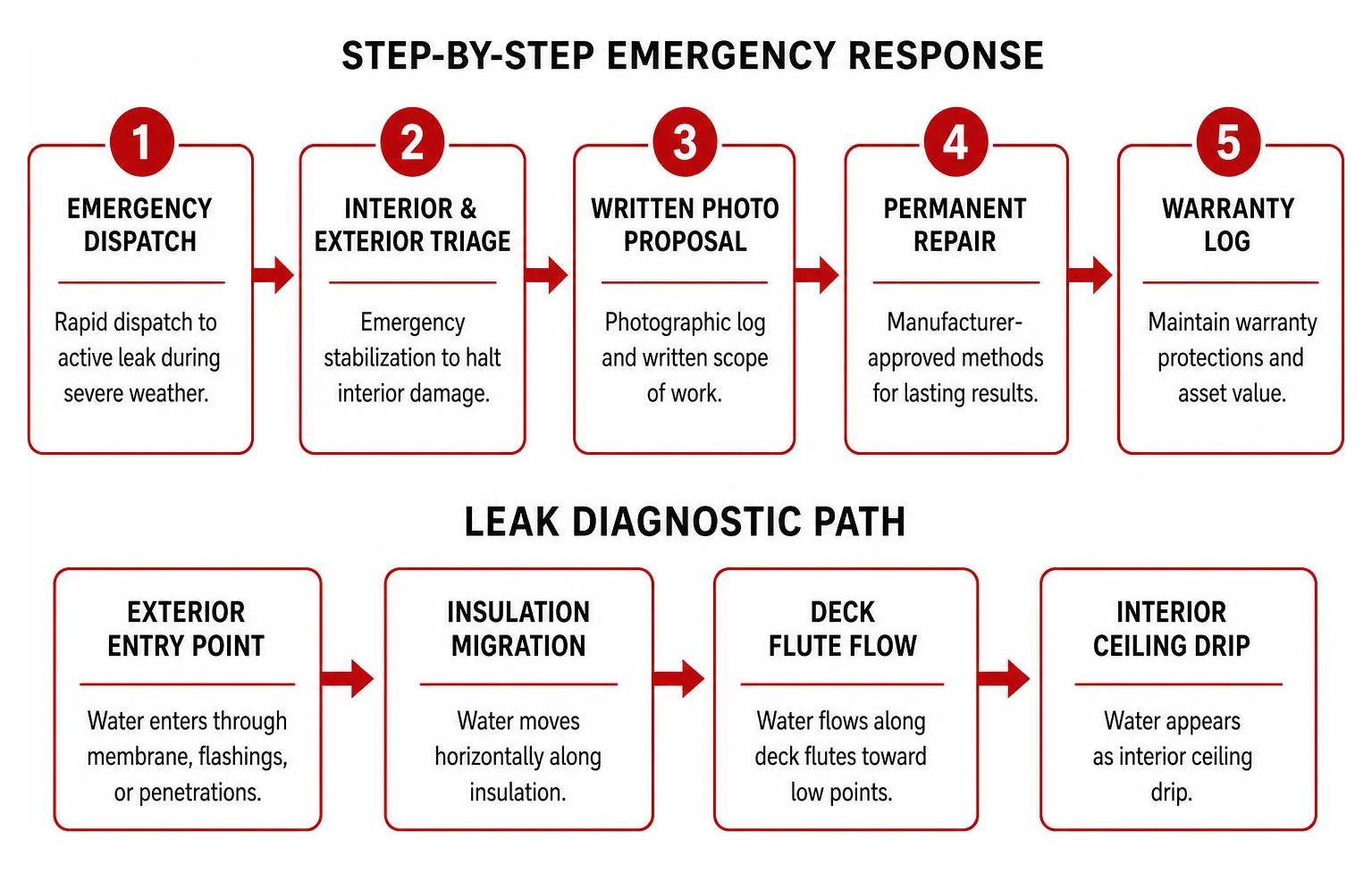
During an initial response, technicians compile a detailed photographic log of all damaged components. This visual evidence forms the backbone of your insurance claim documentation and supports the written scope of work. By following a proven commercial flat roof leak repair playbook, our teams ensure that every repair utilizes manufacturer-approved methods that maintain existing warranty protections and preserve overall asset value.
Why Temporary Patches Fail and Professional Three-Course Repairs Last
The most common mistake in facility maintenance is spreading unreinforced black asphalt mastic over an active leak. Wet membranes prevent standard adhesives from bonding. As sunshine warms the patch, trapped water turns to vapor, expanding outward into hollow blisters that rupture within months.
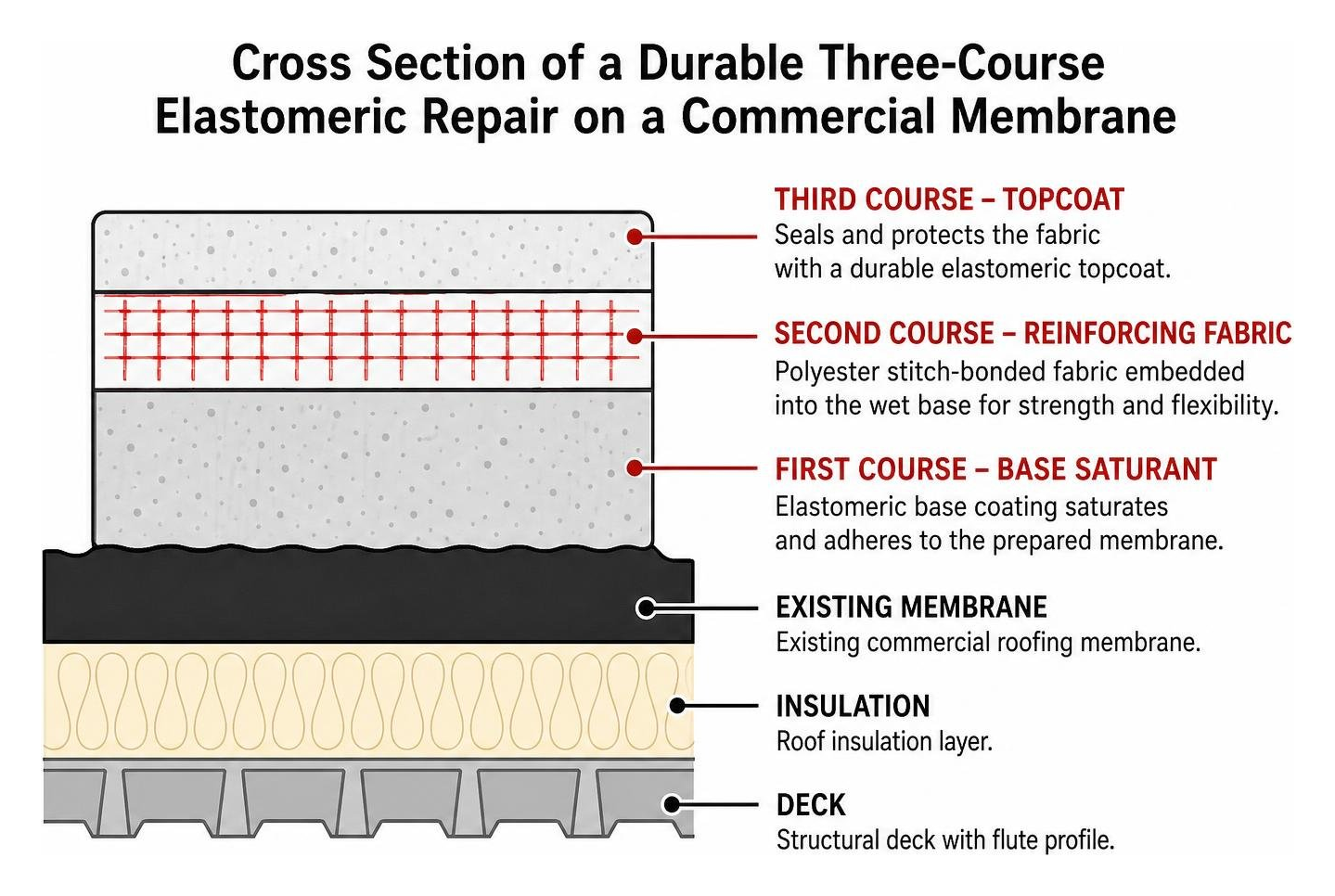
Permanent fixes utilize a three-course elastomeric application. Technicians dry and clean the membrane, apply a base saturant coating, embed a tough polyester stitch-bonded fabric into the wet base, and seal it with a durable topcoat. This creates a flexible composite reinforcement that resists foot traffic, ponding water, and building movement.
Whether executing focused EPDM repairs or preparing a facility for metal roof restoration, these top commercial roof leak repair solutions deliver five or more years of waterproofing rather than failing at the next heavy downpour.
Permanent Solutions: Restoration, Diagnostics, and Long-Term Protection
Most commercial roof leaks do not demand a disruptive, costly tear-off. Total roof replacements generate tons of landfill waste, expose interior operations to the elements during construction, and represent major capital expenditures.
Modern fluid-applied restoration coatings form a seamless, monolithic barrier directly over existing, structurally sound roofing substrates. By eliminating all mechanical fasteners and vulnerable seams across the roof field, restoration seals active leaks while lowering rooftop surface temperatures. This approach extends the working lifespan of commercial systems by up to 20 years at a fraction of full replacement costs.
Differentiating Targeted Repairs from Commercial Roof Restoration
Deciding between isolated repairs and a comprehensive restoration depends on membrane age, the percentage of wet insulation, and long-term facility goals:
- Targeted Roof Repairs: Ideal when the roof membrane is physically sound and water intrusion is isolated to specific flashing details, mechanical curbs, or accidental puncture locations.
- Full-System Roof Restoration: Recommended when the membrane shows widespread UV chalking, widespread seam separation, or multiple leak points, but the underlying insulation remains predominantly dry.
- Spray Polyurethane Foam (SPF) Coatings: Excellent for uneven surfaces, metal roofing profiles, and facilities requiring added thermal insulation and self-flashing monolithic seals.
Selecting manufacturer-approved restoration coatings enables building owners to secure up to 18-year non-prorated renewable warranties, simplifying asset management and budgeting.
Routine Maintenance, Warranties, and Partnering for Asset Longevity
Proactive facility managers know that preventing commercial roof leaks through scheduled preventative maintenance costs far less than reacting to interior emergency flooding. Establishing a biannual maintenance schedule in spring and autumn helps catch seal degradation before severe weather strikes.
Key maintenance priorities include:
- Clearing debris from roof drains, scuppers, and downspouts to prevent ponding.
- Inspecting expansion joints and HVAC curb flashings for sealant shrinkage.
- Checking high-traffic access paths around mechanical penthouses for punctures.
- Documenting all modifications and service calls to preserve warranty standing.
At Yutzy Roofing Service, we partner with building owners, plant engineers, and property managers throughout Madison, Appleton, Wausau, and surrounding Wisconsin communities. We deliver reliable, documented repairs and fluid-applied restorations backed by non-prorated warranties.
Understanding our step-by-step flat roof leak repair process gives building owners total confidence that their industrial and commercial facilities remain protected against moisture, storms, and costly downtime.
