
How to Find Reliable Storm Damage Restoration Companies
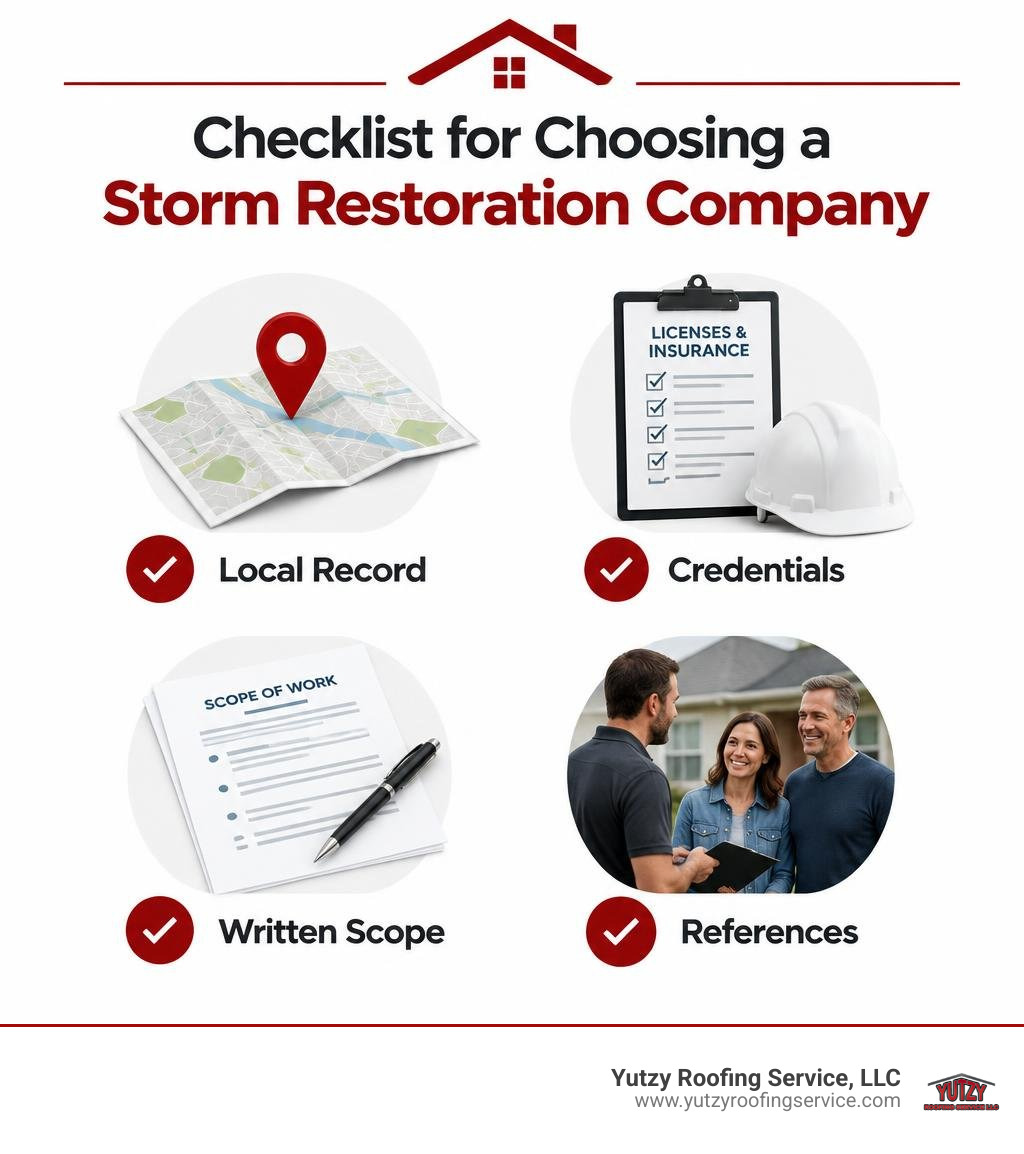
Start with a local company that can secure your building quickly. Before you sign, verify its business registration, insurance, and any licenses required for the work. Ask for a written response time, an itemized scope, and commercial property references. If water is entering the building, keep people clear of unsafe areas, document the damage, and call your insurer while a qualified crew handles emergency protection.
I’m Josh Yutzy with Yutzy Roofing Service, LLC, a family-owned roofing business that has served Wisconsin since 1995. I’ll draw on that roofing background to help you compare storm damage restoration companies and spot warning signs before repairs begin.
Explore more about storm damage restoration companies:
- hail damage roof replacement
- storm damage roof repair
- how to get insurance to pay for roof replacement
Emergency Protocols and Services from Storm Damage Restoration Companies
When severe weather impacts a commercial facility, time is your most critical asset. High winds, heavy hail, and driving rain can tear open roof membranes, crack flashings, and overwhelm internal drainage networks. Attempting to address these structural breaches without specialized equipment creates serious safety hazards and often worsens the damage. Professional restoration teams deploy structured 24/7 rapid response protocols to secure the building envelope, extract standing water, and protect critical business operations.
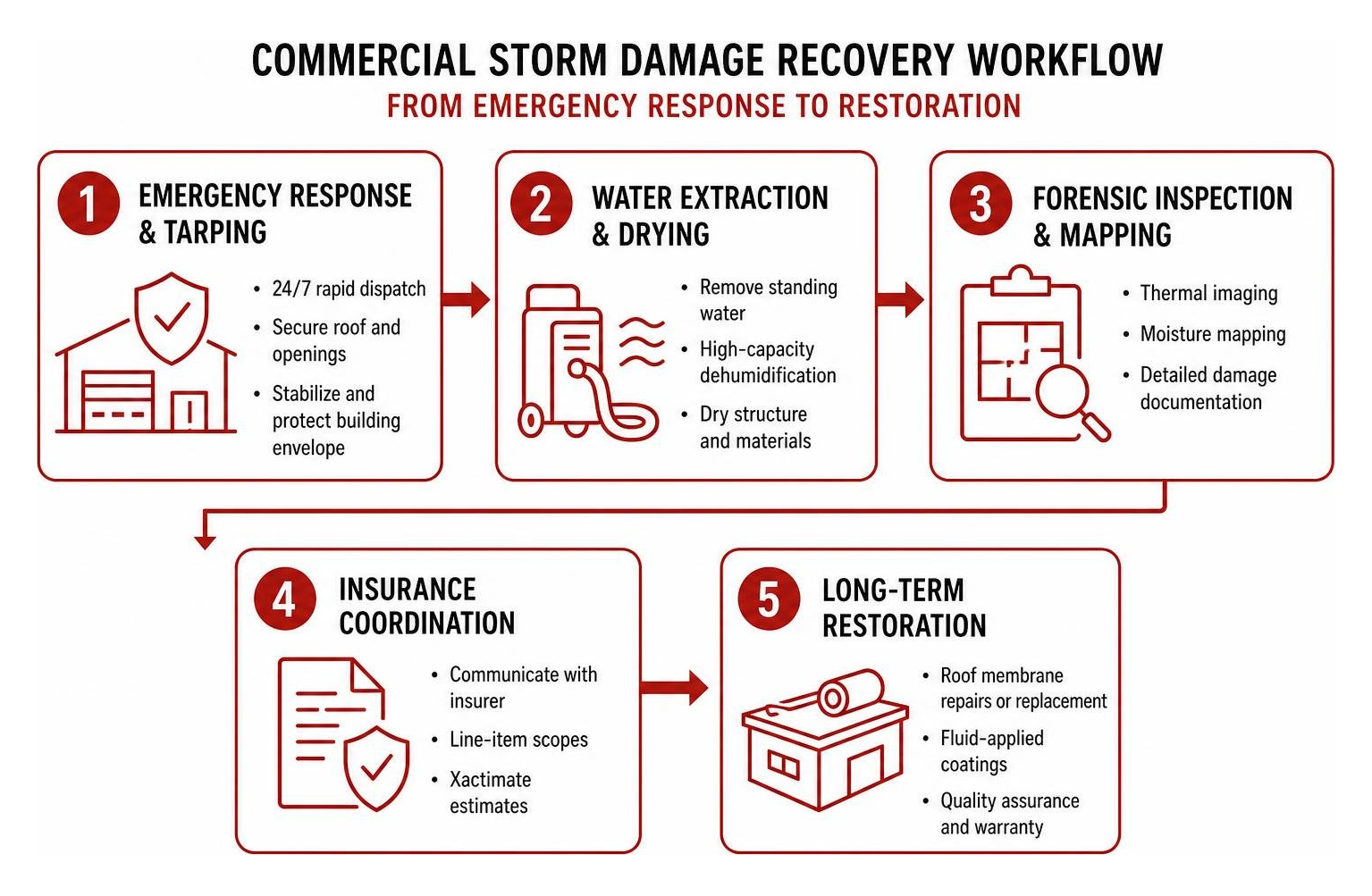
Professional stabilization begins the moment a crew arrives on site. Technicians immediately secure broken skylights, board up compromised openings, and establish safety perimeters around saturated ceiling panels or compromised deck sections. To mitigate interior losses, restoration teams utilize heavy-duty commercial dehumidifiers and air movers capable of cycling thousands of cubic feet of air per hour. Engaging certified commercial storm damage repair services ensures that structural moisture mapping occurs immediately, preventing secondary issues like rust, mold colonization, and insulation failure.
Essential Services Provided by Storm Damage Restoration Companies
A reputable commercial restoration contractor provides complete exterior and interior stabilization services to prevent operations from grinding to a halt:
- Building Envelope Protection: Immediate placement of heavy-duty synthetic tarps over punctured EPDM, TPO, or modified bitumen membranes. Utilizing professional emergency tarping services prevents wind-driven rain from destroying inventory and sensitive electronics.
- Drainage Network Clearance: Clearing scuppers, roof drains, and downspouts blocked by storm debris to prevent dangerous ponding water weight on flat roof decks.
- Moisture Mapping and Thermal Imaging: Using non-destructive infrared cameras to detect trapped moisture insulated beneath roof plies without ripping apart sound construction.
- Structural Integrity Checks: Verifying whether roof trusses, purlins, and decking have suffered load fatigue from fallen limbs or extreme wind uplift.
- Decontamination and Environmental Drying: Deploying desiccant dehumidifiers and antimicrobial agents to treat wet building assemblies before structural rot can develop.
Water Intrusion Categories and Stabilization Timelines
Water damage inside a commercial building varies significantly depending on the contamination source. The Institute of Inspection, Cleaning and Restoration Certification (IICRC) S500 standard establishes distinct water categories that dictate how a contractor must remediate your property:
| Water Category | Water Source & Quality | Health Risk Level | Required Remediation Protocol |
|---|---|---|---|
| Category 1 (Clean) | Broken supply pipes, rainwater from fresh roof punctures | Low | Rapid extraction, standard airflow drying, insulation salvage if caught within 24 hours |
| Category 2 (Gray) | Sump pump overflows, water passing through building materials | Moderate (Chemical / Bio) | Targeted removal of saturated porous items, antimicrobial wash, structural drying |
| Category 3 (Black) | Storm surge, wind-driven floodwaters, sewage backflows | High (Pathogens / Toxins) | Mandatory demolition of porous materials, full biocide treatments, specialized containment |
Wind-driven rain that enters through compromised commercial roof perimeters is frequently classified as Category 2 or Category 3 because it leaches contaminants, industrial grime, and debris from roofing materials as it travels into the facility. Mitigating this intrusion within 24 to 48 hours is non-negotiable to halt the rapid spread of bacteria and fungi. Relying on seasoned Wisconsin emergency roof repair solutions guarantees that the root cause of the breach is stopped permanently while drying equipment operates below.
How to Vet Contractors and Avoid Post-Disaster Fraud
Major hail storms and tornadoes bring out-of-state transient contractors—commonly known as “storm chasers”—who follow weather radar maps to solicit emergency repair work. These operations frequently lack proper licensing, use unqualified temporary labor, and vanish before the following season arrives, leaving building owners with voided warranties and leaking roofs.
Evaluating contractors against established industry evaluation standards helps you weed out opportunistic outfits. Legitimate restoration providers operate from permanent, verifiable business addresses and carry comprehensive commercial general liability insurance and workers’ compensation policies. Furthermore, reputable contractors stand behind their repairs by offering extended, renewable, non-prorated warranties rather than prorated certificates filled with legal loopholes.
Red Flags to Avoid When Hiring Storm Damage Restoration Companies
To protect your commercial property and investment, remain vigilant against these common post-storm contractor tactics:
- Unsolicited Walk-Ins: Salespeople who show up unannounced offering immediate roof replacements or promising to “waive your commercial deductible.”
- Full Upfront Cash Demands: Requests for large cash advances or signed insurance check endorsements before material delivery or equipment staging.
- High-Pressure Signatures: Pushing building managers to sign ambiguous “Direction to Pay” agreements before presenting an itemized repair estimate.
- No Physical Regional Address: Operating exclusively out of temporary trailers or PO boxes without state business registration records.
- Vague Emergency Scopes: Providing a lump-sum price without line-item breakdowns for equipment hourly rates, labor categories, or material grades.
Verifying Credentials, IICRC Standards, and Licensing
A credible restoration provider maintains verifiable credentials across state regulatory agencies and trade organizations. Before awarding a contract, request the company’s state business registration details, municipal trade licenses, and certificates of insurance sent directly from their carrier.
Check their standing on the Better Business Bureau registry, verify their EPA Lead-Safe certifications for older properties, and review objective state benchmarks for restoration companies. In addition, ask for references from local commercial facilities, industrial plants, or distribution centers they have restored in your geographic area.
Managing Insurance Claims and Structural Building Restoration
Filing an insurance claim for commercial storm damage requires meticulous documentation to support your proof of loss. Commercial policies are complex, and adjusters require indisputable physical evidence before approving comprehensive repairs. Professional contractors assist by conducting drone roof inspections, capturing high-resolution aerial photography of hail impact strikes, and performing thermal imaging scans to document sub-membrane moisture.
Properly evaluating hail damaged commercial roofs requires distinguishing between cosmetic granule loss and structural membrane fracturing. Experienced restoration estimators build estimates using insurance-standard software like Xactimate. This standardizes line-item pricing across material costs, labor hours, and emergency mitigation fees, ensuring your adjuster receives documentation formatted to carrier requirements and easing the path toward navigating insurance coverage for roof replacement.
Navigating Commercial Insurance and Scope Documentation
Understanding the difference between Actual Cash Value (ACV) and Replacement Cost Value (RCV) is essential during a claim. Insurance carriers often issue an initial ACV payment reflecting the depreciated value of the damaged roofing system. Once a licensed commercial contractor completes the repairs according to code and submits final documentation, the insurer releases the withheld depreciation (the RCV balance).
Instead of undergoing full structural tear-offs that disrupt your commercial operations, many storm-damaged flat and low-slope roof systems can be effectively renewed using high-performance commercial roof coatings, EPDM repairs, or spray polyurethane foam systems. These fluid-applied restoration systems seal all seams, add insulation value, and provide up to an 18-year non-prorated renewable warranty.
When severe weather compromises your commercial property, protect your asset by scheduling a thorough property assessment with Yutzy Roofing Service to secure your building envelope and ensure long-term performance.
