
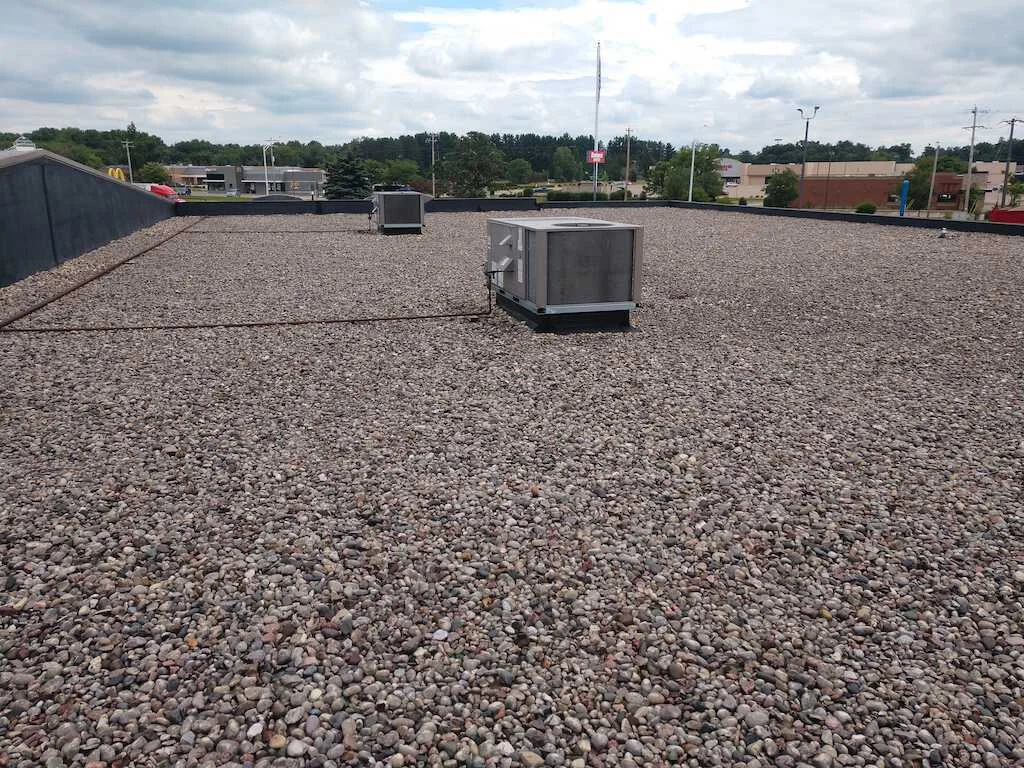
What You Need to Know About Roof Tar and Gravel (Before It Starts Leaking)
Roof tar and gravel — also called built-up roofing or BUR — is one of the most durable and time-tested flat roof systems available for commercial buildings. Here’s a quick overview:
| Question | Quick Answer |
|---|---|
| What is it? | Multiple layers of asphalt and reinforcing felt, topped with embedded gravel |
| How long does it last? | 20–30 years; up to 40+ years with maintenance |
| What does it cost? | $3–7 per sq ft installed; $2–4 per sq ft for patching |
| Is it still used today? | Yes — 20–25% of all low-slope commercial roofs in North America |
| Can it be restored instead of replaced? | Often yes, if less than 25% of the roof is damaged |
If you own or manage a commercial building in Wisconsin, you know the roof takes a beating. Harsh winters, freeze-thaw cycles, and hot summers put serious stress on low-slope roofing systems. A well-maintained BUR system can handle all of it — but only if you know what to watch for and when to act.
This guide covers everything: how these roofs are built, why they fail, what repairs cost, and how to get the most life out of the system you already have.
I’m Josh Yutzy of Yutzy Roofing Service, LLC, and our family business has been installing and restoring roof tar and gravel systems across Wisconsin since 1995. In that time, we’ve seen what separates a 40-year roof from one that fails in 12 — and it almost always comes down to maintenance and early intervention.
What Is a Roof Tar and Gravel System?
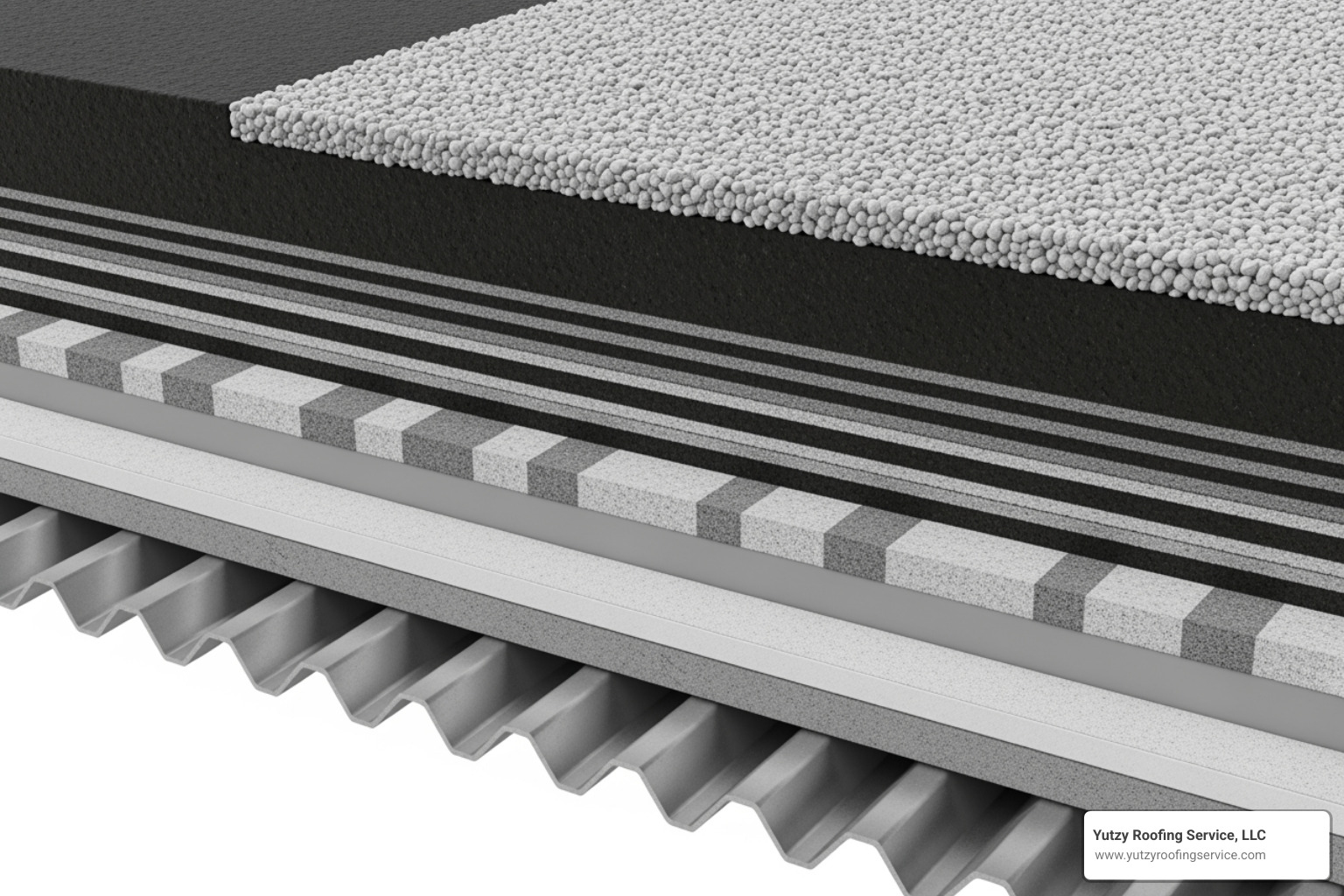
A roof tar and gravel system is the classic version of built-up roofing. It is designed for low-slope commercial roofs and built in layers rather than relying on a single membrane. That layered design is the whole point: if one layer gets nicked or ages, the rest of the system still provides backup protection.
Traditional BUR systems use asphalt bitumen with reinforcing felts or fiberglass mats. On top, a flood coat of asphalt is finished with embedded gravel. That gravel is not decoration. It is armor.
Built-up roofs have been around since the early 1900s and dominated the low-slope commercial market by the 1950s. Even in 2026, they still account for a meaningful share of installations because they remain tough, proven, and highly repairable in the right situations.
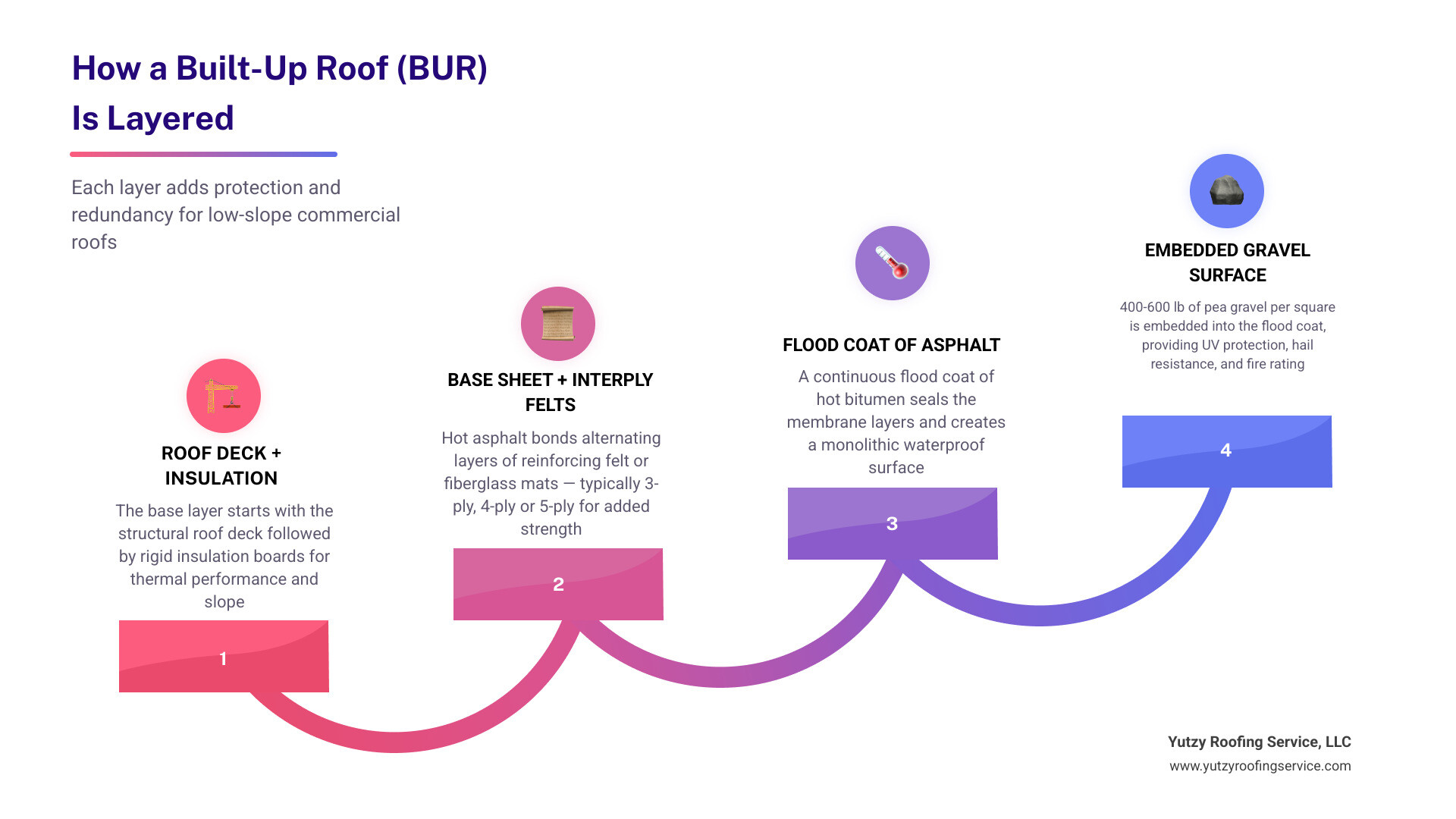
How roof tar and gravel is constructed layer by layer
Most BUR systems are installed over a structural roof deck, often with insulation board above the deck. From there, the roof is built in stages:
- Roof deck preparation
- Insulation board or cover board, if specified
- Base sheet installation
- Alternating layers of hot asphalt and reinforcing felt or fiberglass mat
- A final flood coat of asphalt
- Pea gravel embedded into the flood coat
Common systems are 3-ply, 4-ply, or 5-ply. More plies usually mean more redundancy, better puncture resistance, and longer expected life.
Typical gravel application rates are about 400 to 600 pounds per square, depending on the assembly. That gives the surface enough coverage to shield the bitumen below.
Why the gravel layer matters
The gravel layer does several jobs at once:
- Protects the asphalt from UV damage
- Improves hail and impact resistance
- Helps achieve high fire-resistance ratings, often Class A
- Adds some protection against weathering and wind exposure
- Provides better traction for maintenance traffic
- Helps reduce surface wear from sun and temperature swings
Without gravel, asphalt ages much faster in sunlight. In our service areas across Wisconsin and nearby Minnesota markets, that protection matters. Hail, snow, ice, and foot traffic from rooftop equipment service can all shorten roof life if the surface is exposed.
Loose or displaced gravel is one of the first warning signs we look for during inspections.
Where tar and gravel roofs are still used in 2026
BUR is still a practical option on commercial buildings that need durability more than speed of installation. We most often see it on:
- Warehouses
- Retail buildings
- Industrial facilities
- Multi-unit commercial properties
- Older low-slope buildings
- Buildings with regular rooftop equipment access
It is especially useful where puncture resistance and walkability matter. If your HVAC techs treat the roof like a shortcut, BUR tends to tolerate that better than many thinner systems.
For upkeep tips, see our guide on how to maintain a tar and gravel roof.
Lifespan, Performance, and What Makes These Roofs Fail
A properly installed and maintained BUR roof typically lasts 20 to 30 years. Some well-maintained systems make it past 40 years with timely repairs and coating or restoration work. On the flip side, neglected systems can fail in 12 to 15 years.
The biggest lifespan factors are:
- Quality of installation
- Number of plies
- Drainage
- Climate stress
- Foot traffic
- Flashing condition
- Inspection and maintenance frequency
How long a tar and gravel roof typically lasts
Here is a practical rule of thumb for commercial BUR systems:
- 3-ply: about 15 to 20 years
- 4-ply: about 20 to 25 years
- 5-ply: about 25 to 30 years
Those are not guarantees, just planning ranges. With strong maintenance, some systems exceed them. With poor drainage or ignored leaks, some never get close.
In Wisconsin and southern Minnesota, freeze-thaw cycles can be brutal. Water gets into small openings, freezes, expands, and turns a tiny defect into a bigger one. That is why regular inspection matters more than the calendar alone.
The most common causes of leaks and early deterioration
Most BUR leaks do not start in the middle of an open field of gravel. They usually begin at weak points, including:
- Roof penetrations
- Curbs and flashing details
- Drains and low spots
- Skylights
- Parapet transitions
- Split seams or blisters
- Bare spots where gravel has moved
- Areas with long-term ponding water
We also watch for alligatoring, which is the cracking pattern that shows aged asphalt is drying out and losing flexibility. If gravel coverage has thinned, UV damage accelerates. If flashings split, water can enter even when the field of the roof still looks decent.
Roof tar and gravel inspection checklist for owners and managers
A simple inspection routine catches most problems before they become budget meetings.
We recommend checking roof tar and gravel systems at least twice a year, usually in spring and fall, plus after major storms. During a professional inspection, we look for:
- Clogged drains and scuppers
- Debris buildup
- Bare or thin gravel coverage
- Blisters, ridges, or splits
- Cracked or open flashing
- Soft spots underfoot
- Signs of repeated repairs in the same area
- Ponding water that remains more than 48 hours after rainfall
- Interior leak locations that should be mapped to roof areas
- Moisture trapped below the surface
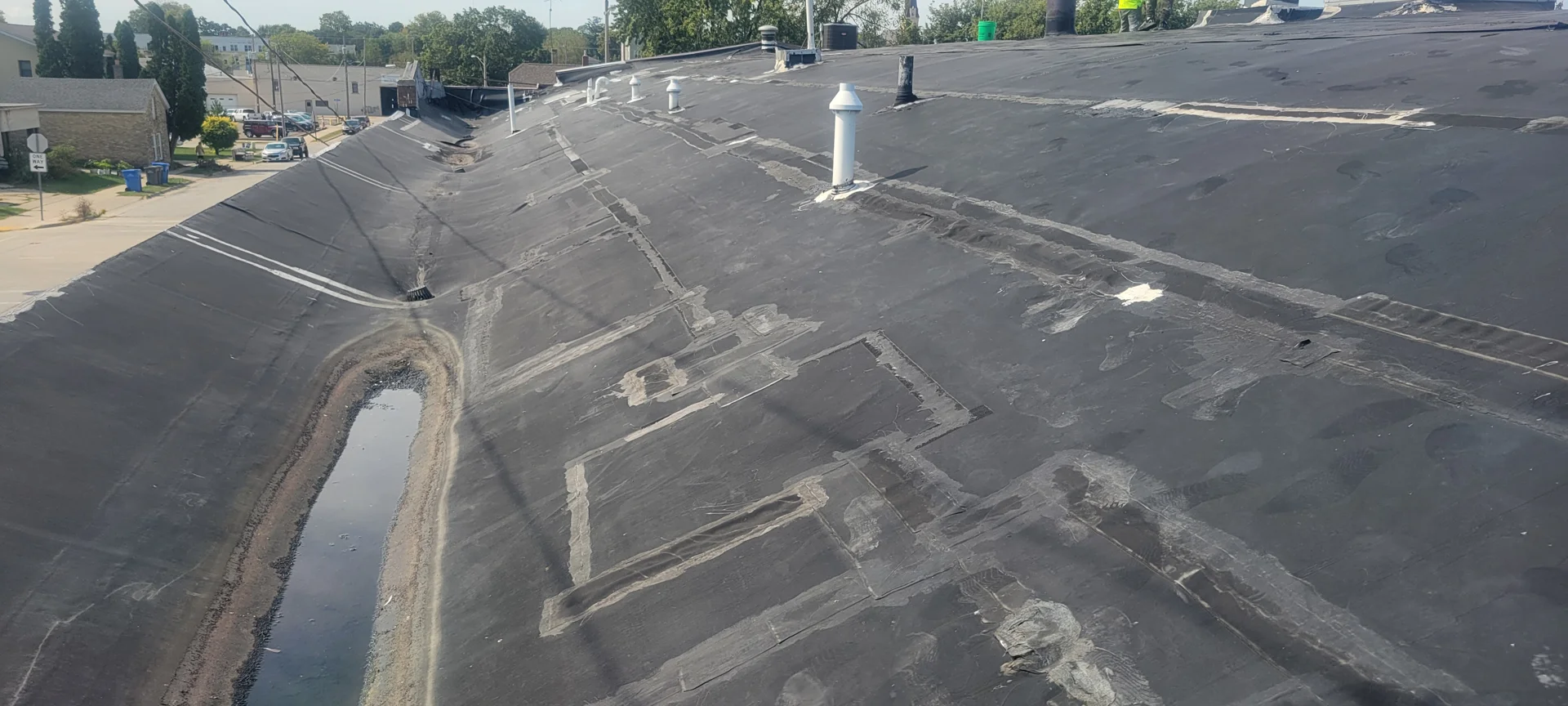
If your building has had recurring leaks, a moisture scan can help determine whether insulation is still dry or if water has spread farther than the visible stain suggests.
For more on inspection planning, visit how to maintain a tar and gravel roof.
Pros, Cons, and How BUR Compares to Restoration Options
BUR is not the newest roof system on the market, but old does not mean obsolete. It means proven. Still, every system has tradeoffs.
Key advantages of tar and gravel roofing
The biggest advantages of BUR are durability and redundancy.
- Multiple layers create backup waterproofing
- Thick system resists punctures and traffic damage
- Gravel improves UV protection and hail resistance
- Fire ratings are often excellent (frequently achieving a Class A fire rating)
- Surface helps dampen sound from rain and rooftop activity
- Maintenance needs can be lower when gravel coverage stays intact
- Some self-sealing characteristics of bitumen help reduce leak risk
This is why BUR remains relevant on busy commercial buildings. If your roof supports service crews, equipment access, and rough weather, a layered system still makes sense.
Main disadvantages and limitations to consider
BUR also comes with real drawbacks:
- It is heavy and may require structural review
- Installation is labor-intensive
- Hot asphalt creates burn and fume hazards
- Leak tracing can be tricky because water may travel between layers
- Ponding water can shorten service life
- Reflectivity is limited unless a coating or alternate surfacing is used
- Installation depends heavily on weather and crew skill
In simple terms, BUR is tough, but it is not light, cheap to tear off, or forgiving of bad workmanship.
Roof tar and gravel vs. fluid-applied restoration systems
For some aging roofs, restoration can be smarter than replacement. Fluid-applied systems can extend service life without a full tear-off, especially when the existing BUR still has a sound deck and mostly dry insulation.
Here is a simple comparison:
| Feature | Traditional BUR | Fluid-Applied Restoration |
|---|---|---|
| Waterproofing style | Multiple asphalt/felt layers | Seamless coating over prepared surface |
| Weight | Heavy | Lightweight |
| Puncture resistance | Very strong | Depends on coating and reinforcement |
| Tear-off required | Often for replacement | Often not if roof is suitable |
| Best use | New BUR or heavily trafficked roofs | Extending life of aging but serviceable roofs |
| Cost profile | Higher labor and tear-off impact | Often lower than full replacement |
For many commercial owners, the right question is not “BUR or not?” It is “Can this BUR be restored before replacement becomes unavoidable?”
Costs, Repairs, and Whether to Restore or Replace
Budget matters, but lifecycle cost matters more. A cheap roof that fails early is not actually cheap. Neither is replacing a roof that could have been restored for several more years of service.
Typical installation, repair, and maintenance costs in 2026
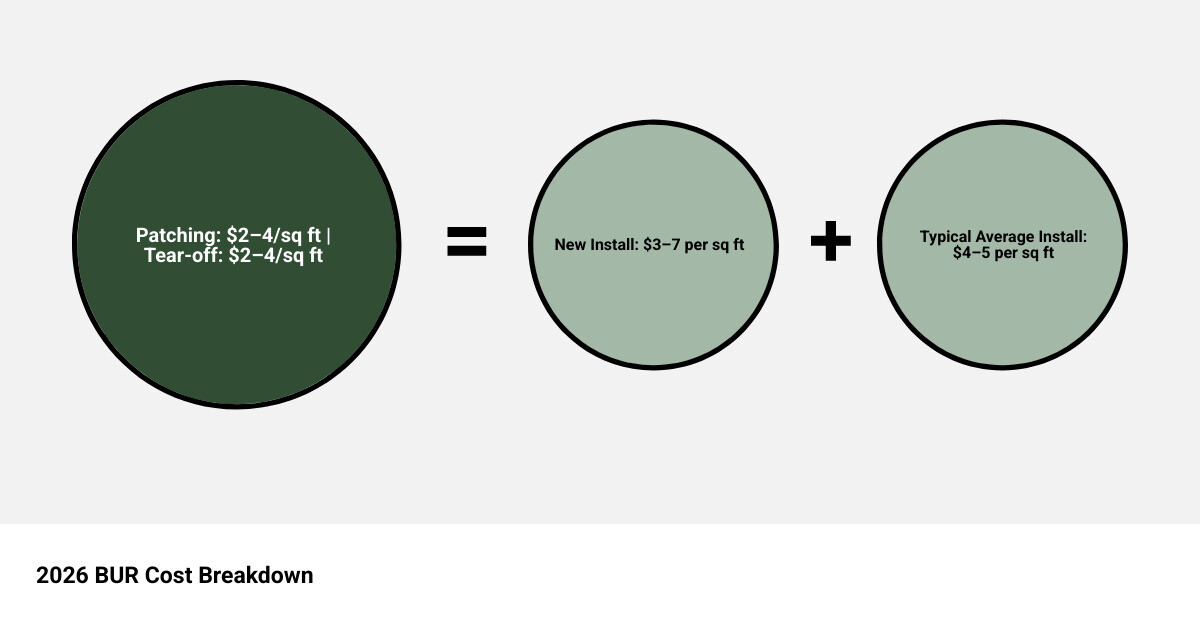
As of 2026, common commercial BUR pricing looks like this:
- New installation: $3 to $7 per square foot
- Most average installs: about $4 to $5 per square foot
- Patch repairs: about $2 to $4 per square foot
- Tear-off and disposal: often $2 to $4 per square foot
- More complex tear-offs or hazardous materials: higher
Cost depends on:
- Ply count
- Roof size
- Deck condition
- Insulation needs
- Number of penetrations
- Access to the roof
- Local disposal requirements
- Whether a full tear-off is needed
For a closer breakdown, read The Price of Protection: A Complete Hot Tar Roofing Cost Breakdown.
How to repair an old leaking tar and gravel roof without full replacement
Yes, many old leaking BUR roofs can be repaired without tearing everything off. The best method depends on the type and extent of damage.
Common repair approaches include:
- Targeted patching at splits or punctures
- Rebuilding failed flashing details
- Applying compatible cold-process mastics in select areas
- Reinforcing weak sections with fabric and coating
- Re-embedding gravel where coverage was lost
- Isolating wet areas before broader restoration work
- Emergency leak stopping while a long-term plan is developed
The key is diagnosing the actual failure point. On BUR, the visible leak inside is not always directly below the roof defect. Water likes to travel. It is basically the most annoying detective novel on your building.
If less than about 25% of the roof is damaged, repair or restoration is often a cost-effective move.
When repair makes sense and when replacement is smarter
Repair usually makes sense when:
- Damage is isolated
- The roof is under about 15 to 20 years old
- Insulation is mostly dry
- Leaks are limited and traceable
- The deck is sound
- Maintenance history is decent
Replacement becomes the smarter choice when:
- More than 25% of the roof is failing
- Leaks keep returning in many areas
- Insulation is saturated across large sections
- Flashings and field membrane are both breaking down
- The deck has structural issues
- The roof is near the end of its useful life
A professional assessment should include moisture diagnostics, not just surface observations. A roof can look acceptable on top and still hide wet insulation below.
Can you install a new tar and gravel roof over an existing one?
Sometimes a recover or overlay is possible, but we do not treat that as an automatic yes. Added roofing means added weight, and BUR is already one of the heavier low-slope systems.
Before installing over an existing roof, we need to verify:
- Current number of roof layers
- Structural load capacity
- Moisture condition of the existing assembly
- Code compliance
- Whether trapped moisture will create future failure
In many cases, full tear-off is still the better long-term option because it allows inspection of the deck and removal of hidden wet materials. In other cases, a recover with a different restoration approach may offer better value than building another heavy BUR assembly on top.
Maintenance, Safety, and Professional Requirements
The fastest way to shorten the life of a BUR roof is to ignore it until water shows up inside. The second fastest is to let untrained people “fix” it with whatever they found in a bucket.
Best maintenance practices to extend service life
We recommend a preventive maintenance plan built around semiannual inspections and documented service.
Best practices include:
- Inspect in spring and fall
- Check after hail, wind, or severe snow and ice events
- Clear drains, scuppers, and gutters
- Remove debris that traps moisture
- Redistribute gravel in worn areas
- Inspect flashings and penetrations
- Track recurring repair spots
- Address ponding areas early
- Consider protective coatings or restoration when the surface begins aging
Good records help too. Photos, leak maps, and service logs make future decisions much easier.
For a deeper look, see A Complete Guide to Maintaining an Asphalt and Gravel Roof Without Losing Your Mind.
Safety considerations for installation and repair
Traditional BUR work is not a casual DIY project. Hot asphalt is typically applied at very high temperatures, often in the 400 to 500 degree range. That creates real hazards:
- Severe burn risk
- Fume exposure
- Fire risk
- Slip and trip hazards on low-slope roofs
- Fall hazards at roof edges and openings
- Extra risk around occupied buildings and rooftop equipment
Safe installation and repair require trained crews, proper PPE, fall protection, weather monitoring, and coordination with building operations.
Why commercial owners should use experienced roofing professionals
BUR is one of those systems where experience saves money. Not because the roof is mysterious, but because diagnosis, compatibility, and detail work matter a lot.
Experienced commercial roofing professionals can help with:
- Structural review for heavy assemblies
- Moisture scanning and leak tracing
- Compatible repair design
- Code compliance
- Documentation for insurance or asset planning
- Warranty-backed restoration options
At Yutzy Roofing Service, we focus on commercial roofing restoration and maintenance, including low-slope systems, coatings, and repairs. We also offer warranty-backed solutions, including up to an 18-year non-prorated renewable warranty on qualifying systems. If you are managing properties in Marshfield, Appleton, Eau Claire, Fond du Lac, Green Bay, Madison, Wausau, Mankato, or Rochester, a planned maintenance approach is almost always cheaper than emergency response.
Frequently Asked Questions About Roof Tar and Gravel
Can you walk on a tar and gravel roof?
Yes, generally you can. BUR is one of the more walkable low-slope roof types because the gravel adds traction and the layered system resists punctures better than many thinner membranes. That said, foot traffic should still be controlled. Around HVAC paths and service areas, walkway pads are a smart upgrade.
Is gravel on a flat roof the same as ballast?
No. On a BUR roof, gravel is usually embedded into a flood coat and mainly protects the membrane from UV, fire exposure, and impact. Ballast on a single-ply roof is usually larger, looser stone used primarily to hold the membrane in place. Same rock family, very different job description.
Is tar and gravel roofing still a good choice today?
Yes, in the right application. In 2026, BUR still makes sense for commercial buildings that need durability, puncture resistance, heavy-traffic tolerance, and strong fire performance. It is especially useful on older low-slope buildings and facilities where restoration planning matters. If you want more reading on the topic, visit our tar and gravel roof resource page.
Conclusion
A roof tar and gravel system can be a long-lasting, high-performing commercial roof when it is properly built, regularly inspected, and repaired before small issues spread. In many cases, the smartest move is not immediate replacement. It is a clear repair-versus-restore evaluation based on age, moisture condition, drainage, and overall damage.
If your BUR roof is leaking, aging, or just overdue for a professional look, the best next step is a documented inspection and maintenance plan. That is how we help owners avoid surprise failures, control lifecycle cost, and get more years from the roof they already have.
To learn more about ongoing care, start with how to maintain a tar and gravel roof.
