
Is Your Commercial Roof One Leak Away From a Costly Problem?
Rubber roof sealant is a flexible, waterproof coating applied directly to a roof surface to stop leaks, block UV damage, and extend roof life — without tearing off your existing system.
Here’s a quick breakdown of your two main options:
| Option | Best For | Typical Coverage |
|---|---|---|
| Rubber sealant | Seams, joints, penetrations, spot repairs | Small targeted areas |
| Rubber coating | Full-surface waterproofing and restoration | 10–50 sq ft per gallon depending on formulation |
Both protect against water intrusion and UV exposure. The right choice depends on how much of your roof needs attention.
Wisconsin’s freeze-thaw cycles, heavy snow loads, and blazing summers are brutal on flat and low-slope commercial roofs. A small seam failure or cracked flashing can quietly grow into a major interior repair. By the time water damage shows up on the ceiling, the real problem has often been spreading for months.
The good news? You don’t always need a full roof replacement. Modern rubber sealants and coatings have improved dramatically — many now reflect over 85% of UV heat and can add years of protection at a fraction of replacement cost.
I’m Josh Yutzy of Yutzy Roofing Service, LLC, and our team has been restoring and protecting commercial roofs across Wisconsin since 1995 — including countless rubber roof sealant applications on EPDM, TPO, and low-slope systems. In this guide, I’ll walk you through exactly which products win in which situations, so you can make a confident, cost-smart decision for your building.
Understanding Rubber Roof Sealant and Protective Coatings
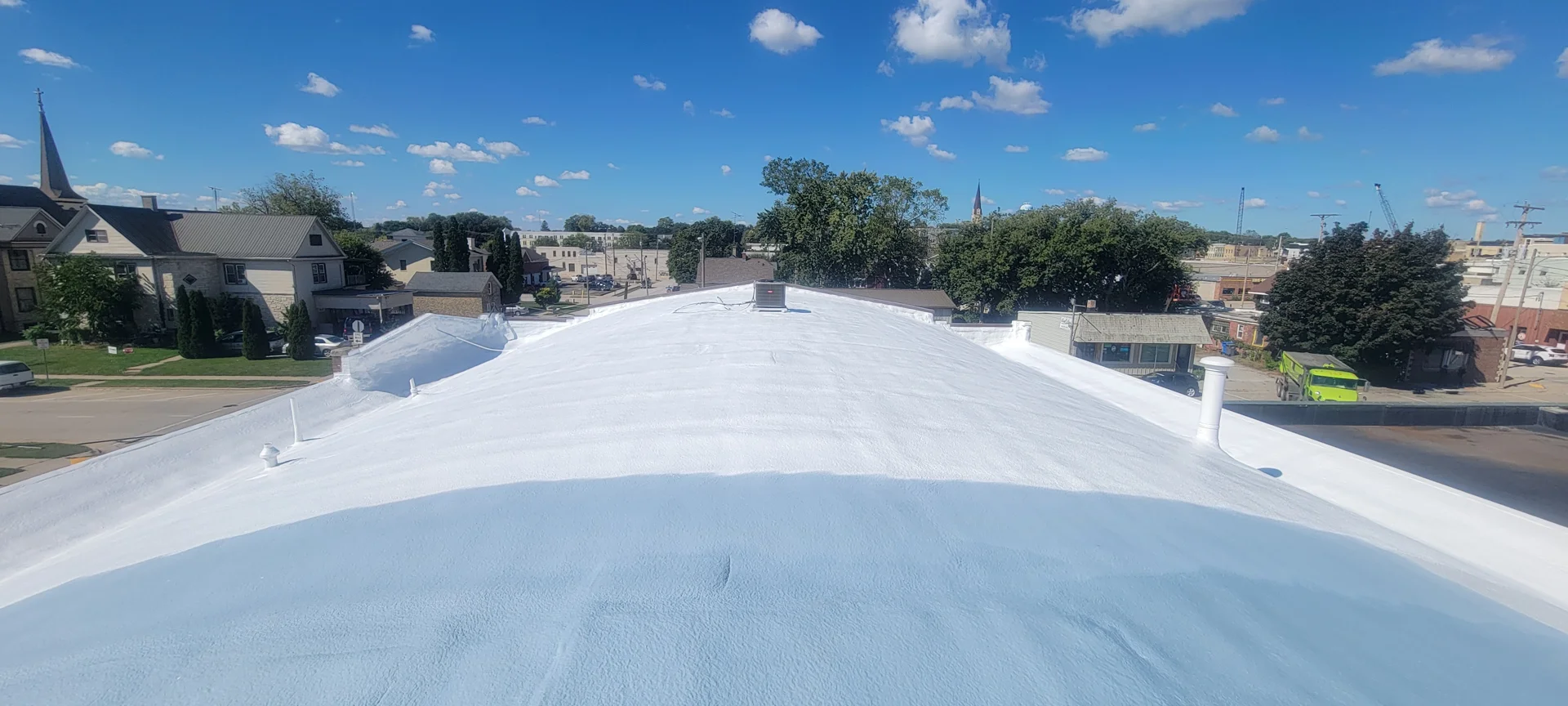
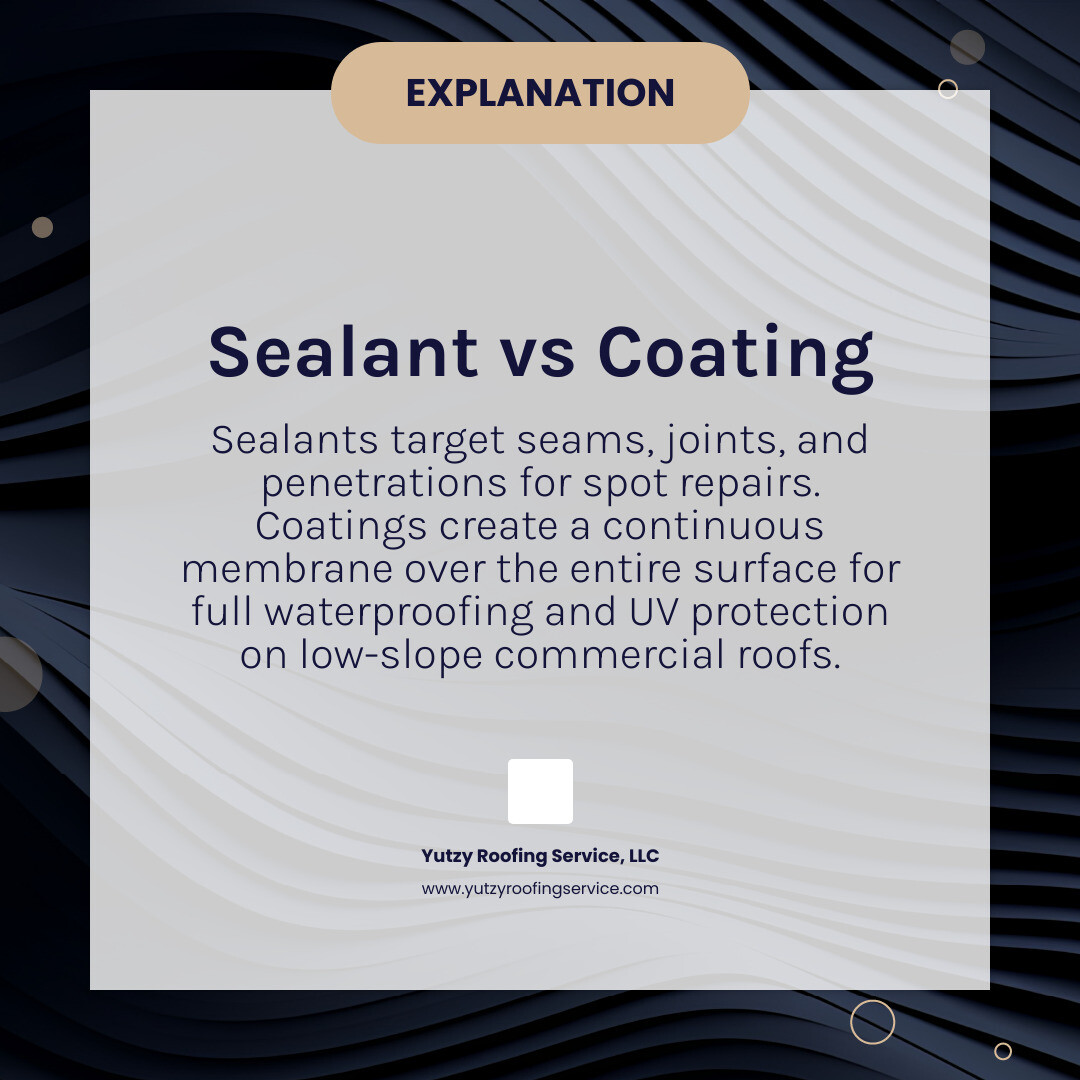
At the simplest level, a Rubber Roof Sealant is made to close gaps and stop water at specific trouble spots. Think seams, pipe boots, fasteners, flashing edges, transitions, small cracks, and penetrations. A coating, on the other hand, is designed to cover much or all of the roof surface and create a continuous protective membrane.
That difference matters.
If you only have a split seam on an EPDM roof, you probably do not need to coat the entire building. If the membrane is aging across the whole field of the roof, UV-worn, chalking, or showing widespread deterioration, a full coating system often makes more sense.
In practical terms, sealants and coatings work by:
- Bonding to the existing roof surface
- Remaining flexible as the roof expands and contracts
- Creating a waterproof barrier against rain and snow
- Shielding the substrate from UV exposure
- Reducing the speed of further weathering
For commercial roofs in Wisconsin and southern Minnesota, that flexibility is a big deal. Roof surfaces can heat up dramatically in summer and then swing hard into freezing conditions in winter. A good rubber product stretches instead of cracking when the substrate moves.
We most often see these systems used on:
- EPDM rubber roofs
- TPO roofs
- Low-slope commercial roofs
- Metal roofs needing restoration
- Modified bitumen roofs
- Concrete or specialty roof surfaces in some cases
Some rubberized products are also made for gutters, walls, and vertical details. For example, cartridge-style products such as this adhesive sealant are useful for targeted joints and overhead or vertical applications because they stay put instead of sagging everywhere like a frosting disaster in July.
When building owners ask us, “Which wins?” our answer is usually:
- Sealant wins for detail work and localized repair
- Coating wins for full-surface restoration
- The best system often uses both
That is especially true on EPDM restoration projects. We may seal seams and penetrations first, then reinforce where needed, and finally apply a field coating if the roof condition supports restoration. If you want a broader look at that strategy, here is more info about EPDM restoration.
Comparing Formulations: Silicone, Butyl, and Acrylic
Not all Rubber Roof Sealant products are the same. The chemistry changes how they handle UV, movement, ponding water, adhesion, and application.
Silicone
Silicone coatings are popular on flat and low-slope commercial roofs because they resist moisture very well and are often promoted as one-coat systems. Research in your source set notes that some silicone roof coatings can provide full protection in a single coat on flat roofs. That can reduce labor and simplify scheduling.
Silicone strengths:
- Excellent resistance to UV exposure
- Strong weather performance
- Often handles standing moisture better than many alternatives
- Frequently available in bright white, reflective finishes
One cited product claims its white finish reflects more than 85% of UV and heat, which can help reduce roof temperatures and cooling demand. That is meaningful on warehouses, offices, and retail buildings with large exposed roof areas.
Silicone limitations:
- Future recoating can be more complicated
- Surface prep is still critical
- Some substrates, especially TPO, may need a primer
- Dirt pickup can be a concern on some systems
Butyl Rubber
Butyl-based products are known for strong waterproofing, flexibility, and adhesion in many repair scenarios. They are often used where a heavy-duty liquid membrane is needed.
Butyl strengths:
- Good flexibility and elongation
- Good adhesion on many roofing surfaces
- Useful for waterproofing details and restoration work
- Solid option for cost-conscious repair versus replacement
One researched butyl product lists coverage of 250 square feet per 5 gallons at 20 mil dry film thickness. That gives a useful reference point for estimating project quantities.
Butyl limitations:
- UV performance varies by formulation
- May not be the best fit for every full-roof coating project
- Application thickness matters a lot
Acrylic
Acrylic coatings are often valued for reflectivity, easier cleanup, and cost-effectiveness. On many roofs, especially where reflectivity is a priority and ponding water is limited, acrylic can be a smart restoration option.
Acrylic strengths:
- Highly reflective white options
- Often lower material cost
- Easy water-based application and cleanup
- Useful in maintenance-focused coating systems
Acrylic limitations:
- Generally less tolerant of ponding water than silicone
- Weather windows matter more during application
- Thickness and recoat planning are important
Mastics and Detail Sealers
Detail mastics deserve their own mention because they are not the same as field coatings. They are built for seams, joints, transitions, cracks, curbs, and penetrations. Some synthetic liquid rubber mastics are offered in brush-grade and trowel-grade versions depending on the joint width and detail shape.
Research also highlighted a clear synthetic rubber sealant option for fixtures and penetrations, ULTRA CLEAR ROOF Waterproof Rubberized Sealant, which is notable for flexibility in temperatures from 0 degrees F to 120 degrees F and for staying clear rather than yellowing. That type of product is usually better for detail sealing than full restoration.
Quick comparison table
| Formulation | Best Use | UV Performance | Ponding Water | Typical Application Notes |
|---|---|---|---|---|
| Silicone | Full-roof restoration on low-slope roofs | Excellent | Strong | Often one coat, primer may be needed on TPO |
| Butyl | Waterproofing, repairs, restoration | Good to very good | Moderate to good | Common target thickness around 20 mils dry on some systems |
| Acrylic | Reflective coating systems | Very good | Fair to moderate | Best where drainage is decent and weather window is favorable |
| Rubber mastic/sealant | Seams, penetrations, flashing, joints | Varies by formula | Detail-only use | Applied by cartridge, brush, or trowel |
If you are comparing repair materials specifically, our article on top products to fix your leaky rubber roof adds more detail.
Best Practices for Applying Rubber Roof Sealant
A great product on a dirty roof is still a bad installation. Most failures we see are not because “rubber roof sealant doesn’t work.” They happen because the surface was not prepared, the wrong material was used, or the coating went on too thin.
Step 1: Inspect the roof first
Before anything is applied, we identify:
- Wet insulation or trapped moisture
- Open seams
- Punctures
- Failing flashing
- Ponding areas
- Loose existing coatings
- Rust on metal surfaces
- Membrane shrinkage on EPDM
- Areas that need reinforcement fabric or seam tape
Sealant is not magic. It is not a substitute for replacing damaged substrate or ignoring major structural issues.
Step 2: Clean the surface thoroughly
Nearly every manufacturer stresses this point, and for good reason.
The roof should be:
- Clean
- Structurally sound
- Free of dust, oils, chalk, debris, and loose material
- Dry unless the specific product is designed for damp application
If you are coating over old paint or an older coating, loose or flaking material must be removed. Some products allow application over well-adhered previous coatings, but oil-based or recently applied coatings may need to come off first.
Step 3: Prime where required
Primer needs vary by substrate and chemistry.
A key research point: some silicone coatings do not require primer on most substrates, except TPO roofs. That exception is important. TPO can be tricky, and skipping the primer when it is required can ruin adhesion.
As a rule, we verify compatibility for:
- EPDM
- TPO
- PVC
- Metal
- Modified bitumen
- Concrete
- Existing coated surfaces
Step 4: Treat seams and details before field coating
This is where sealant shines.
We often use sealant, mastic, or reinforced detail treatment around:
- Pipe penetrations
- Curbs
- Drain bowls
- Fasteners
- Flashing transitions
- Membrane laps
- Cracks and joints
For larger joints or moving transitions, seam tape or reinforcing fabric may be needed before the top layer goes down. That is one of the most overlooked steps in DIY repair work.
For more on EPDM-specific repair strategy, see Rubber Roofing Repair: Renewing and Reinforcing Your EPDM Roofing System.
Step 5: Apply at the correct coverage rate
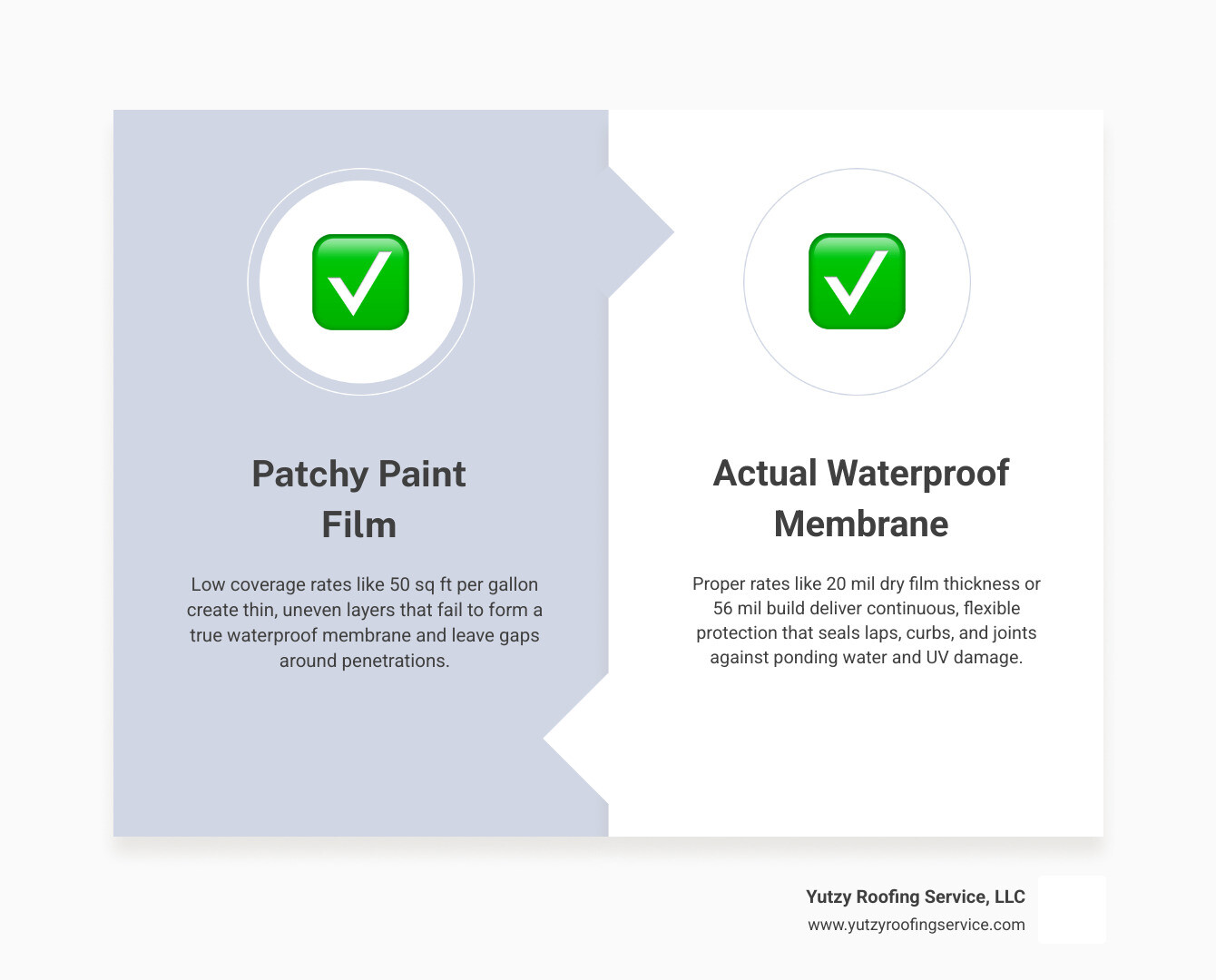
Coverage rate tells you whether you are getting a patchy paint film or an actual waterproof membrane.
Here are practical numbers from the research:
- Some RV liquid rubber products: about 50 sq ft per gallon
- One butyl product: 250 sq ft per 5 gallons at 20 mil dry film thickness
- One rubber-granule coating: 1 gallon per 10 to 35 sq ft depending on target build
- One metal seam sealer: about 0.67 gallon per 100 sq ft in one coat for brush grade
- One heavy-duty coating system reaches about 56 mils dry thickness in one coat
That range is huge because products do very different jobs. A full-body restoration coating is not spread at the same rate as a brush-grade seam treatment.
Step 6: Respect drying and cure times
Typical researched ranges include:
- Touch-dry in 4 to 8 hours for some coatings
- Full cure in 24 to 48 hours for some systems
- About 24 hours before topcoating certain seam sealers
Weather changes these numbers. Higher humidity, lower temperatures, and limited sun can slow curing. In Wisconsin, spring and fall conditions can look perfect at 9 a.m. and become “why is there sleet?” by dinner. We plan around that.
Step 7: Apply in the right conditions
Several research sources noted limits such as:
- Do not apply below 40 degrees F or above 95 degrees F for some products
- Do not coat when rain is expected within 12 hours for some systems
- Avoid overly hot surfaces
- Remove frost or ice before applying
- Some products can tolerate damp surfaces, but many cannot
Always match the product to the actual roof conditions, not the wishful forecast.
Performance in Extreme Weather and UV Exposure
Commercial roofs in Madison, Appleton, Wausau, Eau Claire, Green Bay, Fond du Lac, Marshfield, Rochester, and Mankato have to deal with weather mood swings. A roof might see snowpack, freeze-thaw movement, summer heat, UV bombardment, and wind-driven rain all in the same year. Niceness is not on the forecast.
A quality Rubber Roof Sealant or coating helps in several ways.
UV resistance
Sunlight slowly breaks down exposed roofing materials. Reflective coatings reduce heat buildup and slow surface aging. One researched coating reports reflecting over 85% of UV and heat, while another cited 82.5% reflectivity. That can:
- Lower rooftop temperatures
- Reduce thermal stress
- Support lower cooling costs in warmer months
- Extend the service life of the roof system
Temperature flexibility
Rubberized systems are valued because they stay elastic across temperature swings. That matters during thermal expansion and contraction, especially on metal roofs and large commercial membranes.
The research included clear evidence of cold-weather flexibility testing and products designed to remain rubbery and elastic regardless of temperature. That is exactly what we want in Upper Midwest climates.
Rain, snow, and ponding water
Waterproofing performance depends on chemistry and drainage conditions.
- Silicone generally performs strongly where moisture exposure is severe
- Acrylic can perform very well but is usually less ideal in persistent ponding areas
- Detail mastics are essential at joints and penetrations regardless of field coating type
If your roof has standing water, we do not just throw coating at it and hope for the best. We evaluate drainage, substrate condition, and whether the product is rated for that exposure.
Impact and foot traffic
Some specialty liquid rubber coatings include rubber granules for added durability and grip on walkable areas. That can be helpful on commercial roofs with maintenance traffic. But not every roof should be treated as a walking track. Even restored roofs need controlled traffic paths and routine inspection.
For more roofing-related maintenance and restoration topics, visit our Rubber Roofing tag page.
Frequently Asked Questions about Rubber Roof Sealant
How long does rubber roof sealant last?
It depends on the product type, roof condition, thickness applied, UV exposure, drainage, and maintenance.
From the research:
- Some RV-focused liquid rubber systems claim up to 10 years of protection when applied as directed
- One liquid rubber granule coating carries a 5-year warranty when installed at the correct dry thickness of about 56 mils
In real commercial roofing, lifespan is tied to the whole system, not just the bucket label. A detail sealant around a penetration may need inspection long before a field coating reaches the end of its service life.
That is why we recommend:
- Annual inspections
- Extra checks after hail, high winds, or severe winter conditions
- Cleaning drains and debris
- Prompt repair of cuts, punctures, and seam movement
At Yutzy Roofing Service, we focus on restoration systems that support long-term value, including up to an 18-year non-prorated renewable warranty on qualifying commercial work. That is one reason many building owners choose restoration over replacement when the roof is still a good candidate.
You can also explore more maintenance guidance on our Rubber Roof tag page.
Can I apply rubber roof sealant over existing coatings?
Sometimes yes, sometimes absolutely not.
Compatibility is one of the biggest decision points. Based on the research:
- Some coatings can go over many well-adhered existing coatings with proper prep
- Oil-based or recently applied coatings may need to be removed
- Silicone products often require caution when coating over or recoating
- TPO may require primer even when other surfaces do not
- Loose paint, chalk, dirt, and failing layers must come off first
Here is the simple version:
- If the existing coating is stable and compatible, restoration may work
- If the old surface is peeling, contaminated, or incompatible, adhesion may fail
- If there is trapped moisture or underlying roof damage, surface coating alone is not enough
This is where a professional roof inspection saves money. The wrong coating over the wrong surface is a very expensive science experiment.
What is the cost difference between sealing and replacement?
Localized sealing is almost always the lowest-cost option upfront. Full restoration coating is typically more expensive than a spot repair but far less costly than a tear-off replacement.
In broad commercial terms:
- Sealant is best when the issue is limited
- Coating is best when the roof is aging but still structurally recoverable
- Replacement is best when the system is too far gone for restoration
The value equation includes more than material price:
- Labor savings from avoiding tear-off
- Less disruption to operations
- Lower landfill waste
- Potential energy savings from reflective coatings
- Extended service life from preventive maintenance
Research repeatedly positioned liquid rubber and butyl systems as a fraction-of-replacement-cost solution, and that tracks with what we see in the field. The key is whether your roof qualifies for restoration. If it does, the savings can be substantial.
Conclusion
When we compare sealant vs coating, there is no single winner for every roof.
- Choose Rubber Roof Sealant for seams, penetrations, flashing details, and isolated leaks
- Choose a rubber roof coating when the full roof surface needs renewed waterproofing, UV protection, and life extension
- Choose a combined system when details need repair before the field of the roof is restored
For commercial buildings across Wisconsin and nearby Minnesota service areas, that decision should be based on roof condition, substrate type, drainage, weather exposure, and long-term budget – not guesswork and not a bucket picked because the label looked confident.
At Yutzy Roofing Service, LLC, we help building owners in Madison, Appleton, Wausau, and surrounding areas decide whether sealing, coating, or full restoration offers the best return. Our commercial restoration approach is built around practical performance, minimal disruption, and long-term protection, including up to an 18-year non-prorated renewable warranty on qualifying systems.
If you want to keep your rubber roof in better shape after repairs or restoration, read How to Maintain a Rubber Roof Membrane: A Guide.
And if your roof is showing early leaks, seam issues, or aging membrane problems, now is a very good time to act – before your ceiling starts sending passive-aggressive water stains.
