
What to Do After Storm Damage Roof Repair Becomes Urgent
Storm damage roof repair is one of the most time-sensitive challenges a commercial property owner can face. Acting fast — ideally within the first 24 hours — can be the difference between a manageable repair and a costly structural crisis.
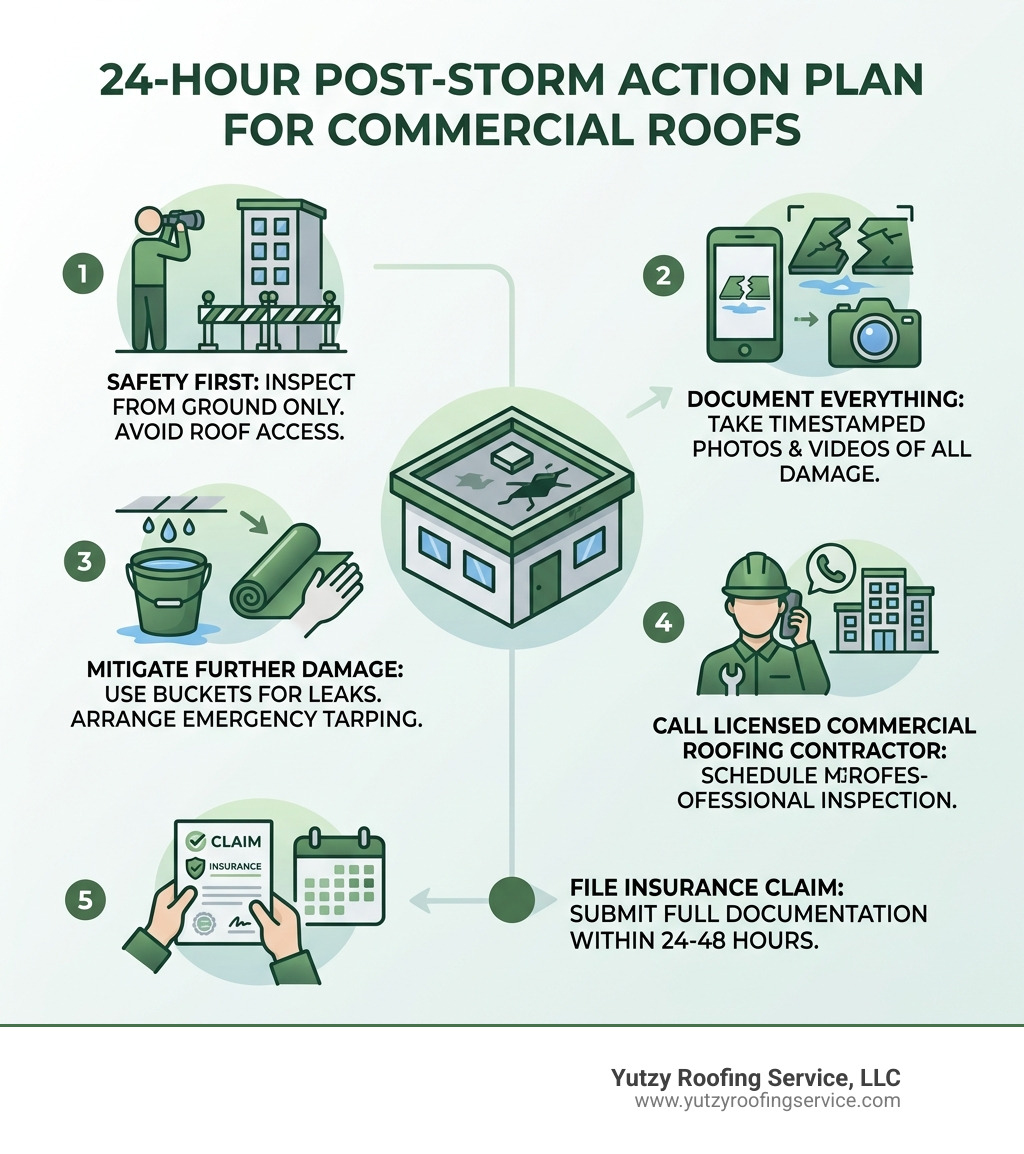
Here’s what to do right away:
- Stay safe — inspect from the ground only; avoid the roof until conditions are clear
- Document everything — take timestamped photos and videos of all visible damage
- Mitigate further damage — place buckets under active leaks; arrange emergency tarping for exposed areas
- Call a licensed commercial roofing contractor — get a professional inspection before contacting your insurer
- File your insurance claim — ideally within 24–48 hours, with full documentation in hand
Wisconsin commercial roofs take a beating. Extreme winters bring heavy snow loads and ice dams. Spring and summer storms deliver hail, high winds, and heavy rain — sometimes all at once. Flat and low-slope roofs common on warehouses, office buildings, and retail properties are especially vulnerable because water has nowhere to go fast.
The damage isn’t always obvious either. A quick glance from the parking lot might show nothing wrong — while inside, water is already working its way through membrane seams, insulation layers, and ceiling decking. By the time you notice a stain on the ceiling tiles, the damage above it may already be significant.
I’m Josh Yutzy, and my family has been handling storm damage roof repair on commercial and residential properties across Wisconsin since 1995. Over nearly three decades, we’ve seen what happens when storm damage is caught early — and what happens when it isn’t. This guide will walk you through everything you need to know to protect your property, navigate your insurance claim, and make smart repair decisions.
Identifying Common Signs of Storm Damage on Commercial Roofs
When a severe weather event rolls through cities like Madison or Eau Claire, the aftermath can be chaotic. Identifying the need for storm damage roof repair starts with knowing exactly what to look for. On a commercial facility, damage isn’t always as obvious as a fallen tree; often, it’s the subtle compromises in the membrane or metal joints that cause the most long-term grief.
Common signs of trouble include:
- Ponding Water: If you see standing water 48 hours after a storm, your drainage system is likely clogged with debris or the roof’s slope has been compromised.
- Membrane Tears: For TPO or EPDM systems, high winds can create punctures or tears, especially if debris was flying.
- Fascia and Soffit Damage: Look for loose or missing components around the edges of the building.
- Clogged Scuppers and Gutters: Storms often strip granules from shingles or wash dirt into drains, leading to backups.
Understanding these 8 common causes of roof damage and how to repair them is the first step in maintaining your building’s integrity.

Identifying Wind and Hail Impact on Commercial Systems
Wind and hail are the “dynamic duo” of roof destruction. In April 2026, we are seeing more frequent high-wind events across the Midwest.
Wind Damage: Gale-force winds (39–54 mph) are enough to lift the edges of a roof membrane. Hurricane-force winds (74+ mph) can cause “wind-lift,” where the pressure difference literally sucks the roofing material away from the substrate. Look for “chatter” marks or creases in the membrane, which indicate the material has been flapping.
Hail Damage: Hail doesn’t have to be baseball-sized to cause problems. Even 1-inch hail can “bruise” a roof. On a gravel-surfaced roof, it displaces the protective layer. On asphalt or membrane systems, it can cause granule loss or internal fractures in the matting that aren’t visible to the naked eye. These fractures eventually turn into leaks as the material expands and contracts with Wisconsin’s temperature swings. You can learn more about what are common types of roof damages and repairs to better spot these issues.
Interior Clues of Exterior Damage
Sometimes the best way to inspect a roof is from the inside. If you can’t safely get a bird’s-eye view, head to the top floor or the attic space.
- Water Stains: Check the ceiling tiles and walls for yellow, brown, or grey bubbles and stains.
- Odors: A musty, earthy smell often indicates mold or mildew growth hidden in the insulation.
- Sagging: If the ceiling appears to be bowing, you may have a significant weight of water trapped in the roof assembly.
- Light Leaks: In warehouse settings with metal roofs, if you can see “stars” (daylight) coming through the ceiling during the day, you have holes that need immediate attention.
Keep a close eye on any tag/roof damage indicators within your facility to catch these problems before they require a total teardown.
Immediate Steps for Storm Damage Roof Repair and Mitigation
Once the storm has passed, the clock starts ticking. Your insurance policy likely includes a “mitigation clause,” which requires you to take reasonable steps to prevent further damage. If you let a small leak turn into a flooded warehouse because you didn’t act, the insurance company might push back on your claim.
Safety First: We cannot stress this enough—stay off the roof if it is wet, icy, or if there are downed power lines nearby. Use binoculars from the ground to scan for missing sections or large debris.
Professional Assessment for Storm Damage Roof Repair
While a ground-level check is great for your initial notes, a professional storm damage roof repair guide will always recommend a certified inspection. We use the IOU Method:
- I (Inside): Checking for leaks, stains, and structural shifts inside the building.
- O (Outside): Ground-level and perimeter checks for debris and metal damage.
- U (Up): A professional ladder or drone-assisted inspection of the actual roof surface.
In 2026, we also utilize advanced moisture detection tools and infrared scans. These tools can “see” water trapped under the membrane that hasn’t started dripping yet, allowing us to provide a comprehensive storm damage repair services report for your adjuster.
Temporary Mitigation and Emergency Tarping
If you have a gaping hole or a severe leak, temporary fixes are a must.
- Leak Containment: Use industrial buckets and “diverter tarps” to funnel water into containers rather than letting it soak into your floors.
- Debris Removal: Carefully remove large branches or trash that could cause further punctures.
- Tarping: Professional tarping involves heavy-duty, reinforced plastic secured with wooden strips (battens). Avoid using “bricks” to hold down a tarp; high winds will just turn those bricks into projectiles.
Knowing how to prepare your roof after receiving a severe weather warning can often prevent the need for these emergency measures in the first place.
Navigating the Insurance Claim Process for Storm Damage
Insurance is often the most stressful part of storm damage roof repair. Understanding the “alphabet soup” of policy terms is vital for getting a fair settlement.
- RCV (Replacement Cost Value): This is the gold standard. It pays the actual cost to replace your roof at today’s prices, regardless of how old the roof was.
- ACV (Actual Cash Value): This policy factors in depreciation. If your 20-year-old roof is destroyed, they will pay you what that old roof was worth—which might only be a fraction of the cost of a new one.
- Deductible: This is your “skin in the game.” In commercial policies, this is often a percentage (1-5%) of the building’s total insured value rather than a flat dollar amount.
For a deeper dive into these terms, check out the Storm Damage Roofing Guide (2026) | American Roofing Guide.
Understanding Recoverable Depreciation
If you have an RCV policy, you will likely receive two checks. The first is for the “Actual Cash Value” (the depreciated amount). Once the work is completed and an invoice is sent to the insurance company, they release the “Recoverable Depreciation”—the remaining funds to cover the full cost of the project.
It is highly beneficial to have your roofing contractor present during the adjuster meeting. We speak the same language as the adjusters and can point out technical damage, such as fractured fiberglass matting, that an adjuster might overlook. You can find more tips on this process by following our tag/storm damage updates.
Filing Your Claim in April 2026
As of April 2026, many insurance companies have shortened their “notice of loss” windows. To ensure a smooth process:
- Date Your Photos: Ensure your smartphone’s GPS and timestamp features are active.
- Weather Reports: Keep a clipping or screenshot of the local weather report showing hail size or wind speeds in your specific area (e.g., Green Bay or Wausau).
- Keep Receipts: Any money you spend on buckets, tarps, or emergency labor is usually reimbursable.
Be sure to check our more info on preparing for severe weather for a checklist on what to have ready before you call your agent.
Choosing Between Restoration and Full Replacement
One of the biggest questions we get is: “Do I need a whole new roof?” The answer depends on the extent of the damage and the age of the current system.
| Feature | Repair | Restoration | Replacement |
|---|---|---|---|
| Scope | Small, localized leaks | Entire roof surface | Full teardown to deck |
| Cost | Low ($500 – $2,500) | Moderate (50% of New) | High ($15,000+) |
| Lifespan | Temporary fix | Adds 10-18 years | 20-30 years |
| Insurance | Often below deductible | Often covered by claims | Covered for major loss |
At Yutzy Roofing Service, we specialize in restoration. If your roof structure is sound but the surface is damaged, we can often apply a spray foam coating or a metal roof restoration system. This “restores” the roof to a leak-free condition and provides a renewable warranty without the massive expense and landfill waste of a total replacement.
Estimating the Cost of Storm Damage Roof Repair
The cost of storm damage roof repair varies wildly based on your location in Wisconsin or Minnesota and the materials involved.
- Asphalt/Shingle Repairs: Typically range from $379 to $1,755 for minor storm fixes.
- Commercial Membrane Repairs: Can range from $1,000 to $5,000 depending on the number of punctures.
- Full Commercial Installation: Often starts at $7,500 for smaller buildings and goes up significantly for large warehouses.
Labor rates in areas like Madison and Appleton can also fluctuate based on contractor availability after a major storm. For a specific quote, visit our storm damage repair services page.
Upgrading for Future Resilience
If you are replacing or restoring your roof, don’t just put back what was there before. Upgrade!
- UL 2218 Class 4: These materials are tested with a 2-inch steel ball dropped from 20 feet. They are much more likely to survive the next hailstorm.
- FORTIFIED Standards: This is a voluntary construction standard that strengthens roofs against high winds.
- Impact-Resistant Coatings: Our spray foam coatings provide an extra layer of “cushion” and waterproofing that can withstand significant weather stress.
How to Select a Reliable Storm Damage Roof Repair Contractor
After a storm, your “inbox” and your front door will likely be flooded with offers. Be careful. Storm damage roof repair attracts “storm chasers”—contractors who travel from state to state following bad weather. They do quick, often shoddy work, collect the insurance check, and are gone before the next season’s leaks begin.
Red Flags of Post-Storm Fraud
Watch out for these warning signs:
- Unsolicited Door-Knockers: If they “just happened to be in the neighborhood,” be wary.
- High-Pressure Sales: If they push you to sign a contract before you’ve even seen an adjuster.
- Upfront Cash Demands: Never pay the full amount upfront. A reputable contractor will have the credit lines to start the job.
- Deductible Waivers: In many states, it is actually illegal for a contractor to “cover” your insurance deductible. It’s considered insurance fraud.
Stay informed by checking our tag/storm damage blog for the latest on local scams.
Vetting Commercial Specialists
When choosing a partner for your building, look for:
- Local Presence: Do they have an office in Marshfield, Green Bay, or Rochester? Will they be here in five years if you have a warranty issue?
- Manufacturer Certifications: This ensures they are trained to install the specific products they are selling.
- Insurance Verification: Ask for current proof of General Liability and Workers’ Comp insurance.
- Workmanship Warranties: At Yutzy, we offer up to an 18-year non-prorated renewable warranty on our restorations.
Frequently Asked Questions about Storm Damage Roof Repair
How long do I have to file a storm damage claim?
Most policies require you to file within 30 days to one year of the event. However, check your specific policy. In high-storm areas, some insurers have “sunset clauses” that limit the time you have to report hail damage specifically.
Can I repair my commercial roof in the rain?
Generally, no. Most roofing adhesives, coatings, and sealants require a dry surface to bond properly. Attempting a permanent repair in the rain often leads to failure. Emergency tarping, however, can and should be done as soon as it is safe to do so, regardless of the drizzle.
Does insurance cover an old commercial roof restoration?
Yes, if the damage was caused by a covered peril (like a storm). However, if your roof was already at the end of its life (e.g., 20+ years old), the insurance company may apply heavy depreciation if you have an ACV policy. This is why regular maintenance and documentation are so important—they prove the roof was in good shape before the storm hit.
Conclusion
Dealing with storm damage roof repair is never on a property owner’s “fun list,” but it doesn’t have to be a disaster. By acting quickly, documenting the damage, and choosing a local, reputable partner, you can turn a stressful event into an opportunity to strengthen your building for the future.
At Yutzy Roofing Service, LLC, we’ve spent decades perfecting the art of commercial roof restoration. Whether you’re in Madison, Appleton, Wausau, or anywhere else in our service area, we’re here to help you navigate the process from the first leak to the final warranty. We specialize in spray foam coatings and metal roof restorations that save you money and protect your assets for the long haul.
If your building has been hit by a storm, don’t wait for the stains to appear on the ceiling. Contact us today for a professional assessment and see why our 18-year non-prorated warranties are the gold standard in Wisconsin.
