
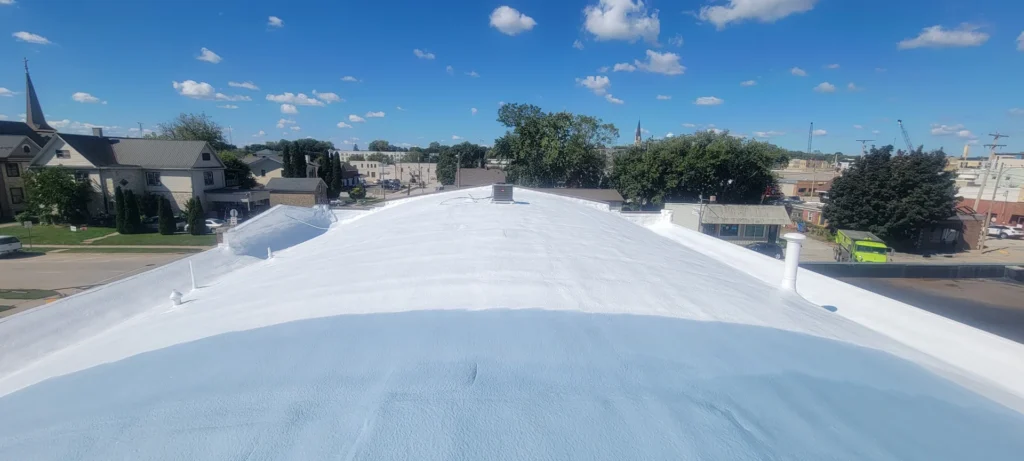
What Spray Polyurethane Foam Roofs Are and How They’re Installed
At its core, a spray polyurethane foam (SPF) roof is a plural-component material that combines two liquid chemicals: isocyanate (the “A” side) and polyol (the “B” side). When these liquids meet at the tip of a spray gun, they undergo a chemical reaction that creates a high-density, closed-cell foam. This isn’t just a surface layer; it is a fully adhered, monolithic membrane that provides both insulation and waterproofing in one step.
SPF roofing has a rich history, having been used for commercial applications since the 1960s. Its popularity stems from its ability to be “self-flashing,” meaning it conforms perfectly to protrusions like HVAC curbs, pipes, and vents, eliminating the need for complicated metal flashing that often leads to leaks. To protect the foam from the sun’s UV rays, we apply a high-performance protective coating—usually silicone or acrylic—to create a durable, weather-resistant shield.
If you are curious about the technical specifics, you can learn more about What is Spray Polyurethane Foam Roofing and What Are Its Benefits. For those managing government or highly regulated facilities, the UFGS spray foam roofing specification provides the rigorous standards we follow to ensure quality.
How spray polyurethane foam roofs are made on the roof
Unlike traditional “factory-made” roofs like TPO or EPDM, spray polyurethane foam roofs are actually manufactured right on top of your building. We use specialized plural-component equipment housed in a mobile rig. This equipment pumps the “A” and “B” chemicals through heated, high-pressure hoses to the roof.
When the liquids are sprayed, they undergo a liquid-to-foam reaction, expanding up to 20 times their original volume within seconds. This expansion allows the foam to find every crack, crevice, and dip in the roof, creating a monolithic surface that is entirely free of seams. Because there are no seams, there are no places for water to get in.
Step-by-step installation process for spray polyurethane foam roofs
Installing an SPF system is a precision-based process that requires a clean slate. Here is how we typically handle a project:
- Deck Preparation and Cleaning: We remove all debris, dirt, and contaminants. If the existing roof is gravel-surfaced BUR, we use a power vacuum to clear the loose stone.
- Moisture Check: We perform a moisture scan to ensure the substrate is dry. Trapping moisture under foam is a recipe for disaster, so we replace any saturated areas first.
- Priming: Depending on the substrate (metal, concrete, or aged membrane), we apply a specific primer to ensure maximum adhesion.
- Foam Application: Our technicians apply the foam in “passes.” Each pass is typically between 1 and 1.5 inches thick. This layer provides the bulk of your R-value and structural strength.
- Coating Application: Within the same day (whenever possible), we apply the first layer of elastomeric coating. For most Wisconsin buildings, we recommend a silicone coating because of its superior resistance to ponding water and UV degradation.
- Granules (Optional): We may broadcast mineral granules into the top coating to provide extra traction for foot traffic and increased impact resistance.
For a deeper look at the industry standards for these steps, you can refer to the D5469/D5469M application standard.
Installation conditions and contractor qualifications that matter
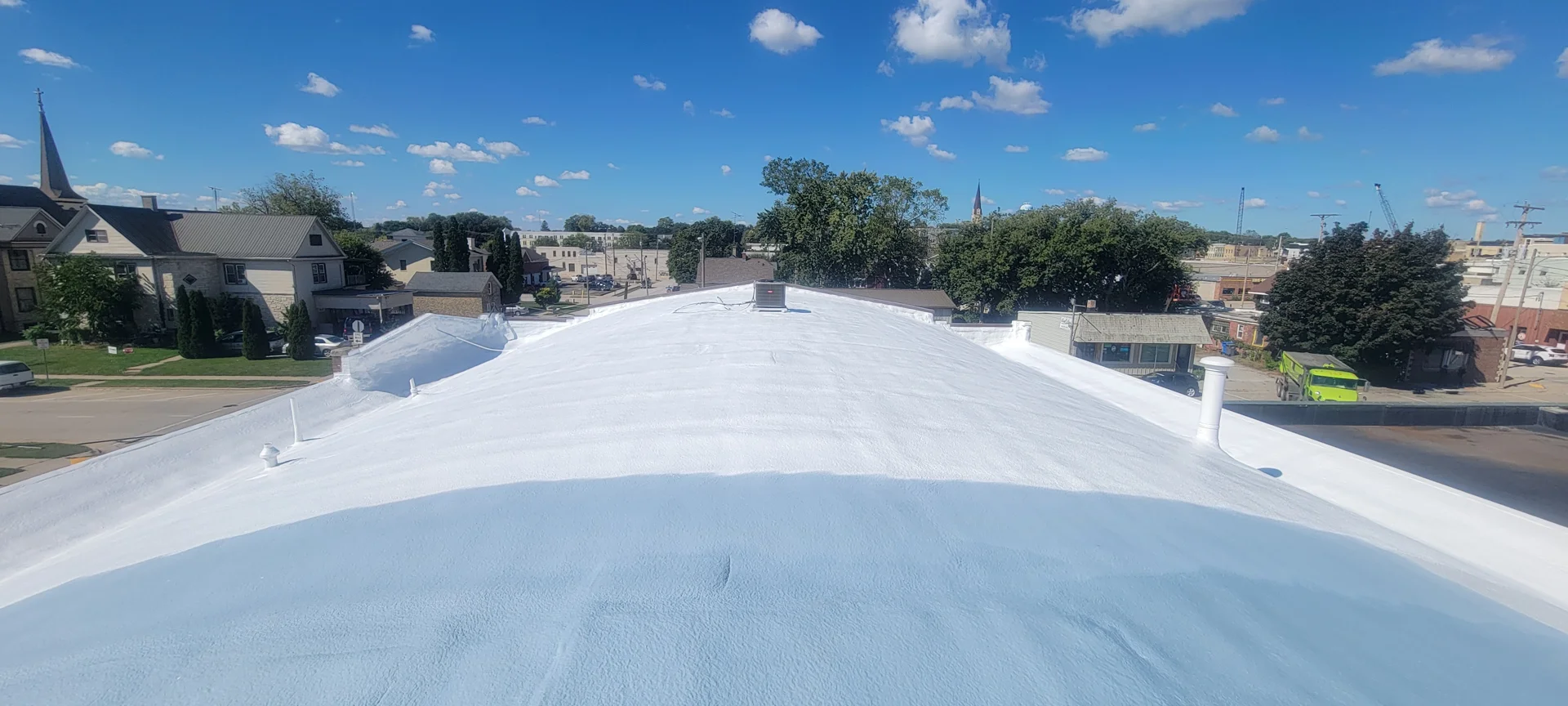
You can have the best chemicals in the world, but if the weather isn’t right, the roof won’t perform. We monitor conditions constantly. The surface temperature must be at least 50°F, and we cannot spray if there is rain, high humidity, or wind speeds exceeding 25 mph (which can cause “overspray” on cars in the parking lot).
Qualifications are equally important. You should always look for a contractor with SPFA training and significant experience. We often perform “core samples” during installation—literally cutting a small piece out of the new roof—to verify the foam density, cell structure, and adhesion before sealing the hole back up.
Why Building Owners Choose SPF Roofing
The biggest draw for spray polyurethane foam roofs is their incredible insulation value. SPF has an R-value of 6.6 per inch, which is significantly higher than Polyiso (5.5) or EPS (3.85). This means you can achieve higher thermal resistance with a thinner layer of material.
Beyond insulation, SPF is incredibly lightweight. This makes it an ideal “recovery” system. Instead of tearing off thousands of pounds of old roofing and sending it to a Wisconsin landfill, we can often spray right over the existing system, saving you a fortune in labor and disposal fees. Despite being light, it is remarkably strong, with a compression strength of 50–60 PSI, meaning it can easily handle regular maintenance foot traffic.
You can read more about why Spray Foam Roofing is an Excellent Choice and how Foam Roofing Helps Boost Energy Efficiency on our dedicated resource pages.
Energy efficiency, reflectivity, and long-term operating savings
An SPF roof does more than just stop leaks; it acts as a thermal blanket for your building. By air-sealing the entire roof deck, it eliminates the “chimney effect” where heat escapes through small gaps in traditional insulation.
When we top the foam with a white, reflective silicone coating, the energy savings multiply. These “cool roofs” can decrease a building’s energy use by 15% to 35% by reflecting up to 85% of the sun’s heat. In fact, most building owners find that an SPF roof pays for itself in energy savings within 5 to 7 years—almost always in less than 10 years.

Durability, lifespan, and why SPF is considered renewable
Most roofs are “disposable”—when they fail, you tear them off. Spray polyurethane foam roofs are renewable. The foam itself does not degrade as long as it is protected from UV light.
A properly installed and maintained SPF roof can last 40, 50, or even 60 years. The secret is the recoating cycle. Every 10 to 20 years, depending on the thickness of the original coating, we simply clean the roof and apply a new top coat. This restores the UV protection and extends the warranty without the need for a new roof. For more details, check out our More info on SPF roofing guide.
Costs, Maintenance, and Common Problems to Know Before You Buy
We believe in being transparent about the investment. For an average 20,000 sq. ft. commercial roof, you can expect to pay between $5.00 and $10.00 per square foot. While the upfront cost might be higher than a thin single-ply membrane, the long-term value is much higher because you avoid the cost of a total tear-off and enjoy massive energy savings.
For a detailed breakdown, see Polyurethane Spray Foam: How Much Does It Cost for Your Roof. It’s also worth reviewing The Pros and Cons of SPF Roofing for Commercial Buildings Explained to see if it’s the right fit for your specific facility.
What affects the price of an SPF roof
Several factors will push your price toward the lower or higher end of that $5–$10 range:
- Roof Size: Larger roofs often benefit from economies of scale.
- Substrate Condition: If we have to do extensive repairs to the existing deck, the price goes up.
- Coating Type and Thickness: A 20-year warranty requires a thicker coating (more “mils”) than a 10-year warranty.
- Complexity: A roof with 50 HVAC units and pipes will cost more than a wide-open warehouse roof.
Maintenance and repair procedures that extend roof life
Maintenance for an SPF roof is surprisingly simple but absolutely necessary. We recommend biannual inspections (spring and fall) and a quick check after any major Wisconsin hailstorm.
- Inspections: We look for punctures (from dropped tools or flying debris) or areas of coating wear.
- Puncture Repair: Small holes can often be fixed with a bit of high-grade silicone caulk.
- Recoat Timing: We measure the remaining coating thickness. If it has worn down to 7–10 mils, it’s time for a recoat.
- Walkway Pads: In high-traffic areas, we install yellow walkway pads to protect the foam.
If you have questions about what is covered during these cycles, see Common Spray Foam Coating Warranty Questions Answered.

Potential disadvantages and failure points
SPF is an amazing system, but it isn’t magic. It has a few “Kryptonites”:
- UV Exposure: Uncoated foam will degrade at a rate of about 1/16th of an inch per year. You must keep it coated.
- Overspray: If a contractor sprays in high winds, the foam can drift onto cars. We use windscreens and monitors to prevent this.
- Weather Window: In Wisconsin, our “foaming season” is limited to the warmer months. You can’t install SPF in the middle of a January blizzard.
- Contractor Skill: This is the biggest one. SPF requires an artisan’s touch. An inexperienced applicator can leave the roof with “bird baths” (low spots) that hold water.
How SPF Compares to Other Commercial Roofing Options
When choosing a roof, it helps to see how SPF stacks up against the “big three” traditional options.
| Feature | SPF Roofing | Built-Up (BUR) | Single-Ply (TPO/EPDM) | Silicone Restoration |
|---|---|---|---|---|
| Seams | None (Seamless) | Many | Many | None |
| R-Value | 6.6 per inch | Low (0.24-0.34) | Depends on board | None added |
| Installation | Spray-applied | Hot tar/Gravel | Mechanical/Adhered | Liquid-applied |
| Renewable | Yes | No | No | Yes |
| Weight | Very Light | Very Heavy | Light | Very Light |
SPF vs built-up roofing and single-ply membranes
Built-up roofing (BUR) has been around for a century, but it is heavy and prone to leaks at the seams. Single-ply membranes like TPO and EPDM are popular, but they rely on adhesives or fasteners that can fail over time. SPF beats both in the “penetration” department. If you have a roof with dozens of pipes and vents, a single-ply roofer has to cut and “boot” every single one. An SPF applicator just sprays around them in seconds, creating a permanent, watertight seal.
SPF vs silicone restoration systems and when each fits best
Silicone restoration is great if your existing roof is in good shape and you just want to stop leaks. However, silicone restoration adds zero insulation. If your building is expensive to heat or cool, SPF is the better choice because it adds that 6.6 R-value per inch, whereas a restoration coating is just a thin skin.
Can SPF Be Installed Over Existing Roofs Like TPO or Metal?
Yes! In fact, this is where SPF shines. As long as the existing roof is structurally sound and dry, we can usually avoid a tear-off. You can learn more about this in our guide: Spray Foam Roofing: What Is It and How Can It Benefit You.
Requirements for installing over TPO and similar membranes
To install over TPO, EPDM, or PVC, we first perform an adhesion test to ensure the foam will bond. We then clean the membrane thoroughly and apply a specific primer. We also check the existing seams; if they are loose, we secure them before spraying. This creates a “roof-over” that is much more cost-effective than a total replacement.
Requirements for installing over commercial metal roofs
Metal roofs are notorious for leaking at the fasteners and seams due to thermal expansion (metal moving as it heats and cools). When we apply SPF over metal, we first treat any rust and tighten all fasteners. The foam then “locks” the panels in place, stopping the movement and providing a seamless, insulated cap that won’t rust.
Frequently Asked Questions About Spray Polyurethane Foam Roofs
How long do spray polyurethane foam roofs last with proper maintenance?
With regular inspections and a recoat every 10–20 years, these roofs can easily last 40 to 50 years. Because the system is renewable, there is theoretically no limit to its lifespan if the building’s structure remains sound.
How much do spray polyurethane foam roofs cost per square foot?
In the current 2026 market, most commercial projects range from $5.00 to $10.00 per square foot. This includes all prep work, foam application, and the protective top coating.
What maintenance schedule keeps an SPF roof performing?
We recommend a “Checkup” twice a year—once in the spring to see how it handled the snow, and once in the fall to prepare for winter. You should also have a professional look at it after any severe weather event involving hail or high winds.
Conclusion
Choosing a new roof for your commercial building is a major decision, but spray polyurethane foam roofs offer a unique combination of energy efficiency, longevity, and cost savings that is hard to beat. By eliminating seams and adding the highest R-value insulation on the market, you aren’t just buying a roof—you’re making a long-term investment in your building’s efficiency.
At Yutzy Roofing Service, LLC, we take pride in helping Wisconsin business owners protect their assets. Whether you’re in Madison, Appleton, or right here in Marshfield, we offer an 18-year non-prorated renewable warranty to give you total peace of mind.
If you’re ready to see if an SPF system is right for your facility, check out our guide: Spray Foam Roofing: What Is It and How Can It Benefit You, or reach out to us for a free inspection. We’ve been keeping Wisconsin dry since 1995, and we’d love to do the same for you.
