
Why Commercial Roof Maintenance Is the Most Important Investment You Can Make
Roof maintenance is the single most important factor — after proper installation — in determining how long your commercial roof lasts and what it costs you over time. That comes straight from the National Roofing Contractors Association (NRCA), and it holds just as true today as it did decades ago.
Here is what every Wisconsin commercial property owner needs to know upfront:
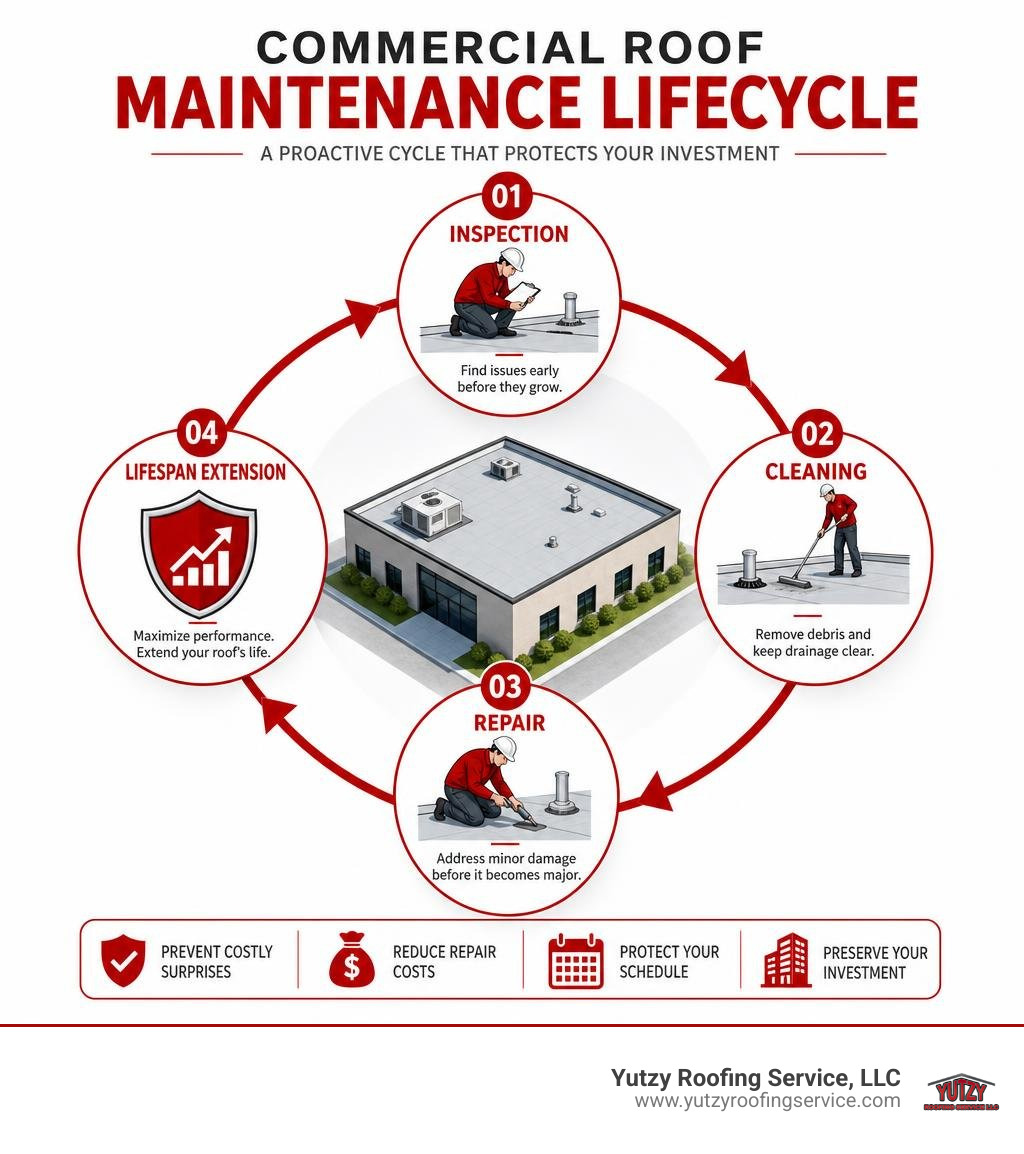
- Inspect twice a year — spring and fall — plus after any major storm
- Small problems become big ones fast — a minor leak ignored today can saturate insulation and rot decking within months
- Maintenance is not the same as repair — maintenance happens before failure; repair happens after
- Neglect is the #1 cause of premature roof failure, not bad weather or poor materials
- Regular upkeep can extend your roof’s life by 25–40%, delaying a $15,000–$50,000+ replacement
Roofing represents just 4% of a building’s total construction cost — yet accounts for up to 75% of construction-related litigation. Almost always, the root cause is the same: deferred maintenance.
Wisconsin’s freeze-thaw cycles, heavy snow loads, and intense summer heat put commercial roofs under extreme stress year-round. A membrane that looks fine in October can be cracked and leaking by April. Without a structured maintenance program, you are essentially waiting for a crisis.
I’m Josh Yutzy, and my family has been providing commercial roof maintenance and restoration services across Wisconsin since 1995 — we have seen how a $300 maintenance visit can prevent a $30,000 emergency repair. In this guide, I will walk you through exactly what your commercial roof needs to stay protected, season by season.
Why Proactive Commercial Roof Maintenance Is Essential
When you manage a commercial facility in places like Madison, Wausau, or Green Bay, it is easy to adopt an “out of sight, out of mind” mentality regarding your roof. However, treating your roof like a structural afterthought is a recipe for financial disaster.
The primary driver for establishing a consistent routine is maximizing your commercial roof’s lifespan. Every year you delay a full replacement keeps capital in your business. By catching membrane cracks, failing seams, or clogged drains early, you preserve the underlying insulation and decking. This proactive approach is detailed in our guide on Why Your Business Needs Commercial Roof Maintenance Services Right Now.
Cost savings extend far beyond delaying replacement. Saturated insulation loses its R-value, forcing your HVAC systems to work overtime and driving up energy bills. Furthermore, many commercial property owners do not realize that neglecting routine roof maintenance can completely void their manufacturer warranties. Major manufacturers require documented, professional inspections to keep coverage active.
Historically, technical departments have warned that misinterpreting a “20-year roof” as a maintenance-free system is the fastest path to premature failure. This reality is thoroughly documented in the federal Roof maintenance manual, which notes that failing to correct minor defects in their earliest stages is the greatest cause of premature roof failures.
Key Differences in Maintenance by Commercial Roof Type
Commercial properties utilize various low-slope and flat roofing systems, each with unique physical characteristics and failure modes. A one-size-fits-all approach does not work when dealing with different chemical compositions and structural designs.

EPDM and Rubber Roof Maintenance
Ethylene Propylene Diene Monomer (EPDM) is a highly durable synthetic rubber membrane, but it is highly susceptible to seam failures and shrinkage over time. As the rubber cures and ages, it naturally pulls back from the roof edges, parapet walls, and penetrations. This puts immense physical stress on the adhesive seams.
To keep an EPDM roof performing well, you must regularly inspect the field seams and flashing details. Look for signs of pulling, cracking, or adhesive degradation. If moisture gets under the seams, it can quickly rot the insulation below. For a complete look at protecting these systems, read our resource on Keep It Tight: A Simple Guide to Rubber Roof Maintenance and Sealing.
Built-Up Roof (BUR) and Flat Roof Maintenance
Built-up roofs (BUR), often referred to as tar-and-gravel roofs, consist of alternating layers of bitumen (asphalt or coal-tar pitch) and reinforcing felts. A common issue with smooth-surfaced asphalt BUR systems is “alligatoring”—a pattern of deep cracks that usually develops within 3 to 5 years of exposure to the elements.
If your BUR has a gravel ballast, the aggregate’s main purpose is to protect the underlying bitumen from UV degradation and wind uplift. However, high winds can scour corners, leaving bare spots that require a double pour of hot bitumen and fresh rock to repair. Additionally, ponding water is a major threat to BUR systems; standing water can break down the asphalt chemistry and seep through microscopic cracks. Learn more about preventing these failures in our guide on Don’t Let Your Roof Fail: Built-Up Roof Maintenance in WI. You can also consult the technical guidelines in the Roof Maintenance – RCABC Roofing Practices Manual for professional-grade repair methodologies.
Metal Roof Restoration and Care
While we do not install new metal roofs, we specialize in restoring and maintaining existing commercial metal roofing systems. Metal is exceptionally durable, but it expands and contracts constantly with temperature swings. This thermal movement backs out fasteners, loosens seams, and stresses the sealants around penetrations.
The biggest enemy of a commercial metal roof is rust. Furthermore, you must watch out for bimetallic corrosion—a rapid chemical degradation that occurs when dissimilar metals (like copper and steel) come into contact. Regular maintenance involves tightening or replacing backed-out fasteners, resealing seams with high-performance elastomeric coatings, and treating rust spots before they eat through the panels. For a deep dive into metal roof preservation, check out A Complete Guide to Commercial Metal Roofing Care and Maintenance.
Spray Polyurethane Foam (SPF) Coatings
Spray Polyurethane Foam (SPF) combined with a high-performance protective coating is one of the most energy-efficient, seamless commercial roofing options available. However, SPF is highly sensitive to UV radiation. The protective topcoat (silicone or acrylic) must remain fully intact to block UV rays and prevent the foam from degrading.
Maintenance for SPF roofs focuses primarily on inspecting the surface for punctures, mechanical damage, or animal activity. If a tool is dropped or a bird pecks a hole in the foam, it must be repaired immediately. We perform field repairs by beveling the damaged foam at a 45-degree angle, applying a compatible sealant or field-mixed polyurethane patch, and recoating the area. Our comprehensive guide, The Ultimate Guide to Flat Roof Coating Experts and Maintenance Plans, explains how these coatings protect your investment.
Step-by-Step Commercial Roof Preservation Checklist

Proactive roof maintenance requires a systematic approach. By breaking down tasks into seasonal checklists and understanding what you can safely monitor versus what requires our professional expertise, you can avoid costly surprises. For a quick reference, you can review the official GAF Scheduled Maintenance Checklist or check out our 6 Commercial Roof Maintenance Tips You Need to Know.
| Maintenance Task | DIY / Facility Manager | Professional Roofer (Yutzy) |
|---|---|---|
| Ground-Level Visual Inspection | Yes | Yes |
| Clearing Loose Debris (Leaves, Trash) | Yes | Yes |
| Clearing Clogged Drain Strainers | Yes | Yes |
| Inspecting Sealants & Pipe Boots | No (Visual Only) | Yes (Repair/Reseal) |
| Core Cuts & Moisture Surveys | No | Yes |
| Membrane Seam Reinforcement | No | Yes |
| Applying Protective Coatings | No | Yes |
Spring and Fall Inspections
In Wisconsin and Minnesota, the transition seasons are critical. Winter brings freezing temperatures, heavy snow loads, and destructive ice dams that can tear apart seams and flashings. Summer brings intense UV exposure and thermal shock from rapid temperature drops during evening thunderstorms.
- Spring Inspection: Focuses on assessing winter damage. We look for split seams, cracked sealants, and membrane punctures caused by snow removal tools or falling ice.
- Fall Inspection: Focuses on preparing the system for the upcoming freeze-thaw cycles. We ensure the entire roof is watertight, drains are clear, and flashings are secure so water cannot get trapped and freeze inside the system. Read more about seasonal prep in our resource on Wisconsin Roofing Maintenance.
Clearing Drainage Systems and Gutters
If water cannot flow off your flat roof, it will find a way inside. Ponding water—defined as standing water that remains on a roof for more than 48 hours after a rainstorm—adds immense weight to your building’s structure and accelerates membrane degradation.
Make it a monthly priority to clear trash, leaves, and branches from your gutters, scuppers, and downspouts. When checking roof drains, ensure the drain strainers are clean. Never remove a drain strainer to speed up drainage; doing so can create a dangerous suction vortex and allow large debris to clog your internal plumbing, leading to a catastrophic backup.
Inspecting Flashings, Seals, and Penetrations
Flashings are the metal or membrane components installed around the edges of your roof and vertical surfaces, such as parapet walls, chimneys, and HVAC curbs. Statistically, over 90% of all commercial roof leaks occur at flashing details and penetrations, not in the open field membrane.
Pay close attention to:
- Pitch Pans: These metal pans surround complex penetrations and are filled with sealant. The filler naturally shrinks, oxidizes, and cracks over time due to building vibration, requiring regular refilling.
- Expansion Joints: These joints allow your building to move without tearing the roof. Inspect them for physical tears or detachment.
- HVAC Units: Trade technicians servicing rooftop units often drop tools, screws, or heavy panels, causing accidental punctures. Always inspect around HVAC curbs after any mechanical service.
When to Repair vs. Replace a Commercial Roof
One of the most important financial decisions a facility manager faces is deciding when to patch a roof and when to invest in a restoration or full replacement.
If your roof membrane is structurally sound but experiencing isolated leaks, localized repairs are highly cost-effective. However, if water has penetrated the system and saturated large sections of the underlying polyisocyanurate insulation, simple repairs will not suffice. Saturated insulation must be removed to prevent structural rot and mold growth.
To determine the true condition of your roof, we conduct physical core cuts and electronic moisture surveys. A core cut involves taking a small, vertical sample through the membrane and insulation down to the deck. This physical sample reveals whether moisture is trapped inside the system.
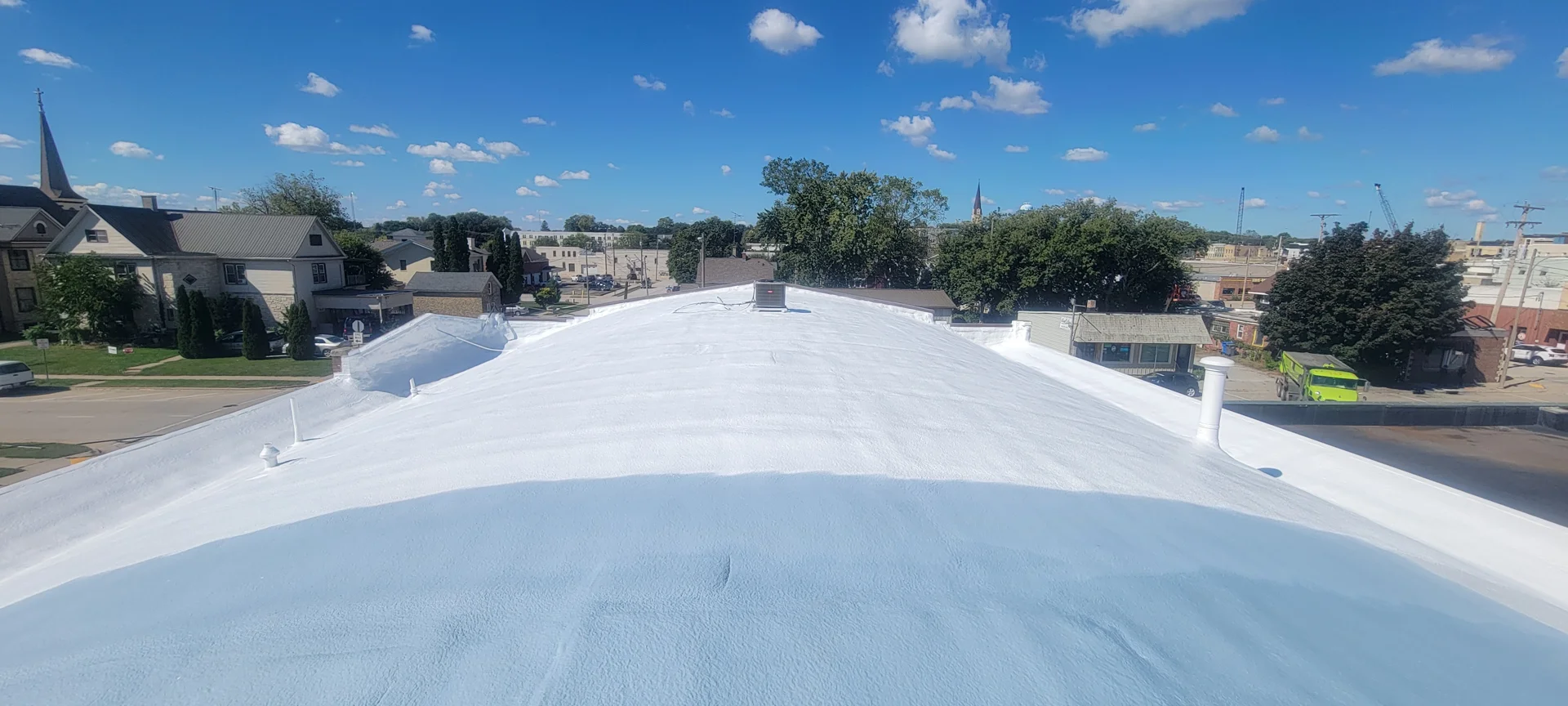
If the insulation is dry but the surface membrane is aging, you do not need an expensive tear-off. Instead, a professional elastomeric roof coating can restore the system, seal all leaks, and extend its life by 10 to 18 years. This is a fraction of the cost of a full replacement. Explore these budget-saving options in our guide on Preventive Strategies: How to Minimize Your Roof Maintenance Cost.
Frequently Asked Questions about Commercial Roof Upkeep
How often should commercial roof maintenance be performed?
At a minimum, you should schedule professional roof maintenance twice a year—ideally in the spring and fall. You should also request an unscheduled inspection immediately following any major weather event, such as high winds, severe hailstorms, or unusually heavy snowfalls. For more details on timing, read How Often to Schedule Maintenance with a Commercial Roofer.
What are the early signs of a commercial roof leak?
Do not wait for water to drip onto your warehouse floor or office desks. Early warning signs include:
- Water stains or dark spots on ceiling tiles or interior walls
- Unexplained musty odors or mold growth in upper-level rooms
- Blistering, bubbling, or soft, spongy spots when walking on your flat roof membrane
- A sudden, unexplained increase in your building’s heating or cooling costs
If you notice any of these issues, consult our guide on Commercial Roofer: When to Call for Maintenance to get a professional on-site immediately.
What safety precautions are required for commercial roof inspections?
Rooftop safety is paramount. Falls are a leading cause of construction-related fatalities.
- Always work with a partner; two people should always be present during an inspection.
- Ensure all personnel wear proper personal protective equipment (PPE), including sturdy, slip-resistant footwear.
- Maintain a safe distance from roof edges unless utilizing proper fall-arrest systems or safety harnesses anchored to certified points.
- Follow all OSHA standards for ladder safety, ensuring the ladder extends at least three feet above the roof edge and is secured at the top and bottom.
Conclusion
Your commercial roof is a major capital asset that shields your inventory, machinery, and team from the elements. Neglecting routine roof maintenance is a costly gamble that leads to premature failure, voided warranties, and disruptive leaks. By partnering with us for regular, scheduled inspections and proactive restorations, you can extend your roof’s service life, lower your energy costs, and protect your bottom line.
At Yutzy Roofing Service, we have spent over three decades helping commercial property owners across Wisconsin—including Madison, Appleton, Green Bay, Wausau, and Eau Claire—protect their investments. We stand behind our work with our industry-leading, up to 18-year non-prorated renewable warranty on roof restorations.
Don’t wait for a costly leak to disrupt your operations. Schedule your professional commercial roof maintenance program today and experience the peace of mind that comes with expert, proactive care.
