What Madison Business Owners Need to Know About Commercial Roof Replacement
Commercial roof replacement in Madison is one of the most significant investments a business owner can make — and one of the most consequential decisions to get right.
If you’re looking for a quick answer, here’s what matters most:
When to replace your commercial roof in Madison:
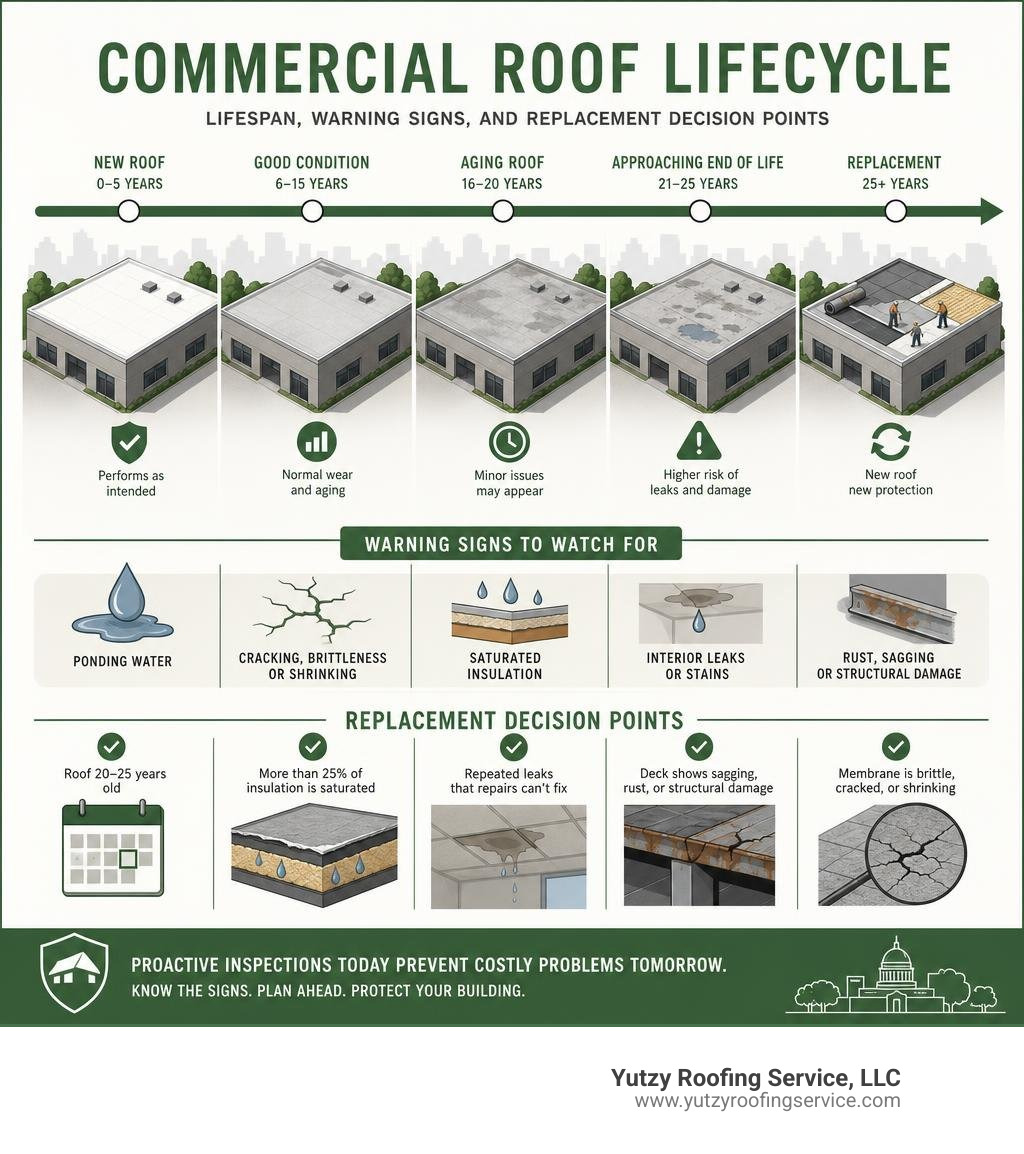
- Your roof is 20–25 years old (typical lifespan for TPO and EPDM in the Midwest)
- More than 25% of the insulation is saturated with moisture
- You’re dealing with repeated leaks that repairs can’t fix
- The roof deck shows sagging, rust, or structural damage
- The membrane has become brittle, cracked, or is shrinking
What replacement typically involves:
- Infrared moisture scan and core sampling to assess damage
- Phased tear-off of old materials (keeping the building weather-tight daily)
- Insulation upgrade and new membrane installation (TPO, EPDM, or PVC)
- Final inspection, cleanup, and warranty documentation
Madison’s climate is especially hard on commercial roofs. Harsh winters, freeze-thaw cycles, heavy snow loads, and hot summers put constant stress on low-slope roofing systems. Ignoring the warning signs doesn’t just risk a leak — it risks structural damage, lost inventory, and business interruption.
I’m Josh Yutzy, and at Yutzy Roofing Service, LLC, we’ve been installing and replacing commercial roofs across Wisconsin since 1995 — including countless commercial roof replacement projects in Madison and the surrounding Dane County area. Our team has seen every kind of roofing failure this climate can cause, and we’re here to help you make the smartest decision for your building and your budget.
Madison Climate Challenges and Warning Signs

When you run a business in Southern Wisconsin, you know that our weather is anything but gentle. From freezing winter blizzards to humid summer heatwaves, commercial buildings in Dane County take a beating. This extreme weather cycle directly impacts low-slope and flat commercial roofing systems, making early leak detection and structural awareness critical.
Signs You Need Commercial Roof Replacement in Madison
It is easy to ignore a commercial roof when it is out of sight, but waiting until water is pouring onto your inventory or office equipment is an expensive mistake. Over time, physical wear and environmental exposure create clear indicators that localized repairs are no longer enough.
Key warning signs that point toward a full replacement include:
- Membrane Shrinkage: As single-ply membranes like EPDM age, they can pull away from the roof edges, parapet walls, and flashings, creating open gaps for water entry.
- Saturated Insulation: Once water gets beneath the membrane, it traps moisture inside the polyisocyanurate insulation boards. Saturated insulation loses all thermal value and structural integrity.
- Structural Sagging: If you notice low spots or visible sagging on your roof deck, it is often a sign of long-term water damage, rotted decking, or structurally compromised supports.
- Repeated Leaks: If you are paying for repairs every few months, you are throwing money at a temporary band-aid. You can learn more about identifying these issues early by reading our guide on Signs Leaky Roof Repair in Madison WI.
How Madison’s Climate Affects Commercial Roof Lifespan
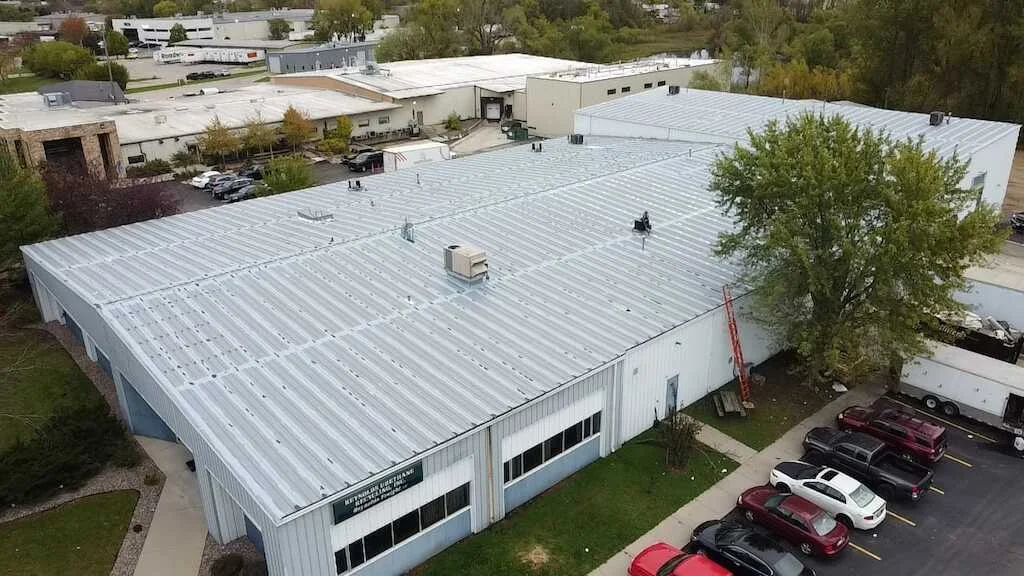
In the Midwest, a typical commercial flat roof has an expected lifespan of 20 to 25 years. However, Madison’s unique climate can shorten this timeline if the roof is not properly designed or maintained.
- Freeze-Thaw Cycles: Wisconsin winters feature constant temperature swings. Water melts during warmer winter days, seeps into tiny cracks, and then expands as it freezes overnight. This cycle acts like a slow-motion jackhammer on your roof seams.
- Ice Damming: Poor building insulation can heat the roof deck from below, melting snow that then refreezes at the cold roof edges. This creates ice dams that back up standing water under flashings and membranes.
- Thermal Shock: The rapid shift from freezing winter temperatures to blazing summer sun causes building materials to expand and contract rapidly. This thermal shock strains seams, fasteners, and physical attachments.
- Heavy Snow Loads: Heavy, wet Midwestern snow puts immense physical weight on flat roofs, testing the structural limits of the decking and drainage systems.
Choosing the Right Commercial Roofing System
Selecting the right material is the foundation of a successful commercial roof replacement in Madison. Each system has distinct performance characteristics, lifespans, and budget considerations.
| Roofing System | Primary Material | Solar Heat Reflection | Average Lifespan | Best Suited For |
|---|---|---|---|---|
| TPO (Thermoplastic Polyolefin) | Blend of polypropylene and rubber | High (Up to 85%) | 20–25 Years | Retail, offices, and energy-conscious facilities |
| EPDM (Ethylene Propylene Diene Monomer) | Synthetic rubber composite | Low (unless coated) | 20–25 Years | Large warehouses, industrial plants, and cold climates |
| PVC (Polyvinyl Chloride) | Durable vinyl membrane | High | 20–30 Years | Restaurants, chemical plants, and high-wind areas |
| BUR (Built-Up Roofing) | Alternating asphalt and fabric | Low (unless graveled) | 20–30 Years | High-traffic roofs requiring heavy puncture resistance |
TPO and PVC Roofing Systems
Thermoplastic single-ply membranes are incredibly popular for modern commercial buildings. TPO roofing and PVC membranes are lightweight, highly flexible, and joined together using hot-air welded seams, which create a continuous, watertight physical bond.
The single biggest benefit of TPO and PVC is energy efficiency. White cool-roof TPO systems reflect up to 85% of solar heat. By bouncing solar radiation away from your building, these systems significantly reduce heat transfer into your facility, lowering your summer cooling costs and easing the load on your HVAC equipment. For a detailed breakdown of these single-ply options, check out our guide on Common Materials for Commercial Roofing in Madison WI.
EPDM and Built-Up Roofing (BUR)
If you are looking for time-tested durability, EPDM rubber and Built-Up Roofing (BUR) are excellent options. EPDM is a synthetic rubber membrane known for its exceptional flexibility and resistance to extreme cold, ozone, and UV damage. It handles Madison’s freezing temperatures beautifully without becoming brittle.
Built-Up Roofing (BUR) consists of multiple layers of asphalt-saturated felt fused together with hot asphalt and finished with a gravel top coat. While BUR is heavier and more labor-intensive to install, it provides superior puncture resistance and multi-layered waterproofing protection.
Repair, Restoration, or Full Replacement?
Before committing to a major capital expense, it is vital to perform a professional roof assessment. Too many property owners are pushed into a full tear-off when a more cost-effective option is available.
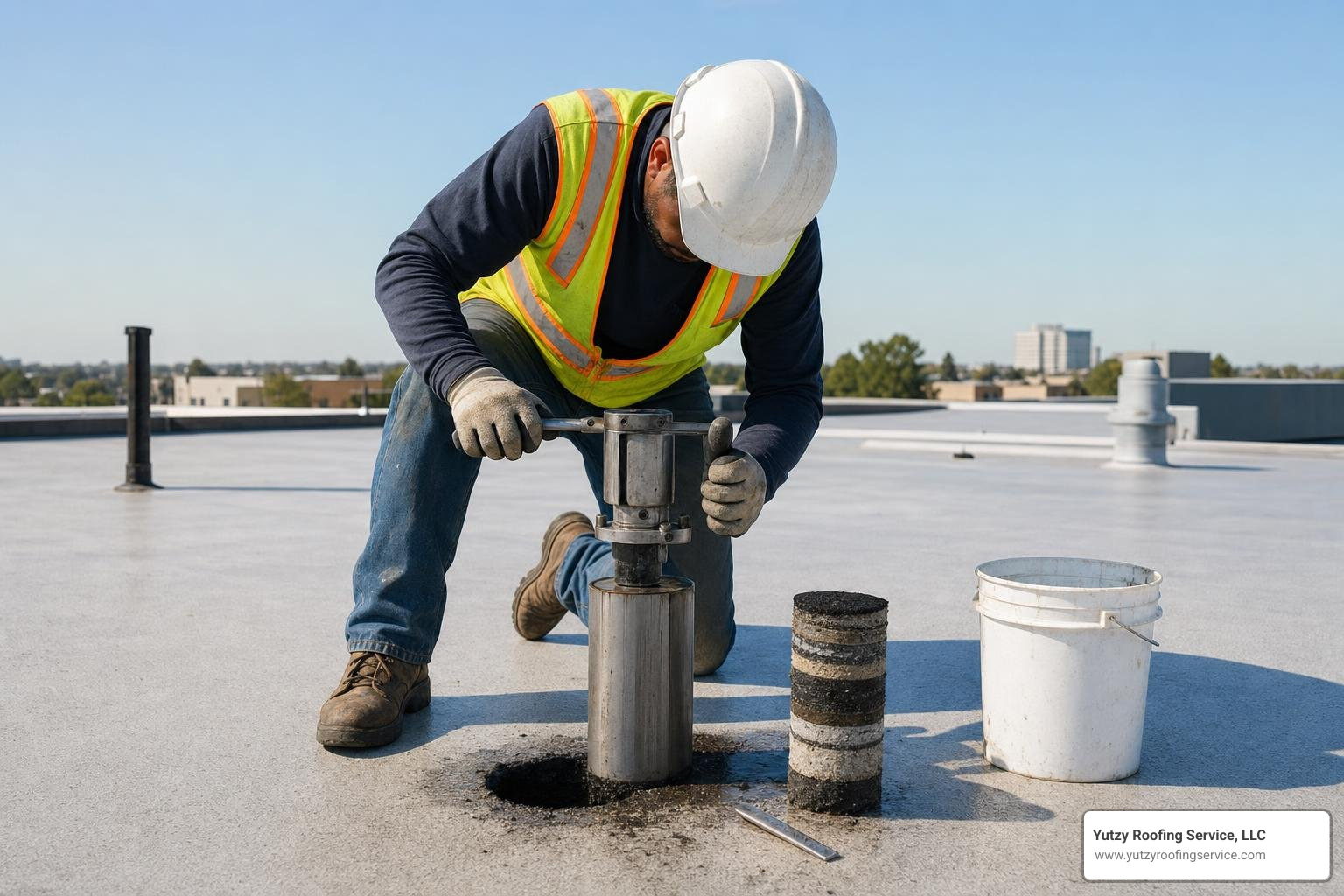
We use data-driven methods, including infrared moisture scans and physical core sampling, to determine exactly what is happening beneath the surface of your roof. Infrared scans detect temperature differences in the roof structure at night, highlighting areas where wet insulation is retaining heat. Core sampling physically extracts a small cross-section of the roof layers to confirm whether moisture has reached the deck.
Deciding Between Restoration and Replacement
The deciding factor between roof restoration and a complete replacement usually comes down to the condition of the underlying insulation.
- The 25% Saturation Rule: If an infrared scan reveals that more than 25% of your roof’s insulation is saturated with water, a full replacement is required. Leaving wet insulation in place traps rot, ruins your building’s energy efficiency, and will eventually cause structural failure.
- Membrane Degradation: If the surface membrane is brittle, cracking, or showing widespread seam failure, restoration is no longer a viable option.
If your roof is structurally sound and has minimal moisture intrusion, a professional restoration can save you up to 50% in upfront costs compared to a full replacement. To help you weigh these options, we have put together two comprehensive resources: Restore or Replace Your Roof in Madison WI How to Decide and our specialized EPDM Roof Restoration Guide Madison WI We Help.
The Benefits of Commercial Roof Coatings
For qualifying low-slope roofs, applying a high-performance elastomeric coating is an incredible way to extend your roof’s life without the mess and expense of a tear-off.
Fluid-applied elastomeric coatings seal existing leaks, reinforce seams, and create a seamless, monolithic barrier across the entire roof surface. This is also a highly effective method for existing metal roofs. Our team specializes in fluid-applied commercial coatings and metal roof restoration, which can renew your roof’s protection and add up to 18 years of renewable, non-prorated warranty coverage.
To explore how coatings can protect your investment, read about The Benefits of Commercial Roof Coatings in Madison WI and our approach to Commercial Metal Roof Restoration in Madison WI.
Planning Your Commercial Roof Replacement in Madison
A successful commercial roofing project requires meticulous planning, strict adherence to local building codes, and professional execution. For commercial buildings in Wisconsin, permitting and code requirements are overseen through local authorities and state-level resources such as the Wisconsin Department of Safety and Professional Services Commercial Buildings program.
The Replacement Process and Timeline
A typical commercial roof replacement in Madison takes between 1 to 3 weeks to complete, depending on the size of the building, the complexity of the roof penetrations (such as HVAC units and exhaust fans), and weather conditions.
Our installation process follows strict professional standards:
- Strategic Tear-Off: We remove old roofing materials in controlled, planned sections.
- Daily Dry-In: We only tear off what can be safely replaced and made 100% weather-tight by the end of the work day. Your building is never left exposed to sudden Wisconsin rainstorms.
- Insulation & R-Value Upgrades: We install new, high-density polyisocyanurate insulation to meet or exceed Wisconsin Commercial Building Codes.
- Membrane Installation: The new single-ply membrane (such as TPO or EPDM) is installed using mechanically attached or fully adhered methods, with all seams hot-air welded or sealed to perfection.
- Quality Assurance & Permitting: We handle all municipal permits and coordinate final inspections to ensure your new roof is fully code-compliant.
Minimizing Disruption to Business Operations
We understand that you cannot afford to shut down your business just because your roof is being replaced. Whether you operate a retail center, an office building, or a manufacturing facility, we coordinate our work to minimize daily operational disruption.
- Staging Coordination: We carefully plan where materials, cranes, and dumpster bins are placed, keeping customer parking lots and loading docks clear.
- Noise Management: High-noise activities, such as drilling or crane operations, can be scheduled during off-peak hours or early mornings.
- Safety Protocols: We install robust safety barriers and overhead protection to keep your employees, tenants, and customers completely safe throughout the project.
- Debris Recycling: We clean up the job site daily and work with local recycling facilities in Wisconsin to divert old roofing membranes and materials away from landfills.
Cost Factors and Warranties for Madison Businesses
A new commercial roof is a major capital investment, and understanding where your money is going helps you maximize your long-term return on investment (ROI).
Cost Factors for Commercial Roof Replacement in Madison
Several key variables will influence the final estimate for your project:
- Roof Size and Slope: Larger surface areas require more materials and labor, while complex slopes or multiple levels increase installation difficulty.
- Insulation Thickness (R-Value): Wisconsin energy codes require specific R-value) ratings for commercial buildings. Upgrading your insulation thickness increases upfront material costs but delivers massive savings on your monthly heating and cooling bills.
- Site Accessibility: Tall buildings, tight downtown Madison lots, or properties with limited staging areas require specialized equipment like cranes or high-reach material lifts.
- Local Building Codes: Compliance with Dane County wind-uplift ratings and local structural codes can affect how the system is designed and secured.
Understanding Commercial Roofing Warranties
When investing in a new roof, the warranty is your safety net. You should look for comprehensive coverage that protects you against both material defects and installation errors.
- NDL (No Dollar Limit) Warranties: These manufacturer-backed warranties cover the full cost of repairs or replacement if a leak occurs due to material failure or installation issues, without any financial cap.
- Non-Prorated Warranties: Unlike prorated warranties that lose value as the roof ages, a non-prorated warranty provides 100% coverage for the entire duration of the warranty term.
- Workmanship Guarantees: These are provided directly by your contractor to cover any issues arising from the physical installation process.
At Yutzy Roofing Service, LLC, we offer up to an 18-year non-prorated renewable warranty on our commercial installations and restorations, giving you decades of worry-free protection.
Frequently Asked Questions about Commercial Roofing
Can our business remain open during a commercial roof replacement?
Yes, absolutely. The vast majority of our commercial clients remain fully operational during construction. We coordinate staging, material deliveries, and noisy work around your business hours. We also establish clear safety zones and debris protection to ensure your employees and customers are completely safe.
How long does a typical commercial flat roof last in Wisconsin?
In the Midwest, a professionally installed TPO or EPDM flat roof generally lasts between 20 to 25 years. However, this lifespan depends heavily on regular preventative maintenance and immediate leak repairs. To keep your system performing at its best, check out The Madison Guide to Keeping Your Flat Roof Functional.
What are the energy efficiency benefits of a cool roof?
Cool roofs, such as white TPO or reflective elastomeric coatings, bounce up to 85% of solar heat away from your building. This drastically reduces the surface temperature of your roof, lowers your indoor temperatures, decreases your summer HVAC load, and cuts your utility bills.
Conclusion
Replacing your commercial roof is a major decision, but it is also an opportunity to upgrade your building’s energy efficiency, protect your business assets, and secure peace of mind for decades to come. Whether your roof requires a complete tear-off and replacement or is a prime candidate for a seamless fluid-applied restoration, partnering with an experienced local contractor is the key to success.
At Yutzy Roofing Service, LLC, we bring decades of hands-on Wisconsin commercial roofing expertise, premium materials, and our industry-leading up to 18-year non-prorated renewable warranty to every project we touch.
Ready to secure your building’s future? Get a professional consultation from commercial roofers near me in Madison, WI today to schedule your free, comprehensive roof inspection and custom quote.
