Choosing the Best Rubber Roof Coating Spray for Fast Leak Repair
When an unexpected leak threatens a commercial facility, acting quickly is critical. Finding reliable, quick flat roof leak solutions helps facility managers prevent inventory loss and interior damage while evaluating longer-term options. Understanding how handheld aerosols, professional silicone systems, and elastomeric water-based coatings compare ensures you choose the right material for the job.
| Product / Chemistry Type | Primary Chemistry | Key Performance Stats | Cure Time / Return to Service | Best Suited For | Expected Service Life |
|---|---|---|---|---|---|
| Aerosol Rubber Spray | Synthetic Rubber / Solvents | Low-drip, multi-surface adhesion, stays flexible | Dries to touch in 15–60 min; full cure 24 hrs | Small flashings, commercial gutters, emergency pipe penetrations | 1–3 years (spot repair) |
| High-Solids Silicone Spray | 100% Silicone (95.5% solids, VOC <50 g/L) | 87% solar reflectivity (SRI 109), 150% elongation, 350 PSI tensile strength | Dries to touch in 2–4 hrs; return to service in 24 hrs | Permanent ponding water resistance on flat commercial roofs | 10–15 years |
| Acrylic Elastomeric Spray | Water-based Acrylic Polymer | 80% solar reflectivity, resists cracking to -10°F, saves up to 5% on energy | Dries to touch in 6 hrs; recoat in 24 hrs | Sloped commercial metal roofs, single-ply restoration, parapet walls | 5–10 years |
| Liquid Rubber Membrane | Silicone-Modified Rubber | UV heat-reflective inhibitors, thermal shock resistance | Tack-free in 2–6 hrs; full cure 24–48 hrs | Built-up roofs, EPDM membranes, low-slope concrete decks | 10–15 years |
Key Formulations: Aerosol Sealants vs. High-Solids Rubber Roof Coating Spray Systems
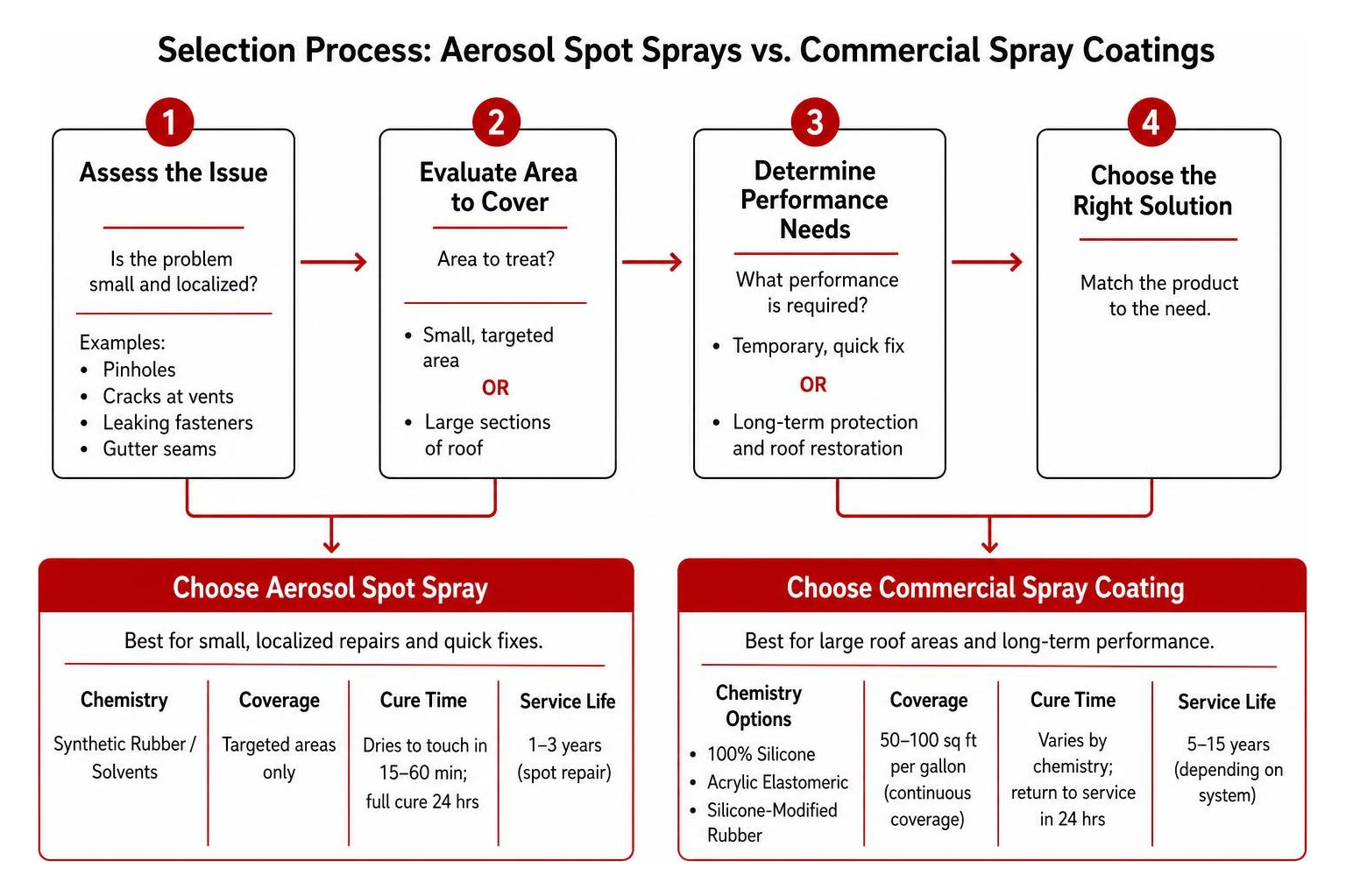
Point-and-spray aerosol cans (typically 14 to 18 ounces) are designed for precision target areas. Products engineered with low-drip formulas allow property managers to address pinholes, cracks around commercial roof vents, or leaking fasteners without dripping sealant onto adjacent brick or siding. They adhere quickly to metal, masonry, and aged rubber.
However, selecting between a localized rubber roof sealant vs coating depends entirely on square footage. Aerosol cans cannot build the monolithic dry film thickness (DFT) required across large commercial decks. For extensive sections, high-solids liquid rubber coatings applied through professional airless sprayers provide continuous coverage ranging from 50 to 100 square feet per gallon.
Chemistry Comparison: Silicone, Acrylic, and Spray Polyurethane Systems
The chemical backbone of your spray coating dictates how well it handles standing water and temperature swings:
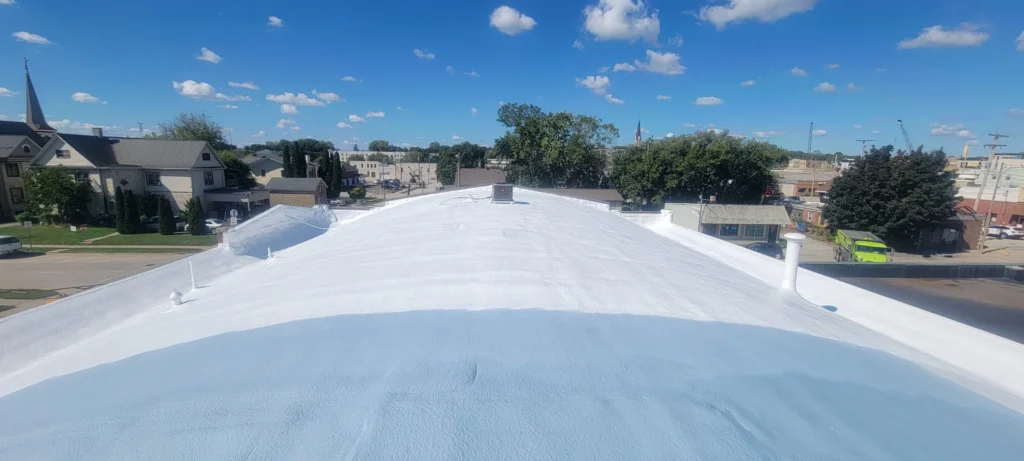
- 100% Silicone Coatings: High-solids silicone formulations cure by reacting with ambient moisture. They excel at resisting permanent ponding water without breaking down. According to data tracked by the Cool Roof Rating Council, premium silicone systems deliver up to 87% initial solar reflectivity, bouncing heat away from facilities, reducing cooling loads, and maintaining elasticity through harsh freeze-thaw cycles.
- Elastomeric Acrylics: Water-based acrylics provide economical, highly reflective topcoats (around 80% reflectivity) for roofs with positive drainage. They remain flexible down to -10°F, helping commercial buildings handle Wisconsin winter thermal shock, though they are not formulated for persistent standing water.
- Spray Polyurethane Foam & Elastomeric Systems: Combining spray foam insulation with fluid-applied elastomeric topcoats delivers continuous thermal performance and superior resistance to wind-driven rain on high-demand commercial roof decks.
Substrate Compatibility Across Commercial EPDM, TPO, and Metal Roofs
Whether you are sealing a logistics warehouse or maintaining an industrial facility, matching the chemistry to the substrate is essential:
- EPDM Rubber Roofing: Aged EPDM membranes pair well with silicone and rubberized coatings. If heavy chalking is present, applying a single-ply adhesion primer prevents peeling.
- TPO and PVC Membranes: Thermoplastic roofs require dedicated primers before applying silicone or elastomeric coatings to ensure maximum surface adhesion.
- Commercial Metal Roofs: Fasteners, panel laps, and standing seams benefit from elastomeric rubber coatings. For weathered panels, applying a rust-inhibitive hybrid epoxy primer before spraying seals out moisture and halts corrosion.
- Modified Bitumen & Built-Up Roofing (BUR): Granulated or smooth asphalt surfaces require thicker rubber coatings to fill surface voids and bridge hairline fractures.
- Parapet Walls & Roof Penetrations: Handheld aerosol sealants are widely used by maintenance crews for rapid spot fixes around commercial vents, HVAC curbs, and scupper boxes before applying monolithic coatings.
Application Guide and Professional Restoration Solutions

Achieving a lasting seal requires matching the application technique to the environment. For professional liquid-applied systems, ambient temperatures should sit between 50°F and 85°F with relative humidity under 80% to 85%. Always check that the roof temperature is at least 5°F above the dew point to prevent trapping moisture beneath the curing membrane, aligning with guidelines from the National Roofing Contractors Association.
For extensive commercial projects, exploring complete EPDM roofing system restoration provides a seamless membrane backed by renewable warranties, avoiding the disruption and high expense of unnecessary structural teardowns.
Step-by-Step Preparation and Applying Rubber Roof Coating Spray Correctly
Proper surface preparation accounts for the majority of any coating’s success. Follow these steps for reliable results:
- Safety & Protective Gear: Equip your team with safety glasses, chemical-resistant gloves, non-slip footwear, and NIOSH-approved respirators following OSHA guidelines when spray-applying products or prepping aged coatings.
- Deep Surface Cleaning: Power wash the substrate using at least 2,000 PSI to remove all dirt, grease, biological growth, and loose debris. Allow the roof to dry completely; moisture content in underlying substrates should remain below acceptable thresholds.
- Detail Work and Joint Sealing: Address all roof penetrations, curb flashings, and open seams. Bridge cracks larger than 1/8″ using elastomeric caulk and polyester reinforcement fabric using a three-course application method.
- Substrate Priming: Apply the recommended primer over weathered TPO, chalky EPDM, or oxidized metal panels to promote chemical bonding.
- Airless Spray Application: When using commercial airless rigs, maintain adequate pressure (typically 2,000 to 3,000+ PSI for acrylics, and up to 5,950 PSI with a 0.031″ tip for high-solids silicone). Apply an even wet film thickness (often 20 to 25 wet mils) to achieve the specified dry mils.
- Curing and Recoating: Allow the first pass to dry according to manufacturer guidelines (2 to 6 hours for most modern silicone and elastomeric chemistries). If a second coat is specified, apply it perpendicular to the first pass within the 4 to 48-hour recoat window.
Professional Commercial Restoration vs. DIY Patch Sprays
While a quick spray from a 14-ounce can is ideal for patching an isolated leak around a rooftop HVAC unit or parapet flashing during a storm, facility managers facing widespread roof aging need broader structural protection.
At Yutzy Roofing Service, we provide commercial roofing restoration across Wisconsin—including Madison, Appleton, Eau Claire, Wausau, and Green Bay. Our fluid-applied roof restorations and spray foam systems create continuous, seamless barriers across commercial facilities, backed by non-prorated renewable warranties of up to 18 years.
If your commercial roof is dealing with recurring leaks, worn flashings, or general weathering, contact our team to schedule a professional roof evaluation and find the right long-term restoration strategy for your building.
