
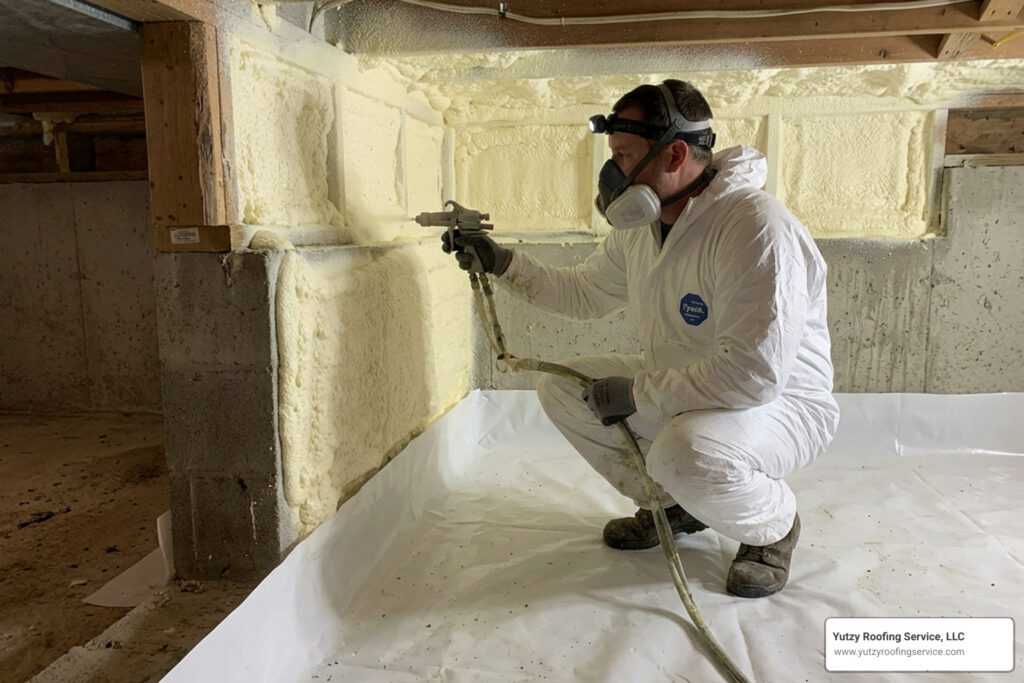
What Does It Really Cost to Spray Foam a Crawl Space in 2026?
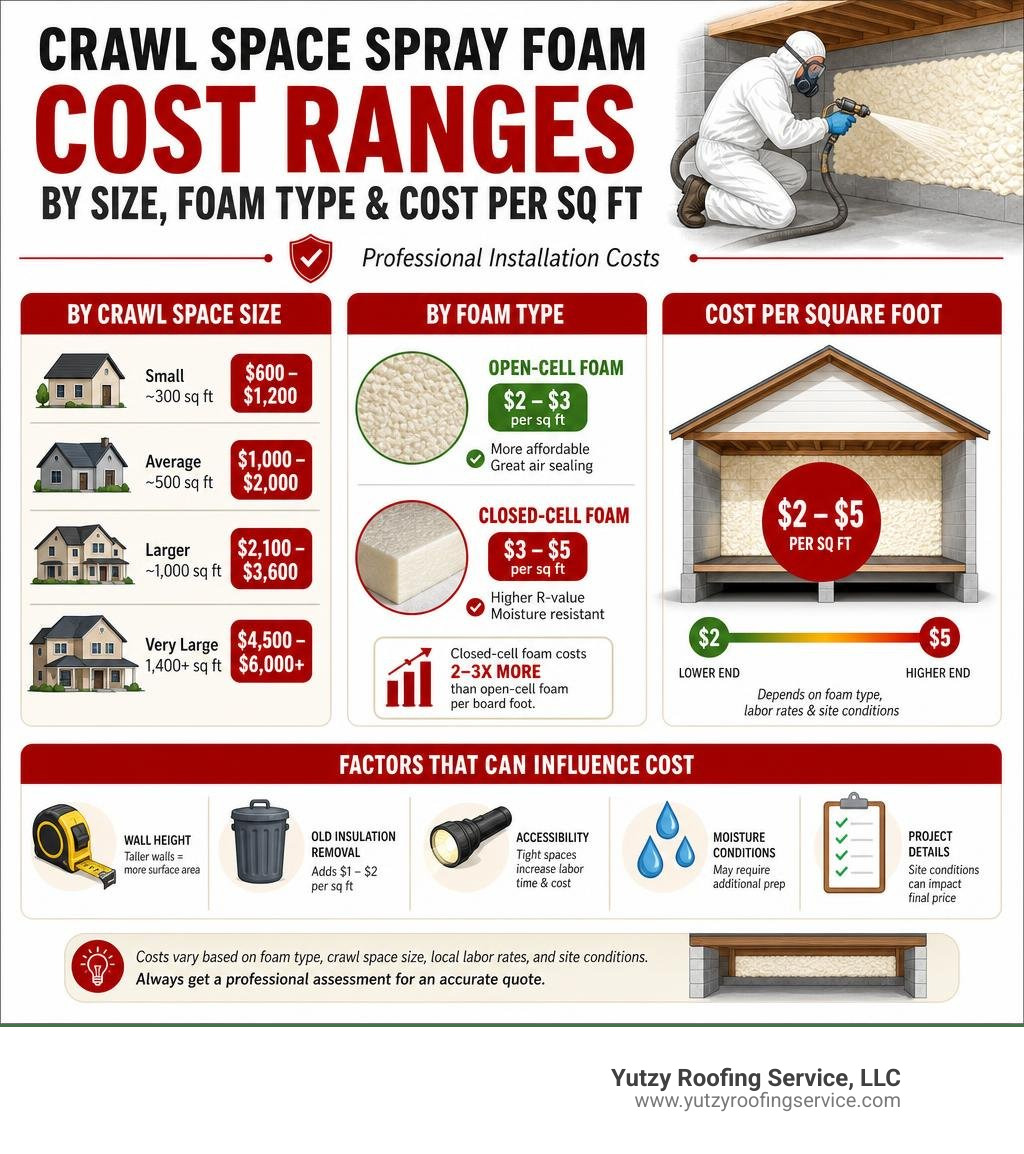
The cost to spray foam a crawl space typically falls between $2,100 and $3,600 for most properties — but that number can shift significantly based on size, foam type, and site conditions.
Here’s a quick breakdown to answer the most common question upfront:
| Crawl Space Size | Estimated Cost (Professional) |
|---|---|
| Small (~300 sq ft) | $600 – $1,200 |
| Average (~500 sq ft) | $1,000 – $2,000 |
| Larger (~1,000 sq ft) | $2,100 – $3,600 |
| Very Large (1,400+ sq ft) | $4,500 – $6,000+ |
Cost per square foot generally runs $2 to $5 for professional spray foam installation, depending on foam type and local labor rates.
A few things can push that number up or down fast:
- Foam type — closed-cell costs 2–3x more than open-cell per board foot
- Wall height — taller foundation walls mean more surface area and more material
- Old insulation removal — adds $1 to $2 per sq ft on top of installation
- Accessibility — tight clearances slow down crews and raise labor costs
This guide breaks all of it down so you know exactly what to expect before you call a contractor.
I’m Josh Yutzy, and at Yutzy Roofing Service we’ve worked on the building envelopes of commercial properties across Wisconsin long enough to know that understanding the cost to spray foam a crawl space upfront is the difference between a smart investment and an expensive surprise. Whether you’re dealing with moisture creeping up from the ground or heat escaping through an uninsulated foundation, this guide will give you the real numbers.
Cost to spray foam crawl space terms to learn:
The Real Cost to Spray Foam Crawl Space Foundations
When budgeting for a commercial facility, warehouse, or municipal building in Wisconsin or Minnesota, calculating the exact cost to spray foam crawl space foundations requires looking at both material costs and labor. Nationwide, the average total cost to insulate a crawl space ranges from $500 to $3,700, but when opting for the premium performance of professional spray foam, typical commercial projects range from $2,100 to $3,600. For large-scale facilities or municipal buildings with extensive footprints, costs can easily exceed $6,000.
The overall investment depends heavily on whether you choose spray foam alone or combine it with other materials. To help you compare options, here is a breakdown of common materials used in professional crawl space retrofits, based on the Crawl Space Insulation Cost Guide:
| Insulation Material | Material Cost (per Sq. Ft.) | R-Value Performance | Best Use Case |
|---|---|---|---|
| Closed-Cell Spray Foam | $2.00 – $5.00 | R-6.0 to R-7.0 per inch | High moisture areas, foundation walls, rim joists |
| Open-Cell Spray Foam | $1.00 – $2.50 | R-3.5 to R-3.8 per inch | Above-grade walls, dry environments |
| Rigid Foam Board (R-10) | $1.20 – $3.70 | R-5.0 per inch | Flat foundation walls (requires joint sealing) |
| Fiberglass Batts (R-19) | $0.90 – $2.80 | R-3.0 to R-3.8 per inch | Dry, vented floor assemblies (not recommended for damp crawl spaces) |
| 20-Mil Vapor Barrier | $0.50 – $1.50 | N/A (Moisture barrier) | Crawl space floor during encapsulation |
While fiberglass batts may seem like a budget-friendly option initially, they perform poorly in the damp, below-grade environments common to Wisconsin and Minnesota. Fiberglass absorbs moisture like a sponge, which leads to sagging, mold growth, and a complete loss of insulating value. Spray foam, particularly closed-cell, provides both high R-value and a seamless air seal in a single step.
Open-Cell vs. Closed-Cell Cost to Spray Foam Crawl Space Areas
Selecting the right type of spray foam is the most critical decision affecting your total project budget. Spray foam is priced and applied based on “board feet”—a measurement representing a one-foot by one-foot square at a thickness of one inch.
- Open-Cell Spray Foam: Typically costs $0.35 to $0.65 per board foot installed. It has a soft, sponge-like texture and yields an R-value of 3.5 to 3.8 per inch. Because it is vapor-permeable, it can absorb water.
- Closed-Cell Spray Foam: Typically costs $1.00 to $2.00 per board foot installed. It cures into a dense, rigid plastic with a high R-value of 6.0 to 7.0 per inch.
For the vast majority of crawl spaces in our service areas—such as Madison, Green Bay, and Rochester—closed-cell spray foam is the only recommended choice. Crawl spaces are naturally prone to dampness due to ground moisture and seasonal humidity. Open-cell foam can trap moisture against wooden subfloors or foundation walls, leading to wood rot and structural decay.
Closed-cell foam acts as its own vapor barrier at a thickness of two inches or more. It completely rejects bulk water, seals out humid summer air, and adds structural rigidity to the foundation walls and rim joists. While it costs roughly two to three times more than open-cell foam upfront, the long-term protection against moisture damage and structural rot makes it the far more economical choice. You can read more about these protective properties in our guide on the How Much Does Spray Foam Insulation Cost in 2026? and explore the More info about spray foam benefits.
How Wall Height and Size Affect the Cost to Spray Foam Crawl Space Foundations
The physical layout of your commercial crawl space dictates how much material is required and where it should be applied. There are two primary strategies for insulating a crawl space: insulating the foundation walls or insulating the underside of the floor deck.
1. Insulating the Foundation Walls (The Encapsulation Approach)
If your crawl space houses mechanical systems, water lines, or HVAC ductwork, you should insulate the foundation walls. This brings the crawl space inside the building’s thermal boundary, preventing pipes from freezing during harsh Wausau or Eau Claire winters.
Because crawl space foundation walls are typically only 1 to 3 feet high, the total square footage of the walls is often much smaller than the square footage of the floor overhead. For example, a 1,000-square-foot crawl space (measuring 25′ x 40′) with 3-foot-tall walls has only 390 square feet of wall space. Insulating these walls with closed-cell spray foam typically costs $420 to $1,900, making it a highly cost-effective option when paired with a ground vapor barrier.
2. Insulating the Underside of the Floor (The Vented Approach)
If there are no pipes, HVAC ducts, or mechanical systems in the crawl space, you can insulate the underside of the subfloor. This keeps the conditioned air inside the occupied parts of the building and leaves the crawl space cold.
However, because you must cover the entire footprint of the building, the surface area is much larger. Insulating the underside of a 1,000-square-foot floor deck costs $1,000 to $4,500 depending on the required thickness and R-value. Working overhead in a tight space also requires more labor, which drives up the installation price.
For a deeper dive into choosing between these two methods, check out the Crawl Space Spray Foam Guide and review our breakdown of building envelope pricing in More info about spray foam pricing.
Key Factors That Drive Crawl Space Insulation Estimates Up or Down
Crawl space projects are rarely uniform. When our teams evaluate a commercial facility in Appleton, Fond du Lac, or Mankato, several site-specific variables can cause the final estimate to fluctuate.
- Access and Clearance: Crawl spaces are notoriously difficult to navigate. If the clearance between the ground and the floor joists is exceptionally tight (18 to 24 inches), the application process slows down significantly. This “access premium” can add 15% to 25% to the total labor estimate.
- Labor Rates: Professional labor typically accounts for 45% to 60% of the total project cost. Standard labor rates for crawl space insulation installation generally range from $0.50 to $1.30 per square foot, depending on the complexity of the workspace.
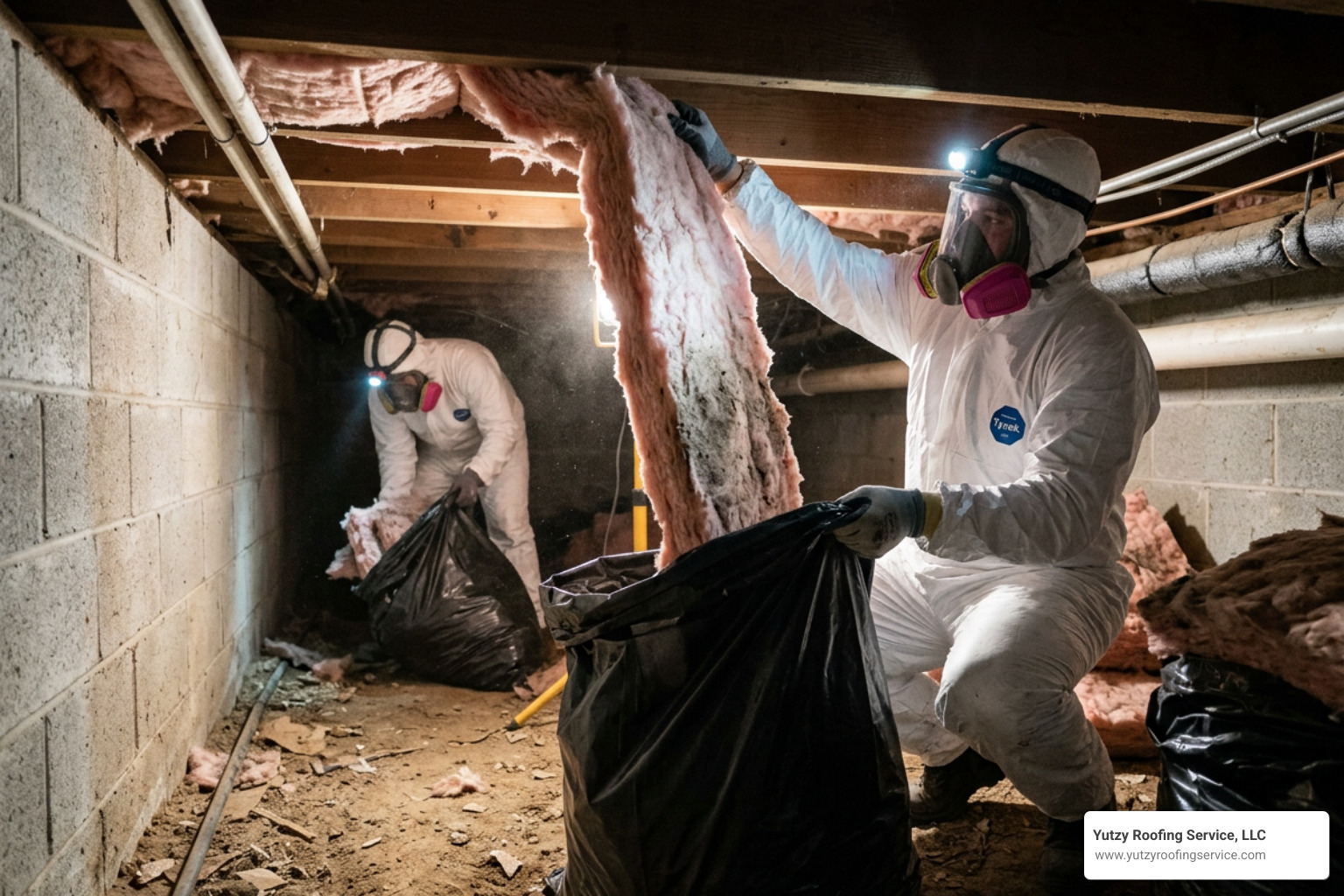
- Old Insulation Removal: Spray foam cannot be applied over old, failing insulation. If the crawl space is currently filled with wet, moldy fiberglass batts, they must be completely removed and disposed of. Removing and disposing of old insulation typically adds $0.75 to $2.00 per square foot (or a flat fee of $500 to $1,800 depending on the volume).
- Ground Moisture and Prep Work: If the crawl space has standing water or high soil moisture, these issues must be resolved before spraying. Applying foam to wet concrete or damp wood prevents proper adhesion and can ruin the seal. Laying down a durable 12-mil or 20-mil plastic vapor barrier over the dirt floor is a standard prep step that adds $0.50 to $1.50 per square foot.
To get a rough estimate of how these variables interact on your specific property, you can utilize the Spray foam insulation cost calculator.
Professional Installation vs. DIY Spray Foam Kits
For smaller properties or minor touch-ups, some building managers consider using DIY closed-cell spray foam kits. These portable, two-tank systems typically cost $0.75 to $2.00 per square foot for the materials alone. While this may seem like an easy way to eliminate professional labor costs, attempting a large-scale crawl space insulation project without professional equipment carries significant risks.
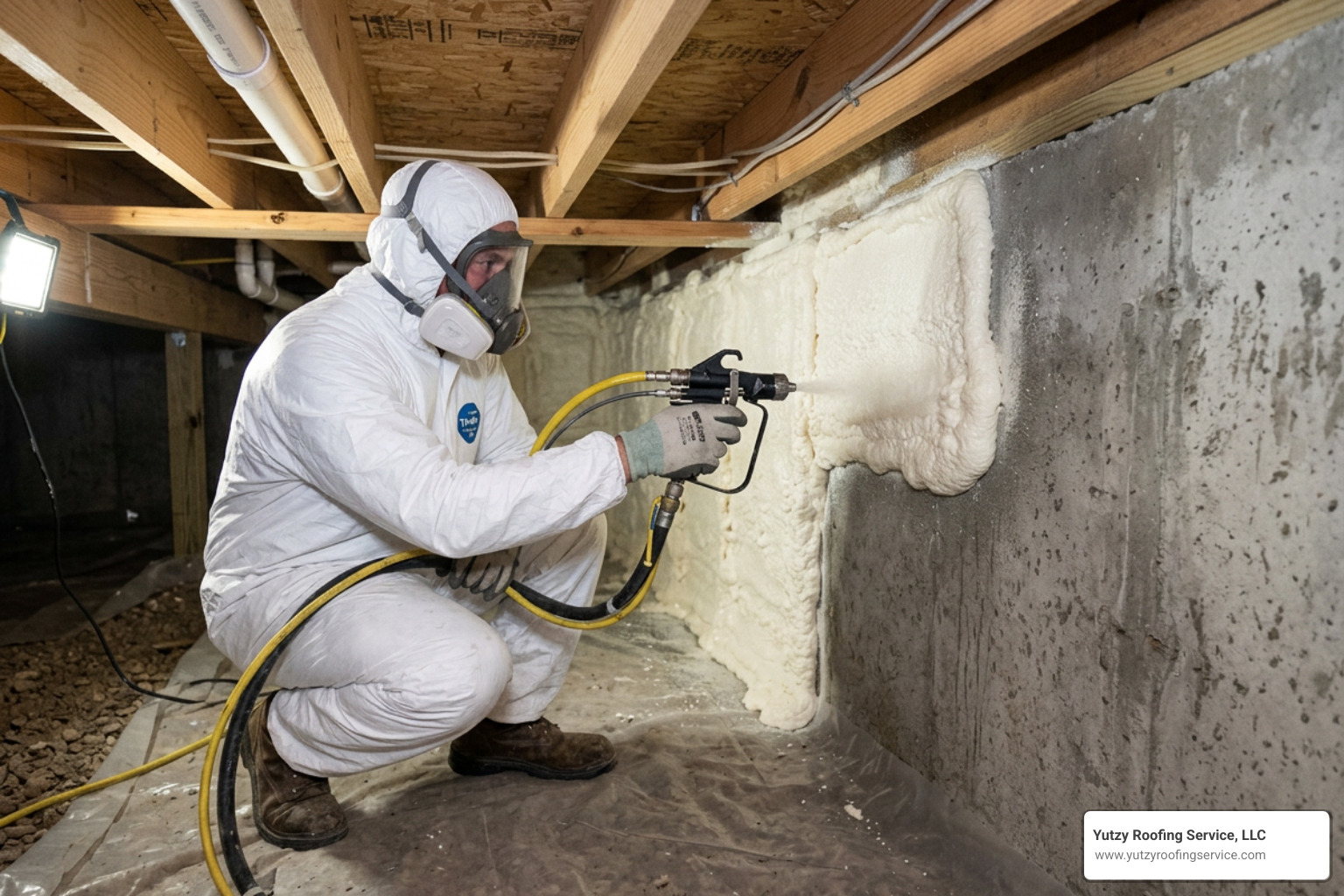
- Chemical Ratio and Temperature Control: Professional spray foam requires precise temperature (usually between 60°F and 80°F) and pressure controls to ensure that chemical “Side A” (isocyanates) and “Side B” (polyol blend) mix in an exact 1:1 ratio. If the chemicals are too cold or misapplied, the foam will not cure properly. This can leave behind a sticky, toxic mess that off-gasses indefinitely and is incredibly expensive to remediate.
- Safety Equipment: Spraying polyurethane foam requires specialized personal protective equipment (PPE), including full-body suits, gloves, and supplied-air respirators to prevent inhalation of harmful vapors during application.
- Curing Time and Off-Gassing: Professional installers use high-output equipment that ensures rapid, safe curing. Typically, the space must be vacated for 24 hours while the foam cures and off-gasses. DIY applications often cure slower, increasing the risk of lingering chemical odors in the building.
- Warranty Protection: When you work with a licensed contractor like Yutzy Roofing Service, the installation is backed by professional warranties and general liability insurance. DIY mistakes have no safety net, and improper application can void other manufacturer warranties on your building materials.
For a detailed comparison of spray foam against other insulation methods, read More info about blow-in foam costs.
Frequently Asked Questions About Crawl Space Insulation Costs
What are the signs that a crawl space needs new insulation?
If your commercial property is suffering from any of the following issues, your crawl space insulation is likely failing or non-existent:
- Cold Floors: Employees or tenants on the ground floor complaining of freezing floors during winter.
- High Utility Bills: An HVAC system that runs constantly to combat drafty floors and thermal transfer.
- Musty Odors: Damp, earthy smells rising into the main floor spaces, caused by mold or mildew growing in wet fiberglass insulation.
- Frozen Pipes: Water lines located in the crawl space freezing or bursting during sub-zero Wisconsin winters.
Are there rebates or tax credits available for crawl space insulation?
Yes! Under the Inflation Reduction Act, commercial property owners may qualify for significant energy efficiency tax deductions (such as Section 179D) for building envelope improvements. Additionally, local utility providers across Wisconsin and Minnesota offer rebates of up to $1,100 for professional insulation upgrades that improve building airtightness. We highly recommend checking with your local energy provider before starting the project to maximize your savings.
How long does spray foam insulation last in a crawl space?
When applied correctly by a certified professional, closed-cell spray foam has an exceptional lifespan of 80 to 100 years. Unlike fiberglass batts, it will not sag, compress, settle, or degrade over time. It is highly resistant to pests, does not support mold growth, and remains fully effective for the entire lifespan of the building. For more information on long-term performance and warranties, refer to More info about spray foam warranties.
Conclusion
Insulating your commercial building’s crawl space with closed-cell spray foam is one of the most effective ways to lower your operating costs, protect your foundation from moisture damage, and improve indoor air quality. While the upfront cost to spray foam crawl space foundations requires an investment, the immediate 15% to 25% reduction in heating and cooling expenses typically allows the project to pay for itself within 3 to 7 years.
At Yutzy Roofing Service, LLC, we specialize in high-performance building envelope solutions across Wisconsin and Minnesota—from Marshfield and Wausau to Madison and Rochester. If you want to stop wasting energy and protect your property with a seamless, durable thermal barrier, we are here to help.
Contact us today to schedule a professional evaluation of your facility’s crawl space, or Learn more about commercial spray foam roofing benefits to see how we protect commercial buildings from the top down.
