What Every Wisconsin Building Owner Should Know About Commercial Roofing Supplies
Commercial roofing supplies are the materials, coatings, adhesives, membranes, and accessories used to install, restore, and maintain low-slope and flat commercial roofs.
Here’s a quick overview of the most common types:
| Supply Type | Common Examples | Best For |
|---|---|---|
| Single-ply membranes | TPO, EPDM, PVC | Full system installs and repairs |
| Roof coatings | Silicone, acrylic, elastomeric | Restoration over existing roofs |
| Insulation | Polyiso, tapered insulation | Energy efficiency and retrofits |
| Adhesives and sealants | Bonding adhesives, seam tape, primers | Leak repair and membrane attachment |
| Accessories | Flashings, drains, cover boards, fasteners | Complete system performance |
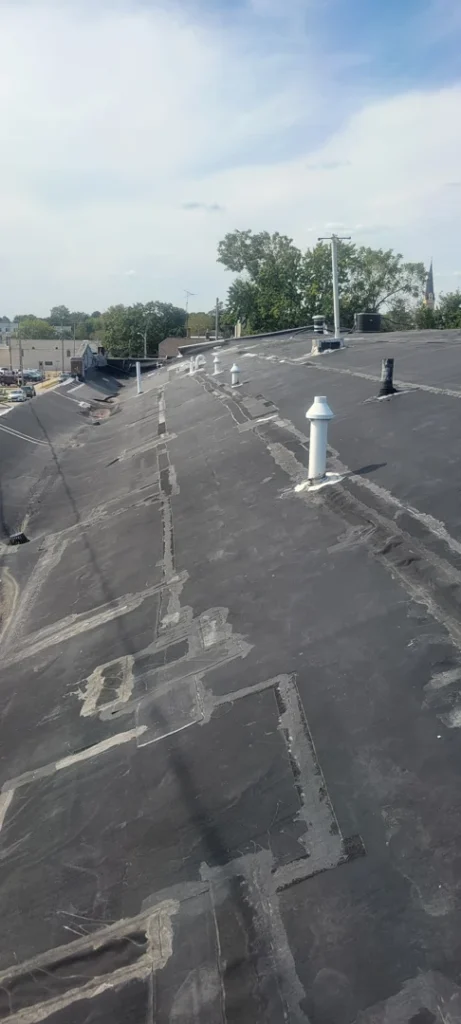
A commercial roof in Wisconsin takes a beating. Brutal winters, freeze-thaw cycles, heavy snow loads, and hot humid summers all work against your roof’s integrity. When leaks show up or membranes start to fail, the right supplies make the difference between a quick, cost-effective restoration and a full — and expensive — tear-off.
Most commercial roofs last 20 to 30 years when properly maintained with quality materials. Choosing the wrong products, or sourcing them from unreliable suppliers, shortens that window fast.
I’m Josh Yutzy, and at Yutzy Roofing Service, LLC, our family has been working with commercial roofing supplies across Wisconsin, Missouri, and Kansas since 1995. In this guide, I’ll walk you through exactly what materials work best for flat roof restoration, repair, and long-term protection.
Commercial roofing supplies terms to know:
Essential Commercial Roofing Supplies for Low-Slope System Maintenance and Repair
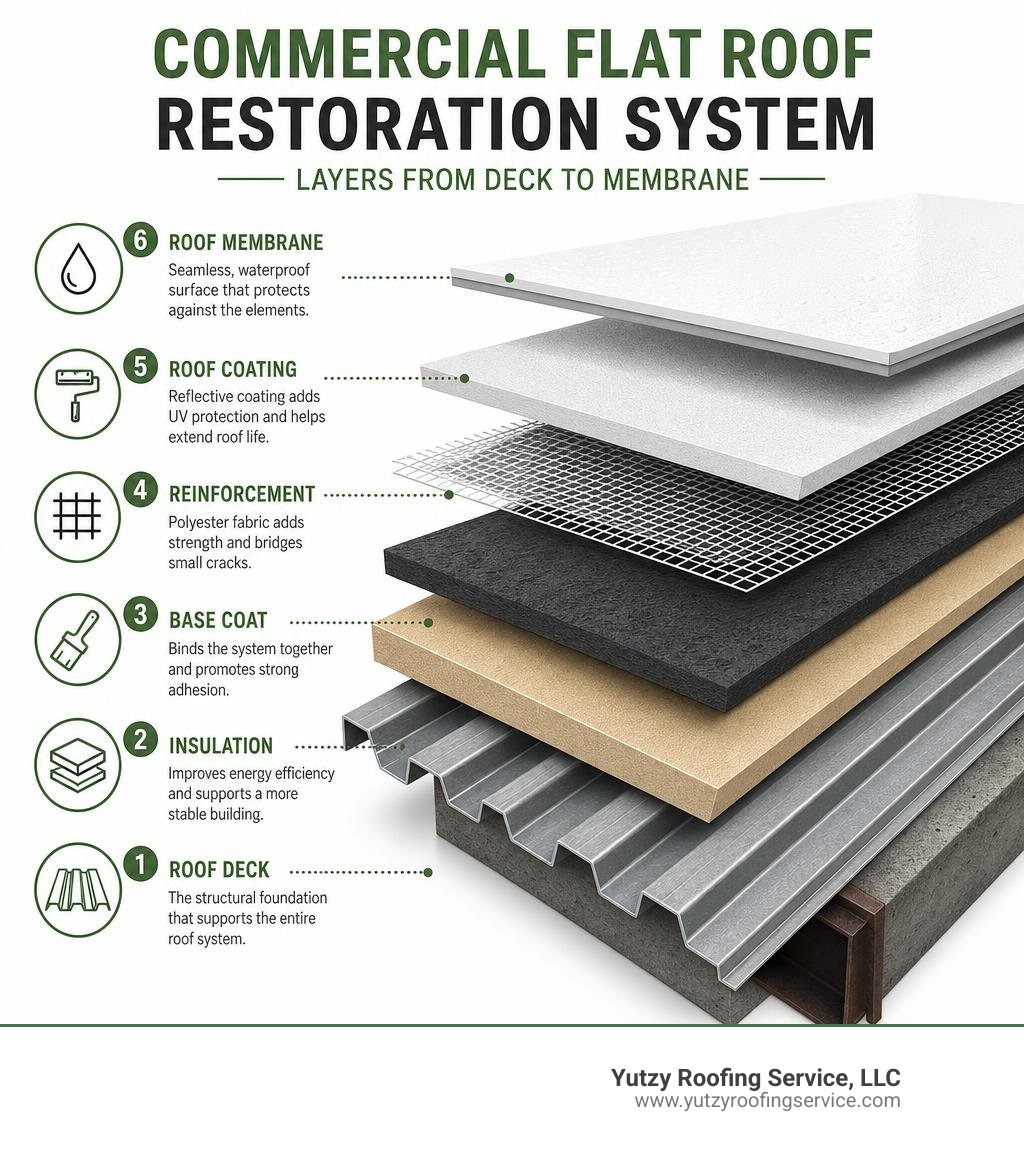
Low-slope and flat roofs require specialized systems to prevent ponding water from migrating into the building envelope. Unlike steep-slope roofs that shed water quickly via gravity, low-slope roofs must remain completely watertight under standing water. Achieving this level of reliability requires a combination of high-grade single-ply membranes, heavy-duty insulation, and robust cover boards.
When planning repairs or retrofits, understanding how these components interact is key to a long-lasting roof. It is never just about patching a hole; it is about maintaining the thermal, structural, and moisture-barrier integrity of the entire assembly. For a detailed breakdown of how these materials fit into different property budgets, explore our guide on The Best Roofing System Materials for Your Business.
To help you understand the core differences between the primary single-ply options, we have compiled a repair-focused comparison below:
| Membrane Type | Primary Weakness requiring Repair | Common Repair Supplies Needed | Temperature Sensitivity During Repair |
|---|---|---|---|
| TPO (Thermoplastic Polyolefin) | Seam failure due to poor heat-welding, weathering | TPO patching membrane, hand welder, seam roller, splice primer | Highly sensitive; requires clean, dry surfaces and precise heat control |
| EPDM (Ethylene Propylene Diene Terpolymer) | Shrinkage, seam separation, puncture damage | EPDM pressure-sensitive patches, seam primer, splice adhesive, lap sealant | Can be repaired in cold weather using specialized primers and pressure-sensitive tapes |
| PVC (Polyvinyl Chloride) | Plasticizer migration making old sheets brittle | PVC patching membrane, heat gun, PVC cleaner, solvent weld adhesive | Requires careful heat-welding; older PVC may require specialized chemical cleaning before welding |
Repairing and Maintaining Single-Ply Membranes: TPO, EPDM, and PVC
When dealing with single-ply membranes, repair strategies vary wildly depending on whether you are working with thermoplastic materials (TPO and PVC) or thermoset rubber (EPDM).
TPO Membrane Repairs
TPO has been used in low-slope commercial applications for over 20 years, making it one of the most popular low-slope products in the industry. It resists UV radiation and heat buildup, helping buildings stay cool and energy-efficient. However, when repairs are required, we must use a hot-air welder to fuse new TPO patches over the damaged areas. If the TPO has aged, its surface must be thoroughly prepped with specialized cleaners to remove dirt and oxidation, or the weld will fail under wind uplift pressures.
EPDM Rubber Patching
EPDM is highly valued in places like Madison, Wausau, and Eau Claire because of its outstanding resistance to extreme cold and thermal shock. It does not shatter or crack when temperatures plunge below zero. Because EPDM is a synthetic rubber, it cannot be heat-welded. Instead, repairs rely on chemical adhesives, primers, and pressure-sensitive tape.
When patching EPDM, applying a high-quality primer is non-negotiable. The primer chemically prepares the rubber surface, allowing the adhesive on the patch to form a permanent vulcanized bond. For more localized insights into how these materials perform under local municipal codes, check out our guide on Common Materials for Commercial Roofing in Madison WI.
PVC Roofing Maintenance
PVC membranes offer exceptional resistance to chemicals, grease, and punctures. Major manufacturers like GAF even offer guarantees up to 30 years on PVC roofing membranes, highlighting their long-term durability. Like TPO, PVC is repaired using hot-air welding equipment.
However, as PVC ages, its chemical plasticizers migrate out of the material, making it less flexible. When executing repairs on older PVC, we must proceed with caution to ensure the heat welding process does not scorch or crack the surrounding brittle membrane.
Commercial Insulation and Cover Boards for Retrofits
A successful flat roof restoration or repair often requires addressing what lies beneath the membrane. If your insulation is wet, squishy, or degraded, laying a new membrane or coating on top is a recipe for disaster.
Polyisocyanurate (Polyiso) Insulation
Polyiso is the industry standard for flat roof insulation due to its high thermal R-value per inch. For flat roofs with poor drainage, we install tapered polyiso insulation systems. These boards are manufactured with a slight slope, directing water toward drains and scuppers to eliminate hazardous ponding water.
Cover Boards
To prolong the lifespan of your roof, a high-density cover board should be installed between the insulation and the membrane. Cover boards act as a protective shield against:
- Foot traffic: Technicians walking on the roof to service HVAC units.
- Hail and storms: Absorbing impacts that would otherwise puncture the membrane.
- Fire: Providing an extra layer of fire protection.
- Moisture: Preventing vapor from migrating up from the building interior.
Using cover boards is a proven best practice to extend roof life, stabilize the substrate, and prepare a flat roof for a seamless restoration.
Sealants, Coatings, and Adhesives for Commercial Roof Restoration

When a commercial roof begins to show its age but remains structurally sound, a full replacement is often an unnecessary expense. Instead, liquid-applied roof restoration systems offer a highly effective, sustainable, and budget-friendly alternative.
By utilizing advanced elastomeric coatings, sealants, and primers, we can seal existing leaks, prevent future water intrusion, and extend the roof’s service life by decades. For a comprehensive look at your restoration choices, read our Detailed Guide to Roof Coating Options.
Silicone vs. Acrylic Roof Coatings
Choosing between silicone and acrylic coatings depends heavily on your roof’s pitch, drainage capacity, and your specific climate challenges.
Silicone Coatings
Silicone is the gold standard for flat roofs that suffer from ponding water. Silicone is chemically inert and does not break down under standing water. It forms a highly flexible, rubberized membrane that stretches and contracts with the building’s thermal movements.
Additionally, silicone offers outstanding UV reflectivity, bouncing solar heat away from your building to lower cooling costs. To learn how to structure a long-term plan around these coatings, see The Ultimate Guide to Flat Roof Coating Experts and Maintenance Plans.
Acrylic Coatings
Acrylic coatings are water-based, cost-effective, and highly breathable. They are excellent for sloped metal roofs or low-slope roofs with perfect drainage. However, acrylics do not hold up well to ponding water; standing water will cause the coating to re-emulsify and peel away.
In Wisconsin, we typically recommend acrylics for metal roof restoration projects where water sheds quickly, and silicone or urethanes for flat rubber surfaces where water may sit for several days.
High-Performance Adhesives and Primers
The success of any liquid-applied coating or membrane repair relies entirely on the bond strength between the new material and the old substrate. This is where high-performance adhesives, primers, and sealants come into play.
- Bonding Adhesives: Used to adhere single-ply membranes to insulation or cover boards. These solvent- or water-based formulas must be applied evenly to prevent bubbles and wind-uplift failures.
- Substrate Primers: Old rubber, asphalt, and metal roofs accumulate years of dirt, oils, and oxidation. Applying a dedicated primer ensures the restoration coating chemically fuses to the surface.
- Metal Roof Restoration Sealants: Metal roofs expand and contract violently during Wisconsin’s seasonal temperature swings. High-solids sealants must be applied to every single seam and fastener head before the topcoat is sprayed. For step-by-step guidance on sealing metal panels, consult our Metal Roof Sealant Complete Guide.
- Seam Tapes: Heavy-duty butyl or EPDM seam tapes are essential for reinforcing weak joints, transitions, and penetrations before applying liquid systems.
Sourcing Commercial Roofing Supplies: Distributors vs. Big-Box Retailers
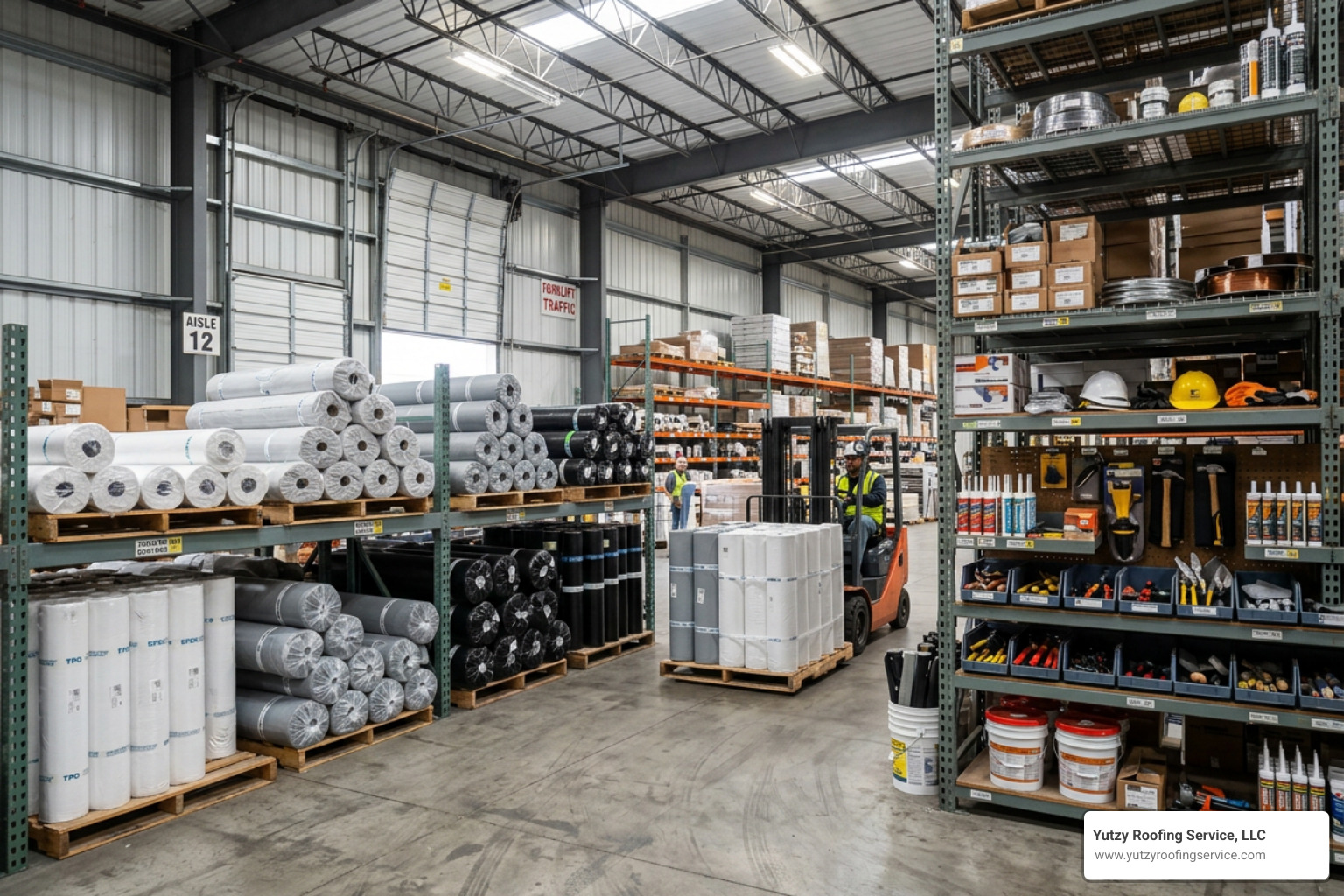
When sourcing commercial roofing supplies, where you buy is just as important as what you buy. While big-box home improvement stores are convenient for residential DIY projects, they are simply not equipped to support commercial-grade projects.
The Advantages of Specialized Commercial Distributors
Specialized commercial distributors offer several key benefits that retail stores cannot match:
- Technical Expertise: Distributors employ product specialists who understand complex commercial assemblies, wind-uplift ratings, and local building codes.
- Product Availability: Commercial projects require large quantities of specialized materials—such as 10-foot-wide TPO rolls, heavy-duty commercial fasteners, and commercial-grade polyiso. Distributors maintain deep inventories of these items.
- Manufacturer Partnerships: Major distributors work directly with top-tier brands like GAF, Carlisle, Elevate, and Continental Materials, Inc.. This ensures you receive authentic, fresh materials backed by full manufacturer warranties.
- Professional Tools: Specialized distributors carry commercial-grade tools, such as Leister automatic heat welders, safety carts, and specialized roof drains that you will never find on a retail shelf.
For contractors and building owners in Wisconsin, utilizing distributors like ABC Supply or QXO’s local commercial branches—such as their locations in Madison, WI and Wausau, WI—ensures access to professional-grade systems.
Delivery Logistics and Bulk Ordering
Commercial roofing materials are incredibly heavy and bulky. A single pallet of commercial cover boards or a load of tapered insulation requires specialized transport. Specialized distributors excel at delivery logistics:
- On-Time Delivery: Commercial projects run on tight schedules. Distributors utilize dedicated fleets to ensure materials arrive exactly when needed, preventing costly labor delays.
- Rooftop Delivery and Crane Services: Instead of dropping heavy pallets on the ground and forcing crews to haul them up manually, distributors use boom trucks and cranes to place materials directly onto the roof deck.
- Order Tracking: Advanced digital platforms allow contractors to track shipments in real time, ensuring smooth coordination with weather windows.
- Bulk Pricing: Buying in bulk from online outlets like Roofing4US or local wholesale distributors drastically reduces the cost per square, keeping commercial projects within budget.
Frequently Asked Questions about Commercial Roofing Supplies
What are the most durable commercial roofing supplies for cold climates?
In cold regions like Wisconsin, Minnesota, and the wider Midwest, roofing materials must withstand extreme thermal shock—the rapid expansion and contraction caused by wild temperature swings.
EPDM rubber is widely considered one of the most durable materials for cold climates because of its natural flexibility. It does not become brittle in sub-zero temperatures and easily handles freeze-thaw cycles without cracking.
Additionally, polyisocyanurate insulation with a high-density gypsum cover board is essential to prevent heat loss and protect the roof from heavy snow loads. To learn more about how these cold-weather systems are designed and maintained, read our guide Everything You Need to Know About Commercial Roofing Services.
How do I choose the right commercial roofing supplies for flat roof restoration?
To select the right supplies for a restoration, you must first evaluate the existing roof’s condition:
- Perform Core Cuts: Take physical core samples of the roof to check for moisture trapped in the insulation. If the insulation is wet, it must be replaced; you cannot coat over wet materials.
- Verify Coating Compatibility: Not all coatings stick to all membranes. For example, silicone bonds beautifully to EPDM and TPO, but may require specific primers. Acrylics work well on sloped metal but fail on flat roofs with ponding water.
- Address Ponding Water: If your flat roof has low spots that collect water, choose high-solids silicone coatings that can withstand continuous submersion.
For a detailed walkthrough of the best patching compounds, sealants, and tools to address flat roof issues, check out our guide on the Top Products to Fix Your Leaky Rubber Roof.
What is the average lifespan of commercial roofing materials?
On average, commercial roofing systems last 20 to 30 years. However, this lifespan is heavily influenced by:
- The Material Selected: High-quality PVC and EPDM systems tend to last longer than basic asphaltic systems when properly maintained.
- Drainage Efficiency: Roofs that drain water quickly outlive those with chronic ponding water issues.
- Maintenance Diligence: Clearing debris, inspecting seams, and addressing minor leaks immediately prevents premature system failure.
- Restoration Quality: Applying a high-quality elastomeric coating system before the original membrane completely degrades can add an extra 10 to 18 years of service life to the roof, effectively doubling its lifespan.
Conclusion
Sourcing the right commercial roofing supplies is the foundation of a dry, energy-efficient, and long-lasting building. Whether you are performing a minor EPDM repair or executing a complete silicone roof restoration, using professional-grade membranes, coatings, and insulation is non-negotiable.
At Yutzy Roofing Service, LLC, we specialize in helping building owners across Wisconsin protect their investments without the massive disruption and cost of a complete roof tear-off. From our base in Marshfield, WI, we proudly serve communities including Appleton, Eau Claire, Fond Du Lac, Green Bay, Madison, and Wausau.
We don’t just patch leaks; we provide high-performance commercial roof restoration, spray foam coatings, metal roof restoration, and EPDM repairs. All of our full restoration systems are backed by our industry-leading, up to 18-year non-prorated renewable warranty.
Ready to stop worrying about your flat roof? Contact Yutzy Roofing Service today to schedule a professional roof inspection and find the perfect restoration solution for your building.
