
When Your Commercial Roof Fails, Every Minute Costs You Money
A local emergency roofer for your commercial property isn’t just a convenience — it’s a business-critical resource when Wisconsin’s brutal weather strikes without warning.
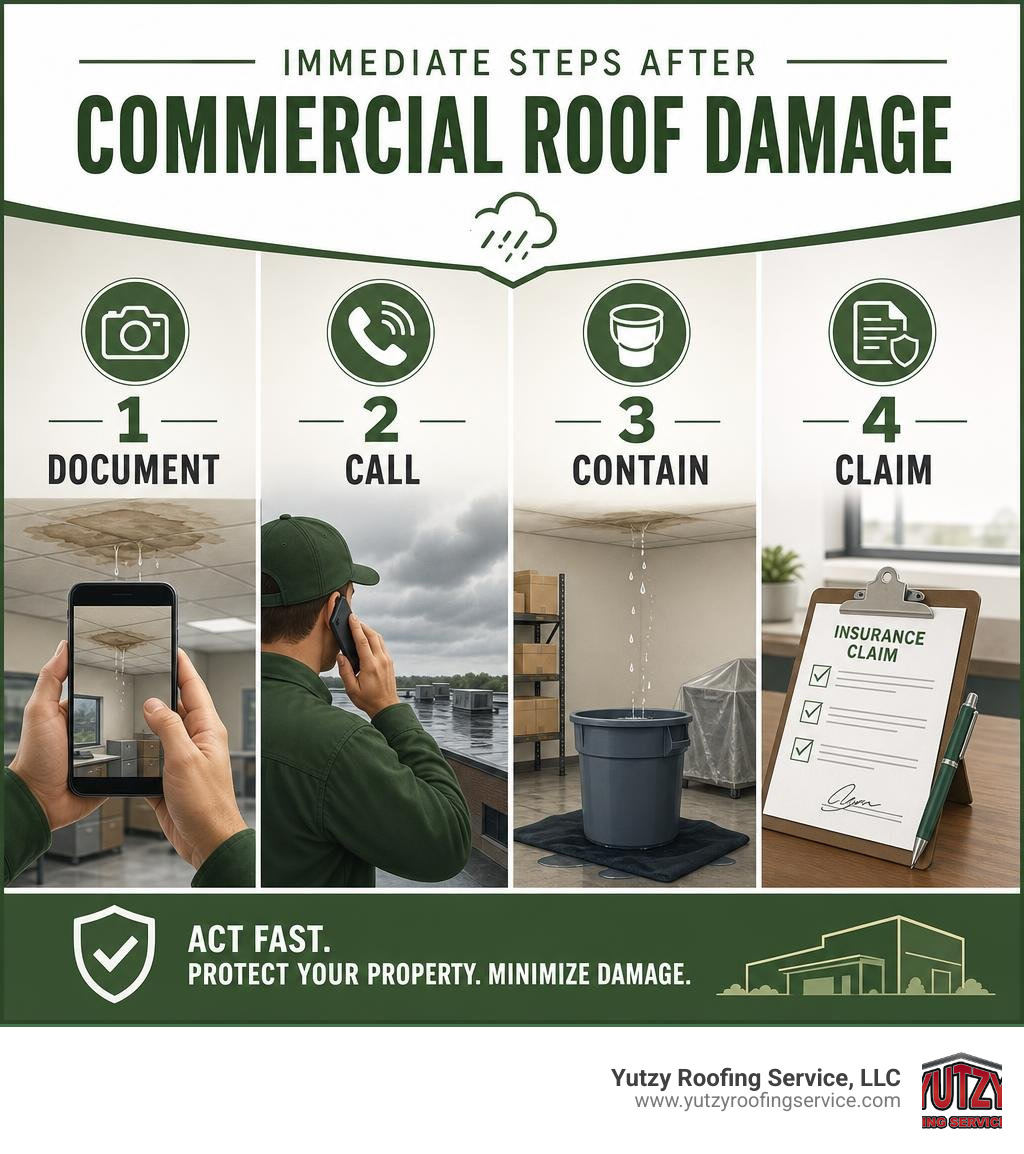
Here’s what to do right now if your commercial roof is damaged:
- Stop the interior damage first — move equipment, inventory, and valuables away from active leaks
- Do not access the roof yourself — wet or storm-damaged commercial roofs are serious fall hazards
- Document everything — photograph all visible damage from the ground and inside the building
- Call a local emergency roofer immediately — active leaks can cause mold within 24 to 48 hours
- Contact your insurance provider — report the damage and ask about emergency claim procedures
Roofing emergencies account for roughly 25% of all homeowner and commercial property insurance claims in the U.S., with severe weather as the leading cause. And homeowners or property owners who delay repairs after storm damage can see costs climb by up to 50% due to secondary water damage and mold.
The faster you act, the less you pay.
I’m Josh Yutzy, and our family business — Yutzy Roofing Service, LLC — has been responding to local emergency roofer calls across Wisconsin since 1995, handling everything from active leaks on flat commercial roofs to wind damage on large industrial buildings. In this guide, I’ll walk you through exactly what to do, who to call, and what to expect when your commercial roof needs urgent attention.
Local emergency roofer terms explained:
Identifying a True Commercial Roofing Emergency
Not every drip from a commercial ceiling requires a midnight phone call to a local emergency roofer, but some situations absolutely do. Knowing the difference can save your business thousands of dollars in unnecessary after-hours fees—or prevent a catastrophic structural failure.
In our decades of serving Wisconsin and Minnesota, we have seen minor issues quickly escalate. If you are unsure whether your situation is critical, read our guide on 5 Ways to Know for Sure if You Need a Emergency Roof Repair to help evaluate the severity.
Commercial roof emergencies are usually triggered by extreme weather patterns. In cities like Wausau, Madison, and Eau Claire, we experience heavy summer downpours, severe windstorms, and winter ice dams. These events expose hidden vulnerabilities in flat and low-slope roofing systems, leading to:
- Active, Uncontrolled Water Intrusion: When water is pouring into your warehouse, retail floor, or office space, it threatens your inventory, electronics, and structural integrity.
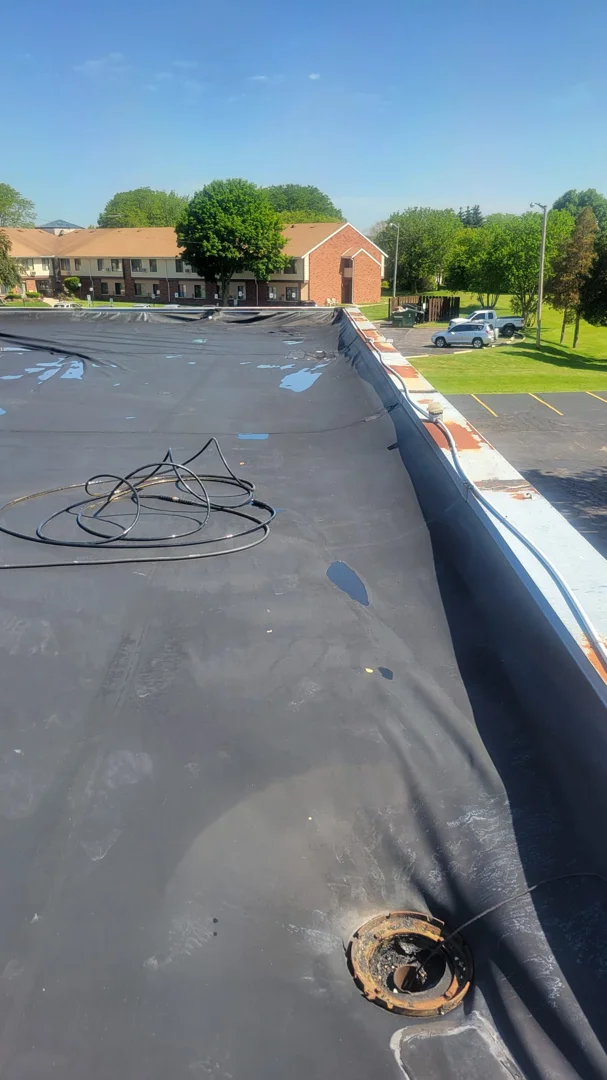
- Ponding Water: Flat roofs are designed to drain, but clogged drains or structural sagging can cause tons of water to pool in one spot, risking a sudden deck collapse.
- Wind Damage: High winds can tear away large sections of single-ply membranes (like EPDM or TPO) or rip metal flashing clean off the edges, leaving the underlying deck completely exposed.
- Hail Impact: Large hail can puncture aged commercial membranes, fracturing the substrate beneath and opening up hundreds of tiny pathways for water to seep in.
If your facility is currently taking on water, you need to understand the immediate actions required to minimize structural deterioration. Review our checklist on What to Do if Your Commercial Roof is Leaking to protect your interior assets before our crew arrives.
When to Call a Local Emergency Roofer Immediately
You should contact a local emergency roofer immediately if you observe any of the following critical warning signs:
- Structural Sagging: If you notice bowing ceiling tiles, bent steel bar joists, or sagging roof lines from the outside, evacuate the area immediately. This indicates a high risk of collapse.
- Water Cascading Near Electrical Systems: Water dripping onto breaker panels, server racks, or industrial machinery is an extreme fire and safety hazard.
- Severe Membrane Blow-Offs: If a storm has peeled back your roof membrane like a banana skin, the building has zero protection against the next rainfall.
Even if you are initially looking at general advice designed to Stop the Flow Before it Floods Your Home, the core physical principles remain the same for commercial facilities: you must divert, collect, and stop the water immediately to prevent secondary mold growth and structural rot.
Routine Maintenance vs. Urgent Commercial Roof Repairs
Many building managers mistake routine maintenance issues for immediate emergencies. Minor wear, such as tiny hairline cracks in a roof coating, small gaps in perimeter flashing, or slightly backed-out fasteners, should certainly be addressed. However, they typically do not require 2 AM emergency dispatch rates.
Routine maintenance issues can usually be scheduled during normal business hours. For a detailed breakdown of when you should schedule a standard service call versus dispatching an emergency crew, refer to our guide on When to Contact Our Roofing Company in Wisconsin.
What to Expect from a Local Emergency Roofer
When disaster strikes your facility in the middle of a storm, knowing what happens next can help keep your anxiety levels in check. A professional local emergency roofer operates very differently from a standard planned-project contractor.
First and foremost, a true emergency roofer provides rapid response times and is available 24/7/365. When you call our emergency line in Wisconsin or Minnesota, you won’t get an offshore call center; you will speak with a specialist who understands commercial roofing systems. Our dispatch speed is optimized because our service trucks are pre-loaded with heavy-duty tarps, fast-acting commercial sealants, fasteners, and safety gear.
Depending on your exact location—whether you are near our headquarters in Marshfield, Wisconsin, or in surrounding areas like Appleton—our goal is to get a crew on-site as quickly as weather and road safety permit. For more details on our regional emergency dispatch protocols, check out our dedicated Wisconsin Emergency Roof Repair page.
First-Visit Stabilization: Tarping and Temporary Patches
It is a common industry misconception that a local emergency roofer will permanently fix your entire roof during a midnight storm. Safety and physics make this impossible.
Instead, the primary goal of the first visit is stabilization. Our crews focus on stopping the water intrusion immediately to prevent further interior damage. This is achieved through:
- Emergency Tarping: Securing massive, industrial-grade, weighted tarps over the damaged sections using specialized sandbags or temporary wooden batten strips to prevent wind lift.
- Temporary Patches: Applying fast-curing wet-surface sealants or temporary membrane patches over punctures and split seams.
- Securing Openings: Boarding up and sealing areas damaged by fallen tree limbs or flying debris.
If you are dealing with a localized puncture on a flat roof, you might find our guide, Under Pressure: Your Quick Guide to Emergency Roof Sealants, helpful for understanding the temporary chemical compounds we use to fight active water pressure. Additionally, you can review our Don’t Let the Rain In With These Emergency Roof Covering Tips to learn how professional temporary covers are secured to withstand high winds.
Emergency Stabilization vs. Permanent Restoration
Once the immediate threat of water damage is contained, we transition from emergency stabilization to planning your permanent restoration.
| Phase | Timeframe | Primary Goal | Materials Used | Warranty Scope |
|---|---|---|---|---|
| Emergency Stabilization | Within hours of dispatch | Stop active leaks, secure the building envelope | Industrial tarps, temporary wet-patch sealants, sandbags | Short-term workmanship guarantee on the temporary seal |
| Permanent Restoration | Scheduled days/weeks later | Restore roof to pre-loss (or better) condition | Spray foam, EPDM, metal restoration, commercial coatings | Up to 18-year non-prorated renewable warranty |
At Yutzy Roofing Service, LLC, we specialize in high-quality commercial roofing restoration. Once the storm passes, we don’t just leave you with a tarp. We evaluate your system for permanent, warrantied solutions, such as:
- Spray Polyurethane Foam (SPF) Coatings: Seamless, self-flashing waterproof barriers that can be applied directly over many existing flat roof systems, sealing all leaks permanently.
- Metal Roof Restoration: Repairing and coating aging metal roofs to stop rust, seal seams, and avoid the high cost of replacement.
- EPDM Repairs: Expertly patching, seaming, and restoring single-ply rubber membranes to extend their service life.
Immediate Steps to Take After Commercial Roof Damage
Discovering a massive leak or storm damage at your facility can be overwhelming, but taking organized, immediate action will protect your building, your operations, and your insurance claim.

Your first priority must always be safety. Never climb onto a wet, wind-swept, or structurally compromised commercial roof. Leave the physical inspection to a licensed local emergency roofer who has the proper safety harnesses, ladders, and wet-weather gear.
While you wait for our crew to arrive, there are several safe steps you can take from ground level and inside the building. To help organize your immediate response without panic, read our guide on My Commercial Roof is Leaking: What Can I Do Now?. For a broader look at managing the stress of a sudden facility disaster, check out How to Handle Emergency Roofing Services Without Losing Your Mind.
Documenting Damage for Insurance Claims
Insurance adjusters require clear, undeniable proof of storm damage to approve commercial claims. To ensure your claim is processed smoothly:
- Take Photos and Videos: Document the interior water entry points, damaged inventory, and any visible exterior damage (such as torn metal flashing or tree limbs resting on the building) from the safety of the ground.
- Keep Damaged Items: Do not throw away water-damaged inventory or equipment before the adjuster inspects them, unless they pose an immediate health hazard.
- Request Detailed Reports: A professional roofing contractor will provide photographic documentation of the roof-level damage and a written estimate detailing the temporary stabilization work performed.
How to Choose the Right Local Emergency Roofer
When water is pouring into your facility, it is tempting to hire the very first contractor who answers the phone. However, hiring an unqualified “storm chaser” or a residential-only handyman can lead to poor repairs, voided manufacturer warranties, and denied insurance claims.
Use this table to understand the critical differences between a specialized local commercial emergency roofer and a standard planned-project contractor:
| Feature | Specialized Local Emergency Roofer | Standard Planned Contractor |
|---|---|---|
| Availability | 24/7/365 immediate dispatch | Monday–Friday, scheduled weeks in advance |
| Response Time | Typically within 1 to 4 hours | 2 to 7 business days for an estimate |
| Truck Equipment | Heavy-duty tarps, wet-surface sealants, emergency pumps | Project-specific materials only |
| Primary Goal | Immediate stabilization & leak containment | Full structural repair or planned replacement |
| Insurance Experience | Heavy focus on rapid photographic documentation | Standard itemized billing and invoices |
To protect your commercial property, you should only work with established, licensed, and certified local contractors who specialize in commercial systems. You can verify professional standards through industry organizations like the National Roofing Contractors Association (NRCA). Whether you are located in Eau Claire, Fond du Lac, Green Bay, or Madison, choosing a contractor with local expertise and proper commercial credentials is vital.
If you are dealing with a leak during the colder months, don’t assume you have to wait for warm weather to address it. Read our guide on Don’t Wait for Spring: Quick Fixes to Stop Roof Leaks Now to see how we handle cold-weather commercial repairs.
Key Questions to Ask Your Local Emergency Roofer
Before authorizing any emergency stabilization work, ask these quick questions to verify the contractor’s credentials:
- “Are you licensed and insured for commercial roofing in this state?” (Commercial roofing involves higher liability and strict safety standards compared to residential work).
- “Do you use your own trained crews, or do you subcontract emergency calls?” (In-house crews ensure consistent quality and safety compliance).
- “Will you provide photographic documentation of the damage and a written estimate before performing permanent repairs?” (This is crucial for your insurance claim).
- “What warranties do you offer on your permanent restoration work?” (At Yutzy Roofing Service, LLC, we offer up to an 18-year non-prorated renewable warranty on qualifying restorations).
Frequently Asked Questions about Emergency Commercial Roofing
How much does emergency commercial roof repair cost?
The average cost of emergency roof repairs in the U.S. ranges from $380 to $1,800, with most property owners spending about $1,100. However, commercial emergency costs vary based on the height of the building, access difficulty, and the severity of the damage.
Emergency stabilization (such as professional tarping and temporary sealing) is typically billed as a flat-rate dispatch fee plus materials, ranging from $300 to $800. We always provide a clear, upfront estimate before starting any permanent restoration work.
Will insurance cover emergency commercial roof repairs?
Yes, most commercial property insurance policies cover emergency roof repairs if the damage was caused by a sudden, accidental event like a windstorm, hail, or a fallen tree.
Most policies also include a “mitigation clause,” which requires the property owner to take immediate action (such as hiring a local emergency roofer for temporary tarping) to prevent further damage. Failure to mitigate the damage promptly can result in the insurer denying coverage for secondary water damage.
Can emergency repairs be done during active rainfall?
Yes, but with limitations. A professional local emergency roofer can apply heavy-duty tarps and specialized wet-surface sealants during active rainfall to slow down or stop water entry.
However, crews cannot perform permanent repairs, apply spray foam coatings, or weld thermoplastic membranes while it is raining, as these processes require completely dry substrates to cure and bond correctly. Furthermore, if high winds or lightning pose a safety hazard, our crews will wait for the severe weather to pass before climbing onto the roof.
Conclusion
A commercial roofing emergency is a stressful test of your business’s resilience, but you don’t have to face it alone. Acting quickly to secure a qualified, licensed local emergency roofer will protect your building, preserve your inventory, and keep your business running safely.
At Yutzy Roofing Service, LLC, we are proud to be the trusted commercial roofing partner for businesses throughout Wisconsin and Minnesota. From our headquarters in Marshfield to our service areas in Madison, Appleton, Wausau, Eau Claire, Fond du Lac, Green Bay, Mankato, and Rochester, we provide high-quality commercial roofing restoration, spray foam coatings, metal roof restoration, EPDM repairs, and preventative maintenance.
We stand behind our craftsmanship with an industry-leading, up to 18-year non-prorated renewable warranty, giving you long-term peace of mind long after the storm has passed.
Whether you need assistance in the Wausau area or require emergency support in southern Minnesota around Mankato, our team is ready to respond quickly and professionally.
Don’t let a minor leak turn into a costly structural disaster. Contact us today at https://www.yutzyroofingservice.com/ to schedule a professional inspection, or keep our number handy so you are always prepared for whatever the Midwestern weather throws your way!
