What to Do Right Now If Your Commercial Roof Is Damaged
Emergency roof tarping is the fastest way to stop water from entering your building after storm damage, a fallen branch, or sudden roof failure. Here’s what you need to know right away:
Quick answers for commercial property owners:
- What it does: A heavy-duty tarp creates a temporary watertight barrier over damaged roof sections until permanent repairs are made.
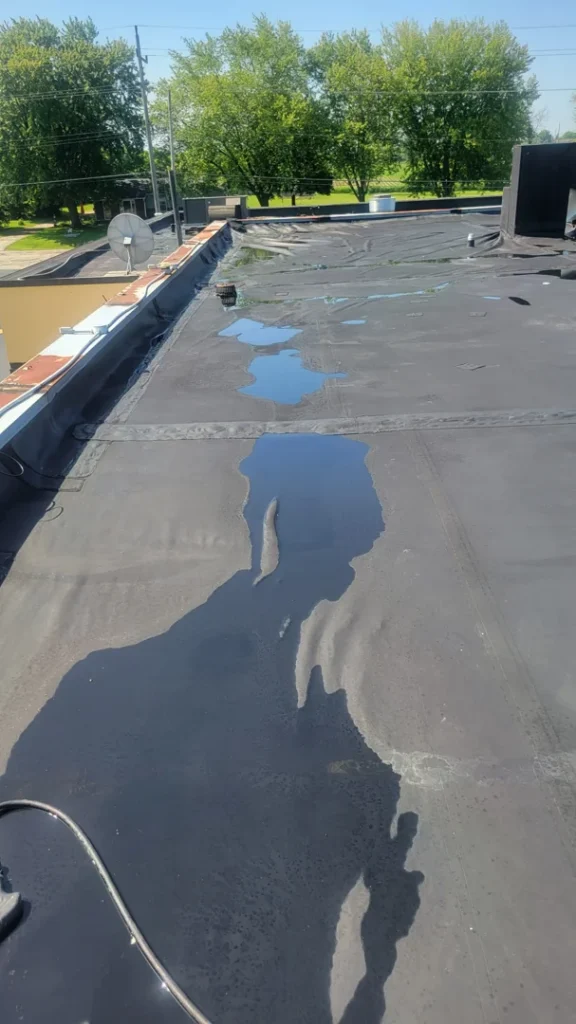
- When you need it: Missing membrane sections, active leaks, visible holes, pooling water that won’t drain, or any storm impact that breaks through your roof surface.
- How long it lasts: A professionally installed tarp holds up for 60 to 90 days under normal conditions.
- What it costs: Expect $1.00–$2.80 per square foot for emergency installation, or $0.70–$2.00 per square foot for standard rates.
- Does insurance cover it? Most commercial property policies cover tarping as a required damage mitigation step.
Here’s the hard truth: a single night of rain through an open roof can cause tens of thousands of dollars in water damage — to your inventory, equipment, ceilings, insulation, and structural components. Mold can begin forming within 24 to 48 hours of water intrusion. Acting fast isn’t just smart — it protects your insurance claim, too.
I’m Josh Yutzy, and Yutzy Roofing Service has been protecting commercial and residential roofs across Wisconsin since 1995 — including responding to urgent situations where emergency roof tarping was the critical first step before a full restoration could begin. In this guide, I’ll walk you through exactly what to do, step by step.
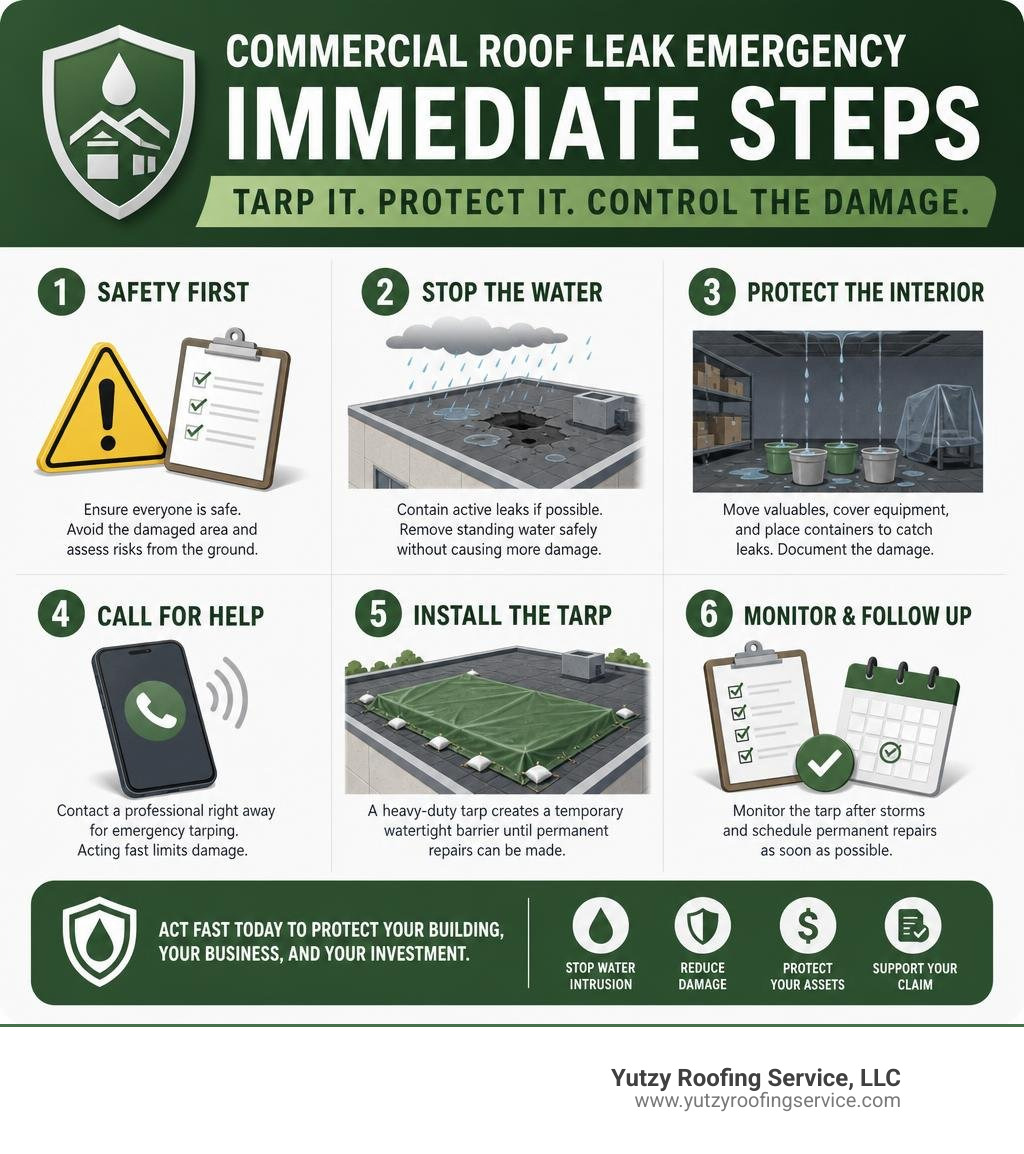
Quick emergency roof tarping terms:
What is Emergency Roof Tarping and When is it Needed?

When severe Midwestern weather strikes our service areas—from the high winds in Eau Claire and Wausau to heavy storms rolling through Madison and Green Bay—commercial flat roofs often bear the brunt of the impact. Emergency roof tarping acts like a heavy-duty, weather-resistant pressure bandage. It is a temporary protective measure designed to seal off exposed areas of your commercial building, shielding your assets from water, wind, and debris until permanent repairs can be scheduled.
But how do you know if your commercial facility has crossed the line from “needs a minor patch” to “requires an immediate emergency tarp”?
There are several clear indicators that your roof is compromised and needs immediate protection:
- Active Water Intrusion: If water is actively dripping into your warehouse, showroom, or office space, the damage is already done. You must act quickly to stop the flow.
- Punctures and Tears in the Membrane: High winds can toss heavy debris, branches, or loose HVAC panels across your roof, slicing through TPO, EPDM, or PVC membranes.
- Widespread Wind Uplift: Strong storms can peel back entire sections of your roof membrane, leaving the underlying insulation and roof deck completely exposed to the elements.
- Pooling Water Over Damaged Areas: On flat roofs, water naturally migrates to low spots. If you have pooling water over a compromised section, gravity will quickly find a way inside.
To make an informed decision, it helps to understand the 5 Ways to Know for Sure if You Need a Emergency Roof Repair. If you spot any of these signs, waiting for the rain to stop before taking action is a gamble you don’t want to take.
Furthermore, knowing What to Do if Your Commercial Roof is Leaking can help you minimize interior damage—such as moving electronics, clearing space beneath the leak, and setting up containment systems—while you coordinate professional emergency services.
The Step-by-Step Commercial Roof Tarping Process
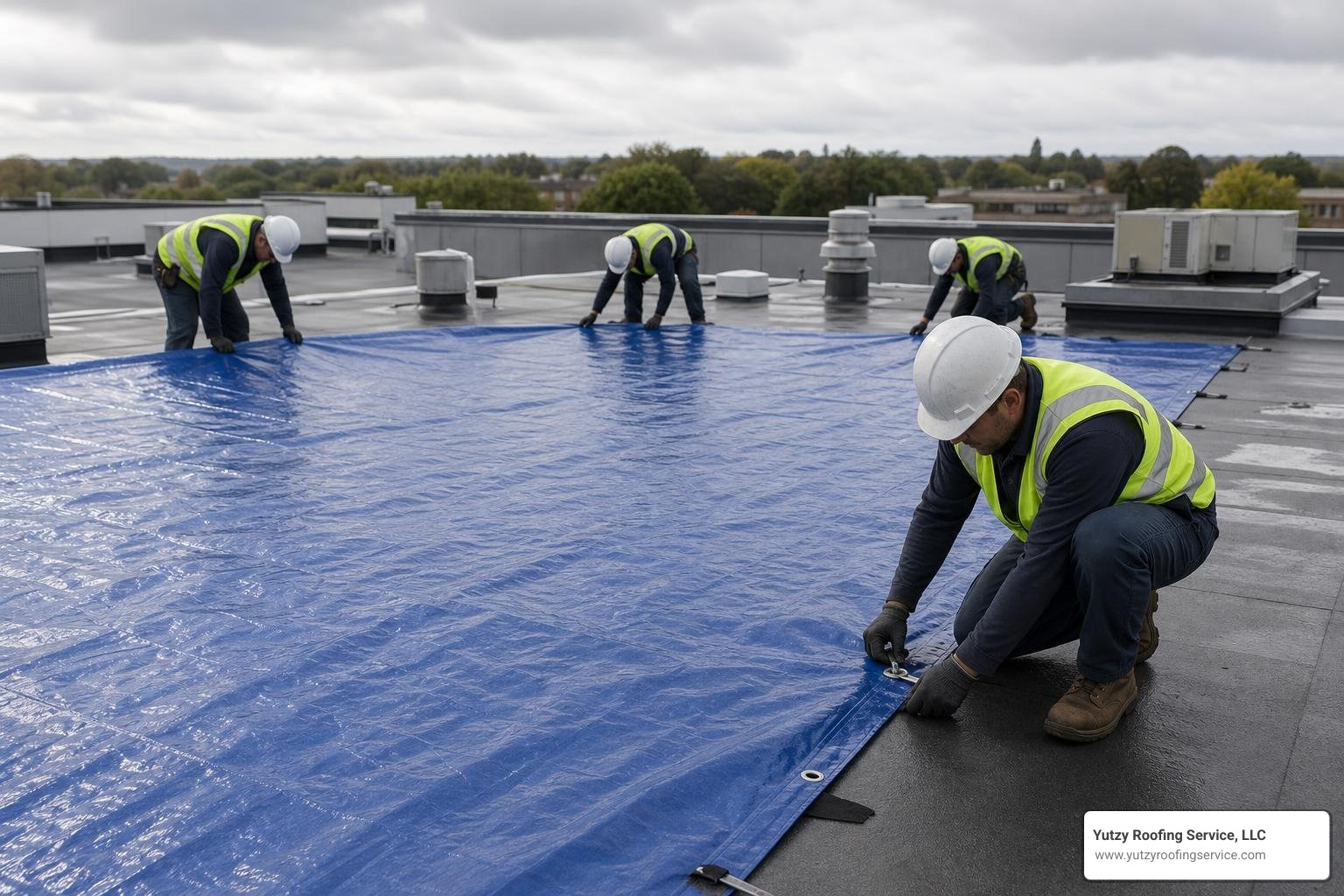
Tarping a commercial flat roof is vastly different from throwing a blue tarp over a residential roof peak. Commercial buildings have low-slope designs, large surface areas, heavy wind exposures, and critical rooftop equipment like HVAC units and exhaust fans.
Before diving into the technical steps, let’s look at how DIY attempts compare to hiring a professional commercial crew:
| Feature/Factor | DIY Facility Tarping | Professional Commercial Installation |
|---|---|---|
| Primary Fastening | Often relies on duct tape, bricks, or loose blocks (high failure rate). | Heavy-duty commercial-grade tarps secured with sandbags, ballast, or wood battens. |
| Safety Equipment | Basic ladders, often lacking safety harnesses or fall protection. | OSHA-compliant safety harnesses, perimeter warning lines, and trained crews. |
| Risk of Further Damage | High. Driving screws directly into flat EPDM/TPO decks can create hundreds of new leaks. | Low. Non-penetrating ballast or strategic parapet anchoring prevents membrane damage. |
| Wind Resistance | Poor. Loose edges easily catch the wind and blow away during the next gust. | Excellent. Strategic tensioning and weighted perimeter systems prevent wind uplift. |
| Insurance Compliance | May not meet the strict “professional mitigation” standards required by adjusters. | Provides detailed photo documentation and reports to support your claim. |
Preparing for Emergency Roof Tarping
The first rule of emergency response is safety. No one should ever step onto a roof during an active, severe lightning storm or in winds exceeding 15 to 20 mph. Once the immediate danger has passed, the preparation phase begins:
- Conduct a Ground-Level and Attic Assessment: Before climbing up, inspect the building’s interior. Note where the water is entering and look for structural sagging or electrical hazards.
- Gather the Right Tools and Safety Gear: A professional crew will arrive with OSHA-compliant safety harnesses, heavy-duty 10-to-12 mil polyethylene tarps, cordless drills, wood battens, non-penetrating weighted bags, and safety ropes.
- Clear Debris and Clean the Surface: You cannot secure a tarp over broken branches, loose gravel, or sharp metal fragments. The damaged area must be swept clean of debris and standing water to ensure a tight, secure seal.
For a deeper dive into the fundamental preparation steps, you can consult the How to Tarp a Damaged Roof | Emergency Roof Tarp Guide | Roofs Wiki.
Securing the Tarp on Flat and Low-Slope Roofs
Once the area is clean and safe, the tarp must be positioned and anchored. On commercial flat roofs, we cannot simply nail wood strips directly into the middle of a delicate EPDM or TPO membrane—doing so would create a goldmine of new leaks. Instead, we use specialized commercial techniques:
- Strategic Overlap: The tarp must extend at least 4 feet beyond the damaged area on all sides. If the damage is close to a roof edge or a parapet wall, the tarp should wrap up and over the wall to prevent water from running underneath.
- Non-Penetrating Weighted Ballast: We secure the perimeter of the tarp using heavy sandbags, rubber-encased weights, or concrete ballast blocks. This keeps the tarp firmly in place without puncturing the underlying membrane.
- Parapet and Curb Anchoring: When anchoring is necessary, we attach wood battens directly to wood or concrete parapet walls, metal gravel stops, or equipment curbs where screws won’t compromise the primary waterproofing field.
- Tensioning: The tarp must be pulled taut. Any slack in the material will allow wind to get underneath, creating a sail effect that can rip the tarp off or wear down the remaining roof membrane through continuous abrasion.
By employing these professional techniques, we ensure the temporary cover acts as a reliable shield. If you are looking for long-term strategies to address the root cause of the issue, explore these 6 Ways to Fix Your Leaking Roof.
Costs, Lifespan, and Insurance for Temporary Roof Coverings
Managing a commercial property means keeping a close eye on the bottom line. When storm damage occurs, you need to weigh the cost of emergency mitigation against your overall operating budget and insurance policy guidelines.
In Wisconsin and Minnesota, the cost for professional emergency roof tarping typically ranges from $1.00 to $2.80 per square foot for rapid, after-hours emergency response. For standard, scheduled temporary coverings, rates usually fall between $0.70 and $2.00 per square foot. Total project costs generally range from $175 to $700 for localized, smaller patches, but can scale higher depending on the size of the building, roof pitch, accessibility, and the severity of the storm damage.
Crucially, you should know that commercial property insurance policies almost always require you to take immediate action to mitigate further damage. If you leave a giant hole in your roof exposed to subsequent rainstorms, your insurance provider may deny coverage for the resulting interior water damage, ruined inventory, or mold remediation. Booking professional Wisconsin Emergency Roof Repair services immediately after a storm provides the documented proof of mitigation that insurance adjusters look for.
Maximizing the Lifespan of Your Emergency Roof Tarping
A temporary roof tarp is not a permanent fix. It is a short-term solution designed to buy you time while you coordinate insurance approvals and permanent restoration work.
A professionally installed, commercial-grade tarp can safely stay in place for 60 to 90 days. However, its actual lifespan depends heavily on environmental factors:
- UV Degradation: Constant exposure to the sun’s harsh ultraviolet rays will gradually weaken polyethylene tarps, making them brittle over time.
- Wind Uplift: High winds can slowly loosen ballast, shift sandbags, or create micro-tears around fasteners.
- Routine Inspections: To ensure your tarp lasts as long as possible, it must be inspected after every high-wind event or heavy rainstorm. Check for secure fastening, shifted weights, and any signs of water pooling on top of the tarp.
To keep your building dry while planning your next steps, review this guide on What to Do if Your Commercial Roof is Leaking to protect your interior operations.
Frequently Asked Questions about Emergency Roof Coverings
Dealing with storm damage can be stressful. We find that keeping our clients informed helps demystify the process. For more tips on navigating this stressful period, take a look at our guide on How to Handle Emergency Roofing Services Without Losing Your Mind.
How much does emergency roof tarping cost?
As mentioned, emergency rates typically range from $1.00 to $2.80 per square foot, while standard rates range from $0.70 to $2.00 per square foot. The final price depends on several tiers:
- Small, localized areas (under 100 sq. ft.): Often a flat minimum charge of $150 to $400.
- Standard commercial sections (100–300 sq. ft.): Typically averages $300 to $750.
- Large-scale damage or complex roofs: Can range from $750 to $1,500+ depending on the safety equipment required, roof height, and the number of penetrations (like HVAC curbs) that must be sealed around.
Can facility managers install a roof tarp themselves?
While it may be tempting to send a maintenance technician up with a hardware-store tarp to save money, we strongly advise against it. Flat commercial roofs present unique safety hazards, especially after a storm. Wet single-ply membranes (like TPO or EPDM) are incredibly slick, and unstable roof decks or hidden weak spots can lead to catastrophic falls.
Furthermore, OSHA regulations require specific fall protection systems for anyone working near roof edges. Finally, improper DIY fastening can permanently damage your roof membrane, voiding your existing warranties and potentially leading to insurance claim denials.
Does commercial property insurance cover emergency tarping?
Yes, in the vast majority of cases. Commercial property insurance carriers view emergency tarping as a necessary step in mitigating loss. When you hire a professional service, you will receive timestamped photos, detailed damage assessments, and formal invoices. Submitting this comprehensive documentation to your insurance adjuster speeds up the claims process and ensures you are reimbursed for these vital emergency services.
Conclusion
When a Wisconsin or Minnesota storm compromises your commercial facility, every minute you wait allows water to seep deeper into your building’s structure. Emergency roof tarping is the critical first line of defense that stops water intrusion, protects your valuable inventory, and keeps your business operations running while you plan permanent repairs.
At Yutzy Roofing Service, LLC, we specialize in commercial roofing restoration, spray foam coatings, metal roof restoration, EPDM repairs, and ongoing preventative maintenance. We serve key commercial hubs across Wisconsin and Minnesota—including Madison, Appleton, Wausau, Fond Du Lac, Green Bay, Eau Claire, Mankato, and Rochester.
We stand behind our craftsmanship, offering an industry-leading, up to 18-year non-prorated renewable warranty on our commercial restoration systems. Don’t let a temporary leak turn into a costly, long-term headache.
Protect your commercial property with Yutzy Roofing Service today, and let our expert team give you the peace of mind you deserve.
