Stop Active Roof Leaks Before Moisture Spreads
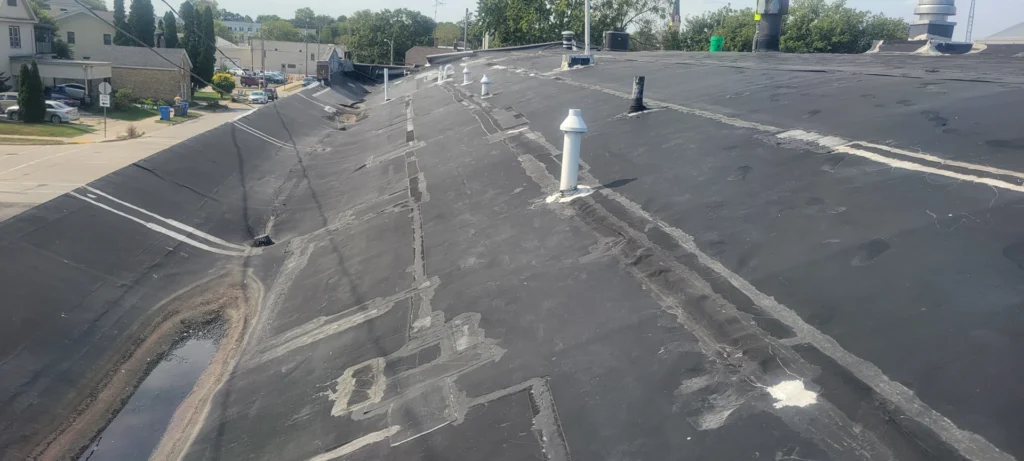
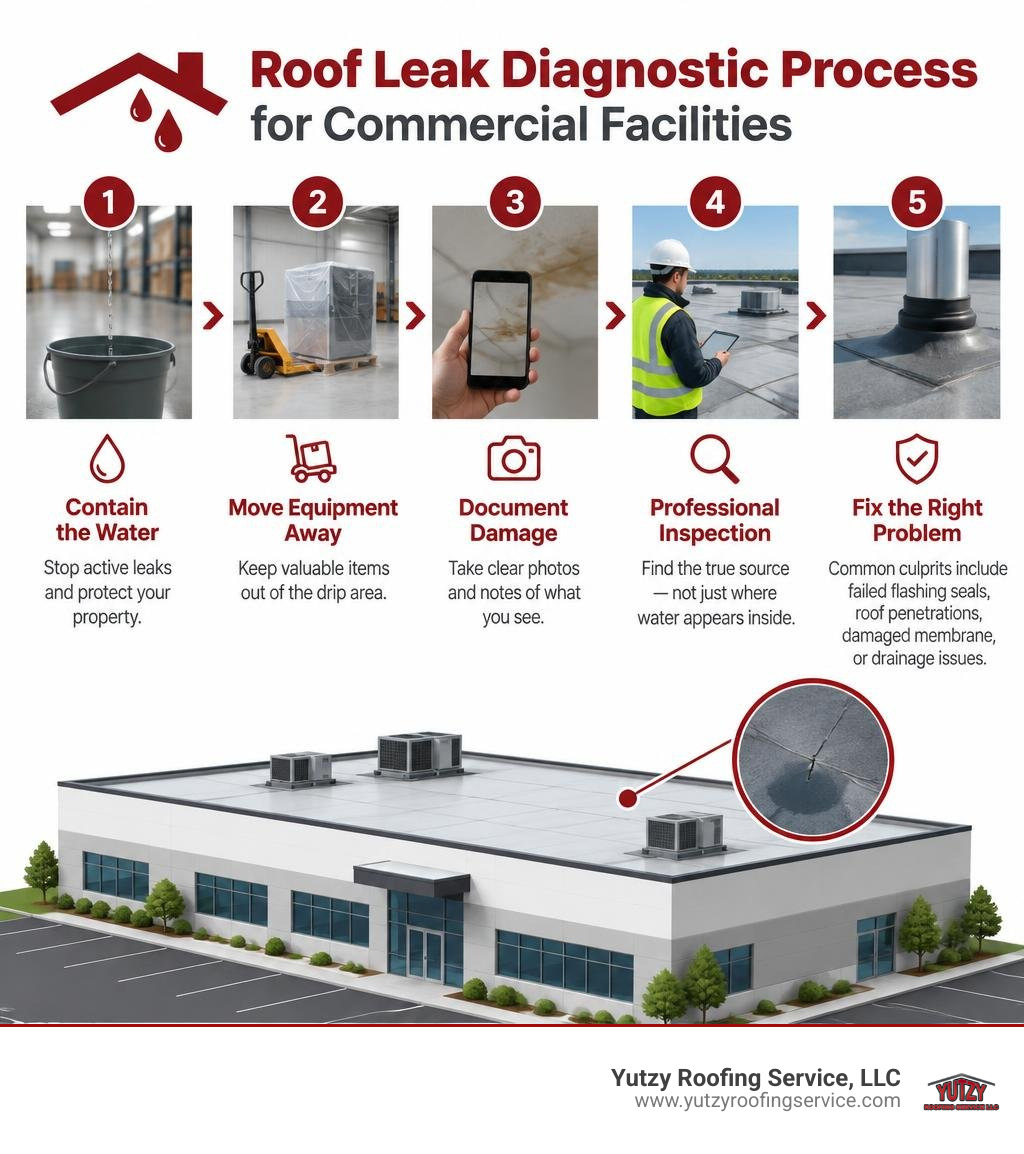
For roof leak repair Fond Du Lac property owners can act on now, first contain the water, move equipment away from the drip area, and document visible damage. Then arrange a professional inspection to trace the leak to its true source – often a failed flashing seal, roof penetration, damaged membrane, or drainage problem rather than the spot where water appears inside.
Do not wait for the next storm. Water can soak insulation, damage roof decking, and create musty conditions quickly. In Fond Du Lac, freeze-thaw weather and heavy runoff can turn a small opening into a larger repair.
I am Josh Yutzy of Yutzy Roofing Service, LLC, a family-owned Wisconsin roofing company serving the state since 1995. Our experience with roof leak repair Fond Du Lac property owners need helps us focus on durable repairs, quality materials, and practical solutions before damage grows.
Roof leak repair Fond Du Lac word roundup:
Step-by-Step Guide to Identifying Active Roof Leaks
Finding the entry point of a roof leak can sometimes feel like chasing a ghost. Water rarely travels in a straight vertical line; it enters through an exterior vulnerability, flows along rafters, trusses, or structural decking, and drips down several feet away from the initial breach.
To protect your facility from structural degradation, follow this methodical leak detection process:
- Locate the Interior Drip Site: Mark the exact location where water penetrates ceilings or interior decking. Place catch basins beneath active drips to protect inventory, machinery, and electrical fixtures.
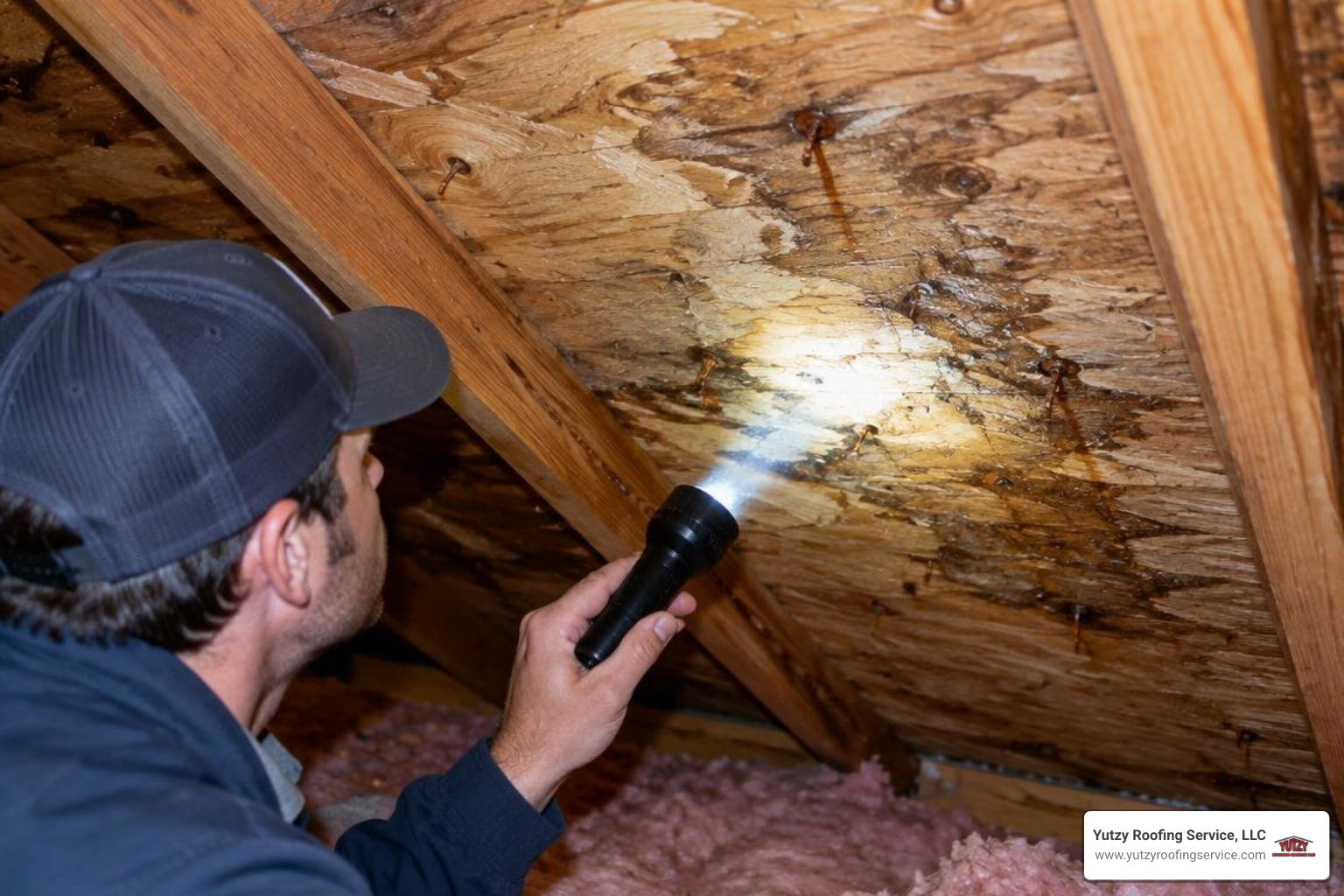
- Access the Attic or Upper Structural Deck: Inspect the underside of the roof deck during or immediately following rainfall. Look for damp timber, rusted fasteners, water tracks, or discolored decking panels.
- Map the Upward Path: Follow moisture marks up the slope of the roof decking toward the highest point of dampness.
- Inspect the Exterior Surface: Transition to the rooftop directly above the highest moisture point identified in the attic. Focus your search on penetrations, membrane seams, and perimeter edges within a 10-foot radius.
- Verify Moisture Saturation: Utilize professional diagnostic tools to measure moisture levels trapped within sub-layers, ensuring hidden pockets of water do not remain unaddressed.
Essential Roof Leak Repair Fond Du Lac Diagnostics
Accurate diagnosis prevents premature replacement while stopping chronic leaks at the source. In commercial facilities and commercial storage buildings, visual inspections only reveal surface-level symptoms.
Advanced moisture mapping involves:
- Thermal Imaging (Infrared Scanning): Moisture holds heat differently than dry building components. Performing an infrared scan after sunset reveals exact boundaries of wet insulation beneath the roof membrane.
- Electronic Moisture Detection: Non-destructive moisture meters quantify saturation levels within roof insulation boards, ensuring technicians cut out only damaged underlayment.
- Physical Membrane Inspections: Checking for punctures, tears, mechanical fastener pull-out, or open lap seams across single-ply membranes like EPDM, TPO, or modified bitumen.

Tracing Penetrations and Perimeter Flashing Failures
Over 90% of commercial roof leaks originate around roof penetrations and perimeter edges rather than within the flat field of the membrane.
When conducting an exterior investigation, inspect these high-risk flashings:
- HVAC Units and Curbing: Vibrations from heavy rooftop mechanical units can crack perimeter sealants or loosen counter-flashing over time.
- Pipe Boots and Conduit Penetrations: Weather-worn neoprene collars and cracked pitch pans allow wind-driven rain to funnel straight down conduit pathways into the building.
- Parapet Walls and Coping Caps: Unsealed coping joints, deteriorated masonry, or loosened termination bars along parapet walls permit water to bypass exterior membranes entirely.
- Drain and Scupper Interfaces: Clogged internal drains or split scupper linings cause water to back up, pooling above critical flashing seams.
When dealing with complex regional weather conditions across East Central Wisconsin, scheduling professional roof repair ensures commercial flashing details are restored to withstand high winds and severe weather.
Effective Methods for Roof Leak Repair Fond Du Lac Property Owners Rely On
Selecting the correct repair methodology depends entirely on the roof substrate, the extent of moisture intrusion, and the structural design of your facility.

- Targeted Membrane Patching: For single punctures or localized seam failures on EPDM or TPO membranes, technicians cut back degraded material, clean the membrane with industrial solvents, prime the area, and heat-weld or adhere a reinforced vulcanized patch.
- Reinforced Mastic and Fabric Applications: Around awkward structural penetrations, skylights, and parapet base flashings, elastomeric liquid membranes embedded with spun-polyester fabric create a seamless, flexible, watertight boot.
- Commercial Roof Restoration Coatings: When a roof exhibits widespread weathering, blistering, or small leaks across its entire surface, full-scale liquid silicone, acrylic, or spray foam coating systems restore watertight integrity. Coatings eliminate vulnerable seams, seal fastener penetrations, and create a monolithic protective barrier over existing metal, modified bitumen, or single-ply surfaces.
Seasonal Factors in Roof Leak Repair Fond Du Lac Projects
Fond Du Lac experiences intense Midwest winter conditions, heavy snow loads, and rapid spring runoff driven by proximity to Lake Winnebago. These local climate conditions introduce unique roofing stresses:
- Freeze-Thaw Cycles: Water expands by roughly 9% when freezing. Moisture trapped in microscopic hairline cracks expands during freezing nighttime temperatures, splitting seams and widening flashing gaps.
- Ice Dam Formations: Poorly insulated roof cavities allow internal building heat to warm the upper roof deck, melting bottom layers of snow. As meltwater runs to colder unheated roof eaves, it refreezes into ice dams, backing standing water beneath flashing components.
- Heavy Snow Load Compression: Sustained snow accumulations deflect roof decks slightly, stressing perimeter terminations and exacerbating low spots where ponding water lingers well into spring.
Comparing Temporary Patches vs Long-Term Restoration
Property managers often face the decision between an immediate quick patch and comprehensive roof restoration.
| Feature | Emergency Roof Patch | Full Commercial Roof Restoration |
|---|---|---|
| Primary Objective | Stop active dripping immediately | Restore long-term waterproofing & extend life |
| Expected Lifespan | 1 to 6 months | 10 to 18+ years (renewable warranties) |
| Installation Time | Under 2 hours | 2 to 5 days depending on facility size |
| Substrate Preparation | Minimal surface drying and cleaning | Power washing, seam priming, fastener tightening |
| Energy Impact | Zero impact on energy efficiency | Lowers cooling costs via reflective topcoats |
| Structural Protection | Localized to immediate puncture | Complete building envelope protection |
| Cost Profile | Low upfront cost; recurring repairs | Cost-effective alternative to tear-offs |
Preventative Maintenance to Keep Attics and Roof Decks Dry
Preventing costly leaks requires proactive seasonal maintenance. Studies from organizations like the National Roofing Contractors Association show that regular preventative maintenance can extend a roof system’s functional lifespan by up to 30%, saving facilities significant capital expenditure over time.
Implement these essential seasonal tasks twice a year (spring and autumn):
- Clear Drainage Paths: Remove fallen leaves, dirt, and debris from rooftop drains, scuppers, downspouts, and commercial gutters to prevent standing water accumulation.
- Inspect Seams and Terminations: Examine lap seams, termination bars, and wall flashings for signs of adhesive degradation, lifting, or curling.
- Check Sealants and Pitch Pans: Refill pitch pockets that have dried out, shrunk, or cracked under UV exposure.
- Secure Loose Fasteners: Tighten or replace backed-out mechanical fasteners across metal decking, coping caps, and trim pieces.
- Monitor Attic Decking and Insulation: Inspect interior sub-structures biannually for dampness, rust rings around fasteners, or sagging insulation batts before exterior leaks manifest indoors.
Frequently Asked Questions About Fond Du Lac Roof Leaks
How often should a commercial or facility roof be inspected?
Commercial and industrial roofs should be inspected at least twice a year—ideally once in the spring after the winter thaw and once in the autumn before heavy snow arrives. Additionally, conduct a visual inspection after major severe weather events, such as hailstorms or severe high-wind fronts, to identify membrane punctures or dislodged perimeter metals immediately.
Can repairing roof leaks improve overall energy efficiency?
Yes. When roof leaks saturate insulation boards (such as polyisocyanurate or fiberglass), the material loses its thermal resistance (R-value). Wet insulation allows conditioned air to escape rapidly during cold Wisconsin winters and permits intense heat transfer during summer. Sealing active leaks, replacing saturated insulation, and applying reflective roof coatings can reduce facility heating and cooling utility costs by 5% to 10%.
What are the earliest warning signs of an active attic leak?
The earliest indicators often appear before visible water drips from the ceiling:
- A persistent musty odor in upper storage areas or attics.
- Dark water stains or mold growth along timber rafters, structural purlins, or plywood decking.
- Surface rust forming on exposed truss plates, metal fasteners, or electrical conduit.
- Compressed, matted, or discolored insulation batts beneath the roof deck.
Conclusion
Protecting your facility against severe weather and moisture intrusion requires quick action, accurate diagnostics, and long-term repair strategies. Addressing minor leaks immediately prevents expensive structural damage, protects valuable interior assets, and preserves the energy efficiency of your building envelope.
At Yutzy Roofing Service, LLC, we specialize in high-performance commercial roof restoration, spray foam coatings, EPDM repairs, and preventative maintenance across Wisconsin. By investing in proactive commercial solutions and mastering roof leak repair solutions, property managers can ensure their facilities remain dry, structurally sound, and energy-efficient for years to come.
