What Is a Rubberized Roof Patch and How Does It Work?
A rubberized roof patch is an advanced repair compound designed to create an immediate, airtight, and watertight seal over roof defects. Traditional roofing cements rely almost entirely on standard asphalt and filler materials, which harden over time and become brittle. In contrast, a rubberized roof patch incorporates synthetic liquid rubber polymers and deep-penetrating oils (such as Penetrex technology) directly into the asphalt resin or synthetic base.
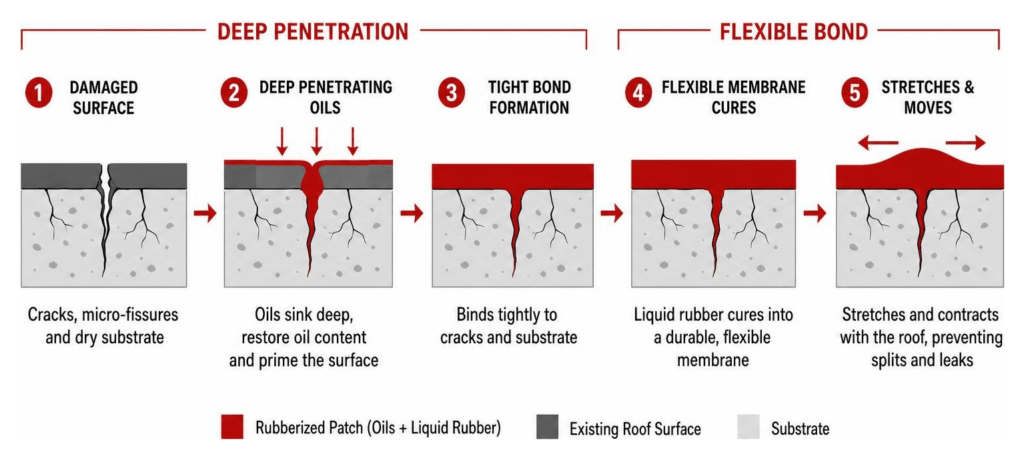
When applied over damaged commercial roofing, these deep-penetrating oils sink deep into narrow cracks, micro-fissures, and dried-out substrates to restore oil content and bond tightly to the base material. Meanwhile, the liquid rubber content cures into a heavy-bodied, flexible membrane. This flexible bond stretches and contracts alongside the underlying roof system during extreme thermal movement, preventing the patch from splitting or popping loose. Understanding how localized sealants function alongside full-surface restoration helps when evaluating a rubber roof sealant vs coating.
Key Features and Benefits of a Rubberized Roof Patch
Modern rubberized roof patch products offer distinct physical advantages that make them essential for commercial maintenance toolkits:
- Penetrating Oils & Deep Adhesion: Specialized oil additives allow the compound to soak into weathered asphaltic fibers, establishing a deep-rooted mechanical bond.
- Superior Sag Resistance: Heavy-bodied trowel grades maintain their thickness on vertical flashing, parapet walls, and pipe boots without slumping during warm weather.
- UV Stability & Weatherproofing: Formulations incorporate mineral fillers and synthetic rubbers that resist UV oxidation, drying, and chalking under direct sunlight.
- Extended Warranties: High-grade commercial rubberized patches frequently carry product ratings or manufacturer coverage up to 10 years.
- High-Gap Filling Capacity: Thicker rubberized sealant pastes can fill wide splits and gaps up to 3 inches across without shrinking or cracking during cure.
Rubberized Patch vs. Traditional Roof Cement
Standard plastic roof cement has served as a temporary patch material for decades, but it lacks long-term elastic performance. Standard asphalt cement relies on hard asphalt binders that stiffen as their light oils evaporate. Within a few seasons, roof movement causes standard cement to dry, crack, and separate from the substrate.
Conversely, a rubberized roof patch is engineered to remain pliable over years of continuous freeze-thaw cycles. Testing demonstrates that high-performance rubberized roof cements last 2 to 3 times longer than standard non-rubberized roof cements.
| Feature / Metric | Standard Plastic Roof Cement | Rubberized Roof Patch Compound |
|---|---|---|
| Primary Binder | Straight Asphalt Resin | Asphalt blended with Synthetic Rubber / Polymers |
| Flexibility | Low (becomes brittle over time) | High (elongates with thermal movement) |
| Service Longevity | 1 – 3 years | 5 – 10+ years (2-3x longer lifespan) |
| Crack Penetration | Surface adhesion only | Penetrating oil action reaches deep into cracks |
| Shrinkage & Sag | Prone to cracking and slumping | High sag resistance; minimal shrinkage |
| Gap Filling | Limited to hairline cracks (< 1/4") | Fills gaps up to 3 inches wide |
Compatible Roofing Surfaces and Wet Application Limits
Commercial buildings utilize a wide range of roofing membranes, and selecting a compatible repair material is critical to achieving a long-lasting seal. Rubberized patch formulations excel on bituminous, asphaltic, and metal substrates, but technical requirements vary depending on the product type. For full performance metrics, reviewing official technical documentation like the Elastomeric Roof Patch Specifications is recommended.
Typical compatible substrates include:
- Built-Up Roofs (BUR): Multi-ply asphalt and gravel systems.
- Modified Bitumen: Both SBS (Styrene-Butadiene-Styrene) and APP (Atactic Polypropylene) modified membranes.
- Commercial Metal Roof Panels: Standing seam, corrugated, and exposed-fastener metal systems.
- Single-Ply Membranes: Aged EPDM rubber membranes and select TPO/PVC surfaces (when paired with appropriate elastomeric or silicone formulations).
Applying Patching Material on Wet and Damp Surfaces
A challenge during weather emergencies is stopping active roof leaks while water is still running across the deck. Solvent-based asphaltic rubberized patches (often labeled as “Wet Patch”) contain specialized chemical surfactants that displace standing water. These compounds adhere tightly to cold, wet, or even completely submerged surfaces, establishing an immediate barrier to stop water intrusion during a storm.

However, property owners must understand the difference between temporary emergency patching and permanent repair:
- Temporary Wet Repairs: When applied directly into standing water or onto wet felt, the patch stops the leak instantly. However, water remains trapped underneath the waterproof barrier. When the sun heats the roof, this trapped moisture expands into steam, creating high pressure that can lift the patch, form blisters, and eventually cause new leaks.
- Permanent Dry Repairs: To achieve a permanent repair on a wet roof, open up or cut out the damaged area once the storm passes, allow the substrate to dry completely, and apply a fresh 3-course patch over the dry, clean surface.
Material Incompatibilities and Safety Precautions
While rubberized roof patch products work across most commercial substrates, specific material incompatibilities and safety hazards exist:
- Coal Tar Pitch Incompatibility: Asphaltic rubberized patches must never be applied over coal tar pitch roofing membranes. The solvents and asphalt in the patch react chemically with coal tar, causing the compound to soften, run, and break down completely.
- Solvent Vapor Hazards: Solvent-based rubberized cements contain mineral spirits and aromatic solvents. When working near air intake vents or in confined spaces, heavy solvent vapors can enter the building or create health hazards for installers.
- Personal Protective Equipment (PPE): Always wear solvent-resistant gloves, eye protection, and a NIOSH-approved respirator when working with solvent-borne mastics or disturbing old roof layers that may contain lead or hazardous dust.
- VOC Limits: Ensure chosen products comply with regional volatile organic compound (VOC) limits. Solvent-based patches typically maintain VOC levels under 250 g/L, while acrylic elastomeric patches stay under 25 g/L.
How to Apply Rubberized Roof Patch for Permanent Leak Repairs
Achieving a durable, leak-free patch requires thorough preparation and proper application thickness. Simply smearing a thin layer of compound over dirt or loose gravel will result in premature failure. If you are handling basic maintenance tasks, learning DIY rubber roof repair made easy will help you establish proper field protocols.
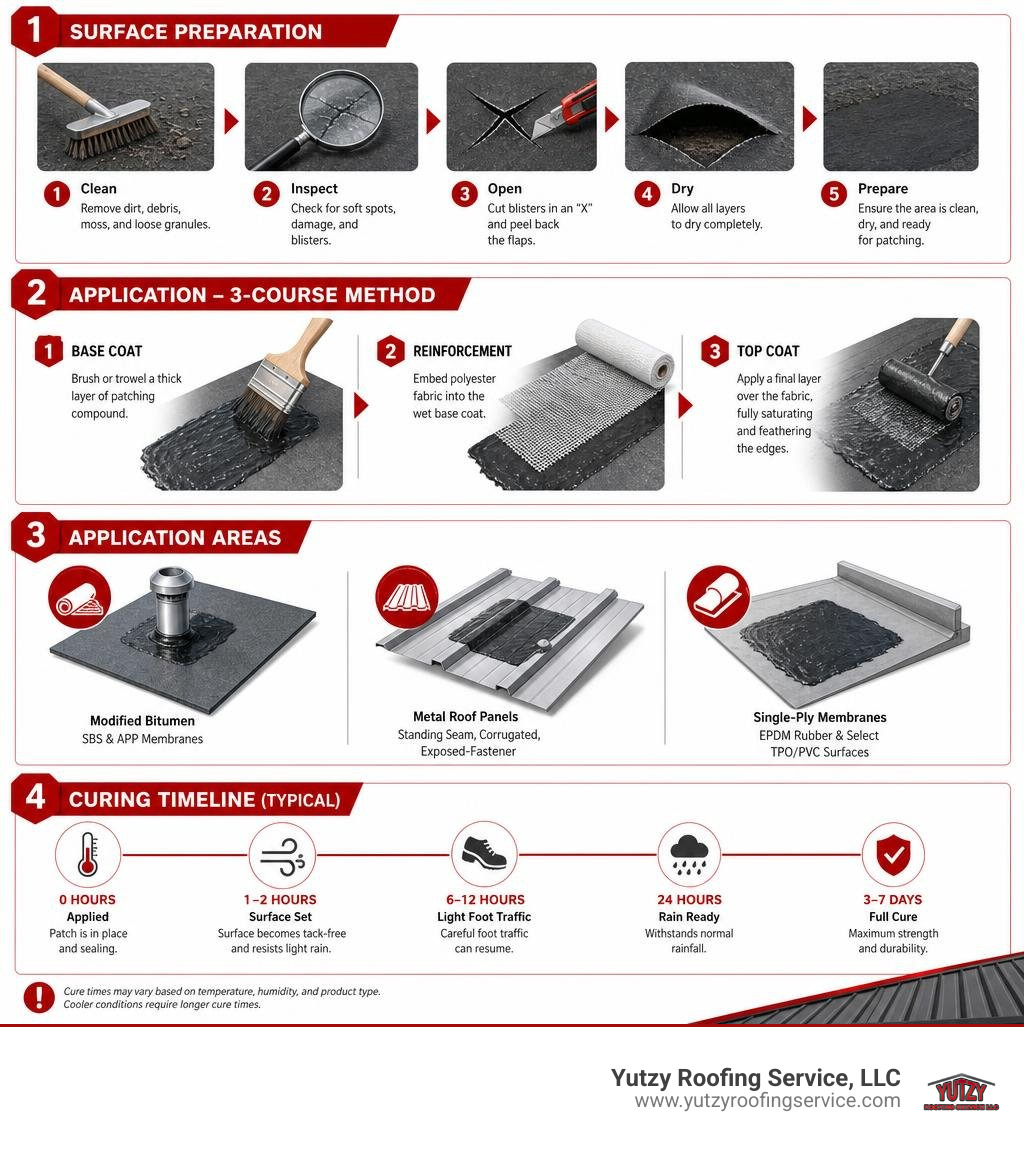
Step 1: Thorough Surface Cleaning Scrape away loose gravel, dirt, moss, algae, rust, and degraded roof cement using a wire brush or stiff broom. On mineral-surfaced cap sheets, sweep away loose surface granules. Wipe off grease or oil using mineral spirits on asphaltic systems or approved cleaners on single-ply membranes.
Step 2: Substrate Inspection Inspect the area surrounding the leak for structural soft spots, delaminated insulation, or unbonded membrane seams. Cut open air blisters or water pockets in a cross pattern (“X” cut), peel back the flaps, and allow the interior layers to dry completely.
Step 3: Primary Trowel Application Using a margin trowel, putty knife, or broad knife, scoop the rubberized roof patch compound and spread it heavily over the repair area. Apply the material at an even wet film thickness of approximately 1/8 inch (125 mils). Ensure the patch extends at least 2 to 4 inches beyond the damaged edge onto sound roofing material.
Step 4: Surface Coverage Calculation When applied at the standard 1/8-inch thickness, a 1-gallon container yields a coverage rate of approximately 12 square feet.
Executing the 3-Course Repair Method
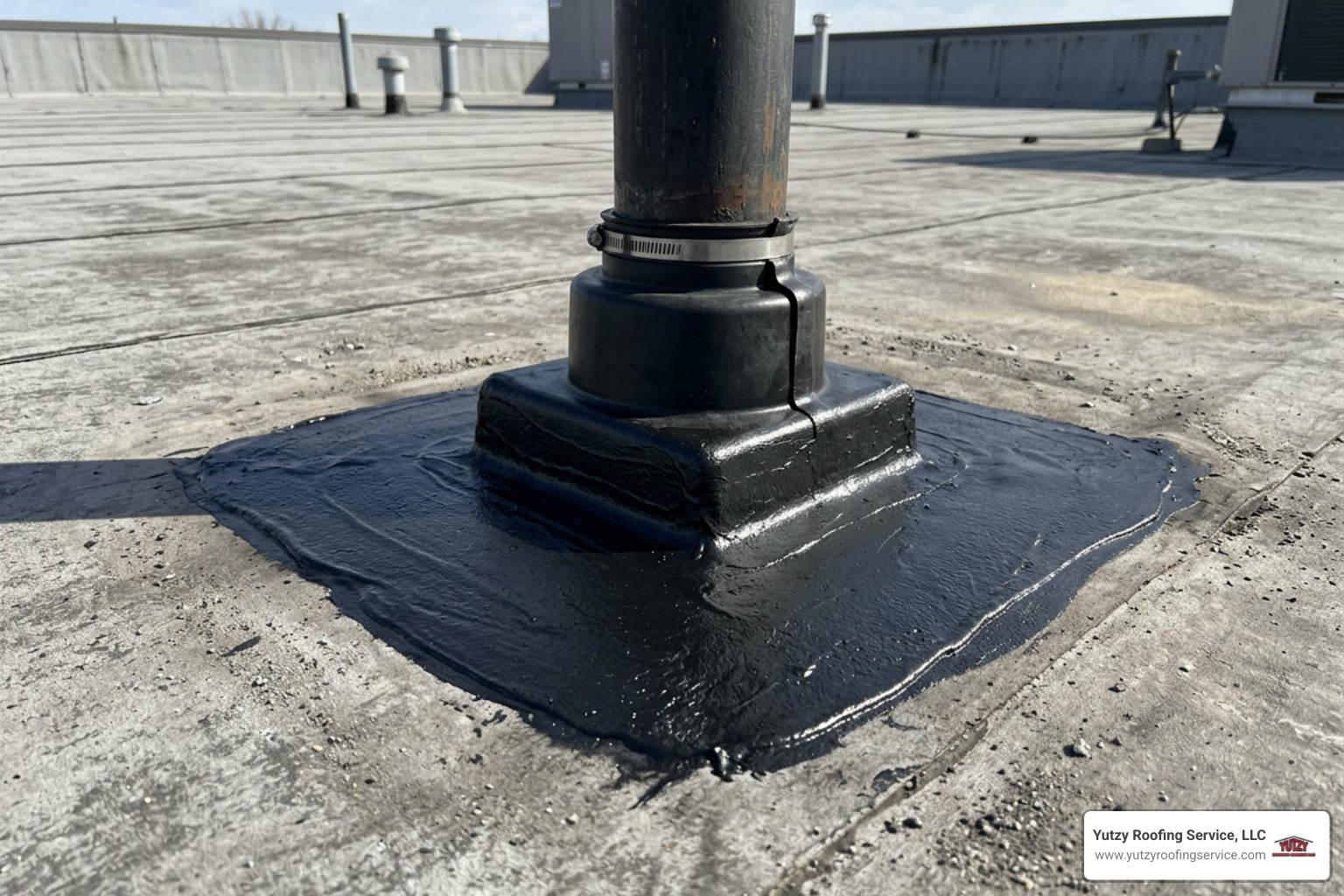
For high-stress areas—such as lap seams, split flashing, structural joints, and pipe penetrations—a simple single layer of roof patch is not sufficient. Commercial roofing standards require a 3-course repair method (sandwich method) to absorb dynamic structural movement without tearing. For specialized detail work, review our complete guide on patching things up: a guide to EPDM flashing and seam repair.

The 3-course installation procedure follows these exact steps:
- Course 1 (Base Coat): Apply a heavy layer of rubberized roof patch over the seam, split, or detail area at 1/8-inch thickness, extending 3 to 4 inches beyond the crack on all sides.
- Course 2 (Reinforcing Mesh): Immediately press a strip of woven fiberglass patching fabric or spun-bound polyester mesh directly into the wet patch compound. Use a trowel to lightly press the fabric down, smoothing out all wrinkles and air pockets until the wet compound bleeds through the mesh weave.
- Course 3 (Top Coat): Apply a second heavy layer of rubberized roof patch directly over the embedded fabric, completely encapsulating the mesh. Ensure no fabric threads remain exposed to UV rays or weather.
Curing Times and Paintability of Rubberized Roof Patch
Curing speeds depend on ambient temperature, humidity, wind speed, and application thickness.
- Tack-Free Skin Time: Solvent-based pastes and elastomeric patches typically form a protective surface skin within 15 to 30 minutes, preventing dust and light rain from washing away the fresh compound.
- Full Cure Time: Under standard weather conditions (70°F and 50% relative humidity), standard asphaltic and elastomeric patches achieve a full functional cure within 24 hours. Heavy paste formulations or deep gap fills (up to 3 inches) require 24 to 48 hours for complete through-curing.
- Application Temperature Limits: Apply most rubberized mastics when air and substrate temperatures range between 40°F and 120°F (4°C to 49°C). If temperatures on hot metal decks exceed 100°F, lightly misting the metal with water prior to applying water-based elastomeric patches prevents the material from skinning over too quickly.
- Recoating & Paintability: White acrylic elastomeric patches can be top-coated or painted with reflective acrylic roof coatings after 4 to 8 hours of drying time. Standard asphaltic rubberized patches require several weeks of cure before coating with aluminum roof paint to prevent asphalt bleed-through. Silicone-based rubber patches are inherently non-paintable due to their low surface energy, though their built-in UV resistance eliminates the need for topcoats.
Comparing Patch Material Formulations: Asphaltic, Elastomeric, and Silicone
Not all roof patch products share the same chemical makeup. Commercial building managers must select between three distinct chemistry categories based on performance needs, budget, and environmental exposure. To review top-rated repair options, check our overview of top products to fix your leaky rubber roof.
1. Solvent-Based Asphaltic Rubberized Wet Patch
- Chemical Base: Asphalt resin blended with mineral spirits, cellulose fibers, Penetrex oils, and synthetic rubber polymers.
- Best Use Cases: Built-up roofing, modified bitumen (SBS/APP), flashings, and emergency wet repairs during storms.
- Key Advantages: Excellent wet-surface and underwater adhesion; deep crack penetration; low initial material cost.
- Cleanup Method: Requires mineral spirits or paint thinner to clean tools and equipment before drying.
- Technical Specs: Solids content ~73-77% by weight; VOC < 250 g/L; flash point 105°F; Rubberized Wet Patch Technical Data.
2. Acrylic Elastomeric Roof Patch
- Chemical Base: Water-borne acrylic polymer resins reinforced with titanium dioxide pigments and elastomeric flexibilizers.
- Best Use Cases: Metal roof panels, exposed metal fasteners, aged single-ply systems, and dry asphalt surfaces requiring a bright white reflective finish.
- Key Advantages: Non-flammable; low VOC content (< 25 g/L); dries bright white; fully paintable with reflective coatings; easy soap-and-water cleanup.
- Limitations: Cannot be applied on wet surfaces or when rain is predicted within 48 hours; vulnerable to damage from standing water.
- Technical Specs: Solids content ~69% by weight; dry-to-recoat in 4–8 hours; full cure in 24 hours; 10-year limited warranty.
3. Heavy-Bodied Silicone Roof Patch
- Chemical Base: High-solids (90%+) moisture-cure silicone rubber.
- Best Use Cases: Flat roofs with chronic ponding water areas, commercial EPDM/TPO single-ply seams, skylight curbs, and severe temperature environments.
- Key Advantages: Impervious to standing or ponding water; extreme ultimate elongation (400% to 500%); wide service temperature range (-40°F to 350°F); excellent UV stability.
- Limitations: High initial material cost; non-paintable; requires solvent cleanup before cure; uncured silicone is easily contaminated by dirt.
Frequently Asked Questions About Roof Patching
How long does a rubberized roof patch repair typically last?
A professionally installed rubberized roof patch using the 3-course method over a clean, dry surface typically lasts between 5 and 10 years. Many premium commercial patch formulations carry standard 10-year product performance warranties. Because the liquid rubber binders resist cracking under dynamic expansion and contraction, these repairs last 2 to 3 times longer than repairs made with standard plastic roof cement. However, emergency repairs applied over wet or dirty substrates should be re-inspected and permanently redone once the roof dries.
Can a rubberized patch be applied in below-freezing temperatures?
Solvent-based asphaltic wet patches can be applied in cold weather, provided the material itself is kept at room temperature prior to use so it remains trowelable. However, standard application guidelines recommend applying mastics when ambient temperatures are above 40°F (4°C). Below 40°F, frost or ice crystals can coat the roofing membrane, preventing proper chemical adhesion. Water-based acrylic elastomeric patches must never be applied in freezing conditions, as freezing destroys the un-cured emulsion.
How do you clean up rubberized patch compounds from tools?
Cleanup protocols depend directly on the formulation chemistry:
- Solvent-Based Asphaltic & Silicone Patches: Clean trowels, putty knives, and equipment immediately using mineral spirits, paint thinner, or naphtha. Cured silicone or cured asphalt mastic must be scraped or cut off mechanically using a utility knife.
- Water-Based Acrylic Elastomeric Patches: Wash brushes, trowels, and hands with warm soap and water before the material dries.
- Skin Contact: To remove solvent-based paste or silicone sealant from skin, wipe away excess material with a dry paper towel, then clean the area using isopropyl alcohol or specialized hand wipes followed by soap and water.
Dependable Commercial Roof Leak Control
Using a high-quality rubberized roof patch is one of the most effective ways to seal unexpected roof leaks, reinforce vulnerable flashing, and stop water damage in its tracks. By selecting the proper compound—whether an all-weather asphaltic wet patch, a reflective elastomeric sealant, or a ponding-water-resistant silicone—building owners can protect their structural investments across all weather conditions.
While localized patching provides an immediate barrier against minor leaks, recurring roof issues often indicate aging membranes or widespread seam degradation. In these cases, combining spot repairs with commercial restoration coatings or fluid-applied membrane systems offers long-term protection without the expense of a complete roof tear-off.
At Yutzy Roofing Service, LLC, we specialize in helping commercial property owners extend the working life of their roofs across Wisconsin and Minnesota. Our commercial restoration solutions, spray foam coatings, and metal roof repair systems are backed by non-prorated renewable warranties up to 18 years. To diagnose tricky commercial roof leaks or learn how to properly maintain your facility, explore our guide on how to fix a roof leak and mistakes to avoid, or contact our team today for an expert roof evaluation.
