Choose a Roof Coating That Matches Water Exposure and Roof Condition
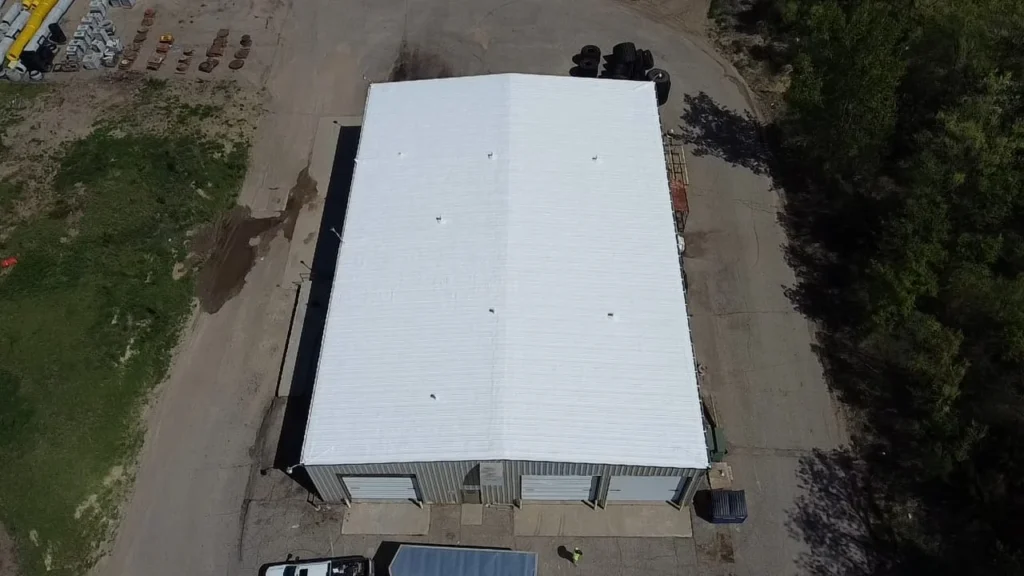
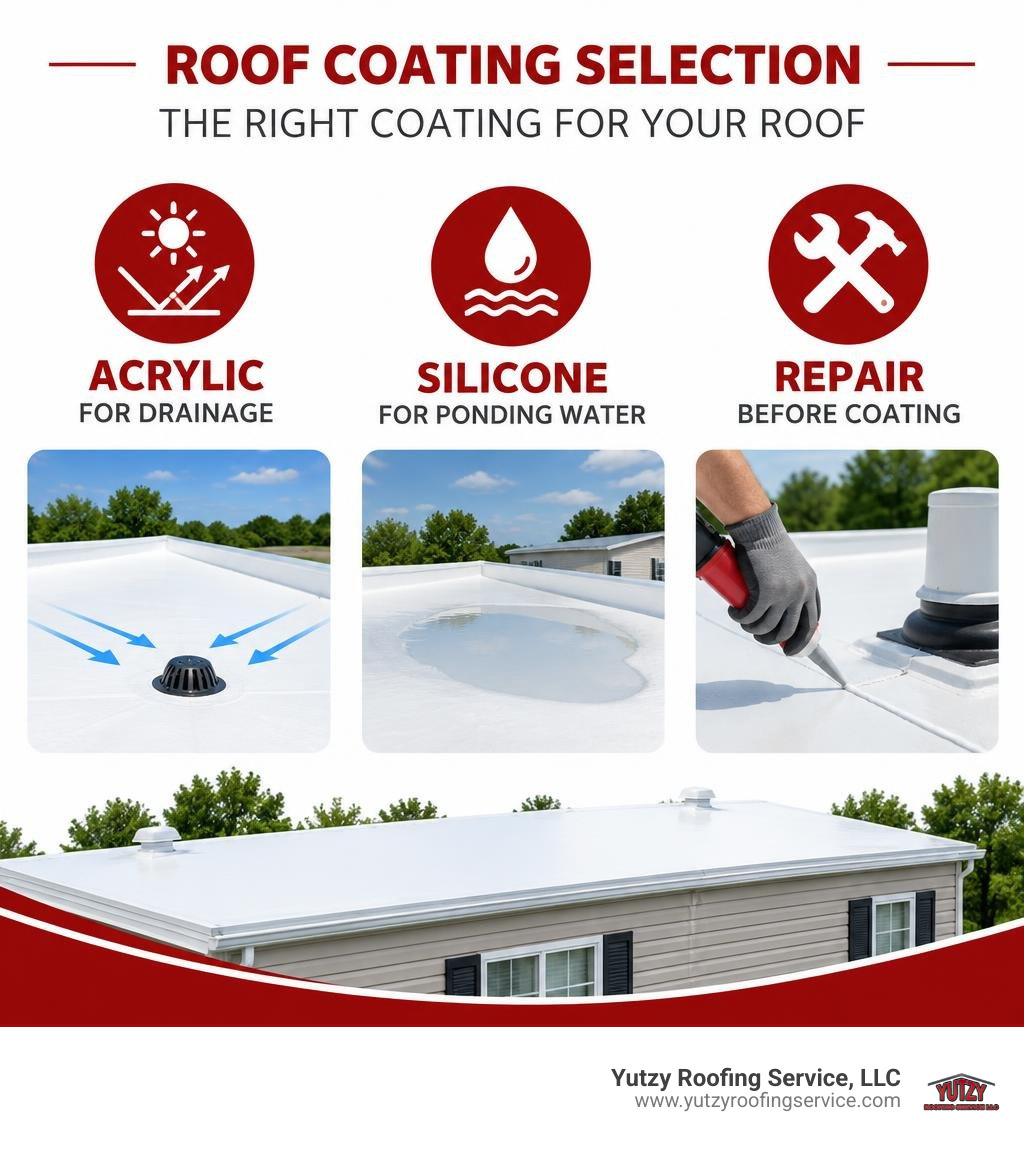
The best commercial low-slope roof coating is one that matches the roof’s condition, drainage, and climate. Choose a bright-white acrylic or elastomeric coating for strong reflectivity and energy savings on a sound, well-draining surface; choose high-solids silicone where ponding water is a concern. Property managers evaluating a mobile home roof coating for warehouses, offices, and other commercial buildings will find the same principles apply: coating only works when the existing roof is dry, structurally sound, clean, and repaired at seams and penetrations.
A properly applied reflective coating creates a seamless waterproof layer that helps manage UV exposure, temperature swings, and minor surface movement. White elastomeric systems can lower interior temperatures and may provide energy savings of up to 35%, while two coats are commonly recommended for full coverage and durability. For commercial structures, a durable fluid-applied system follows the same restoration logic: the substrate must be sound before any fluid-applied membrane goes down.
I am Josh Yutzy of Yutzy Roofing Service, LLC, a family-owned roofing company serving Wisconsin since 1995 with a focus on durable roof restoration and repair systems. Our experience with commercial low-slope roof coating and restoration starts with the same priority: identify whether a coating can reliably protect the existing roof before recommending it.
Commercial low-slope roof coating helpful reading:
Core Types of Low-Slope Roof Coating Systems
Low-slope commercial roof structures face constant exposure to weather extremes. Understanding the chemical formulations behind fluid-applied membranes makes it easy to select the right product. Reviewing a detailed guide to roof coating options can help you decide which material fits your building’s slope and climate demands.
| Coating System | Key Chemistry | Best Application | Ponding Water Resistance | Typical Service Life |
|---|---|---|---|---|
| Acrylic / Elastomeric | Water-based acrylic polymers | Well-drained sloped roofs, UV reflection | Moderate (requires positive drainage) | 5 – 10 Years |
| 100% High-Solids Silicone | Moisture-cure silicone resins | Flat areas, low-slope sections | Excellent (impervious to standing water) | 10 – 18 Years |
| Elastomeric Ceramic | Acrylic with ceramic microspheres | High-heat areas, sound reduction | Moderate to Good | 10 Years |
| Asphalt Emulsion | Clay-stabilized asphalt | Base waterproofing, dampproofing | Moderate | 3 – 7 Years |
Elastomeric and Acrylic Low-Slope Roof Coating Formulations
Water-based acrylic elastomeric coatings are widely favored for their balance of ease of use, cost-effectiveness, and physical durability. These formulations feature impressive elongation properties, stretching up to 200% of their original thickness. This elastic flexibility accommodates standard thermal expansion and contraction cycles across broad temperature swings without cracking.
Acrylic systems maintain a low-VOC profile that makes handling safer during application. For properties with positive drainage, reviewing acrylic roof coating benefits shows how these bright-white finishes deliver high solar reflectance. For exact product properties and application details, you can consult specific acrylic latex roof coating technical guidelines.
High-Solids 100% Silicone Formulations
When positive drainage is imperfect and standing water occurs, high-solids silicone becomes the premier choice. Formulated as a solvent-free system with low volatile organic compounds, silicone utilizes moisture-cure chemistry. The material pulls ambient moisture from the air to cross-link into a monolithic barrier.
Because cured silicone is non-porous and chemically inert against water breakdown, it will not soften, blister, or peel under ponding water. High-solids silicone can often be applied in a high-build single coat, achieving a 24-mil dry film thickness in one uniform application. Reviewing standard silicone roof coating technical specifications for commercial roof coating applications confirms that single-pass coverage significantly reduces labor while providing lasting weatherproofing.
Ceramic Insulating and Asphalt Emulsion Alternatives
Specialty formulations provide targeted performance benefits:
- Ceramic Insulating Systems: Blend high-grade elastomeric resins with microscopic ceramic spheres. These spheres reflect ultraviolet rays while deadening airborne noise from rain and wind.
- Asphalt Emulsions: Clay-stabilized, water-based asphalt coatings serve as heavy-duty base coats and dampproofers, filling small surface imperfections on weathered substrates before a bright reflective topcoat is applied.
Key Performance Benefits and Energy Savings
Coating a low-slope roof forms a seamless, fluid-applied barrier that seals fasteners, laps, and perimeter joints. Understanding the advantages of roof coatings and sealants helps property managers recognize how preventative restoration protects structural decking from moisture intrusion and thermal strain.
Heat Reflectivity and Cooling Cost Reductions
Bright white roof coatings feature a high Solar Reflectance Index (SRI), reflecting up to 85% to 95% of incoming solar radiation. Traditional dark roofing absorbs extreme heat, often reaching 150°F to 180°F in direct summer sun. A reflective coating can reduce surface temperatures by 30°F to 50°F, translating directly to lower internal heat gain and cooling cost reductions of up to 35%. Using specialized heat proof paint for roof cooling eases the burden on indoor HVAC equipment during peak summer months.
Substrate Protection and Waterproof Membrane Formation
Repeated exposure to moisture and atmospheric oxygen causes corrosion and fastener fatigue on commercial roofing surfaces. A flexible, monolithic coating stops rust in its tracks while creating a continuous seal over movement-prone seams. Evaluating the rubber roof sealant vs coating comparison demonstrates why full-surface fluid membranes outlast localized spot repairs by accommodating seasonal thermal shifts.
Surface Compatibility and Roof Preparation Standards

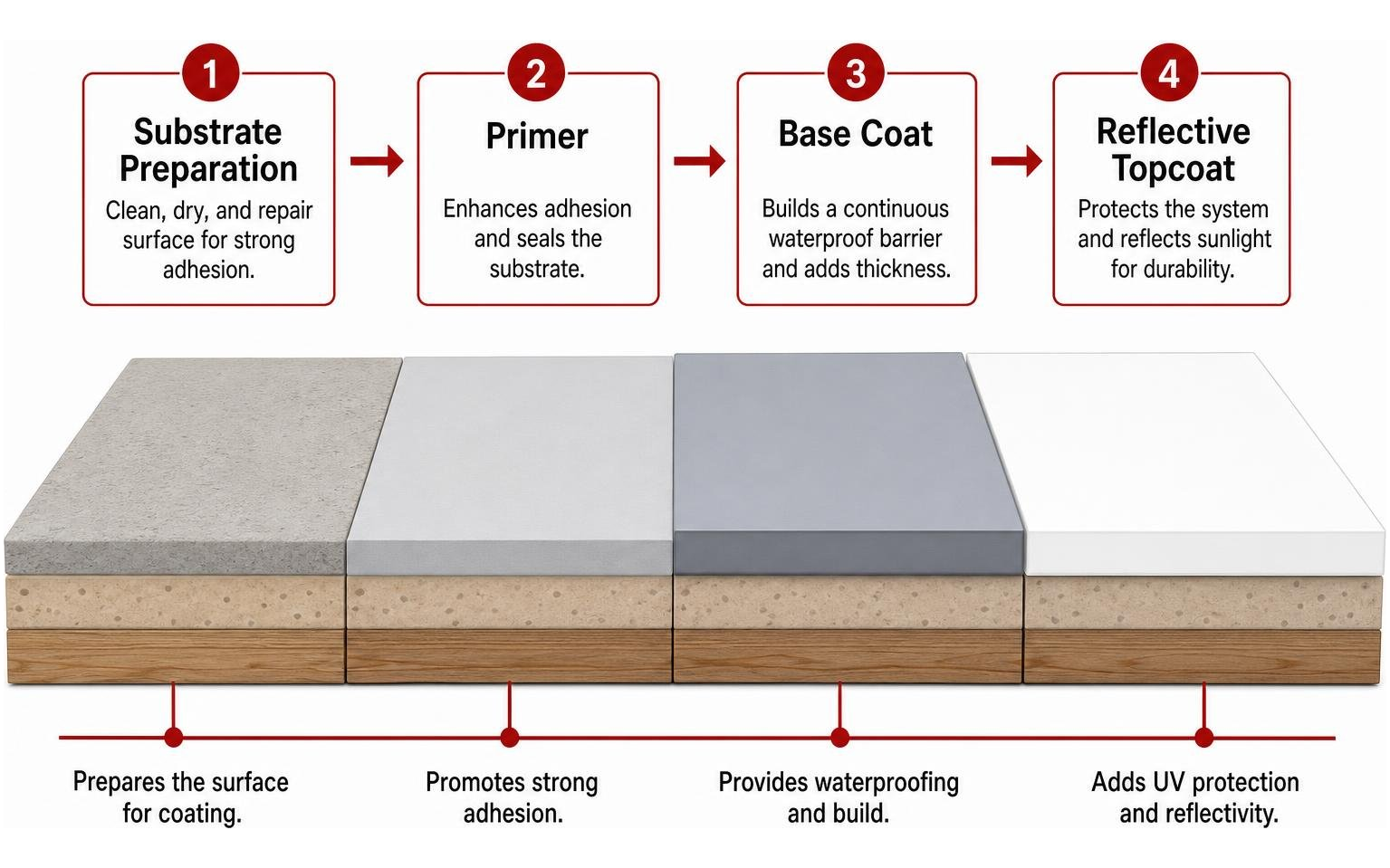
Proper surface preparation accounts for roughly 80% of a coating project’s long-term success. Even top-tier coatings will fail prematurely if applied over loose contaminants, chalked paint, moisture, or active corrosion.
Substrates Suitable for a Low-Slope Roof Coating
Fluid-applied coatings bond to a wide range of properly prepped low-slope roofing substrates:
- Galvanized Steel and Aluminum: Excellent candidates for reflective elastomeric and acrylic systems. Exploring proven reflective metal roof coating options preserves existing metal sheets without costly tear-offs.
- Weathered Single-Ply Membranes (EPDM, TPO, PVC): Accept silicone and specialty elastomeric coatings once cleaned and treated with an adhesion primer.
- Aged Asphalt and Modified Bitumen: Readily restored using asphalt emulsions or high-build acrylic coatings with appropriate bleed-blocking primers.
Cleaning, Seam Sealing, and Adhesion Priming
Achieving a durable bond requires methodical execution:
- Pressure Washing: Clean the surface with a minimum of 1500 PSI to remove dirt, grease, moss, and loose coatings. Allow the substrate to dry completely.
- Corrosion Treatment: Remove loose rust with a wire brush and treat oxidized areas with a rust-inhibiting metal primer.
- Seam and Fastener Detailing: Seal all mechanical fasteners, laps, joints, and penetrations using an elastomeric mastic or reinforcing mesh tape prior to coating the broader deck.
- Adhesion Priming: Apply a manufacturer-recommended single-ply or metal primer to ensure maximum adhesion.
Application Methods, Coverage Rates, and Thickness Specifications

The ideal application method depends on project scale, deck slope, and the viscosity of the chosen coating.
Brush, Roller, and Airless Spray Equipment Requirements
- Brushes: Use heavy-duty, soft roofing brushes for detail work around curbs, flashings, and vents.
- Rollers: Apply with a 3/4-inch nap roller on smooth-to-medium surfaces to ensure consistent wet mil thickness.
- Airless Sprayers: Large commercial surfaces benefit from high-pressure spray rigs. Heavy silicone coatings require sprayers rated at up to 7000 PSI with delivery rates of 1 to 2 gallons per minute and tip sizes between .027 and .040 inches. Clean tools promptly with warm soapy water for acrylics or mineral spirits for silicone products.
Calculating Pail Quantities and Dry Film Thickness
Achieving the required Dry Film Thickness (DFT) is essential for long-term performance and warranty coverage:
- Coverage Rates: Acrylic and elastomeric products generally yield 100 to 150 square feet per gallon per coat. A standard 4.75-gallon pail covers approximately 250 to 350 square feet across two coats.
- Mil Thickness Targets: Most quality systems require 16 to 24 dry mils total. Two successive coats applied at 12 to 16 wet mils each ensure complete coverage without pinholes or thin spots.
Longevity, Product Costs, and Manufacturer Warranties
Planning a roof restoration requires balancing initial material investment against long-term service life.
Expected Service Life and Recoat Intervals
Quality elastomeric coatings provide a service life of 5 to 10 years before requiring a maintenance recoat. High-solids silicone systems routinely perform for 10 to 18 years. Scheduling visual inspections every spring and fall ensures minor drainage blockages or physical scuffs are addressed before the membrane is compromised.
Pricing Tiers and Warranty Considerations
- Entry-Level Acrylics / Asphalt Emulsions: Typically range from $45 to $85 per 4.75-gallon pail, offering economical baseline waterproofing.
- Premium Elastomeric Ceramics: Price out between $55 and $120 per pail, providing enhanced thermal and sound insulation.
- High-Solids 100% Silicones: Generally run $150 to $350 per 4.75-gallon container, reflecting superior ponding water durability.
Comprehensive commercial restoration projects often qualify for 10- to 18-year renewable, non-prorated manufacturer warranties when applied to required mil thicknesses by approved contractors.
Frequently Asked Questions About Roof Restoration
When should a roof not receive an elastomeric coating?
Do not apply elastomeric coatings over loose gravel, traditional shingles, active interior moisture leaks with saturated insulation, or structurally compromised decking. Structural failures require deck repair or replacement before any coating is applied.
How many gallons are needed to cover a small or large low-slope roof area?
For a 1,000-square-foot roof using a standard two-coat elastomeric system (averaging 125 sq. ft. per gallon per coat), you will need roughly 16 gallons (about 3 to 4 standard 4.75-gallon pails). A larger 5,000-square-foot roof requires approximately 80 gallons (about 17 pails) to achieve proper dry film thickness.
How long does a silicone or elastomeric system take to cure?
Under standard conditions (70°F and 50% relative humidity), acrylic coatings dry to the touch in 2 to 4 hours and are ready for a second coat in 12 to 24 hours. Silicone coatings dry to the touch in 2 hours by absorbing ambient moisture and achieve full return-to-service cure within 24 hours.
Conclusion
Restoring a low-slope roof with a high-performance coating is a proven, cost-effective way to stop leaks, improve energy efficiency, and protect structural assets from weather degradation. Working with an experienced contractor ensures proper substrate preparation, precise mil thickness, and dependable long-term protection.
At Yutzy Roofing Service, LLC, we specialize in comprehensive commercial roof restoration across Wisconsin and Minnesota, including Madison, Appleton, Wausau, Fond du Lac, Green Bay, Eau Claire, and Marshfield. To extend the performance of your commercial building with long-lasting solutions, explore our professional options for restoration and commercial roof coatings in Madison, WI and schedule a professional evaluation today.
