How Rubberized Metal Roof Coating Protects a Commercial Roof
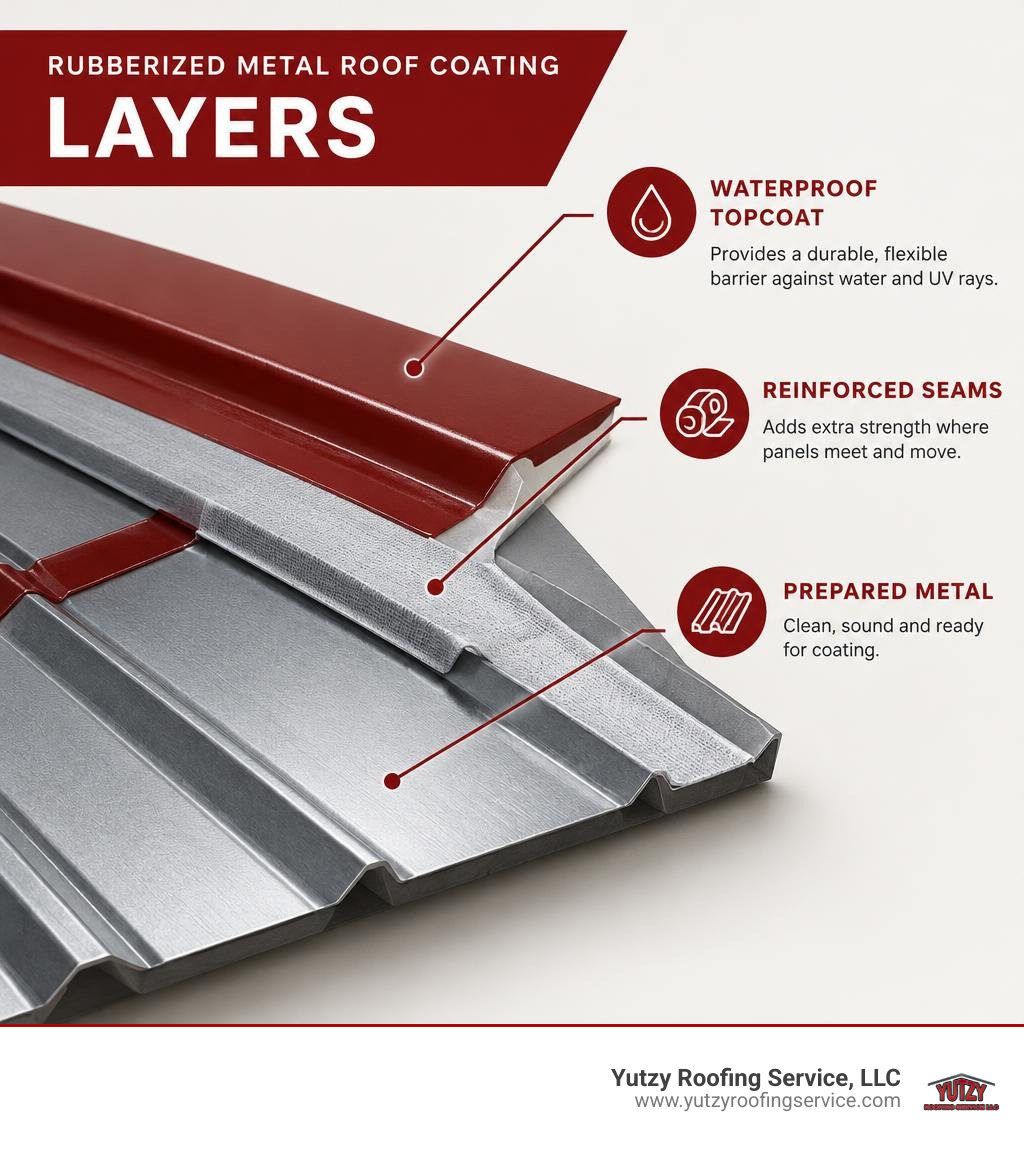
Rubberized metal roof coating is a flexible, waterproof layer applied over an existing metal roof. It helps seal small gaps and moves with the panels as Wisconsin temperatures change. It can be a practical way to restore a sound roof, but coating alone will not fix loose panels, failed fasteners, or severe rust.
A roofing contractor should inspect the roof, repair damaged areas, clean the metal, reinforce seams and penetrations, and apply the coating at the thickness the manufacturer requires. Good prep matters as much as the coating itself.
I’m Josh Yutzy of Yutzy Roofing Service, a family roofing business that has served Wisconsin since 1995. I’ll use our commercial metal roof restoration experience to explain when a rubberized metal roof coating makes sense and what it takes to make it last.
Rubberized metal roof coating terms at a glance:
Why Commercial Facilities Choose a Rubberized Metal Roof Coating
Commercial facilities face extreme weather cycles throughout the Midwest. In places like Madison, Wausau, and Green Bay, commercial metal roofs endure scorching summer heat followed by sub-zero winter freezes. These massive temperature swings trigger thermal shock, causing steel and aluminum panels to constantly expand and contract. Over time, this natural shifting backs out fasteners, pulls open panel overlaps, and strains factory seams.
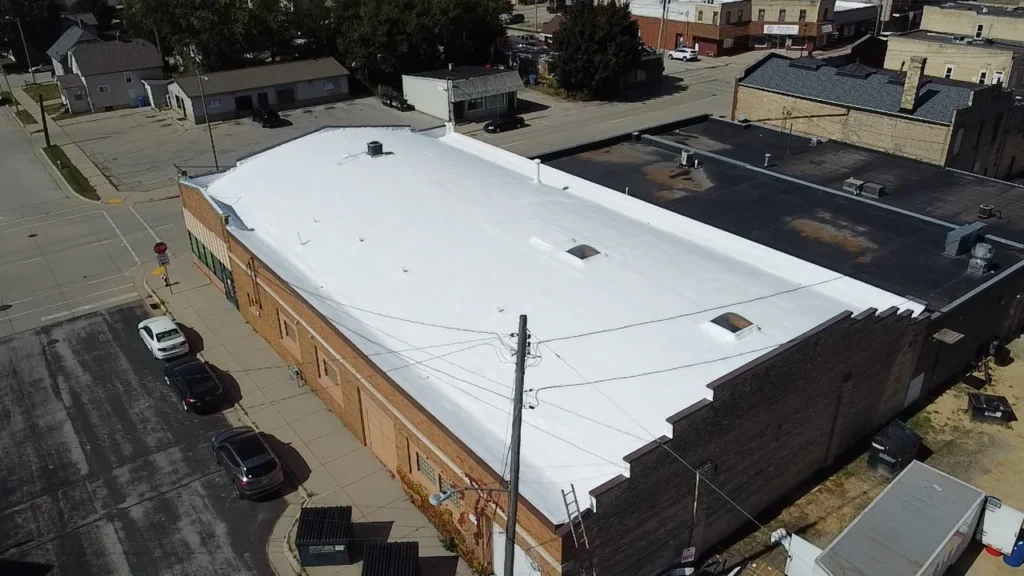
A high-performance liquid rubber membrane cures into a fully adhered, seamless protective barrier that accommodates these natural building movements. By establishing a monolithic seal across every square foot of your building envelope, commercial property managers succeed in waterproofing metal roof assemblies before minor leaks cause interior inventory losses or structural rust. Industry technical research, such as the White Paper For Metal Building Manufacturers Association, demonstrates that elastomeric fluid-applied coatings protect standing seam assemblies from long-term fatigue while dramatically extending roof service life.
Key Benefits and Chemistry of Rubberized Metal Roof Coating Formulations
Liquid rubber and modified thermoplastic formulations combine synthetic polymers with elastomeric resins to deliver exceptional elasticity. While standard industrial paints crack under minimal deflection, specialized elastomeric formulations like MAXIMUM-STRETCH® offer up to 650% elongation. This allows the cured rubber membrane to stretch and snap back across panel joints without splitting, tearing, or peeling away from the metal.
Beyond physical flexibility, these coatings deliver substantial thermal performance. Bright white formulas provide high solar reflectance and thermal emittance values—often reaching a Solar Reflectance Index (SRI) of 111 with an 88% solar reflectance rating. Choosing reflective metal roof coating options lowers surface roof temperatures by up to 50 degrees Fahrenheit during peak summer months, reducing facility cooling loads and lowering utility expenditures.
Performance Factors for Rubberized Metal Roof Coatings
Selecting the proper chemistry requires matching the formulation’s physical properties to your building’s slope, exposure, and drainage characteristics.
| Performance Attribute | Thermoplastic Modified Rubber | 100% Silicone Systems | Standard Elastomeric Acrylic |
|---|---|---|---|
| Elongation Capacity | 500% to 650% | 200% to 400% | 150% to 300% |
| Ponding Water Resistance | Excellent | Superior | Moderate (Requires Positive Slope) |
| Solar Reflectance | 85% to 88% | 85% to 90% | 80% to 85% |
| Tensile Strength | High | Moderate | Moderate to High |
| Average Recoat Cycle | 5 to 10 Years | 10 to 15 Years | 5 to 8 Years |
While silicone excels at holding standing water, liquid-applied rubber chemistries provide superior tensile strength and puncture resistance against windblown debris and rooftop foot traffic.
Metal Substrate Compatibility and Rust Inhibition
Liquid rubber coatings bond securely to almost all industrial metal substrates, including corrugated steel, R-panel profiles, standing seam assemblies, galvanized metal, aluminum, and copper flashings.
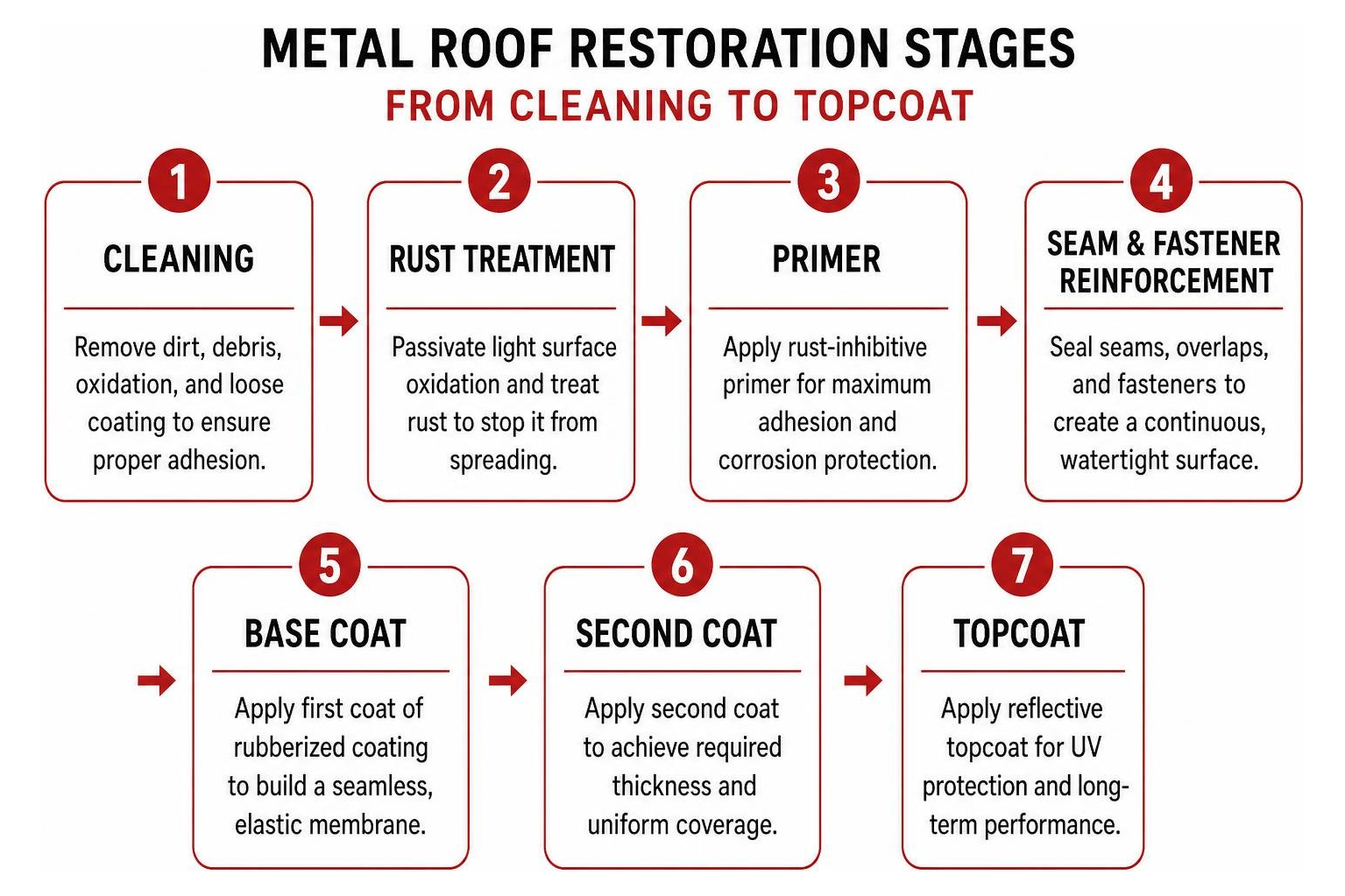
One of the largest threats to commercial metal roofing is surface oxidation. Advanced elastomeric formulas incorporate direct-to-metal rust inhibitors that passivate light surface oxidation and prevent rust from spreading beneath the membrane. However, heavily corroded panels require targeted mechanical scaling, rust-inhibitive priming, or structural panel replacement as part of a comprehensive metal roof restoration project.
Professional Application, Maintenance, and Long-Term Performance
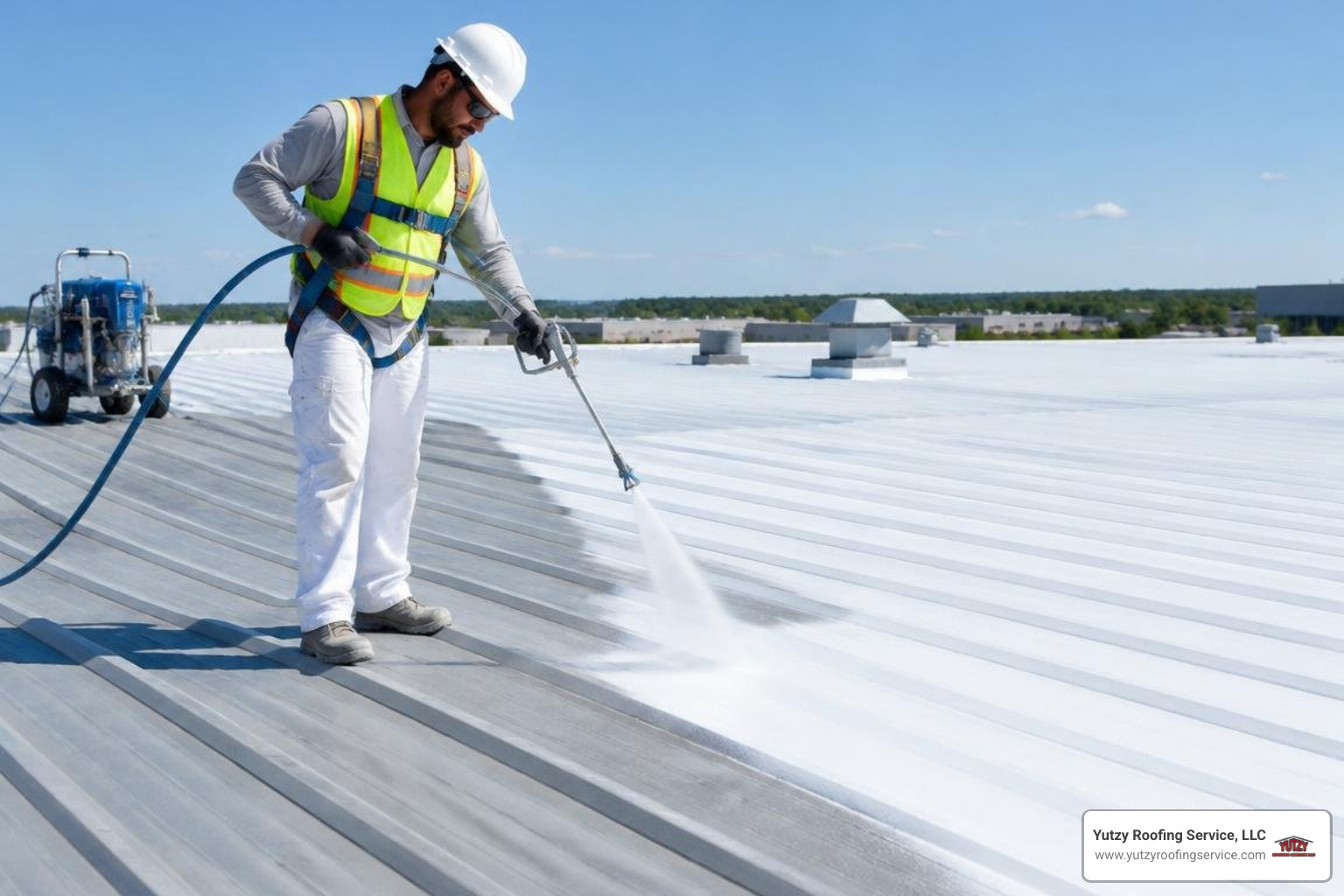
Achieving a durable, leak-free membrane requires specialized commercial installation practices. Applying liquid rubber is not a simple roll-on paint job; it demands precision surface preparation, proper film builds, and structural detail reinforcement to back up long-term performance warranties. Facility managers should review a detailed guide to roof coating options to understand the engineering standards required for commercial roofs.
Professional Surface Preparation and Detail Work for Seams and Fasteners
Long-term coating adhesion depends heavily on the preparation phase. Certified contractors use high-pressure industrial washers operating at 2,500 to 4,000 PSI alongside specialized cleaners to remove grease, atmospheric pollutants, oxidized chalking, and loose scale.
Once the metal is dry and clean, technicians address vulnerable roof details:
- Fastener Tightening & Replacement: Backed-out screws are tightened or replaced with oversized commercial-grade fasteners featuring fresh EPDM washers.
- Three-Course Seam Reinforcement: Horizontal and vertical overlaps receive a heavy base layer of elastomeric mastic, an embedded layer of stitch-bonded polyester fabric, and a saturating top layer of sealant.
- Flashing and Penetration Detailing: Pipe boots, HVAC curbs, skylights, and parapet transitions are encapsulated with elastomeric flashing compounds to bridge expansion joints seamlessly.
Professional Application Process for Rubberized Metal Roof Coating Systems
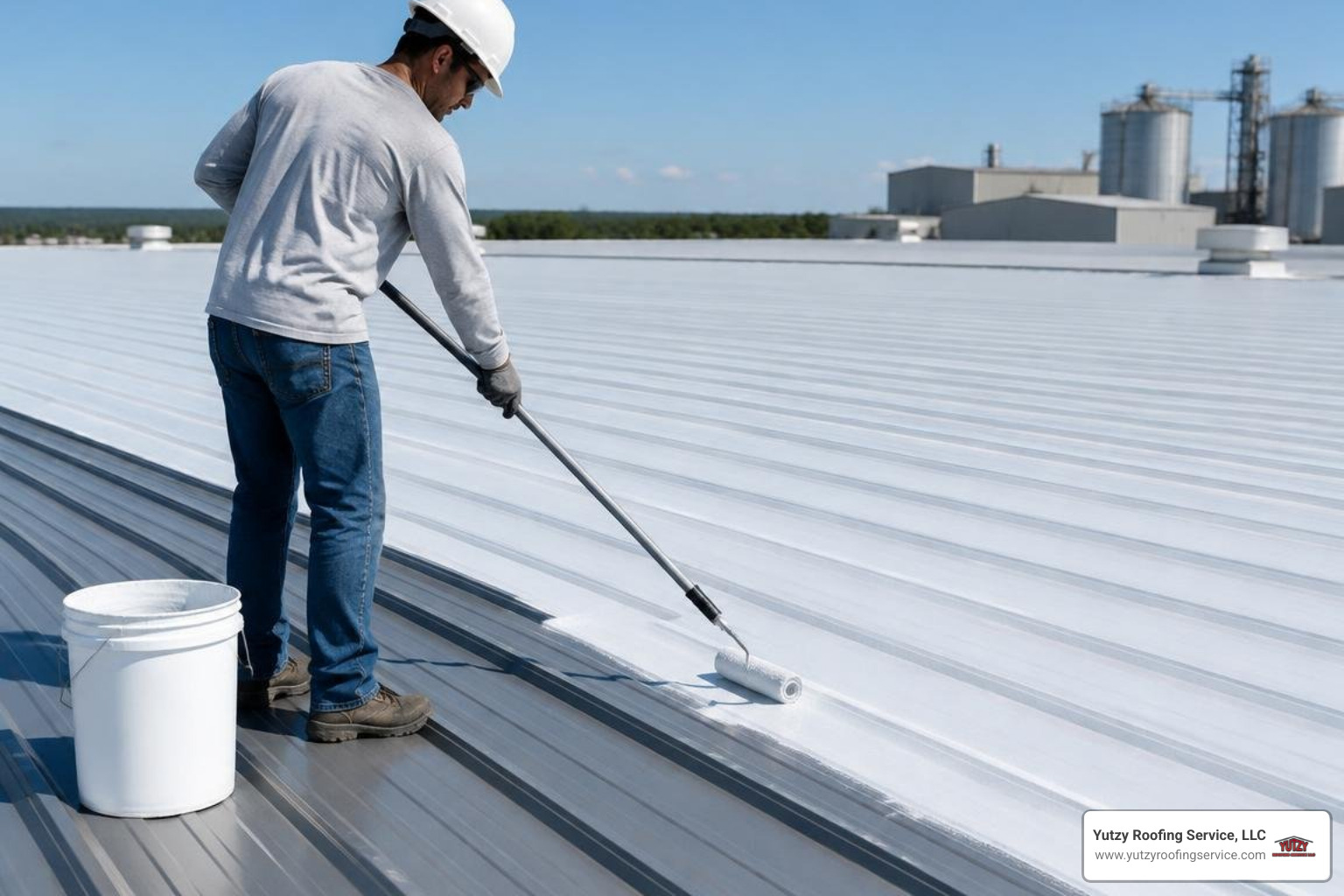
Professional commercial crews apply coatings using high-output airless spray rigs operating at 2,500 to 4,000 PSI with specialized tip sizes (.033″ to .045″). After spraying, technicians immediately backroll the material with 3/8-inch nap industrial rollers to eliminate air bubbles and ensure deep mechanical adhesion into metal panel striations.
Modern liquid rubber products are engineered to be low-VOC, non-toxic, and environmentally compliant, allowing installation on active commercial buildings without releasing hazardous fumes into indoor air intakes.
Commercial Lifespan, Recoating Intervals, and Warranties
When properly applied by certified professionals, a high-performance rubberized roof system delivers 5 to 10 years of dependable protection before requiring a maintenance recoat. Upgraded high-build systems can extend performance to 10 to 15 years. Because the cured membrane acts as a renewable sacrificial shield, building owners can clean and topcoat the roof at the end of its warranty cycle without tearing off the original metal roof.
At Yutzy Roofing Service, we offer comprehensive commercial metal roof restoration across Wisconsin—including Appleton, Madison, Wausau, Fond du Lac, Green Bay, Eau Claire, and Marshfield—backed by renewable warranties up to 18 years. To learn more about selecting the right system for your building, explore our complete metal roof sealant guide or contact our team for an on-site commercial roof evaluation.
