
Why Wisconsin Commercial Roof Maintenance Matters
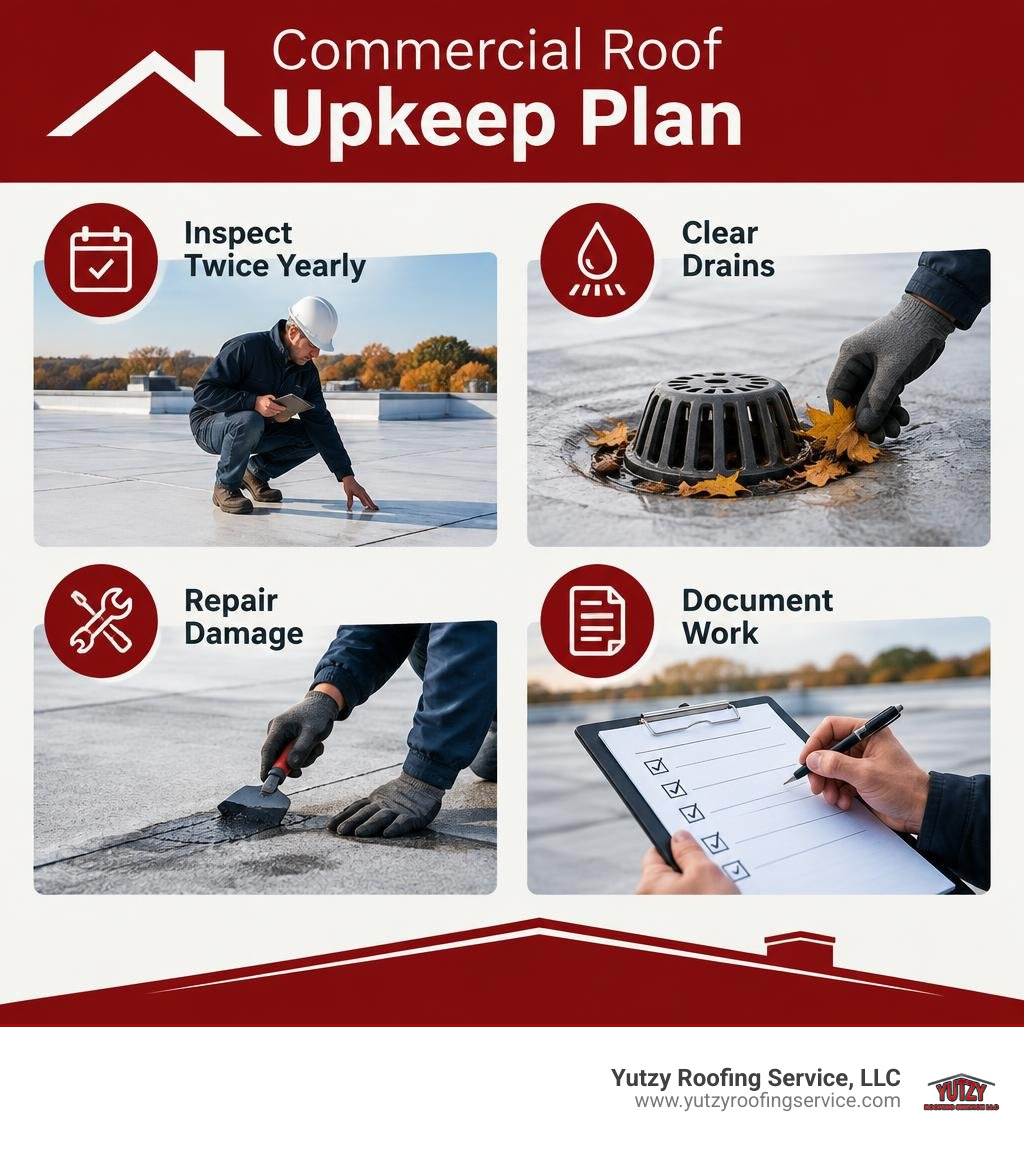
Schedule a commercial roof inspection each spring and fall, and after major storms. Ask the provider to check drains, seams, flashing, and signs of trapped moisture. Have small problems repaired before snow, ice, or heavy rain turns them into leaks that disrupt your business.
I’m Josh Yutzy of Yutzy Roofing Service, LLC, a family-owned roofing company serving Wisconsin since 1995. I share practical guidance on commercial roof maintenance services in Wisconsin that facility managers can use to protect their buildings, starting with the upkeep plan below.
When evaluating commercial roof maintenance services in Wisconsin, building owners can partner with experienced commercial roofers near me to safeguard their investments under a comprehensive commercial roof warranty wisconsin agreement.
The Essential Guide to Commercial Roof Maintenance Services Wisconsin Businesses Rely On
Managing a commercial property involves balancing budgets, tenant comfort, and long-term asset value. The formal MAINTENANCE Definition & Meaning revolves around preserving property and keeping equipment in working order. For commercial roofing, routine care keeps minor wear from turning into catastrophic business disruptions.
According to research from the Building Owners and Managers Association (BOMA), proactive maintenance reduces total roof lifecycle costs by up to 30%. In contrast, data from the National Roofing Contractors Association (NRCA) indicates that approximately 70% of premature commercial roof failures occur because of neglected upkeep.
Regular maintenance helps facility managers:
- Preserve structural integrity: Stopping small leaks protects decking, structural steel, and interior inventory from costly water damage.
- Maintain warranty compliance: Most commercial warranties mandate documented annual or semi-annual professional inspections to remain valid.
- Identify invisible moisture: Using non-destructive testing, technicians pinpoint wet subsurface insulation before it spreads across the building envelope.
1. Severe Weather Impacts: Ice Dams, Heavy Snow Loads, and Freeze-Thaw Cycles
Wisconsin weather tests commercial roof assemblies year-round. Our extreme winters and stormy summers create specific failure points across industrial buildings.
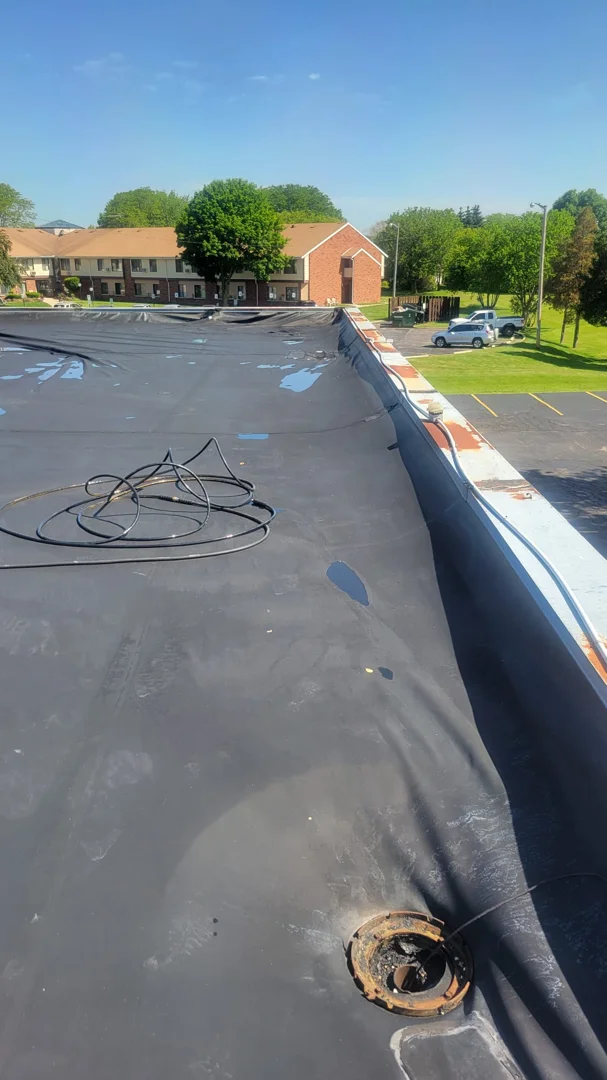
- Freeze-Thaw Expansion: Water enters microscopic cracks during sunny winter days, freezes overnight, expands by about 9%, and tears open seams, flashings, and pitch pockets.
- Heavy Snow Accumulation: Dense, wet snow places thousands of extra pounds of stress on roof decks and HVAC curb supports.
- Ice Damming and Blocked Drains: When interior building heat escapes through the roof, it melts snow that refreezes near cold exterior perimeters, blocking scuppers and internal drains.
- Thermal Shock: Rapid temperature swings from sub-zero winter chills to mid-summer heatwaves cause roofing membranes and metal panels to expand and contract rapidly, stressing fasteners and flashings.
- Ponding Water: Deflections in structural framing allow water to pool. Left unaddressed for over 48 hours, ponding deteriorates coatings and accelerates membrane breakdown.
Routine inspections help reduce weather-related repair expenses by up to 40% by addressing these hazards before harsh weather hits. For facility managers, dependable commercial roof maintenance services in Wisconsin are the most effective way to stay ahead of seasonal damage.
2. Commercial Roof Maintenance Services for Wisconsin Systems: EPDM, Metal, and Flat Roofs
Different commercial roofing materials face unique vulnerabilities in Upper Midwest climates. Tailoring service protocols to your specific roof substrate ensures maximum durability.
| Roofing System | Primary Vulnerabilities | Core Maintenance Tasks | Inspection Focus |
|---|---|---|---|
| EPDM Single-Ply | Seam adhesive failure, shrinkage, puncture from foot traffic | Resealing lap seams, installing uncured flashings, reinforcing corners | Shrinkage at perimeters, seam gaps, ballast displacement |
| Existing Commercial Metal | Fastener back-out, thermal movement, panel corrosion | Tightening/replacing fasteners, rust treatment, applying protective coatings | Flashing sealants, end-lap joints, oxidation around fasteners |
| Flat Roof Coatings / SPF | Mechanical impact, topcoat erosion, ponding degradation | Recoating worn areas, repairing foam punctures, clearing drains | UV chalking, coating thickness, blister formation |
Facility teams scheduling EPDM roof inspection and maintenance prioritize seam adhesion, while buildings with aged standing seam or corrugated panels benefit from structured metal roof maintenance and care. Industrial properties looking to renew existing substrates often utilize flat roof coating restoration to form a seamless, weather-tight barrier without the cost or disruption of total tear-offs.
3. Immediate Red Flags: Moisture Intrusion, Blistering, and Drainage Failure
Catching roofing issues early prevents localized damage from migrating into structural decking.
Watch for these warning signs:
- Membrane Blisters and Delamination: Trapped air or moisture under single-ply membrane sheets expands in hot weather, creating surface bubbles.
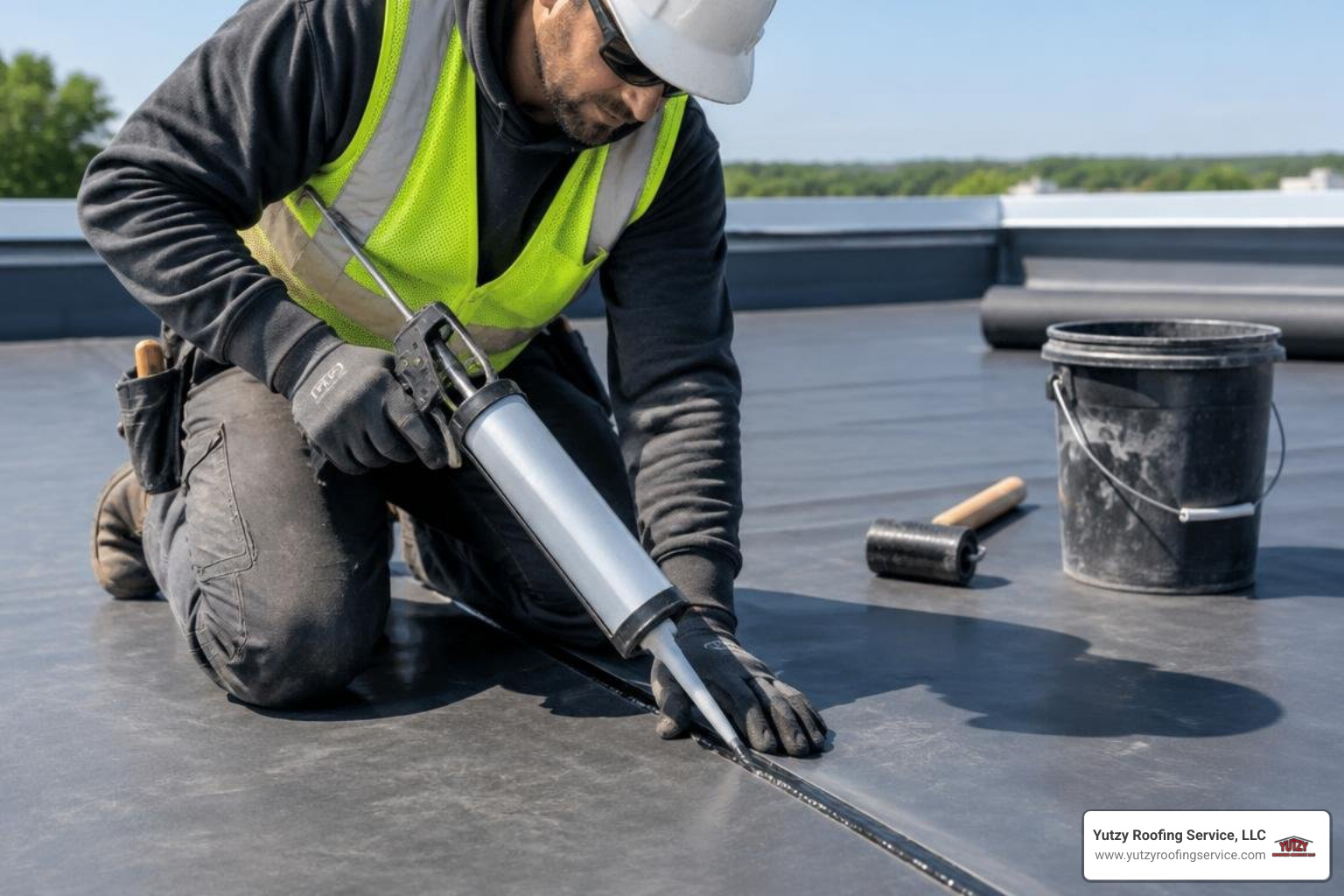
- Open Seams and Flashing Separation: Gaps where the membrane turns up parapet walls or surrounds mechanical equipment allow water behind the water-shedding surface.
- Interior Discoloration and Odors: Water spots on ceiling tiles or musty odors in top-floor offices indicate moisture has breached the thermal insulation envelope.
- Ponding Water Near HVAC Units: Sagging insulation or clogged scuppers trap standing water, stressing structural joints.
If your facility exhibits any of these symptoms, scheduling a commercial roof inspection allows technicians to diagnose hidden moisture before structural rot sets in. Following essential commercial roof maintenance tips between visits keeps building perimeters clean and secure.
4. Proactive Maintenance vs. Premature Replacement Cost Breakdown
Many property owners defer upkeep to save operational cash, but emergency repairs and premature replacements cost significantly more over time.

A simple financial comparison highlights the value of preventive care:
- Annual Maintenance: Routine commercial roof maintenance costs roughly $0.10 to $0.50 per square foot annually (averaging $500 to $1,500 per service visit depending on facility footprint).
- Premature Roof Tear-Off: Prematurely replacing an unmaintained roof averages $4.00 to $8.00 per square foot, along with downtime, landfill disposal fees, and potential interior damage.
- Lifespan Impact: While an unmaintained Wisconsin commercial roof lasts around 20 years, an active maintenance plan can extend service life by up to 50% (reaching 30+ years).
- Thermal Performance: A restored, well-maintained reflective roof surface curbs thermal gain, improving building energy efficiency by up to 20% and reducing cooling loads during humid Wisconsin summers.
Understanding why businesses need commercial roof maintenance transforms roofing expenses from an unpredictable liability into a manageable, predictable operating cost.
5. Seasonal Scheduling and Wisconsin Commercial Roof Maintenance Protocols
Commercial roofing in Wisconsin requires a consistent twice-a-year maintenance schedule. Reliable commercial roof maintenance services in Wisconsin address seasonal wear before it becomes structural damage.
Wisconsin commercial properties must adhere to state commercial building codes regarding drainage slopes, insulation values, and wind uplift resistance. Working with regional trade networks such as Roofing Contractors – Organization helps ensure all maintenance satisfies regional standards. Establishing a commercial roof maintenance plan creates an ongoing record of upkeep that satisfies both local building inspectors and insurance adjusters.
Selecting Qualified Wisconsin Commercial Roofing Contractors and Next Steps
Choosing the right maintenance partner ensures high-quality workmanship, code compliance, and dependable warranty coverage.
When vetting commercial contractors in Wisconsin, verify:
- Commercial Specialization: Choose contractors dedicated strictly to commercial, industrial, and agricultural facilities rather than residential work.
- Comprehensive Safety Standards: Ensure crews maintain full OSHA compliance and comprehensive commercial general liability insurance.
- Restoration Capabilities: Look for contractors skilled in fluid-applied coatings, single-ply repairs, and metal restorations rather than companies that only push total roof tear-offs.
- Non-Prorated Warranties: Opt for providers that back their restoration work with robust warranties covering labor and materials.
At Yutzy Roofing Service, LLC, we help facility managers maximize roof life through commercial roof restoration, elastomeric coatings, EPDM repairs, and customized preventive plans. We back our restoration systems with non-prorated renewable warranties lasting up to 18 years, giving you predictable long-term performance.
Whether you oversee properties in Marshfield, Appleton, Green Bay, Madison, Wausau, Eau Claire, Fond Du Lac, Rochester, or Mankato, our team is ready to protect your investment. Connect with experienced Wisconsin commercial roofing specialists today to schedule your seasonal inspection and safeguard your facility for years to come.
