Urgent Roof Repairs: What to Do When a Commercial Ceiling Leaks
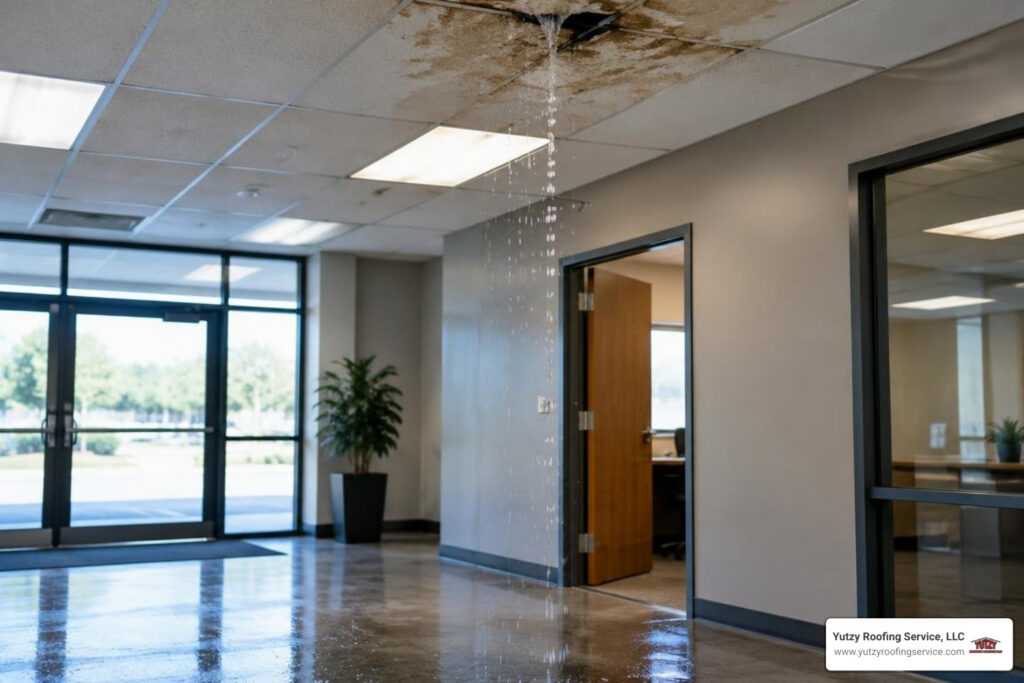
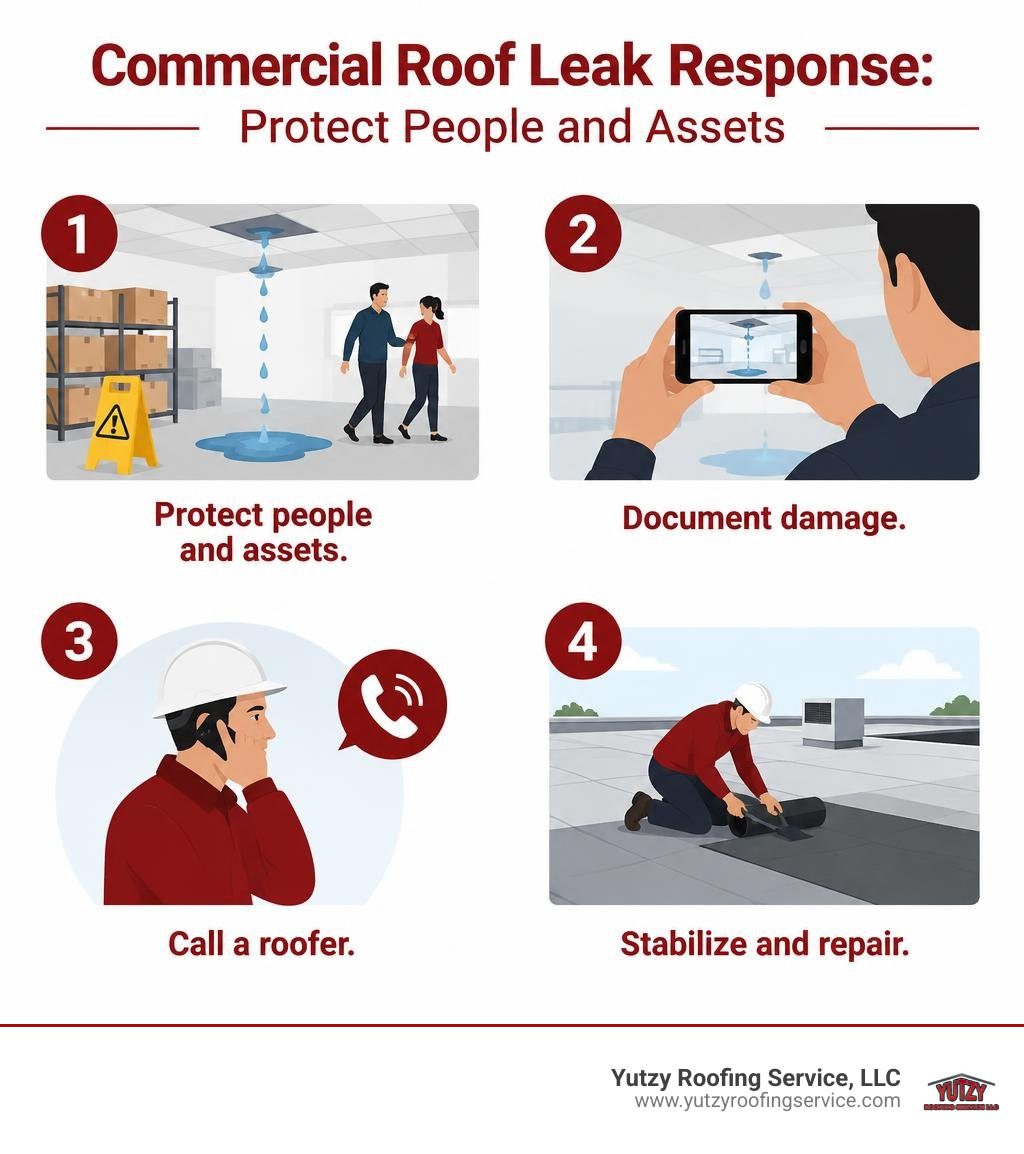
If water is coming through your ceiling, keep people away from the leak and any nearby electrical equipment. Move stock and equipment if you can do so safely, collect dripping water, and call a commercial roofing contractor for urgent roof repairs. Do not go onto a wet or damaged roof. Take photos from a safe place so you have a record of the damage.
A roofer can assess the cause, stabilize the roof to limit further water entry, and plan a lasting repair. A temporary fix protects the building while that work is arranged; it should not be mistaken for the finished repair.
I’m Josh Yutzy of Yutzy Roofing Service, a family-owned roofing company that has served Wisconsin since 1995. Our experience with commercial roof repairs and maintenance shapes this guide to urgent roof repairs.
Urgent roof repairs vocab explained:
Immediate Action Plan for Urgent Roof Repairs and Water Ingress
When water breaches a commercial roofing assembly, the clock starts ticking immediately. Moisture penetrating the insulation core compromises structural steel or wood decking and creates an active environment for dangerous mold growth within 24 to 48 hours. Quick internal triage buys crucial time, but establishing structural stability requires certified commercial roofers equipped for heavy membrane management.
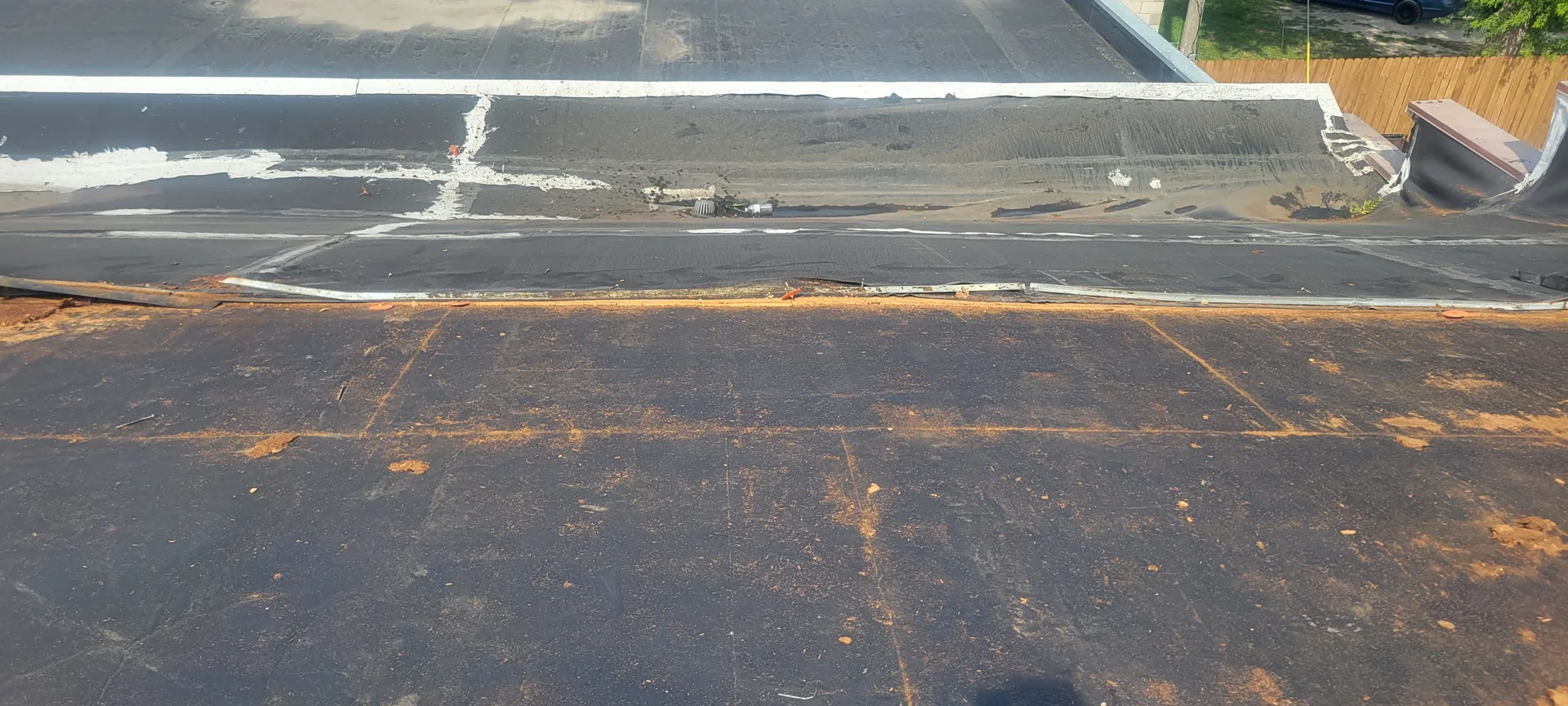
Commercial low-slope and flat assemblies—such as EPDM, TPO, and metal systems—behave differently than standard sloped structures. Water can enter an exterior puncture, migrate hundreds of feet along internal deck flutes, and finally pour through a ceiling opening far from the original failure point. Reviewing 5 ways to know for sure if you need an emergency roof repair will help you assess whether your situation requires immediate dispatch. Specialized industrial guidance such as the NRCA Single-Ply Roofing Manual outlines strict safety parameters for identifying underlying insulation saturation before walking on compromised roof decks.
Critical Triggers Demanding Urgent Roof Repairs
Not every water mark requires immediate after-hours dispatch, but structural failures definitely do. The most urgent roofing emergencies stem from severe seasonal shifts and sudden storm impacts across Wisconsin and Minnesota facilities:
- Wind Uplift & Membrane Blow-offs: Gale-force winds can pull unsecured perimeter flashings, tear open single-ply seams, or lift entire sections of rubber membranes, fully exposing the underlying insulation.
- Ponding Water Overload: Saturated structural drains or blocked scuppers turn flat roofs into retaining ponds. Standing water adds thousands of pounds of dead load, risking catastrophic deck deflection or collapse.
- Impact Punctures: Flying storm debris and fallen branches pierce roofing membranes, creating direct channels for heavy downpours.
- Winter Freeze-Thaw & Ice Dams: Repeated winter freeze cycles force expanding ice under metal roof seams, expansion joints, and flashing collars, allowing meltwater to pour into facility interiors.
When severe weather compromises building envelopes, calling for professional storm damage repair services stabilizes the facility before interior assets are ruined. Industry authorities outline similar critical standards in Angi’s roof repair emergency guidelines, emphasizing that active water intrusion threatening operations or structural integrity requires immediate intervention.
Safe Interior Containment and Electrical Hazard Mitigation
While our crew is en route to your facility, focus all efforts on ground-level containment and personnel safety. Never climb onto a damaged or wet roof surface. High-voltage machinery, wet slick membranes, and weakened decking make DIY inspection hazardous.
- Secure the Electrical Perimeter: Water entering lighting fixtures, conduits, or busways presents severe fire and shock risks. Shut off power at the main breaker panels for any water-affected zones.
- Protect High-Value Assets: Move warehouse inventory, raw materials, server racks, and manufacturing equipment out from beneath active drip lines. Cover stationary machinery with heavy-duty polyethylene sheeting.
- Capture and Relieve Trapped Water: Place sturdy commercial containment bins beneath active drips. If ceiling tiles are noticeably sagging and holding water, carefully relieve the hydraulic pressure with a small puncture using an extended pole while standing clear. This avoids a sudden, uncontrolled ceiling collapse.

The Emergency Stabilization Protocol: Professional Tarping and Temporary Sealing
Once our licensed emergency crew arrives, the primary objective is rapid mechanical stabilization. During ongoing rain or heavy snow, permanent adhesives and chemical coatings cannot cure. Instead, certified technicians deploy heavy-duty exterior water diversion systems, specialized perimeter ballast, and wet-surface emergency patches.
Deploying industrial tarps securely over commercial flat sections requires weighted ballast, specialized edge-fastening battens, and temporary mastic that adheres to wet substrates. These interim setups mimic the temporary protective standards of federal relief measures, which are designed to safeguard properties for roughly 30 days while engineers and contractors design permanent solutions. For a closer look at the specialized materials used to stop active leaks during heavy downpours, explore our quick guide to emergency roof sealants.
Transitioning from Emergency Tarping to Permanent Membrane Restoration
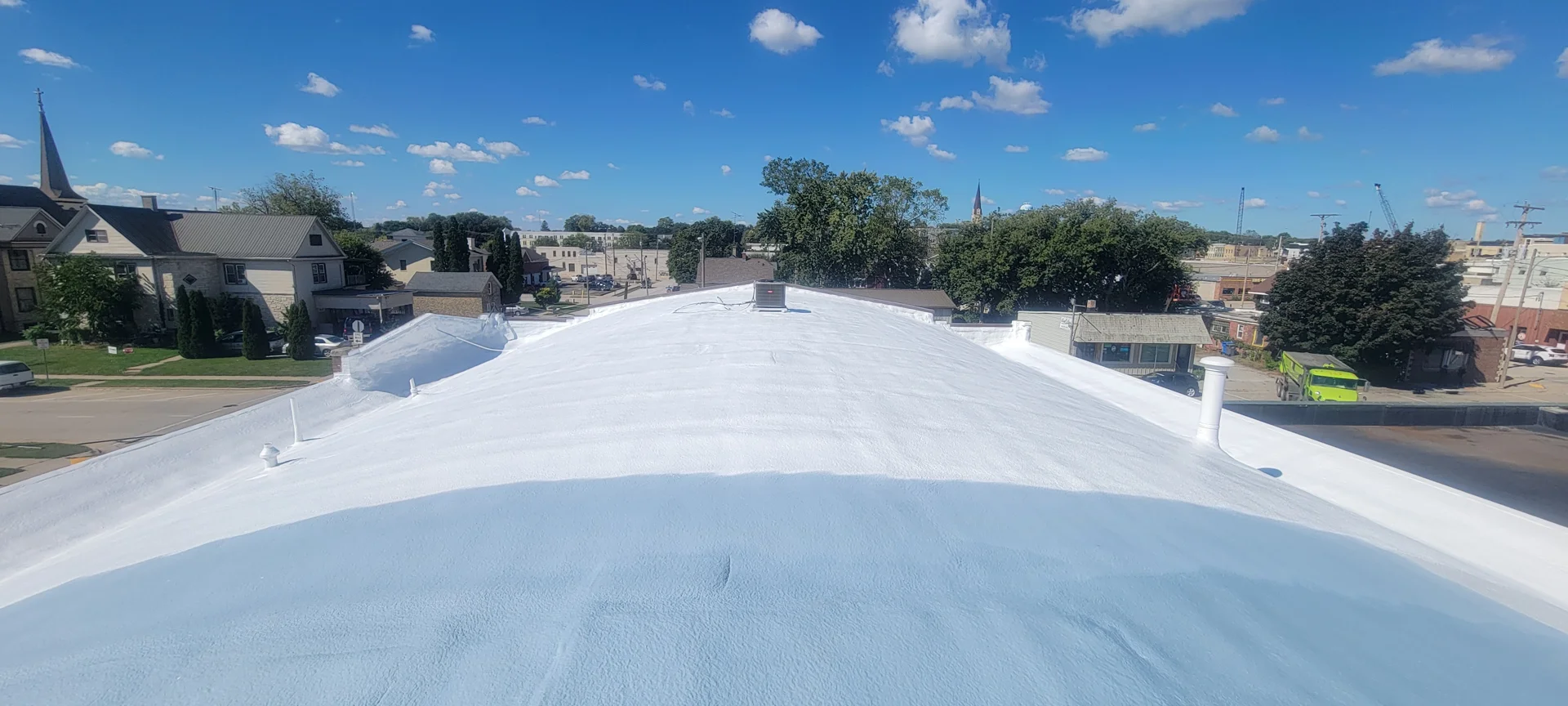
A temporary patch stops the immediate waterfall, but it is not a complete fix. Once weather conditions stabilize, the roof requires comprehensive diagnostic evaluation. Leaving temporary tarps in place past their service life leads to trapped condensation, rotted deck fasteners, and saturated insulation boards.
Our restoration specialists perform non-destructive moisture scans and physical core sampling across commercial roofs in Madison, Appleton, Wausau, and surrounding regions. This diagnostics process separates dry, sound insulation from moisture-compromised sections. When you need immediate dispatch followed by lasting structural engineering, contact our Wisconsin emergency roof repair team to resolve the underlying failure points.
Calculating Costs and Insurance Claims for Urgent Roof Repairs
Navigating emergency expenses and commercial property insurance requires detailed proof of loss. Standard commercial insurance policies require policyholders to take immediate mitigation steps to prevent secondary water damage.
- Detailed Photographic Logs: Our crews take high-resolution, timestamped images of the exterior damage, entry points, and interior water spread before and after temporary stabilization.
- Itemized Emergency Invoices: We separate urgent mitigation and tarping fees from long-term reconstruction estimates so your carrier adjusters can process emergency claim funds quickly.
- Adjuster Coordination: Working directly with an experienced restoration contractor during on-site inspections prevents claim denials and ensures all hidden insulation damage is factored into the settlement.
To learn more about tracking expenses, avoiding claim delays, and organizing your financial recovery, review our guide on managing urgent repair rates and homeowners insurance claims.
Why Professional Commercial Restoration Outperforms Temporary Patches
When facing major roof compromise, property managers must weigh temporary patches against comprehensive restoration or total tear-offs. Standard industry practice recommends full restoration or replacement when damage exceeds 30% of the total roof surface or when the underlying insulation has sustained chronic moisture saturation.
| Metric | Temporary Emergency Fix | Commercial Membrane Restoration | Full Tear-Off & Replacement |
|---|---|---|---|
| Primary Goal | Active leak diversion | Complete renewal & structural seal | Full structural deck rebuild |
| Lifespan | 24 hours to 30 days | 15 to 18+ years (renewable) | 20 to 30 years |
| Material Types | Poly tarps, wet mastics | Spray foam, silicone, elastomeric | New single-ply or built-up layers |
| Downtime | None (Immediate) | Minimal (No business disruption) | Significant operational downtime |
| Warranty Options | None (Workmanship only) | Up to 18-year non-prorated | Standard manufacturer warranties |
Rather than investing in costly, disruptive tear-offs, commercial restoration systems offer long-term performance. Advanced fluid-applied elastomeric coatings, spray polyurethane foam (SPF), and reinforced EPDM restoration create a monolithic, seamless barrier directly over your existing roof substrate.
At Yutzy Roofing Service, we restore commercial metal, single-ply, and low-slope roofs backed by an industry-leading, non-prorated renewable warranty lasting up to 18 years. Addressing urgent leaks with long-term restoration protects your inventory, eliminates structural risk, and ensures your facility stays dry through any season.
