
What Does an Emergency Roofer Cost in 2026?
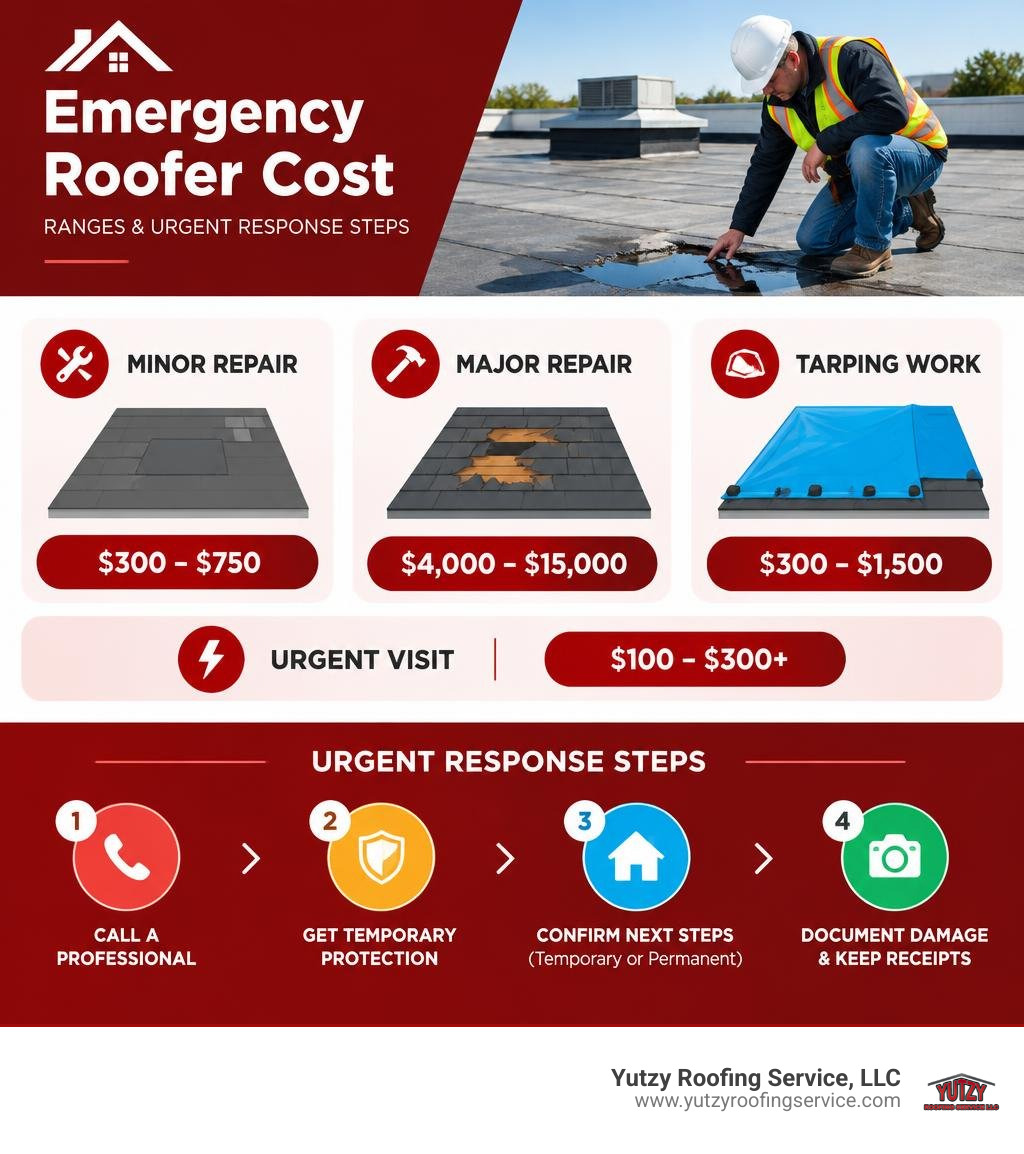
Emergency roof repairs commonly cost $300 to $10,000 or more. A small repair may run $300 to $750, while severe damage can reach $4,000 to $15,000. Professional tarping often costs $300 to $1,500, and an urgent visit may add $100 to $300 or more. These are general U.S. benchmarks, not a quote for a commercial roof.
If water is entering your building, a large area is exposed, or the roof may be unsafe, call a professional roofer now. Ask whether the first visit covers temporary protection, a permanent repair, or both. Keep photos and itemized receipts in case the damage qualifies for an insurance claim.
I’m Josh Yutzy of Yutzy Roofing Service, LLC, a family-owned company that has served Wisconsin since 1995. I’ll use that roofing background to explain what drives emergency roofer cost and what to document before filing a claim.
Emergency roofer cost terms to learn:
When severe weather hits, identifying whether a situation demands immediate triage is vital. You can review 5 ways to know for sure if you need an emergency roof repair to evaluate immediate water intrusion risks, structural roof failure threats, and active inventory hazards before dispatching crews. For commercial property managers, the first hour after a storm often determines whether a minor membrane tear becomes a saturated insulation problem or a structural deck failure. A fast, professional response limits secondary damage to interior equipment, stored inventory, and electrical systems while keeping the total emergency roofer cost within a manageable range.
Understanding Emergency Roofer Cost Breakdown and Price Factors
The overall investment required for urgent commercial repairs depends on initial stabilization, material destruction, and mobilization speed. Understanding the smart homeowner price breakdown for common roof repairs provides helpful context on standard versus critical dispatch fees.
| Damage Category | Standard Scheduled Repair | Emergency Response Repair | Common Inclusions |
|---|---|---|---|
| Minor (Localized Puncture/Flashing) | $300 – $600 | $600 – $1,200 | Temporary seal, single-ply patch, fast call-out |
| Moderate (Membrane Tear, Minor Deck Damage) | $1,000 – $2,500 | $1,800 – $4,500 | Water extraction, temporary tarping, perimeter secure |
| Severe (Structural Sag, Tree Strike, Blow-Off) | $3,500 – $9,000 | $5,000 – $15,000+ | Crane/hoist staging, structural shoring, heavy-duty securement |
Damage Severity and Factors Influencing Emergency Roofer Cost
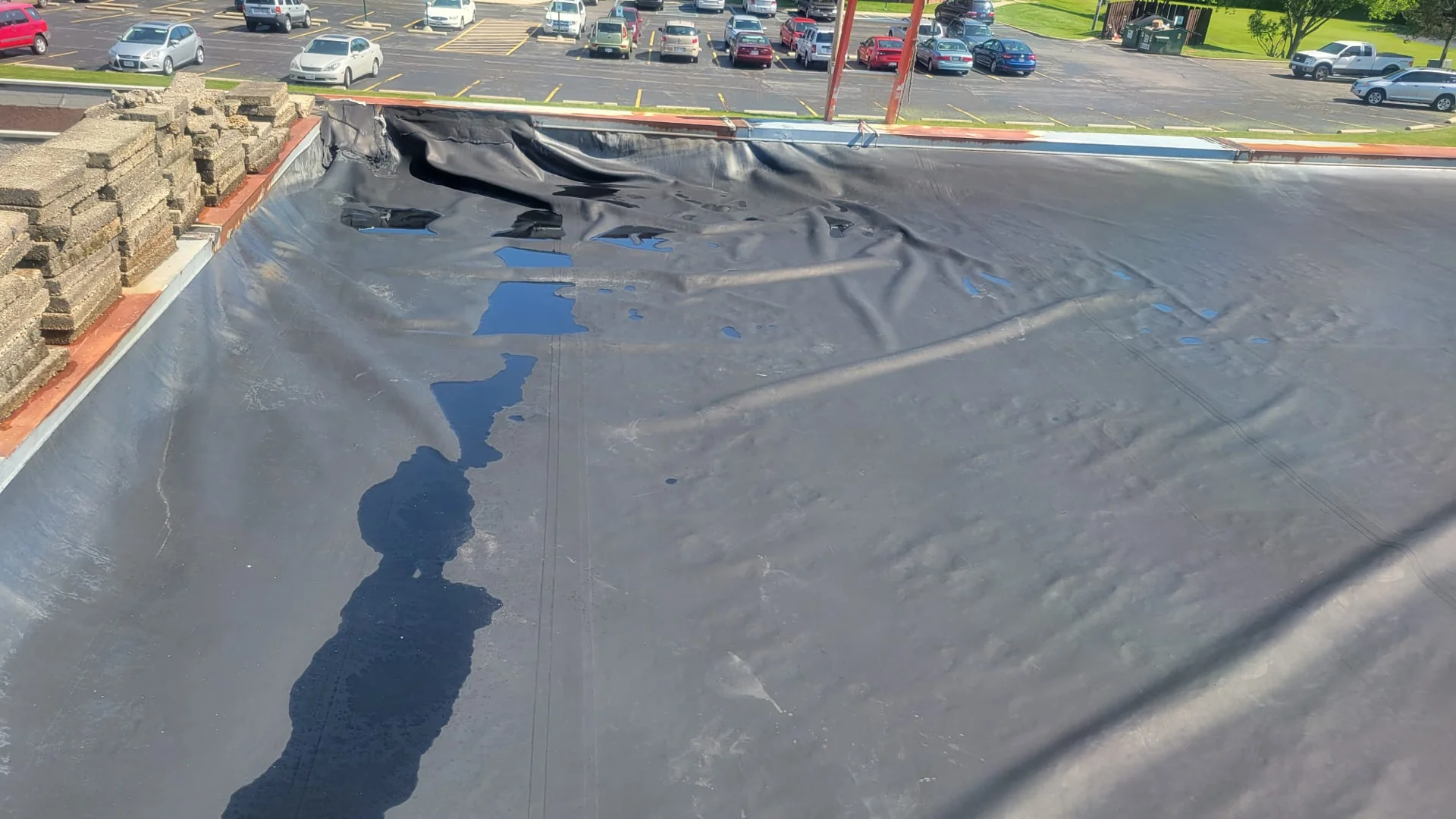
Water entering a commercial facility travels across deck flutes, saturating polyisocyanurate insulation before dripping through ceiling tiles. Severe wind blow-off, hail impacts, or fallen limbs can puncture single-ply systems like EPDM, TPO, or PVC. When seams rip or flashing separates around HVAC curbs, immediate containment is crucial.
Issues like sudden emergency roof leak repair require diagnostic evaluation to find hidden moisture pathways. If ponding water builds up over compromised insulation, the added weight risks structural deck deflection, making rapid repair essential to stop compounding structural decay. The longer water remains trapped within the roofing assembly, the more extensive the removal and replacement scope becomes, which directly increases the final emergency roofer cost.
Urgent Service Fees, After-Hours Surcharges, and Labor Pricing
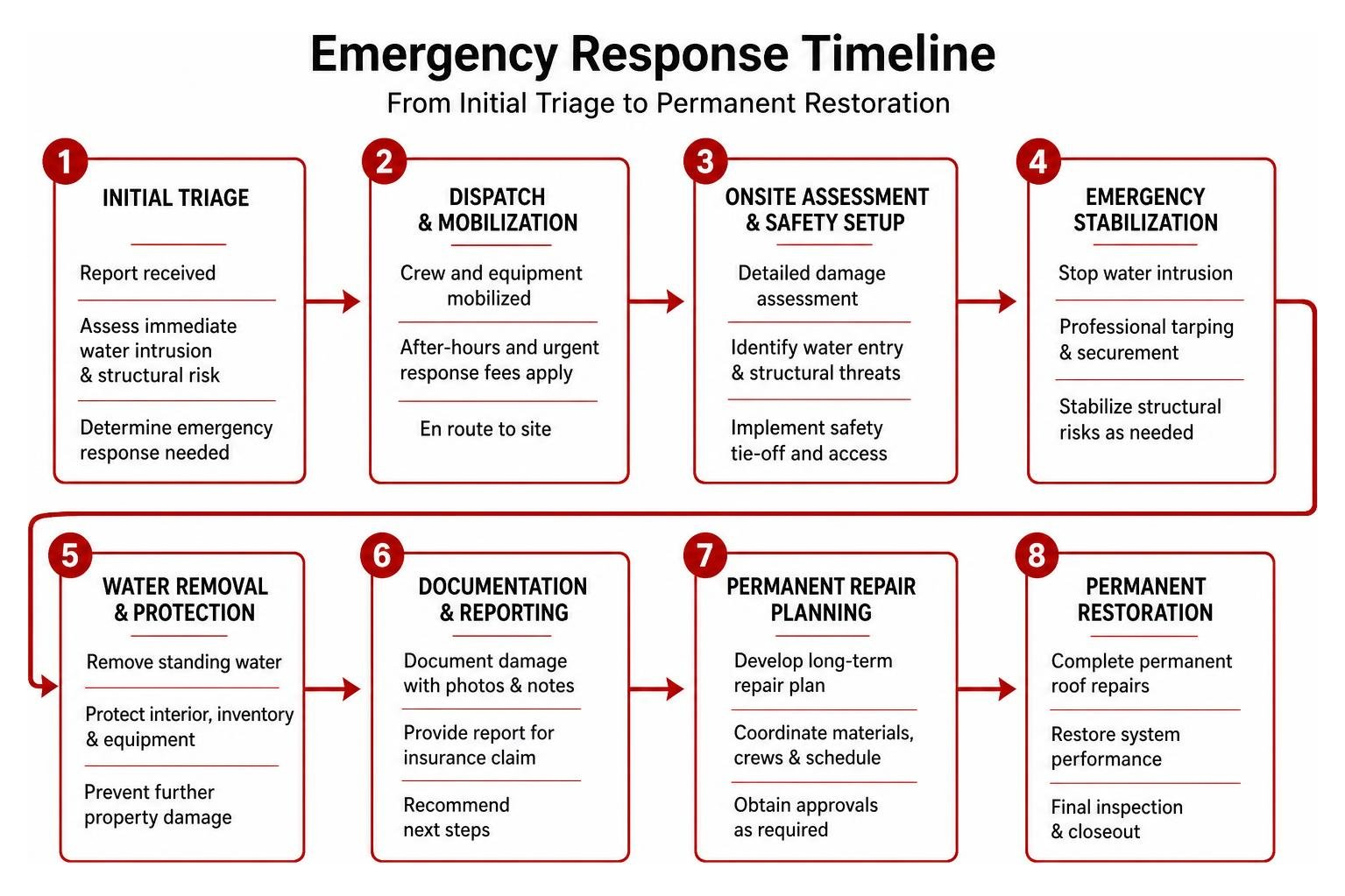
Standard commercial roofing labor rates run between $45 and $80 per hour. However, urgent calls dispatched late at night, on weekends, or during active blizzards incur premium surcharges. Contractors routinely apply call-out fees ranging from $100 to $300, with hourly labor climbing 50% to 100% higher than baseline rates.
Specialized safety tie-off setups, high-lift rentals, and dangerous access conditions influence pricing during critical storm response, comparable to regional patterns detailed in emergency roof repair cost NSW 2026. Mobilizing a fully equipped crew with generators, industrial fasteners, and commercial torches outside normal business hours justifies these necessary surcharges. Building owners should expect that a 2:00 a.m. response during a snowstorm will cost more than a same-day weekday dispatch, but that premium is typically far less than the expense of replacing saturated insulation, damaged ceiling systems, or production equipment.
Mitigating Emergency Roofer Cost with Professional Tarping and Stabilization
Professional make-safe repairs keep water out while long-term engineering plans are finalized. Certified contractors use heavy-duty, 10-mil reinforced waterproof tarps secured with dimensional wood battens and perimeter sandbag ballasts.
Building managers looking into how to find the best emergency tarping companies near me fast know that makeshift solutions quickly fail in strong winds. Professional stabilization prevents catastrophic interior inventory losses and machinery damage, creating a durable barrier that lasts 60 to 90 days while insurance adjustments take place. A properly installed tarp system also gives your contractor time to order matching membrane materials and schedule a full repair crew without leaving the building exposed to additional weather events.
Navigating Insurance Claims and Emergency Contractor Selection
Commercial property policies cover sudden and accidental weather perils such as windstorms, hail strikes, and structural tree impacts. When managing these events, understanding how to handle emergency roofing services without losing your mind keeps your documentation clear and organized throughout the adjustor verification process.
Managing Insurance Claims and Required Mitigation Protocols
Commercial policies feature a mitigation clause requiring property owners to take reasonable steps to prevent further damage. Emergency stabilization expenses are reimbursable under covered losses when properly recorded.
Follow this protocol to protect your claim:
- Photograph all exterior membrane tears, punctures, and interior water leaks before any physical stabilization begins.
- Request detailed, itemized receipts from your contractor distinguishing urgent make-safe costs from permanent restoration estimates.
- Notify your insurance carrier within the required 24 to 72-hour reporting window to assign an adjuster.
- Have your certified contractor present during the adjuster’s site walkthrough to verify hidden insulation saturation using thermal imaging.
For regional facilities facing freeze-thaw cycles and severe blizzards, choosing a contractor experienced in Wisconsin emergency roof repair ensures that local snow load codes and moisture barriers are accurately factored into the settlement. A contractor who understands how Wisconsin winters stress commercial roofing assemblies can document damage in terms that align with how adjusters evaluate covered perils, which helps avoid disputes over whether deterioration was sudden or long-term.
Selecting Licensed Contractors and Avoiding Fraudulent Storm Chasers
Severe weather brings transient out-of-state contractors who travel between storm zones offering quick fixes. These operations often lack local commercial licenses, demand massive upfront cash deposits, and disappear before warranties can be honored.
Always verify active state contractor credentials, commercial general liability coverage, and workers’ compensation insurance before authorizing work. Working with an established local partner like Yutzy Roofing Service guarantees long-term support backed by reliable warranties on advanced fluid-applied membrane restoration, spray foam insulation, and commercial single-ply repairs. A local contractor with a physical Wisconsin presence can also return to inspect the roof after the next storm, honor warranty obligations, and provide documentation for any follow-up insurance claims without the delays that come from tracking down an out-of-state crew.
