What Is EPDM Roof Coating and How Does It Work?
An EPDM roof coating is a specialized, fluid-applied elastomeric membrane engineered to adhere to synthetic rubber single-ply roofs (ethylene propylene diene monomer). Over time, constant exposure to extreme sun, heavy rains, and winter ice degrades the original EPDM surface. As the rubber thins out, underlying layers can become exposed and seams can begin to split. Applying a protective liquid coat restores seamless waterproofing across the roof surface, effectively sealing hairline cracks and preventing costly moisture penetration.
Beyond leak protection, high-performance fluid coatings dramatically enhance solar reflectance and thermal emittance. Standard black EPDM rubber absorbs significant solar energy, driving up interior cooling costs during humid Midwestern summers. Reflective white topcoats radiate absorbed heat away from the building envelope, achieving up to 87% solar reflectance and 89% thermal emittance. By reducing thermal stress on the roof assembly and lowering surface temperatures, a restoration system can extend overall commercial roof longevity while curbing energy consumption. For a comprehensive overview of coating materials, see our Detailed guide to roof coating options.
Types of EPDM Roof Coating Options
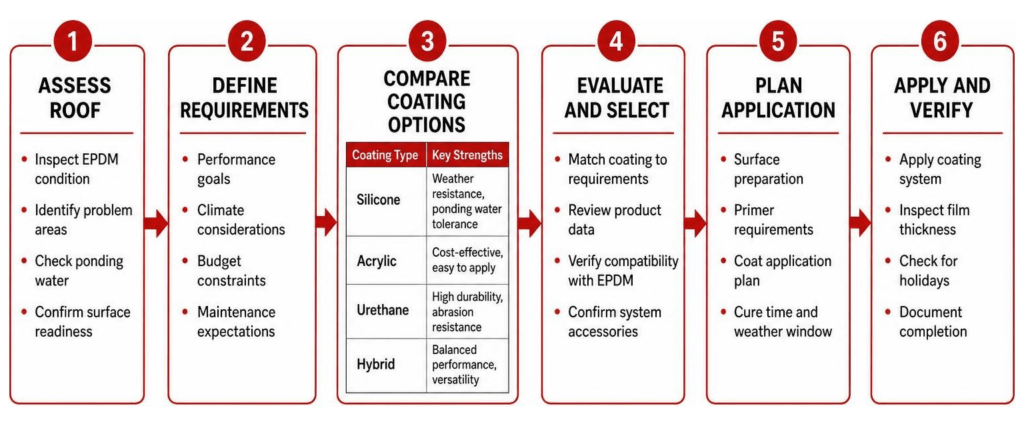
When evaluating EPDM roof coating systems, selecting the appropriate chemical formulation for your specific facility is essential. Each coating chemistry offers unique physical properties, substrate compatibility, and performance trade-offs:
- Silicone Roof Coatings: 100% silicone elastomeric systems (such as EPDM Silicone 99) are widely recognized for superior weather resistance and permanent resistance to ponding water. With high total solids content (often 96% ± 2% by volume), silicone loses minimal volume as it cures, achieving high dry film thickness (DFT) in fewer coats. With a tensile strength around 325 psi and elongation capacities reaching 249%, silicone comfortably expands and contracts alongside the underlying EPDM membrane.
- Acrylic Elastomer Coatings: Products such as Superior Coat offer a cost-effective, breathable membrane formulation with high solar reflectance (86%) and thermal emittance (88%). With total solids content around 65% by weight, acrylic coatings are ideal for sloped rubber roofs where positive drainage is assured. However, water-based acrylics are sensitive to standing water and must not freeze during storage or initial cure.
- Liquid Butyl Rubber Coatings: Formulated with synthetic butyl polymers, these coatings create a flexible, moisture-impermeable barrier with high elongation. Butyl formulations bond strongly to aged EPDM and can often be applied directly without requiring separate primer layers, though coverage rates are typically lower (around 50 sq. ft. per gallon).
| Feature / Coating Type | 100% Silicone Elastomeric | Acrylic Elastomer | Liquid Butyl Rubber |
|---|---|---|---|
| Solids Content (by Volume/Weight) | ~96% by volume | ~53% by volume (65% by weight) | Varies (~50-65%) |
| Tensile Strength | 325 psi ± 50 | 278 psi | 250 – 300 psi |
| Elongation | 249% ± 50 | 239% | 200 – 300% |
| Ponding Water Resistance | Excellent | Poor (Avoid flat/ponding areas) | Good to Excellent |
| Primary Advantage | High durability & chemical stability | Lower material cost & high reflectivity | One-coat primerless adhesion options |
Benefits of Restoring Commercial Rubber Roofs
Restoring an aging synthetic rubber membrane delivers substantial financial and operational advantages over complete roof replacement. As roofs mature, seam degradation and flashing separation represent the leading causes of commercial building leaks. Fluid-applied restoration encapsulates vulnerable seams, penetrations, and fasteners in a single, monolithic rubber shield.
Investing in fluid-applied restoration provides immediate advantages:
- Leak Prevention: Eliminates water intrusion points across all lap joints and flashing details.
- Cool Roof Thermal Performance: Reflective white surfaces lower rooftop temperatures by up to 50°F, reducing peak HVAC demand.
- Sustainability: Minimizes landfill waste by eliminating the need to tear off existing EPDM insulation board and membrane.
- Capital Savings: Restoring a commercial roof costs a fraction of complete roof tear-off and replacement.
To learn more about maximizing your property’s structural defense, read our guide on the Top Benefits of EPDM Roof Restoration.
Surface Preparation and Priming Requirements
Proper surface preparation is the single most critical factor determining the long-term success of an EPDM roof coating application. Even the highest-quality coating will peel or blister if applied over dirt, chalking oxidation, oils, or loose debris.

Preparation begins with thoroughly washing the EPDM membrane using an approved commercial roof surface detergent and high-pressure washing (typically 2,000 to 3,000 psi). For severe oxidation or stubborn soot, specialized chemical cleaners or acid-wash prep solutions are scrubbed into the rubber surface and thoroughly power-rinsed. Care must be taken to continuously rinse exterior walls and building side surfaces to prevent detergent streak marks.
Once the membrane is completely dry, critical surface prep steps include:
- Acetone Surface Wipe: Wiping heavily oxidized EPDM areas with solvent slightly softens the rubber membrane, removing residual carbon dust and optimizing chemical adhesion.
- Detail & Seam Reinforcing Tape: Inspecting all lap seams, pipe boots, roof drains, and end-cap transitions. Reinforcing fabric tape or specialized lap sealants must be embedded over high-stress joints prior to coating.
- Substrate Repairs: Replacing any wet insulation core sections and patching damaged membrane patches.
For a deeper look into preparing your commercial facility, check our overview on EPDM Restorations: What to Know. Commercial property managers can also review localized market cost guidelines, such as regional pricing insights for Rubberized Roof Coating in Fond Du Lac, WI – Costs 05 / 2026.
Is a Primer Necessary Before Coating EPDM?
A common question among facility managers is whether a specialized primer is mandatory prior to applying an EPDM roof coating. In almost all commercial silicone and acrylic applications, the answer is yes.
EPDM rubber contains oils and curing agents that make adhesion difficult for standard coatings. Polymer primers and cleaner-activator solutions chemically alter the surface tension of the membrane, creating a secure chemical bond. Water-based polymer primers (such as Liquid Rubber EPDM & TPO Primer, typically priced around $89.95 per gallon) dry to a sticky, tacky state. This tacky finish acts as a permanent bonding engine, preventing the liquid coating from peeling or lifting under severe weather conditions.
Failure to apply a required primer often leads to inter-coat delamination and high failure rates. To see a step-by-step breakdown of seam repair and membrane prep, explore our guide on How to Repair Rubber Roofing in 6 Easy Steps.
The Application Process for EPDM Roof Coating
Applying fluid-applied commercial roof coatings requires strict adherence to environmental parameters, equipment specifications, and safety standards.
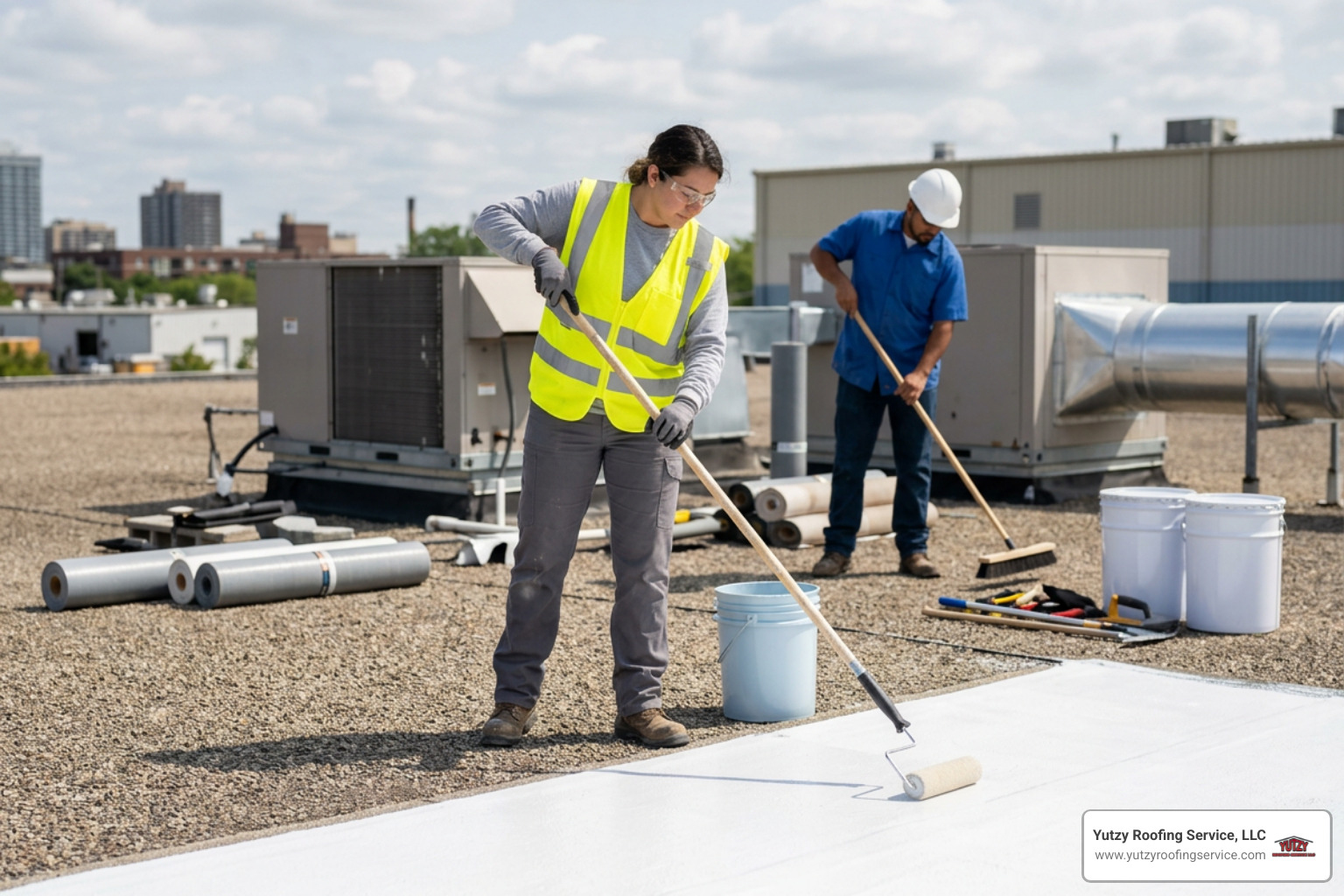
Before opening coating containers, technicians verify weather parameters:
- Temperature Limits: Surface and ambient temperatures must remain strictly between 35°F and 100°F (ideal working range is 50°F to 90°F). Acrylic formulations must stay above 50°F and never drop below 32°F within 24 hours of application.
- Dew Point Constraints: Ambient temperatures must be at least 5°F above the local dew point to prevent micro-condensation on the rubber substrate.
- Relative Humidity: For moisture-cure silicones, relative humidity should ideally remain above 20% to support normal cure timing; extremely dry air slows curing significantly.
During application, multi-coat systems (such as EPDM Rubber Roof Signature Extended Life Silicone Coating Part 2 – 1 Gallon, White, priced around $118.52 per gallon) are applied using heavy-duty airless spray equipment or medium nap rollers. Manufacturers often mandate a strict one-day application window—completing the cleaner/primer step and applying the second topcoat perpendicularly to the first coat to guarantee uniform coverage without pinholes.
Safety remains paramount: application crews utilize full fall protection rigging, safety harnesses, wall protection sheeting, and consult Safety Data Sheets (SDS) for adequate ventilation and handling.
EPDM Roof Coating Application Rate and Coverage
Achieving proper dry film thickness (DFT) is necessary to validate system performance and manufacturer warranties. Applying product too thin leads to premature weathering, while over-applying in single passes can cause surface cracking or sagging.
Standard coverage benchmarks include:
- Two-Coat Silicone Systems: Applied at a rate of 1 gallon per 125 sq. ft. per coat (total 2 gallons per 125 sq. ft. for a completed two-coat assembly). For example, a 2,400 sq. ft. roof section typically requires approximately 38 to 40 gallons of finished coating.
- High-Solids Single-Coat Silicones: Products like EPDM Silicone 100% require an application rate of 1.25 gallons per 100 sq. ft. (400 sq. ft. per 5-gallon pail) to achieve a target dry thickness exceeding 20 mils.
- Liquid Butyl Rubber: Applied at approximately 50 sq. ft. per gallon for single-pass systems (such as RV Roof Magic at $124.99 per gallon).
Drying Times, Cure Rates, and Weather Constraints
Cure times vary based on environmental conditions, chemical composition, and ambient humidity:
- Skin-Over Time: 100% silicone coatings typically skin over in approximately 30 minutes under warm conditions.
- Tack-Free Window: Achieved within 1 to 4 hours.
- Full Cure Rate: Ranges from 2 to 8 hours for moisture-curing silicones, whereas acrylic elastomeric coatings may take 12 to 24 hours to reach full cure at 75°F.
Cool temperatures, low humidity, or unexpected rain within the dry window will delay curing and can spoil uncured acrylic coatings. Careful project scheduling around regional weather forecasts prevents washouts and structural bonding failures.
Common EPDM Coating Problems, Costs, and Maintenance
Understanding potential failure points ensures building owners achieve maximum value from their commercial roofing investment.
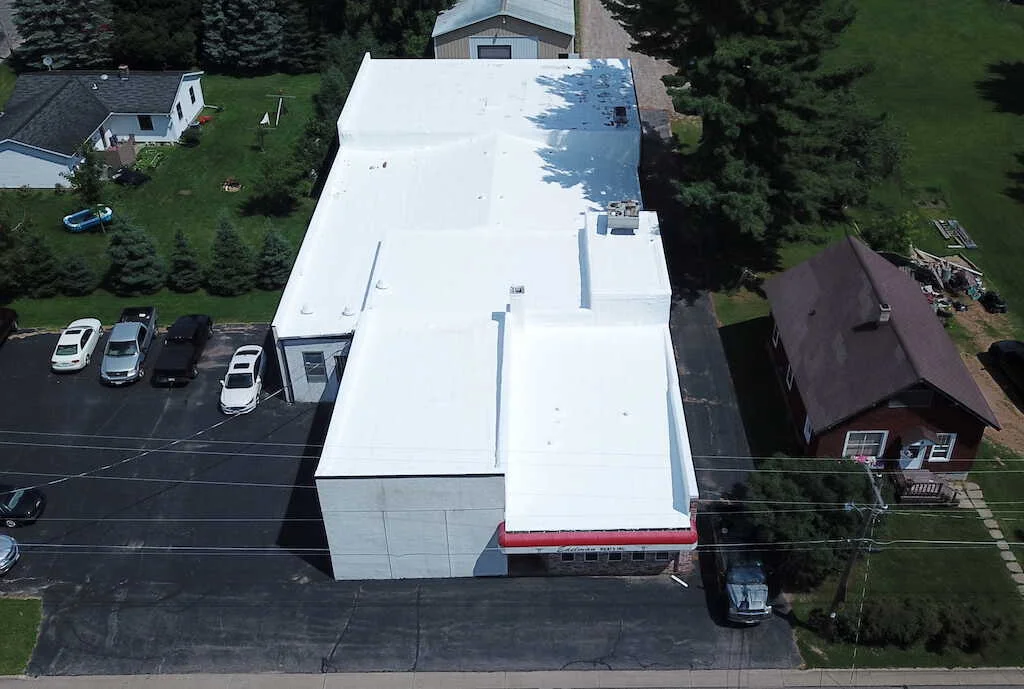
The most common issues encountered with an EPDM roof coating include:
- Trapped Moisture Blistering: If moisture is trapped inside wet insulation boards beneath the EPDM membrane prior to coating, solar heat forces the water vapor upward. This creates vapor pressure bubbles and blisters beneath the newly applied film. Moisture thermal imaging and core cuts must be performed prior to application.
- Adhesion Failure from Poor Prep: Skipping deep cleaning or failing to use an activator primer on aged EPDM causes the coating to flake and peel within a few seasons.
- Silicone Recoating Restrictions: While silicone offers unmatched water resistance, nothing adheres to cured silicone except more silicone. Applying acrylic or organic patch sealants over cured silicone will result in immediate adhesion failure.
Financial Considerations and Cost Expectations
Restoration costs depend on roof geometry, total square footage, substrate repairs, and material chemistry. Commercial projects using high-grade silicone systems typically range from $1.50 to $4.50 per square foot for materials and professional labor. In comparison, small specialty DIY applications (such as a fifth-wheel or small commercial roof section) might cost between $450 and $550 in total materials for primers, tapes, and sealants.
For detailed cost breakdowns and budget planning resources, explore The Ultimate EPDM Roofing Cost Calculator and Price Guide. Property owners can also compare regional commercial installation data, such as Rubberized Roof Coating in Wausau, WI – Costs 08 / 2026 – homeyou.
How to Repair and Maintain Coated Commercial Roofs
A restored rubber roof requires basic semi-annual preventive maintenance to preserve warranty compliance and optimize service life.
Recommended maintenance steps:
- Routine Inspections: Perform spring and autumn inspections to check roof drains, scuppers, gutters, and perimeter flashings for debris buildup.
- Debris Clearing: Remove leaves, twigs, and dirt accumulations that can trap organic debris or physically damage the membrane.
- Flashings & Sealant Touch-Ups: Inspect rooftop HVAC curbs, pipe boots, and skylight edges. Minor coating punctures can be repaired using compatible elastomeric liquid patches or high-grade silicone lap sealants.
Discover full care guidelines in our resource on How to Keep Your EPDM Roof Happy and Healthy.
Frequently Asked Questions About EPDM Roof Coatings
Can an EPDM roof coating be applied over existing coatings?
Yes, but coating compatibility is crucial. If the existing coating is acrylic or asphalt-based, a new silicone or acrylic system can usually be applied after thorough power washing and proper priming. However, if the roof was previously coated with 100% silicone, only another compatible silicone product will adhere to it. Acrylics, butyls, and urethane patch materials will not stick to an existing silicone surface. We recommend performing a localized adhesion test patch before proceeding with full-scale application over legacy coatings.
Can EPDM roof coatings be applied to TPO or metal substrates?
Most modern fluid-applied coatings are engineered for multi-substrate compatibility. High-solids silicone coatings (such as EPDM Silicone 100%) and liquid butyl rubbers bond effectively to aged TPO, metal roofing panels, spray polyurethane foam (SPF), modified bitumen, and structural concrete. However, smooth substrates like TPO require specific primer solutions to achieve proper adhesion, with primer dry times typically taking 1 to 2 hours before topcoating.
How long does an EPDM roof coating last?
A professionally applied EPDM roof coating system typically provides a reliable service life of 10 to 20 years, depending on film thickness, environmental exposure, and routine maintenance. Because fluid-applied coatings are renewable, high-performance systems can be cleaned and recoated at the end of their design life to extend roof longevity indefinitely. At Yutzy Roofing Service, we back our commercial restoration projects with up to 18-year non-prorated renewable warranties.
Conclusion
Restoring an aging commercial rubber roof with a high-performance EPDM roof coating is one of the most effective ways to stop leaks, improve solar reflectivity, and extend roof service life without incurring the massive expense of a complete tear-off. Success depends entirely on thorough surface preparation, using the correct primer, adhering to strict environmental application rules, and choosing the right liquid membrane chemistry for your building.
At Yutzy Roofing Service, LLC, we bring decades of commercial roofing expertise to property owners across Wisconsin and Minnesota—including Marshfield, Appleton, Eau Claire, Fond Du Lac, Green Bay, Madison, Wausau, Mankato, and Rochester. Whether your building requires targeted rubber repairs, commercial spray foam coatings, metal roof restoration, or a seamless fluid-applied membrane backed by an up to 18-year non-prorated renewable warranty, our team delivers lasting craftsmanship tailored to your facility.
Ready to extend the life of your commercial roof? Learn why choosing professional fluid-applied restoration is an EPDM Restorations Smart Investment for Your Business or contact Yutzy Roofing Service today to schedule your commercial roof inspection!
