What Goes Into a Commercial Flat Roof Installation?
Start with a roof assessment, not a membrane choice. A qualified contractor should check the deck, trapped moisture, insulation, and drainage before recommending a repair, coating, or replacement. If a new roof is needed, the right system depends on your building’s structure, Wisconsin weather, energy goals, and budget. That planning helps protect the building while keeping the project manageable for tenants.
I’m Josh Yutzy of Yutzy Roofing Service, LLC, a family roofing business that has served Wisconsin since 1995. My experience with commercial flat roof installation informs the practical choices covered in this guide. Industry data from the National Roofing Contractors Association shows that low-slope roofing continues to dominate the commercial market, with single-ply membranes leading new construction and reroofing activity.
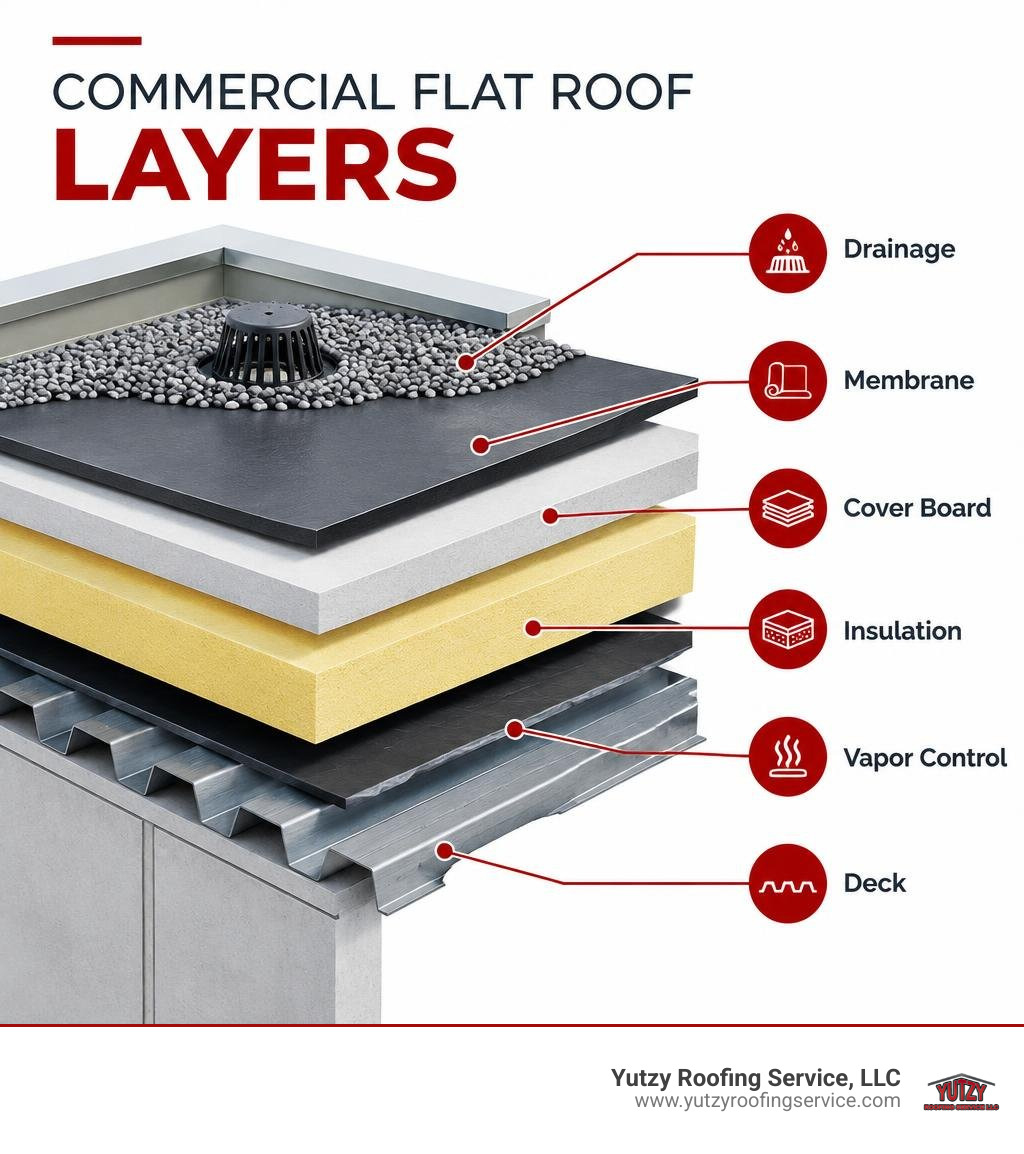
Simple guide to commercial flat roof installation terms:
Core Materials and Planning for Commercial Flat Roof Installation
Planning a commercial roofing project requires looking at how every layer interacts. A flat roof is not completely flat; it is a low-slope system engineered to shed water while withstanding extreme temperature swings. In regions like Madison, Green Bay, and Rochester, freezing winters and humid summers place heavy thermal stress on the assembly.
Before picking materials, a comprehensive structural assessment determines whether the deck can handle mechanical fastening, adhesive bonding, or the weight of ballasted assemblies. Local building codes mandate strict thermal envelope standards and vapor retarders to stop interior humidity from condensing inside the roof insulation. Proper slope design ensures water flows toward internal drains, scuppers, or gutters without ponding. Choosing the right setup begins by reviewing the different types of commercial roofs available for industrial and commercial facilities.
Comparing Single-Ply and Asphalt Systems for Commercial Flat Roof Installation
Commercial low-slope roofs are dominated by single-ply membranes and multi-ply asphalt systems. Each material offers distinct advantages depending on structural requirements and chemical exposure.
- TPO (Thermoplastic Polyolefin): Holds roughly 40% of the new construction market and 30% of reroofing projects. Its heat-welded seams create a monolithic barrier, and its bright white surface reflects solar heat, lowering peak cooling loads.
- EPDM (Ethylene Propylene Diene Monomer): Capturing 22% of new builds and 26% of reroofing, this synthetic rubber membrane offers exceptional elasticity and resists freeze-thaw cycles effectively.
- Modified Bitumen & Built-Up Roofing (BUR): Mod Bit represents about 12.4% of new construction and 14% of reroofing. Modern multi-ply polymer-modified sheets provide great puncture resistance, whereas older traditional BUR systems typically lasted 15 to 25 years.
| Roofing System | Typical Lifespan | Installed Cost Range (per sq. ft.) | Maintenance Level | Key Benefit |
|---|---|---|---|---|
| TPO | 20–30 Years | $8 – $14 | Low to Moderate | Heat-welded seams, solar reflectivity |
| EPDM | 20–30 Years | $8 – $13 | Low to Moderate | High flexibility, thermal shock resistance |
| Modified Bitumen | 15–20 Years | $9 – $15 | Moderate | Multi-ply puncture resistance |
| Built-Up (BUR) | 15–25 Years | $10 – $16 | High | Heavy gravel-surfaced durability |
For a deeper dive into these material characteristics, review our detailed flat roof types breakdown.
Key Substrate and Insulation Requirements Before Commercial Flat Roof Installation
The performance of any top membrane depends heavily on what sits beneath it. Polyisocyanurate (polyiso) rigid foam insulation boards deliver high thermal resistance per inch. These boards are paired with high-density cover boards, such as gypsum-fiber or coated glass-mat boards, to protect the insulation from foot traffic and hail.
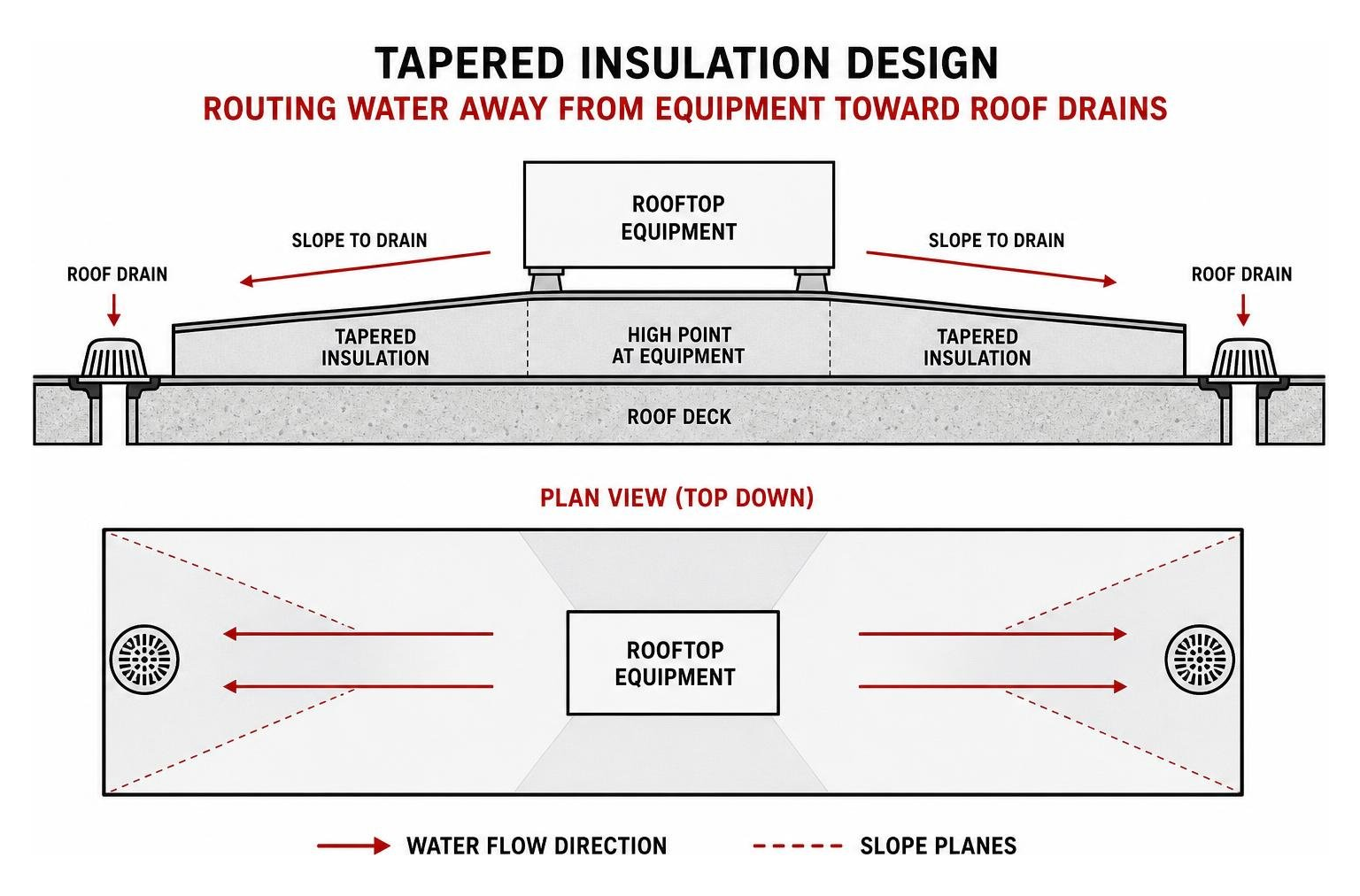
Positive drainage is mandatory. Standing water degrades seams and voids manufacturer warranties. Tapered insulation systems create an engineered slope (typically a minimum 1/4-inch rise per horizontal foot) that channels rainwater directly into scuppers and drains.
Deciding Between Roof Repair, Restoration Coating, and Full Replacement
A failing roof does not always require a complete tear-off. Making the right call depends on the condition of the underlying substrate and insulation.
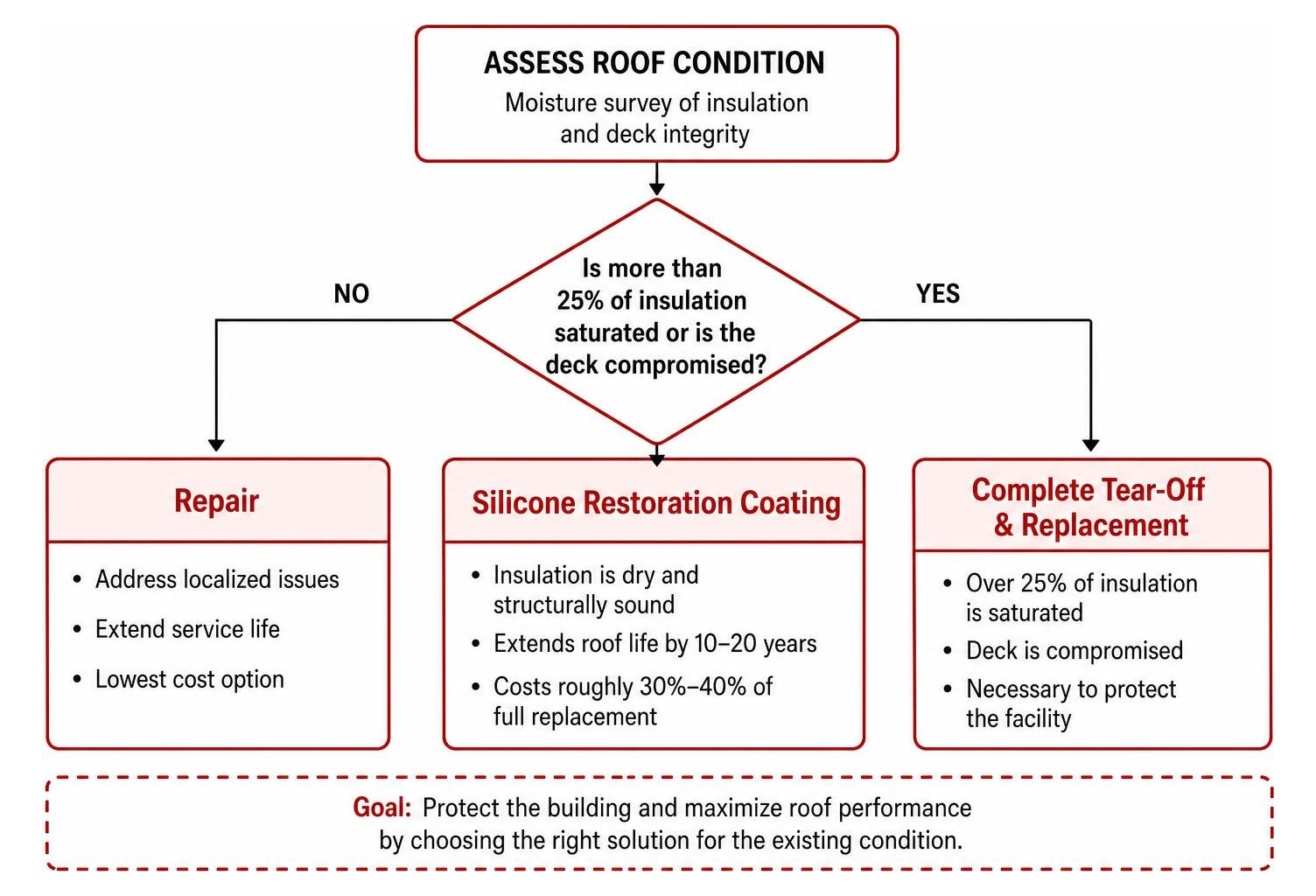
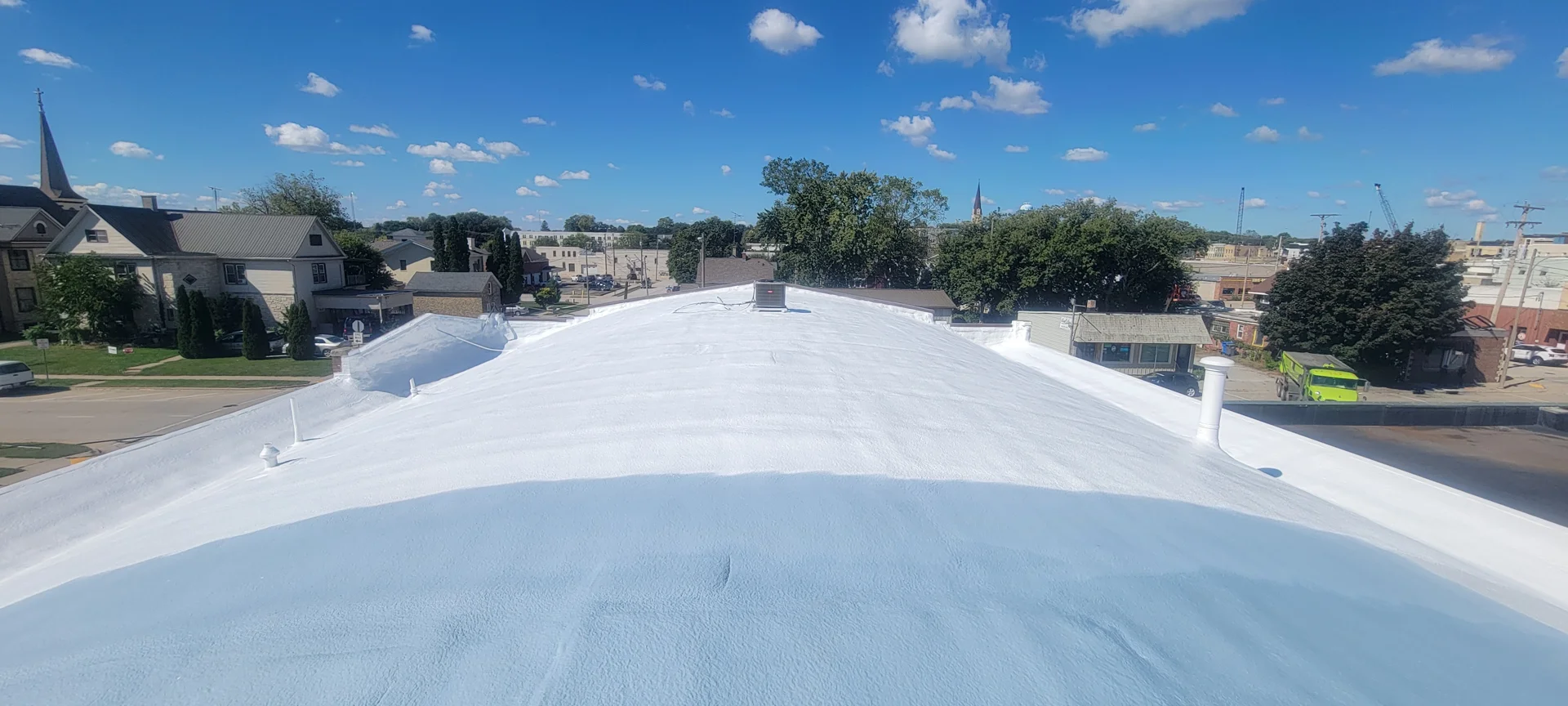
When moisture surveys reveal that the existing insulation is dry and structurally sound, applying a seamless silicone or acrylic restoration coating can extend roof life by 10 to 20 years at roughly 30% to 40% of full-replacement cost. However, if over 25% of the insulation is saturated or the deck is compromised, a complete tear-off is necessary to protect the facility. Learn more about navigating this decision through our guide on commercial roof repair or replacement.
Execution, Cost Factors, and Long-Term Maintenance Strategies
Executing a commercial roof project requires clear logistical planning. Installed costs typically range from $8 to $14 per square foot for single-ply replacements, meaning a 14,000-square-foot facility often ranges from $120,000 to over $200,000 depending on insulation thickness, deck repairs, and parapet flashing details.
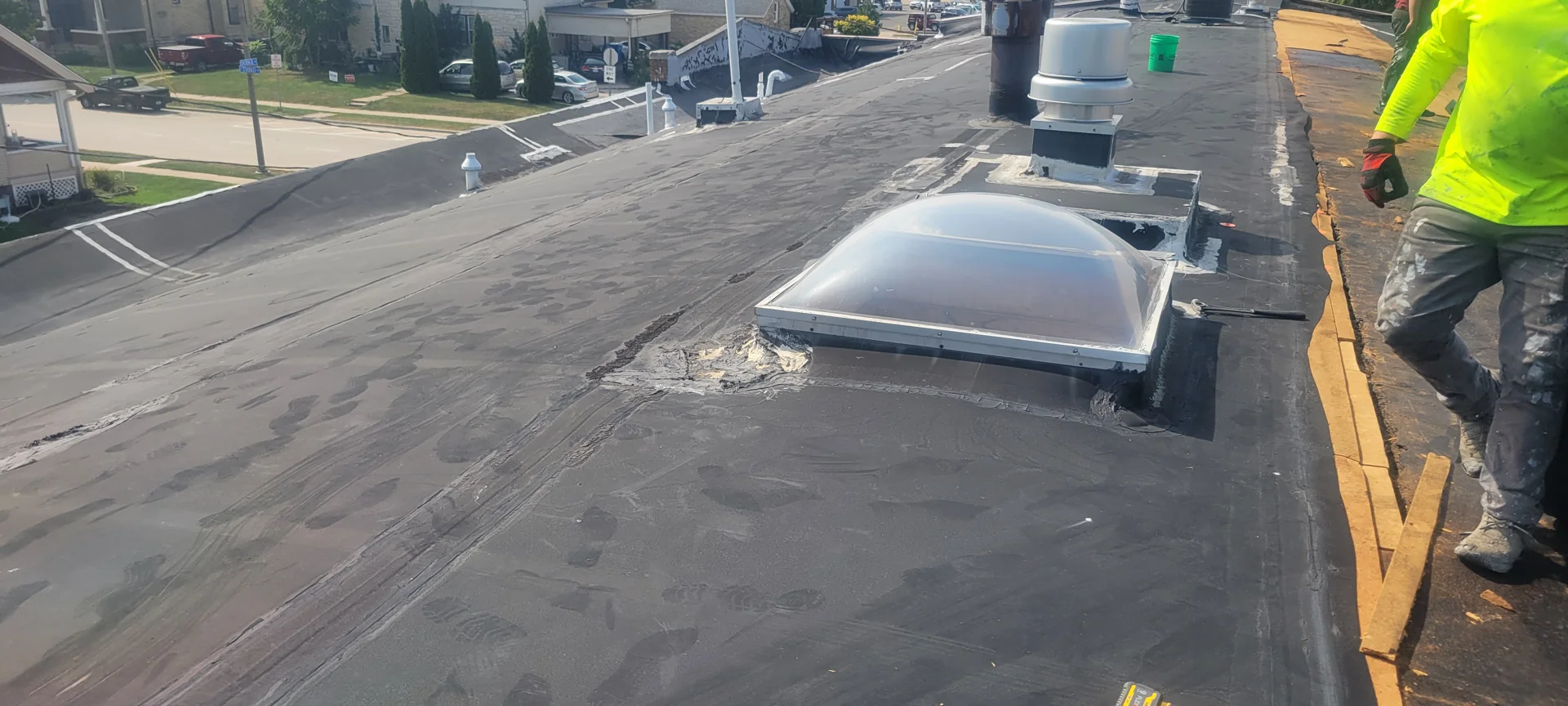
Key elements influencing the final investment include:
- Tear-Off Labor: Stripping multiple existing roof layers requires specialized disposal and safety equipment.
- Attachment Method: Mechanically fastened systems offer fast installation, while fully adhered systems provide superior wind uplift resistance.
- Crane & Hoisting Logistics: Staging heavy material bundles on active industrial properties demands strict safety zones.
For an in-depth breakdown of project pricing variables, check out the key factors that influence commercial roofing cost.
Commercial Project Costs, Logistics, and Tenant Disruption Management
Maintaining business operations during installation is essential for retail centers, warehouses, and medical offices across Wisconsin and Minnesota. Experienced roofing teams use phased scheduling, tearing off and waterproofing one section at a time so the building is never exposed to sudden storms.
Coordinating HVAC shutdowns during off-peak morning hours keeps interior spaces comfortable while technicians seal rooftop curb units. Setting up safety perimeters, designated crane access zones, and debris chutes keeps ground-level customer traffic safe. You can explore our step-by-step installation methodology in this practical guide to commercial roof installation.
Selecting a Qualified Contractor, Warranties, and Preventative Upkeep
Commercial flat roofing is complex, demanding certified installation crews who follow strict safety and manufacturer guidelines. Property owners should never attempt DIY repairs or rely on general handymen, as improper adhesives or unsealed flashings can void warranties and cause hidden structural rot.
When vetting contractors, ask about their manufacturer certifications and warranty options. Top commercial systems carry 20- to 30-year manufacturer warranties alongside robust contractor workmanship coverage. Knowing the right questions to ask a commercial roofing company helps you find a dependable partner.
At Yutzy Roofing Service, LLC, we offer up to 18-year non-prorated renewable warranties, specializing in commercial roof restoration, spray foam coatings, EPDM repairs, and custom maintenance programs. Routine semi-annual inspections and prompt drain cleanouts keep your commercial flat roof performing efficiently for decades. Schedule a commercial roofing consultation with our experienced team to inspect your roof and protect your investment.
