Understanding Emergency Roof Tarping and Board-Up Services
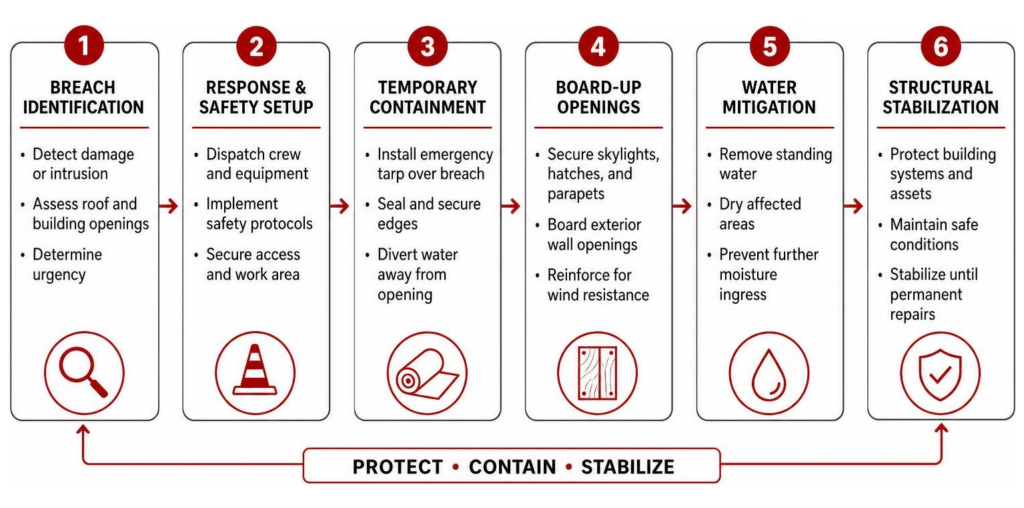
When a commercial building suffers structural damage, emergency roof tarping and board-up services act as your first line of defense. Emergency tarping involves installing heavy-duty, waterproof membranes over compromised roof decking, torn seams, or punctured single-ply systems. The primary goal is simple: halt water intrusion instantly to prevent interior collapse, stop mold containment failures, and protect valuable commercial assets.
Commercial structures face distinct challenges during an emergency. Large flat surfaces like EPDM, TPO, or modified bitumen often collect water, turning a minor puncture into a major structural hazard. When high winds tear off roof coverings or fallen tree limbs breach the roof deck, structural openings allow rain to cascade directly into your facility. Board-up services complement roof tarping by securing shattered skylights, compromised parapet walls, damaged roof access hatches, and exterior wall openings.
Failing to secure these breaches immediately exposes your building to severe secondary loss. Moisture migrates rapidly through insulation layers and deck fluting, compromising structural framing and ruining interior drywall. By reviewing helpful Emergency Roof Covering Tips, facility managers can better understand how temporary containment shields internal operations until permanent restoration takes place.
Comparing Roof Tarping, Heat Shrink Wrapping, and Board-Up
Choosing the right temporary protection depends on the structural opening and expected timeline before permanent repairs occur:
- Blue Plastic Tarps / Heavy-Duty Tarps: Fast, cost-effective, and highly flexible. Polyethylene or vinyl tarps are ideal for immediate short-term protection over flat or sloped commercial roofs.
- Heat Shrink Wrapping: Heavy plastic film draped across the structure and heated to shrink snugly against the contours of the building. This provides a contoured, airtight, 100% waterproof seal that withstands high winds and offers superior UV protection for longer durations.
- Board-Up Services: Uses heavy plywood sheets and structural framing to block vertical openings, broken window banks, roof access doors, and damaged parapet walls to prevent weather entry and unauthorized access.
Materials Used: Polyethylene vs Vinyl vs Canvas
The choice of emergency covering material directly affects how long your roof stays protected under heavy weather:
| Feature | Polyethylene (Poly) Tarps | Reinforced Vinyl Tarps | Heavy Canvas Tarps |
|---|---|---|---|
| Water Resistance | Excellent (100% Waterproof) | Superior (100% Waterproof) | Water-resistant (Can saturate) |
| Durability / Strength | Moderate to High (Reinforced weave) | Extreme (Puncture & tear resistant) | Moderate (Heavy weight) |
| UV Resistance | Standard to Treated | Excellent (Long-term sun exposure) | Moderate |
| Best Application | Rapid response, short-term protection | Extended commercial protection | Dry debris control |
| Installation Method | Furring strips / Weighted anchors | Furring strips / Weighted anchors | Fastened or weighted |
For commercial roofs, heavy-duty polyethylene and reinforced vinyl are the gold standards. Professional crews prioritize non-destructive installation techniques—such as securing edges with furring strips or utilizing weighted anchoring systems—to protect surviving roofing membranes without driving damaging nails into sound deck structures.
When to Call Emergency Tarping Companies Near Me
Emergency tarping shouldn’t wait for business hours. You should reach out to tarping companies near me instantly when your commercial facility experiences severe storm damage, missing membrane sections, HVAC curb breaches, or punctured roof decks.
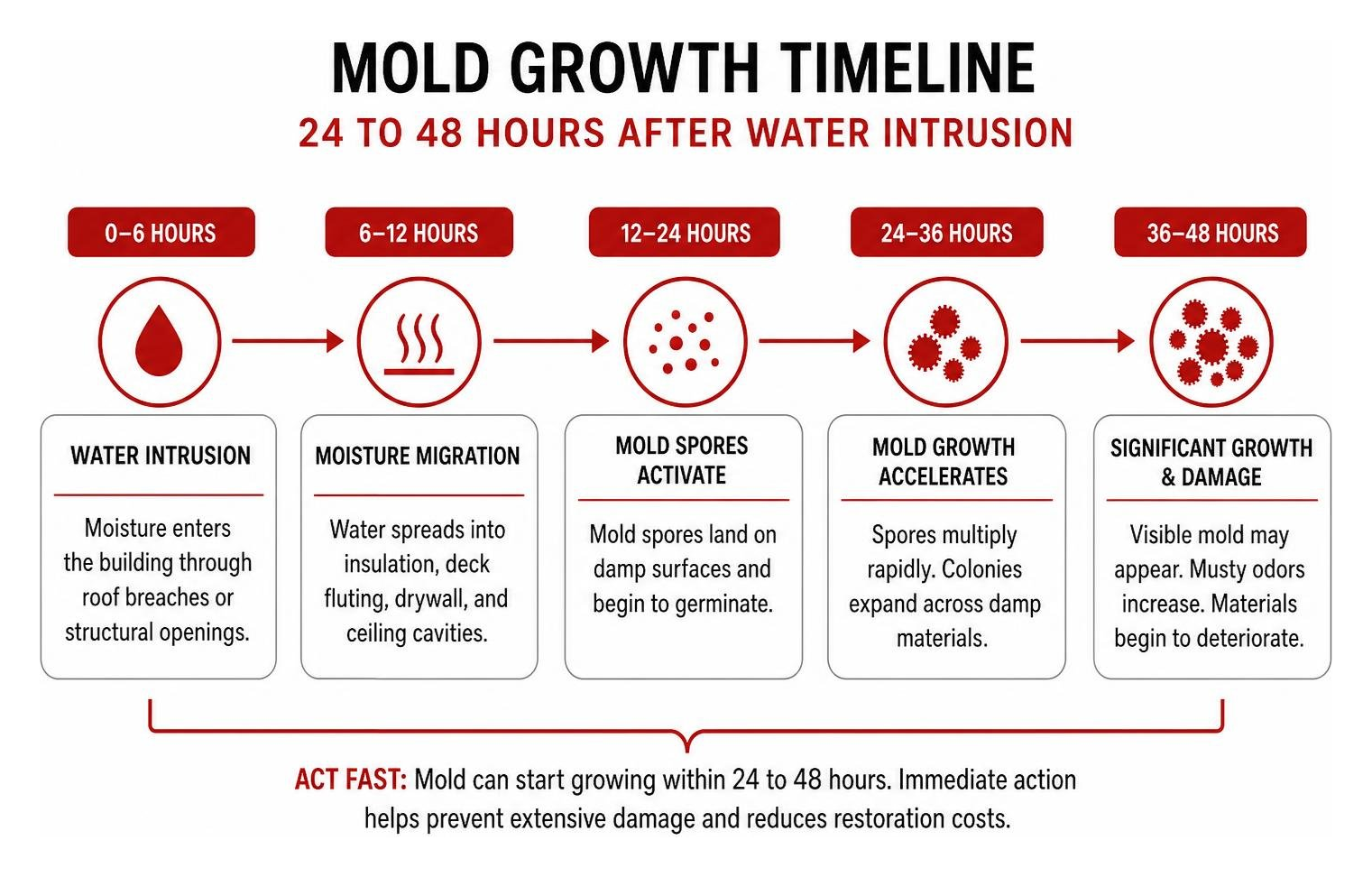
The margin for error is razor-thin. According to environmental health safety guidelines from the Environmental Protection Agency (EPA), mold spores begin multiplying in damp insulation, wall cavities, and ceiling spaces within 24 to 48 hours of moisture exposure. Delaying emergency weatherization allows liquid water to migrate deep into commercial deck fluting, insulation boards, and interior spaces. Knowing the signs of active roof failure is critical; reading about 5 Ways to Spot Emergency Leaks can help you decide when immediate containment is necessary.
DIY vs Professional Emergency Roof Protection
Attempting to tarp a commercial roof yourself poses severe safety hazards. Commercial roofs during or after a storm feature slick surfaces, hidden structural deck collapses, loose electrical wires, and dangerous high-wind gusts. Professional contractors follow strict safety protocols established by the Occupational Safety and Health Administration (OSHA) to prevent catastrophic falls and injuries on storm-damaged structures.
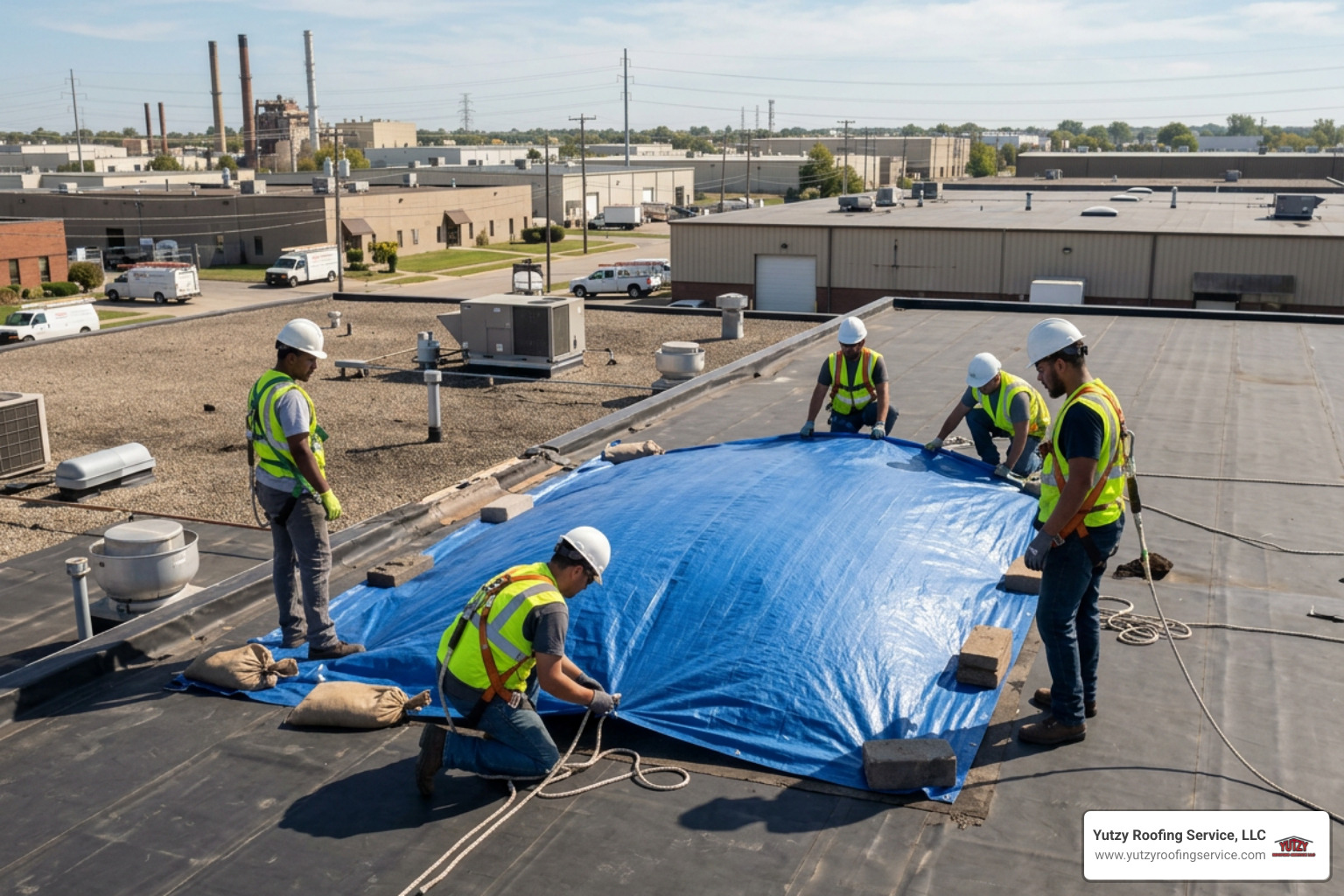
Professional emergency response teams bring essential advantages:
- Specialized fall protection, tie-off points, and OSHA-compliant safety rigging.
- Industrial-grade, wide-width vinyl and poly tarps designed for heavy commercial wind loads.
- Professional securing methods, including non-destructive furring strips and weighted anchor bags, preventing wind uplift without adding extra holes to your roof.
Costs, Lifespan, and Insurance Coverage for Emergency Tarping
Emergency roof tarping costs vary based on overall square footage, roof pitch, safety access requirements, and the extent of the damage. Typical small commercial tarping jobs range between $300 and $1,500, though large commercial industrial facilities requiring heavy crane access, specialized scaffolding, or extensive shrink-wrapping can run higher depending on structural complexity. Average standard roof repair costs nationwide linger around $1,000, making temporary tarping an inexpensive barrier against tens of thousands of dollars in secondary water destruction.
A standard, properly installed commercial roof tarp is built as a temporary fix lasting from a few weeks up to a couple of months. While heat-shrink wrap can endure longer weather exposure, temporary tarps are designed to hold the line until permanent restoration takes place. Understanding How to Handle Emergency Roofing helps commercial facility managers keep project timelines, structural repairs, and unexpected emergency expenses under control.
How Property Insurance Covers Emergency Roof Protection
Most commercial insurance policies include a strict “duty to mitigate loss” clause. This requires policyholders to take immediate, reasonable steps to protect the structure from further damage following a natural disaster or severe weather event.
Emergency roof tarping costs are routinely covered under standard property insurance policies as part of mandatory loss mitigation efforts. To ensure smooth claim processing and full reimbursement:
- Capture detailed photos and high-resolution video of the roof damage before the tarp or board-up material is installed.
- Photograph the completed tarping job, highlighting non-destructive securing methods and structural sealing.
- Keep itemized receipts and retain all contractor invoices for emergency dispatch fees.
- Provide comprehensive documentation directly to your insurance adjuster during the initial inspection.
How to Select and Hire Reliable Tarping Companies Near Me
When searching for reliable tarping companies near me, look beyond simple proximity. Focus on established contractors with verified commercial qualifications, round-the-clock emergency availability, valid state licensing, and adequate commercial liability coverage. Refer to our guide on Finding Reliable Leak Repair Services to evaluate commercial service contractors accurately before an emergency strikes.

Vetting Local Tarping Companies Near Me for Emergency Response
When vetting emergency dispatch crews for your commercial building, ask these essential questions:
- Do you offer guaranteed response times for commercial dispatch during severe storm surges?
- What non-destructive anchoring methods do you use on flat single-ply EPDM, TPO, or modified bitumen membranes?
- Do you provide detailed photo reports and itemized billing for insurance claim documentation?
Working with experienced local service providers guarantees fast mobilization during regional storm events. If your building is located in our primary service areas—such as Madison, Appleton, Green Bay, Wausau, Fond Du Lac, Eau Claire, or Marshfield—partnering with dedicated Commercial Roofers in Wisconsin ensures rapid, local emergency containment.
Red Flags When Comparing Tarping Companies Near Me
Protect your business from predatory practices during disaster events by watching for these critical red flags:
- Demanding full payment upfront: Reputable emergency responders bill reasonably or work directly through insurance claim processes.
- Invasive tarp fastening: Avoid contractors who drive long nails through intact flat roof membranes, causing unnecessary structural damage and additional leaks.
- Lack of active insurance: Always verify current general liability and worker’s compensation credentials before allowing emergency crews onto your roof deck.
Frequently Asked Questions About Emergency Roof Tarping
How fast can a professional emergency tarping crew arrive on site?
Top emergency response teams operate 24/7 hotlines and strive to dispatch crews within 1 to 4 hours of your call, depending on regional weather severity and road safety.
How long can a heavy-duty roof tarp stay on a building?
A professionally installed, commercial-grade tarp is designed to protect your structure for 2 to 6 weeks. It serves as a reliable temporary bridge while permanent repairs or complete roof restorations are scheduled.
Will commercial property insurance pay for emergency roof tarping?
Yes. Property insurance policies typically cover emergency tarping and board-up services under emergency mitigation clauses, provided the initial breach was caused by a covered peril like windstorm, hail, or fallen trees.
Conclusion
When severe weather breaks through your commercial building, taking immediate action is critical. Partnering with experienced tarping companies near me halts secondary water intrusion, prevents rapid mold outbreaks, protects building assets, and maintains your standing with insurance carriers.
At Yutzy Roofing Service, LLC, we specialize in high-performance commercial roof restoration, energy-efficient spray foam coatings, metal roof repairs, and long-term EPDM maintenance backed by non-prorated renewable warranties up to 18 years. If your commercial property has suffered roof damage or you want to establish a proactive maintenance plan before the next big storm, visit Yutzy Roofing Service today to get fast, professional support from team members you can trust.
