
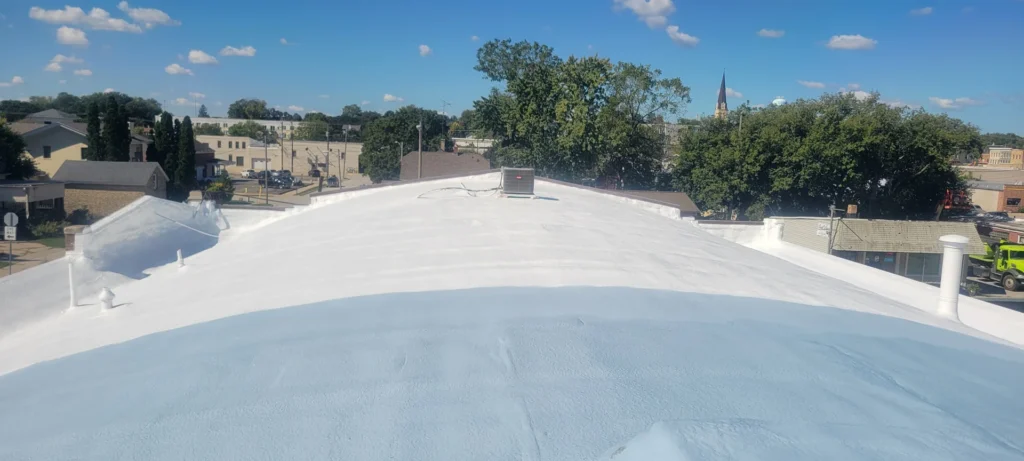
What Is a Liquid Roof Membrane? (Quick Answer)
A liquid roof membrane is a fluid-applied waterproofing system that is rolled or brushed onto a roof surface and cures to form a seamless, flexible, watertight layer — with no seams, laps, or joints where leaks can start.
At a glance:
| Feature | Liquid Roof Membrane |
|---|---|
| Application method | Rolled, brushed, or sprayed on cold |
| Curing result | Seamless, fully adhered waterproof layer |
| Compatible substrates | Concrete, metal, modified bitumen, EPDM, TPO, SPF, and more |
| Primary use | Waterproofing new and existing commercial roofs |
| Typical warranty | Up to 25 years |
| Wind uplift rating | Up to 270 psf |
If your commercial roof is leaking, aging, or worn down by Wisconsin winters and summers, a liquid-applied system is often the most cost-effective way to restore it — without a full tear-off.
If you manage a commercial building in Wisconsin, you already know what freeze-thaw cycles, heavy snow loads, and summer heat do to a flat roof. Seams split. Coatings crack. Water finds a way in. Traditional roofing systems — built from sheets, rolls, and layers of material fastened or torched together — rely on those seams staying intact. When they don’t, you get leaks.
That’s exactly the problem a liquid roof membrane is designed to solve.
Unlike sheet membranes, liquid-applied systems are installed in fluid form and cure into one continuous, seamless layer that conforms to every corner, drain, penetration, and irregular surface on your roof. There are no seams to split. No laps to peel. No weak points for water to exploit.
Liquid-applied roofing has been growing fast — over 1.185 billion square feet were installed in the U.S. in 2016 alone — and it’s not hard to see why. For commercial building owners facing costly replacements, it offers a proven, lower-disruption alternative.
I’m Josh Yutzy of Yutzy Roofing Service, LLC, and our team has been restoring commercial roofs across Wisconsin since 1995, including with liquid roof membrane systems suited to our region’s demanding climate. In the sections below, I’ll walk you through everything you need to know to make a confident decision for your building.
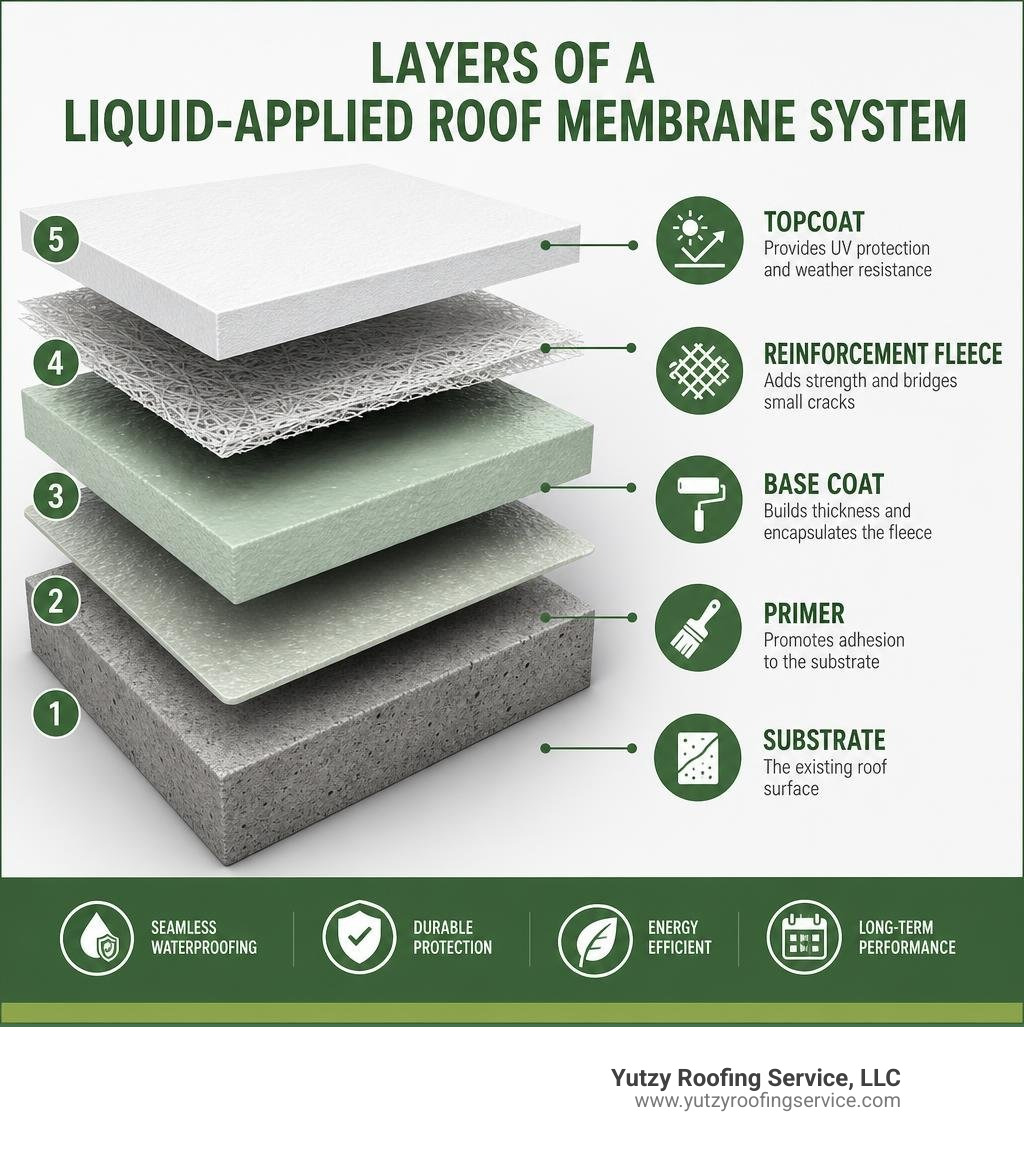
Important liquid roof membrane terms:
What is a Liquid Roof Membrane and How Does It Work?
A liquid roof membrane is a cold-applied, fully adhered waterproofing system that is installed directly over an existing roof substrate. When applied, it begins as a liquid polymer and cures through exposure to air, moisture, or a chemical catalyst to form a dense, rubber-like, highly elastic membrane.
Because it starts as a liquid, it easily flows around complex roof penetrations, HVAC units, pipes, and parapet walls. This eliminates the need for complex custom flashing or torching, which are common sources of human error during installation.
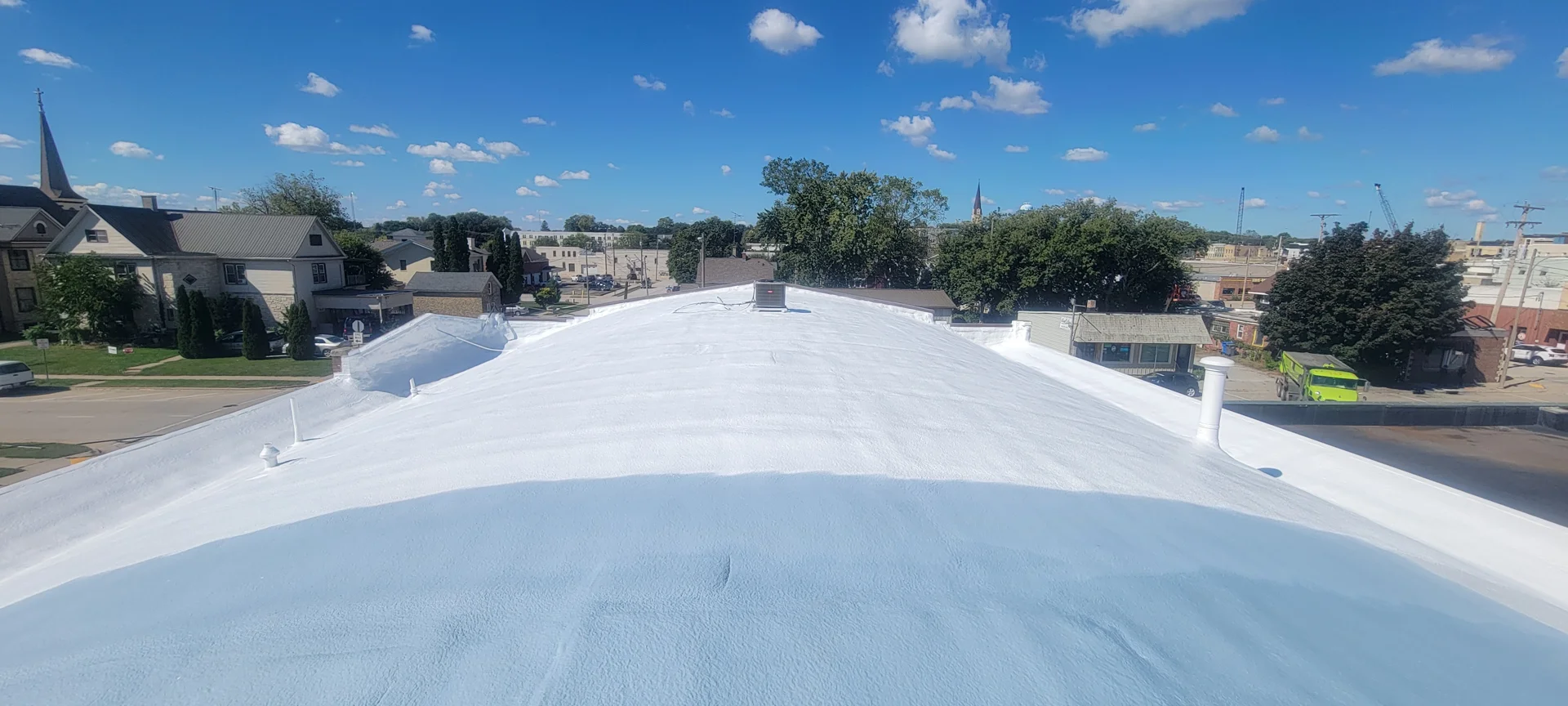
These systems are highly compatible with a wide range of existing commercial roof substrates. Whether your facility has a weathered concrete deck, aging metal panels, built-up roofing (BUR), modified bitumen, or single-ply sheets, a liquid membrane can bond directly to the surface once it is properly cleaned and primed.
To understand how these systems protect your building, it helps to explore The Different Types of Roof Waterproofing Methods Explained to see how fluid-applied technology compares to older, multi-layered roofing strategies.
Liquid Roof Membrane vs. Traditional Roof Coverings
Traditional commercial roofing systems rely on single-ply sheets like EPDM (rubber) or TPO (thermoplastic), or multi-ply asphaltic systems. While these systems are highly durable, they share one fundamental vulnerability: seams.
Every roll of EPDM or TPO must be glued, taped, or heat-welded to the next roll. Over time, building movement, thermal expansion, and Wisconsin’s brutal freeze-thaw cycles place immense stress on these joints. When the adhesive fails or a weld splits, water finds an immediate path into your building. For example, if you are dealing with failing EPDM roofing or researching low slope roofing options, you are likely familiar with the constant battle against seam failures.
In contrast, a liquid-applied system has zero seams. It forms a single, monolithic glove over your entire roof. There are no edges to lift in high winds and no seams to degrade under standing water. This monolithic structure drastically reduces the long-term risk of localized leaks.
Liquid-Applied Membranes vs. Standard Roof Coatings
It is common to confuse liquid-applied roofing membranes with standard roof coatings, but they serve completely different purposes. The key difference lies in their chemical composition, thickness, and structural reinforcement:
- Standard Roof Coatings: These are thin, non-reinforced paint-like layers (typically applied at 10 to 15 mils dry film thickness) designed primarily for maintenance, UV protection, and heat reflectivity. They are excellent for extending the life of a roof that is already watertight, but they are not engineered to seal active leaks or act as a standalone waterproof barrier.
- Liquid-Applied Roofing Membranes: These are thick, highly engineered waterproofing systems (often 30 to 60+ mils thick) that frequently incorporate a reinforcing polyester fleece or mesh embedded between a base coat and a topcoat. They are classified as actual roof coverings by building codes and are fully capable of acting as the primary waterproofing layer on a building.
For a deeper dive into how these two product classes differ and when to use each, check out our Detailed Guide to Roof Coating Options.
Key Materials and Formulations in Liquid Roofing
Not all liquid membranes are created equal. The performance, cost, and longevity of your system depend heavily on the chemistry of the polymer used. The three most common formulations are acrylic, silicone, and polyurethane.
| Material Type | Pros | Cons | Best Used For |
|---|---|---|---|
| Acrylic | Highly cost-effective, excellent UV resistance, easy to apply, water-based (low odor). | Sensitive to ponding water, cannot be applied in freezing temperatures. | Sloped roofs, well-draining metal roofs, and budget-conscious restorations. |
| Silicone | Outstanding moisture tolerance, handles ponding water indefinitely, highly reflective. | Attracts dirt easily (reducing reflectivity over time), low tear strength, difficult to recoat. | Flat roofs with minor drainage issues, high-UV environments. |
| Polyurethane | Extremely tough, high tensile strength, excellent traffic resistance, chemical resistant. | Higher material cost, can have strong odors during application, moisture-sensitive during cure. | High-traffic roofs, roofs with heavy equipment, cold-weather applications. |
Selecting the right chemistry requires balancing your budget, your building’s structural needs, and local weather patterns. For a comprehensive breakdown of these options, read our guide on How to Choose the Right Type of Roof Membrane for Your Commercial Building. You can also explore specialized commercial systems like Liquid Roof Membrane Systems: GAF HydroStop, Acrylic, Silicone.
Polyurethane Liquid Roof Membrane Technology
Polyurethane technology represents the high-performance tier of the liquid roofing market. Modern polyurethane membranes often utilize moisture-triggered curing mechanisms (sometimes referred to as moisture-activated or iCure technology). Instead of being damaged by humidity, these systems actually use atmospheric moisture to trigger the curing process, allowing them to dry quickly and become rain-resistant in as little as 10 to 60 minutes after application.
This fast-curing nature is a lifesaver in unpredictable Midwestern weather. Polyurethanes also offer exceptional tensile strength (often around 4.5 to 8 N/mm² depending on reinforcement) and retain their elastic properties even in sub-zero temperatures. At the same time, they remain vapor-permeable, allowing any trapped moisture within the existing roof deck to escape as vapor rather than forming destructive blisters under the membrane.
To see how top-tier manufacturers design these high-performance polyurethane systems, you can review technical resources such as:
- SikaRoof® Liquid Membrane | Polyurethane roof membrane | Sika Ireland
- SikaRoof® Liquid Membrane | One-component PU Waterproofing System
- Everbuild® Liquid Roof
Silicone and Acrylic Formulations
Silicone is the go-to choice for flat roofs that suffer from occasional ponding water. Because silicone is inorganic, it does not break down under standing water, unlike acrylics which can re-emulsify (soften and dissolve) if submerged for long periods.
However, silicone has a physical quirk: it is naturally “tacky” and tends to accumulate dirt, dust, and environmental debris within the first 6 to 12 months after installation. This dirt buildup can darken the roof and reduce its initial solar reflectivity.
Acrylics, on the other hand, stay much cleaner and offer excellent reflectivity at a lower price point, but they should only be used on roofs with positive slope and reliable drainage.
Key Benefits of Liquid-Applied Roofing for Commercial Buildings
For commercial property managers, a liquid roof membrane offers several major operational and financial advantages over a traditional tear-off and replacement.

- No Building Disruption: A traditional roof replacement is loud, dirty, and intrusive. It involves tearing off old materials, throwing them into dumpsters, and exposing your building’s interior to the elements. Liquid application is quiet, clean, and requires no heavy tear-off machinery. Your business can remain fully operational throughout the process.
- Zero-Flame Installation: Many traditional modified bitumen systems require open torches or super-heated asphalt kettles, creating a severe fire hazard. Liquid systems are cold-applied with rollers, brushes, or airless sprayers, completely eliminating insurance risks and fire hazards during construction.
- Incredible Wind Resistance: Because liquid membranes are fully adhered directly to the substrate, there are no mechanical fasteners to back out and no sheets for the wind to get under. These systems can achieve wind uplift ratings of up to 270 pounds per square foot (psf), making them incredibly secure during severe storms.
- Energy Efficiency: Most liquid membranes are bright white or light-colored, reflecting up to 85% of solar heat. This drastically reduces the load on your building’s HVAC systems during hot Wisconsin summers.
If you want to see how these benefits translate directly to local commercial properties, take a look at our article on Commercial Roof Coatings: Top Benefits for Madison WI.
Installation Process and Building Code Standards
To ensure a liquid membrane performs for decades, the installation must follow strict professional standards. It is not as simple as painting a floor; it is a highly technical multi-step process.
- Surface Preparation: The existing roof must be thoroughly cleaned using high-pressure power washing to remove all dirt, grease, moss, and loose debris. Any wet insulation must be identified via infrared scanning and replaced.
- Detailing and Patching: All seams, fasteners, penetrations, and joints are treated first. This usually involves applying a heavy-duty mastic or detail sealant, followed by reinforcing polyester mesh or seam tape over high-stress areas.
- Base Coat and Reinforcement Fleece: A generous base coat of the liquid membrane is applied. While the coat is still wet, a tough polyester reinforcement fleece (such as Sikalastic Fleece-120) is rolled into the liquid. This fleece acts as the “spine” of the system, providing structural strength, puncture resistance, and crack-bridging capabilities.
- Topcoat Application: Once the base coat has cured or dried sufficiently, a durable topcoat is applied over the reinforcement layer to seal the system and provide UV protection.
From a regulatory standpoint, building codes have evolved to recognize the strength of these systems. The International Building Code (IBC) distinguishes between roof coverings and roof maintenance coatings. Because liquid-applied membranes are reinforced and tested as complete assemblies, they are classified as official “roof coverings” under IBC Section 1507. This means they must pass rigorous fire, wind-uplift, and hail-impact testing to receive FM Approvals (Factory Mutual) and listing on systems like RoofNav.
If you are planning a project, reviewing A Practical Guide to Commercial Roof Installation will help you understand the engineering and labor standards required.
Frequently Asked Questions about Liquid Roofing
To help you maintain your commercial facility, we have compiled answers to the questions we hear most often from building owners. For a broader look at long-term care, check out The Ultimate Guide to Flat Roof Coating Experts and Maintenance Plans.
How long does a liquid-applied roof membrane last?
When professionally installed and maintained, a high-quality liquid roof membrane can easily last 15 to 25 years. The exact lifespan depends on the formulation, the thickness of the application, and whether a full reinforcement fleece was used.
The best part about these systems is that they are renewable. When the membrane eventually reaches the end of its warranty period, the surface can simply be cleaned and top-coated with a fresh layer of liquid polymer. This instantly extends the system’s life for another 10 to 15 years without the need for a tear-off. For more details on longevity, read Roof Membranes: How Long Do They Last.
Can liquid roofing be applied over an existing wet or damp substrate?
As a general rule, the substrate must be completely dry (typically with a moisture content of 4% or less) before application. Applying liquid membranes over trapped moisture can lead to adhesion failure, blistering, and rot within the roof structure.
However, some advanced moisture-cured polyurethane systems can tolerate slightly damp surfaces during application because they use atmospheric moisture to cure. Even so, standing water or saturated insulation must always be removed and replaced. Adhesion testing is highly recommended before any full-scale application.
To learn more about keeping water out of your roof deck, read Stop the Leak Before It Starts with Waterproof Sealant for Flat Roofs. You can also research single-coat emergency repair options like Roof Coat Liquid Membrane – Waterproof Your Roof in One Coat.
What is the difference between a roof coating and a liquid membrane under the IBC?
Under the International Building Code, the difference is all about structural intent and testing:
- IBC Section 1507 (Liquid-Applied Roofing): Categorizes these systems as full roof coverings. They must undergo rigorous system-wide testing for wind uplift, fire resistance (Class A, B, or C), and impact resistance. They are designed to act as the primary, standalone barrier against water.
- IBC Section 1509 (Roof Coatings): Defines coatings as maintenance or repair materials. They are not considered new roof coverings and do not require the same structural system testing, as they are meant to protect and extend the life of an existing, functional roof.
Conclusion
A liquid roof membrane is one of the smartest investments a commercial building owner can make. It stops leaks, cuts cooling costs, avoids the mess of a tear-off, and provides a seamless, highly durable shield that stands up to the worst weather the Midwest can throw at it.
At Yutzy Roofing Service, LLC, we specialize in high-quality commercial roof restorations, spray foam coatings, and fluid-applied systems. We stand behind our work with an up to 18-year non-prorated, renewable warranty, giving you complete peace of mind that your facility is protected for the long haul.
Whether your building is located in Marshfield, Appleton, Eau Claire, Fond Du Lac, Green Bay, Madison, Wausau, or even over in Mankato or Rochester, MN, our team is ready to help you find the perfect solution.
Ready to protect your commercial property and eliminate leaks for good? Learn more about the benefits of commercial roof coatings in Madison, WI or contact us today to schedule a professional roof inspection!
