Why Heat Proof Paint for Roof Is a Smart Move for Commercial Buildings
Heat proof paint for roof surfaces is a specialized reflective coating that reduces how much solar energy your roof absorbs — keeping the building cooler and cutting energy costs.
Here’s a quick summary of what you need to know:
| Question | Quick Answer |
|---|---|
| What does it do? | Reflects sunlight and releases heat instead of absorbing it |
| How much can it cool a roof? | Reduces roof surface temps by up to 40% |
| Indoor temperature reduction? | 5–10°C cooler indoors |
| Energy savings? | Up to 30% reduction in cooling costs |
| How long does it last? | Typically 10 years before recoating |
| What roofs can it go on? | Metal, concrete, tile, asbestos, EPDM |
| Key performance metric? | Solar Reflective Index (SRI) — higher is better |
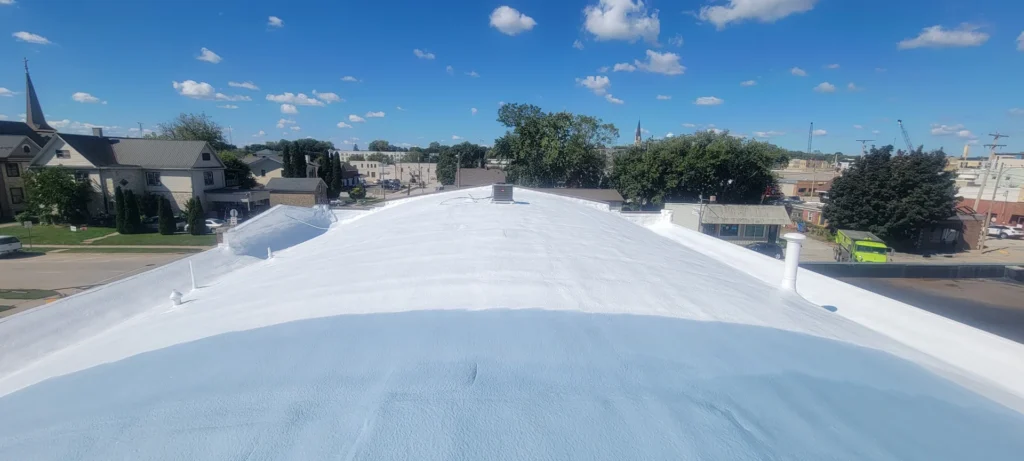
If you manage a commercial building in Wisconsin, you already know what extreme summers do to an unprotected roof. A dark, uncoated surface can reach temperatures well above 70°C on a hot day — turning your building into an oven and driving up air conditioning costs. Heat reflective coatings work by bouncing solar energy away before it ever becomes heat inside your building. The difference is dramatic: one real-world example showed a bare metal roof reaching 70°C without coating, compared to roughly 30°C with a reflective coating applied — on the same day, in the same conditions.
I’m Josh Yutzy, and with over 30 years of commercial roofing experience across Wisconsin, Missouri, and Kansas, I’ve seen how the right heat proof paint for roof restoration can extend a roof’s life while delivering real, measurable energy savings. In the sections ahead, we’ll walk through exactly how these coatings work, what performance numbers to expect, and how to choose the right product for your facility.
Understanding Heat Proof Paint for Roof Systems
When we talk about heat proof paint for roof systems, we aren’t just talking about a bucket of white paint from the local hardware store. These are sophisticated chemical formulations designed to manage thermal energy. In the commercial roofing world, we categorize these under “cool roof” technologies.
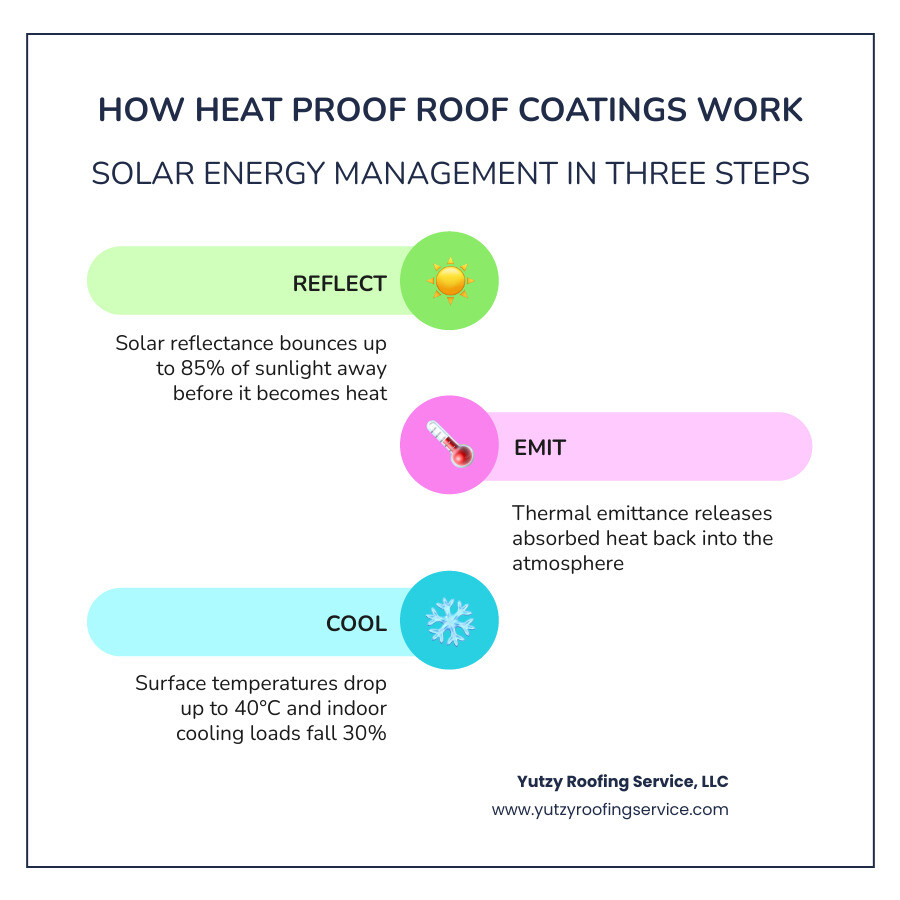
The two heavy hitters in this category are solar reflectance and thermal emittance. Solar reflectance is the ability of the material to bounce sunlight (photons) back into the atmosphere. Thermal emittance is the roof’s ability to “shed” the heat it does happen to absorb. Think of it like a high-end athletic shirt that wicks away sweat; a good roof coating wicks away heat.
Many of these advanced systems, like 290 Roof Shield Ceramic Elastomeric Roof Coating – Richard’s Paint, utilize ceramic microspheres to create a thermal barrier. By using these specialized materials, we can achieve 7 Surprising Advantages of Roof Coatings and Sealants, including reduced thermal shock—the expanding and contracting of your roof that leads to leaks and structural fatigue.
How heat proof paint for roof technology works
The magic happens at the molecular level. Modern coatings often use nanotechnology to create a seamless, dense layer that blocks up to 85% of solar heat. Products like Excel Roof Cool Coat Heat Reflective Solar Coating 10L (White) leverage “triple action technology.” This combines:
- Infrared Reflection: Bouncing away the invisible heat rays from the sun.
- UV Protection: Preventing the sun’s rays from breaking down the roof’s chemical bonds.
- Nano-Insulation: Using hollow microspheres to create a microscopic “dead air” space that prevents heat from transferring through the coating.
This is why, in May 2026, we are seeing more warehouses and factories moving away from traditional dark membranes. It’s not just about comfort; it’s about physics.
Key certifications and SRI values
If you are shopping for a heat proof paint for roof application, you need to look at the Solar Reflective Index (SRI). This is a value that combines reflectance and emittance into one number.
- A standard black roof has an SRI of about 0.
- A standard white roof might have an SRI of 80.
- High-performance coatings often reach SRI values of 102 to 122.
In our region, look for coatings that meet ASTM E1980 standards. This ensures the product has been tested for performance in real-world conditions. High SRI values are critical for LEED compliance and meeting GRIHA standards or Energy Star ratings. If your business is aiming for “Green Building” status in Madison or Green Bay, these numbers are your best friends.
Performance Metrics: Temperature Reduction and Energy Savings
The most common question we get at Yutzy Roofing Service is: “Will I actually see a difference on my utility bill?” The answer is a resounding yes. When we apply a high-quality heat proof paint for roof surface, we aren’t just making the roof look pretty; we are fundamentally changing its relationship with the sun.
Statistical data shows that these coatings can lower roof surface temperatures by up to 40%. On a blistering July day in Wausau, that can mean the difference between a roof that’s 150°F and one that’s a manageable 90°F. For more on how this impacts your facility, check out Energy Efficient Roofs: What Are the Best Options?.
Expected savings with heat proof paint for roof
Real-world performance typically breaks down into three categories of savings:
- Indoor Cooling: You can expect a 5–10°C (roughly 9–18°F) reduction in indoor temperatures in non-air-conditioned spaces like warehouses.
- HVAC Load: For air-conditioned offices or retail spaces, the cooling load can drop by up to 25%.
- Energy Costs: Total cooling energy costs typically drop by 15% to 30%.
From a business perspective, the operational ROI is impressive. Most commercial clients see a full payback period of 12 to 18 months just through energy savings and reduced HVAC maintenance. Because the AC units don’t have to work as hard, they last longer and require fewer repairs.
Substrate compatibility for commercial facilities
Can you apply heat proof paint for roof cooling to any surface? Almost!
- Metal Roofs: These are the primary candidates. Coatings stop the “oven effect” and prevent rust.
- Concrete Slabs: Excellent for flat roofs; the coating fills hairline cracks and prevents thermal mass heat storage.
- Asbestos Sheets: Encapsulates the fibers while providing cooling.
- Aged EPDM: Instead of a costly tear-off, you can perform an Top Benefits of EPDM Roof Restoration using a reflective coating to extend its life by a decade or more.
Application and Maintenance of heat proof paint for roof Restoration
Applying these coatings is a precise process. You can’t just slap it on over dirt and expect it to work. At Yutzy Roofing Service, we follow a strict protocol to ensure the 10-year (or longer) lifespan these products promise.
The first step is always surface preparation. We use high-pressure washing to remove dirt, salts, oils, and loose particles. If there are cracks larger than 2mm, they must be repaired with a compatible filler first. We also perform adhesion testing to ensure the coating will bond permanently to your specific roof material. For a deeper dive into this, see The Ultimate Guide to Flat Roof Coating Experts and Maintenance Plans.
Professional application steps
In May 2026, the industry standard involves airless spray application. We use a crosshatch pattern (spraying one direction, then the other) to ensure uniform coverage.
- Wet Mil Thickness: We monitor this closely. A typical high-build coating needs to be applied at a specific thickness (often 425 microns wet) to achieve the desired dry film thickness.
- Curing Time: Most coatings are touch-dry in 2–4 hours, but they require a full 24 hours without rain to cure properly.
- Priming: On rusted metal or highly absorbent concrete, a primer is essential to prevent “bleed-through” and ensure a solid bond.
Long-term maintenance and durability
A professionally applied heat proof paint for roof system should last at least 10 years. However, “low maintenance” doesn’t mean “no maintenance.”
- Annual Inspections: Check for debris buildup or physical damage from hail or HVAC technicians.
- Cleaning: A simple rinse can help maintain the high SRI value. If the roof gets covered in soot or dust, its reflectivity drops.
- Seam Inspections: We pay special attention to seams and penetrations. Our Metal Roof Sealant Complete Guide explains how these areas are the first line of defense against leaks.
Comparing Reflective Coatings to Traditional Insulation
Many building owners ask if they should just add more fiberglass insulation inside the attic or ceiling. While traditional insulation is great for keeping heat in during a Wisconsin winter, it doesn’t stop the roof itself from getting scorching hot.
| Feature | Reflective Coatings | Spray Foam (SPF) | Fiberglass Insulation |
|---|---|---|---|
| Primary Goal | Reflect Solar Heat | Seal & Insulate | Trap Air |
| SRI Value | High (100+) | Moderate | Low |
| Weight | Very Lightweight | Moderate | Lightweight |
| Installation | Non-Invasive | Requires Equipment | Invasive |
| Waterproofing | Yes (Seamless) | Yes | No |
Reflective coatings address thermal bridging—where heat transfers through the metal studs or rafters. By stopping the heat at the “skin” of the building, you prevent the entire structure from heating up.
Limitations and climate considerations
Is heat proof paint for roof cooling perfect for every situation? Not quite.
- Ponding Water: Standard reflective paints don’t like standing water. For flat roofs with drainage issues, we often recommend silicone-based coatings which handle “ponding” much better. Check out The Waterproof Truth About Commercial Flat Roof Coating for more details.
- Winter Considerations: In places like Eau Claire or Rochester, MN, you might worry about losing “solar gain” in the winter. However, the energy saved during our humid summers almost always outweighs the minor loss of heat gain in the winter, especially since the sun sits so low on the horizon during Wisconsin winters anyway.
Frequently Asked Questions about Roof Cooling
How long does heat reflective roof paint last?
Most commercial-grade coatings are designed to last 10 to 12 years. At that point, the roof doesn’t need to be replaced; it simply needs a “refresh” coat to restore its reflectivity and waterproofing properties.
Can heat proof paint be applied to rusted metal roofs?
Yes, but the preparation is key. The rust must be treated or primed with a rust-inhibitive primer first. If you skip this step, the rust will eventually eat through the coating from the underside.
What is the difference between SRI and Solar Reflectance?
Solar Reflectance only measures how much light is bounced away. SRI (Solar Reflective Index) is a more complete number because it also includes “Thermal Emittance”—how quickly the roof cools down once the sun goes behind a cloud.
Conclusion
Choosing the right heat proof paint for roof restoration is one of the most cost-effective ways to upgrade a commercial building. Whether you are in Madison, WI, or Rochester, MN, the combination of energy savings, extended roof life, and improved indoor comfort makes it a win-win for facility managers.
At Yutzy Roofing Service, LLC, we specialize in these high-performance systems. We don’t just paint roofs; we restore them to a condition that is often better than the day they were installed. With our renewable warranties and decades of experience in the Wisconsin climate, we can help you turn your roof from a liability into an asset.
If you’re ready to see how much you could save, let’s talk. Exploring The Benefits of Commercial Roof Coatings in Madison WI is a great place to start your journey toward a cooler, more efficient building.

