
How to Approach Cracked Roof Repair on a Commercial Building
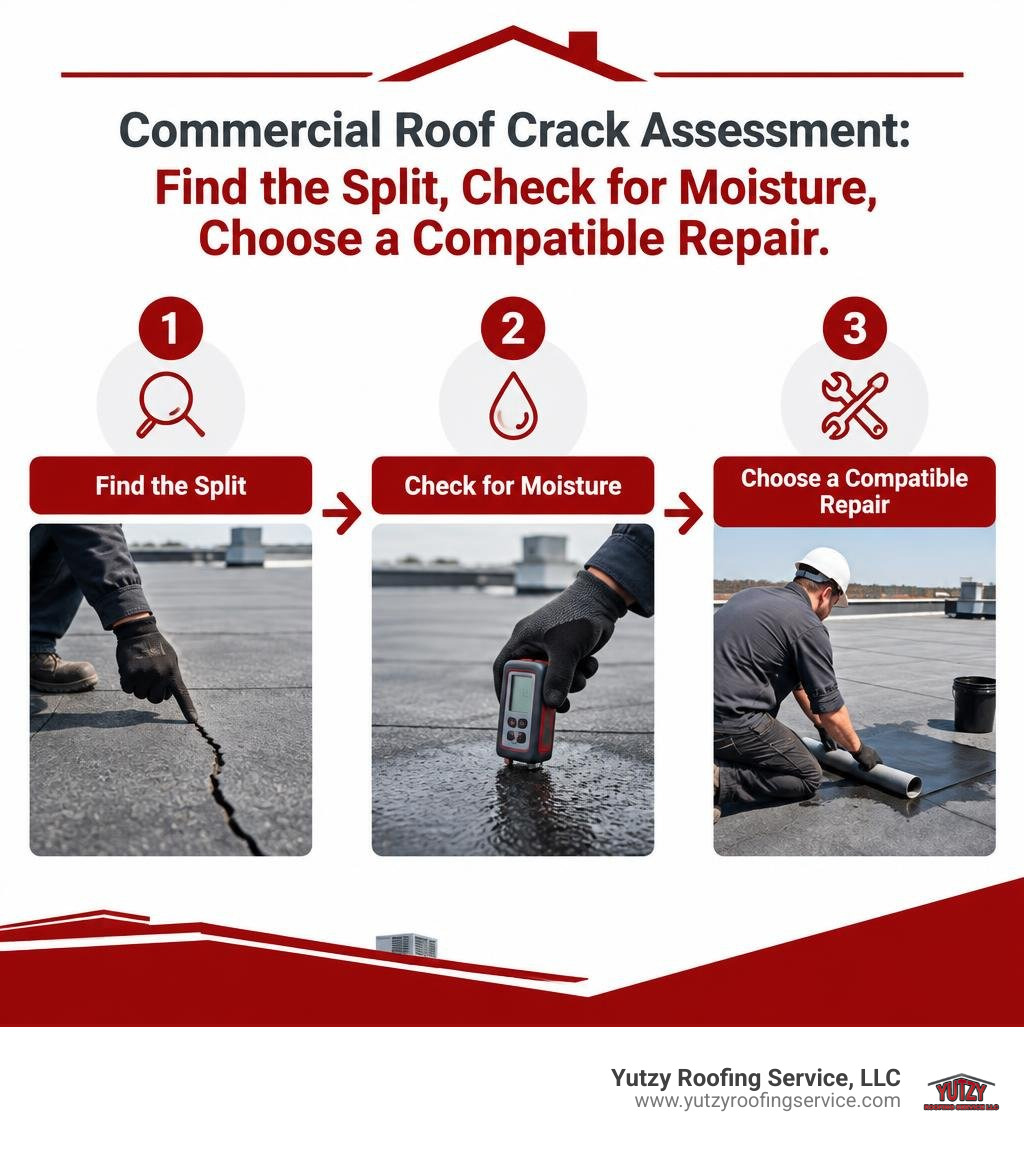
For cracked roof repair, keep people off the damaged area and have a commercial roofer identify the split, check for trapped moisture, and choose a repair that matches the roof system. A small EPDM split may need a compatible patch. Widespread cracking or wet insulation calls for a broader assessment before anyone applies sealant.
Wisconsin’s freeze-thaw cycles and summer heat can make cracks worse. A surface patch may stop a drip without fixing the damage beneath it.
I’m Josh Yutzy of Yutzy Roofing Service, a family roofing business serving Wisconsin since 1995. I bring that experience to cracked roof repair, starting with the cause of the damage so the repair fits the roof.
Cracked roof repair word list:
Introduction
Commercial roofs face continuous environmental stress. Industrial facilities across regions like Madison, Wausau, and Appleton experience extreme seasonal swings—from sub-zero winter freezes to scorching summer UV exposure. These drastic temperature changes trigger thermal expansion and contraction across flat roofing systems. Over time, physical movement causes base materials to lose elasticity, resulting in visible splits, fractured seams, and popped surface blisters.
When left unaddressed, ponding water—defined as standing water that remains on a flat roof for more than 48 hours—accelerates membrane breakdown. Moisture penetrates hairline cracks, seeps into underlying insulation boards, and causes structural decking decay. A cracked commercial roof is never just an aesthetic blemish; it represents a serious threat to building integrity, inventory, and operations.

Professional Protocols for Commercial Cracked Roof Repair
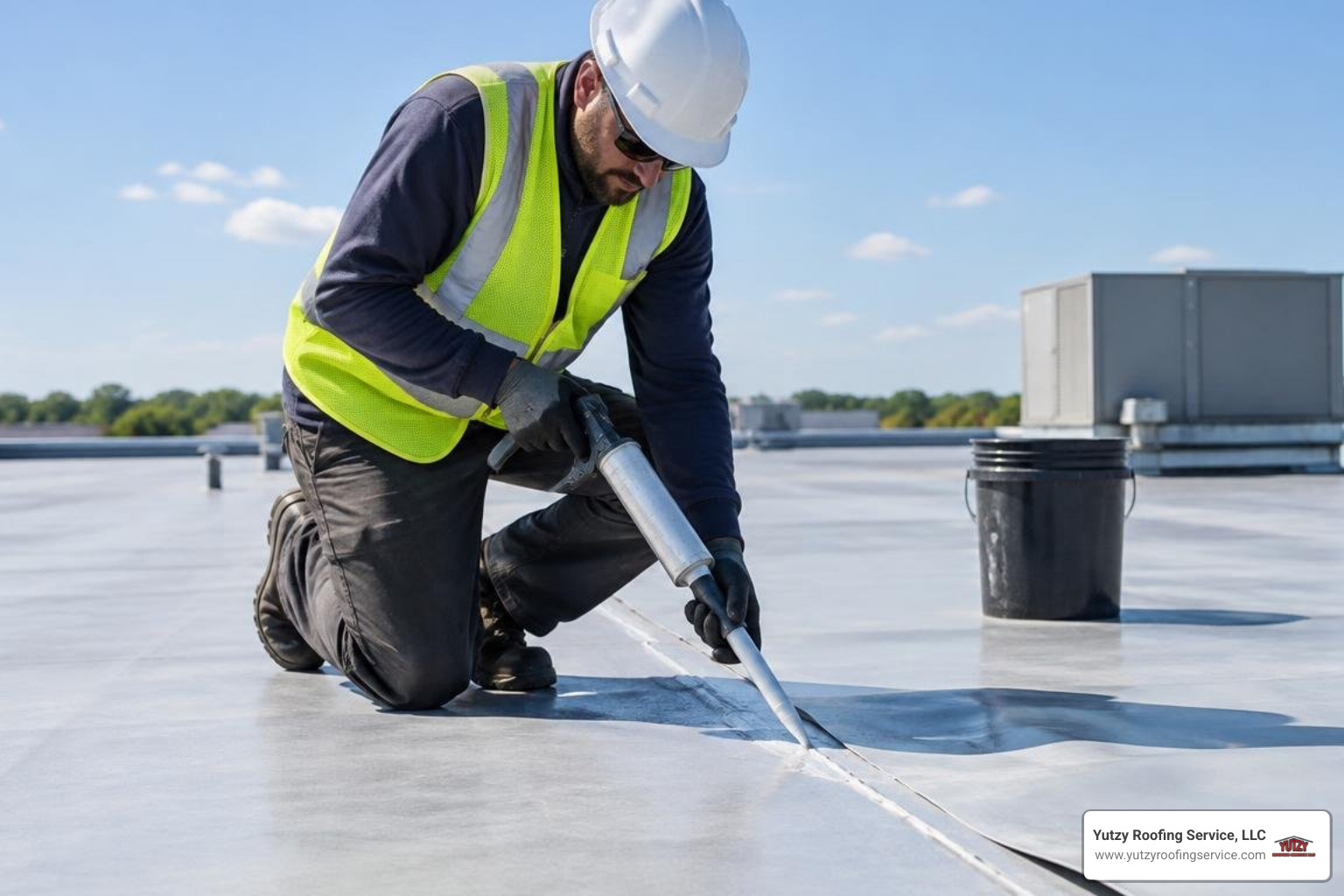
Fixing a damaged commercial membrane requires much more than smearing caulk over a fissure. Professional contractors follow systematic technical standards to ensure repairs hold up under harsh weather. Proper surface preparation is mandatory; all dirt, grease, and oxidized residue must be scrubbed away using specialized industrial cleaners before applying adhesives or membranes.
Technicians also evaluate the underlying substrate. When learning how to identify roof damage, experts look beyond surface breaches for hidden structural rot or saturated insulation. Following established guidelines like repairing EPDM flashings and seams, certified contractors install vulcanized reinforcement fabric, multi-ply patches, and fluid-applied elastomeric sealants that bond molecularly with the existing substrate.
Diagnosing Membrane Splits and Cracked Roof Repair Needs
Commercial roofs develop splits through several mechanisms:
- Thermal Shock: Rapid temperature swings cause repetitive expansion and contraction, tearing older membranes.
- Blister Ruptures: Moisture trapped within roofing plies expands into vapor during hot days, creating blisters that eventually crack under foot traffic or hail impact.
- Flashing Separation: Expansion around HVAC curbs, parapet walls, and vent penetrations pulls metal flashing away from the primary membrane.
Trained roofers use electronic moisture meters and strategic core sampling to determine whether moisture has invaded the insulation. Understanding how to maintain EPDM flat roofs ensures that water migration beneath the top ply is caught early, preventing internal mold growth and wood decking decay.
Advanced Materials for Industrial Cracked Roof Repair
Commercial roofing contractors rely on engineered repair compounds matched to the specific roof chemistry and environmental conditions.
| Repair Material | Application Temperature Range | Primary Best Use | Flexibility & Durability |
|---|---|---|---|
| Rubberized Wet Patch | 0°F to 120°F | Emergency leak containment, wet surface application, standing water repairs | High initial flexibility; excellent temporary all-weather adhesion |
| Elastomeric Acrylic Sealants | 45°F to 100°F | UV-exposed field transitions, metal roof joints, liquid restoration base coats | High elongation; durable UV resistance over dry, prepped surfaces |
| Polyurethane Sealants | 35°F to 95°F | Parapet terminations, masonry penetrations, heavy-traffic seams | Maximum mechanical strength; superior puncture and tear resistance |
Rubberized wet patch formulations are particularly valuable during Midwest winters because they can be applied in temperatures ranging from 0°F to 120°F, even under standing water. For permanent repairs, contractors embed universal patching fabric between layers of liquid rubber coatings to bridge structural movement without cracking.
Emergency Stabilization vs Certified Multi-Layer Patching
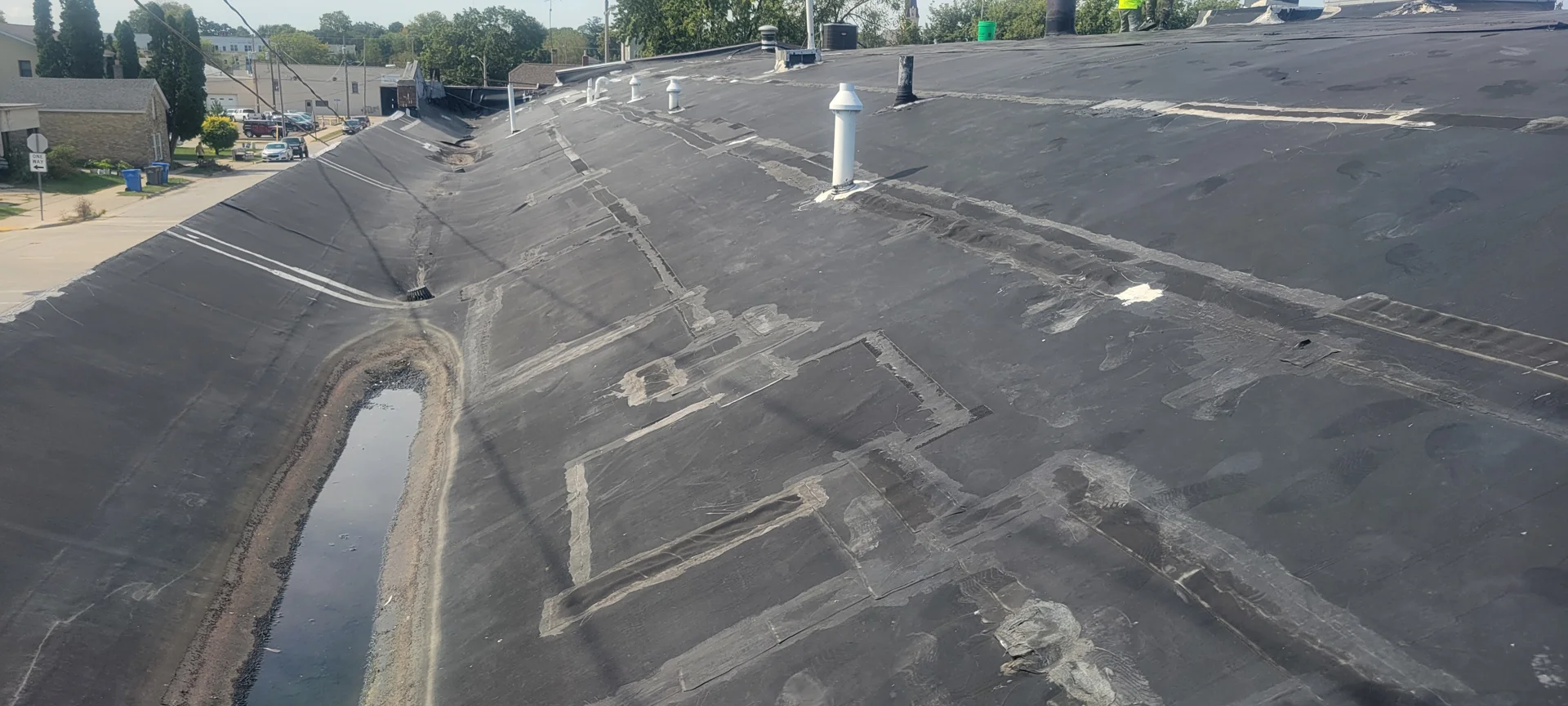
When severe storms tear open a commercial roof, facility managers need fast stabilization. Roughly 40% of property owners cite weather damage as the main driver for major roof work, with 15% describing their situation as an immediate emergency. In urgent cases, taking initial steps for handling emergency roof damage prevents catastrophic interior losses. Professional emergency roof tarping—averaging around $450—uses heavy-duty tarps anchored with wood batten strips and all-weather bitumen patches.
However, emergency stabilization is strictly a temporary stopgap. Permanent commercial repair requires certified multi-layer patching, vulcanized membrane bonding, and seamless elastomeric coatings that comply with manufacturer warranty specifications.
Safety Hazards and Structural Risks of Unqualified Roof Work
Commercial roof repair involves significant safety risks and technical challenges. Navigating elevated flat roofs requires strict OSHA compliance, commercial fall protection harnesses, perimeter warning lines, and hazard assessments for rooftop electrical conduits.
Furthermore, untrained personnel walking across saturated insulation risk punching through rotted decking underneath. Hiring a licensed, insured commercial roofing contractor protects your facility from liability and guarantees the repair meets municipal building codes.
Choosing Long-Term Restoration Over Temporary Surface Patches
Applying repeated spot patches to an aging commercial roof often leads to recurring leaks and endless maintenance expenses. Instead of continually chasing new fissures, facility owners can opt for fluid-applied commercial roof restoration.
Applying seamless elastomeric coatings or spray polyurethane foam across the entire surface creates a monolithic, waterproof barrier. When deciding on roof repair vs replacement options, fluid-applied restoration eliminates vulnerable seams without the massive cost and business disruption of a complete tear-off.
When Extensive Splitting Signals Full Restoration
Not every cracked roof can be salvaged with isolated patches. Industry standards recommend exploring full restoration or replacement when:
- The 30% Threshold is Crossed: More than 30% of the roof surface exhibits widespread cracking, granule loss, or splitting.
- Substrate Saturation Occurs: Moisture surveys reveal saturated underlying insulation over widespread sections.
- Energy Costs Spike: Damaged roofing insulation loses its thermal resistance (R-value), driving up commercial heating and cooling expenses.
- Decking Shows Structural Deflection: Severe interior ceiling sagging or deck rot compromises structural safety.
Securing Long-Term Commercial Roof Protection
Preventing severe cracks starts with a structured commercial maintenance program. Scheduling bi-annual inspections each spring and fall allows technicians to clean internal drains, reseal perimeter flashings, and repair small membrane splits before seasonal weather strikes.
At Yutzy Roofing Service, we specialize in long-term commercial roof restoration, spray foam insulation, and metal and EPDM roof repairs across Wisconsin, including Marshfield, Wausau, Appleton, and Madison. We back our fluid-applied systems with up to an 18-year non-prorated renewable warranty, giving commercial property owners dependable protection against the elements. If your facility shows signs of membrane cracks or water infiltration, explore professional solutions to stop the drip and protect interior facilities before structural damage escalates.
