Choosing Caulk for Metal and Concrete Joints
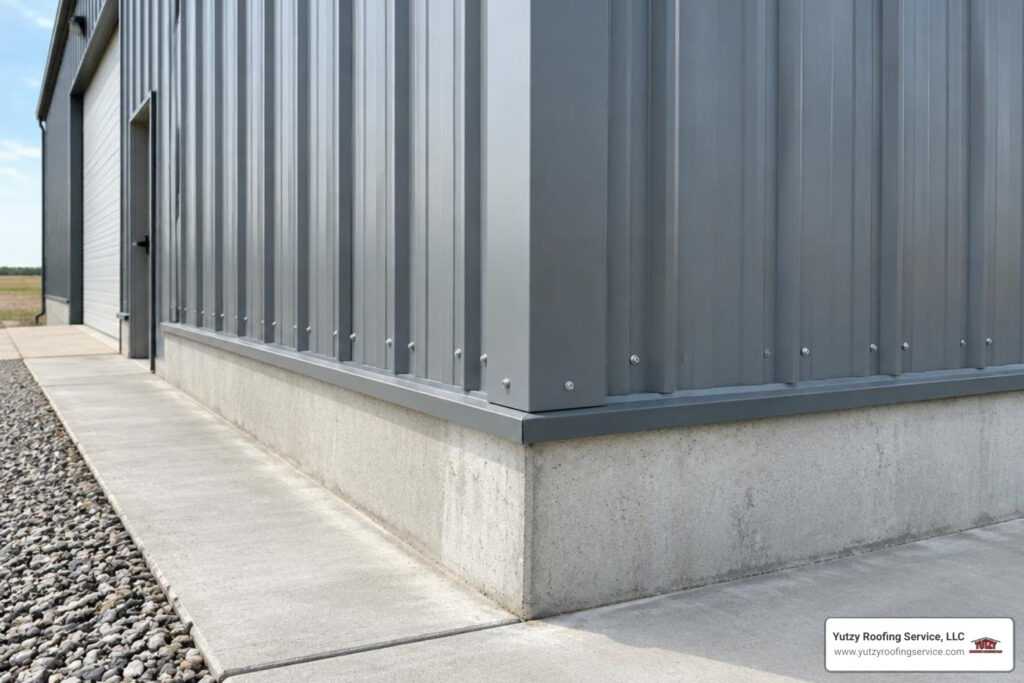
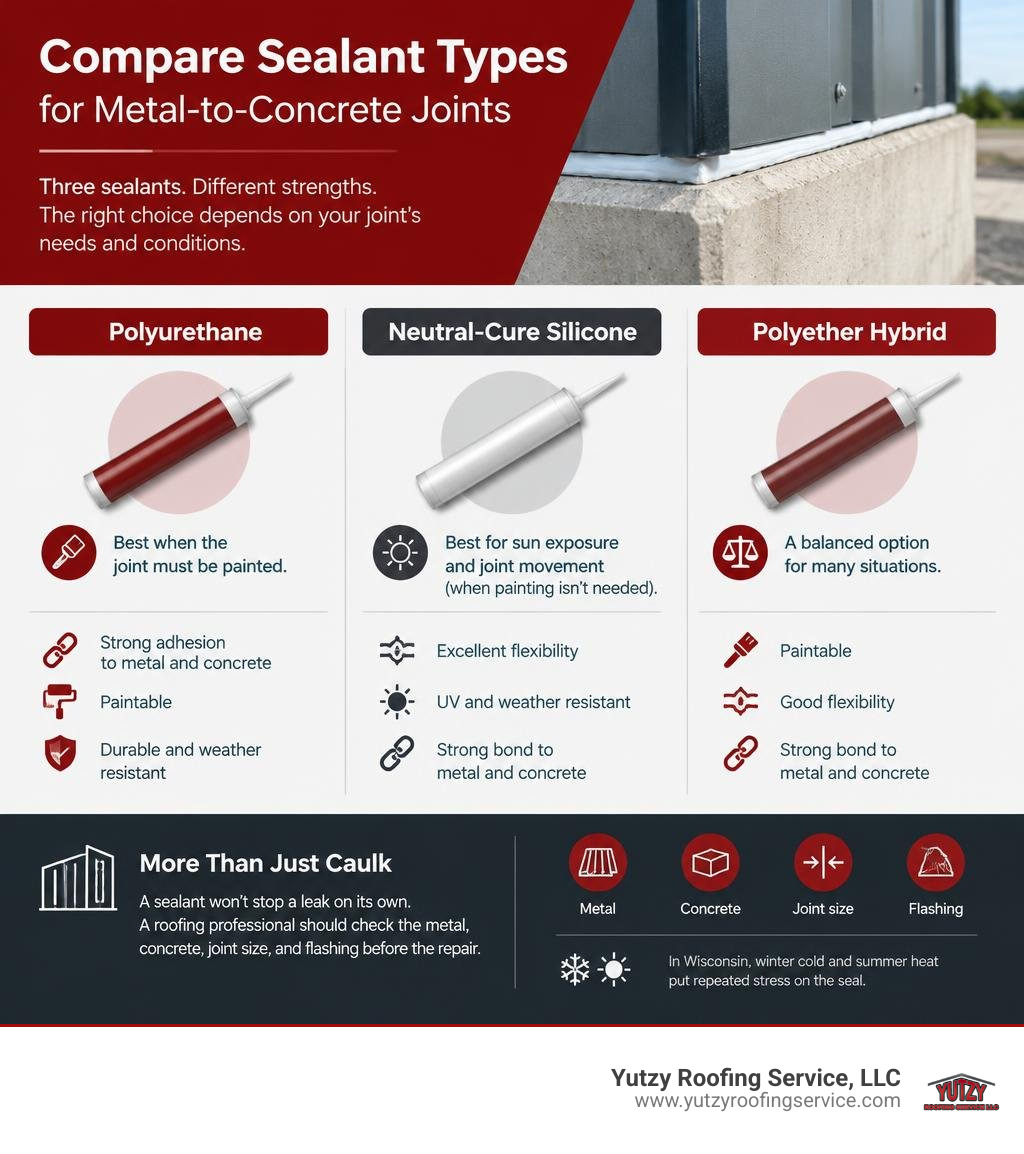
For exposed caulk for metal and concrete, choose a polyurethane sealant when the joint must be painted. Choose a neutral-cure silicone when sun exposure and joint movement are the bigger concerns and painting is not needed. A paintable polyether hybrid can offer a middle ground. The right product still needs to bond to both surfaces and fit the joint’s expected movement.
On a commercial building, sealant alone may not stop a leak. A roofing professional should check the metal, concrete, joint size, and flashing before making the repair. That matters in Wisconsin, where winter cold and summer heat put repeated stress on the seal.
I’m Josh Yutzy, and my experience with commercial roofing at Yutzy Roofing Service shapes how I assess caulk for metal and concrete. The comparison below starts with the sealant types, then explains what makes a joint last.
Caulk for metal and concrete word roundup:
Comparative Performance: Choosing the Best Caulk for Metal and Concrete
Although sealants make up less than 1% of the overall construction cost of a commercial building, their failure leads to expensive interior damage and structural rot. Joining metal to concrete presents a distinct engineering challenge: metal expands rapidly with thermal spikes, while porous concrete moves at a slower rate and holds moisture. Selecting the right product requires evaluating chemical bonding, shear resistance, and ASTM C920 performance standards, as outlined in our commercial metal roof sealant buyers guide.
Polyurethane Sealants for Structural Flexibility and Paintability
Polyurethane sealants serve as the standard choice when building joints require abrasion resistance, strong shear adhesion, and field painting. Commercial-grade non-sag polyurethanes provide primerless adhesion to porous concrete and structural steel, curing into a tough rubber gasket that handles dynamic structural shifts.
Because they accept standard exterior coatings, polyurethanes blend seamlessly across finished masonry and painted architectural trims. To learn more about substrate prep, review our complete guide to caulking metal surfaces. Commercial polyurethane formulations often achieve a 24-hour fast cure, minimizing downtime during building maintenance.
Silicone and Hybrid Polymers for Superior UV Resistance
Where maximum movement and heavy solar radiation dominate, neutral-cure architectural silicones excel. High-grade systems like DOWSIL 813C silicone and Spectrem 3 silicone deliver low-modulus elasticity with joint movement capabilities reaching up to plus or minus 50%. These premium neutral-cure formulations avoid acidic byproducts, preventing the corrosion of coated metal panels and protecting natural masonry from oil staining (backed by ASTM C1248 standards).
Silicones are non-paintable, and standard varieties can attract airborne dust. For joints requiring both silicone-like UV resistance and paintability, polyether hybrid sealants (STPE/MS polymers) offer balanced performance.
Specialized Viscoelastic and Butyl Compounds for Corrosion Isolation
For concealed joints, mechanical base plates, and below-grade metal-to-concrete interfaces, non-curing compounds provide unmatched long-term isolation. Specialized products like ConSeal PW viscoelastic compound offer cold-applied, self-healing protection that prevents cathodic disbondment across a broad operating temperature range of -45°F to 158°F.
Similarly, concealed butyl tapes and pumpable compounds provide a lifespan of 25 years or more when protected from direct sunlight, acting as reliable compression gaskets in structural seams. For deeper insights on flashing compounds, see our ultimate guide to metal roof sealants.
Chemical Comparison of Caulk for Metal and Concrete Formulations
| Sealant Chemistry | Movement Capability | UV Resistance | Paintable? | Expected Service Life | Primary Commercial Use Case |
|---|---|---|---|---|---|
| Polyurethane (Non-Sag) | ±25% to ±35% | Moderate to High | Yes | 10 – 15 Years | Painted facade transitions, precast panel joints, structural base flashing |
| Neutral-Cure Silicone | ±50% | Outstanding | No | 20 – 30+ Years | High-movement curtain walls, unpainted parapets, dynamic expansion joints |
| Polyether / MS Hybrid | ±25% to ±50% | High | Yes | 15 – 20 Years | Color-matched exposed trim, mixed-substrate perimeters |
| Viscoelastic / Butyl | Dynamic / Self-healing | Concealed Only | No | 25+ Years | Concealed lap seams, base rail gaskets, below-grade corrosion barriers |
Engineering Weathertight Commercial Perimeter Seals and Base Connections
Sealing the junction where a pre-engineered metal building meets a poured concrete slab requires more than applying a simple exterior bead. In regions with severe freeze-thaw cycles, such as Wisconsin, water sitting along a flat perimeter will work its way under base channels through hydrostatic pressure and capillary action.
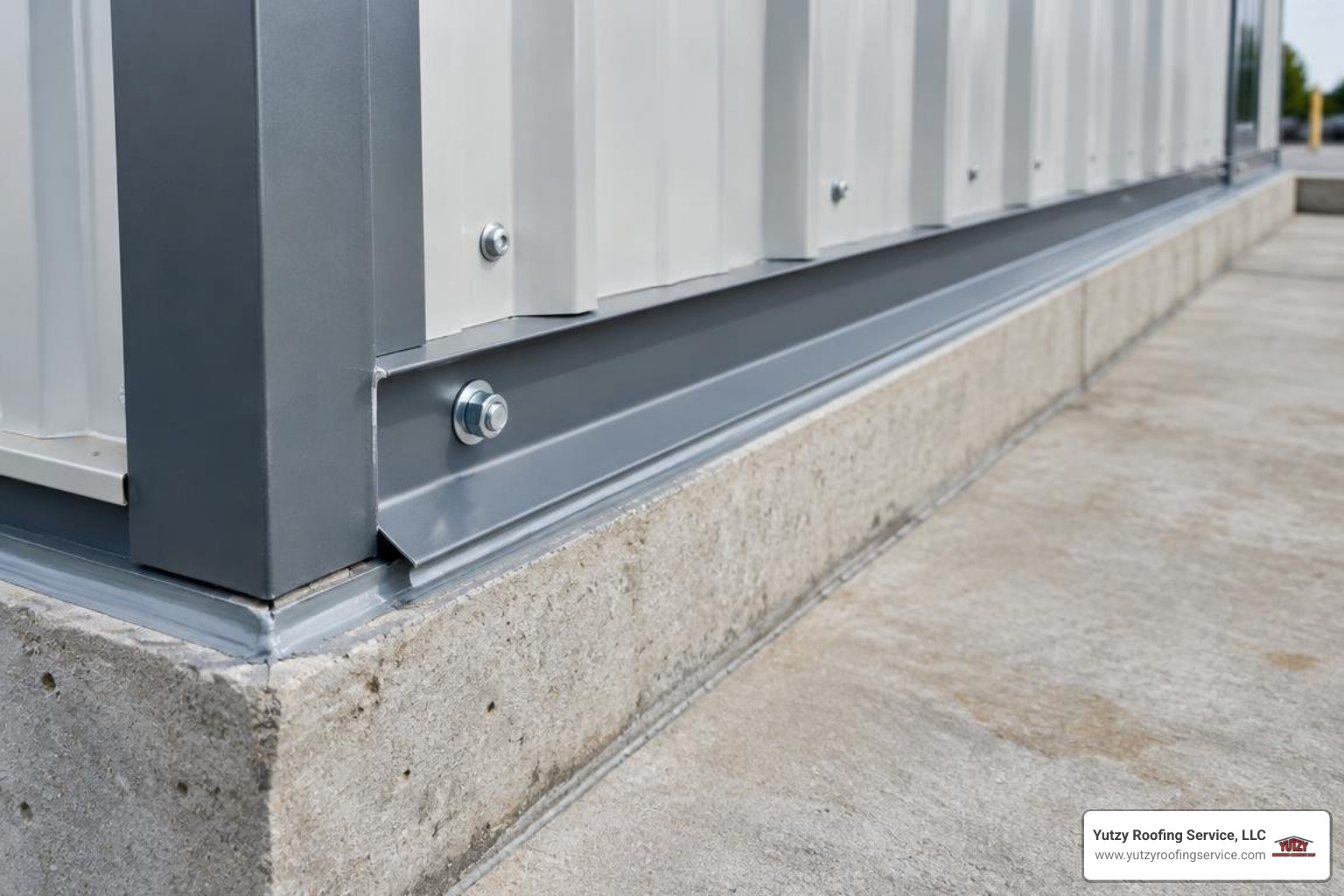
A dependable base assembly relies on redundant water management:
- Concealed Compression Gaskets: Installing continuous butyl or polyurethane sealant directly beneath the base rail before fastening down structural anchors.
- Mechanical Z-Flashing: Fastening rigid Z-profile flashing behind wall panels and extending it outward over the slab edge to shed bulk runoff.
- Rat-Lip Foundation Detailing: Utilizing a 1-inch exterior concrete step-down (rat lip) to ensure panel fasteners terminate below the interior floor line.
- Site Drainage: Maintaining proper slope and commercial gutter capacity, as detailed in our guide on metal roof waterproofing in Madison WI.
Critical Joint Design and Preparation for Caulk for Metal and Concrete
A sealant joint is only as reliable as its dimensions and surface preparation. Applying caulk into an improperly sized gap causes early failure under thermal stress.
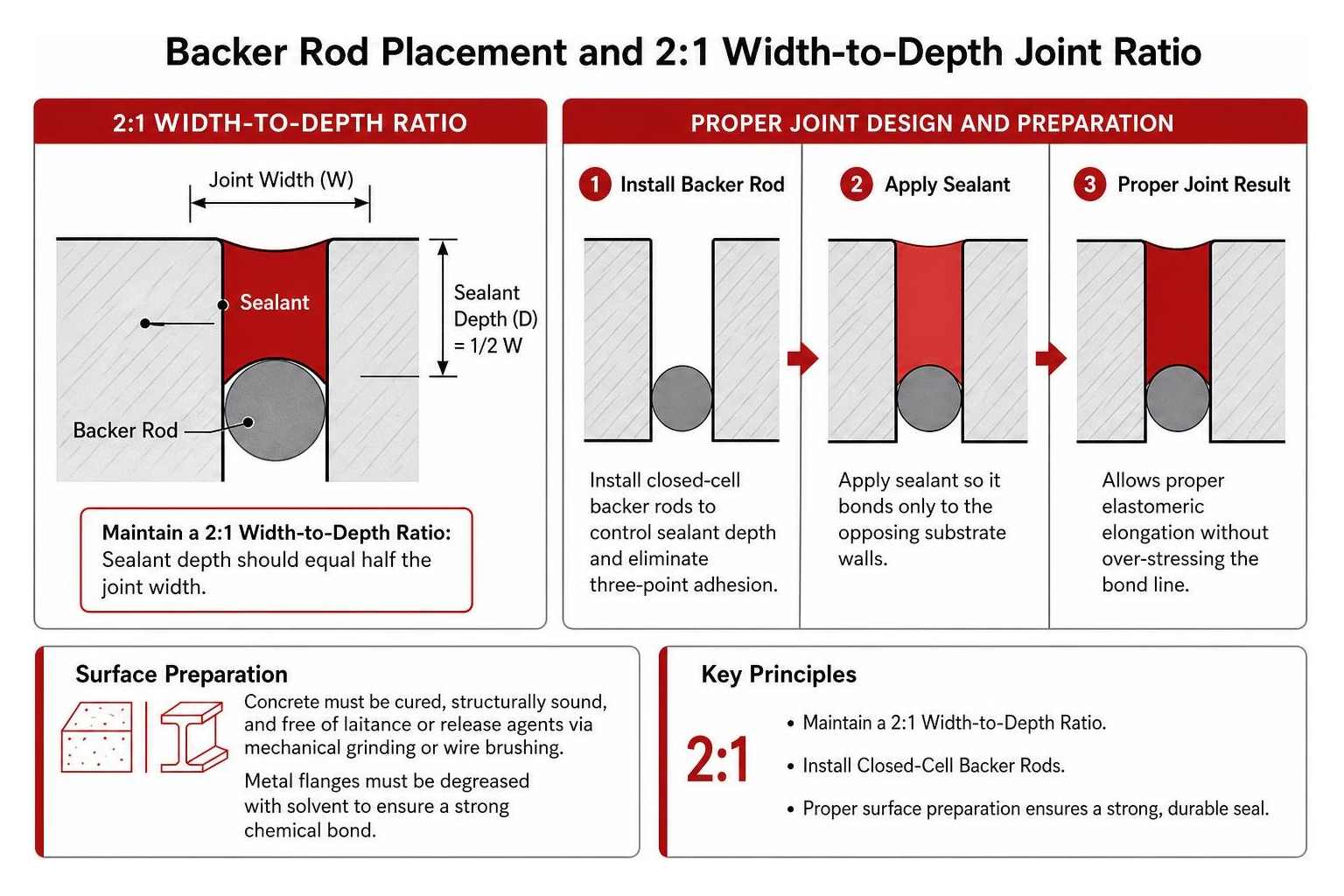
- Maintain a 2:1 Width-to-Depth Ratio: For joints wider than 1/4 inch, the sealant depth should equal half the joint width to allow proper elastomeric elongation without over-stressing the bond line.
- Install Closed-Cell Backer Rods: Backer rods control sealant depth and eliminate three-point adhesion, ensuring the caulk only bonds to the opposing substrate walls.
- Surface Preparation: Concrete must be cured, structurally sound, and free of laitance or release agents via mechanical grinding or wire brushing. Metal flanges must be degreased with solvent to ensure a strong chemical bond.
Why Commercial Facilities Require Professional Sealant Installation
Commercial buildings undergo relentless thermal cycling, structural deflection, and exposure to wind-driven rain. When caulking fails, it typically suffers from adhesive failure (peeling off the substrate) or cohesive failure (tearing through the middle of the bead). Both issues lead to hidden moisture accumulation that rusts structural framing and damages interior inventory.
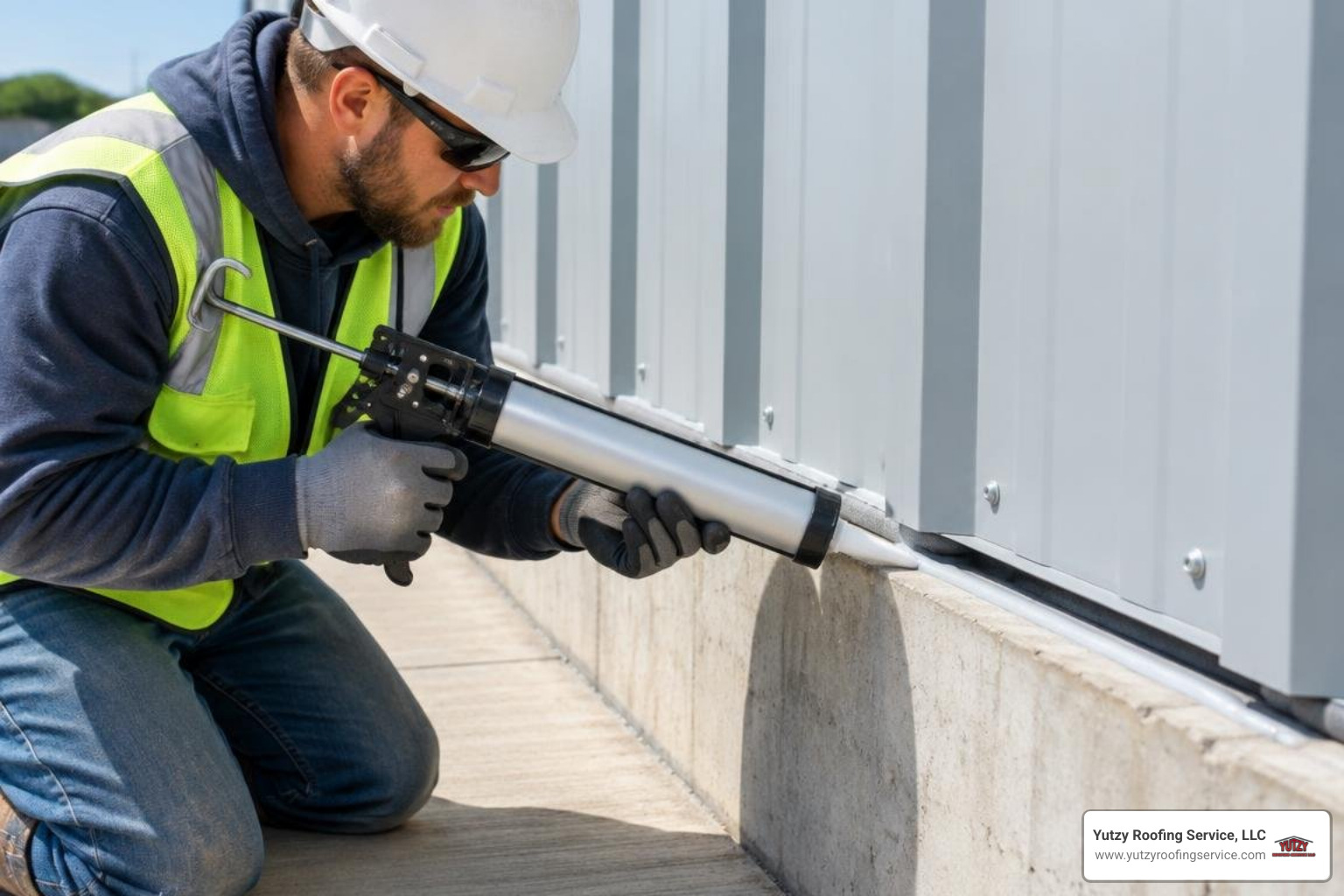
At Yutzy Roofing Service, LLC, we understand that building envelope integrity demands a comprehensive system rather than temporary patch jobs. We inspect the interplay between metal siding, concrete parapets, flashing geometry, and commercial roof transitions across facilities in Wausau, Appleton, and Green Bay.
Our team specializes in full commercial roof restoration, metal roof repair, and spray foam coatings backed by renewable, non-prorated warranties up to 18 years. Rather than risking water infiltration from failing perimeter seals, partner with experienced commercial contractors who understand building movement. Explore our advice on choosing the best caulk for metal commercial envelopes and reach out to our team to protect your facility for decades to come.
