
How Professionals Repair a Rusted Metal Roof
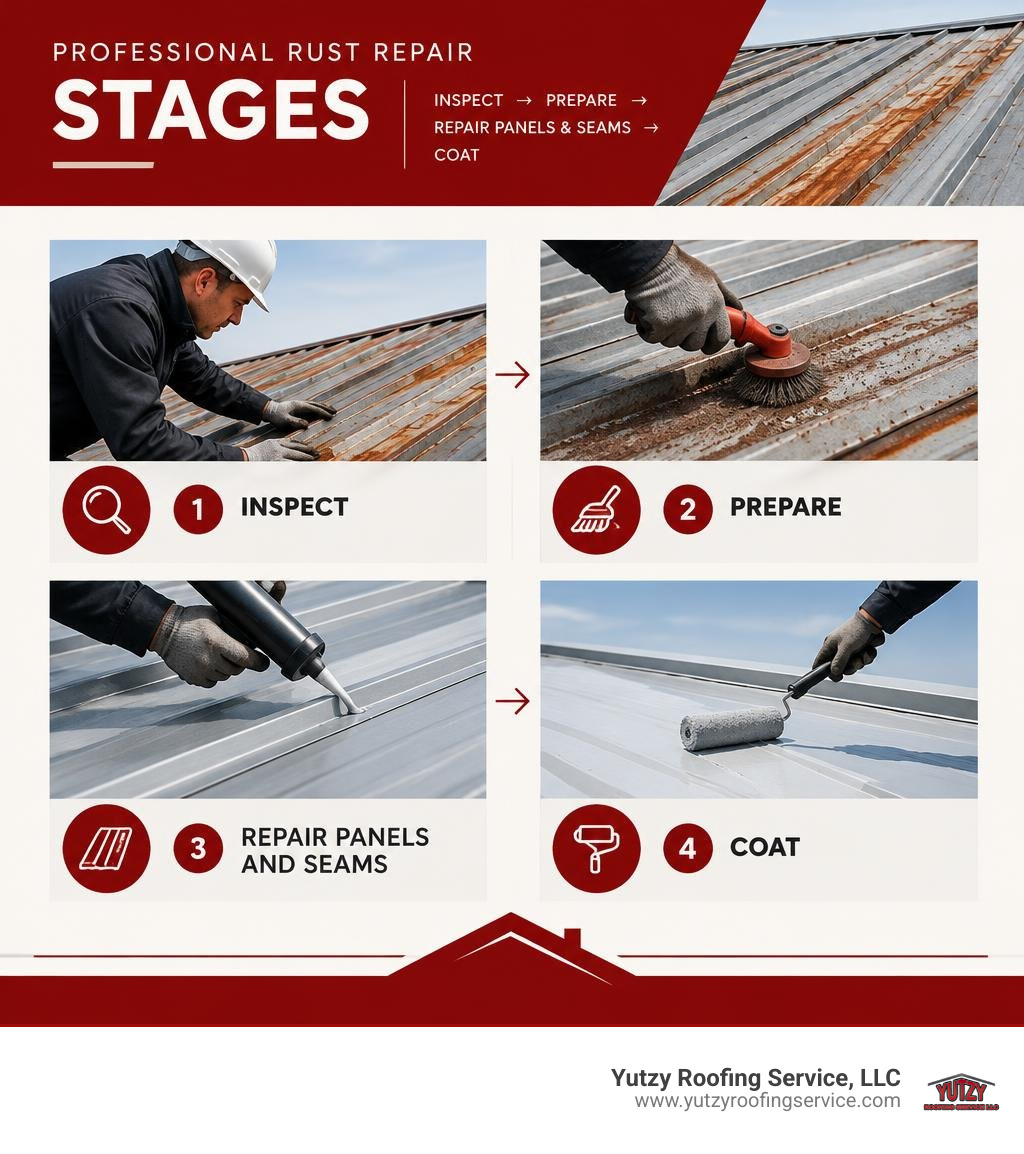
Rusted metal roof repair starts with an inspection. A contractor checks whether the panels are still sound and looks for leaks, loose fasteners, and wet insulation. If the damage is limited, the crew removes loose rust, treats the metal, repairs failed seams or panels, and applies a compatible protective coating. Perforated panels or damaged structural parts need replacement, not a coating that hides the problem.
For a commercial property, that first inspection helps avoid spending money on a repair that will not last. I’m Josh Yutzy of Yutzy Roofing Service, LLC, a family roofing business serving Wisconsin since 1995. I bring that commercial roofing background to this guide to rusted metal roof repair and how contractors decide what can be saved.
Relevant articles related to rusted metal roof repair:
For additional industry context on metal roof corrosion and restoration, the Metal Construction Association provides technical resources on commercial metal roofing systems.
The Professional Rusted Metal Roof Repair Process: Step-by-Step Restoration
Commercial steel roofs represent substantial investments for industrial facilities, warehouses, and commercial properties across Wisconsin and southeastern Minnesota. Over years of exposure to snow, industrial emissions, and temperature swings, factory protective coatings eventually break down. Once oxygen and moisture reach unprotected steel, oxidation takes over.
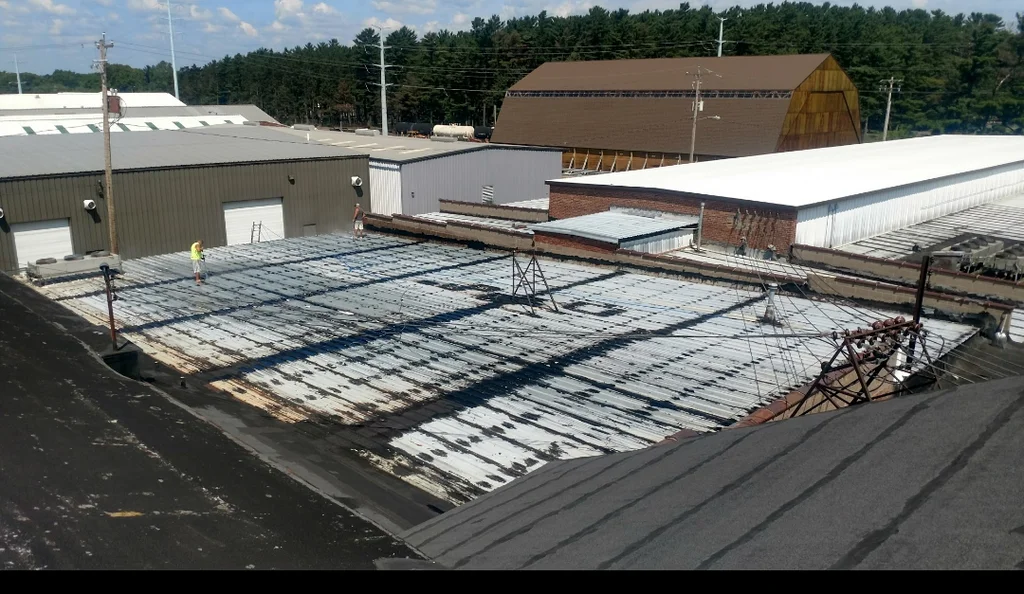
Left unchecked, minor surface oxidation evolves into deep structural scaling and leaks. When facilities experience water intrusion, handling it promptly through professional Wisconsin metal roof repair prevents extensive interior downtime and inventory damage. Professional contractors deploy specific sequences designed to eliminate active corrosion, reinforce weak joints, and seal the entire envelope with industrial-grade waterproofing.
Assessing Commercial Panel Corrosion and When Rusted Metal Roof Repair Is Viable
Before pulling out spray rigs or wire wheels, our crews assess the severity of oxidation across the entire roof plane. Not every rusted roof can be saved with restoration coatings. Structural integrity dictates whether a building qualifies for a targeted commercial metal roof restoration or requires panel replacement.
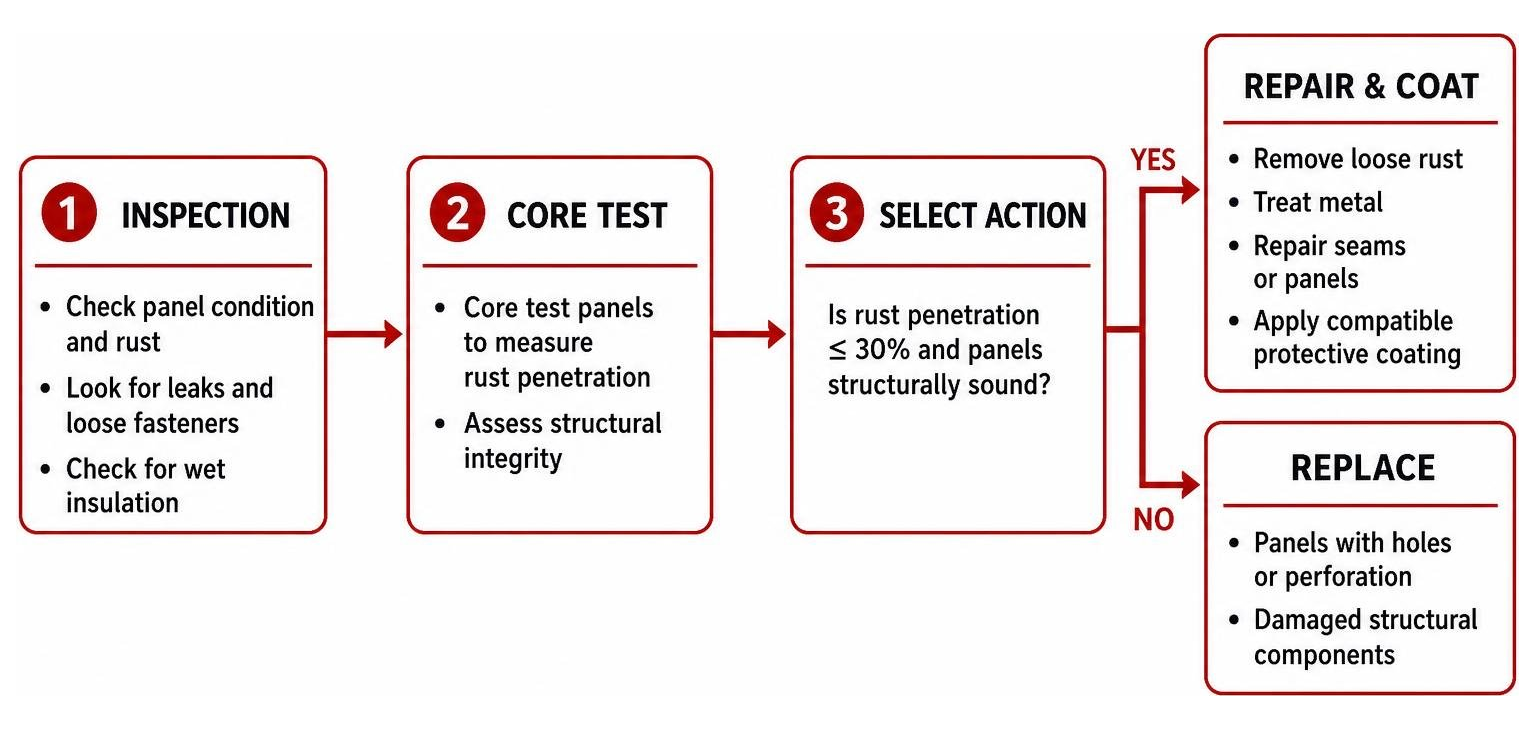
As a rule of thumb, when rust damage exceeds roughly 30% of the entire roof surface—or when rust has completely eaten through panel profiles to form open holes—a topical coating is no longer an engineered solution. Moisture tests also verify whether the underlying insulation is dry. Applying coatings over wet insulation traps moisture against the underside of panels, continuing hidden structural rot.
| Rust Severity Stage | Visible Symptoms | Structural Impact | Recommended Commercial Action |
|---|---|---|---|
| Stage 1: Light Surface Rust | Discoloration, chalking factory finish | Zero loss of steel gauge | Surface wash, primer, and topcoat |
| Stage 2: Moderate Scale | Flaking oxidation, rough texture at seams | Minimal gauge thinning | Mechanical abrasion, rust converter, fluid-applied restoration |
| Stage 3: Deep Pitting | Blistered metal, failing fastener heads | Moderate structural thinning | Fastener replacement, mastic reinforcement, full coating |
| Stage 4: Perforation / Rot | Holes, daylight visible through panel deck | Compromised structural load | Steel panel cut-out and mechanical replacement |
Mechanical Surface Preparation and Chemical Rust Converters
A protective coating system is only as reliable as its bond with the steel substrate. Applying high-performance elastomers directly over loose, flaky rust leads to early coating delamination. Professional surface preparation begins with mechanical wire brushing and high-pressure industrial washing to strip away loose scale, dirt, and biological growth.
Following mechanical prep, crews apply specialized chemical primers containing rust converters or zinc phosphate. Rather than relying on simple cosmetic paint, professional rust primers trigger a chemical reaction that converts iron oxide into an inert, stable iron phosphate layer. These molecular inhibitors chemically stop active oxidation under the new barrier and create the ideal profile for fluid-applied membranes to adhere.
Fastener Replacement, Seam Reinforcement, and Custom Panel Patching
A commercial metal roof expands and contracts continuously with daily thermal cycling. Over time, thermal movement backs out screws, cracks neoprene washers, and separates overlapping lap seams. Professional remediation requires mechanical reinforcement across all critical transitions:
- Fastener Remediation: Crews inspect all screws across the roof deck, replacing stripped or backed-out fasteners with oversized, corrosion-resistant fasteners fitted with UV-stable EPDM washers.
- Lap Seam Reinforcement: Horizontal and vertical panel laps receive mastic tape reinforcement or embedded reinforcing fabric saturated in elastomeric compound to bridge natural thermal movement without cracking.
- Sealing Details: Penetrations, skylight curbs, and flashings are detailed using high-solids commercial metal roof sealants formulated for high flexibility.
- Structural Patching: Where isolated rust has created small punctures, technicians rivet matching heavy-gauge galvanized patches over a bed of industrial sealant, securing all perimeter edges before topcoating.
Applying Protective Coatings for Long-Term Rusted Metal Roof Repair
Once the building envelope is mechanically tight and fully primed, commercial crews apply fluid-applied protective coating systems. Using professional-grade airless spray equipment, technicians apply seamless elastomeric barriers—such as silicone, acrylic, or urethane—at precise dry-mil thicknesses.

A high-solids silicone system is often specified at roughly 20 dry mils to earn comprehensive 15- to 20-year performance ratings. Because these coatings cure into a seamless, rubberized membrane across the entire structure, they eliminate thousands of potential leak points at fasteners and seams. Yutzy Roofing Service backs our metal restorations with up to 18-year non-prorated, renewable warranties, providing industrial owners with lasting structural protection and thermal reflection that lowers summer cooling loads.
Evaluating Commercial Repair Costs and Budget Planning
For facility managers and commercial building owners, deciding between a complete structural tear-off and a professional restoration is largely a matter of financial return and operational continuity.
A full metal roof replacement requires tearing off old panels, exposing equipment to the elements, and interrupting daily business operations. Full metal replacements generally range from $8.00 to $15.00 or more per square foot once labor, tear-off, and disposal are factored in. In contrast, engineered fluid-applied restorations cost 40% to 60% less while extending the roof’s working lifespan by 10 to 20 years.
Commercial Restoration Cost Factors in 2026
The overall cost of restoring rusted commercial steel panels depends on several facility-specific variables:
- Surface Area and Pitch: Larger, unobstructed roof decks benefit from lower per-square-foot application costs compared to complex layouts with hundreds of HVAC curbs and vent pipes.
- Corrosion Stage: Extensive Stage 3 pitting requires additional prep labor, spot priming, and fastener replacement compared to early Stage 1 surface chalking.
- Coating Chemistry and Thickness: Premium high-solids silicone coatings that handle ponding water cost slightly more than multi-pass acrylic systems, but they deliver longer manufacturer warranties.
| Restoration Scope | Average Cost per Sq. Ft. (2026) | Typical Warranty Term | Expected Life Extension |
|---|---|---|---|
| Acrylic Multi-Coat System | $3.50 – $5.00 | 10 – 15 Years | 10 – 15 Years |
| High-Solids Silicone System | $4.50 – $7.00 | 15 – 20 Years (Non-Prorated) | 15 – 20 Years |
| Full Mechanical Replacement | $8.00 – $15.00+ | 20 – 30 Years | 30 – 40 Years |
Because restoration is classified as routine maintenance rather than a structural capital replacement, facility owners can frequently deduct the entire expense in the year it is completed, delivering significant tax advantages.
Preventive Maintenance and Commercial Roof Life Extension
Protecting commercial steel panels over the long haul requires ongoing preventive care. Unchecked organic debris, clogged scuppers, and ponding water accelerate chemical corrosion on even the most durable coatings.
Facility managers should establish a schedule for ongoing commercial metal roofing care and maintenance. Biannual inspections—conducted every spring and fall—allow professionals to spot backed-out fasteners, check perimeter seals, and clear drainage paths before seasonal storms roll in.
If your facility is showing signs of widespread surface rust, persistent seam leaks, or failing fasteners, our team is here to help. Contact Yutzy Roofing Service, LLC to schedule an engineered assessment, or explore our comprehensive flat commercial roof repair guide to evaluate the best long-term strategy for your building’s roof.
