Filling Holes in Corrugated Iron Starts With Finding the Leak
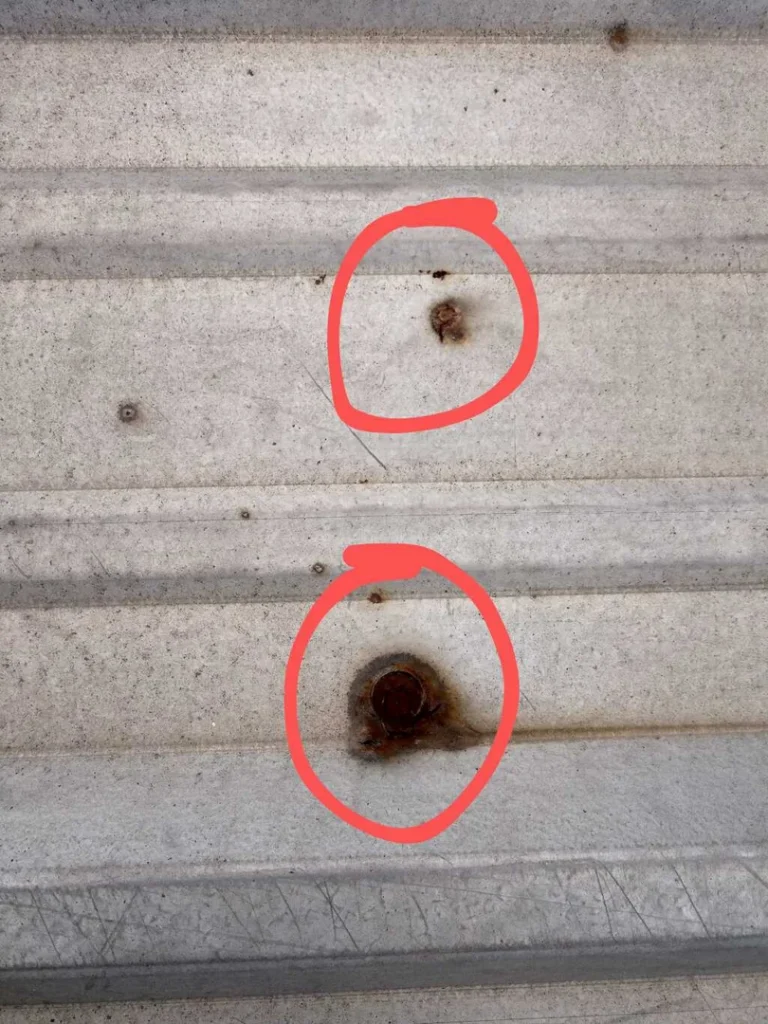
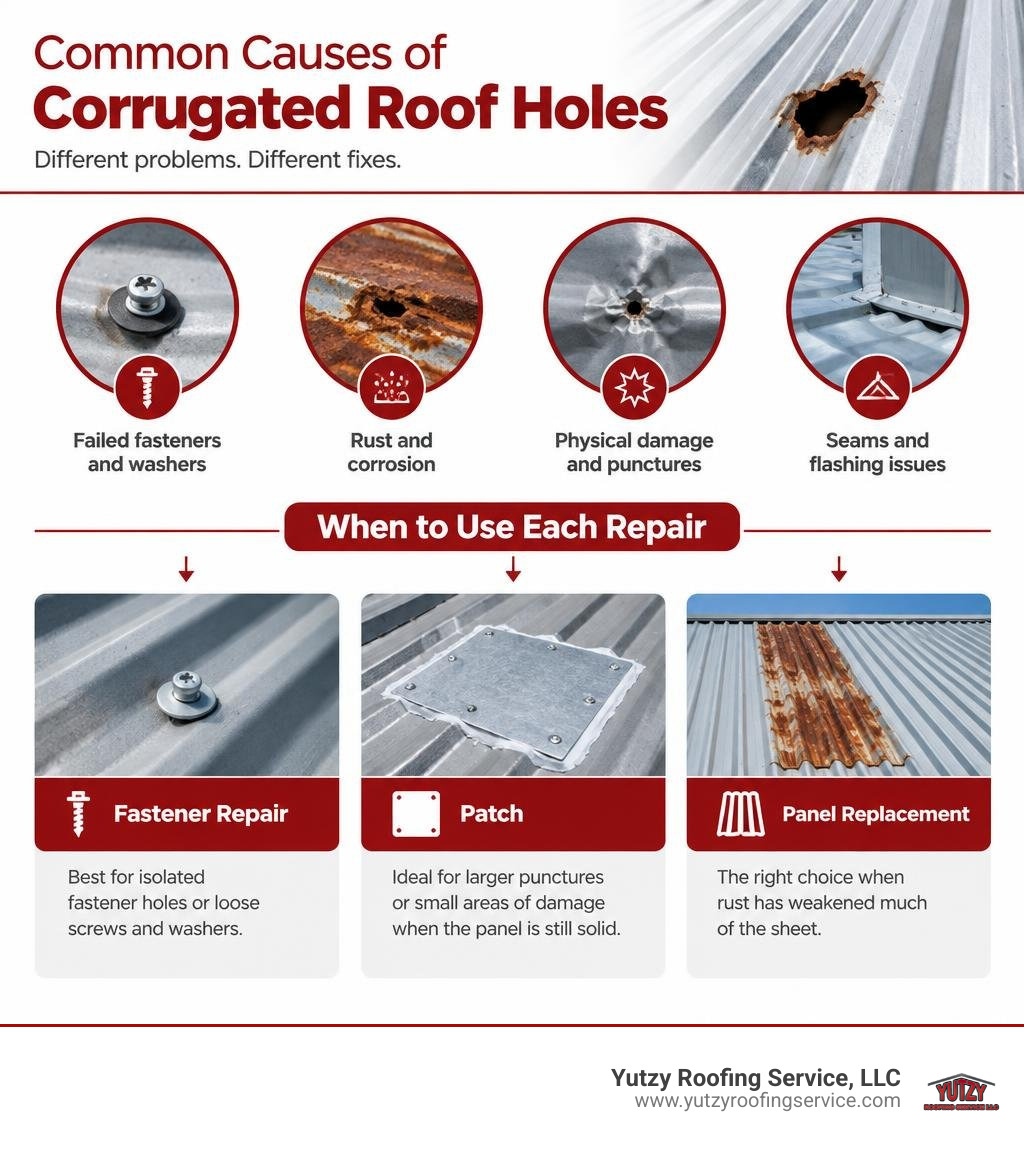
Filling holes in corrugated iron starts with finding where water enters, which may not be directly above the indoor leak. A roofing contractor can replace a failed screw and washer at a small fastener hole, or seal and secure a matching metal patch over a larger puncture. If rust has weakened much of the sheet, replacing the panel may be the sounder repair.
That choice matters on a commercial roof. Water can travel along the corrugations and enter through seams or flashing, so sealing the first hole you see may not stop the leak.
I’m Josh Yutzy, part of the family behind Yutzy Roofing Service, which has served Wisconsin since 1995. That roofing background guides this look at filling holes in corrugated iron and knowing when a patch is not enough.
Key filling holes in corrugated iron vocabulary:
Professional Methods for Filling Holes in Corrugated Iron
Addressing punctures and localized failures across a commercial corrugated roof requires strict engineering controls. Industrial metal roofs expand and contract continuously under daily temperature swings. If a repair fails to accommodate this movement or introduces incompatible metals, the repair can fail rapidly, accelerating rust instead of halting it.
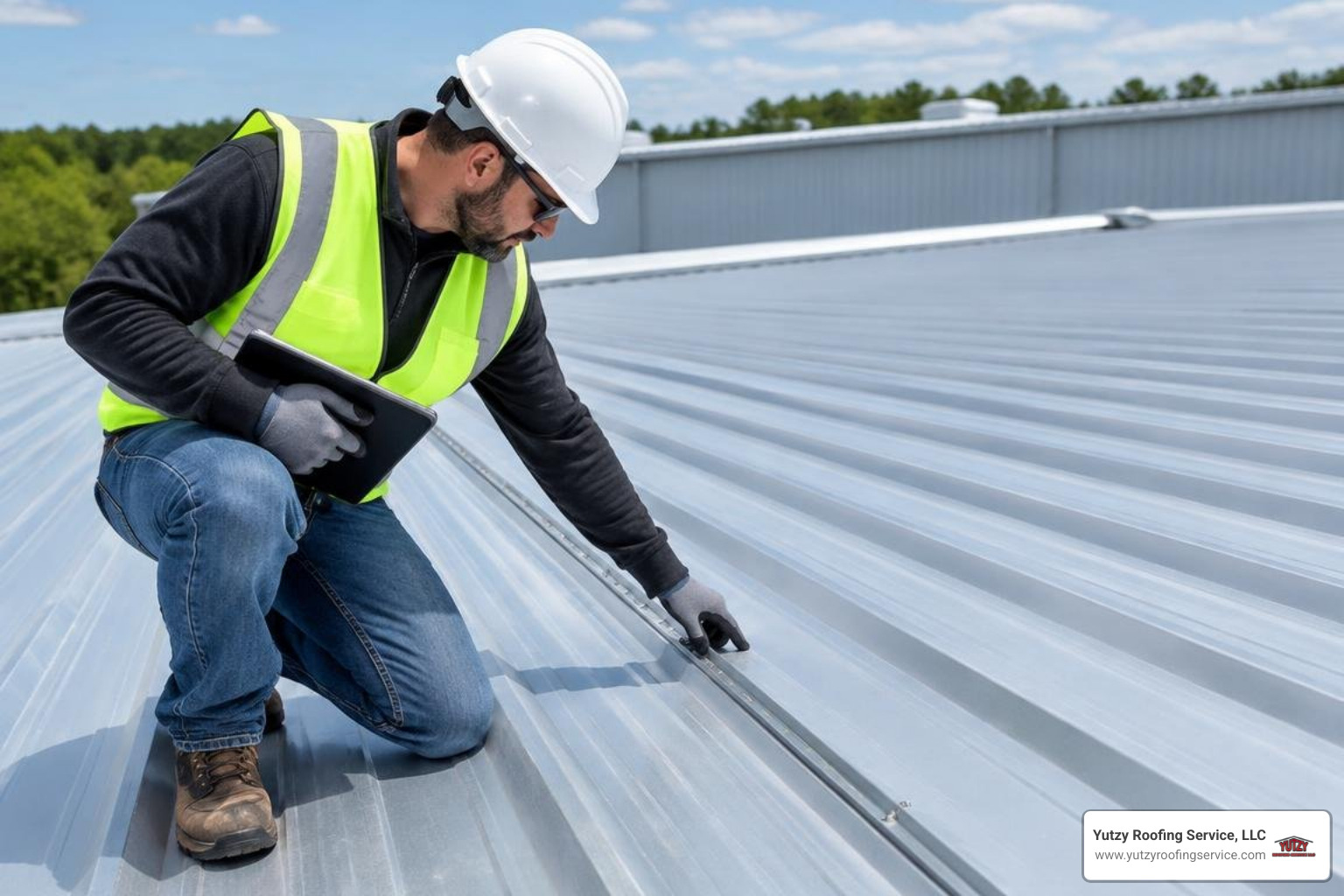
When our commercial roofing specialists repair commercial corrugated sheets, we begin with comprehensive surface preparation. We clear oxidation down to bare metal using specialized mechanical wire brushing, followed by chemical rust-inhibiting treatments to eliminate active corrosion cells. Proper galvanic isolation is mandatory. For instance, pairing mismatched metals—such as placing galvanized patches against Zincalume substrates without dielectric separation—promotes accelerated galvanic corrosion. Reference standards like the Care and Maintenance of Corrugated Iron guide emphasize maintaining metallurgical compatibility to protect the underlying structure.
When executing a professional rusted metal roof repair, commercial contractors determine the repair protocol based on structural integrity, hole diameter, and panel placement.
| Repair Scope | Typical Cause | Professional Repair Technique | Expected Service Life |
|---|---|---|---|
| Small Fastener Punctures (< 1/4 in.) | Backed-out screws, stripped threads, degraded neoprene washers | Up-sized commercial fastener with UV-stable vulcanized EPDM washer capped with polyurethane | 7–15 Years (inspected every 2–3 years) |
| Medium Tears & Perforations (1/4 in. – 2 in.) | Heavy hail impacts, mechanical equipment displacement | Elastomeric fabric membrane bridge fully saturated with commercial urethane roof cement (DOI 10.5281/zenodo.7352186) | 5–10 Years |
| Large Rust Perforations (> 2 in.) | Severe localized oxidation, tree limb penetration | Heavy-gauge matching profile metal patch overlapping 2–3 inches, bedded in butyl sealant and mechanically anchored | 10–15+ Years |
| Pervasive Structural Corrosion | End-of-life sheet degradation, improper drainage ponding | Full panel section extraction and installation of matching profile corrugated sheets | 20+ Years |
Assessing Commercial Roof Punctures Before Filling Holes in Corrugated Iron
Water rarely travels in a straight vertical line through a commercial building envelope. Due to the sinusoidal profile of corrugated sheets, moisture entering a fastener hole or rust pinhole can travel tens of feet along structural purlins or underlayment before dripping onto the warehouse floor.
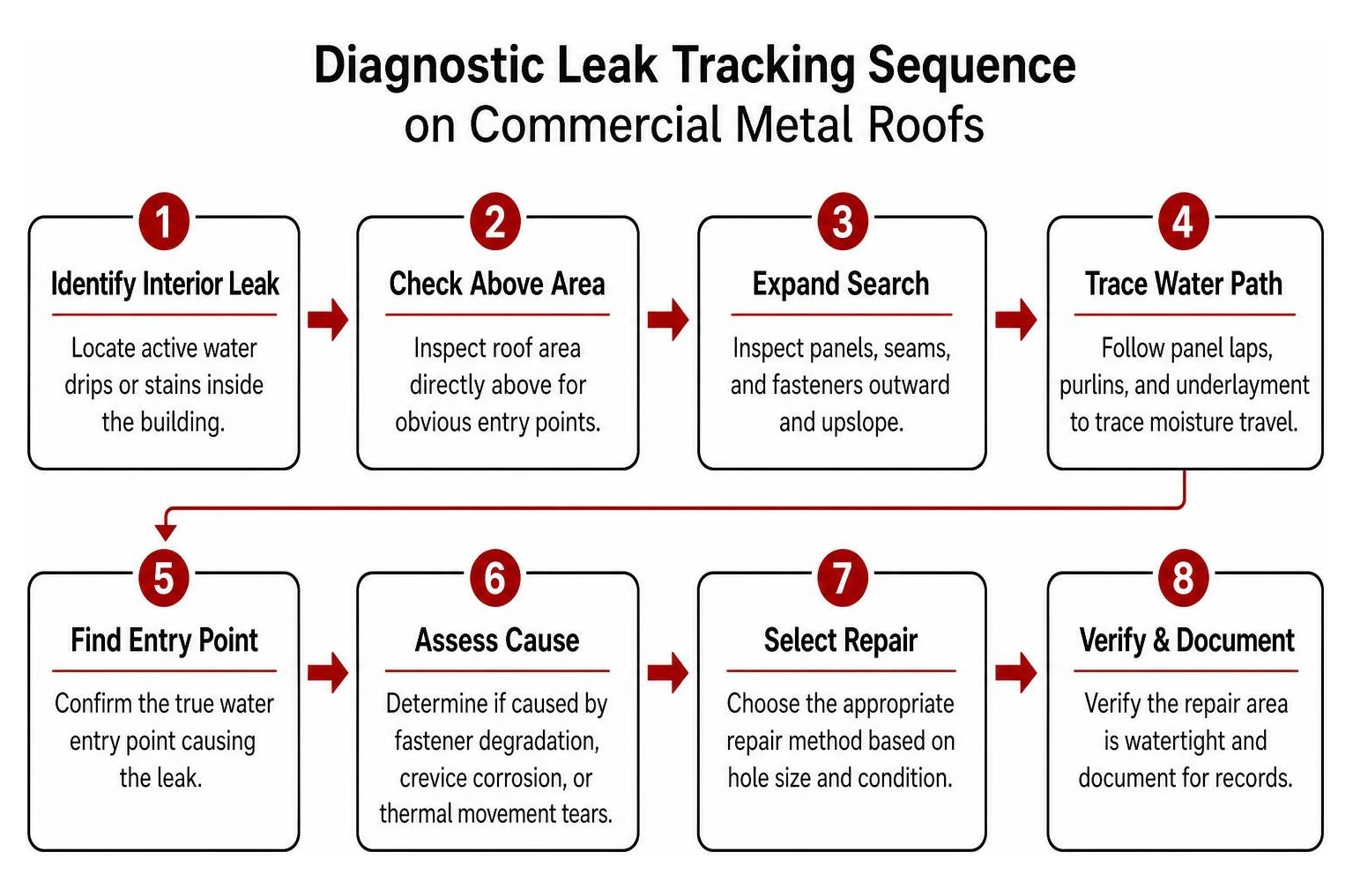
Accurate puncture diagnostics require systematic tracking. When identifying commercial metal roof leaks, commercial technicians evaluate:
- Exposed Fastener Degradation: Fasteners undergo dynamic stress as industrial panels shift. Over 7 to 15 years, original rubber washers dry-rot and crack, while screws back out from purlins, creating clear entry points for moisture.
- Crevice Corrosion: Moisture and airborne debris become trapped inside overlapping panel laps, quietly corroding the metal from the underside up.
- Thermal Movement Tears: Fasteners placed without adequate expansion allowance can tear elongated slots through thin-gauge metal panels over time.
Industry Techniques for Filling Holes in Corrugated Iron
For minor penetrations, commercial technicians install oversized heavy-duty fasteners equipped with bonded EPDM washers that resist severe UV exposure and thermal shifting. If an original fastener backed out and stripped the metal, simply driving the same screw back in creates a perpetual leak risk. We install the next larger gauge fastener to firmly grip the purlin.
When repairing medium-sized punctures or larger isolated holes, contractors apply a structured metal overlay patch:
- Profile-Matched Cutting: Technicians cut a metal patch matching the exact corrugation profile of the deck, ensuring it overlaps the damaged perimeter by a minimum of 2 to 3 inches (50 to 75 mm) in every direction.
- Substrate Priming: The damaged area is scrubbed to bright metal, removing all loose scale, chalked coatings, and failed legacy caulking.
- Bedded Sealant Layer: We apply high-grade commercial-grade metal roof sealants—such as industrial neutral-cure polyurethanes or elastomeric butyl compounds—under the patch. Standard acidic household silicones must never be used, as their acetic acid curing agent actively corrodes bare steel.
- Mechanical Fastening: The patch is anchored using stitch screws spaced 6 to 8 inches on center, ensuring the perimeter is uniformly compressed against the sealant without bowing the sheet metal, adhering to established technical standards for corrugated roofing.
- Perimeter Tooling and Coating: All patch seams and screw heads receive a protective topcoat of UV-stable industrial sealant tooled smooth to prevent water damming.
Addressing Complex Damage in Seams and Valleys
Holes that appear inside the low valleys (the pans) or along vertical raised seams of corrugated roofing demand specialized commercial handling. Valleys carry massive volumes of rushing rainwater during storms. A rigid patch mechanically fastened across a high water-flow path can cause debris damming and standing water, which drops metal roof lifespans dramatically from decades to just a few years.
Per building codes such as IRC R905.10.2, lapped metal roofs without applied lap sealant require at least a 3:12 roof slope; with manufacturer-approved continuous lap sealant, roofs can function reliably down to a 1/2:12 pitch. When repairing seams, we utilize engineered 1/4-14 x 7/8 in. Lap Tek stitch fasteners spaced precisely at 20 inches on center, paired with concealed 3/32 x 3/8 in. butyl sealant tape along side laps. For intricate transitions, reinforcing the seam with asphalt-free elastomeric membrane fabric embedded in liquid urethane ensures durable flexibility without hindering the building’s thermal expansion cycles.
Why Commercial Facilities Require Professional Metal Roof Restoration
Attempting temporary fixes on a commercial roof with off-the-shelf silicone or hardware-store tape often results in rapid failure within months. Commercial corrugated roofing demands specialized equipment, fall-arrest gear compliant with strict OSHA safety regulations, and commercial-grade materials that retain flexibility through extreme seasonal temperature shifts across the Midwest.

When commercial panels show multiple rust holes or widespread fastener failure across the roof field, localized patching is merely a short-term Band-Aid. Our team at Yutzy Roofing Service provides complete, turnkey metal roof restoration. By replacing structurally compromised fasteners, repairing isolated tears with heavy-gauge reinforcements, and applying a fully adhered, seamless elastomeric fluid-applied restoration coating across the entire corrugated surface, we eliminate existing leaks and prevent future corrosion from developing.
Our industrial restoration systems bridge seams, encapsulate all fastener heads, and carry non-prorated, renewable warranty coverage for up to 18 years. Whether your building is located in Madison, Appleton, Wausau, or nearby regions in Wisconsin and Minnesota, our specialized crew brings decades of hands-on expertise to safeguard your facility.
Protect your inventory, structural steel, and facility operations today. Schedule a commercial inspection to stop interior leaks and let our experienced commercial team restore your corrugated metal roofing for the long haul.
