Choosing Caulk for Metal Roof Repairs
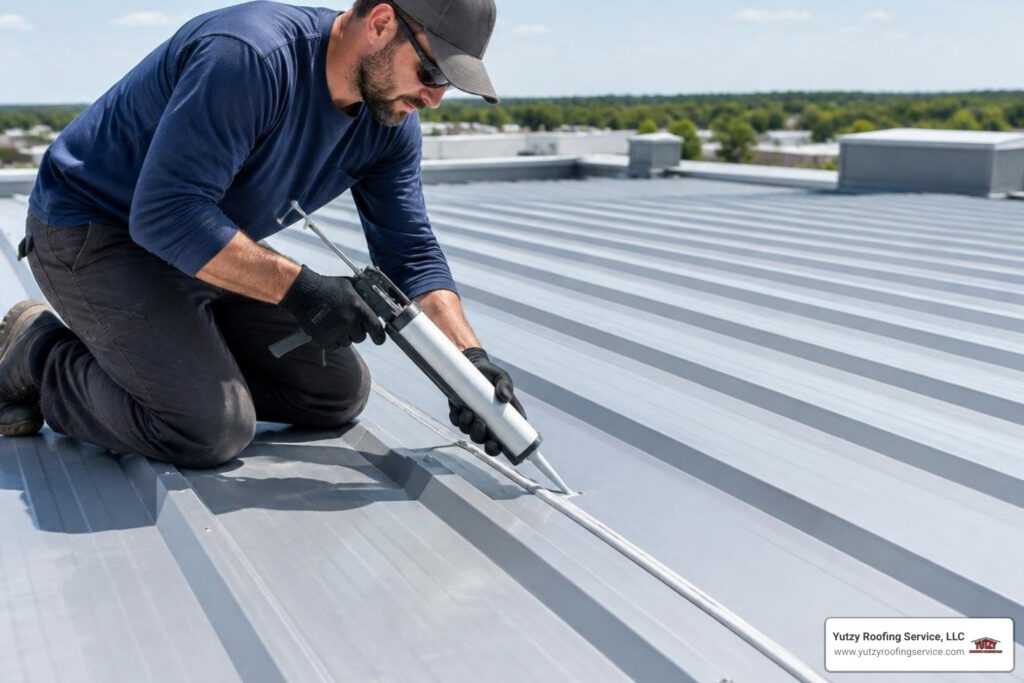
For an exposed metal roof seam, start with a flexible, UV-resistant sealant rated for the roof’s metal or coating. Neutral-cure silicone is often a good fit where the joint moves with temperature changes. Use a sealant rated for fastener heads or flashing when repairing those details. Whatever the product, clean the metal and follow its instructions for surface dryness, application temperature, and cure time.
The right caulk can help stop a small leak, but it cannot fix a loose panel or damaged flashing. I’m Josh Yutzy of Yutzy Roofing Service, LLC, a family-owned company that has worked on Wisconsin roofs since 1995. In this guide, I’ll help you compare caulk for metal and choose a practical repair for an existing commercial roof.
Performance Comparison: Selecting the Right Caulk for Metal
Commercial metal roofs experience severe thermal expansion and contraction. As sun, wind, and freezing winter temperatures hit commercial buildings across Wisconsin and Minnesota, steel and aluminum panels expand during hot summer afternoons and contract drastically during sub-zero winter nights.
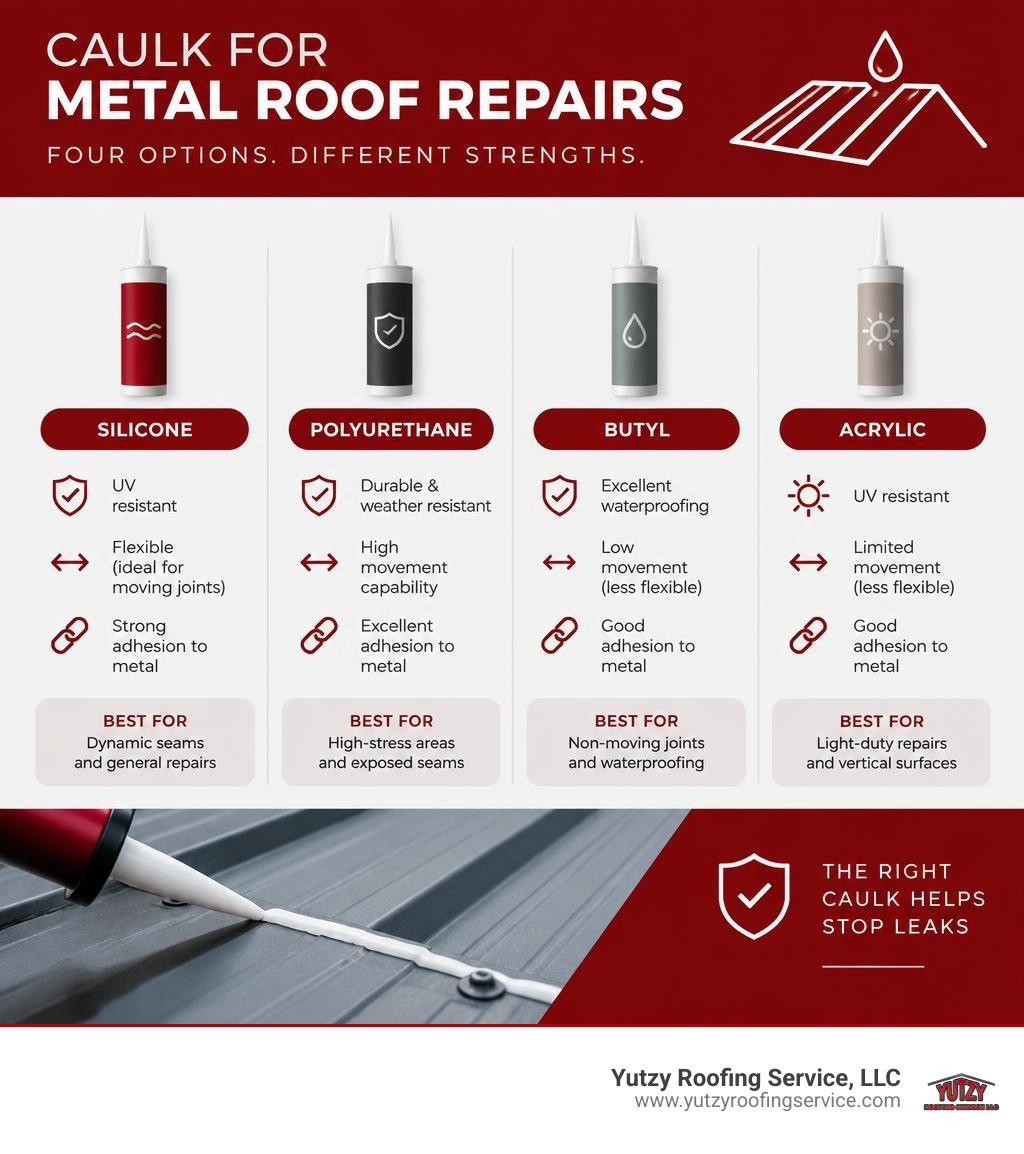
If your sealant lacks elasticity, it will split down the middle or pull away from the metal. Selecting the right product requires evaluating chemical formulations, joint movement capabilities, and adhesion properties on specific commercial metal profiles. Explore our commercial metal roof sealant options to understand how different base chemistries perform under real-world weather stress.
| Sealant Type | Movement Capacity | UV Resistance | Paintable? | Cure / Rain-Ready Time | Common Cost (Per Cartridge) | Best Commercial Use Cases |
|---|---|---|---|---|---|---|
| Silicone (Neutral Cure) | ±25% to ±50% | Outstanding | No | 30 min rain-ready; 24 hr full cure | $13.98 – $18.00 | Exposed seams, flashings, skylight perimeters |
| Polyurethane | ±25% | Moderate to High | Yes (cured) | 2 to 4 hr tack-free; 24–72 hr cure | $10.00 – $15.00 | High-abrasion joints, structural metal flashing |
| Butyl Rubber | Low (non-curing) | Poor (exposed) | No | Non-skinning / Immediate seal | $9.00 – $14.00 | Concealed lap joints, under-trim waterproofing |
| Acrylic / Terpolymer | ±12.5% to ±25% | Good | Yes | 1 to 2 hr tack-free; 24–48 hr cure | $8.00 – $13.00 | Painted metal trims, low-movement penetrations |
Silicone vs. Polyurethane Caulk for Metal Seams
When repairing exterior exposed metal roof joints, neutral cure silicone and polyurethane represent the top two industrial contenders.
Neutral cure silicone stands out for its exceptional resistance to ultraviolet radiation and weather aging. Unlike standard acetoxy silicones—which release acetic acid and can corrode steel or Galvalume—neutral cure formulations cure without acidic byproducts. Products like MetaLink High Performance Metal Roof Sealant specifications demonstrate joint movement capabilities up to ±50%, making them ideal for high-stress expansion joints on long-span standing seam and R-panel roofs.
According to the Metal Silicone 2 Technical Data Sheet, specialized silicone caulks can become rain-ready in as little as 30 minutes while maintaining long-term flexibility across severe temperature swings from -60°F to 400°F. Silicone will not discolor architectural finishes like bronze, anodized aluminum, or chrome.
Polyurethane sealants offer immense mechanical strength and superior paintability once cured. They grip tenaciously to raw metal, masonry transitions, and structural steel flashings. However, polyurethane will gradually harden and crack under prolonged, unshaded UV radiation. For exposed seams under continuous sunlight, high-grade neutral silicone typically provides greater longevity.
Butyl and Acrylic Caulk for Metal Fasteners and Flashings
Butyl sealants and acrylic terpolymers fill specialized niches in commercial roof maintenance.
Butyl caulk is a non-skinning, highly sticky synthetic rubber. Because it never truly hardens, it absorbs continuous panel vibration. It is designed almost exclusively for concealed joints, such as sandwiched panel laps, or as an alternative sealant alongside mastic tape for metal roof joints. If left exposed to direct sunlight, butyl can attract dirt and degrade over time.
Acrylic and specialty fastener caulks, such as low-viscosity formulas with 79% solids content, are engineered to encapsulate screw heads and self-tapping fasteners. Premium fastener-grade sealants remain flexible down to -20°F, ensuring the sealant does not shatter when fasteners back out slightly under winter contraction. Acrylic sealants are also easily paintable, allowing building owners to blend flashings and trim seamlessly with factory-finished metal panels.
Key Performance Factors and Building Code Standards
When selecting industrial roof sealants, always consult technical data sheets for strict ASTM standards:
- ASTM C-920 (Standard Specification for Elastomeric Joint Sealants): Look for Class 25 (±25% movement) or Class 50 (±50% movement) ratings under Type S (single component), Grade NS (non-sag).
- Substrate Compatibility: Ensure the sealant bonds with Kynar 500 (PVDF), silicone-modified polyester (SMP), Galvalume, and galvanized steel without requiring harsh chemical primers.
- Environmental Compliance: Ensure VOC levels meet local commercial building environmental regulations.
Commercial Application and Long-Term Maintenance Best Practices
Even the highest-rated sealant fails prematurely if applied over dirty, oily, or frozen metal. Professional execution ensures that small spot fixes protect the structural integrity of your facility.
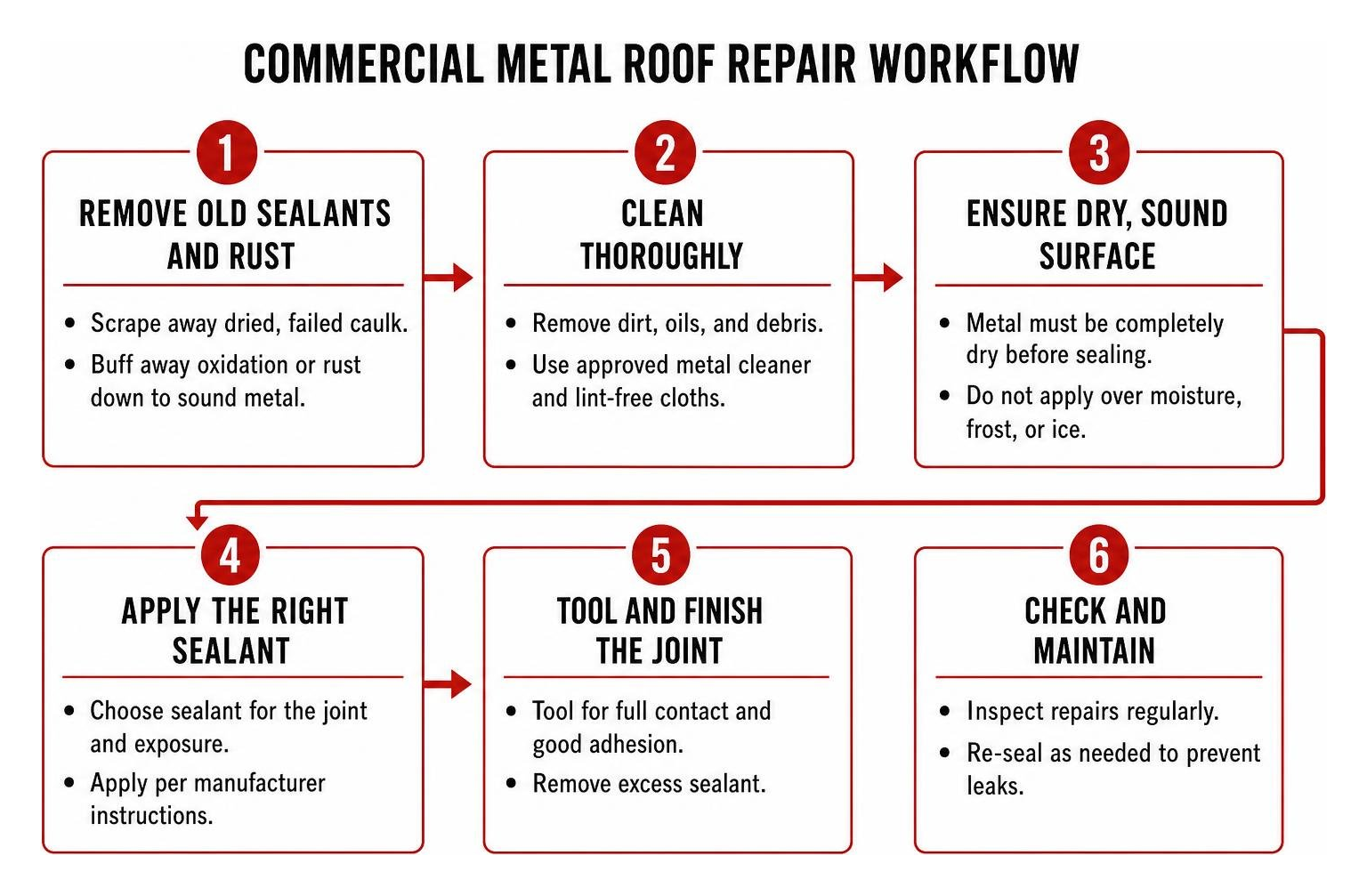
Step-by-Step Surface Preparation and Cold-Weather Application
To achieve an airtight, watertight bond on metal joints, follow this proven commercial preparation sequence:
- Remove Old Sealants and Rust: Scrape away dried, failed caulk using plastic or brass scrapers. Never leave cracked silicone underneath new sealant. Buff away surface oxidation or rust down to sound metal.
- Degrease and Clean: Clean the joint thoroughly using isopropyl alcohol or a manufacturer-approved solvent to lift industrial soot, grease, and dirt. Wipe dry with a clean lint-free cloth.
- Install Closed-Cell Backer Rods: For expansion joints or gaps wider than 1/4 inch, insert a closed-cell polyethylene backer rod. This prevents three-point adhesion, ensuring the caulk only bonds to the opposing metal sides and stretches freely in the middle.
- Apply a Continuous Bead: Cut the cartridge nozzle at a 45-degree angle to match the gap width. Dispense a smooth, continuous bead with consistent gun pressure, pushing the caulk forward into the joint rather than dragging it.
- Tool the Joint: Immediately tool the sealant with a concave joint tool or gloved finger to press the caulk against both metal substrates, eliminating air voids.
Cold and Wet Weather Considerations:
While certain emergency wet-patch silicones can seal active leaks during downpours, general structural caulking should occur above 40°F on clean, dry surfaces. When applying sealant in freezing conditions (such as Wisconsin and Minnesota winters), moisture frost can create an invisible barrier on metal panels, causing bond failure. Always warm cartridges to room temperature before application to maintain correct viscosity.
Review our proven metal roof leak repair protocols for further step-by-step guidance on troubleshooting persistent water ingress.
Common Caulking Mistakes and Inspection Schedules
Avoid these critical application errors on your building:
- Three-Point Adhesion: Filling a wide joint without a backer rod causes the sealant to bond to the bottom substrate as well as the sides, tearing the caulk bead as the panels move.
- Tooling with Soapy Water: Using soapy water to smooth neutral cure silicone can introduce moisture and chemical contaminants, ruining adhesion.
- Layering Incompatible Sealants: Applying polyurethane or acrylic directly over old silicone will fail, as silicone resists adhesion from almost every other polymer chemistry.
A single tube of caulk is a valuable spot-repair tool for localized flashings, vents, and fasteners. However, if your commercial facility suffers from recurring seam leaks, extensive fastener backing, or widespread panel corrosion, spot caulking is merely a temporary patch.
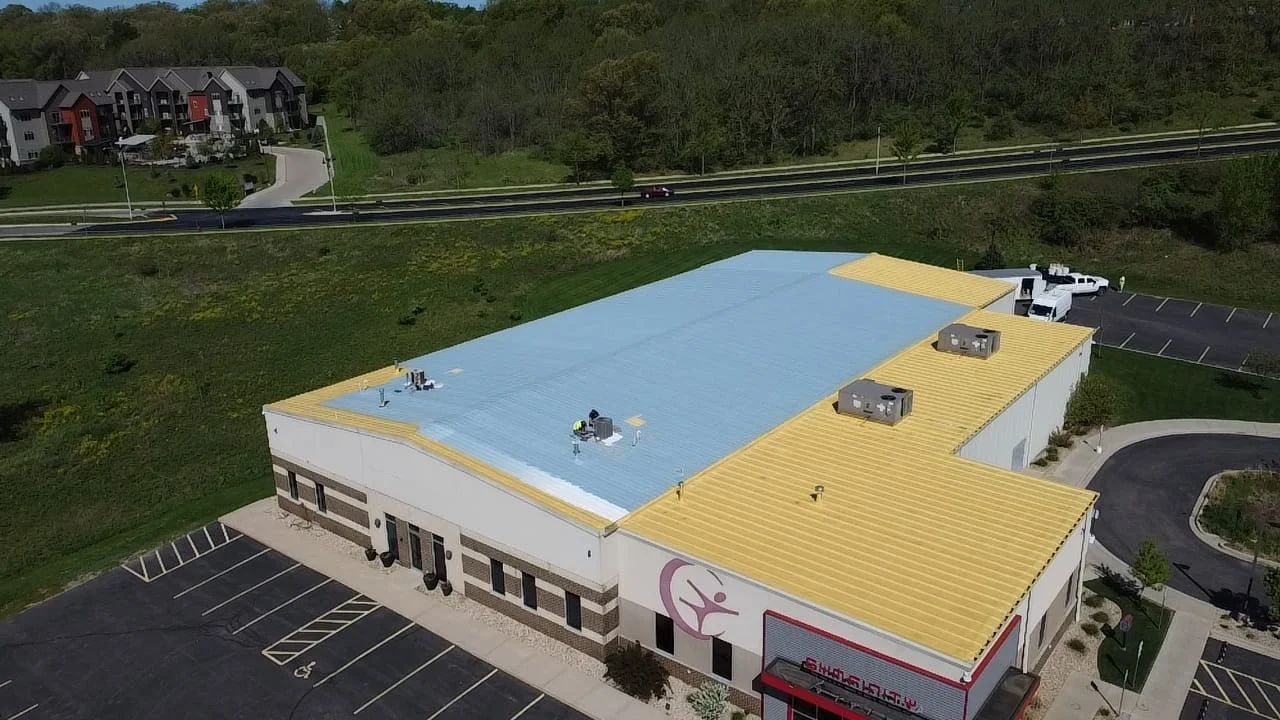
In these situations, a complete commercial metal roof restoration is far more cost-effective than constant piecemeal repairs. At Yutzy Roofing Service, we apply fluid-applied restoration coatings and reinforced seam treatments backed by up to 18-year non-prorated, renewable warranties throughout Madison, Appleton, Green Bay, Wausau, Marshfield, and surrounding areas.
To keep your commercial facility completely watertight, learn more about preventing commercial metal roof leaks or contact our team to schedule an on-site commercial roof evaluation.
